Healthy juice recipes give you a practical, ingredient-driven way to increase your daily intake of vitamins, minerals, and plant compounds. The right homemade juice — built around vegetables with a small amount of fruit — delivers real nutritional value without the added sugars and preservatives found in most bottled options.
Juice consumption matters more than most people realize. The USDA Dietary Guidelines for Americans recommend that adults eat 1.5 to 2 cups of fruit and 2 to 3 cups of vegetables per day. Most Americans fall far short of those targets. A well-built juice recipe doesn’t replace whole produce, but it is one of the most efficient ways to close that gap on days when eating enough whole vegetables feels impossible.
This guide covers 16 evidence-based sections: what makes a juice genuinely healthy, which recipes are worth your time, how to handle specific ingredients like beets and celery, how juicing compares to blending nutritionally, and who needs to be particularly careful with high-volume juice intake. Real measurements. Real macros. Real answers.
Healthy Juice Recipes: What Makes a Juice Actually Healthy?
A healthy juice recipe is one built primarily from vegetables, with fruit used for flavor rather than as the base, and free of added sugars, sweeteners, or preservatives.
The distinction matters because fruit-only juices, even freshly pressed ones, can deliver 25 to 40 grams of natural sugar per 8-ounce serving without the dietary fiber that would otherwise slow glucose absorption. The Academy of Nutrition and Dietetics defines a nutritionally sound juice as one that retains naturally occurring vitamins and minerals without added caloric sweeteners.
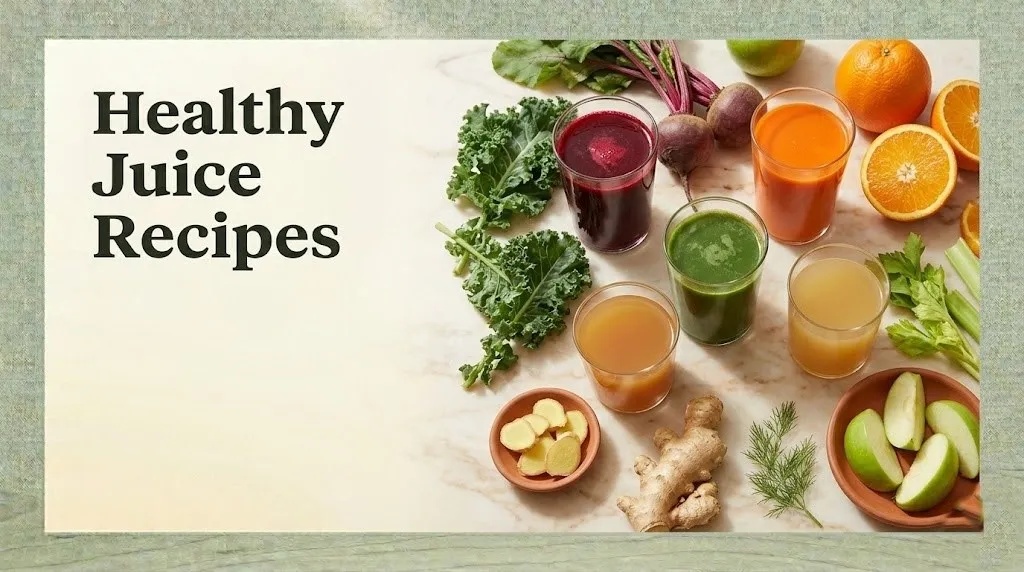
Vegetable-forward recipes tend to contain 60 to 90 calories per 8-ounce serving. Pure fruit blends run 120 to 180 calories for the same volume. The addition of one apple to a vegetable juice adds approximately 13 grams of natural sugar but also contributes quercetin, a flavonoid associated with anti-inflammatory activity in several human dietary studies.
A genuinely healthy juice also prioritizes ingredient diversity. Rotating between leafy greens like kale (Brassica oleracea var. sabellica) and spinach (Spinacia oleracea), root vegetables like carrot (Daucus carota) and beet (Beta vulgaris), and functional additions like ginger (Zingiber officinale) ensures you’re getting a broader range of phytonutrients, not just vitamin C from repeated citrus use.
Key markers of a nutritionally sound juice recipe:
- Vegetables make up at least 60% of the total ingredient volume
- Fruit is used for flavor balance, not as the primary ingredient
- No added sugar, honey, agave, or sweetened juice concentrates
- Ingredients are used raw or minimally processed to preserve heat-sensitive vitamins
- Serving size is 8 to 12 ounces, not 32-ounce “detox” portions that spike calorie and sugar load
People managing blood sugar should treat any juice, including vegetable-heavy ones, as a carbohydrate serving in their daily plan. The American Diabetes Association recommends that people with diabetes consult a registered dietitian before adding regular juice consumption to their routine.
Best Healthy Juice Recipes to Start With
The best healthy juice recipes for most people balance flavor with nutritional depth, are repeatable with common grocery store ingredients, and work in both a juicer and a high-speed blender.
After testing dozens of combinations, six recipes consistently deliver on taste, nutrition, and practical ease. The table below shows the approximate nutritional profile per 8-ounce serving for each one.
| Recipe | Calories | Sugar (g) | Vitamin C | Key Compound | Best Time |
|---|---|---|---|---|---|
| Green Detox (kale, cucumber, apple, lemon, ginger) | 75 | 12 | High | Chlorophyll, gingerols | Morning |
| Beet and Ginger (beet, carrot, ginger, lemon) | 95 | 18 | Moderate | Betalains, nitrates | Pre-workout |
| Carrot Orange Ginger (carrot, orange, ginger) | 110 | 20 | Very High | Beta-carotene, gingerols | Morning |
| Celery Apple Lemon (celery, apple, lemon, cucumber) | 70 | 14 | Moderate | Apigenin, quercetin | Any time |
| Anti-Inflammatory Turmeric (pineapple, turmeric, ginger, lemon) | 120 | 22 | High | Curcumin, gingerols | Post-meal |
| Low Sugar Green (spinach, cucumber, celery, lemon, mint) | 45 | 6 | Moderate | Chlorophyll, folate | Any time |
Ingredient sourcing affects flavor and nutrition. Organic produce is worth considering for thin-skinned items like apples and cucumbers, which appear on the USDA’s higher pesticide-residue monitoring lists. For root vegetables like beets and carrots, the difference in pesticide exposure between conventional and organic is generally lower.
People with celery allergies, which are classified as a major allergen in European Union food labeling regulations, should replace celery in these recipes with cucumber or zucchini at a 1:1 volume ratio.
Healthy Fruit Juice Recipes With Real Nutritional Value
Healthy fruit juice recipes deliver the highest concentrations of vitamin C (ascorbic acid), folate, and certain antioxidants, but they come with a higher natural sugar load than vegetable-based blends.
The key to making fruit juice genuinely nutritious rather than just sweet is strategic pairing. Combining high-sugar fruit like mango or pineapple with lower-sugar, high-fiber whole ingredients or functional spices creates a more balanced nutritional outcome. Adding fresh ginger (Zingiber officinale) or turmeric (Curcuma longa) root turns a simple fruit juice into a recipe that delivers bioactive compounds with documented anti-inflammatory properties.
Three fruit-forward recipes worth making:
Citrus Immunity Juice
- 2 medium oranges, peeled
- 1 pink grapefruit, peeled
- 1-inch piece fresh ginger root
- Half a lemon, peeled
Per 8 oz: approximately 110 calories, 24g natural sugar, 120% daily value of vitamin C (ascorbic acid), moderate folate.
Tropical Anti-Inflammatory Blend
- 1 cup fresh pineapple chunks
- 1-inch piece fresh turmeric root (Curcuma longa)
- 1-inch piece fresh ginger root
- 1 medium carrot (Daucus carota)
- Juice of half a lemon
Per 8 oz: approximately 130 calories, 22g natural sugar, high beta-carotene, curcumin present (enhanced by fat pairing, see section 8 below).
Watermelon Mint Refresh
- 2 cups fresh watermelon, rind removed
- Half a cucumber (Cucumis sativus)
- 8 fresh mint leaves
- Juice of half a lime
Per 8 oz: approximately 65 calories, 14g natural sugar, lycopene, high hydration content.
According to the American Heart Association, excess added sugar in the diet raises triglyceride levels and contributes to cardiovascular risk. Natural sugars in fresh fruit juice behave differently than added sugars, but consumed in large daily quantities, the effect on blood glucose and calorie intake is still meaningful. Eight ounces is the appropriate single serving for any fruit-heavy juice.
Note for people with diabetes: Even unsweetened fruit juices raise blood glucose rapidly due to the absence of fiber. If you’re monitoring carbohydrate intake, pair any fruit juice with a small amount of protein or fat to moderate the glycemic response.
Key Takeaway: A well-built juice recipe is 60% vegetables by volume, uses fruit for flavor balance only, and keeps the serving size at 8 to 12 ounces to manage natural sugar load effectively.
Is Fresh Juice Healthy or Just Sugar in a Glass?
Fresh juice is genuinely healthy when it’s made primarily from vegetables, consumed in appropriate portions, and treated as a supplement to whole fruit and vegetable intake rather than a replacement.
The concern about juice being “just sugar” applies most directly to 100% fruit juices consumed in large quantities. An 8-ounce glass of orange juice contains approximately 21 grams of natural sugar and around 110 calories, comparable to a small whole orange in sugar content but without the 3 grams of dietary fiber the whole fruit provides. That fiber difference is nutritionally meaningful: it slows glucose absorption, increases satiety, and supports digestive regularity.
That said, fresh juice is not without real value. A 2017 analysis published in the journal Nutrients found that 100% fruit and vegetable juices provide meaningful amounts of potassium, folate, vitamin C, and plant polyphenols that many adults are not getting sufficient amounts of through diet alone. The researchers noted that juice consumption was associated with higher overall fruit and vegetable intake, not lower.
The USDA Dietary Guidelines for Americans state that 100% fruit juice can count toward daily fruit intake, but advise that whole fruit is preferred because of its fiber content. The guidelines recommend limiting juice to 4 to 6 ounces per day for children and 8 ounces per day for adults as part of a balanced eating pattern.
Fresh-pressed homemade juice is also meaningfully different from pasteurized commercial juice. Heat pasteurization reduces concentrations of heat-sensitive vitamins, particularly vitamin C (ascorbic acid) and certain B vitamins. Cold-pressed or freshly made juice retains higher levels of these compounds, though it also has a much shorter shelf life (24 to 72 hours refrigerated, depending on the recipe).
Juicing vs Blending: Which One Keeps More Nutrition?
Juicing and blending are not nutritionally equivalent processes, and the right choice depends on your specific health goal.
Juicing extracts liquid from produce and separates it from the pulp. The pulp contains most of the insoluble dietary fiber in fruits and vegetables. When you discard the pulp, you discard that fiber. What remains is a concentrated liquid of water-soluble vitamins, minerals, and plant compounds. The juice absorbs quickly into the bloodstream, which delivers nutrients efficiently but also raises blood sugar faster than eating the same produce whole.
Blending retains the entire ingredient, including all fiber, which slows digestion and moderates the glucose response. Think of blended smoothies as a slow-release traffic system versus the express lane that fresh-pressed juice represents. For people managing their blood sugar or trying to stay full longer, blending typically serves those goals better.
| Factor | Cold-Press Juicing | Centrifugal Juicing | High-Speed Blending |
|---|---|---|---|
| Fiber retained | None (pulp removed) | None (pulp removed) | All fiber retained |
| Vitamin C preservation | High | Moderate (heat/oxidation) | High |
| Enzyme preservation | High | Moderate | High |
| Blood glucose effect | Fast rise | Fast rise | Slower, moderated |
| Satiety | Lower | Lower | Higher |
| Yield from produce | High | Moderate | Full volume |
| Effort and cleanup | High | Moderate | Low |
| Best for | Maximum nutrient concentration | Speed and convenience | Fiber + nutrients together |
A masticating (cold-press) juicer operates at lower speeds and produces less friction heat than centrifugal models, which preserves more heat-sensitive nutrients and enzymes. For people investing in a juicer specifically for nutritional reasons, a masticating juicer is the more nutritionally efficient machine, though it requires more prep time.
If you don’t own a juicer, a high-speed blender with a nut-milk bag or fine-mesh strainer can produce juice with a texture and fiber content similar to cold-pressed juice. You control how much pulp you strain out.
Healthy Juice Recipes for Beginners (No Experience Needed)
The best starting point for anyone new to juicing is a simple 3 to 4 ingredient recipe that produces a result that is genuinely drinkable on the first attempt.
Many people try green juice for the first time, find it intensely bitter or grassy, and abandon juicing altogether. That experience usually comes from recipes that use too much raw kale or too little fruit to offset the bitterness. Beginner-friendly recipes solve for palatability first, then gradually shift the ratio toward more vegetables as your taste adapts.
Beginner Green Juice (serves 1, approximately 10 oz)
To make this juice in a juicer or blender:
- Wash 2 large stalks of celery (Apium graveolens) and 1 medium green apple (Malus domestica) thoroughly under cold running water.
- Peel and slice 1 medium cucumber (Cucumis sativus). No need to peel if using organic.
- Cut the apple into quarters and remove the core and seeds.
- Feed celery, cucumber, and apple through the juicer alternately, starting and ending with a firmer ingredient.
- Squeeze the juice of half a lemon directly into the glass after juicing.
- Stir, taste, and serve immediately over ice.
Per 10 oz serving: approximately 85 calories, 17g natural sugar, vitamin C, vitamin K, potassium, apigenin (from celery), quercetin (from apple peel).
For blender method: Combine all ingredients, add half a cup of water, blend on high for 60 seconds, then strain through a fine-mesh strainer or nut-milk bag. Press the pulp to extract maximum liquid.
Quick Tip:
- Add a 1-inch piece of peeled cucumber or a few sprigs of fresh mint to reduce bitterness in any green juice.
- Start with one part leafy greens to three parts milder vegetables and one apple. Adjust the ratio weekly as your preference shifts.
- Lemon juice added after juicing preserves more vitamin C than running it through the machine.
Children under 12 months should not consume any fruit or vegetable juice, per the American Academy of Pediatrics guidance. For children aged 1 to 3, juice should be limited to 4 ounces per day maximum.
Green Juice Recipe: The Healthy Version That Actually Tastes Good
A genuinely good green juice recipe balances the chlorophyll-rich bitterness of leafy greens with the natural acidity of citrus and the mild sweetness of cucumber.
The recipe below has been designed to be palatable for someone who doesn’t typically like green juice, while still delivering a strong concentration of vitamin K, folate, vitamin C (ascorbic acid), iron, and plant chlorophyll.
Green Detox Juice (serves 1, 12 oz)
Ingredients:
- 4 large kale leaves with stems (Brassica oleracea var. sabellica), approximately 60g
- 1 medium cucumber (Cucumis sativus), approximately 200g
- 1 medium green apple (Malus domestica), approximately 150g
- 1-inch piece fresh ginger root (Zingiber officinale)
- Juice of 1 lemon
- 2 large stalks of celery (Apium graveolens)
To make:
- Rinse all produce under cold running water.
- Remove kale from stems if using a centrifugal juicer. Masticating juicers can handle whole stems.
- Feed celery and cucumber through the machine first to establish flow.
- Alternate kale leaves with apple quarters to push the greens through efficiently.
- Add ginger last, as its fibrous nature requires a hard ingredient following it.
- Squeeze lemon juice directly into the glass. Do not run lemon through the machine.
- Stir well and drink immediately for maximum vitamin C retention.
| Nutrient | Amount per 12 oz serving |
|---|---|
| Calories | Approximately 80 |
| Natural sugar | 14g |
| Vitamin C (ascorbic acid) | 60 to 80mg (67 to 89% daily value) |
| Vitamin K | High (from kale) |
| Folate | Moderate |
| Iron | Low to moderate |
| Potassium | Moderate to high |
People taking warfarin or other vitamin K-dependent anticoagulants should be aware that large amounts of kale and other leafy greens can interact with medication dosing. This does not mean avoiding greens entirely, but maintaining a consistent weekly intake is more important than eliminating them. Anyone on anticoagulant therapy should discuss their juice routine with the prescribing physician specifically in the context of their INR targets.
Key Takeaway: Green juice is genuinely nutritious when built around kale or spinach as the base, cucumber and celery for volume, one apple for palatability, and fresh lemon added post-juicing to preserve vitamin C.
Anti-Inflammatory Juice Recipes Backed by Research
Anti-inflammatory juice recipes are built around ingredients with documented effects on markers of systemic inflammation, specifically C-reactive protein (CRP), interleukin-6 (IL-6), and oxidative stress markers.
The three most research-supported ingredients for anti-inflammatory juicing are fresh ginger root (Zingiber officinale), fresh turmeric root (Curcuma longa), and tart or dark berry juices. A 2015 review in the journal Nutrients identified gingerols and shogaols in ginger as compounds that inhibit the production of inflammatory cytokines in human cell studies. A 2021 meta-analysis published in the American Journal of Clinical Nutrition found that curcumin supplementation was associated with reduced CRP levels in adults with elevated inflammatory markers.
The important caveat for turmeric: curcumin (the primary bioactive compound in turmeric) has poor bioavailability when consumed on its own. Black pepper contains piperine, which research shows increases curcumin absorption by up to 2000%, according to a study published in Planta Medica. Adding a small pinch of black pepper to any turmeric-containing juice meaningfully improves how much curcumin your body actually absorbs.
Anti-Inflammatory Turmeric Ginger Juice (serves 1, 10 oz)
Ingredients:
- 1 cup fresh pineapple (Ananas comosus) chunks, approximately 165g
- 1.5-inch piece fresh turmeric root (Curcuma longa), peeled
- 1-inch piece fresh ginger root (Zingiber officinale)
- 1 medium carrot (Daucus carota)
- Juice of 1 lemon
- Small pinch of ground black pepper (added to glass, not juiced)
To make:
- Peel turmeric and ginger with a spoon edge. Wear gloves; turmeric stains hands permanently.
- Feed carrot through first, then pineapple, then turmeric, then ginger.
- Squeeze lemon juice directly into the finished juice.
- Add a small pinch of black pepper and stir.
- Drink within 30 minutes for best curcumin stability.
Per 10 oz serving: approximately 120 calories, 22g natural sugar, high vitamin C, high beta-carotene, curcumin, gingerols, bromelain (from pineapple).
People with a history of gallstones should note that concentrated turmeric juice may stimulate bile production. If you have active gallbladder disease, consult your gastroenterologist before making high-turmeric juice a daily habit.
Healthy Juice Recipes for Weight Loss: What the Evidence Says
Juice can support a weight-loss eating plan, but it does not cause weight loss on its own, and the research on juice-based cleanses as weight management tools is limited and mixed.
What the evidence does support is that replacing high-calorie, high-sugar beverages like sodas, sweetened coffee drinks, or commercial fruit punches with low-calorie vegetable-based juices can reduce overall daily calorie intake. A vegetable-forward juice at 60 to 90 calories per 8 ounces is a genuinely lower-calorie option compared to a 12-ounce soda at 150 calories with zero micronutrient value.
According to research published in Appetite in 2018, consuming low-energy-density foods and beverages (those with fewer calories per gram) is one of the most practical strategies for reducing total daily calorie intake without strict portion counting. Vegetable-heavy juices fall firmly in that category.
What juice cannot do is replace dietary fiber in a weight-loss context. Fiber is the macronutrient most consistently associated with satiety and reduced calorie intake in clinical feeding studies. Juicing removes insoluble fiber. People using juice as a meal replacement will likely experience hunger sooner than if they ate the same ingredients whole.
| Approach | Calorie Range | Fiber | Satiety | Weight Loss Support |
|---|---|---|---|---|
| Vegetable juice (8 oz) as snack replacement | 50 to 90 cal | Minimal | Low to moderate | Moderate, if replacing higher-calorie snack |
| Fruit juice (8 oz) as meal supplement | 110 to 140 cal | Minimal | Low | Limited |
| Juice cleanse (all meals replaced) | 800 to 1200 cal/day | Very low | Low | Short-term water weight only |
| Juice + whole food eating plan | Variable | Moderate to high | Higher | More sustainable |
The most practical weight-management use of juice is as a structured, calorie-aware morning or afternoon snack, not as a meal replacement or cleanse protocol.
Healthy Morning Juice Recipe to Start Your Day Right
A healthy morning juice recipe should deliver a meaningful nutrient hit within the first hour of waking, without spiking blood sugar to a level that leads to a mid-morning energy crash.
The best morning juice builds around ingredients that give you vitamin C for immune and skin function, potassium for fluid balance and nerve function, and a small amount of natural sugar for fast-absorbing glucose. Adding fresh ginger (Zingiber officinale) supports digestion, which tends to be sluggish in the first 30 minutes after waking.
Morning Energizer Juice (serves 1, 12 oz)
Ingredients:
- 2 medium carrots (Daucus carota), approximately 120g
- 1 medium orange, peeled (Citrus sinensis), approximately 130g
- 1-inch piece fresh ginger root (Zingiber officinale)
- Half a lemon, peeled
- Half a medium apple (Malus domestica)
To make:
- Wash carrots and scrub with a vegetable brush. No need to peel if they’re clean.
- Peel the orange and remove any visible seeds.
- Feed carrot through the juicer first to establish flow.
- Alternate orange segments and ginger, finishing with the apple.
- Run the lemon through last, or squeeze it into the glass directly.
- Pour over ice if desired. Drink within 20 minutes of making.
| Nutrient | Amount per 12 oz |
|---|---|
| Calories | Approximately 115 |
| Natural sugar | 22g |
| Vitamin C (ascorbic acid) | 95 to 120% daily value |
| Beta-carotene | Very high |
| Potassium | Moderate to high |
| Folate | Moderate |
Drinking juice first thing on an empty stomach is generally well tolerated. If you experience acid reflux, the citrus and ginger combination may aggravate symptoms. In that case, pair this juice with a small amount of food or switch to the celery-cucumber recipe in section 13.
Key Takeaway: The most effective morning juice combines high-vitamin C citrus, beta-carotene-rich carrot, and fresh ginger for digestion support, keeping the serving size at 12 ounces to balance energy delivery with manageable sugar content.
Beet Juice Recipe: Health Benefits and How to Make It
Beet juice made from raw beets (Beta vulgaris) is one of the most researched vegetable juices for cardiovascular and athletic performance benefits, specifically because of its high dietary nitrate content.
When you consume dietary nitrates, gut bacteria convert them to nitrite, which the body then converts to nitric oxide (NO). Nitric oxide dilates blood vessels, reducing the effort required by the heart to pump blood and improving oxygen delivery to muscles during exercise. A 2017 meta-analysis published in the American Journal of Clinical Nutrition, covering 23 randomized controlled trials, found that dietary nitrate supplementation (primarily from beet juice) was associated with a statistically meaningful reduction in systolic blood pressure of approximately 3 to 4 mmHg.
Raw beets also contain betalains, the pigment compounds that give them their deep red-purple color. Betalains have demonstrated antioxidant and anti-inflammatory activity in laboratory studies, though large-scale human clinical trials are still ongoing.
Beet and Ginger Juice (serves 1, 10 oz)
Ingredients:
- 1 medium raw beet (Beta vulgaris), approximately 130g, scrubbed and trimmed
- 2 medium carrots (Daucus carota)
- 1-inch piece fresh ginger root (Zingiber officinale)
- 1 medium apple (Malus domestica)
- Juice of half a lemon
To make:
- Scrub the beet thoroughly. Peel only if preferred. Trim the stem end and root tail.
- Cut the beet into quarters to fit through the juicer feed tube.
- Feed carrot through first, then beet, then apple, then ginger.
- Squeeze lemon juice into the glass after juicing.
- Stir and drink immediately or refrigerate for up to 24 hours.
Per 10 oz: approximately 100 calories, 20g natural sugar, high betalains, dietary nitrates, beta-carotene, vitamin C.
Important note: Beet juice can turn urine and stool red or pink, a harmless phenomenon called beeturia. It affects approximately 10 to 14% of people and is related to individual differences in gut bacteria and stomach acidity. If this happens, there is no cause for concern.
People with a history of calcium oxalate kidney stones should limit beet juice intake. Beets are high in oxalates, and concentrated oxalate intake can contribute to stone formation in people who are already prone to them.
Carrot and Ginger Juice Recipe With Full Nutritional Breakdown
Carrot and ginger juice is one of the most nutritionally consistent homemade juices you can make, delivering very high concentrations of beta-carotene (provitamin A), moderate vitamin C, and the bioactive gingerols from fresh ginger.
Beta-carotene is a carotenoid that the body converts to retinol (vitamin A) as needed. Vitamin A is essential for vision (particularly low-light vision), immune function, skin cell turnover, and the maintenance of mucous membranes throughout the respiratory and digestive tracts. According to the NIH Office of Dietary Supplements, one medium raw carrot provides approximately 509 mcg RAE (retinol activity equivalents) of vitamin A, covering roughly 57% of the daily recommended intake for adult women and 45% for adult men.
An 8-ounce glass of fresh carrot juice made from 4 to 5 medium carrots provides two to three times that amount in a single serving, making it one of the most concentrated food sources of provitamin A available outside of liver.
Carrot Ginger Orange Juice (serves 1, 12 oz)
Ingredients:
- 4 medium carrots (Daucus carota), approximately 250g
- 1.5-inch piece fresh ginger root (Zingiber officinale)
- 1 medium navel orange (Citrus sinensis), peeled
- Juice of half a lemon
| Nutrient | Amount per 12 oz |
|---|---|
| Calories | Approximately 120 |
| Natural sugar | 23g |
| Vitamin A (as beta-carotene) | 350 to 500% daily value |
| Vitamin C (ascorbic acid) | 90 to 110% daily value |
| Potassium | 700 to 900mg |
| Gingerols | Present |
| Folate | Moderate |
Because carrot juice provides extremely high concentrations of beta-carotene, consuming it in very large amounts daily over long periods can cause carotenodermia, a harmless yellowing of the skin (particularly palms and soles), caused by beta-carotene deposited in the skin. This reverses on its own once intake normalizes. It is not a sign of vitamin A toxicity, which requires preformed retinol (from animal sources or supplements), not plant-derived beta-carotene.
Celery Juice Recipe: What It Actually Does (and Doesn’t Do)
Celery (Apium graveolens) juice became one of the most widely promoted wellness drinks of the early 2020s, driven primarily by social media claims that celery juice “heals the gut,” “detoxifies the liver,” and “restores stomach acid.” The scientific evidence for those specific claims does not exist.
What celery juice does genuinely provide: apigenin (a flavonoid with documented antioxidant and mild anti-inflammatory properties in laboratory studies), phthalides (compounds associated with mild blood pressure-lowering effects in some animal and small human studies), vitamin K, potassium, and a high water content that contributes to hydration.
A 2022 review in Nutrients found that celery and its extracts demonstrated antioxidant, anti-inflammatory, and hypotensive activity in preclinical models, though the authors noted that human clinical evidence remains limited and most studies used concentrated extracts rather than fresh juice.
Celery Apple Lemon Juice (serves 1, 12 oz)
Ingredients:
- 5 large stalks celery (Apium graveolens) with leaves, approximately 300g
- 1 medium apple (Malus domestica)
- Half a medium cucumber (Cucumis sativus)
- Juice of 1 lemon
- Optional: 5 fresh mint leaves for brightness
To make:
- Rinse celery stalks and leaves under cold water for 30 seconds.
- Cut celery into 3-inch pieces to fit the juicer feed tube comfortably.
- Feed cucumber through first, then alternate celery and apple pieces.
- Squeeze lemon juice into the glass. Add mint if using; do not run mint through the machine as it can taste medicinal when juiced.
- Stir and drink within 30 minutes.
Per 12 oz: approximately 75 calories, 14g natural sugar, moderate vitamin K, moderate potassium, apigenin present.
Celery is a major allergen under EU food labeling regulations. People with celery allergy, which can range from mild oral allergy syndrome to severe systemic reactions, should not consume celery juice in any form.
Key Takeaway: Celery juice contributes real antioxidants and mild hydration benefits, but the viral claims about liver detox and gut healing far outrun the actual human clinical evidence; treat it as a pleasant, low-calorie addition to a varied juice routine rather than a cure.
Low Sugar Juice Recipes for People Watching Their Intake
Low sugar juice recipes prioritize non-starchy vegetables as the bulk of the recipe and use lemon, lime, or small amounts of green apple for flavor without significantly raising the sugar content.
The American Diabetes Association (ADA) recommends that people with diabetes treat fruit juice as a carbohydrate exchange rather than a “free” food. Even unsweetened vegetable juice can contribute 8 to 15 grams of carbohydrate per 8-ounce serving. Tracking that as part of daily carbohydrate intake is the appropriate approach.
The following juice recipes keep sugar below 8 grams per 8-ounce serving by building around cucumber, celery, spinach, lemon, and small amounts of green apple or lime for flavor.
| Recipe | Total Sugar (8 oz) | Calories | Key Nutrients |
|---|---|---|---|
| Spinach Cucumber Lemon | 5g | 40 | Folate, vitamin K, vitamin C |
| Celery Cucumber Mint | 4g | 35 | Apigenin, potassium, hydration |
| Kale Cucumber Lime Ginger | 7g | 50 | Vitamin K, vitamin C, gingerols |
| Bitter Melon Green Blend | 6g | 45 | Charantin (preliminary research) |
| Tomato Celery Herbs | 5g | 50 | Lycopene, vitamin C, potassium |
Low Sugar Green Juice (serves 1, 10 oz)
Ingredients:
- 2 cups fresh spinach (Spinacia oleracea), approximately 60g
- 1 medium cucumber (Cucumis sativus)
- 3 stalks celery (Apium graveolens)
- Juice of 1 lemon
- 1-inch piece fresh ginger root (Zingiber officinale)
- 2 sprigs fresh mint (added to glass, not juiced)
Per 10 oz: approximately 45 calories, 6g natural sugar, high folate, high vitamin K, moderate vitamin C, gingerols.
Spinach (Spinacia oleracea) is relatively high in oxalates. People with a history of kidney stones, particularly calcium oxalate stones, should limit high-oxalate juices and confirm appropriate intake levels with their nephrologist, as individual oxalate sensitivity varies and dietary oxalate recommendations differ significantly between individuals based on urine chemistry testing.
Healthy Juice Recipes for Energy Without the Crash
Juice recipes that support sustained energy work by delivering iron, B vitamins (particularly folate), natural sugars with accompanying micronutrients, and hydration, rather than relying on stimulants like caffeine.
Energy drops in the afternoon are often a combination of dehydration, low blood sugar, and insufficient iron or B-vitamin intake. A 2020 study in Frontiers in Nutrition found that mild dehydration equivalent to just 1 to 2% of body weight reduces cognitive performance and self-reported energy levels measurably in healthy adults. A well-hydrated juice with iron-rich leafy greens and natural sugars from apple or beet directly addresses two of those three factors simultaneously.
The best energy-supporting juice ingredients include:
- Beet (Beta vulgaris): Dietary nitrates improve oxygen delivery to muscles, reducing perceived effort during physical tasks.
- Spinach (Spinacia oleracea): High in folate and non-heme iron, which supports red blood cell production and oxygen transport.
- Citrus (Citrus sinensis, Citrus limon): Vitamin C (ascorbic acid) improves absorption of non-heme iron when consumed together in the same meal or juice.
- Ginger (Zingiber officinale): Mild circulatory stimulant. Not a caffeine substitute, but gingerols have been shown to modestly increase thermogenesis.
- Apple (Malus domestica): Natural fructose provides fast glucose with quercetin for antioxidant support.
Afternoon Energy Juice (serves 1, 12 oz)
Ingredients:
- 1 small beet (Beta vulgaris), approximately 100g
- 2 large handfuls fresh spinach (Spinacia oleracea), approximately 60g
- 1 medium apple (Malus domestica)
- 2 medium carrots (Daucus carota)
- Juice of half a lemon
- 1-inch piece fresh ginger root
Per 12 oz: approximately 110 calories, 20g natural sugar, high folate, moderate iron, high beta-carotene, betalains, dietary nitrates, gingerols, vitamin C.
People who are pregnant or breastfeeding should be aware that spinach-heavy juices are a meaningful source of folate (vitamin B9), which is specifically recommended at increased amounts during pregnancy. The NIH recommends 600 mcg of dietary folate equivalents per day during pregnancy. A 12-ounce spinach-based juice can contribute a substantial portion of that target from food alone.
Healthy Juice Cleanse Recipes: Realistic Expectations and How to Do It Safely
A juice cleanse involves consuming only fresh juices for a defined period, typically one to five days, with the goal of reducing overall calorie intake, increasing micronutrient density, or resetting eating patterns.
The word “detox” is used liberally in the juice cleanse marketing space and deserves honest treatment here. The liver, kidneys, and lymphatic system are the body’s primary detoxification organs. They process and eliminate waste products continuously and do not require a juice-based intervention to do so. No peer-reviewed clinical evidence demonstrates that short-term juice cleanses remove toxins, improve organ function in healthy adults, or produce lasting metabolic benefits.
What a well-designed juice cleanse does provide: a structured reduction in processed food intake, meaningful increases in vegetable and fruit consumption, reduced overall calorie intake for most people, and a practical reset of taste preferences away from heavily processed foods.
The Academy of Nutrition and Dietetics does not formally endorse juice cleanses as a therapeutic protocol and recommends that any dietary change this substantial be discussed with a registered dietitian, particularly for people with diabetes, kidney disease, cardiovascular conditions, or eating disorder histories.
How to do a one-day juice reset safely:
- Eat a light, vegetable-rich dinner the night before. Do not fast before starting.
- Plan 5 to 6 juices at 8 to 12 ounces each, for approximately 400 to 700 total calories.
- Space juices every 2 to 3 hours. Do not skip any scheduled juice.
- Drink at least 2 additional liters of plain water throughout the day.
- Include at least one juice with protein-containing additions, such as 1 tablespoon of hemp seeds blended in, to reduce the likelihood of muscle catabolism.
- Avoid strenuous exercise on a full cleanse day. Light walking is appropriate.
- Break the cleanse with a light meal: cooked vegetables, soup, or eggs. Not a large meal.
One-day cleanses carry minimal risk for healthy adults. Cleanses of three or more days carry greater risks of electrolyte imbalance, muscle loss, and disordered eating reinforcement. People with type 1 diabetes should not attempt any juice-only protocol without direct medical supervision.
Key Takeaway: A one-day juice reset built around vegetable-forward recipes spaced every 2 to 3 hours is a low-risk way to increase micronutrient intake and reduce processed food consumption, but it does not “detox” the body and should not be relied on as a weight-loss strategy.
Frequently Asked Questions About Healthy Juice Recipes
What is the healthiest juice to drink every day?
A vegetable-forward juice made from leafy greens, cucumber, celery, lemon, and a small amount of apple or ginger is the most nutritionally sound choice for daily consumption.
It delivers vitamin K, folate, vitamin C (ascorbic acid), and plant antioxidants at under 90 calories per 8-ounce serving.
Rotating between different base vegetables weekly prevents over-reliance on any single ingredient and broadens your phytonutrient intake.
Can I make healthy juice recipes with a blender instead of a juicer?
Yes, a high-speed blender with a fine-mesh strainer or nut-milk bag produces juice comparable to a centrifugal juicer.
Blend all ingredients with a quarter cup of water on high speed for 60 to 90 seconds, then press the mixture through the strainer to separate the liquid from the pulp.
How much pulp you retain is your choice; leaving some adds fiber and moderates the glucose response.
Are homemade juice recipes better than store-bought juice?
Freshly made homemade juice retains higher levels of heat-sensitive vitamins like vitamin C (ascorbic acid) and certain B vitamins than pasteurized commercial juice.
Store-bought 100% juice that is pasteurized or shelf-stable has undergone heat treatment that reduces those concentrations.
Cold-pressed commercial juices are closer in nutrient retention to homemade juice but typically cost significantly more per serving.
How many calories are in a healthy homemade juice?
A vegetable-forward juice made from greens, celery, cucumber, and one apple contains 60 to 90 calories per 8-ounce serving.
Fruit-based juices made primarily from oranges, apples, or pineapple run 110 to 150 calories per 8-ounce serving.
Serving size is the most important variable: a 32-ounce “detox” juice that is primarily fruit juice can contain 400 to 550 calories, equivalent to a full meal.
Should people with diabetes drink fresh juice?
People with type 2 diabetes can include small amounts of vegetable-forward juice in a carbohydrate-managed eating plan, but juice should be counted as a carbohydrate serving, not a free food.
Even low-sugar vegetable juices deliver 8 to 15 grams of carbohydrates per 8 ounces, which affects blood glucose.
A registered dietitian familiar with the individual’s carbohydrate targets is the right person to help determine appropriate juice quantities and timing, particularly when managing insulin dosing.
Building a sustainable juice habit doesn’t require expensive equipment or a complicated routine. Start with one recipe you actually enjoy, use it three to four times per week, and pair it with whole food meals rather than treating it as a standalone dietary strategy.
The recipes in this guide are built around ingredients you can find at any grocery store, sized for realistic daily use, and designed to deliver real nutrients at calorie amounts that fit into a balanced eating day.
That’s the honest version of healthy juicing: not a cleanse, not a cure, just a practical and genuinely nourishing addition to a diet that’s already built on real food.