
Anchovies are healthy to eat. They deliver a concentrated dose of omega-3 fatty acids, high-quality protein, and key micronutrients in a very small caloric package.
That matters more than most people realize. The Dietary Guidelines for Americans 2020-2025 recommend at least 8 ounces of seafood per week for most adults, yet most Americans fall well short of that target. Small, oily fish like anchovies are among the most efficient ways to close that gap.
This article covers the full nutritional picture of anchovies, what the research says about their specific health effects, the real sodium concern with canned versions, how they compare to sardines and other oily fish, who should eat them carefully, and practical ways to work them into everyday cooking.
Are Anchovies Healthy to Eat?
Yes, anchovies are healthy to eat for most people. They rank among the most nutrient-dense fish available, offering omega-3 fatty acids, complete protein, selenium, calcium, and vitamin B12 in a very low-calorie format.
The species most commonly sold commercially is Engraulis encrasicolus, the European anchovy. This small, saltwater fish belongs to the oily fish category alongside sardines, mackerel, and herring. Oily fish carry their fat-soluble nutrients (including fat-soluble vitamins and omega-3s) in their flesh rather than in their liver, which makes the nutrition available in every bite.
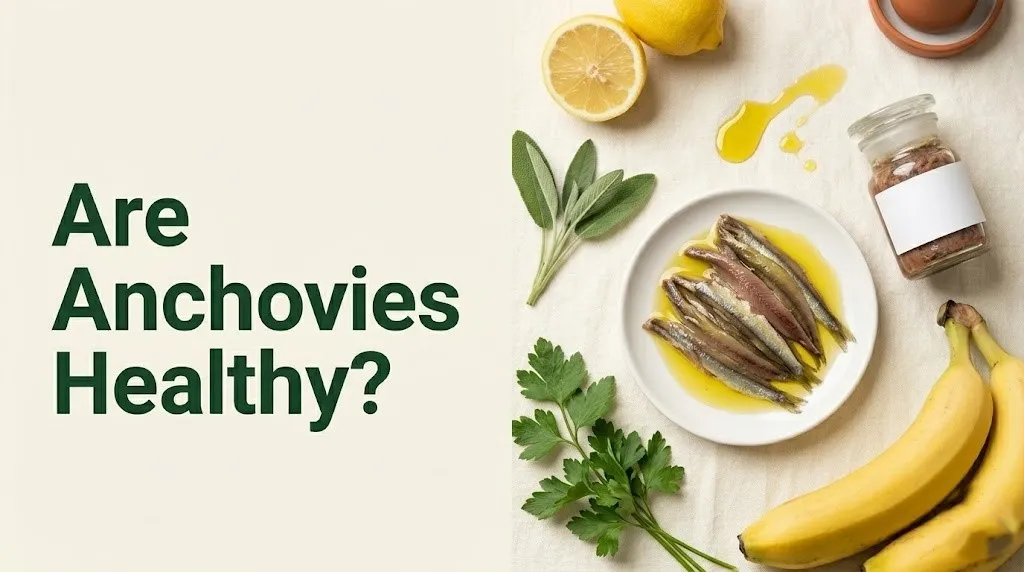
The one genuine complication is sodium. Canned and salt-packed anchovies are heavily preserved with salt, which can make the sodium content a real concern for certain individuals. That doesn’t make anchovies unhealthy as a food category. It means preparation method and portion size matter, which is true of most minimally processed foods.
Key nutrition snapshot per 5 oil-packed fillets (approximately 20g):
| Nutrient | Amount | % Daily Value |
|---|---|---|
| Calories | 29 | 1.4% |
| Protein | 4.1g | 8% |
| Total Fat | 1.3g | 2% |
| Omega-3 (EPA + DHA) | 0.4g | Varies by age/sex |
| Sodium | 734mg | 32% |
| Calcium | 46mg | 4% |
| Selenium | 12mcg | 22% |
| Vitamin B12 | 0.5mcg | 21% |
Source: USDA FoodData Central
Anchovy Nutrition Facts Per Serving
A standard serving of anchovies is typically 5 oil-packed fillets, weighing approximately 20 grams. That is a small amount that most people use as a flavoring rather than a protein centerpiece, so understanding what you actually get per serving is important.
According to USDA FoodData Central, a 1-ounce (28g) serving of canned anchovies in oil provides approximately 42 calories, 5.8 grams of protein, 1.9 grams of total fat, and just over 1 gram of saturated fat.
That protein-to-calorie ratio is notable. Anchovies deliver more protein per calorie than chicken breast. Think of it like a nutritional compression file: the same nutrients packed into a fraction of the weight and volume.
The micronutrient density is where anchovies genuinely stand out:
- Selenium: A strong antioxidant mineral that supports thyroid function. One serving provides roughly 22% of the daily value.
- Vitamin B12 (cobalamin): One serving covers approximately 21% of the daily recommended intake. B12 is required for nerve function, DNA synthesis, and red blood cell formation.
- Calcium: Particularly notable because it comes from the edible, softened bones in canned anchovies. This is a meaningful calcium source for people who don’t consume dairy.
- Niacin (vitamin B3): Supports energy metabolism and DNA repair.
- Iron and phosphorus: Both present in moderate amounts per serving.
The fat profile of anchovies is worth understanding. The total fat is low, and the dominant fats are polyunsaturated, with EPA (eicosapentaenoic acid) and DHA (docosahexaenoic acid) as the primary omega-3 components.
Health Benefits of Anchovies
The health benefits of anchovies stem directly from their nutritional composition: omega-3 fatty acids, selenium, vitamin B12, and calcium, each with documented physiological roles.
The American Heart Association recommends eating fish, particularly fatty fish rich in EPA and DHA, at least twice per week. Anchovies meet that fatty fish criterion. Per gram of fish, they deliver a higher concentration of EPA and DHA than many larger fish, partly because they have not diluted their omega-3 stores by living long enough to accumulate size.
The selenium content deserves specific attention. The National Institutes of Health Office of Dietary Supplements notes that selenium acts as an essential component of selenoproteins, which regulate oxidative stress and support immune function. One serving of anchovies contributes meaningfully toward the adult recommended dietary allowance of 55 micrograms per day.
Core documented benefits supported by research:
- Cardiovascular support through EPA and DHA’s effects on triglyceride levels and inflammatory markers
- Cognitive function support through DHA’s role in neuronal membrane structure
- Bone density support through the combination of calcium, phosphorus, and vitamin D present in whole anchovies
- Thyroid function support through selenium
- Red blood cell production and nerve health through vitamin B12
- Muscle maintenance and satiety through the high protein-to-calorie ratio
People following plant-based diets who occasionally include fish (pescatarians) will find anchovies particularly efficient for meeting B12 and omega-3 targets that are otherwise difficult to achieve without supplementation.
Key Takeaway: Anchovies deliver one of the highest omega-3 concentrations per calorie of any commonly available fish, alongside meaningful amounts of selenium, B12, and calcium that most people’s diets are short on.
Anchovies and Heart Health
Anchovies support heart health primarily through their EPA and DHA content, which the American Heart Association identifies as beneficial for reducing triglyceride levels and supporting overall cardiovascular function.
EPA and DHA work through several distinct mechanisms. They reduce the production of inflammatory signaling molecules in the blood vessels. They appear to lower circulating triglyceride concentrations, which is a recognized cardiovascular risk factor when elevated. A 2019 review published in Nutrients found that regular consumption of EPA and DHA from marine sources was associated with reduced cardiovascular event risk, particularly when consumed as part of a broader dietary pattern.
Anchovies are not a silver bullet for heart disease prevention. No single food is. But as part of a dietary pattern that includes vegetables, whole grains, legumes, and other lean proteins, they contribute meaningfully to the type of eating pattern that research consistently links to lower cardiovascular risk.
Sodium is the cardiovascular counterpoint. A 5-fillet serving of oil-packed canned anchovies can contain upwards of 700mg of sodium, which is roughly 30% of the daily limit the American Heart Association recommends for most adults (1,500mg per day for those with hypertension, 2,300mg per day as the general upper limit). People with high blood pressure need to account for anchovy sodium within their daily total rather than treating it as a free pass.
People on sodium-restricted diets should treat anchovies as a flavoring used in small amounts, not a protein staple eaten in volume.
Anchovies and Brain Health
Anchovies contribute to brain health through their DHA content, a long-chain omega-3 fatty acid that makes up a substantial portion of the structural fat in the human brain.
DHA (docosahexaenoic acid) is not a general “brain food” in a vague sense. It is a specific structural component of neuronal membranes. The brain requires a continuous supply of DHA to maintain membrane fluidity, which affects how efficiently neurons communicate. The NIH notes that DHA is particularly important during fetal brain development and in early childhood, but the need for dietary DHA does not disappear after childhood.
A 2022 study published in the American Journal of Clinical Nutrition found that higher blood DHA levels in older adults were associated with better performance on cognitive tests and a lower estimated risk of dementia progression. The research did not establish causality, but it adds to a growing body of evidence that maintaining adequate DHA through diet is meaningful for long-term brain health.
Anchovies are one of the most concentrated dietary sources of DHA available. Because they are small fish, they accumulate DHA efficiently from their plankton diet without living long enough to accumulate much mercury or other persistent pollutants.
People who eat no fish and no seafood (strict vegans, for instance) rely either on algae-derived DHA supplements or on the body’s limited conversion of ALA (alpha-linolenic acid) from flaxseed and walnuts. The conversion rate of ALA to DHA is low and variable, which is why fish-derived DHA remains the most reliable dietary source for most people.
Anchovies and Bone Health
Anchovies support bone health through a combination of calcium, phosphorus, and vitamin D, three nutrients that work together in bone mineralization.
What makes anchovies unusual as a calcium source is where the calcium comes from: the edible bones. Canned anchovies are processed in a way that softens the small bones until they are completely edible. Eating those bones is how the calcium content gets into your diet. Draining the oil and discarding the fish without eating the bones would reduce the calcium benefit substantially.
The NIH Office of Dietary Supplements confirms that phosphorus works alongside calcium in bone matrix formation. Anchovies contain both, which makes them structurally useful for bone support in a way that calcium supplementation alone is not.
Vitamin D enhances calcium absorption in the gut. Anchovies contain a modest amount of vitamin D, approximately 1.0 to 1.5 mcg per 100g depending on preparation. This is not enough to meet full daily requirements, but it contributes to a dietary pattern that supports calcium utilization.
People at risk for osteoporosis, including postmenopausal women and older adults, would benefit from including small oily fish like anchovies regularly as part of a broader calcium and vitamin D strategy. Anyone managing a diagnosed calcium deficiency should work with a registered dietitian to build a complete dietary plan rather than relying on a single food.
Key Takeaway: The edible bones in canned anchovies make them a surprisingly effective calcium source, and their DHA content gives them legitimate brain and heart health credentials backed by published research.
Are Canned Anchovies Healthy?
Canned anchovies are healthy in nutritional terms, but their very high sodium content means portion size and frequency matter considerably more than with fresh anchovies.
Most people encounter anchovies in their canned, oil-packed form. The canning and salting process preserves the fish effectively and does not destroy the omega-3 fatty acids, selenium, vitamin B12, or calcium content. What it does add is a substantial amount of sodium. A 2-ounce (56g) serving of canned oil-packed anchovies contains approximately 1,450mg of sodium, which exceeds the American Heart Association’s daily recommended limit for people with high blood pressure in a single serving.
This does not mean canned anchovies are off the table. It means they function best as a flavoring and umami booster used in small quantities rather than as a main protein portion.
The oil they are packed in also matters. Most commercial canned anchovies use soybean oil or sunflower oil. Neither is inherently harmful, but neither adds omega-3s the way olive oil would. Some premium brands pack anchovies in olive oil, which improves the overall fat quality of the product.
Canned anchovy sodium comparison by product type:
| Product Type | Sodium per 2oz (56g) |
|---|---|
| Oil-packed (standard) | ~1,450mg |
| Oil-packed (rinsed) | ~1,000 to 1,100mg |
| Salt-packed (whole, unrinsed) | ~3,000mg+ |
| Salt-packed (soaked 30 min) | ~1,200 to 1,500mg |
| Anchovy paste (per tbsp) | ~550mg |
People following halal or kosher dietary guidelines should verify whether the specific canned anchovy product carries appropriate certification, as processing facilities and oil types vary by brand.
Canned Anchovies vs Fresh Anchovies
Fresh anchovies and canned anchovies share the same core nutritional profile but differ meaningfully in sodium content, availability, and preparation requirements.
Fresh anchovies are rarely sold in most supermarkets outside of coastal regions with active fishing industries. In Spain, Italy, and parts of Southeast Asia, fresh anchovies (called boquerones in Spanish cuisine when marinated in vinegar) are widely available and eaten whole. Fresh anchovies have a much lower sodium content, approximately 100 to 130mg per 100g, compared to the 3,000 to 5,000mg per 100g found in salt-packed canned versions.
The omega-3 content is comparable between fresh and canned, assuming the canning process uses minimal heat treatment. High-heat processing can reduce EPA and DHA slightly, but most commercial canning retains the majority of the omega-3 content.
Fresh anchovies do require more handling. They need to be cleaned, scaled, and prepared promptly. Their shelf life is very short, typically 1 to 2 days refrigerated. Canned anchovies, by contrast, can last for 2 to 5 years unopened when stored properly in a cool, dry place.
Fresh vs. canned anchovy comparison:
| Feature | Fresh Anchovies | Canned (Oil-packed) |
|---|---|---|
| Sodium per 100g | ~100 to 130mg | ~3,000 to 5,000mg |
| Omega-3 content | High | High (comparable) |
| Calcium | Moderate | Higher (soft bones) |
| Shelf life | 1 to 2 days | 2 to 5 years |
| Availability | Limited/seasonal | Widely available |
| Preparation required | Yes (cleaning) | Minimal |
| Best use | Pan-fried, marinated | Flavoring, sauces, pizza |
Anchovies vs Sardines: Which Is Healthier?
Both anchovies and sardines are nutrient-dense, low-mercury oily fish that belong in a healthy diet, but they differ in sodium content, omega-3 concentration, and flavor intensity.
Sardines (Sardina pilchardus) are slightly larger than anchovies and are typically canned in water, tomato sauce, or olive oil rather than packed in salt. This makes canned sardines substantially lower in sodium than canned anchovies, approximately 300 to 450mg per 3.75-ounce can, compared to the much higher sodium load of equivalent anchovy portions.
Anchovies have a slightly higher EPA and DHA concentration per gram of fish than most sardine products. They are also more intensely flavored, which means people typically use smaller amounts per meal, further reducing the sodium consumed per dish.
Nutritional comparison per 100g (approximate):
| Nutrient | Anchovies (canned) | Sardines (canned, water) |
|---|---|---|
| Calories | ~150 | ~208 |
| Protein | ~20.4g | ~24.6g |
| Omega-3 (EPA + DHA) | ~2.1g | ~1.5g |
| Sodium | ~3,668mg | ~400 to 500mg |
| Calcium | ~232mg | ~351mg |
| Vitamin B12 | ~3.2mcg | ~8.9mcg |
Sardines win clearly on sodium and vitamin B12. Anchovies win on omega-3 density per gram. For people managing blood pressure, sardines are the more practical everyday option. For people using fish as a cooking flavoring in small amounts, anchovies are hard to beat.
Both fish score well on sustainability metrics. The Monterey Bay Aquarium Seafood Watch rates many anchovy and sardine fisheries as good choices, particularly European and U.S. Pacific varieties.
Key Takeaway: Sardines are the better everyday low-sodium option, while anchovies win on omega-3 concentration per gram. For most people, rotating between both is the sensible approach.
Are Anchovies High in Mercury?
Anchovies are low in mercury and rank among the safest fish to eat from a mercury exposure standpoint.
Mercury accumulates in fish through a process called biomagnification. Large, long-lived predatory fish at the top of the food chain, such as swordfish, king mackerel, and shark, accumulate the most mercury because they eat smaller fish that have already concentrated mercury from their diet. Anchovies sit near the bottom of the marine food chain. They eat plankton and zooplankton, live for only 3 to 4 years, and have minimal opportunity to accumulate mercury.
The FDA and EPA jointly advise that anchovies fall in the category of “best choices” for mercury safety, meaning they can be eaten 2 to 3 servings per week without mercury concern for most adults, including pregnant women and young children.
FDA and EPA fish mercury safety categories (relevant fish listed):
| Category | Fish Examples | Weekly Guidance |
|---|---|---|
| Best choices (lowest mercury) | Anchovies, sardines, salmon, trout | 2 to 3 servings/week |
| Good choices | Canned light tuna, mahi-mahi | 1 serving/week |
| Choices to avoid | Swordfish, king mackerel, bigeye tuna | Avoid or minimize |
Pregnant women and people feeding young children can include anchovies within the FDA and EPA’s recommended 8 to 12 ounces of low-mercury seafood per week. The sodium in canned anchovies remains a more practical concern than mercury for most people in this group.
How Many Anchovies Should You Eat Per Day?
There is no single universal daily limit for anchovies, but 3 to 6 fillets (approximately 15 to 30 grams) per day is a practical range for most healthy adults who are watching their sodium intake.
The Dietary Guidelines for Americans 2020-2025 recommend 8 ounces of seafood per week for a 2,000-calorie diet, with an emphasis on varieties higher in EPA and DHA. Anchovies easily satisfy the omega-3 component of this recommendation in small amounts. Even 5 fillets (20g) twice per week provides a meaningful EPA and DHA contribution.
The more relevant limit for daily anchovy intake is sodium, not omega-3 or calorie content. A person consuming 6 to 8 fillets of canned anchovies as a daily pizza topping or pasta addition is likely adding 500 to 1,000mg of sodium to their diet from that one ingredient. Over a diet already containing processed foods, bread, cheese, or condiments, that number adds up.
Practical daily guidance by health context:
| Health Context | Practical Daily Limit | Notes |
|---|---|---|
| Healthy adult | 5 to 8 fillets | Stay within total daily sodium limit |
| High blood pressure | 2 to 4 fillets | Rinse fillets; account in daily sodium budget |
| Sodium-restricted diet | 1 to 3 fillets | Use sparingly as flavoring only |
| Pregnant (low-mercury concern only) | Up to 2 to 3 servings/week | Follow FDA fish guidelines |
| Children under 12 | Small amounts | Sodium concern; age-appropriate portions |
The practical answer for a healthy adult: anchovies in typical culinary amounts (a few fillets per dish, a few times per week) pose no problem. Daily, high-volume consumption from canned sources needs sodium accounting.
How to Reduce Sodium in Canned Anchovies
Rinsing canned anchovies under cold water for 30 seconds reduces their sodium content by approximately 20 to 30%, which is a meaningful reduction for people managing sodium intake.
This technique is the simplest intervention available. Open the can, drain the oil, place the fillets under gently running cold water, and pat dry. The exterior salt dissolves and washes away. The flavor does reduce somewhat, but anchovy flavor comes primarily from the fermentation process and the natural compounds in the fish itself, not purely from salt.
For salt-packed anchovies (which come in larger containers and require rinsing by design), the standard preparation involves soaking in cold water for 30 minutes, changing the water once halfway through, then rinsing and patting dry. This reduces sodium more aggressively but also softens the texture. Some cooks prefer a 10 to 15 minute soak in cold milk, which draws out salt while adding a mild richness. The milk method is particularly useful for salt-packed varieties.
To reduce sodium in canned anchovies:
- Open the can and pour off all the packing oil.
- Place fillets in a fine-mesh strainer.
- Run cold water over the fillets for 30 to 60 seconds.
- Gently pat dry with paper towels.
- For salt-packed anchovies, soak in cold water for 20 to 30 minutes instead, changing the water once.
- Taste before adding additional salt to any recipe using rinsed anchovies.
People with severe sodium restrictions (under 1,500mg per day) should use anchovy paste instead, using one teaspoon in a dish that serves four people, which distributes the sodium across portions.
Key Takeaway: Rinsing canned anchovies removes 20 to 30% of their sodium. For people managing blood pressure, this single step makes anchovies a more realistic flavoring option within a sodium-controlled diet.
Who Should Avoid Eating Anchovies?
Most people can eat anchovies without issue, but several specific groups should exercise caution or avoid them based on medical or dietary conditions.
People with fish allergies must avoid anchovies entirely. Anchovies are a major allergen under the same fish allergen category as other finfish. The proteins that trigger fish allergic reactions (particularly parvalbumins) are present in anchovies. A fish allergy is distinct from a shellfish allergy, but people with either allergy should check labels carefully, as anchovies appear in unexpected products including Worcestershire sauce, Caesar dressing, and some pizza sauces.
People with gout should be cautious. Anchovies are high in purines, naturally occurring compounds that break down into uric acid in the body. Elevated uric acid levels trigger gout attacks. The American College of Rheumatology notes that high-purine seafood, including anchovies, sardines, herring, and mackerel, can raise uric acid levels and should be limited or avoided during active gout flares. People managing gout who want to include oily fish should discuss specific safe options and portion sizes with their treating physician.
People on strict sodium-restricted diets should treat canned anchovies as an occasional small-amount flavoring, not a regular protein source. See the sodium reduction section above for practical techniques.
People taking anticoagulant medications (such as warfarin) should note that high omega-3 intake can affect blood clotting. Eating anchovies in normal culinary amounts is unlikely to cause a problem, but a very high intake should be discussed with a prescribing physician.
Additional groups who should eat anchovies mindfully:
- People with kidney disease (sodium and phosphorus concerns)
- People with thyroid disorders sensitive to iodine (anchovies are an iodine-containing food)
- Infants and young toddlers (sodium content, texture, and whole fish safety)
Anchovies and the Mediterranean Diet
Anchovies are a traditional and nutritionally integral part of the Mediterranean diet, one of the most extensively researched dietary patterns in nutrition science.
The Mediterranean diet emphasizes vegetables, legumes, whole grains, olive oil, nuts, and regular consumption of fish and seafood, with modest amounts of poultry and dairy, and limited red meat. Anchovies fit naturally into this pattern as a small, oily, sustainably caught fish that delivers high omega-3 content without the mercury concerns of larger species.
A 2021 meta-analysis published in Nutrients examining the Mediterranean diet found consistent associations with reduced risk of cardiovascular disease, type 2 diabetes, and all-cause mortality across large population studies. While no individual food drives those outcomes alone, the regular inclusion of oily fish like anchovies is considered a key component of the dietary pattern that generates these associations.
In traditional Mediterranean cooking, anchovies function primarily as a flavor base rather than a protein main. A few fillets dissolved in warm olive oil become the foundation of countless Italian pasta sauces, Provençal dishes, and Spanish tapas. This approach delivers the nutritional benefits of anchovies in a sodium-managed way because the fillets are spread across an entire dish rather than eaten in volume.
The Mediterranean dietary pattern is also recognized by the Academy of Nutrition and Dietetics as appropriate for most healthy adults and suitable for adaptation to various cultural food traditions. People following a Mediterranean-style diet who want to maximize oily fish benefits can rotate anchovies with sardines, mackerel, and salmon across the week to vary both nutrients and sodium load.
How to Use Anchovies in Cooking
Anchovies are one of the most effective umami-building ingredients in any kitchen, capable of adding savory depth to dishes without tasting “fishy” when used correctly.
The most common mistake people make with anchovies is adding them too late in the cooking process. Anchovies dissolve completely when added to warm fat (olive oil or butter) at the beginning of cooking. Within 2 to 3 minutes over medium heat, the fillets break down into the oil and become invisible, leaving behind a rich, savory base that tastes nothing like what you expect from fish. This is the technique behind classic Italian dishes like bagna cauda and pasta puttanesca.
Practical ways to cook with anchovies:
- Melt 2 to 3 fillets in warm olive oil as the base for any tomato sauce, pasta, or braised vegetable dish
- Whisk 1 teaspoon of anchovy paste into Caesar dressing (homemade or purchased) for the authentic flavor
- Place 2 fillets under the skin of a chicken before roasting for concentrated umami depth
- Mash with softened butter and herbs to make a compound butter for grilled steak or roasted vegetables
- Stir into lamb or beef stew alongside aromatics in the early stages of cooking
- Blend into a vinaigrette with lemon and Dijon mustard for a savory salad dressing
For people who want the nutritional benefits without the strong flavor, anchovy paste is the most approachable entry point. It disperses evenly in sauces and dressings, requires no preparation, and comes in small tubes that keep refrigerated for weeks after opening.
People avoiding gluten should check anchovy paste labels, as some brands include wheat-based additives. Strict vegans have no appropriate substitution for the specific compound flavor of anchovies, though miso paste, soy sauce, or nutritional yeast can approximate the umami quality in plant-based cooking contexts.
Key Takeaway: The best way to eat anchovies for both nutrition and flavor is to dissolve them into a warm fat base at the beginning of cooking. They disappear into the dish while their omega-3s, selenium, and B12 remain fully present.
Frequently Asked Questions About Anchovies
Are anchovies good for you?
Yes, anchovies are good for you when eaten in appropriate amounts.
They provide omega-3 fatty acids, complete protein, vitamin B12, selenium, and calcium in a low-calorie serving.
The sodium in canned anchovies is the main nutritional concern and should be factored into daily intake.
How many anchovies can I eat in a day?
For most healthy adults, 5 to 8 fillets per day in culinary use is a reasonable amount when accounting for total daily sodium.
The Dietary Guidelines for Americans recommend 8 ounces of seafood per week, and anchovies satisfy the omega-3 component of that target in small servings.
People with high blood pressure or kidney disease should keep amounts smaller and use rinsed fillets.
Are canned anchovies as healthy as fresh anchovies?
Canned anchovies retain most of the omega-3s, protein, selenium, and B12 found in fresh anchovies.
The primary difference is sodium content: fresh anchovies contain roughly 100 to 130mg of sodium per 100g, while canned anchovies can contain 3,000 to 5,000mg per 100g before rinsing.
Rinsing canned fillets under cold water reduces sodium by approximately 20 to 30%, making them more comparable in practical health impact.
Are anchovies high in mercury?
No, anchovies are low in mercury and are classified as a “best choice” fish by the FDA and EPA.
Because anchovies eat plankton and live only 3 to 4 years, they accumulate very little mercury compared to large predatory fish like swordfish or king mackerel.
Pregnant women and young children can safely include anchovies within the recommended 8 to 12 ounces of low-mercury seafood per week.
Can people with high blood pressure eat anchovies?
People with high blood pressure can eat anchovies in small amounts, but the sodium content in canned forms requires careful management.
The American Heart Association recommends limiting sodium to 1,500mg per day for people with hypertension, and a standard 5-fillet serving of canned anchovies can contain 700mg or more.
Using rinsed fillets as a flavoring in small amounts, spread across a dish that serves multiple people, is the most practical approach.
Closing
Anchovies earn their place in a healthy diet. The omega-3 content, the B12, the selenium, and the calcium from those soft canned bones add up to genuine nutritional value in a remarkably compact package.
The main thing to manage is sodium. Use them as the flavoring and flavor-depth ingredient they’ve always been in Mediterranean cooking: a few fillets dissolved into a sauce, a spoonful of paste whisked into a dressing. That approach gives you the nutrition without overloading any single meal with salt.
If you’ve been avoiding anchovies because you assumed they were too intense or too salty, rinsed fillets melted into olive oil at the start of cooking is the place to start. The flavor surprise is real.