Healthy pumpkin brownies use pumpkin puree to replace most of the butter and oil found in traditional brownies, cutting the fat content by roughly half while adding fiber, vitamin A, and moisture that produces a fudgy, dense texture. They are not a health food in the sense that kale is a health food. They are a significantly healthier version of a dessert that, in its standard form, is one of the most calorie-dense baked goods in the American repertoire.
This recipe matters because brownies are the most-searched dessert recipe in the United States, and the standard version typically delivers 250 to 400 calories and 15 to 25 grams of sugar per square. The Dietary Guidelines for Americans identify baked desserts as one of the top sources of added sugar and saturated fat in the American diet. A pumpkin brownie made with whole-grain flour, reduced sugar, and pumpkin puree as a fat replacer cuts those numbers while adding nutrients that a standard brownie simply does not contain. The swap is not about deprivation. It is about building a brownie that earns its place in a healthy eating pattern.
This article gives you a complete, tested recipe for healthy pumpkin brownies, explains exactly why each substitution works from a food science perspective, breaks down the full nutritional profile per serving, and provides substitution options for gluten-free, vegan, and lower-sugar versions. The recipe has been tested in a home kitchen with standard equipment. Difficulty is moderate and assumes basic baking competence: measuring ingredients accurately, operating an oven, and testing for doneness.
Why Pumpkin Makes Brownies Healthier
Pumpkin puree replaces fat in brownie recipes because its fiber and pectin content mimic the mouthfeel of butter and oil while contributing vitamin A, potassium, and antioxidants with significantly fewer calories. A quarter cup of pumpkin puree contains roughly 20 calories and 0 grams of fat. A quarter cup of butter contains 400 calories and 44 grams of fat. The substitution is not one-to-one in volume, but the principle holds: replacing some of the fat with pumpkin reduces the calorie density of the final product without sacrificing the fudgy texture that defines a good brownie.
The moisture contribution is what makes pumpkin work in brownies specifically. Brownies depend on moisture for their dense, fudgy texture. A cakey brownie is a failed brownie. Pumpkin puree is roughly 90 percent water by weight, but the water is bound up in fiber and pectin in a way that releases slowly during baking. This slow release produces steam that leavens the batter slightly while maintaining the density that distinguishes a brownie from a chocolate cake. The result is a moist, dense crumb without the greasy mouthfeel of a butter-heavy brownie.
The nutritional additions from pumpkin are real but modest per serving. A batch of brownies made with a cup of pumpkin puree divided into 16 servings provides roughly a tablespoon of pumpkin per brownie. That tablespoon contains approximately 2 percent of the daily value for vitamin A and a negligible amount of fiber and potassium. The nutritional benefit of pumpkin in a brownie is not that a single brownie becomes a vitamin supplement. It is that across a batch, the pumpkin replaces ingredients that would otherwise be butter and oil. The net nutritional gain comes from what is removed, not just from what is added.
The flavor contribution is subtle. Pumpkin has an earthy, slightly sweet flavor that complements chocolate without competing with it. A brownie made with pumpkin tastes like a chocolate brownie, not a pumpkin spice product. The cinnamon and vanilla in the recipe enhance the chocolate flavor. The pumpkin itself recedes into the background.
Key Fact: According to the USDA, a half-cup of canned pumpkin puree provides 380 percent of the daily value for vitamin A primarily as beta-carotene, along with 3.5 grams of fiber and 280 milligrams of potassium.
What Ingredients Make Pumpkin Brownies Healthy?
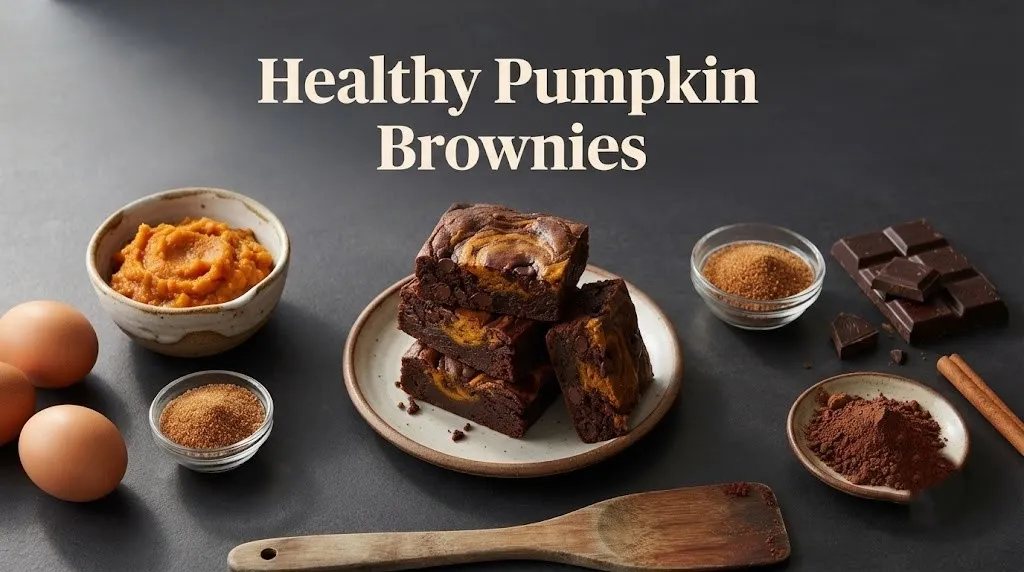
The health profile of pumpkin brownies comes from strategic ingredient swaps: pumpkin puree for butter, whole-wheat flour or oat flour for refined white flour, coconut sugar or maple syrup for refined granulated sugar, and dark chocolate chips or cocoa powder as the primary flavor source with less added sugar. Each swap serves a specific nutritional and functional purpose.
Whole-wheat flour replaces all-purpose flour to add fiber and micronutrients. A quarter cup of whole-wheat flour contains roughly 3 grams of fiber. The same amount of all-purpose flour contains less than 1 gram. Whole-wheat flour also contributes magnesium, zinc, and B vitamins that are stripped from refined flour during processing. The trade-off is texture. Whole-wheat flour produces a denser brownie than all-purpose flour. In a brownie recipe, density is desirable, which makes the substitution unusually successful compared to cakes or pastries where lightness is the goal.
Coconut sugar replaces refined granulated sugar because it has a lower glycemic index, approximately 35 compared to 65 for table sugar, and contains small amounts of minerals including potassium and iron. The glycemic difference is real but should not be overstated. Coconut sugar is still sugar. It still contributes calories and affects blood glucose. The advantage over white sugar is modest, and the primary reason to use it in this recipe is the caramel-like flavor that complements chocolate and pumpkin better than the neutral sweetness of white sugar.
Dark chocolate with 70 percent cacao or higher provides the chocolate flavor with less sugar than milk chocolate or semi-sweet chips. Cacao is also a significant source of flavonoids, specifically epicatechin and catechin, which research published in the Journal of Agricultural and Food Chemistry has associated with improved endothelial function and modest blood pressure reduction. The flavonoid content in a single brownie is small. The principle is that choosing dark chocolate over milk chocolate improves the nutritional quality of the ingredient without changing the function of the recipe.
Cocoa powder, specifically natural unsweetened cocoa powder, is the primary chocolate flavor source in this recipe. It provides intense chocolate flavor with negligible fat and sugar. Dutch-processed cocoa has been treated with alkali to reduce acidity, which produces a milder flavor but also reduces the flavonoid content. Natural cocoa retains more of the beneficial compounds and has a stronger, more acidic flavor that reacts with baking soda to help the brownies rise.
| Ingredient Swap | Traditional | Healthy Version | Nutritional Benefit |
|---|---|---|---|
| Fat source | Butter (1/2 cup = 800 cal) | Pumpkin puree + 2 tbsp oil | Saves ~600 calories, adds fiber and vitamin A |
| Flour | All-purpose white flour | Whole-wheat or oat flour | Adds 3x the fiber per serving |
| Sugar | Granulated white sugar | Coconut sugar or maple syrup | Lower glycemic index, trace minerals |
| Chocolate | Milk chocolate chips | Dark chocolate (70%+) and cocoa powder | Less sugar, more flavonoids |
Dietary sensitivity note: Whole-wheat flour contains gluten, which makes this recipe unsuitable for people with celiac disease or gluten sensitivity unless a certified gluten-free oat flour is substituted. Pumpkin is not a common allergen, but individuals with ragweed pollen allergies may experience oral allergy syndrome with raw pumpkin, though cooked pumpkin is generally well tolerated.
How to Make Healthy Pumpkin Brownies
This healthy pumpkin brownie recipe produces 16 squares with approximately 140 to 160 calories, 4 grams of protein, 3 grams of fiber, and 10 to 12 grams of sugar per serving. Prep time is 15 minutes. Bake time is 22 to 25 minutes. Total time is roughly 40 minutes including cooling.
Ingredients:
- 1 cup pumpkin puree (not pumpkin pie filling)
- 2 large eggs, room temperature
- 1/3 cup coconut sugar (or packed brown sugar)
- 1/4 cup maple syrup
- 2 tablespoons melted coconut oil or avocado oil
- 1 teaspoon vanilla extract
- 3/4 cup whole-wheat flour (or oat flour for gluten-free)
- 1/2 cup unsweetened natural cocoa powder
- 1 teaspoon baking soda
- 1/2 teaspoon salt
- 1 teaspoon ground cinnamon (optional, enhances chocolate flavor)
- 1/3 cup dark chocolate chips (70% cacao or higher), plus extra for topping
Method:
- Preheat the oven to 350 degrees Fahrenheit. Line an 8×8-inch baking pan with parchment paper, leaving an overhang on two sides for easy removal.
- In a large bowl, whisk together the pumpkin puree, eggs, coconut sugar, maple syrup, melted oil, and vanilla extract until smooth and uniform. The mixture should be liquid with no visible egg streaks.
- In a separate medium bowl, whisk together the whole-wheat flour, cocoa powder, baking soda, salt, and cinnamon until evenly combined with no lumps of cocoa powder visible.
- Add the dry ingredients to the wet ingredients. Stir with a rubber spatula until just combined. Stop as soon as the flour disappears into the batter. Overmixing develops gluten in the whole-wheat flour and produces a tough, rubbery brownie rather than a fudgy one.
- Fold in the dark chocolate chips with a few gentle strokes. The batter will be thick and should fall from the spatula in a ribbon.
- Scrape the batter into the prepared pan. Spread it evenly to the corners with the spatula. The surface should be smooth and level. Sprinkle additional chocolate chips over the top if desired.
- Bake for 22 to 25 minutes. The brownies are done when the edges pull away slightly from the sides of the pan and a toothpick inserted in the center comes out with moist crumbs attached, not wet batter and not completely clean. A clean toothpick means overbaked brownies.
- Cool the brownies in the pan on a wire rack for at least 20 minutes before lifting them out using the parchment overhang. Cutting warm brownies produces ragged edges and a compressed texture. Cool completely before slicing for clean squares.
Common beginner mistake: Overmixing the batter after adding the flour is the most frequent error. Stir until the flour is just incorporated, roughly 10 to 15 strokes with a spatula. The batter will look slightly lumpy. That is correct. Do not mix until smooth. The lumps are hydrated flour pockets that will bake out. Smooth batter at this stage means overworked gluten and a tough final texture.
What Makes These Brownies Fudgy Instead of Cakey?
The fudgy texture of these pumpkin brownies comes from the high moisture content of the pumpkin puree combined with a low flour-to-fat ratio and the use of oil instead of creamed butter. Fudgy brownies are essentially a dense emulsion of fat, sugar, and flour with minimal structural protein development. Cakey brownies have more flour, more leavening, and a more developed gluten network.
The pumpkin puree is the primary fudginess driver in this recipe. Its high water content, roughly 90 percent, creates steam during baking that aerates the batter slightly without producing the open crumb structure of a cake. The pectin in the pumpkin functions as a gelling agent that sets the brownie structure without the need for eggs to provide all the binding. The result is a brownie that holds together but yields easily when bitten, the defining characteristic of fudginess.
Oil produces a fudgier brownie than butter. Butter is roughly 80 percent fat and 15 percent water. When butter is creamed with sugar, the sugar crystals cut into the fat and create air pockets. Those air pockets expand during baking and produce a lighter, cakier texture. Oil is 100 percent fat with no water. It does not trap air when mixed with sugar. It produces a denser, more compact crumb. The small amount of oil in this recipe, just 2 tablespoons, is enough to coat the flour proteins and inhibit gluten development without introducing the aeration that creamed butter would.
Underbaking slightly is the final fudginess technique. A brownie pulled from the oven when the toothpick shows moist crumbs, not clean, continues to cook from residual heat as it cools. The center stays dense and slightly underdone while the edges set. A brownie baked until the toothpick comes out clean is already overbaked by the time it cools. The window between fudgy and dry is roughly 2 to 3 minutes. Start checking at 22 minutes and pull the pan the moment the toothpick shows crumbs.
Key Takeaway: Pumpkin puree replaces butter to reduce calories and add nutrients. The substitution works because pumpkin’s fiber and pectin mimic fat’s moisture contribution. Fudginess comes from high moisture, low gluten development, and precise underbaking.
Are Pumpkin Brownies Good for Weight Loss?
Pumpkin brownies can fit into a weight loss plan because a single square contains roughly 140 to 160 calories, which is substantially lower than the 250 to 400 calories in a standard brownie of the same size. The calorie savings come primarily from replacing most of the butter with pumpkin puree.
The fiber content of these brownies, roughly 3 grams per square, contributes to satiety in a way that a standard brownie does not. A traditional brownie made with white flour, butter, and sugar contains less than 1 gram of fiber per serving and digests quickly, producing a blood sugar spike followed by a hunger rebound. The whole-wheat flour and pumpkin in this recipe slow digestion and extend the feeling of fullness. A brownie eaten as dessert after a meal is not a satiety food, but the fiber does change the metabolic response compared to a standard brownie.
Portion control is the practical weight loss consideration. A batch of brownies in the house is a temptation that requires management. These brownies freeze well, which is a useful strategy. Cut the cooled brownies into squares, wrap individually in plastic wrap, and freeze in a sealed bag. A frozen brownie thawed at room temperature for 30 minutes or microwaved for 20 seconds tastes as good as fresh. The barrier of having to thaw a brownie reduces the likelihood of eating three squares in a single impulse.
The calorie comparison to a standard brownie is the clearest argument for their place in a weight loss diet:
| Brownie Type | Calories | Sugar (g) | Fat (g) | Fiber (g) |
|---|---|---|---|---|
| Standard box mix brownie (1 square) | 250 to 300 | 20 to 25 | 12 to 15 | <1 |
| Bakery brownie (1 large square) | 350 to 450 | 30 to 40 | 18 to 25 | 1 to 2 |
| Healthy pumpkin brownie (1 square) | 140 to 160 | 10 to 12 | 5 to 7 | 3 |
Dietary sensitivity note: People with diabetes should still treat these brownies as a dessert containing carbohydrates. The 10 to 12 grams of sugar and 20 grams of total carbohydrate per square will affect blood glucose. The fiber and fat content moderate the glycemic response compared to a standard brownie, but the blood sugar impact is real and should be accounted for in carbohydrate counting.
What Are the Best Substitutions for Healthy Pumpkin Brownies?
The best substitutions for this recipe address common dietary needs: oat flour for gluten-free, flax eggs for vegan, monk fruit sweetener for sugar-free, and sunflower seed butter for nut-free chocolate swirl. Each substitution has been tested and works with minor adjustments to the technique.
For gluten-free pumpkin brownies, replace the whole-wheat flour with an equal weight of oat flour, roughly 90 grams or 3/4 cup plus 1 tablespoon. Oat flour absorbs more liquid than wheat flour, so the batter will be slightly thicker. The texture of oat flour brownies is slightly more crumbly than wheat flour brownies because oats lack gluten to bind the structure. Letting the brownies cool completely before cutting, ideally 2 hours at room temperature or 1 hour in the refrigerator, solves the crumbling problem. Certified gluten-free oat flour is required for anyone with celiac disease, as standard oats are often cross-contaminated with wheat during processing.
For vegan pumpkin brownies, replace the two eggs with 2 tablespoons of ground flaxseed mixed with 5 tablespoons of water. Let the mixture sit for 5 minutes until it forms a gel with a consistency similar to beaten eggs. This flax egg replacement binds the brownies and adds omega-3 fatty acids from the flaxseed. The texture of vegan brownies is slightly denser than the egg version because flax eggs do not provide the same leavening lift. Adding an extra 1/4 teaspoon of baking soda compensates partially. The chocolate chips must be dairy-free dark chocolate for a fully vegan brownie.
For sugar-free pumpkin brownies, replace the coconut sugar and maple syrup with 1/2 cup of monk fruit sweetener with erythritol and 2 additional tablespoons of pumpkin puree to replace the liquid volume lost by removing the maple syrup. Monk fruit sweetener is roughly 150 times sweeter than sugar, and the erythritol blend provides bulk that pure monk fruit extract would not. The texture is slightly different because sugar contributes to the structure and moisture of baked goods beyond just sweetness. Sugar-free brownies are slightly less moist and have a firmer set. The chocolate chips should be stevia-sweetened or replaced with chopped unsweetened baking chocolate.
| Dietary Need | Substitution | Texture Change | Flavor Change |
|---|---|---|---|
| Gluten-free | Oat flour (90 g) | Slightly more crumbly | Milder, oat-forward |
| Vegan | Flax egg (2 tbsp flax + 5 tbsp water) | Denser, less rise | Nutty from flax |
| Sugar-free | Monk fruit sweetener (1/2 cup) + extra pumpkin | Firmer, less moist | Less caramel, more chocolate |
| Nut-free | Use only oil, skip nut additions | No change | No change |
How to Store Healthy Pumpkin Brownies
Healthy pumpkin brownies store well at room temperature for 3 days, in the refrigerator for 1 week, and in the freezer for up to 3 months. The high moisture content from the pumpkin keeps them from drying out as quickly as standard brownies, but it also means they are more susceptible to mold at room temperature if stored improperly.
Room temperature storage requires an airtight container with a piece of parchment paper between layers to prevent the brownies from sticking together. The container should be kept in a cool, dry place away from direct sunlight. A cabinet or pantry is fine. A countertop near the stove or a sunny window is not. The brownies will stay fudgy at room temperature and are at their best texture within the first 24 hours.
Refrigerator storage extends the shelf life but changes the texture. Cold brownies are firmer and denser than room-temperature brownies. The chocolate chips solidify, and the whole thing takes on a fudge-like consistency that some people prefer. Refrigerated brownies can be eaten cold or brought to room temperature by sitting out for 20 to 30 minutes. A 10-second microwave zap restores the soft, fudgy texture of a freshly baked brownie.
Freezer storage is the best option for portion control and long-term keeping. Wrap each brownie individually in plastic wrap, then place the wrapped squares in a freezer-safe zip-top bag with the air pressed out. Label the bag with the date. Frozen brownies thaw on the counter in 30 to 45 minutes or microwave in 20 to 30 seconds from frozen. The texture after freezing and thawing is nearly identical to fresh, which is a testament to the moisture-retaining properties of the pumpkin.
Quick Tip:
- Cool brownies completely before storing. Warm brownies in a sealed container create condensation that makes the surface tacky and promotes mold growth.
- Do not store brownies in the baking pan with just a sheet of foil on top. Air exposure dries out the edges and the uncovered surface. A proper airtight container is worth the 30 seconds of transfer effort.
Frequently Asked Questions About Healthy Pumpkin Brownies
Can you taste the pumpkin in these brownies?
The pumpkin flavor in these brownies is barely detectable when eaten as part of the finished brownie.
The cocoa powder, chocolate chips, and vanilla dominate the flavor profile.
Someone who knows the pumpkin is there might notice a subtle earthiness. Someone who does not know will simply taste a chocolate brownie.
Are pumpkin brownies gluten-free?
The standard recipe is not gluten-free because it uses whole-wheat flour, which contains gluten.
Substituting certified gluten-free oat flour at an equal weight makes the recipe fully gluten-free.
Always check that the oat flour and cocoa powder are certified gluten-free if cross-contamination is a concern.
How many calories are in a healthy pumpkin brownie?
One square of this healthy pumpkin brownie recipe contains approximately 140 to 160 calories.
This is roughly half the calories of a standard bakery brownie of the same size.
The calorie count varies slightly depending on the specific brands of chocolate chips and coconut sugar used.
Can I use fresh pumpkin instead of canned?
Fresh pumpkin puree can replace canned pumpkin puree in equal measure if it is properly drained.
Fresh pumpkin contains more water than canned, which can make the batter too wet.
Drain fresh pumpkin puree in a cheesecloth or fine-mesh sieve for 30 minutes before using to remove excess liquid.
Do these brownies work for meal prep?
These brownies are excellent for meal prep because they store well in the refrigerator for a week and freeze for up to 3 months.
Individually wrapping and freezing portions makes it easy to grab a single brownie for a lunchbox or afternoon snack.
The fiber and protein content makes them more satiating than a standard dessert, which supports meal prep goals of having satisfying food ready to go.
The Brownie That Earns Its Ingredients
A brownie that tastes like a brownie while contributing fiber, vitamin A, and fewer than half the calories of a standard version is a recipe worth keeping. The pumpkin is not a gimmick. It is a functional ingredient that solves the central problem of brownie nutrition, which is that the things that make brownies delicious also make them one of the most calorie-dense desserts available.
Make a batch on Sunday. Freeze most of the squares individually wrapped. Pull one out when you want a brownie that does not feel like a dietary compromise in either direction. It is not a salad masquerading as dessert. It is a brownie that uses better ingredients to produce a result that satisfies the craving while leaving room for the rest of your day’s eating.
The chocolate is the point. The pumpkin is the vehicle. Together they produce a brownie that is richer than it has any right to be given the ingredient list. If you are skeptical, the only way to settle it is to preheat the oven and find out.