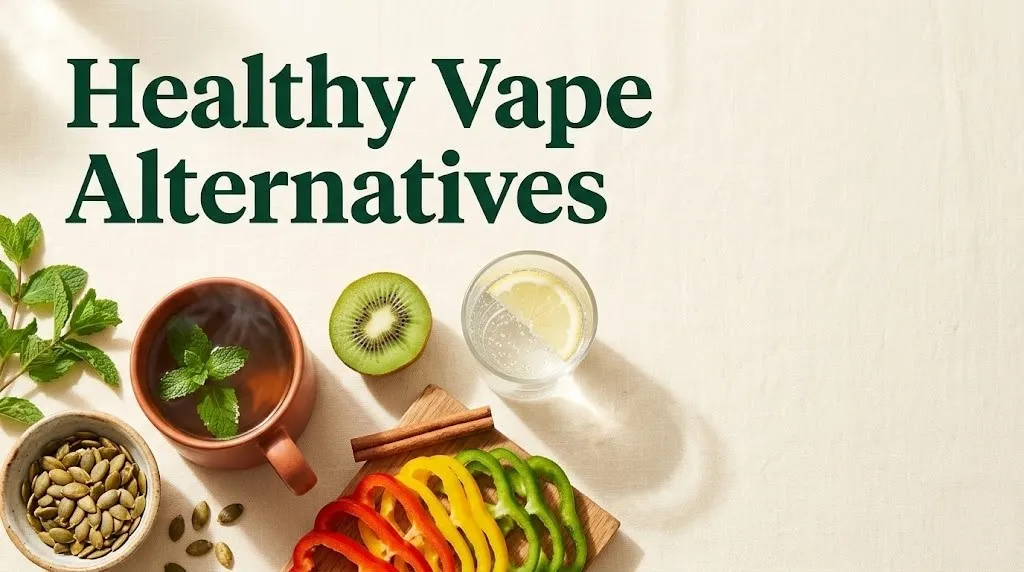
The best healthy vape alternative addresses three things at once: the oral habit, the nicotine dependency, and the stress-relief function that keeps people reaching for their device. No single substitute does all three perfectly, but the right combination of food strategies, behavioral tools, and natural options gets remarkably close.
According to the Centers for Disease Control and Prevention (CDC), more than 9 million adults in the United States use e-cigarettes regularly, and the majority report wanting to quit. The problem isn’t motivation. It’s that quitting vaping without a concrete replacement plan leaves too many physical and behavioral gaps unfilled.
This guide covers 15 specific alternatives, organized by what they replace. You’ll get food and drink strategies, sensory substitutes, herbal options (with honest safety notes), breathing tools, and long-term habit guidance. Everything here is grounded in how nicotine addiction and behavior change actually work.
Healthy Vape Alternatives: What They Are and Why They Matter
A healthy vape alternative is any food, behavior, tool, or technique that replaces one or more functions of vaping without introducing comparable harm to the lungs, cardiovascular system, or developing brain.
Vaping serves multiple functions simultaneously for regular users. It delivers nicotine, provides an oral sensation, gives hands something to do, creates a ritual break from stress, and often delivers a specific flavor experience. Replacing it with a single substitute almost never works. That’s why a multi-strategy approach backed by behavioral research outperforms any single product.
The National Institute on Drug Abuse (NIDA) describes nicotine as a drug that triggers rapid dopamine release in the brain’s reward pathway. Over time, the brain expects that dopamine hit at predictable moments: after meals, during stress, while commuting. Healthy alternatives work by either providing a competing dopamine response (exercise, flavor, social connection) or reducing the intensity of withdrawal symptoms through nutritional and sensory support.
Here’s a breakdown of what each alternative category addresses:
| Alternative Category | Oral Habit | Nicotine Craving | Stress Response | Flavor Sensation |
|---|---|---|---|---|
| Food-based snacks | Yes | Partial | Partial | Yes |
| Herbal teas and drinks | Yes | No | Yes | Yes |
| NRT (patch, gum, lozenge) | Partial | Yes | No | No |
| Breathing techniques | No | Partial | Yes | No |
| Exercise | No | Yes | Yes | No |
| Flavor sticks/cinnamon | Yes | No | No | Yes |
Not every person needs all six columns filled. Knowing which functions vaping serves for you specifically determines which alternatives to prioritize.
Key Fact:
- Nicotine cravings typically peak within 3 to 5 minutes and fade.
- Any alternative that occupies those minutes interrupts the craving cycle.
- Combining two or more categories significantly increases quit success rates, according to research published in Nicotine and Tobacco Research.
Oral Fixation Alternatives to Vaping
Oral fixation is one of the least-discussed but most persistent reasons vaping habits are hard to break. The physical act of inhaling, exhaling, and putting something to your mouth creates a behavioral loop that nicotine replacement therapy alone doesn’t address.
Think of it like trying to stop tapping a pen during a tense meeting. The pen isn’t doing anything chemically useful. But removing it without replacing the behavior leaves an uncomfortable physical gap.
The most effective oral fixation substitutes mimic the sensory experience of vaping closely enough to reduce the urge without involving heat, aerosol, or nicotine:
- Cinnamon sticks (Cinnamomum verum): Hold one between your fingers, put it to your lips, and inhale the aromatic oils. The spice provides a mild throat sensation without any smoke or vapor.
- Toothpicks flavored with mint, cinnamon, or anise: Widely available at pharmacies. The chewing action satisfies the oral component.
- Nicotine-free herbal inhalers: Devices filled with herbs like peppermint (Mentha piperita) or eucalyptus. They produce no smoke and no nicotine, but they provide an inhalation sensation.
- Chewing gum (non-nicotine): The jaw movement and flavor distraction work well for the first 5 to 10 minutes of a craving. Sugar-free versions with xylitol are the better option for dental health.
- Straws: Breathing slowly through a thin straw replicates the draw resistance of a vape device. Simple, but surprisingly effective for habitual users.
- Sunflower seeds (Helianthus annuus): Cracking and chewing seeds keeps both hands and mouth occupied for extended periods.
People with jaw pain or temporomandibular joint (TMJ) disorder should avoid high-impact chewing options like tough jerky or certain seeds, and instead focus on softer textural substitutes like cinnamon sticks or straws.
Food Alternatives to Vaping
Food alternatives to vaping work by giving your mouth, hands, and attention something to engage with during the minutes that cravings hit hardest. The goal isn’t to eat more overall, just to redirect the behavioral trigger toward something that doesn’t harm your lungs.
The Academy of Nutrition and Dietetics notes that behavioral substitution is most effective when the replacement activity closely mirrors the original in sensory terms. For vaping, that means prioritizing foods that require some active engagement: crunching, peeling, chewing slowly, or assembling.
The best food-based vaping alternatives share a few common traits. They take at least 2 to 4 minutes to eat, they require some hand-to-mouth movement, and they ideally deliver a flavor payoff that satisfies the palate without a sugar crash.
Top food alternatives by sensory function:
| Food | What It Replaces | Practical Notes |
|---|---|---|
| Sunflower seeds (Helianthus annuus) | Hand and mouth occupation | High in magnesium; salt variety helps with cravings |
| Pumpkin seeds (Cucurbita pepo) | Crunch + hand activity | Rich in zinc; eat in-shell for slower consumption |
| Celery sticks | Low-calorie crunch | Pairs well with hummus for protein satiety |
| Baby carrots | Crunch + natural sweetness | Vitamin A and fiber; portable snack format |
| Apple slices | Sweet flavor hit | Quercetin content may have mild anti-inflammatory properties |
| Edamame in pods | Hand-to-mouth ritual | Protein-rich; takes time to shell |
| Rice crackers | Light crunch | Portion-friendly; low in added ingredients |
| Dark chocolate (70% cacao or higher) | Flavor reward + dopamine response | Limit to 1 to 2 squares per craving; rich in polyphenols |
Individuals managing blood sugar carefully (including those with type 2 diabetes or insulin resistance) should prioritize lower glycemic index options like seeds, celery, and edamame over sweet fruits and chocolate during vaping cravings.
Snacks for Vaping Cravings
The right snack for a vaping craving is one that buys you 5 to 10 minutes of sensory engagement and delivers real nutritional value. Reaching for chips or sugary candy technically works as a distraction, but it adds a second unhealthy habit while you’re trying to drop the first.
Cravings often arrive as a cluster of physical signals: a slight tension in the chest, restlessness in the hands, and a pull toward a familiar flavor. Smart snack choices interrupt all three at once.
Research published in the Journal of Addictive Behaviors found that people who replaced smoking cues with structured eating rituals reported lower craving intensity during the first four weeks of cessation compared to those using willpower alone.
Best snacks specifically for vaping cravings:
- Dried mango strips: The chewy texture and intense sweetness occupy the mouth for several minutes. Unsulfured, no-sugar-added versions avoid unnecessary additives.
- Roasted chickpeas: Crunchy, portable, and high in protein and fiber. A 30-gram serving delivers roughly 6 grams of protein and keeps hunger stable.
- Sliced bell peppers with hummus: High water content, satisfying crunch, and the dipping ritual mimics the hand-to-mouth motion of vaping.
- String cheese: Takes time to pull apart and eat. Provides 6 to 7 grams of protein per stick, which supports blood sugar stability during withdrawal.
- Pumpkin seeds: A 28-gram serving contains roughly 150 calories, 8 grams of protein, and 40% of the daily recommended intake of magnesium.
Magnesium is worth flagging. Several studies suggest that magnesium deficiency is more common in people under chronic stress, and stress is the primary trigger for most vaping urges. Choosing magnesium-rich snacks isn’t just a distraction strategy. It’s mild nutritional support for the craving mechanism itself.
People with nut or seed allergies should review ingredient labels carefully, as many roasted seed snacks are processed in facilities that also handle tree nuts.
Key Takeaway: Oral fixation, behavioral ritual, and nutritional support all matter for beating vaping cravings. The most effective substitutes combine mouth occupation, hand activity, and real food nutrition rather than relying on willpower alone.
Drinks Instead of Vaping
Certain drinks function as genuine vaping alternatives by satisfying the throat and flavor-seeking dimensions of the habit. Hot drinks especially create a ritual, a sensation, and a reason to pause that closely mirrors what a vaping break provides.
A mug of peppermint tea (Mentha piperita), for example, delivers menthol-adjacent coolness at the back of the throat. That sensation is functionally similar to the “throat hit” that many vapers describe as one of the most satisfying parts of their habit. Replacing it with a warm mint drink covers that specific craving dimension.
Drinks that work as vaping substitutes:
| Drink | What It Addresses | Notes |
|---|---|---|
| Peppermint tea (Mentha piperita) | Throat hit + flavor + ritual | Menthol sensation without any smoke |
| Sparkling water (flavored, unsweetened) | Carbonation “hit” + hand ritual | Choose brands without artificial sweeteners for cleaner choice |
| Ginger tea (Zingiber officinale) | Warming sensation + stress relief | 6-gingerol compound has documented anti-nausea effects |
| Chamomile tea (Matricaria chamomilla) | Anxiety reduction + warmth | Apigenin compound linked to mild calming effects in research |
| Warm lemon water | Flavor brightness + ritual hydration | Vitamin C (ascorbic acid) content may support the body during withdrawal |
| Cold brew coffee (half-caf) | Stimulant effect + ritual | Reduce caffeine if withdrawal causes insomnia; half-caf limits disruption |
| Licorice root tea (Glycyrrhiza glabra) | Throat coating + sweet flavor | Do not consume daily if you have hypertension or are pregnant |
Licorice root (Glycyrrhiza glabra) deserves a specific safety note. The glycyrrhizin compound it contains can raise blood pressure with regular consumption. People managing hypertension, heart disease, or kidney conditions, and pregnant individuals, should avoid it or confirm its suitability with their prescribing physician, since daily medicinal use carries a different risk profile than occasional culinary use.
Staying well-hydrated throughout the day also matters during nicotine withdrawal. Dehydration amplifies irritability and fatigue, both of which are common withdrawal symptoms that can trigger cravings.
Foods That Help With Nicotine Withdrawal
Certain foods directly support the body’s recovery from nicotine exposure by replenishing nutrients that nicotine depletes or by moderating the stress hormones that drive cravings.
Nicotine has documented effects on nutrient absorption and metabolism. According to research summarized by the National Institutes of Health (NIH), regular nicotine exposure reduces levels of vitamin C (ascorbic acid), vitamin B12 (cobalamin), folate, and magnesium in the body. Restoring these through food gives the body better biochemical tools for managing the withdrawal period.
Nutrient-rich foods for withdrawal support:
| Nutrient | Why It Matters During Withdrawal | Best Food Sources |
|---|---|---|
| Vitamin C (ascorbic acid) | Depleted by nicotine; supports adrenal function | Bell peppers, kiwi, broccoli, oranges |
| Magnesium | Calms nervous system; reduces stress reactivity | Pumpkin seeds, dark leafy greens, almonds |
| B vitamins (B1, B3, B6, B12) | Support energy, mood, and nerve function | Eggs, legumes, whole grains, leafy greens |
| Zinc | Supports taste recovery and immune function | Oysters, pumpkin seeds, lentils, beef |
| Chromium | Helps regulate blood sugar during cravings | Broccoli, whole grain bread, eggs |
| Tryptophan | Precursor to serotonin; supports mood | Turkey, oats, bananas, pumpkin seeds |
Blood sugar fluctuation is one of the most underreported withdrawal challenges. Nicotine artificially suppresses appetite and influences blood glucose regulation. When you stop vaping, blood sugar can become less stable, which creates irritability and hunger-based cravings that feel identical to nicotine urges.
Eating small, protein-and-fiber-rich meals every 3 to 4 hours during the first two weeks of withdrawal helps smooth out those blood sugar swings. It’s essentially giving your body a more stable fuel source at the exact moment it’s lost its chemical scaffold.
People with celiac disease or non-celiac gluten sensitivity should choose gluten-free whole grain options for their B vitamin and chromium intake, such as certified gluten-free oats, quinoa, and brown rice.
Key Takeaway: Drink strategies and targeted nutrition work together during nicotine withdrawal. Mint teas address the throat-hit sensation, hydration manages irritability, and key nutrients like vitamin C, magnesium, and B vitamins restore what nicotine depletes.
Herbal Alternatives to Vaping
Herbal alternatives to vaping include teas, inhalers, and chewable herbs that provide flavor and mild physiological effects without nicotine or tobacco. They are not medically equivalent to nicotine replacement therapy, and they are not uniformly safe for all people. But used appropriately, several have real evidence behind them.
The most commonly recommended herbs for vaping replacement fall into two functional categories: those that address the sensory act of vaping and those that modulate anxiety and stress.
Sensory-function herbs:
- Peppermint (Mentha piperita): Delivers a cooling sensation in the throat. Available as loose-leaf tea, dried sprigs for chewing, or herbal inhaler cartridges. The menthol compound activates cold-sensitive receptors in the mucous membranes.
- Cinnamon (Cinnamomum verum): Warming, slightly spicy, and aromatic. Whole cinnamon sticks work well as a physical oral substitute. Cinnamon also contains cinnamaldehyde, which has documented antimicrobial properties.
- Licorice root (Glycyrrhiza glabra): Sweet, throat-coating, and mildly stimulating. Widely used in cessation programs in Europe as a flavored chewing stick. Avoid if you have high blood pressure or are pregnant.
Stress-modulating herbs:
- Valerian root (Valeriana officinalis): Studied for its mild sedative effects, particularly for anxiety and sleep disruption. A 2020 review in Phytomedicine found evidence supporting its use for short-term anxiety relief. Available as tea or capsule.
- Passionflower (Passiflora incarnata): Contains chrysin and other flavonoids linked to mild GABAergic activity in the brain. Research published in the Journal of Clinical Pharmacy and Therapeutics found passionflower comparable to low-dose oxazepam for generalized anxiety.
- Chamomile (Matricaria chamomilla): The apigenin compound it contains binds to GABA receptors at low levels. Best delivered as a warm tea consumed slowly over 10 to 15 minutes.
Pregnant individuals should avoid valerian root and passionflower. Anyone taking prescription sedatives, anti-anxiety medications, or blood thinners should confirm herb-drug interactions with their prescribing physician before using these herbs daily, since several have documented pharmacological interactions at therapeutic doses.
Breathing Alternatives to Vaping
Breathing techniques are a legitimate, evidence-backed alternative to vaping that work in under five minutes and require no equipment. They address the stress-relief and sensory inhalation dimensions of vaping simultaneously.
The physical act of inhaling and exhaling slowly and deeply activates the parasympathetic nervous system, which reduces cortisol, slows heart rate, and creates a measurable calming effect. That’s the same outcome many vapers report after taking a long pull. The mechanism is different, but the result is comparable.
Three techniques worth knowing:
Diaphragmatic (belly) breathing:
- Sit upright or lie flat.
- Place one hand on your chest and one on your abdomen.
- Inhale slowly through your nose for 4 seconds. Your abdomen should rise; your chest should stay relatively still.
- Exhale slowly through pursed lips for 6 seconds.
- Repeat for 8 to 10 cycles.
Box breathing (used by military and emergency services personnel):
- Inhale through your nose for 4 counts.
- Hold your breath for 4 counts.
- Exhale through your mouth for 4 counts.
- Hold empty for 4 counts.
- Repeat for 4 to 6 cycles or until calm.
4-7-8 breathing (developed by Dr. Andrew Weil):
- Exhale completely through your mouth.
- Inhale through your nose for 4 counts.
- Hold for 7 counts.
- Exhale fully through your mouth for 8 counts.
- Repeat 4 times maximum per session.
According to a review published in Frontiers in Human Neuroscience, slow-paced breathing at 4 to 6 breath cycles per minute produces measurable reductions in anxiety and cortisol within 5 minutes. For people who vape primarily to manage stress, this is a free, portable, and immediately available substitute.
People with chronic respiratory conditions such as asthma or COPD should introduce breathing exercises carefully and may want to work with a respiratory therapist to adapt techniques safely.
Key Takeaway: Herbal options and breathing techniques target the stress dimension of vaping most directly. Chamomile and passionflower have real calming evidence behind them, and diaphragmatic breathing produces a cortisol reduction within 5 minutes that directly competes with the relief people feel from vaping.
Vaping Alternatives for Anxiety and Stress
Vaping for anxiety is extremely common. Many regular users report that stress relief, not nicotine addiction, feels like the primary reason they vape. This distinction matters because the alternatives that work for anxiety-driven vaping are different from those that work for pure nicotine dependency.
The American Lung Association notes that while nicotine temporarily reduces feelings of anxiety and irritability, this is partly because it relieves the discomfort of nicotine withdrawal itself. The net anxiolytic effect is largely circular: nicotine creates the tension it then relieves.
Breaking that cycle requires substituting the stress-relief function specifically. The most effective strategies for anxiety-driven vaping include:
- Progressive muscle relaxation (PMR): Systematically tensing and releasing muscle groups over 15 to 20 minutes. Research in Behaviour Research and Therapy shows PMR reduces acute anxiety comparably to benzodiazepines in mild-to-moderate cases.
- Cold water: Splashing cold water on the face or holding a cold glass activates the diving reflex, which slows heart rate and interrupts the anxiety-craving feedback loop.
- Journaling: Writing about the trigger that caused the craving externalizes the emotional content. A 2018 study in JMIR Mental Health found brief expressive writing reduced craving intensity in smokers.
- Mindfulness-based stress reduction (MBSR): An 8-week structured program with documented efficacy for anxiety reduction in multiple peer-reviewed trials. Available as guided apps and in-person courses.
- Adaptogenic herbs: Ashwagandha (Withania somnifera) and rhodiola (Rhodiola rosea) have both shown stress-hormone-modulating effects in clinical trials. Neither is a substitute for medical anxiety treatment, but as daily dietary supplements they provide a measurable background reduction in cortisol.
People managing diagnosed anxiety disorders should work with a qualified mental health professional when designing their vaping cessation strategy, since abrupt nicotine withdrawal can temporarily worsen anxiety symptoms before improvement begins.
Exercise Instead of Vaping
Exercise is one of the most robustly supported healthy vaping alternatives in the behavioral science literature. It increases dopamine and endorphin levels, occupies both the body and mind, and provides a genuine mood lift that substitutes for nicotine’s reward signal.
A study published in Nicotine and Tobacco Research found that even 10 minutes of moderate aerobic exercise reduced cigarette cravings and withdrawal symptoms in nicotine-dependent adults. The effect was acute: it worked during the craving, not just as a long-term strategy.
Exercise types by craving type:
| Craving Type | Best Exercise Match | Duration |
|---|---|---|
| Stress-driven craving | Walking outdoors or yoga | 15 to 30 minutes |
| Boredom-driven craving | High-intensity interval training (HIIT) | 10 to 20 minutes |
| Post-meal craving | 10-minute walk after eating | 10 minutes |
| Social/habitual craving | Group exercise class or sports | Variable |
| Nighttime craving | Gentle stretching or restorative yoga | 10 to 20 minutes |
The timing advantage of exercise is worth emphasizing. Because a nicotine craving typically peaks and passes within 3 to 5 minutes, even a very short burst of physical activity can bridge that gap. Twenty jumping jacks, a brisk walk around the block, or a two-minute set of bodyweight squats provide enough neurological interruption to let the craving subside.
People with cardiovascular conditions, musculoskeletal injuries, or respiratory limitations should choose exercise alternatives appropriate to their physical capacity and confirm activity levels with their treating healthcare provider before starting a new exercise program as part of cessation.
Key Takeaway: Exercise and stress management techniques address the anxiety and reward dimensions of vaping in ways that food substitutes cannot. Even 10 minutes of movement during a craving produces measurable relief, making it one of the most accessible tools in any cessation plan.
Flavor Alternatives to Vaping
Flavor is a primary driver of vaping appeal, especially in the youth and young adult market. Many popular e-cigarette products are designed to deliver intense, novel flavor experiences (mango, mint, watermelon, vanilla custard) that have no direct equivalent in nature. Finding flavor-forward food and beverage substitutes addresses this specific dimension.
The best flavor alternatives are foods and drinks with immediate, intense sensory impact. They need to deliver payoff within the first bite or sip, since a craving won’t wait for a slow build.
High-impact flavor alternatives by vaping flavor profile:
| Vaping Flavor | Food/Drink Alternative | Why It Works |
|---|---|---|
| Mint/menthol | Peppermint tea, mint gum, spearmint leaves | Menthol-adjacent cooling at the throat |
| Mango/tropical | Fresh or frozen mango chunks, mango sparkling water | Intense sweetness without added sugar in whole-fruit form |
| Watermelon | Watermelon slices with a pinch of sea salt | High water content; refreshing; the salt enhances sweetness perception |
| Vanilla/dessert | Vanilla rooibos tea (unsweetened) | Warm, sweet, aromatic with no calories |
| Cinnamon | Cinnamon stick to chew or smell | Spice sensation replicates the warming throat hit |
| Berry | Fresh blueberries or frozen berry mix | Anthocyanin-rich; intense color and flavor |
| Citrus | Cold sparkling water with fresh lemon zest | Bright aroma + carbonation sensation |
The sensory marketing research behind e-cigarette flavors is deliberately engineered to maximize palatability and drive repeat behavior. Understanding this doesn’t mean you’re powerless against it. It means replacing those engineered flavors with genuinely satisfying natural alternatives that deliver real nutritional value alongside the sensory hit.
For individuals avoiding added sugars (including those managing diabetes or metabolic syndrome), the best flavor alternatives in this list are herbal teas, sparkling water, fresh herbs, and whole fruits eaten in moderate portions.
Nicotine-Free Vape Alternatives
Nicotine-free vaping products do exist, but calling them a healthy alternative requires scrutiny. Products marketed as “zero-nicotine” or “0mg vapes” still aerosolize propylene glycol and vegetable glycerin, which produce ultrafine particles when heated. The American Lung Association states that inhaling any aerosol, regardless of nicotine content, carries lung tissue risk.
That said, some people use nicotine-free options as a transitional step when tapering from higher-nicotine products. Used strictly as a short-term step-down tool, they represent a harm-reduction strategy rather than a healthy long-term substitute.
Genuinely nicotine-free alternatives that carry no inhalation risk:
- Herbal inhalers: Devices filled with dried herbs (peppermint, lavender, eucalyptus). No combustion, no heat, no aerosolized propylene glycol. Some pull air through the herb; others are aromatherapy-style scent inhalers.
- Essential oil inhalers (personal aromatherapy inhalers): Small, portable nasal inhalers containing a cotton wick saturated with food-grade essential oils. Provide scent and mild throat sensation without any inhaled particles.
- Nicotine replacement therapy (NRT): FDA-approved options including the nicotine patch, nicotine gum (2 mg and 4 mg doses), and nicotine lozenges (2 mg and 4 mg doses). These deliver nicotine without lung exposure. They are available over the counter and have a strong evidence base for cessation support.
NRT products are generally considered the safest bridge for people with significant nicotine dependency. The FDA has approved several NRT formats, and the American Lung Association recommends combining them with behavioral support for highest effectiveness.
Prescription options including varenicline and bupropion are also available for people whose nicotine dependency is severe. These require a clinical evaluation and prescription from a licensed healthcare provider, since both have specific contraindications and side effect profiles.
How to Replace a Vaping Habit Long-Term
Long-term habit replacement requires addressing the full habit loop: the cue that triggers vaping, the routine of the act itself, and the reward it delivers. Swapping one element without the others creates a gap that eventually pulls people back.
Behavioral researchers describe this as the cue-routine-reward cycle, a framework popularized by MIT research and applied extensively in addiction medicine. In vaping terms: the cue might be stress, a meal ending, or a specific location. The routine is picking up the device. The reward is the nicotine hit, the throat sensation, or the brief mental break.
A practical long-term replacement framework:
- Map your cues: Keep a one-week log of every time you reach for your vape. Note the time, location, emotional state, and what you were doing immediately before.
- Assign a substitute to each cue: Stress cue gets a breathing technique or a 10-minute walk. Post-meal cue gets a cinnamon stick and a cup of ginger tea. Boredom cue gets a seed snack and a short podcast.
- Keep substitutes visible and accessible: Put sunflower seeds where your vape used to sit. Put herbal tea in your work bag. The substitute has to be less friction than vaping, not more.
- Establish a craving timer: When a craving hits, set a five-minute timer. Use your assigned substitute actively for those five minutes. Most cravings do not survive five minutes of genuine distraction.
- Plan for high-risk moments: Social settings, alcohol consumption, and high-stress events are the most common relapse triggers. Pre-assign what you’ll do at each. A pre-decided plan in those moments outperforms spontaneous willpower by a wide margin.
- Track reduction, not just abstinence: If you vape twice today instead of fifteen times, that’s measurable progress. Perfectionism about quitting increases relapse rates. Progress-based tracking maintains motivation more effectively.
According to the CDC, people who combine behavioral strategies with NRT or prescription cessation medication are roughly two to three times more likely to successfully quit compared to those using willpower alone.
Key Takeaway: Nicotine-free alternatives and long-term habit strategies work best together. Map your specific cues, assign a concrete substitute to each, and keep those substitutes easier to reach than your vaping device.
Dietary Support for Quitting Vaping
A targeted dietary approach during the first four to eight weeks of vaping cessation provides biochemical support for the neurological changes happening during withdrawal. This isn’t a separate diet plan. It’s strategic food choice layered onto whatever eating pattern you already follow.
Nicotine affects dopamine, serotonin, and acetylcholine systems in the brain. When you stop vaping, each of those systems temporarily underperforms while the brain recalibrates. Diet choices that support neurotransmitter production can shorten that adjustment window.
Dietary priorities during vaping cessation:
| Dietary Goal | Why It Matters | Foods to Emphasize |
|---|---|---|
| Support serotonin production | Reduces mood dips and irritability | Oats, bananas, turkey, pumpkin seeds, eggs |
| Stabilize blood sugar | Prevents hunger-craving confusion | Beans, lentils, whole grains, vegetables |
| Restore vitamin C (ascorbic acid) | Nicotine depletes it; adrenal support | Bell peppers, kiwi, broccoli, papaya |
| Restore magnesium | Reduces stress reactivity | Dark leafy greens, pumpkin seeds, dark chocolate |
| Support dopamine synthesis | Helps balance reward circuitry | Tyrosine-rich foods: eggs, chicken, fish, almonds |
| Anti-inflammatory baseline | Vaping inflames lung and vascular tissue | Fatty fish, berries, olive oil, turmeric |
The Harvard T.H. Chan School of Public Health describes a Mediterranean-style dietary pattern as particularly supportive for reducing systemic inflammation and stabilizing mood, both of which are under stress during nicotine withdrawal.
Eating three structured meals per day plus two small snacks reduces the likelihood of blood sugar crashes that amplify craving intensity. It’s a less glamorous intervention than a supplement protocol, but the evidence for its effectiveness is far more solid.
People following plant-based diets should pay particular attention to vitamin B12 (cobalamin) during cessation, since B12 is already at higher depletion risk on plant-exclusive diets and nicotine exposure compounds that deficit. Fortified foods or a sublingual B12 supplement are practical options.
Healthy Vaping Alternatives for Teens
Teen vaping is a distinct challenge from adult vaping, and the alternatives that work best for adolescents differ meaningfully from adult strategies. The developing brain responds differently to nicotine, forms habits faster, and is more vulnerable to addiction persistence.
According to the CDC, approximately 2.1 million middle and high school students in the United States used e-cigarettes as of 2023. Among teen users, flavor appeal and social context are the two most frequently cited reasons for starting and continuing.
Strategies specific to teen vaping alternatives:
- Flavor-forward food substitutes: Given that flavor is the primary teen draw, high-impact fruit, mint, and sparkling water alternatives address the craving at its origin point. Frozen mango, sparkling water in appealing flavors, and mint gum are portable and socially acceptable.
- Social peer group alternatives: Teens vape in social settings more than alone. Identifying alternative social rituals (a post-school walk, a sport, a shared study snack) replaces the social bonding function.
- School-based mindfulness programs: Several school districts have implemented mindfulness-based stress reduction (MBSR) programs adapted for adolescents with documented effectiveness for reducing substance use urges.
- Physical activity programs: Team sports and after-school exercise provide dopamine and social reward simultaneously, addressing two of the primary functions vaping serves for teens.
- Herbal supplements with caution: Most herbal anxiolytics and sleep aids marketed as vaping alternatives are not studied in adolescent populations. Valerian root and passionflower, while generally mild in adults, should not be self-administered by teens without a pediatrician’s guidance, since safety data in the under-18 population is limited.
Parents and school counselors supporting teens through vaping cessation should be aware that abrupt nicotine withdrawal in adolescents can include mood swings, sleep disruption, and academic performance dips lasting two to four weeks. These are normal withdrawal effects, not behavioral problems, and having clear food, activity, and social substitutes in place before cessation begins significantly eases that window.
Frequently Asked Questions About Healthy Vape Alternatives
What is the healthiest alternative to vaping?
The healthiest alternatives to vaping combine behavioral substitution with nutritional support and stress management techniques rather than relying on a single product.
Nicotine replacement therapy (FDA-approved patches, gum, or lozenges) combined with diaphragmatic breathing and food-based oral fixation strategies consistently shows the highest cessation success rates in peer-reviewed research.
No single alternative replaces every function of vaping simultaneously, which is why multi-strategy approaches outperform single substitutes in clinical outcomes.
What can I chew or eat to stop vaping cravings?
Sunflower seeds (Helianthus annuus), cinnamon sticks, sugar-free gum, celery sticks, and pumpkin seeds are among the most effective chewable alternatives for vaping cravings.
The best options require extended hand-to-mouth activity and deliver flavor engagement for at least three to five minutes, which covers the peak window of most nicotine cravings.
Magnesium-rich options like pumpkin seeds add mild biochemical support for the stress response that drives many cravings.
Are herbal vapes a safe alternative to regular vaping?
Herbal vapes that still produce heated aerosol are not a categorically safe alternative to nicotine vaping, since inhaling any heated aerosol exposes the lungs to ultrafine particles.
The American Lung Association states that no inhaled aerosol is without risk to lung tissue, regardless of whether it contains nicotine.
Herbal teas, chewable herbs, and scent-based nasal inhalers are safer functional alternatives because they deliver herbal benefits without aerosolization.
What drinks help with nicotine withdrawal?
Peppermint tea (Mentha piperita), sparkling water, warm ginger tea (Zingiber officinale), and chamomile tea (Matricaria chamomilla) are the most consistently cited drinks for managing nicotine withdrawal symptoms.
Peppermint tea addresses the throat-hit sensation; chamomile and ginger support the anxiety and stress dimensions of withdrawal.
Staying well-hydrated throughout the day with plain water also reduces withdrawal-related irritability and fatigue, which are common craving triggers.
How long does it take for vaping cravings to stop?
Most acute nicotine cravings peak within 3 to 5 minutes and typically decline significantly within 2 to 4 weeks of stopping vaping.
According to the National Institute on Drug Abuse (NIDA), physical nicotine withdrawal symptoms, including irritability, difficulty concentrating, and sleep disruption, generally peak in the first 72 hours and improve substantially by week two.
Behavioral and sensory cravings (the habitual reach for the device) often take longer, sometimes 8 to 12 weeks, to fully diminish, which is why replacing the behavioral routine matters as much as addressing the chemical dependency.
Your Next Step
The single most practical takeaway from everything in this guide: pick the two vaping functions that feel hardest to replace and address those first. If it’s the throat sensation, start with peppermint tea and a cinnamon stick. If it’s the stress break, start with box breathing and magnesium-rich snacks. If it’s both, you now have the specific tools for each.
Stock your desk, kitchen, and bag with substitutes before you need them. A substitute that requires effort to find will lose every time to a device that’s already in your pocket.
The craving window is short. Five minutes, reliably. Everything in this guide is designed to get you through that window with something better than aerosol.