Being a healthy man means consistently eating a diet that supports cardiovascular function, muscle maintenance, metabolic health, and cognitive longevity, paired with regular movement, adequate sleep, and stress management. The nutrition piece is not about six-pack abs or restrictive eating. It is about the daily food choices that determine whether you develop heart disease, diabetes, or cognitive decline decades from now.
This matters now because men in the United States face a specific health gap that diet directly addresses. The Centers for Disease Control and Prevention (CDC) reports that men are 50 percent more likely to die from heart disease than women and are diagnosed with type 2 diabetes at a slightly higher rate. The American Heart Association identifies diet as the leading modifiable risk factor for cardiovascular disease, which remains the number one cause of death for American men. The food on your plate today is either contributing to those statistics or protecting you from them.
You will learn exactly what nutrients men underconsume, how protein needs shift with age, which foods support testosterone and prostate health through evidence-backed mechanisms, how to build meals that actually fill you up, and what a week of healthy eating looks like without protein powders or restriction. Everything here is sourced to named research and real dietary guidelines. Nothing is influencer speculation.
What Does a Healthy Diet for Men Look Like?
A healthy diet for men centers on vegetables, fruits, whole grains, lean proteins, legumes, nuts, seeds, and healthy fats arranged in a pattern that supports heart health, muscle maintenance, and metabolic function. It looks less like a bodybuilding meal plan and more like the Mediterranean diet or the DASH diet.
The Mediterranean diet is the most researched eating pattern for men’s health outcomes. A 2023 study in the New England Journal of Medicine tracking over 25,000 participants found that men who adhered most closely to a Mediterranean eating pattern had a 25 percent lower risk of major cardiovascular events compared to those with the lowest adherence. The diet is not complicated. It emphasizes olive oil as the primary fat, fish and poultry over red meat, daily vegetables and fruits, legumes and whole grains at most meals, and moderate or no alcohol.
The DASH diet, which stands for Dietary Approaches to Stop Hypertension, is equally well supported for men managing or trying to prevent high blood pressure. The National Heart, Lung, and Blood Institute developed DASH specifically to reduce sodium and increase potassium, magnesium, and calcium through food. Men tend to consume more sodium than women, driven by higher calorie intake and higher consumption of processed and restaurant foods. The DASH framework directly counteracts that pattern.
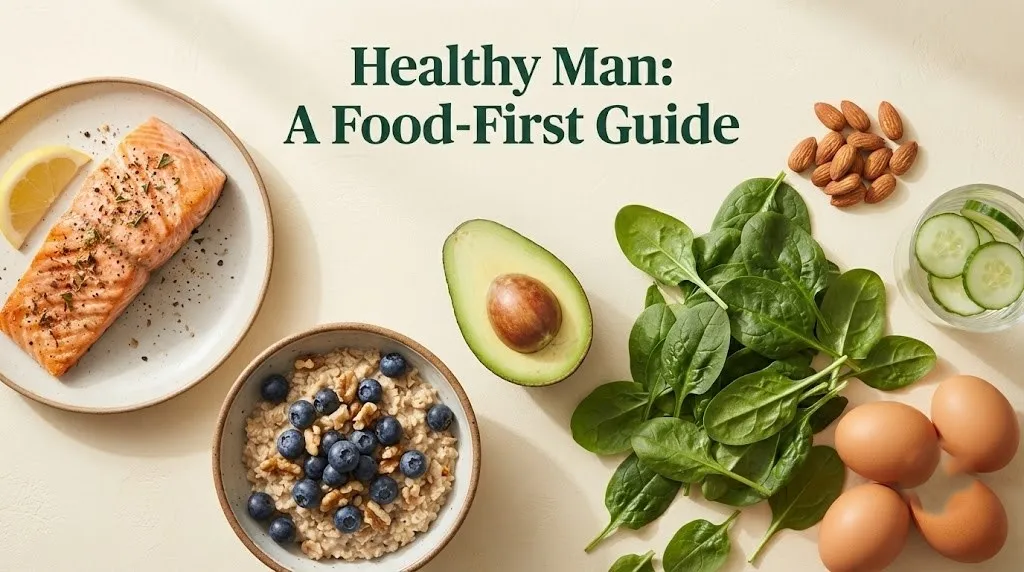
A practical healthy plate for a man looks like this: half the plate covered with vegetables and some fruit, a quarter with a palm-sized portion of protein (fish, poultry, legumes, or occasionally red meat), and a quarter with whole grains or starchy vegetables. A tablespoon or two of healthy fat, olive oil, avocado, nuts, or seeds, finishes the plate. This is not a weight loss diet. It is a health maintenance diet that happens to support a healthy weight. The same plate structure works for men at 25 and at 65, with the protein and calorie amounts adjusted up or down based on activity and age.
What Nutrients Do Men Typically Lack?
Men in the United States most commonly underconsume fiber, potassium, magnesium, vitamin D, and omega-3 fatty acids, while overconsuming sodium, saturated fat, and added sugars. The pattern reflects a diet high in animal products and refined grains and low in vegetables, fruits, legumes, and fatty fish.
Fiber is the single biggest gap. The Dietary Guidelines for Americans recommend 30 to 38 grams of fiber daily for adult men, depending on age. The average American man consumes roughly 18 grams. Fiber is not just about digestion. Soluble fiber, found in oats, beans, apples, and barley, binds cholesterol in the gut and reduces LDL cholesterol levels. The FDA allows a health claim stating that diets high in soluble fiber may reduce the risk of heart disease. Men who skip breakfast or eat low-fiber breakfasts (eggs and bacon, a bagel, a protein bar) miss the easiest opportunity to close the fiber gap.
Magnesium is the overlooked mineral in men’s nutrition. It supports muscle function, blood pressure regulation, and sleep quality. Adult men need 400 to 420 milligrams daily. Good sources include pumpkin seeds, almonds, spinach, black beans, and whole grains. A man eating a typical American diet heavy in refined grains and processed foods likely gets less than 300 milligrams. Magnesium deficiency is not acute like scurvy. It is a slow, subclinical shortfall that contributes to hypertension and poor sleep over years.
Vitamin D status is worth checking with a blood test rather than guessing. Men who work indoors, live in northern latitudes, or have darker skin are at higher risk of insufficiency. The National Institutes of Health (NIH) recommends 600 IU daily for adult men, rising to 800 IU after age 70. Fatty fish like salmon and sardines provide dietary vitamin D. Fortified milk and some yogurts contribute. Sun exposure produces vitamin D in the skin, but the amount varies too much by season, latitude, and skin pigmentation for universal recommendations.
| Nutrient | Daily Target for Men (19 to 50) | Top Food Sources | Why Men Need It |
|---|---|---|---|
| Fiber | 30 to 38 g | Beans, lentils, oats, berries, vegetables | Heart health, digestion, cholesterol |
| Potassium | 3,400 mg | Potatoes, spinach, bananas, avocados | Blood pressure regulation |
| Magnesium | 400 to 420 mg | Pumpkin seeds, almonds, spinach | Muscle function, sleep, blood pressure |
| Vitamin D | 600 IU (15 mcg) | Salmon, sardines, fortified milk | Bone health, immune function |
| Omega-3 (DHA/EPA) | 250 to 500 mg | Salmon, mackerel, sardines, trout | Heart and brain health |
How Much Protein Does a Healthy Man Need?
A healthy adult man needs 0.8 grams of protein per kilogram of body weight as a baseline, roughly 56 grams daily for a 154-pound man, with higher needs of 1.2 to 2.0 grams per kilogram for men who are physically active, building muscle, or over 65. The baseline requirement prevents deficiency. The higher target supports muscle protein synthesis and healthy aging.
The baseline 0.8 grams per kilogram is the Recommended Dietary Allowance (RDA) set by the National Academies of Sciences, Engineering, and Medicine. For a 180-pound man (82 kilograms), that is 66 grams of protein daily. This amount is achievable with a 3-ounce chicken breast at lunch (26 grams) and a 3-ounce piece of salmon at dinner (22 grams), with the remaining 18 grams coming from grains, vegetables, and snacks throughout the day.
Physically active men benefit from higher intake. The Academy of Nutrition and Dietetics and the American College of Sports Medicine recommend 1.2 to 2.0 grams per kilogram for athletes and regular exercisers, with the higher end for those in heavy training or trying to build muscle while in a calorie deficit. For the same 180-pound man, that range is 98 to 164 grams daily. Spreading protein across three to four meals rather than loading it all at dinner improves muscle protein synthesis, according to a 2023 study in the Journal of Nutrition.
Men over 65 need more protein than younger adults to combat anabolic resistance, the reduced responsiveness of aging muscle to protein intake. The European Society for Clinical Nutrition and Metabolism recommends 1.2 to 1.5 grams per kilogram for older adults. A 180-pound, 70-year-old man should target 98 to 123 grams daily. This is not about vanity muscle. It is about preserving the strength to get out of a chair, climb stairs, and recover from illness or injury.
Protein quality matters alongside quantity. Animal proteins (meat, fish, eggs, dairy) are complete, containing all essential amino acids. Plant proteins (beans, lentils, grains, nuts) are often incomplete but become complete when combined across a day. The body pools amino acids from all meals. A man eating a variety of plant and animal proteins does not need to combine specific foods at specific meals. The total daily pattern matters more than individual plate composition.
Key Takeaway: A healthy man’s diet prioritizes vegetables, fiber-rich carbs, lean proteins, and healthy fats. Most men underconsume fiber, magnesium, and potassium while overconsuming sodium. Protein needs range from 56 grams to over 160 grams daily depending on body size, activity, and age.
What Are the Best Foods for Men’s Heart Health?
The best foods for men’s heart health are fatty fish rich in omega-3s, leafy greens high in dietary nitrates, whole grains providing soluble fiber, legumes, nuts particularly walnuts and almonds, olive oil, and berries rich in anthocyanins. These foods address the specific mechanisms that drive cardiovascular disease in men.
Fatty fish deserves its reputation. Salmon (Salmo salar), mackerel, sardines, and trout provide eicosapentaenoic acid (EPA) and docosahexaenoic acid (DHA), the long-chain omega-3 fatty acids with the strongest evidence for cardiovascular protection. The American Heart Association recommends at least two 3.5-ounce servings of fatty fish per week. A 2024 meta-analysis in the Journal of the American College of Cardiology found that men who ate fish twice weekly had a 15 percent lower risk of coronary heart disease compared to men who ate fish less than once monthly.
Leafy greens like spinach, kale, and arugula contain dietary nitrates that convert to nitric oxide in the body. Nitric oxide relaxes blood vessels and lowers blood pressure. A 2023 study in Hypertension found that men who consumed one cup of nitrate-rich vegetables daily had a 2 to 4 mmHg reduction in systolic blood pressure, an effect size comparable to some medications. The effect is not a cure for diagnosed hypertension, but it is a meaningful dietary contribution to vascular health.
Oats and barley are the best whole-grain sources of beta-glucan, a soluble fiber that binds bile acids in the gut and reduces LDL cholesterol. The FDA permits a health claim that 3 grams of beta-glucan daily, roughly the amount in a bowl of oatmeal, may reduce the risk of heart disease. Other whole grains like brown rice, quinoa, and whole wheat contribute insoluble fiber and nutrients but do not have the same cholesterol-lowering effect.
Nuts, particularly walnuts and almonds, have been studied for heart health specifically. Walnuts are high in alpha-linolenic acid (ALA), a plant omega-3. A 2023 study in Circulation found that men who ate a handful of walnuts five or more times per week had a 20 percent lower risk of cardiovascular events compared to men who rarely ate nuts. The calorie density of nuts means portion awareness matters. A serving is one ounce, roughly 14 walnut halves or 23 almonds, not a bowlful.
What Foods Support Healthy Testosterone Levels?
No single food dramatically raises testosterone in men with normal levels, but a diet adequate in zinc, vitamin D, magnesium, and healthy fats while low in processed foods and excessive alcohol supports the body’s natural testosterone production. The effect is about preventing deficiency-driven suppression rather than boosting levels above baseline.
Zinc is the mineral most directly linked to testosterone. The body requires zinc for the enzyme that converts cholesterol into testosterone. Zinc deficiency, which is rare in healthy men eating a varied diet, suppresses testosterone production. Oysters are the richest dietary source, providing roughly 500 percent of the daily value in a 3-ounce serving. Beef, pumpkin seeds, and lentils provide more modest amounts. A man with adequate zinc intake does not benefit from supplemental zinc for testosterone. A man who is deficient may.
Vitamin D functions as a steroid hormone precursor in addition to its role in bone health. Multiple observational studies have found a correlation between low vitamin D status and low testosterone, though causation is not firmly established. A 2024 study in the Journal of Clinical Endocrinology and Metabolism found that correcting vitamin D deficiency in men with baseline levels below 20 nanograms per milliliter resulted in a modest increase in total testosterone. The effect was not seen in men with normal vitamin D status at baseline.
Dietary fat is necessary for testosterone production because testosterone is synthesized from cholesterol. Very low-fat diets, below 20 percent of total calories from fat, have been shown to reduce testosterone in some studies. The effect is not a reason to eat bacon and butter with abandon. It is a reason to avoid extreme fat restriction and to include healthy sources like olive oil, avocado, nuts, and fatty fish. The Dietary Guidelines for Americans recommend 20 to 35 percent of calories from fat for general health, a range that supports hormone function.
The foods that undermine testosterone are more clearly established than the foods that boost it. Excessive alcohol, particularly binge drinking, suppresses testosterone acutely and chronically. Severe calorie restriction and very low body fat reduce testosterone as the body downregulates reproductive function to conserve energy. Ultra-processed diets high in refined carbohydrates and low in micronutrients are associated with lower testosterone in observational studies, though the mechanism is likely multifactorial involving obesity, insulin resistance, and nutrient inadequacy.
What Should Men Eat for Prostate Health?
Men concerned about prostate health should emphasize tomatoes (cooked or processed), cruciferous vegetables, legumes, green tea, and fatty fish, while limiting processed red meat, excessive calcium from supplements, and heavy alcohol intake. These recommendations are based on consistent observational evidence, not single-study findings.
Cooked tomatoes are the food most strongly associated with prostate health. Tomatoes contain lycopene, a carotenoid antioxidant that concentrates in prostate tissue. Cooking tomatoes in oil, as in tomato sauce or tomato paste, increases lycopene absorption significantly compared to raw tomatoes. The Health Professionals Follow-Up Study, which tracked over 50,000 men for more than two decades, found that men who consumed cooked tomato products two or more times per week had a lower risk of prostate cancer compared to men who rarely ate them. The protective association was strongest for advanced and metastatic prostate cancer.
Cruciferous vegetables, including broccoli, cauliflower, Brussels sprouts, and bok choy, contain sulforaphane and indole-3-carbinol, compounds that support the body’s detoxification pathways and may influence hormone metabolism. A 2023 review in the Journal of the National Cancer Institute found that men with the highest cruciferous vegetable intake had an approximately 15 percent lower risk of aggressive prostate cancer compared to men with the lowest intake.
Legumes, particularly soybeans and soy foods like tofu, tempeh, and edamame, contain isoflavones, plant compounds that weakly bind to estrogen receptors. In countries with high lifelong soy consumption, prostate cancer rates are lower than in Western countries. Whether adding soy to a Western diet in middle age provides the same benefit is less clear. The evidence is suggestive but not definitive. Soy foods are healthy additions to the diet for other reasons (protein, fiber, low saturated fat) regardless of the prostate-specific benefit.
What men should limit includes processed red meat. The World Health Organization classified processed meat as a Group 1 carcinogen in 2015, meaning there is sufficient evidence that it causes cancer in humans, with colorectal cancer having the strongest evidence and prostate cancer having suggestive associations. High-heat cooking methods (grilling, frying) that char meat produce heterocyclic amines and polycyclic aromatic hydrocarbons, which are known carcinogens. Limiting charred meat and processed meat is a reasonable precaution.
How Can Men Maintain a Healthy Weight Through Diet?
Men maintain a healthy weight by eating a diet built around whole foods, lean proteins, fiber-rich carbohydrates, and vegetables, with calorie intake matched to activity level and age-related metabolic changes. The strategy is not about willpower or restriction. It is about food choices that naturally regulate appetite and energy balance.
Protein and fiber are the two nutrients that most directly affect satiety, the feeling of fullness that prevents overeating. Protein is the most satiating macronutrient. Fiber adds bulk to meals and slows gastric emptying. A meal containing 30 to 40 grams of protein and 10 or more grams of fiber keeps most men full for four to five hours. A meal low in both (a bagel with cream cheese, a slice of pizza) leaves most men hungry within two to three hours. Building meals around protein and fiber is the practical application of the satiety research.
The Dietary Guidelines for Americans recommend that adult men consume 2,200 to 3,000 calories daily depending on age and activity level. A sedentary 40-year-old needs roughly 2,400 calories. An active 25-year-old needs roughly 3,000. The difference between weight maintenance and slow weight gain is often 100 to 200 calories daily, the equivalent of one tablespoon of oil or one extra slice of bread. Small, consistent excess adds up over years.
Liquid calories are the easiest to overconsume because they do not trigger satiety the way solid food does. A 2023 study in the American Journal of Clinical Nutrition found that men who eliminated sugar-sweetened beverages lost an average of 1 to 2 pounds over six months without making any other dietary changes. Soda, sweetened coffee drinks, beer, and fruit juice are the primary sources of liquid calories in the typical male diet. Switching to water, unsweetened tea, and black coffee is the single highest-impact weight management change available to most men.
Alcohol contributes to weight gain through its own calorie content (7 calories per gram, nearly as dense as fat at 9 calories per gram) and through its effect on food intake. Alcohol disinhibits eating behavior and increases appetite in the short term. Men who drink heavily consume more calories at meals than men who drink moderately or not at all. The weight management recommendation for alcohol is not abstinence for everyone. It is awareness of the calorie contribution and the eating behavior that follows drinking.
Key Takeaway: Heart health for men centers on fatty fish, leafy greens, oats, and nuts. Testosterone is supported by adequate zinc, vitamin D, and healthy fats, not by any single “boosting” food. Prostate health benefits from cooked tomatoes, cruciferous vegetables, and limiting processed meat.
What Are the Healthiest Breakfasts for Men?
The healthiest breakfasts for men combine protein, fiber, and healthy fat in a meal that sustains energy and satiety until lunch. Eggs on toast with avocado, oatmeal with protein and nuts, and Greek yogurt with berries and seeds all fit the template. The key is including at least 20 to 30 grams of protein and 5 to 10 grams of fiber.
Eggs are an excellent breakfast protein source for men. Two large eggs provide 12 grams of protein along with choline, a nutrient involved in brain function and cell membrane structure. The concern about dietary cholesterol in eggs and heart disease has been substantially revised. A 2024 review in Nutrients concluded that for most healthy adults, consuming one to two eggs daily does not measurably increase cardiovascular risk. Men with diabetes or existing heart disease should follow their healthcare provider’s specific guidance on egg intake.
Oatmeal is the gold standard breakfast for soluble fiber. A cup of cooked oats provides 4 grams of fiber, half of which is beta-glucan, the cholesterol-lowering soluble fiber. Adding a scoop of protein powder, a serving of Greek yogurt, or a handful of nuts brings the protein content from inadequate to adequate. Plain oatmeal with brown sugar is a carbohydrate bomb. Oatmeal with nuts, seeds, and a protein source is a balanced meal.
The breakfast-skipping question deserves an honest answer. Intermittent fasting, which often involves skipping breakfast, is popular but not universally beneficial. Some men thrive on a morning fast. Others experience mid-morning energy crashes, overeat at lunch, or find that skipping breakfast leads to poorer food choices later. There is no metabolic magic to breakfast or to skipping it. The right choice is the one that supports your energy, appetite control, and overall diet quality across the whole day.
A practical healthy breakfast rotation for men:
- Two scrambled eggs with spinach, one slice of whole-grain toast, and half an avocado (30 grams protein, 8 grams fiber)
- One cup of Greek yogurt with half a cup of berries, 2 tablespoons of walnuts, and 1 tablespoon of chia seeds (25 grams protein, 7 grams fiber)
- One cup of cooked oatmeal made with milk, one scoop of whey or soy protein powder, and 1 tablespoon of almond butter (30 grams protein, 6 grams fiber)
How Should Men Eat for Muscle Gain?
Men trying to build muscle need a calorie surplus of roughly 300 to 500 calories above maintenance, a daily protein intake of 1.6 to 2.2 grams per kilogram of body weight, and a consistent strength training program. The food supports the training. The training provides the stimulus for growth. Neither works without the other.
The calorie surplus is non-negotiable for muscle gain in most men. The body cannot synthesize new tissue at a net positive rate without the energy to fuel the process. A surplus of 300 to 500 calories daily is enough to support roughly 0.5 to 1 pound of weight gain per week, which is the realistic maximum rate of muscle gain for a natural lifter past the beginner phase. Larger surpluses mostly produce fat gain, not faster muscle growth.
Protein timing is less important than total daily intake, but there is a modest benefit to distributing protein across three to four meals rather than two large ones. A 2023 study in the Journal of the International Society of Sports Nutrition found that men who consumed 30 to 40 grams of protein at each of four meals had higher 24-hour muscle protein synthesis rates than men who consumed the same total protein in two meals. The effect is small enough that a man should not stress about exact meal timing, but it supports the practical advice to include a protein source at every meal.
Carbohydrates fuel training performance, which indirectly supports muscle growth. A man who lifts hard needs glycogen in his muscles to train with sufficient intensity and volume. Very low-carb diets impair high-intensity performance for many athletes. The carbohydrate needs of a man trying to build muscle are not extreme. Three to five grams per kilogram of body weight daily, roughly 250 to 400 grams for a 180-pound man, supports training without excess.
Fat intake should be adequate but not excessive during a muscle-building phase. The 20 to 35 percent of calories from fat recommended by the Dietary Guidelines is appropriate. Fat supports hormone function and provides energy. Very low-fat diets can reduce testosterone slightly. Very high-fat diets crowd out the carbohydrates that fuel training. The middle ground is the sweet spot.
Dietary sensitivity note: Men who are lactose intolerant should choose lactose-free dairy or plant-based protein alternatives like soy milk and pea protein to meet elevated protein needs without gastrointestinal distress. Whey protein isolate contains minimal lactose and is often tolerated by men with mild lactose intolerance.
What Is the Best Diet for Men Over 50?
The best diet for men over 50 emphasizes protein at every meal, calcium-rich foods, fiber, omega-3 fatty acids, and potassium while restricting sodium and added sugars to address the specific health risks that increase with age. The calorie target decreases as metabolism slows, but nutrient needs remain the same or increase.
Protein becomes more critical after 50 because of sarcopenia, the age-related loss of muscle mass and strength. Men lose roughly 3 to 8 percent of muscle mass per decade after 30, and the rate accelerates after 60. The anabolic resistance of aging muscle means that older men need more protein to stimulate the same amount of muscle protein synthesis as a younger man. The recommendation of 1.2 to 1.5 grams per kilogram of body weight is higher than the general adult RDA. Distributing protein evenly across meals matters more for older men than for younger ones.
Calcium and vitamin D needs increase with age because bone density declines and fracture risk rises. Men over 50 should consume 1,000 milligrams of calcium daily, rising to 1,200 milligrams after 70. Dairy products, fortified plant milks, canned sardines with bones, and leafy greens provide calcium. Vitamin D requirements rise to 800 IU daily after 70. The combination of adequate protein, calcium, and vitamin D supports bone health and reduces fracture risk, which is underdiscussed in men’s health compared to women’s.
Fiber remains as important at 60 as at 30. Constipation becomes more common with age, and fiber addresses it directly. Soluble fiber continues to lower cholesterol. Fiber-rich foods tend to be lower in calories, which helps with the weight management challenge that many men face as their metabolism slows. The 30 to 38 gram daily target does not decrease with age.
Sodium restriction becomes more medically relevant after 50 because blood pressure tends to rise and the kidneys become less efficient at excreting sodium. The 2,300 milligram daily limit, with an ideal target of 1,500 milligrams for those with hypertension, applies to older men more urgently than to younger men with normal blood pressure. Reducing processed food and restaurant meals is the practical path to sodium reduction.
Key Takeaway: Muscle-building men need a calorie surplus and 1.6 to 2.2 grams of protein per kilogram of body weight. Men over 50 need more protein than younger men to combat age-related muscle loss, plus attention to calcium, vitamin D, and sodium restriction.
What Are Healthy Fats and Why Do Men Need Them?
Healthy fats are monounsaturated fats and polyunsaturated fats, including omega-3 fatty acids, found in olive oil, avocados, nuts, seeds, and fatty fish. Men need these fats for hormone production, cell membrane structure, cardiovascular protection, and the absorption of fat-soluble vitamins A, D, E, and K.
Monounsaturated fats are the primary fat in the Mediterranean diet and the fat most strongly associated with cardiovascular benefit. Olive oil, the main source, contains oleic acid and polyphenols with antioxidant and anti-inflammatory properties. The PREDIMED trial, a landmark study published in the New England Journal of Medicine, found that a Mediterranean diet supplemented with extra-virgin olive oil reduced cardiovascular events by roughly 30 percent compared to a control diet. Men who replace butter and margarine with olive oil make a direct cardiovascular improvement.
Omega-3 fatty acids, specifically EPA and DHA from marine sources, are the fats men are most likely to underconsume. The body can convert a small amount of plant omega-3 (ALA from flaxseeds, walnuts, and chia seeds) into EPA and DHA, but the conversion rate is low, roughly 5 to 10 percent. Men who do not eat fatty fish should consider an algal oil supplement, which provides EPA and DHA directly, after discussing it with their healthcare provider. The omega-3 recommendation of 250 to 500 milligrams of combined EPA and DHA daily is achievable with two servings of salmon or sardines per week.
Saturated fat, found primarily in red meat, butter, cheese, and coconut oil, is the fat men should moderate. The American Heart Association recommends limiting saturated fat to less than 6 percent of total daily calories, roughly 13 grams for a 2,000-calorie diet. A 2024 meta-analysis in the Journal of the American College of Cardiology confirmed that replacing saturated fat with unsaturated fat reduces cardiovascular risk, while replacing saturated fat with refined carbohydrates does not. The replacement matters as much as the reduction.
Trans fat from partially hydrogenated oils has been largely eliminated from the US food supply following the FDA’s 2018 ban. Small amounts of naturally occurring trans fat exist in dairy and meat but are not considered harmful at those levels. The manufactured trans fat that drove cardiovascular risk for decades is no longer a population-level concern in the United States.
How Can Men Build a Healthy Meal Plan?
A healthy meal plan for men starts with determining calorie needs based on age, weight, and activity level, then building three meals and one to two snacks around the plate method: half vegetables or fruit, a quarter protein, a quarter whole grains, with healthy fat added. The plan should be flexible enough to survive a busy week.
A 2,500-calorie daily template, appropriate for a moderately active 180-pound man maintaining weight, distributes roughly as follows:
- Breakfast (600 calories): 30 grams protein, 60 grams carbohydrates, 25 grams fat, 10 grams fiber
- Lunch (700 calories): 40 grams protein, 70 grams carbohydrates, 25 grams fat, 12 grams fiber
- Dinner (700 calories): 40 grams protein, 70 grams carbohydrates, 25 grams fat, 12 grams fiber
- Snack (300 calories): 15 grams protein, 25 grams carbohydrates, 15 grams fat, 5 grams fiber
- Snack (200 calories): 10 grams protein, 15 grams carbohydrates, 10 grams fat, 3 grams fiber
Meal prep makes the plan executable. Cooking a batch of chicken breasts, a pot of quinoa or brown rice, and roasting a tray of vegetables on Sunday creates the components for four to five days of lunches. Pre-portioned nuts, Greek yogurt cups, and washed fruit become grab-and-go snacks. The goal is not to meal prep every item. It is to reduce the friction of assembling healthy meals when time is short and decision fatigue is high.
The plan must accommodate real life. Business lunches, family dinners, travel, and social events happen. A healthy eating pattern is not derailed by a single restaurant meal or a weekend of less intentional eating. The goal is consistency across weeks and months, not perfection at every meal. Men who aim for 80 percent whole-food eating and 20 percent flexibility tend to sustain the pattern. Men who aim for 100 percent adherence tend to abandon it within weeks.
Quick Tip for building a week of meals:
- Pick two breakfast options, three lunch options, and four dinner options to rotate across the week. Variety within a structure prevents boredom and decision fatigue.
- Shop with a list organized by the plate method: vegetables and fruit, proteins, whole grains, healthy fats. The list writes the meals.
What Are the Best Snacks for Men?
The best snacks for men combine protein and fiber to bridge hunger between meals without adding empty calories. Greek yogurt with berries, an apple with almond butter, a hard-boiled egg with a handful of nuts, cottage cheese with cherry tomatoes, and a protein shake with a banana all fit the criteria.
A good snack provides 150 to 300 calories, 10 to 20 grams of protein, and enough fiber and fat to produce satiety. A snack that is purely carbohydrate (pretzels, a granola bar, a banana by itself) digests quickly and leaves most men hungry again within an hour. Adding protein and fat slows digestion and extends the hunger-suppressing effect.
The snack foods marketed to men, protein bars and shakes, are convenient but not always necessary. A protein bar can be a useful emergency snack for a man who skipped lunch and needs calories before an evening workout. It is not a superior snack compared to whole food. Many protein bars are candy bars with added protein, containing 15 to 20 grams of sugar and a long ingredient list. Reading the label separates the useful from the indulgent.
Late-night snacking is a common weight management pitfall for men. The calories eaten after 9 p.m. tend to be high in fat and sugar (chips, ice cream, beer) and are not offset by reduced intake earlier in the day. The solution is not to ban evening eating. It is to plan a snack that satisfies without derailing the day. A casein-rich snack like cottage cheese or Greek yogurt digests slowly and may support overnight muscle protein synthesis, making it a functional late-night option for men who lift.
How Does Alcohol Affect Men’s Health and Nutrition?
Alcohol affects men’s health by contributing empty calories, disrupting sleep architecture, impairing muscle protein synthesis, and increasing the risk of liver disease, certain cancers, and cardiovascular problems when consumed above moderate levels. Moderate intake, defined as two drinks or fewer per day for men by the Dietary Guidelines for Americans, is compatible with a healthy lifestyle for men without a history of alcohol use disorder.
The calorie contribution of alcohol surprises many men. A standard drink (12 ounces of beer at 5 percent alcohol, 5 ounces of wine at 12 percent, or 1.5 ounces of spirits at 40 percent) contains roughly 100 to 150 calories from the alcohol itself, plus additional calories from the carbohydrate in beer or the mixer in a cocktail. Two beers per night add 300 calories. Over a week, that is 2,100 calories, which is more than half a pound of potential weight gain if those calories are surplus to needs.
Alcohol and muscle building do not mix well. A 2023 study in the Journal of Strength and Conditioning Research found that men who consumed alcohol after a resistance training session had reduced muscle protein synthesis rates compared to men who consumed a non-alcoholic control beverage. The effect was dose-dependent. One or two drinks had a small effect. Binge drinking (four or more drinks in a session) suppressed protein synthesis significantly. Men optimizing for muscle gain should limit post-workout drinking.
The liver bears the metabolic burden of alcohol processing. Alcohol is metabolized primarily in the liver, where it is converted to acetaldehyde, a toxic intermediate, before being cleared. Chronic heavy drinking causes fatty liver, alcoholic hepatitis, and eventually cirrhosis. The liver’s capacity to metabolize alcohol is finite. Exceeding that capacity on a regular basis causes cumulative damage that is sometimes reversible in early stages and permanent in later ones.
The cardiovascular effects of alcohol are more complex than the “glass of red wine is good for your heart” narrative suggests. Some observational studies find a J-shaped curve, with moderate drinkers having lower cardiovascular risk than both abstainers and heavy drinkers. Other research suggests this is a statistical artifact driven by confounding factors. The World Heart Federation stated in 2022 that no amount of alcohol is beneficial for heart health. Men who do not drink should not start for heart protection. Men who drink moderately can continue, provided they understand that the evidence for a protective effect is weaker than popularly believed.
Key Takeaway: Healthy fats from olive oil, nuts, seeds, and fatty fish are essential for men’s cardiovascular and hormonal health. Saturated fat should be limited. A practical meal plan distributes calories across three meals and one to two snacks built on the plate method. Alcohol moderation matters for weight, muscle, and liver health.
Frequently Asked Questions About Men’s Health and Nutrition
What is the healthiest diet for a man?
The Mediterranean diet is the most researched and consistently beneficial eating pattern for men’s overall health.
It emphasizes vegetables, fruits, whole grains, legumes, fish, olive oil, and nuts while limiting red meat and processed foods.
The same diet reduces the risk of heart disease, diabetes, cognitive decline, and several cancers in large observational studies.
How many calories should a man eat daily?
A moderately active adult man needs roughly 2,400 to 3,000 calories daily depending on age, with younger and more active men needing more.
A sedentary man needs 2,200 to 2,600 calories. A highly active man or one with a physically demanding job may need 3,000 calories or more.
The specific number should be adjusted based on weight stability. If you are gaining unwanted weight, reduce intake. If you are losing desired weight, increase intake.
Can a man be healthy on a plant-based diet?
A well-planned plant-based diet can meet all of a man’s nutritional needs and is associated with lower rates of heart disease and diabetes.
Attention must be paid to protein adequacy, vitamin B12 (which requires supplementation on a vegan diet), iron, zinc, and omega-3 fatty acids.
Vegetarian and vegan men should include legumes, soy foods, nuts, seeds, and whole grains at most meals to ensure sufficient protein and micronutrient intake.
What vitamins should a man take daily?
Most healthy men eating a varied diet do not need any vitamin supplements, but vitamin D is the most likely nutrient to warrant testing and possible supplementation.
The NIH recommends 600 IU of vitamin D daily, which many men do not achieve through food and sun exposure alone.
A blood test can determine whether supplementation is necessary. Multivitamins do not replace a poor diet and have not been shown to reduce mortality in well-nourished populations.
How can a man lose belly fat through diet?
Belly fat loss requires a calorie deficit, which is achieved by reducing overall calorie intake while maintaining adequate protein and fiber to support satiety and muscle preservation.
No specific food or diet eliminates belly fat in isolation. The fat loss pattern is determined by genetics, not by food choices within a calorie deficit.
Strength training during weight loss helps preserve muscle mass, which supports a higher metabolic rate and a leaner appearance at a given body weight.
Eating for the Long Game
Being a healthy man in 2026 is not about optimizing every meal or tracking every gram. It is about building an eating pattern you can sustain for decades, not weeks. The men who stay healthy into their 70s and 80s are not the ones who tried every diet. They are the ones who found a way to eat vegetables, enough protein, and mostly whole foods without making themselves miserable.
Start with the gap that is easiest to close. If you eat almost no vegetables, add a handful of spinach to your eggs or a side salad to your dinner. If your breakfast is a coffee and a pastry, try eggs and toast or oatmeal with nuts instead. The changes do not need to happen all at once. They need to happen and then stick.
The men’s health outcomes that matter, avoiding the heart attack at 55, the diabetes diagnosis at 48, the frailty at 72, are built meal by meal across years. You do not have to eat perfectly. You have to eat well enough, consistently enough, that your body has what it needs to repair itself, fuel your days, and carry you into old age with strength and function intact.