Healthy gums are pink, firm, and snug around each tooth, with no bleeding during brushing or flossing. Gingivitis is the earliest stage of gum disease, characterized by red, swollen gums that bleed easily when disturbed. The difference is visible, and the early stage is reversible with the right food and hygiene habits.
The American Academy of Periodontology reports that nearly half of adults over 30 have some form of periodontal disease, and gingivitis is the entry point. What makes gingivitis particularly relevant to a food and nutrition conversation is that the gum tissue is one of the fastest-turnover tissues in the human body. It requires a constant supply of vitamin C, zinc, and protein to maintain its integrity. When those nutrients are missing, the gums are among the first tissues to show signs of breakdown.
This guide walks you through exactly how to tell healthy gums from gingivitis, which nutrients and foods directly support gum tissue, and how to build an anti-inflammatory eating pattern that protects your gums. You will find a side-by-side comparison table, a full one-day gum health meal plan, and clear guidance on when diet can reverse the problem and when you need a dentist.
Healthy Gums vs Gingivitis: What Is the Difference?
Healthy gums, clinically called healthy gingiva, are pale or coral pink, firm to the touch, and have a stippled texture like an orange peel. Gingivitis gums are red or reddish-purple, swollen, soft, and bleed when brushed or flossed.
The difference begins at the cellular level. Healthy gum tissue has an intact epithelial barrier that resists bacterial penetration. The collagen matrix that gives gums their firm texture is well-maintained. Blood vessels supply oxygen and nutrients without leaking fluid into the surrounding tissue. In gingivitis, the bacterial biofilm called plaque accumulates along the gumline. The body’s immune response to this biofilm causes vasodilation, which makes the gums appear red, and increased capillary permeability, which causes swelling and easy bleeding.
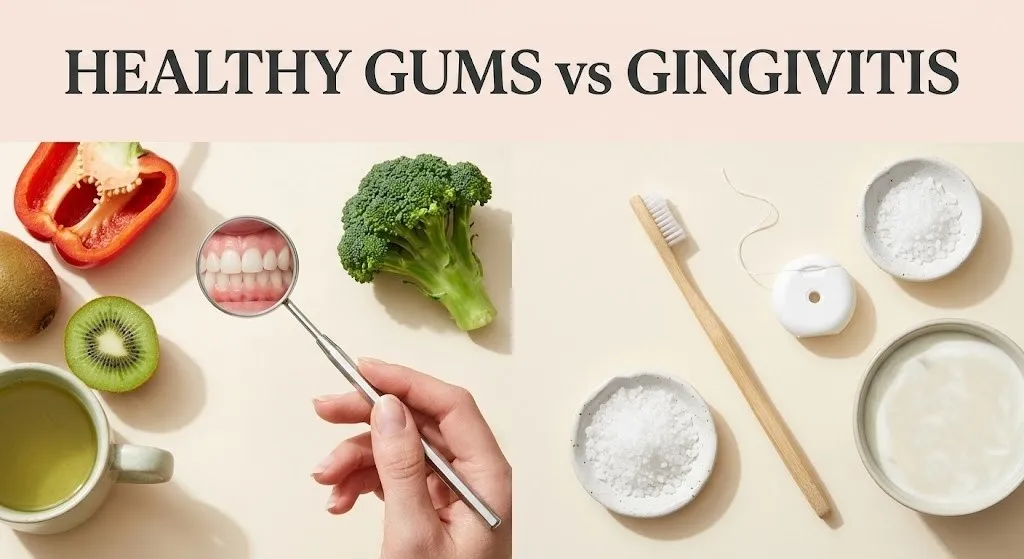
The color change from pink to red is the most visible sign. Healthy gums are not necessarily perfectly uniform in color. People with darker skin tones may have gums that are more brownish or have melanin pigmentation. The key is that healthy gums are consistent in color and do not appear angry or inflamed at the margins where they meet the teeth. Gingivitis gums look irritated specifically at the gumline, while the rest of the gum tissue may appear normal.
Healthy Gum vs Gingivitis: A Side-by-Side Comparison
A direct comparison between healthy gums and gingivitis makes the differences unmistakable. The table below summarizes what you see, what you feel, and what you experience with each condition.
| Characteristic | Healthy Gums | Gingivitis |
|---|---|---|
| Color | Pale or coral pink (varies by skin tone) | Red, reddish-purple, or dusky |
| Texture | Firm, stippled like orange peel | Swollen, smooth, shiny, soft |
| Shape | Knife-edged margin hugging tooth tightly | Rounded, rolled margin pulling away slightly |
| Bleeding | None during brushing or flossing | Bleeds easily, pink-tinged saliva |
| Pain | None | Tender to touch, may feel sore |
| Pocket depth | 1 to 3 millimeters | 2 to 4 millimeters with swelling |
| Reversibility | Maintained with hygiene and diet | Fully reversible with improved care |
The pocket depth measurement is a clinical test performed by a dentist using a periodontal probe. Healthy gums have a shallow sulcus, the natural space between the tooth and gum, measuring 1 to 3 millimeters. Gingivitis causes the gum tissue to swell, which can create a slightly deeper pocket, but the attachment between the gum and the tooth is not permanently lost. This is the key distinction between gingivitis and more advanced periodontitis. In periodontitis, the attachment fibers and bone are damaged. In gingivitis, they are intact, which is why the condition is fully reversible.
Key Takeaway: Healthy gums are pink, firm, and do not bleed. Gingivitis gums are red, swollen, and bleed on contact. The difference is visible, and the early stage is fully reversible.
Signs of Healthy Gums You Can Check at Home
Healthy gums have four characteristics you can check in a bathroom mirror with good lighting: color, texture, contour, and bleeding response. Knowing your own baseline helps you spot changes early.
Color varies by person. For lighter skin tones, healthy gums are typically a shade of pink, sometimes described as coral pink. For darker skin tones, gums may be brownish or have patches of melanin pigmentation that are perfectly normal. The key is consistency. Healthy gums are uniform in color from the base of the gum down to the margin where they meet the tooth. There should be no distinct red line at the gum margin.
Texture is best felt with a clean finger. Healthy gums feel firm and slightly rough, a texture called stippling. Stippling is the result of collagen fibers pulling the gum tissue tight against the underlying bone. Gums that feel smooth and puffy have lost this collagen tension. You can also check texture by looking at the gum surface. Healthy gums have a matte, slightly textured appearance. Shiny, glossy gums are a sign of fluid accumulation from inflammation.
Contour describes how the gum hugs the tooth. In healthy gums, the margin is thin and knife-edged, fitting snugly around each tooth like a turtleneck collar. The little triangles of gum between teeth, called interdental papillae, come to a point and fill the space. Inflamed gums lose this sharp contour and appear rounded or rolled at the margins.
Early Signs of Gingivitis You Should Never Ignore
Bleeding during brushing or flossing is the earliest and most reliable sign of gingivitis. Healthy gums do not bleed. If you see pink on your toothbrush or floss, that is inflammation, not normal contact.
Bleeding occurs because the blood vessels in the inflamed gum tissue are dilated and the capillary walls are more permeable. The mechanical action of brushing or flossing disturbs these fragile vessels, and they leak blood. The blood is often mixed with saliva, appearing as a pink tinge rather than frank red blood. Some people assume this bleeding is from brushing too hard. More often, it is from brushing gums that are already inflamed.
Redness and swelling are the next signs. The gum margin, the line where the gum meets the tooth, looks redder than the surrounding tissue. The gums may appear puffy, especially in the triangular spaces between teeth. You might notice that your gums look different in the morning, perhaps slightly more swollen, because inflammation can fluctuate.
Bad breath or a persistent bad taste can accompany gingivitis. The bacteria in plaque produce volatile sulfur compounds as metabolic byproducts. These compounds smell unpleasant and taste metallic or sour. The odor is often most noticeable upon waking, when saliva production has been low overnight and bacterial activity has continued undisturbed. If bad breath persists despite brushing and tongue cleaning, gum inflammation is a possible source.
Key Takeaway: Bleeding gums during brushing or flossing is never normal. It is the earliest and most reliable sign of gingivitis. Do not ignore it or dismiss it as brushing too hard.
Vitamin C and Gum Health: The Collagen Connection
Vitamin C, also called ascorbic acid, is essential for gum health because it is a required cofactor for collagen synthesis. Collagen is the structural protein that gives gum tissue its firmness, strength, and ability to heal. Without adequate vitamin C, the gums literally begin to fall apart.
The NIH Office of Dietary Supplements sets the Recommended Dietary Allowance for vitamin C at 75 to 90 milligrams per day for adults. Smokers need an additional 35 milligrams per day because smoking depletes vitamin C. Severe vitamin C deficiency leads to scurvy, a condition in which the gums become swollen, purple, spongy, and bleed profusely. Scurvy is rare in developed countries, but marginal vitamin C deficiency is not. A diet consistently low in fresh fruits and vegetables can produce subclinical gum changes long before full scurvy develops.
A single cup of raw red bell pepper contains roughly 190 milligrams of vitamin C, more than double the RDA. A medium kiwi contains roughly 64 milligrams. A cup of raw broccoli contains roughly 81 milligrams. These foods deliver vitamin C in its natural form, along with bioflavonoids and other compounds that may enhance its absorption and activity.
Vitamin C also functions as an antioxidant in gum tissue. Inflammation generates free radicals, which can damage cell membranes and collagen fibers. Adequate vitamin C neutralizes these free radicals before they cause significant harm. This antioxidant function is separate from the collagen synthesis function and contributes to the overall resilience of gum tissue against bacterial challenge.
Best Foods for Healthy Gums
The best foods for healthy gums supply vitamin C, zinc, omega-3 fatty acids, and polyphenols, all of which have specific roles in gum tissue maintenance and repair. These foods are not exotic. They are standard produce, protein, and tea aisle items.
Crunchy raw vegetables like carrots, celery, and bell peppers serve a dual purpose. They physically scrub the tooth surface as you chew, stimulating saliva production, and they deliver vitamin C and fiber. Saliva is the mouth’s natural defense mechanism. It contains enzymes that break down bacterial cell walls, minerals that remineralize enamel, and compounds that buffer acid produced by plaque bacteria.
Fatty fish including salmon, sardines, and mackerel supply omega-3 fatty acids, specifically docosahexaenoic acid (DHA) and eicosapentaenoic acid (EPA). A 2014 study in the Journal of Clinical Periodontology found that higher dietary intake of DHA and EPA was associated with lower rates of periodontitis. The proposed mechanism is the anti-inflammatory effect of omega-3s on the gingival tissue response to bacterial biofilm.
Green tea contains catechins, particularly epigallocatechin gallate (EGCG), which have documented antibacterial effects against Streptococcus mutans and other oral pathogens. A 2016 systematic review in the Journal of Periodontology found that regular green tea consumption was associated with reduced gingival inflammation and probing depth.
Yogurt and fermented foods supply probiotics, specifically Lactobacillus and Bifidobacterium species. These beneficial bacteria compete with pathogenic bacteria in the oral cavity, potentially reducing the bacterial load that contributes to plaque formation.
Omega-3 Fatty Acids for Gum Inflammation
Omega-3 fatty acids reduce gum inflammation by modulating the body’s inflammatory response to the bacterial biofilm that causes gingivitis. The mechanism is well-documented in periodontal research.
When plaque bacteria accumulate along the gumline, the immune system responds with an inflammatory cascade. Pro-inflammatory molecules called cytokines, including interleukin-1 and tumor necrosis factor-alpha, are released. These molecules recruit immune cells to the area, increase blood flow, and make capillaries leaky, producing the redness and swelling characteristic of gingivitis. Omega-3 fatty acids, specifically DHA and EPA, are converted in the body to resolvins and protectins, specialized molecules that actively resolve inflammation rather than simply blocking it.
A 2010 study in the Journal of Periodontology found that patients with periodontitis who supplemented with omega-3 fatty acids in combination with aspirin showed significant improvements in pocket depth and clinical attachment level compared to those who received standard treatment alone. The aspirin enhanced the conversion of omega-3s to resolvins.
The richest dietary sources of preformed DHA and EPA are cold-water fatty fish. A 3-ounce serving of wild salmon provides roughly 1.5 to 2 grams of combined DHA and EPA. Sardines, mackerel, and anchovies are also excellent sources. For those who do not eat fish, algae-based DHA supplements provide the same compound without the fish source.
Key Takeaway: Omega-3 fatty acids from fatty fish actively resolve gum inflammation by producing resolvins, specialized molecules that turn off the inflammatory response to plaque bacteria.
How an Anti-Inflammatory Diet Protects Your Gums
An anti-inflammatory diet protects your gums by reducing the systemic inflammatory load that amplifies the local gum response to plaque. When your overall diet is pro-inflammatory, your gums overreact to the bacteria at the gumline.
The Mediterranean diet is the most studied anti-inflammatory dietary pattern. It emphasizes vegetables, fruits, whole grains, legumes, nuts, olive oil, and fish, with limited red meat, processed foods, and added sugars. A 2018 study in the Journal of Clinical Periodontology found that adherence to a Mediterranean diet was associated with lower rates of periodontitis and less gingival bleeding.
The mechanism is not a single nutrient but a pattern effect. The high intake of polyphenols from vegetables, fruits, olive oil, and tea reduces oxidative stress. The omega-3 fatty acids from fish produce resolvins. The fiber from whole grains and legumes feeds beneficial gut bacteria, which produce short-chain fatty acids that have systemic anti-inflammatory effects. The low intake of added sugars and refined carbohydrates reduces the substrate available to oral bacteria for acid and plaque production.
Refined carbohydrates and added sugars are the dietary components most directly linked to gum inflammation because they feed the bacteria in plaque. When you eat sugar or refined starch, the bacteria metabolize it and produce acid and sticky extracellular polysaccharides that build the plaque biofilm. Reducing these foods reduces the bacterial load and the inflammatory stimulus.
The Oral Microbiome and Your Diet
The oral microbiome is the community of bacteria, fungi, and viruses living in your mouth. Your diet shapes which species dominate, and the balance between protective and pathogenic species determines your gum health.
A healthy oral microbiome is diverse and dominated by species that do not cause disease. Streptococcus salivarius, for example, is a commensal bacterium that produces bacteriocins, natural antibiotics that inhibit the growth of pathogenic species. When the diet is high in sugar and refined carbohydrates, acid-producing and acid-tolerant species like Streptococcus mutans and Lactobacillus proliferate. These species contribute to plaque formation and create an environment where gum pathogens like Porphyromonas gingivalis can thrive.
Dietary nitrate, found in leafy greens like spinach, arugula, and Swiss chard, supports a beneficial oral microbiome pathway. Certain oral bacteria convert nitrate to nitrite, which is then converted to nitric oxide in the stomach and bloodstream. Nitric oxide has antimicrobial properties and supports healthy blood flow to the gums.
Fermented foods introduce live beneficial bacteria directly into the oral cavity. Chewing a piece of crunchy sauerkraut or taking a spoonful of yogurt swishes live cultures around the teeth and gums. While these bacteria do not permanently colonize the mouth, they transiently compete with pathogens and produce compounds that inhibit their growth.
Key Takeaway: Your diet shapes your oral microbiome. Leafy greens support nitrate-converting bacteria. Fermented foods introduce live probiotics. Sugar feeds the acid-producing species that cause plaque and gum inflammation.
Probiotics for Oral Health: Do They Work?
Probiotics for oral health show promise in reducing plaque and gingival inflammation, but the research is still developing. Specific strains have stronger evidence than others, and the delivery method matters.
Lactobacillus reuteri is one of the most studied probiotics for gum health. A 2013 systematic review in the Journal of Clinical Periodontology found that L. reuteri supplementation reduced plaque accumulation and gingival bleeding in patients with gingivitis. The probiotic is available in lozenge form, which allows sustained contact with the oral tissues. Chewing the lozenge releases the bacteria over 10 to 15 minutes.
Streptococcus salivarius K12 is another oral probiotic strain that produces bacteriocins inhibiting Streptococcus pyogenes, a pathogen associated with sore throat and periodontal infections. It is available in lozenges and has been studied primarily for halitosis and pharyngeal infections, with emerging research on gum health.
Probiotics from food sources have less concentrated bacterial counts than supplements but offer a broader range of strains. Yogurt, kefir, kimchi, sauerkraut, and miso all contain live cultures. The bacteria contact the gums briefly during eating, which may be sufficient for a modulating effect on the oral microbiome when consumed regularly.
The dental community has not reached a consensus on probiotic prescribing for gum health. The American Academy of Periodontology acknowledges the emerging evidence but does not currently include probiotics in standard treatment guidelines. Probiotics should be viewed as a supportive strategy, not a replacement for mechanical plaque removal through brushing and flossing.
Crunchy Vegetables That Naturally Clean Teeth and Gums
Crunchy vegetables act as nature’s toothbrush. The mechanical action of chewing fibrous, watery vegetables scrubs the tooth surface, stimulates saliva, and massages the gum tissue.
Carrots are the classic crunchy vegetable for oral health. The firm, fibrous texture requires significant chewing, which generates saliva flow. Saliva contains bicarbonate, which neutralizes plaque acids, and calcium and phosphate, which remineralize enamel. A raw carrot eaten at the end of a meal can help clear food debris and buffer acid.
Celery has a stringy, fibrous structure that physically abrades the tooth surface as you chew. The high water content dilutes sugars and acids. Celery is also a source of vitamin K, which supports the proteins involved in bone metabolism and may benefit the alveolar bone that supports teeth.
Apples, while containing natural sugar, have enough fiber and water to largely offset the sugar content from an oral health perspective. The chewing action stimulates saliva. The fibrous flesh scrubs the teeth. An apple is not a substitute for brushing, but it is a far better dessert for gums than a candy bar or cookie.
Bell peppers, particularly raw red bell peppers, combine the mechanical benefits of a crunchy vegetable with the nutritional benefit of high vitamin C content. A cup of raw red bell pepper slices delivers more vitamin C than an orange and provides a satisfying crunch that stimulates gum circulation.
Worst Foods for Gingivitis and Gum Inflammation
The worst foods for gingivitis are those that feed plaque bacteria, spike blood sugar, stick to teeth, or create an acidic oral environment. Reducing or eliminating these foods supports gum healing.
Sugary beverages including soda, fruit juice, and sweetened coffee drinks bathe the teeth in sugar. The sugar feeds acid-producing bacteria, and the liquid reaches every surface, including the gumline. The acid produced by bacterial metabolism then demineralizes enamel and irritates gum tissue. Diet soda avoids the sugar but is acidic enough to erode enamel directly.
Sticky candies and dried fruits cling to tooth surfaces and lodge in the spaces between teeth. The prolonged contact time means bacteria have an extended feeding window. Raisins, dried mango, and fruit leathers are concentrated sugar sources that stick tenaciously to teeth. If you eat them, rinse your mouth with water immediately afterward.
Refined starches including white bread, crackers, and chips break down into sugars in the mouth. The enzyme amylase in saliva begins digesting starches immediately, releasing maltose and glucose. These sugars then feed bacteria just as effectively as added sugar. Soft white bread also packs into the crevices between teeth, providing a sustained food source for plaque bacteria.
| Food Category | Effect on Gums | Healthier Alternative |
|---|---|---|
| Sugary beverages | Feed acid-producing bacteria | Water, unsweetened green tea |
| Sticky candies | Prolonged sugar contact with gums | Fresh fruit, rinsed afterward |
| Refined starches | Break down into sugars, pack into crevices | Whole grain, crunchy vegetables |
| Alcohol | Dehydrates, reduces saliva flow | Water, herbal tea |
| Acidic drinks | Erode enamel, irritate gum tissue | Milk, water, green tea |
A One-Day Meal Plan for Healthy Gums
A one-day meal plan for healthy gums prioritizes vitamin C, omega-3 fatty acids, polyphenols, nitrates, and probiotics across three meals and one snack. This plan supplies roughly 200 milligrams of vitamin C, 2 grams of omega-3s, and abundant polyphenols.
Breakfast: Plain Greek yogurt with one cup of fresh berries, two tablespoons of chopped walnuts, and a drizzle of honey. A cup of green tea. The yogurt supplies probiotics and calcium. The berries supply vitamin C and polyphenols. The walnuts supply a small amount of plant-based omega-3 ALA. The green tea supplies catechins.
Morning Snack: One raw red bell pepper, sliced, with a quarter cup of hummus. The bell pepper supplies roughly 190 milligrams of vitamin C, exceeding the daily RDA. The hummus supplies zinc and fiber. The crunchy texture stimulates saliva and massages the gums.
Lunch: A large spinach salad with grilled salmon, cherry tomatoes, cucumber, shredded carrots, and a lemon-olive oil dressing. The spinach supplies nitrates for the oral microbiome. The salmon supplies preformed DHA and EPA omega-3s. The raw vegetables supply additional vitamin C and mechanical cleaning action.
Afternoon Snack: A kiwi and a small handful of almonds. The kiwi supplies 64 milligrams of vitamin C. The almonds supply vitamin E and a satisfying crunch.
Dinner: Stir-fried broccoli, red bell pepper, and chicken with ginger and garlic over brown rice. A cup of unsweetened green tea. The broccoli and bell pepper supply vitamin C. The ginger and garlic have anti-inflammatory properties. The green tea continues the polyphenol intake.
Key Takeaway: This one-day gum health meal plan delivers ample vitamin C, omega-3s, probiotics, and polyphenols. The crunchy vegetables stimulate saliva and physically clean the teeth.
How Diet Affects Gum Tissue Repair
Diet affects gum tissue repair because the gums are a high-turnover tissue that constantly rebuilds its collagen matrix, epithelial barrier, and blood vessel network. The raw materials for this repair come from the food you eat.
Gum epithelial cells turn over every 7 to 10 days. This rapid replacement requires a steady supply of amino acids for protein synthesis, vitamin C for collagen cross-linking, and zinc for cell division. When these nutrients are available in adequate amounts, the gums can repair the minor damage caused by daily chewing, brushing, and bacterial exposure. When they are deficient, repair slows, and the tissue becomes more vulnerable to bacterial penetration.
The repair process also requires adequate blood flow to deliver oxygen and nutrients and remove metabolic waste. Omega-3 fatty acids support healthy blood flow by reducing inflammation in the microvasculature and by making red blood cell membranes more flexible. The nitrate-nitrite-nitric oxide pathway, supported by leafy green vegetables, also enhances blood flow by dilating blood vessels.
Think of gum tissue like a road that is constantly being repaved. The construction crew needs asphalt, machinery, and fuel. The asphalt is the amino acids from dietary protein. The machinery is vitamin C and zinc, which run the construction enzymes. The fuel is the energy from a balanced diet. If any of these inputs are missing, the road develops potholes. In gum terms, those potholes are areas of weakened tissue where bacteria can gain a foothold.
Bleeding Gums and Vitamin Deficiency
Bleeding gums are a classic sign of vitamin C deficiency, but deficiencies in vitamin K, folate, and zinc can also contribute to gum bleeding. The nutritional cause is often overlooked in favor of purely mechanical explanations.
Vitamin C deficiency impairs collagen synthesis, weakening the walls of the capillaries in the gum tissue. These fragile capillaries rupture under the minor mechanical stress of brushing or chewing, causing bleeding. The NIH Office of Dietary Supplements notes that gums that bleed easily are one of the earliest clinical signs of inadequate vitamin C intake, appearing before more severe symptoms.
Vitamin K deficiency impairs the production of clotting factors in the liver. Without adequate vitamin K, the blood does not clot efficiently. A small disruption to the gum tissue that would normally be sealed in seconds continues to bleed. Vitamin K is found in leafy green vegetables, broccoli, and fermented foods. It is also synthesized by gut bacteria, which is one reason that antibiotic use can sometimes lead to vitamin K insufficiency.
Folate deficiency causes megaloblastic changes in rapidly dividing cells, including the epithelial cells of the gums. The gum tissue becomes fragile and prone to bleeding. Folate is found in legumes, leafy greens, and fortified grains. Zinc deficiency impairs cell division and protein synthesis, slowing the repair of the gum epithelial barrier.
The Best Tea for Gum Health
Green tea is the best tea for gum health because of its high concentration of catechins, particularly epigallocatechin gallate (EGCG). These polyphenols have direct antibacterial effects against oral pathogens and anti-inflammatory effects on gum tissue.
A 2016 systematic review in the Journal of Periodontology analyzed multiple studies on green tea and periodontal health. The review found that regular green tea consumption was associated with reduced gingival bleeding, shallower probing depths, and less clinical attachment loss. The proposed mechanism involves the ability of catechins to inhibit the collagenase enzymes that break down gum tissue during inflammation.
Green tea also contains fluoride, which strengthens enamel against acid erosion. The fluoride content varies by brand and brewing method but is a consistent component of tea leaves. Unsweetened green tea is a zero-calorie beverage that supports gum health without contributing to the sugar load that feeds plaque bacteria.
Herbal teas, including chamomile and peppermint, have mild anti-inflammatory properties but lack the concentrated catechin content of green tea. Black tea contains theaflavins, which are the oxidized equivalents of catechins and have some antibacterial activity. Green tea is the best studied and most directly supported by research for gum health.
Dentist vs Nutritionist: Who Helps Your Gums More?
A dentist and a nutritionist address gum health from different angles, and both are necessary for optimal outcomes. The dentist removes established plaque and tartar and monitors for disease progression. The nutritionist optimizes the diet to support gum tissue integrity and reduce inflammation.
A dentist or dental hygienist physically removes plaque and tartar through scaling and polishing. Tartar, also called calculus, is mineralized plaque that cannot be removed by brushing or flossing. It requires professional instruments. A dentist also measures pocket depths, monitors gum recession, and screens for periodontitis. These clinical assessments are essential and cannot be replicated by dietary changes alone.
A registered dietitian or nutritionist addresses the systemic factors that make gums more or less susceptible to inflammation. They assess dietary intake of vitamin C, zinc, omega-3 fatty acids, and polyphenols. They identify dietary patterns that may be contributing to a pro-inflammatory state. They provide specific food recommendations and meal planning support.
The two professionals are complementary, not competitive. A person with gingivitis needs the mechanical cleaning and monitoring provided by a dental professional and the nutritional support that makes the gum tissue resilient. Neither approach alone is optimal. A dentist who treats the plaque without addressing the nutritional deficiency may see the patient return with recurrent inflammation. A nutritionist who optimizes the diet without the initial removal of established tartar cannot reverse the existing mechanical irritation.
Frequently Asked Questions About Healthy Gums and Gingivitis
Can gingivitis be reversed with diet alone?
Gingivitis can be partially improved with an anti-inflammatory diet rich in vitamin C and omega-3s, but established tartar must be removed by a dental professional. Diet strengthens the gum tissue and reduces inflammation, but it cannot physically scrape off mineralized calculus.
What vitamin deficiency causes bleeding gums?
Vitamin C deficiency is the most common nutritional cause of bleeding gums. Vitamin K deficiency can also contribute because it impairs blood clotting. A diet low in fresh fruits and vegetables is the primary risk factor for marginal vitamin C deficiency.
How long does it take for gingivitis to heal?
Gingivitis can begin to improve within 3 to 5 days of improved oral hygiene and dietary changes. Full resolution of visible inflammation typically takes 1 to 2 weeks with consistent care. Established tartar requires professional removal before healing can complete.
Is salt water rinse good for gingivitis?
A warm salt water rinse can temporarily reduce gum inflammation by drawing out fluid from swollen tissue through osmosis. It is a supportive measure, not a treatment. It does not replace brushing, flossing, or professional cleaning.
What foods should I avoid if I have gingivitis?
Avoid sugary beverages, sticky candies, refined starches, and acidic drinks. These foods feed the bacteria that produce plaque biofilm and increase oral acidity. Replace them with crunchy vegetables, unsweetened green tea, and water.
The state of your gums is a running report on your diet. Healthy gums are pink, firm, and bleed-free because the collagen matrix is intact, the vitamin C supply is adequate, and the inflammatory response is well-regulated. Gingivitis gums are red, swollen, and bloody because something is missing or something is irritating.
Look in the mirror tonight. Check the color, the texture, the gumline. If you see pink on your floss or your toothbrush, take it seriously. Eat a raw bell pepper. Brew a cup of green tea. Add salmon to your grocery list. And call your dentist for a cleaning if it has been more than six months. Your gums will respond. They are among the fastest-healing tissues in your body when given the right support.