Goodles are a meaningfully healthier choice than traditional boxed mac and cheese because they deliver more protein, more fiber, and more micronutrients per serving, but they remain a processed food that should be served as part of a balanced plate rather than eaten as a standalone meal.
The mac and cheese aisle looks different than it did ten years ago. Between the familiar blue boxes sit newcomers promising protein, fiber, hidden vegetables, and clean ingredients. Goodles, the brand co-founded by actress Gal Gadot in 2022, made the biggest splash. The claim is bold: mac and cheese that is actually good for you. The question is whether the nutrition facts back it up.
According to the USDA Dietary Guidelines for Americans, most people underconsume dietary fiber and overconsume sodium and saturated fat. A product that improves the fiber and protein of a pantry staple while keeping it convenient addresses real dietary gaps. This article breaks down exactly what is inside a box of Goodles, what the numbers mean, who benefits from eating them, and who should reach for a different option instead.
What Are Goodles
Goodles are a boxed dry pasta and cheese sauce product designed as a nutritionally upgraded alternative to traditional mac and cheese, made with a blend of wheat and chickpea proteins, whole wheat flour, and fortified nutrients to deliver more protein and fiber per serving.
The product line includes several flavors: Cheddy Mac, Shella Good, Twist My Parm, Mover and Shaker, and seasonal limited releases. Each box contains dry pasta and a powdered cheese sauce packet. Preparation mirrors traditional boxed mac and cheese: boil the pasta, drain, add milk and butter or oil, stir in the cheese powder.
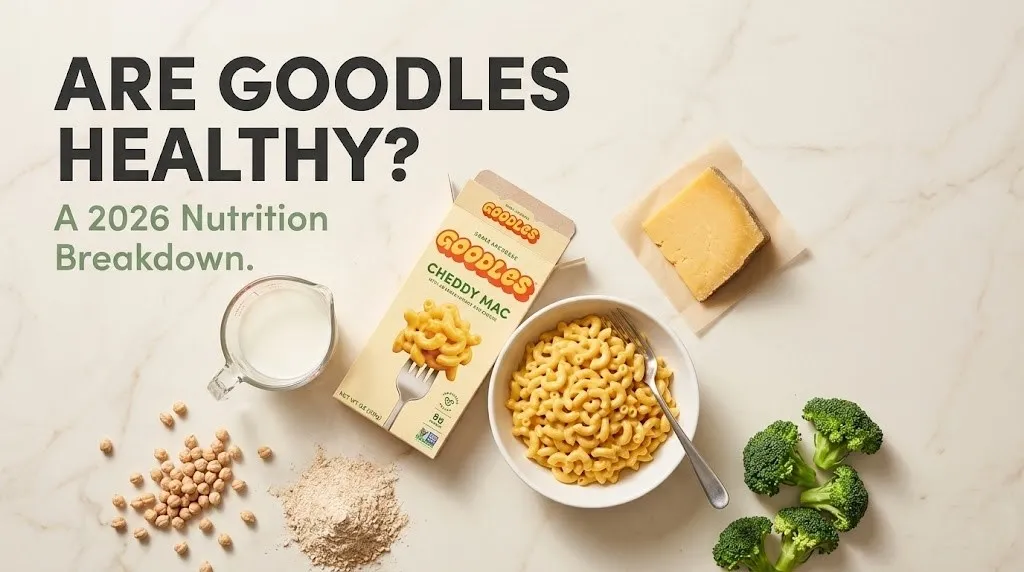
What separates Goodles from standard mac and cheese starts with the pasta itself. Traditional mac and cheese noodles are made from refined durum wheat semolina, a simple carbohydrate with minimal fiber and protein. Goodles pasta incorporates whole wheat flour, chickpea protein, and wheat protein isolate alongside semolina. The result is a noodle that contains approximately 14 to 15 grams of protein and 6 to 7 grams of fiber per prepared cup, compared to 9 grams of protein and 1 to 2 grams of fiber in standard mac and cheese.
The brand also adds a nutrient fortification blend including B vitamins, iron, and vitamin D. These are the same types of fortification found in enriched flour products, but Goodles includes higher levels and a broader range of nutrients. The cheese sauce powder is made from real cheddar cheese, butter, and milk protein concentrate, with emulsifiers and phosphates to create a smooth texture when mixed with hot pasta.
Dietary Sensitivity Note: Goodles contain wheat and milk in multiple forms (cheese, butter, whey, milk protein concentrate). They are not suitable for people with celiac disease, wheat allergy, or dairy allergy. Some flavors may contain soy.
Goodles Nutrition Facts and Ingredients
One cup of prepared Goodles Cheddy Mac, made with 2 percent milk and butter according to package directions, contains approximately 260 to 280 calories, 14 grams of protein, 6 grams of fiber, and 5 grams of total fat, representing a substantial nutritional shift from traditional boxed mac and cheese.
Here is the full nutrition breakdown for the most popular flavor, Cheddy Mac, prepared as directed:
| Nutrient | Per 1 Cup Prepared (140g) | % Daily Value |
|---|---|---|
| Calories | 270 | — |
| Total Fat | 5g | 6% |
| Saturated Fat | 3g | 15% |
| Cholesterol | 15mg | 5% |
| Sodium | 560mg | 24% |
| Total Carbohydrates | 47g | 17% |
| Dietary Fiber | 6g | 21% |
| Total Sugars | 5g | — |
| Added Sugars | 0g | 0% |
| Protein | 14g | 28% |
| Vitamin D | 2mcg | 10% |
| Calcium | 130mg | 10% |
| Iron | 3mg | 15% |
| Potassium | 280mg | 6% |
The ingredient list for the dry pasta and cheese sauce combined includes: whole wheat flour, durum wheat semolina, chickpea protein, wheat protein isolate, cheddar cheese (pasteurized milk, cheese cultures, salt, enzymes), butter, milk protein concentrate, whey, natural flavors, salt, sodium phosphate, sodium alginate, lactic acid, annatto extract for color, and the nutrient fortification blend (thiamin mononitrate, niacin, ferrous sulfate, riboflavin, folic acid, vitamin D3).
The presence of whole wheat flour as the first ingredient is notable. Refined pasta lists semolina or enriched wheat flour first, meaning the bran and germ have been removed. Whole wheat flour retains the entire grain kernel, which provides fiber, B vitamins, magnesium, and phytonutrients. The USDA Dietary Guidelines recommend that at least half of grain intake come from whole grains, making this a meaningful formulation choice.
The protein blend of chickpea, wheat, and milk creates a complementary amino acid profile. Wheat is low in lysine but adequate in methionine. Chickpeas are adequate in lysine but lower in methionine. Together with the milk protein in the cheese sauce, the protein quality is higher than any single plant source alone.
Key Takeaway: A cup of prepared Goodles provides about 14 grams of protein and 6 grams of fiber with moderate calories. The whole wheat flour, chickpea protein, and milk protein create a more complete nutritional package than standard enriched pasta.
Are Goodles Actually Healthy
Goodles are healthier than traditional boxed mac and cheese in the specific ways that matter for most eating patterns, more protein, more fiber, more micronutrients, and whole grain content, but they are not a health food and should not be treated as a vegetable or protein equivalent to whole food sources.
The word “healthy” is not binary. A food is healthier or less healthy relative to what it replaces, how often it is eaten, and what it is eaten with. Goodles replacing a standard box of Kraft mac and cheese on a Tuesday night is a nutritional upgrade. Goodles eaten as a standalone meal three times a week is a missed opportunity to serve vegetables, whole food proteins, and less processed grains.
What makes Goodles a better choice than standard boxed mac and cheese:
- Protein content at 14 grams per cup nearly doubles the 8 to 9 grams in traditional versions, making it more satiating and better at supporting muscle maintenance
- Fiber content at 6 grams per cup provides roughly a quarter of the daily fiber recommendation from a food category that typically offers almost none
- Whole grains from whole wheat flour contribute phytonutrients, magnesium, and B vitamins not present in refined pasta
- Zero added sugars, unlike some boxed mac and cheese products that add sugar to their sauce powder
- Fortified nutrients including iron, B vitamins, and vitamin D provide meaningful daily value percentages
What keeps Goodles from being a genuine health food:
- Sodium content at 560 milligrams per cup represents nearly a quarter of the American Heart Association’s recommended 2,300 milligram daily limit
- Added phosphates from sodium phosphate and the inherent phosphorus in chickpea protein may be a concern for people with kidney disease
- Emulsifiers like sodium alginate, while generally recognized as safe, are markers of food processing that you would not find in a homemade version
- Processing level lands Goodles in the category of ultra-processed food by the NOVA classification system, even if the ingredient quality is better than most competitors
Think of Goodles like a premium instant coffee. It is a better version of something processed, not a replacement for the real thing. It serves a purpose. That purpose is convenience with fewer nutritional compromises.
Goodles Protein Content and Quality
Goodles deliver 14 to 15 grams of protein per prepared cup from a blend of chickpea protein, wheat protein isolate, and milk proteins, creating a complementary amino acid profile that provides all essential amino acids in meaningful amounts.
The protein number on the label tells only part of the story. Protein quality depends on two factors: the amino acid profile and digestibility. Animal proteins like milk, cheese, and whey are complete proteins with high digestibility. Plant proteins often lack one or more essential amino acids in optimal proportions.
Goodles addresses this through blending. Wheat protein is rich in methionine and cysteine but low in lysine. Chickpea protein is a legume protein higher in lysine than wheat but lower in sulfur-containing amino acids. When combined, the amino acid profile approaches that of a complete protein. The cheese sauce powder adds milk proteins (casein and whey), which are complete animal proteins with high bioavailability.
The protein digestibility-corrected amino acid score (PDCAAS) of the blend is not publicly available, but the combination of cereal protein, legume protein, and dairy protein is a well-established strategy for improving plant protein quality. A 2021 review in the journal Nutrients found that blending cereal and legume proteins in a roughly 50/50 ratio produces a PDCAAS comparable to animal proteins.
Here is how the protein in Goodles compares to other common protein sources on a per-serving basis:
| Food | Serving | Protein | Approximate Quality |
|---|---|---|---|
| Goodles Cheddy Mac | 1 cup prepared | 14g | Good (blended plant and dairy) |
| Kraft Original Mac and Cheese | 1 cup prepared | 9g | Moderate (dairy from cheese) |
| Banza Chickpea Mac and Cheese | 1 cup prepared | 14g | Good (legume plus dairy) |
| Chicken breast | 3 ounces cooked | 26g | Excellent (complete animal protein) |
| Greek yogurt | 1 cup | 20g | Excellent (complete dairy protein) |
| Lentils | 1 cup cooked | 18g | Moderate (incomplete plant protein) |
The 14 grams of protein in a cup of Goodles is meaningful for a grain-based dish. For someone eating three meals per day, this represents a solid portion of the 20 to 30 grams of protein per meal that research suggests optimizes muscle protein synthesis in adults. Replacing standard pasta with Goodles for a meal adds about 5 grams of protein, equivalent to about half an egg’s worth.
Goodles Fiber and Whole Food Ingredients
Goodles contain 6 to 7 grams of dietary fiber per prepared cup from whole wheat flour, chickpea flour, and added chicory root fiber, providing roughly a quarter of the daily fiber recommendation in a food category that traditionally offers almost none.
Dietary fiber is one of the most underconsumed nutrients in the American diet. The Academy of Nutrition and Dietetics recommends 25 grams per day for women and 38 grams for men. Average intake hovers around 15 grams. A food that delivers 6 grams of fiber in a familiar, palatable format addresses a genuine nutritional gap.
The fiber in Goodles comes from three sources. Whole wheat flour provides insoluble fiber from the bran layer of the wheat kernel, which adds bulk to stool and supports regular digestion. Chickpea flour contributes both soluble and insoluble fiber. Added chicory root fiber (inulin) is a soluble prebiotic fiber that ferments in the colon and supports beneficial gut bacteria.
Here is how Goodles fiber compares to other common fiber sources:
| Food | Serving | Fiber |
|---|---|---|
| Goodles Cheddy Mac | 1 cup prepared | 6g |
| Kraft Original Mac and Cheese | 1 cup prepared | 1g |
| Banza Chickpea Mac and Cheese | 1 cup prepared | 5g |
| Apple with skin | 1 medium | 4.4g |
| Broccoli | 1 cup cooked | 5g |
| Black beans | 1/2 cup | 7.5g |
Inulin has a specific functional role beyond fiber content. It acts as a prebiotic, selectively feeding Bifidobacterium and Lactobacillus species in the colon. A 2023 systematic review in the British Journal of Nutrition confirmed that inulin supplementation increases Bifidobacterium populations. However, inulin can cause bloating and gas in sensitive individuals, particularly at doses above 5 grams. A cup of Goodles contains approximately 2 to 3 grams of inulin based on the fiber breakdown, which is below the typical digestive threshold for most people.
Dietary Sensitivity Note: Individuals with irritable bowel syndrome (IBS) following a low-FODMAP diet should be aware that inulin (chicory root fiber) is a high-FODMAP ingredient. Some people with IBS experience bloating and discomfort from inulin-containing products.
Goodles Vitamins and Minerals From Fortification
Goodles are fortified with thiamin, niacin, riboflavin, folic acid, iron, and vitamin D at levels that provide 10 to 25 percent of the daily value per serving, making them a meaningful source of nutrients that are commonly underconsumed or added back to refined grain products.
Fortification is the addition of nutrients to a food product that were not originally present or were present in lower amounts. Enrichment is the addition of nutrients back to levels found in the original whole grain. Goodles uses both approaches. The whole wheat flour provides naturally occurring B vitamins and minerals. The fortification blend adds additional amounts plus nutrients not found in meaningful levels in wheat.
Here are the key fortified nutrients in Goodles and their functions:
| Nutrient | Amount per Serving | % DV | Function |
|---|---|---|---|
| Thiamin (B1) | 0.3mg | 25% | Carbohydrate metabolism, nerve function |
| Niacin (B3) | 4mg | 25% | Energy metabolism, DNA repair |
| Riboflavin (B2) | 0.3mg | 23% | Energy production, antioxidant function |
| Folic Acid | 100mcg DFE | 25% | DNA synthesis, red blood cell formation |
| Iron | 3mg | 17% | Oxygen transport, energy metabolism |
| Vitamin D | 2mcg | 10% | Calcium absorption, immune function |
Folic acid fortification is particularly noteworthy. The FDA mandated folic acid enrichment of refined grain products in 1998 to reduce neural tube defects in pregnancy. The policy is considered one of the most successful public health interventions in modern history, reducing neural tube defects by an estimated 35 percent according to CDC data. Goodles provide 25 percent of the daily value for folate, contributing to this protective effect for people who may become pregnant.
Iron fortification addresses a different gap. Iron deficiency is the most common nutrient deficiency worldwide. The World Health Organization identifies iron deficiency anemia as a significant public health concern affecting approximately 30 percent of women of reproductive age globally. The 3 milligrams of iron in Goodles, while modest compared to red meat or supplements, contributes to the cumulative daily intake that prevents deficiency.
One limitation of fortification is that added nutrients are not always as bioavailable as those naturally present in whole foods. Iron from ferrous sulfate, the form used in Goodles, has good bioavailability when consumed with vitamin C. The cheese sauce does not provide vitamin C, so pairing Goodles with bell peppers, tomatoes, or a squeeze of lemon improves iron absorption from the meal.
Key Takeaway: Goodles provide meaningful amounts of B vitamins, iron, and vitamin D through fortification. These nutrients fill genuine dietary gaps, but their bioavailability depends on what else is on the plate.
Goodles vs Kraft Mac and Cheese Nutrition
Goodles outperform Kraft Original Mac and Cheese on protein, fiber, whole grain content, and micronutrient fortification, while containing similar amounts of calories and saturated fat, making them a clearly superior nutritional choice between the two products.
The Kraft blue box is the benchmark against which every mac and cheese alternative is measured. It is the category original and still the market leader. Comparing Goodles to Kraft directly answers the question most shoppers are actually asking: is this premium product worth the extra few dollars?
Here is a direct nutritional comparison of one cup prepared of each:
| Nutrient | Goodles Cheddy Mac | Kraft Original |
|---|---|---|
| Calories | 270 | 250 |
| Protein | 14g | 9g |
| Total Fat | 5g | 4.5g |
| Saturated Fat | 3g | 2.5g |
| Carbohydrates | 47g | 47g |
| Dietary Fiber | 6g | 1g |
| Sugars | 5g | 6g |
| Sodium | 560mg | 570mg |
| Iron | 3mg (17% DV) | 0.8mg (4% DV) |
| Calcium | 130mg (10% DV) | 60mg (5% DV) |
The calorie and fat profiles are similar. The differences appear in protein, fiber, and micronutrients. Goodles add 5 grams of protein and 5 grams of fiber per serving. Over a week of meals, those differences compound.
The ingredient comparison is revealing. Kraft Original pasta contains only durum wheat semolina, an enriched refined grain. Goodles pasta contains whole wheat flour as the first ingredient plus chickpea protein and wheat protein isolate. The cheese sauce in both products is made from real cheese with emulsifiers. Kraft uses more artificial color (Yellow 5 and Yellow 6) while Goodles uses annatto, a plant-based colorant.
For someone who eats boxed mac and cheese once a week, switching from Kraft to Goodles adds approximately 260 grams of protein and 260 grams of fiber to their annual diet. Those are not trivial numbers in the context of overall nutrient intake. The switch also adds whole grains and cuts artificial colors, changes that align with the USDA Dietary Guidelines recommendation to make half of all grain intake whole grain.
Goodles vs Banza Chickpea Pasta Comparison
Goodles and Banza chickpea mac and cheese are nutritionally comparable on protein and fiber, but Goodles offer a wheat-based pasta texture closer to traditional mac and cheese while Banza provides a completely gluten-free option made entirely from chickpeas.
Banza is the other major player in the better-for-you mac and cheese category. Its pasta is made from chickpea flour, pea starch, and xanthan gum. The cheese sauce is similar to Goodles, a powdered mix made from real cheese with emulsifiers. The nutritional profiles are closer than either is to Kraft.
| Nutrient | Goodles Cheddy Mac | Banza Classic Cheddar |
|---|---|---|
| Calories | 270 | 280 |
| Protein | 14g | 14g |
| Total Fat | 5g | 6g |
| Saturated Fat | 3g | 3.5g |
| Carbohydrates | 47g | 48g |
| Dietary Fiber | 6g | 5g |
| Sodium | 560mg | 520mg |
| Gluten-Free | No (contains wheat) | Yes |
The nutritional differences are minimal. The choice between Goodles and Banza comes down to dietary needs and taste preference. Banza is the clear choice for anyone who needs to avoid gluten. The chickpea-only pasta makes it safe for celiac disease and wheat allergy. Goodles contain wheat in multiple forms and are not suitable for gluten-free diets.
Texture is the other differentiator. Chickpea pasta has a distinct texture. It is slightly firmer, with a less springy bite than wheat pasta. Some people prefer it. Others find it gummy or unfamiliar. Goodles pasta, because it still contains durum wheat semolina as a primary ingredient, bites and chews like traditional pasta. For picky eaters, particularly children, this texture familiarity can be the difference between a finished bowl and a rejected dinner.
From a whole food perspective, Banza has one advantage. Its pasta is made almost entirely from chickpeas, a single whole food ingredient in flour form. Goodles pasta is a more complex formulation with protein isolates and multiple grain sources. Neither is “bad.” Banza simply sits closer to a whole food on the processing spectrum.
Dietary Sensitivity Note: Banza is gluten-free and suitable for celiac disease. Goodles are not. For dairy-free needs, neither product works in its standard formulation. Both cheese sauces contain milk, butter, and whey. Vegan mac and cheese alternatives from brands like Daiya use plant-based cheese substitutes.
Is Goodles Mac and Cheese Good for Weight Loss
Goodles can fit into a weight loss eating pattern because the higher protein and fiber content supports satiety better than traditional mac and cheese, but portion control and meal composition matter more than the product choice itself.
Weight loss requires a sustained calorie deficit. Foods that help achieve that deficit tend to be high in protein, high in fiber, high in water content, and moderate in calorie density. Goodles score better on protein and fiber than standard mac and cheese, but they remain a calorie-dense grain product that is easy to overeat.
The satiety advantage is real but should not be overstated. Protein is the most satiating macronutrient. Fiber adds bulk and slows gastric emptying. A 2019 study in the journal Obesity found that meals with at least 25 grams of protein produced greater satiety and reduced subsequent food intake compared to lower-protein meals matched for calories. A cup of Goodles contains 14 grams of protein. Reaching the 25-gram threshold requires adding another protein source, a side of Greek yogurt, a hard-boiled egg, or edamame.
Here is how Goodles compares on weight loss relevant metrics:
| Factor | Goodles | Kraft | Banza |
|---|---|---|---|
| Protein (satiety) | 14g | 9g | 14g |
| Fiber (satiety, digestion) | 6g | 1g | 5g |
| Calorie density | Moderate | Moderate | Moderate |
| Ease of overeating | Easy | Very easy | Easy |
| Volume per calorie | Low | Low | Low |
The ease-of-overeating problem is inherent to mac and cheese. It is a soft, palatable, energy-dense food that can be eaten quickly. A full box prepared makes roughly three cups. An adult can easily eat half the box, consuming 400 to 500 calories of pasta and cheese in a few minutes without feeling full. Adding a large portion of non-starchy vegetables, broccoli, cauliflower, spinach, or bell peppers, increases the volume and fiber of the meal for minimal additional calories.
For someone actively tracking calories for weight loss, one cup of Goodles as the grain portion of a meal that includes a lean protein source and at least two cups of vegetables is a reasonable framework. One cup of Goodles alone, eaten from the pot, is not a meal that supports weight loss.
Quick Tip:
- If you are counting calories, measure one dry serving (2 ounces of pasta) before cooking. Do not eat from the pot. The prepared volume with vegetables added will be satisfying, but the dry measurement keeps the calories accurate.
Are Goodles Healthy for Kids and Toddlers
Goodles are a reasonable occasional meal for children and toddlers because the whole grains, fiber, and fortified nutrients offer more nutritional value than standard mac and cheese, but the sodium content is high for young children and the processed nature of the food makes it inappropriate as a daily staple.
Parents reach for boxed mac and cheese because children reliably eat it. Goodles offer a way to serve a food kids already accept while improving the protein, fiber, and whole grain content. That is a legitimate nutritional win. The question is whether the sodium and processing caveats change the calculation for small bodies.
The sodium content of 560 milligrams per cup is high for children. The American Heart Association recommends children aged 4 to 8 consume no more than 1,200 milligrams of sodium per day. One cup of Goodles uses nearly half that budget. For toddlers aged 1 to 3, the daily sodium limit is 1,200 milligrams or less. A half-cup serving, more appropriate for a toddler, still provides 280 milligrams, about a quarter of the daily allowance.
Here is how Goodles fits into daily sodium budgets by age:
| Age Group | Daily Sodium Limit (AHA) | 1 Cup Goodles | % of Daily Limit |
|---|---|---|---|
| 1-3 years | 1,200mg | 560mg (adult serving) | 47% (too high) |
| 4-8 years | 1,200mg | 560mg | 47% (high) |
| 9-13 years | 1,500mg | 560mg | 37% (moderate) |
| 14-plus years | 2,300mg | 560mg | 24% (reasonable) |
For toddlers and young children, the solution is portion control and preparation modification. Serve a quarter to a third of a cup as the pasta portion alongside vegetables and a separate protein. Prepare the cheese sauce with less of the powder packet or use milk instead of butter to reduce the saturated fat and sodium concentration per bite.
The fiber content in Goodles is another consideration for young children. Six grams of fiber per cup is a meaningful amount for a small digestive system. While fiber supports healthy digestion, too much too quickly can cause bloating and discomfort in young children. Introducing Goodles gradually rather than switching entirely from low-fiber pasta prevents digestive upset.
Dietary Sensitivity Note: Goodles contain wheat and milk, two of the top nine allergens. They are not appropriate for children with wheat allergy, celiac disease, or dairy allergy. For children with these allergies, Banza chickpea pasta prepared with a dairy-free cheese sauce is a safer alternative.
Key Takeaway: Goodles are an upgrade over standard boxed mac and cheese for kids, but the sodium content makes portion control necessary, especially for toddlers and children under 8.
Goodles Sodium Content and Health Concerns
Goodles contain 560 milligrams of sodium per prepared cup, representing nearly one-quarter of the American Heart Association’s daily limit of 2,300 milligrams for healthy adults and nearly half the 1,200-milligram limit for children, making sodium the most legitimate nutritional concern with this product.
Sodium is the weak point in almost every boxed and packaged food. It functions as a flavor enhancer, a preservative, and a processing aid. The cheese sauce powder in Goodles relies on sodium for all three functions. Salt enhances the cheese flavor. Sodium phosphate helps the powder dissolve smoothly. Sodium alginate thickens the sauce.
The 560 milligrams per cup is not uniquely high compared to competitors. Kraft Original contains 570 milligrams. Banza contains 520 milligrams. The entire category is sodium-dense. The difference is that Goodles markets itself as a healthier choice, which creates a higher expectation for sodium reformulation that the product does not currently meet.
Context matters for sodium. The American Heart Association notes that over 70 percent of dietary sodium in the American diet comes from packaged and restaurant foods, not from salt added during home cooking. A single serving of Goodles uses a quarter of the daily sodium budget before any other food is consumed that day. For someone who also eats a sandwich with deli meat, a cup of canned soup, or a restaurant meal, the cumulative sodium load can easily exceed 3,000 to 4,000 milligrams.
Here is the sodium reality for different eating patterns:
| Eating Pattern | Typical Daily Sodium | 1 Cup Goodles Impact |
|---|---|---|
| Whole foods, home-cooked meals | 1,500-2,000mg | Uses 28-37% of daily intake |
| Mix of home and packaged foods | 2,500-3,000mg | Uses 19-22% of daily intake |
| Frequent restaurant and packaged foods | 3,500-5,000mg | Uses 11-16% of daily intake |
For someone whose overall diet is low in processed foods, a serving of Goodles fits within a reasonable sodium budget. For someone whose diet already includes multiple packaged and restaurant items daily, Goodles add to a sodium intake that likely already exceeds recommendations.
Quick Tip:
- Reduce the effective sodium per serving by preparing Goodles with extra vegetables. Adding two cups of steamed broccoli to the prepared mac and cheese increases the volume of the meal and dilutes the sodium concentration per bite without changing the total sodium in the dish.
Is Goodles Safe for Kidney Concerns and High Blood Pressure
Goodles are not recommended for people with chronic kidney disease or those on phosphorus-restricted diets because the added phosphates and naturally occurring phosphorus in chickpea protein contribute to a phosphorus load that compromised kidneys cannot clear effectively.
This is the topic that no competitor article addresses, and it is the most important caveat for a specific, vulnerable population. Phosphorus is present in nearly all foods. Healthy kidneys filter excess phosphorus from the blood. In chronic kidney disease, particularly stage 3 and beyond, phosphorus clearance declines. Elevated blood phosphorus (hyperphosphatemia) drives calcium loss from bones and accelerates vascular calcification, increasing cardiovascular risk.
The National Kidney Foundation recommends that patients with chronic kidney disease limit phosphorus to 800 to 1,000 milligrams per day. Added phosphates in processed foods are absorbed at nearly 100 percent efficiency, compared to 40 to 60 percent for naturally occurring phosphorus in whole foods. This makes processed foods with phosphate additives particularly problematic for kidney patients.
Goodles contain phosphorus from three sources: chickpea protein (natural phosphorus), whole wheat (natural phosphorus), and sodium phosphate (added phosphorus). The exact phosphorus content per serving is not listed on the nutrition facts panel because phosphorus labeling is not mandatory unless a phosphorus-related claim is made. Based on similar products, the total phosphorus per cup is likely 200 to 300 milligrams, with a significant portion from the added sodium phosphate.
For someone with stage 3 chronic kidney disease, one cup of Goodles could represent 25 to 35 percent of the daily phosphorus allowance, with the added phosphate fraction absorbed at nearly 100 percent. A meal of Goodles plus a glass of milk, which also contains phosphorus, could push a single meal’s phosphorus load above 500 milligrams.
Individuals with hypertension should also pay attention. The 560 milligrams of sodium per cup is not inherently disqualifying, but it requires accounting. Someone following the DASH diet for blood pressure management targets 1,500 to 2,300 milligrams of sodium per day. A cup of Goodles uses a quarter to a third of that budget.
People with chronic kidney disease, end-stage renal disease on dialysis, or hyperphosphatemia should avoid Goodles unless cleared by their nephrologist. People with hypertension should fit Goodles into their sodium budget rather than adding them on top of an already high-sodium eating pattern.
How to Make Goodles a Healthier Complete Meal
Turn a box of Goodles into a balanced meal by halving the pasta portion per person, adding at least two cups of non-starchy vegetables, and including an additional lean protein source, which increases volume, fiber, and satiety while reducing the sodium and calorie density per bite.
A box of Goodles prepared as directed and eaten by one person is not a meal. It is a bowl of pasta. The difference between a bowl of pasta and a meal is vegetables, additional protein, and portion awareness.
The strategy uses Goodles as the carbohydrate and partial protein base of a plate rather than the entire plate. Here is the formula:
- Cook one box of Goodles according to package directions.
- While the pasta cooks, steam, roast, or sauté three to four cups of vegetables. Broccoli, cauliflower, spinach, bell peppers, peas, and zucchini all work.
- Prepare an additional lean protein if desired: a can of rinsed chickpeas, shredded rotisserie chicken breast, or a can of water-packed tuna.
- Combine half the prepared Goodles with half the vegetables and half the additional protein. Store the remaining portions separately for another meal.
The result: one cup of Goodles becomes half a cup per serving. The vegetables add volume, fiber, and micronutrients for about 50 calories. The additional protein pushes the meal’s protein total toward the 25 to 30 grams that research suggests optimizes satiety.
Three specific meal combinations using one box of Goodles split into two servings:
Broccoli chicken mac: Half the prepared Goodles mixed with two cups steamed broccoli florets and half a cup shredded chicken breast. Approximately 390 calories, 28g protein, 10g fiber.
Southwest veggie mac: Half the prepared Goodles mixed with one cup sautéed bell pepper and onion, half a cup black beans, and a spoonful of salsa. Approximately 370 calories, 20g protein, 13g fiber.
Greens and white bean mac: Half the prepared Goodles stirred into two cups wilted spinach with half a cup cannellini beans and a squeeze of lemon. Approximately 360 calories, 22g protein, 12g fiber.
Dietary Sensitivity Note: The vegetable additions are naturally gluten free and dairy free. The overall meal remains unsuitable for gluten-free or dairy-free diets because the Goodles base contains wheat and milk.
Key Takeaway: A box of Goodles split into two servings, each mixed with two cups of vegetables and an additional protein source, transforms a processed convenience food into a genuinely balanced meal.
Who Should Eat Goodles and Who Should Avoid Them
Goodles work best for active adults, older children, and families seeking a nutritionally upgraded pantry convenience food, while people with celiac disease, wheat or dairy allergies, chronic kidney disease, or strict low-sodium requirements should avoid them.
This decision framework summarizes everything the nutritional breakdown has covered, organized by who benefits and who should choose differently:
| Goodles Are a Good Fit For | Goodles Are Not a Good Fit For |
|---|---|
| Active adults wanting more protein and fiber in a convenient format | People with celiac disease or wheat allergy (contains wheat) |
| Parents seeking a better boxed mac and cheese for kids over age 8 | People with dairy allergy or severe lactose intolerance |
| College students who need shelf-stable, quick meals with better nutrition | Individuals with chronic kidney disease or on phosphorus restriction |
| Anyone replacing standard boxed mac and cheese in their rotation | Those on strict low-sodium diets for heart failure or hypertension |
| Busy households wanting whole grains in a familiar format | Toddlers and young children under 4 (high sodium relative to body size) |
| People comfortable with processed foods in moderation | Anyone seeking a completely unprocessed, whole-food diet |
For the people in the left column, Goodles are a net positive. They replace a nutritionally weaker product with a stronger one. They provide protein, fiber, whole grains, and fortified nutrients in a format that actually gets eaten.
For the people in the right column, the specific allergens, the phosphorus from added phosphates, and the sodium content make Goodles unsuitable. The alternatives section below addresses what to reach for instead.
One group deserves special mention: pregnant individuals. The folic acid fortification in Goodles provides 25 percent of the daily value per serving, which is beneficial for neural tube defect prevention. The iron supports increased blood volume. However, the sodium and processed nature of the product make it a sometimes food rather than a daily staple during pregnancy. The overall dietary pattern matters more than any single food.
Healthy Mac and Cheese Alternatives Beyond Goodles
The healthiest mac and cheese alternatives include Banza for gluten-free needs, homemade whole wheat pasta with pureed vegetables in the cheese sauce for maximum nutritional control, and lentil or chickpea pasta with nutritional yeast sauce for dairy-free eating.
Goodles are one option in a growing category. Here is a comparison of alternatives for different dietary needs:
| Alternative | Best For | Protein | Fiber | Key Feature |
|---|---|---|---|---|
| Goodles | Wheat and dairy eaters | 14g | 6g | Closest to traditional taste |
| Banza | Gluten-free | 14g | 5g | Single-ingredient chickpea pasta |
| Annie’s Organic | Organic preference | 9g | 2g | USDA organic, no artificial flavors |
| Homemade with whole wheat pasta | Nutritional control | Variable | Variable | No emulsifiers or phosphates |
| Lentil pasta with nutritional yeast | Dairy-free, vegan | 15g | 8g | Plant-based complete meal base |
| Jovial Grain-Free | Grain-free, gluten-free | 5g | 3g | Cassava-based, allergen-friendly |
Homemade mac and cheese provides the most nutritional control. Using whole wheat pasta, a sauce made from milk and sharp cheddar thickened with pureed cooked cauliflower or butternut squash, and adding frozen peas or broccoli produces a meal with similar protein, more vegetables, less sodium, and no added phosphates or emulsifiers. The tradeoff is time and convenience.
For dairy-free eating, lentil or chickpea pasta with a sauce made from nutritional yeast, plant milk, garlic powder, and a small amount of cashew cream or sunflower seed puree provides a creamy, protein-rich alternative. Nutritional yeast is a deactivated yeast that provides B vitamins and a naturally cheesy flavor. It is not a perfect replica of mac and cheese, but it is satisfying in its own right.
For the simplest upgrade from standard boxed mac and cheese, adding a cup of frozen peas to the boiling pasta water during the last two minutes of cooking and stirring a can of rinsed chickpeas into the finished dish improves the protein, fiber, and vegetable content of any boxed mac and cheese for minimal effort.
Key Takeaway: Goodles are one good option among several. Banza serves gluten-free needs. Homemade versions with vegetable purees maximize nutrition. The healthiest choice is the one that fits your dietary needs, your budget, and your realistic weeknight cooking capacity.
Frequently Asked Questions About Goodles
How much protein is in a box of Goodles?
One prepared cup of Goodles Cheddy Mac contains 14 grams of protein.
A full box makes approximately three cups, providing about 42 grams of protein total.
The protein comes from chickpea protein, wheat protein isolate, and milk proteins in the cheese sauce.
Are Goodles healthier than Kraft mac and cheese?
Yes, Goodles are healthier than Kraft mac and cheese because they contain 5 grams more protein, 5 grams more fiber, whole grains from whole wheat flour, and more fortified vitamins and minerals per serving.
The calorie, fat, and sodium content are similar between the two products.
Goodles also use plant-based annatto for color instead of artificial dyes found in Kraft.
Can people with diabetes eat Goodles mac and cheese?
People with diabetes can eat Goodles if they account for the 47 grams of carbohydrate per cup in their meal planning.
The higher fiber and protein content compared to standard mac and cheese may slow the blood glucose rise modestly, but the carbohydrate load remains significant.
Pairing Goodles with additional non-starchy vegetables and a lean protein source improves the glycemic profile of the meal.
Is Goodles safe for toddlers and young children?
Goodles can be an occasional food for toddlers over age 2 in small portions, but the sodium content of 560 milligrams per cup is high for young children.
A quarter-cup serving provides about 140 milligrams of sodium, which is more appropriate for a toddler’s daily sodium limit of 1,200 milligrams.
The fiber content from whole wheat and inulin may cause digestive discomfort in young children if introduced in large amounts suddenly.
Does Goodles have artificial ingredients or preservatives?
Goodles do not contain artificial flavors, artificial colors, or artificial preservatives.
The cheese sauce uses annatto for color and relies on natural flavors.
However, Goodles do contain processing aids like sodium phosphate and sodium alginate, which are emulsifiers and stabilizers not typically found in home cooking.
Goodles are the best version of a boxed mac and cheese you can currently buy. That is an honest statement, not marketing copy. They deliver more protein, more fiber, whole grains, and a broader micronutrient profile than any major competitor. For a busy parent who is going to serve mac and cheese anyway, switching to Goodles is a genuine nutritional upgrade.
The product is not a health food. The sodium is high. The phosphorus content is a real concern for people with kidney issues. The processing level puts it firmly in the ultra-processed category, even if the ingredient quality is better than the competition. None of this makes Goodles bad. It makes them a realistic improvement over what they replace.
Serve them with vegetables. Split the box into multiple portions. Pair them with additional protein when you can. Treat them as a convenient grain base rather than a complete meal. Goodles earn their place in the pantry as a smarter shortcut, not a daily staple.