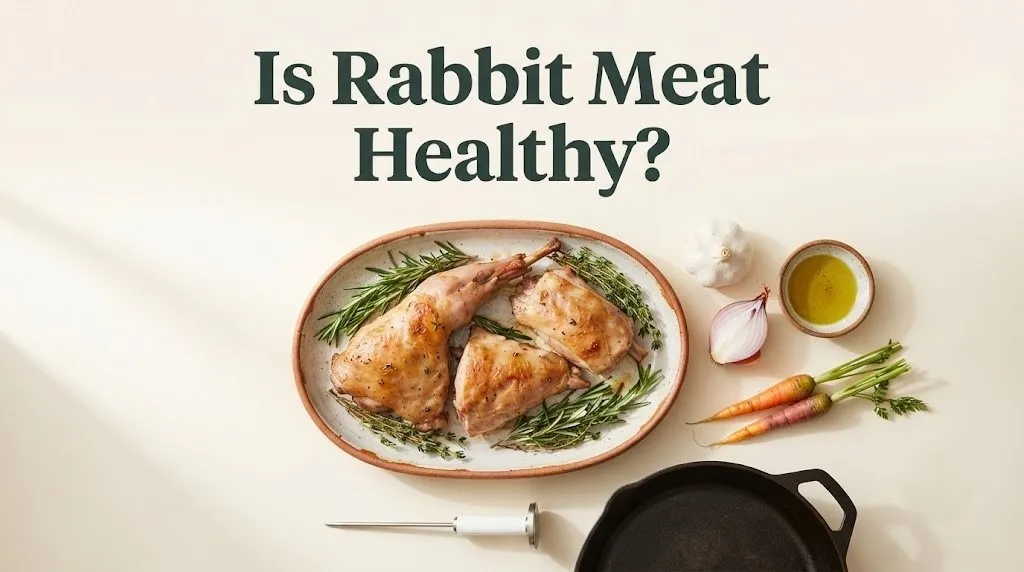
Rabbit meat is one of the leanest, highest-protein animal proteins available, making it exceptionally healthy from a macronutrient standpoint but requiring careful preparation and an awareness of its unique nutritional limitation. It is not a food most Americans eat regularly, but the nutritional profile is strong enough that it deserves a closer look.
The reason rabbit matters in a conversation about healthy eating is that it outperforms chicken, beef, and pork on leanness and protein density. The USDA reports that domestic rabbit meat contains roughly 173 calories, 31 grams of protein, and 5 grams of fat per 100 grams of cooked meat. For comparison, skinless chicken breast delivers about 165 calories and 31 grams of protein. The numbers are remarkably close, with rabbit offering a slightly higher iron and vitamin B12 content per serving. The trade-offs are not nutritional. They are cultural, practical, and related to rabbit’s unusual fat profile.
This guide covers everything you need to know about rabbit meat as food. You will learn the full nutritional breakdown, how it compares to more common meats, what protein poisoning is and whether you actually need to worry about it, how to cook rabbit so it does not dry out, who should and should not eat it, and where to buy it if you decide to add it to your rotation. Every nutritional claim is sourced to the USDA nutrient database or named research.
Rabbit Meat Nutrition Facts
A 3-ounce (85-gram) serving of cooked domestic rabbit meat contains approximately 147 calories, 26 grams of protein, 4.3 grams of fat (of which 1.2 grams are saturated), 70 milligrams of cholesterol, and 40 milligrams of sodium. It is a lean, protein-dense meat with a micronutrient profile strong in B vitamins and minerals.
The protein content is the standout feature. At 26 grams per 3-ounce serving, rabbit provides more protein per calorie than nearly any other commonly available meat. The protein is complete, meaning it contains all nine essential amino acids in proportions the human body can use efficiently. The Food and Agriculture Organization (FAO) of the United Nations has identified rabbit as a high-quality protein source suitable for addressing protein malnutrition in resource-limited settings.
The fat profile is where rabbit differs most from conventional meats. Rabbit fat is highly unsaturated, which means it is soft at room temperature and oxidizes more readily than the saturated fat in beef or pork. This unsaturated fat profile is actually cardioprotective by the standards of the American Heart Association, which recommends replacing saturated fat with unsaturated fat where possible. The challenge is culinary, not nutritional. Rabbit’s leanness makes it prone to drying out during cooking.
The micronutrient profile deserves attention. Rabbit is an excellent source of vitamin B12, providing roughly 3.5 micrograms per 100 grams, which exceeds the daily requirement of 2.4 micrograms for adults. It is a good source of niacin (vitamin B3), phosphorus, selenium, and iron. The iron in rabbit meat is heme iron, the form found in animal foods that the body absorbs more efficiently than the non-heme iron in plant foods. This makes rabbit particularly relevant for people at risk of iron deficiency, including menstruating women and endurance athletes.
| Nutrient | Rabbit (3 oz cooked) | Chicken Breast (3 oz) | Beef Sirloin (3 oz) | Pork Tenderloin (3 oz) |
|---|---|---|---|---|
| Calories | 147 | 140 | 180 | 145 |
| Protein | 26 g | 26 g | 25 g | 24 g |
| Total Fat | 4.3 g | 3.5 g | 8 g | 4.5 g |
| Saturated Fat | 1.2 g | 0.9 g | 3 g | 1.5 g |
| Iron | 2 mg | 0.5 mg | 1.6 mg | 0.7 mg |
| Vitamin B12 | 3.5 mcg | 0.3 mcg | 1.5 mcg | 0.5 mcg |
| Cholesterol | 70 mg | 75 mg | 75 mg | 70 mg |
How Does Rabbit Meat Compare to Chicken?
Rabbit meat and skinless chicken breast are nearly identical in calories and protein content per serving, with rabbit offering more iron and vitamin B12 while chicken breast is slightly lower in fat. The two meats are more similar than different nutritionally, and they can substitute for each other in most recipes with minor adjustments for rabbit’s leanness.
The nutritional differences that do exist favor rabbit in specific micronutrient categories. Rabbit provides roughly four times the iron of chicken breast and ten times the vitamin B12. For someone with low iron stores or a B12 deficiency risk, rabbit offers a meaningful advantage. The zinc and phosphorus content is also higher in rabbit than in chicken.
The texture and flavor differences are more pronounced than the nutritional ones. Rabbit meat is finer-grained than chicken breast and has a mildly sweet flavor that some tasters describe as a cross between chicken and pork. Wild rabbit has a stronger, gamier flavor than farmed rabbit. Farmed rabbit is milder and more consistent in texture. The flavor is subtle enough that rabbit takes well to marinades and braising liquids, absorbing flavors from herbs, wine, stock, and aromatics more readily than chicken breast does.
The cooking behavior differs in one critical way. Chicken breast contains enough intramuscular fat to stay moist with quick, high-heat cooking methods like grilling or pan-searing. Rabbit does not. Rabbit requires either moist-heat cooking (braising, stewing) or careful attention to temperature with dry-heat methods. Overcooked rabbit breast turns dry and stringy faster than overcooked chicken breast because there is no fat to buffer the protein contraction.
Cost and availability create the practical difference between the two meats. Chicken breast is available at every grocery store for roughly 3 to 5 dollars per pound. Rabbit typically costs 8 to 15 dollars per pound and is not available at most conventional supermarkets. It is found at specialty butchers, farmers markets, and online meat purveyors. The nutritional similarity means rabbit is not a necessary upgrade from chicken. It is an alternative for people seeking variety, a different flavor, or the specific micronutrient advantages it offers.
Is Rabbit Meat Good for Weight Loss?
Rabbit meat supports weight loss effectively because it delivers more protein per calorie than most other meats, and high-protein foods increase satiety and preserve lean muscle mass during calorie restriction. A 3-ounce serving provides 26 grams of protein for only 147 calories.
Protein is the most satiating macronutrient. A substantial body of research, including a 2020 meta-analysis in Nutrients, has demonstrated that higher-protein diets increase post-meal fullness and reduce subsequent calorie intake compared to lower-protein diets with the same calorie content. Rabbit delivers this protein efficiency in a leaner package than beef or pork, making it a useful tool for someone trying to create a calorie deficit without feeling hungry.
The thermic effect of food also favors protein. The body uses roughly 20 to 30 percent of the calories from protein just to digest and metabolize it, compared to 5 to 10 percent for carbohydrates and 0 to 3 percent for fat. Eating rabbit instead of a fattier meat marginally increases the number of calories burned during digestion. The effect is small per meal but cumulative over weeks and months of consistent dietary choices.
Muscle preservation during weight loss matters for metabolic rate. Lean body mass is the primary driver of resting energy expenditure. Losing muscle during a calorie deficit slows the metabolism and makes further weight loss harder. Adequate protein intake, generally 1.6 to 2.2 grams per kilogram of body weight daily for people in a calorie deficit, helps preserve muscle. Rabbit fits neatly into a high-protein, low-calorie eating plan.
The caveat is that rabbit alone is not a weight loss solution. The weight loss benefit comes from substituting it for higher-calorie protein sources or using it as the center of a calorie-controlled meal. A rabbit stew with vegetables and a small amount of olive oil is a nutrient-dense, filling meal. A rabbit braised in cream and served with buttered noodles is delicious but not low-calorie. Preparation method determines the final health impact.
Key Takeaway: Rabbit is nutritionally similar to chicken breast with more iron and B12. It supports weight loss through high protein density and satiety. The cooking challenge is its leanness, which requires moist heat or careful temperature control.
What Vitamins and Minerals Does Rabbit Meat Provide?
Rabbit meat is rich in vitamin B12, niacin (B3), phosphorus, selenium, iron, and zinc. It provides several essential micronutrients at levels that meet or exceed the amounts found in more commonly eaten meats.
Vitamin B12 is the most concentrated micronutrient in rabbit. A 100-gram serving provides more than 100 percent of the adult daily requirement. B12 is essential for red blood cell formation, neurological function, and DNA synthesis. It is found naturally only in animal foods. People who eat little or no meat, particularly vegans and some vegetarians, are at risk of B12 deficiency. For omnivores, rabbit is a potent dietary source.
Iron in rabbit meat is heme iron, which has roughly 25 to 30 percent absorption in the human gut compared to 5 to 10 percent for the non-heme iron in plant foods. The National Institutes of Health (NIH) identifies heme iron as particularly valuable for preventing iron-deficiency anemia in populations with high iron needs. A 3-ounce serving of rabbit provides roughly 2 milligrams of iron, which is 11 percent of the daily value for adult women and 25 percent for adult men.
Selenium is a mineral that functions as an antioxidant through its role in selenoproteins. Rabbit provides roughly 40 micrograms of selenium per 100 grams, which is more than half the daily requirement. Selenium supports thyroid function, immune response, and DNA repair. Soil selenium content varies by region, so the exact amount in any given rabbit depends on where the animal was raised and what it ate.
Phosphorus and zinc round out the mineral profile. Phosphorus works with calcium to build bone mineral density. Zinc supports immune function and wound healing. A serving of rabbit provides approximately 20 percent of the daily zinc requirement. These minerals are present in other meats as well, but rabbit’s low calorie content means the nutrient-to-calorie ratio is favorable.
What Is Rabbit Starvation or Protein Poisoning?
Rabbit starvation, also called protein poisoning, is a condition that occurs when a person consumes almost exclusively very lean protein without adequate fat or carbohydrate, leading to nausea, diarrhea, and eventually death from hyperammonemia and amino acid toxicity. It is not a risk for anyone eating rabbit as part of a normal mixed diet.
The condition gets its name from historical accounts of explorers and trappers in North America who subsisted on wild rabbit during winter months when other game was scarce. Wild rabbit is even leaner than farmed rabbit, carrying as little as 2 percent body fat. The human liver can process protein at a maximum rate of roughly 35 to 40 percent of total daily calories before the urea cycle becomes overwhelmed. When protein exceeds this threshold for extended periods, ammonia builds up in the blood.
The symptoms of protein poisoning follow a predictable progression. Nausea and diarrhea appear within days. Fatigue and low blood pressure follow. Heart rate slows. The condition is fatal if the diet is not corrected. The cure is fat and carbohydrate. A single meal containing adequate fat resolves the acute symptoms because it provides the non-protein energy the body needs to metabolize the excess amino acids.
No one eating rabbit as part of a varied diet that includes cooking oil, vegetables, grains, or other fat sources is at risk of rabbit starvation. The condition requires near-exclusive consumption of extremely lean meat for weeks. A rabbit braised with olive oil, served with potatoes and vegetables, contains plenty of fat and carbohydrate. The historical cases that gave the condition its name were situations of extreme food scarcity, not dietary choices.
The practical takeaway is that rabbit should not be the only food you eat. This is true of any single food. Pair rabbit with fat sources like olive oil, butter, avocado, or nuts. Include carbohydrate sources like root vegetables, grains, or legumes. The meal becomes nutritionally complete and the protein poisoning risk vanishes.
Is Rabbit Meat Safe to Eat?
Rabbit meat is safe to eat when sourced from reputable suppliers, stored at proper temperatures, and cooked to an internal temperature of 160 degrees Fahrenheit (71 degrees Celsius) . The same food safety principles that apply to chicken apply to rabbit.
The USDA inspects domestic rabbit meat under voluntary inspection programs. Unlike beef, pork, and poultry, rabbit inspection is not mandatory at the federal level, though many producers participate voluntarily. The practical implication is that consumers should buy rabbit from established suppliers with transparent sourcing practices. Rabbit sold at farmers markets should come from a producer who can answer questions about raising conditions and processing.
Tularemia, also called rabbit fever, is a bacterial infection caused by Francisella tularensis that can be transmitted to humans through handling or eating infected wild rabbits. The CDC reports roughly 200 to 300 human cases annually in the United States, primarily among hunters handling wild rabbits. Farmed rabbit is not a tularemia risk because the animals are raised in controlled environments. Cooking rabbit to 160 degrees Fahrenheit kills the bacteria regardless of source.
Parasites are another concern primarily associated with wild rabbit. Wild rabbits can carry tapeworms, roundworms, and other parasites. Farmed rabbits raised in sanitary conditions and inspected before sale carry minimal parasite risk. Anyone hunting wild rabbit should have the carcass inspected and should cook the meat thoroughly. Freezing wild rabbit at 0 degrees Fahrenheit for 10 days kills most parasites, though not all.
The same cross-contamination rules apply to rabbit as to raw chicken. Use separate cutting boards and utensils for raw rabbit. Wash hands thoroughly after handling. Refrigerate raw rabbit at 40 degrees Fahrenheit or below and use within 2 days, or freeze at 0 degrees Fahrenheit for up to 6 months. Leftover cooked rabbit should be refrigerated within 2 hours and consumed within 3 to 4 days.
Quick Tip for safe rabbit handling:
- Treat raw rabbit exactly like raw chicken in your kitchen. Separate cutting boards, thorough hand washing, and temperature monitoring are non-negotiable.
- Cook rabbit to an internal temperature of 160 degrees Fahrenheit measured at the thickest part of the meat.
How to Cook Rabbit So It Stays Tender
Rabbit meat stays tender when cooked with moist-heat methods like braising, stewing, or slow cooking, or when pan-seared or roasted with careful attention to internal temperature and the addition of fat. The leanness of rabbit is the central cooking challenge. The solution is either low-and-slow moisture or high-heat speed with added fat.
Braising is the most reliable method for rabbit. The technique works with every cut of the animal. Rabbit pieces are browned in a heavy pot with a small amount of oil, then simmered in a covered pot with liquid (stock, wine, tomato, or a combination) and aromatics for 60 to 90 minutes at roughly 300 to 325 degrees Fahrenheit. The collagen in the meat converts to gelatin during the long slow cook, creating tenderness. The braising liquid becomes a sauce.
Stewing follows the same principle. Rabbit pieces are cut small, browned, and simmered in liquid until fork-tender. Stewing works particularly well for the tougher leg and shoulder cuts. Rabbit stew with potatoes, carrots, celery, and herbs is the most traditional preparation across European and Latin American cuisines that eat rabbit regularly.
Pan-searing rabbit loin or boneless leg meat requires speed and attention. The meat is cut into medallions or left whole, seasoned, and seared in a hot pan with butter or oil for 3 to 4 minutes per side. The internal temperature target is 160 degrees Fahrenheit. The meat must rest for 5 minutes after cooking. Going past 165 degrees produces dry, stringy rabbit. A marinade of olive oil, acid (lemon juice or vinegar), and herbs applied for 2 to 4 hours before cooking improves moisture retention.
Roasting whole rabbit is possible but requires added fat to prevent drying. The rabbit is seasoned, brushed with oil or wrapped in bacon or pancetta, and roasted at 350 degrees Fahrenheit for approximately 45 to 60 minutes depending on size. Basting with pan juices every 15 minutes helps maintain moisture. The safe internal temperature of 160 degrees is the target. Covering the rabbit loosely with foil during the first half of cooking prevents the exterior from drying before the interior cooks through.
Key Takeaway: Rabbit starvation is not a risk for anyone eating rabbit as part of a mixed diet that includes fat sources. Rabbit is safe when cooked to 160 degrees Fahrenheit. Moist-heat cooking methods produce the best texture because of rabbit’s extreme leanness.
What Does Rabbit Meat Taste Like?
Rabbit meat tastes mildly sweet and savory, with a fine grain and a flavor most often described as a subtle cross between chicken and pork. Farmed rabbit is milder than wild rabbit, which develops a gamier, more mineral-forward flavor from its varied forage diet.
The mildness of farmed rabbit makes it a versatile canvas for sauces, marinades, and spice blends. It does not dominate a dish the way lamb or venison does. The meat takes on the character of whatever it is cooked with. Rabbit braised in white wine with tarragon tastes of wine and tarragon. Rabbit stewed with tomatoes, olives, and garlic tastes of the Mediterranean. The meat itself is a background note that supports rather than competes with the seasoning.
The flavor difference between wild and farmed rabbit is real and worth understanding before you cook. Wild rabbit has a darker meat color and a more pronounced flavor that some people love and others find unpleasant. Soaking wild rabbit in salted water or buttermilk for several hours before cooking mellows the gaminess. Farmed rabbit requires no soaking and has a clean, neutral flavor that most people find inoffensive on first encounter.
The texture of properly cooked rabbit is tender and slightly fibrous, similar to chicken thigh but finer-grained. Overcooked rabbit, like overcooked chicken breast, becomes dry and stringy. The texture difference between a braised rabbit leg and a pan-seared rabbit loin is significant. Braising produces meat that pulls apart easily. Pan-searing produces slices that hold their shape. Both are pleasant when executed correctly.
For a first-time rabbit eater, the safest introduction is rabbit braised with aromatic vegetables and served over rice or polenta. The cooking method forgives mistakes. The flavor is gentle. The presentation is familiar enough that the unfamiliarity of the protein does not overwhelm the experience.
Who Should Not Eat Rabbit Meat?
People with gout, certain kidney conditions, or a known allergy to rabbit should avoid or limit rabbit meat. Pregnant women should exercise the same caution with rabbit as with other meats regarding proper cooking and sourcing.
Gout is the most common dietary restriction relevant to rabbit consumption. Rabbit meat is moderately high in purines, which are compounds that the body breaks down into uric acid. In people with gout, elevated uric acid levels can trigger painful joint flare-ups. The purine content of rabbit is similar to other meats rather than uniquely high, but all meat consumption requires monitoring for someone managing gout. A healthcare provider familiar with the patient’s uric acid levels should provide individualized guidance on meat intake.
Rabbit allergy is rare but documented. Case reports in the allergy literature describe reactions ranging from oral itching to anaphylaxis following rabbit meat consumption. The allergy appears to be distinct from more common mammalian meat allergies like the alpha-gal syndrome caused by lone star tick bites. Anyone with a known rabbit allergy should avoid the meat entirely and be aware that rabbit may appear as an ingredient in specialty sausages, pates, and prepared foods.
Pregnant women can safely eat rabbit meat that has been cooked to 160 degrees Fahrenheit. The same listeria and toxoplasmosis concerns that apply to undercooked poultry apply to rabbit. The recommendation is thorough cooking, not avoidance. The iron and B12 content of rabbit is actually beneficial during pregnancy, when iron needs increase significantly. The American College of Obstetricians and Gynecologists recommends adequate iron intake during pregnancy, and rabbit provides a highly bioavailable source.
People with advanced chronic kidney disease who are on protein-restricted diets should account for rabbit’s high protein content. A 3-ounce serving provides more than half the daily protein allowance for someone on a strict renal diet. A renal dietitian can help determine whether rabbit fits within the prescribed protein limit.
Is Rabbit Meat Environmentally Sustainable?
Rabbit meat is one of the most environmentally sustainable land-animal proteins available, with a feed conversion ratio superior to beef, pork, and even chicken. Rabbits convert plant matter into edible protein more efficiently than most livestock and produce less methane and require less land per pound of meat.
The feed conversion ratio tells the story in numbers. Rabbits require roughly 2.5 to 3 pounds of feed to produce 1 pound of body weight. Beef cattle require 6 to 10 pounds. Pigs require 3 to 4 pounds. Chickens require 1.7 to 2 pounds. Rabbit is competitive with chicken and superior to every other major land animal protein. The FAO has promoted rabbit farming in developing countries specifically because of this efficiency.
Land use is another sustainability advantage. Rabbits can be raised in small spaces relative to the protein they produce. They do not require pasture. Backyard rabbit raising is practiced worldwide and can produce a meaningful amount of meat from kitchen scraps and forage that would otherwise go unused. The land footprint of commercial rabbit production is significantly smaller per pound of meat than cattle or pig operations.
Methane production, a major driver of livestock’s climate impact, is minimal in rabbits. Ruminant animals like cattle and sheep produce methane through enteric fermentation in their digestive tracts. Rabbits, as monogastric animals, produce negligible methane. The greenhouse gas profile of rabbit meat is closer to chicken than to beef.
The sustainability caveat is scale. Rabbit meat is a niche product in North America, which means the supply chain is not optimized the way chicken and beef supply chains are. A rabbit purchased from a local farmer at a market has a different environmental footprint than rabbit shipped frozen across the country. The local, small-scale rabbit producer is the sustainability ideal. The factory-farmed rabbit operation that does not currently exist at scale in the United States would present different environmental questions.
How Does Rabbit Compare to Other Lean Meats?
Rabbit is comparable to turkey breast, bison, and venison in its leanness and protein density, with a micronutrient profile that stands out for iron and B12 content. It belongs in the category of ultra-lean meats that require different cooking treatment than fattier cuts.
| Meat | Calories (3 oz) | Protein (g) | Fat (g) | Iron (mg) | B12 (mcg) |
|---|---|---|---|---|---|
| Rabbit | 147 | 26 | 4.3 | 2.0 | 3.5 |
| Turkey Breast | 125 | 26 | 1.5 | 0.5 | 0.3 |
| Bison (top sirloin) | 145 | 24 | 5 | 2.8 | 2.0 |
| Venison (deer) | 135 | 26 | 3 | 3.5 | 1.8 |
| Chicken Breast | 140 | 26 | 3.5 | 0.5 | 0.3 |
| Ostrich | 130 | 24 | 3 | 3.0 | 4.0 |
Turkey breast is the leanest of the lean meats at 1.5 grams of fat per serving, but it gives up significant iron and B12 compared to rabbit. Bison and venison are closer to rabbit in iron content and have the advantage of being grass-fed in many cases, which improves the fatty acid profile of the small amount of fat they contain.
Venison (from deer, Odocoileus species in North America) is the closest wild-game comparison to rabbit. Both are very lean, high in iron, and prone to drying out when overcooked. Both benefit from braising and stewing. Both have a more pronounced flavor than conventional meats. The choice between them is largely about availability and taste preference rather than nutritional superiority.
The category of ultra-lean meats shares a common cooking principle: fat must be added during preparation or the meat must be cooked in a way that preserves internal moisture. None of these meats can be treated like a ribeye steak. All of them reward the cook who respects their leanness rather than fighting it.
Key Takeaway: Rabbit tastes like mild, sweet chicken with a finer grain. People with gout or advanced kidney disease should monitor intake. Rabbit is environmentally sustainable and comparable to other ultra-lean meats like turkey breast and venison in macronutrients, with an edge in iron and B12.
Where to Buy Rabbit Meat
Rabbit meat is available at specialty butcher shops, farmers markets, some Whole Foods Market locations, and through online meat purveyors that ship frozen product nationwide. It is not a standard supermarket item in most of the United States.
Local farmers markets are the most reliable in-person source for fresh rabbit. Small-scale rabbit farmers sell directly to consumers in many regions. The farmer can answer questions about breed, feed, and processing. Prices at farmers markets typically range from 8 to 12 dollars per pound for whole rabbit and 12 to 18 dollars per pound for cut-up parts.
Specialty butcher shops, particularly those serving European, Latin American, or Chinese communities, often carry rabbit. Italian, French, and Spanish cuisines have strong rabbit traditions, and butcher shops in neighborhoods with these culinary cultures are more likely to stock rabbit regularly. Chinese grocery stores and butcher shops in urban areas frequently carry rabbit as well.
Online meat purveyors have made rabbit accessible regardless of geography. Companies like D’Artagnan, Fossil Farms, and smaller regional operations ship frozen rabbit nationwide. The shipping cost adds to the price, but the convenience of direct delivery opens rabbit to consumers who live nowhere near a specialty market. Online rabbit typically costs 12 to 20 dollars per pound including shipping for smaller orders.
Whole rabbit versus cut-up parts is the main purchasing decision. Whole rabbit costs less per pound and gives the cook control over how the animal is broken down. The carcass and bones become stock. Cut-up parts are more convenient and may be preferred by someone cooking rabbit for the first time who is not comfortable breaking down a whole animal.
Quick Tip:
- Ask the vendor whether the rabbit is farmed or wild. Farmed rabbit is milder and has more consistent tenderness.
- A whole rabbit weighing 2.5 to 3 pounds feeds two to three people when braised or stewed.
How to Store and Handle Rabbit Meat
Fresh rabbit should be stored in the coldest part of the refrigerator at 40 degrees Fahrenheit or below and used within 1 to 2 days of purchase. Frozen rabbit stored at 0 degrees Fahrenheit maintains quality for up to 6 months and remains safe indefinitely.
Refrigerator storage follows the same rules as raw chicken. Keep rabbit in its original packaging on a plate or in a container to catch any drips. Store it on the lowest shelf of the refrigerator so that any leaking juices cannot contaminate other foods. If the rabbit will not be used within 2 days, freeze it immediately.
Freezing rabbit properly extends its usable life without meaningful quality loss. Wrap the meat tightly in plastic wrap, then in aluminum foil or a freezer bag with the air pressed out. Vacuum sealing is ideal if the equipment is available. Label the package with the date. Frozen rabbit that develops freezer burn, which appears as grayish-brown leathery patches, is safe to eat but will have degraded texture and flavor.
Thawing must be done safely. The three acceptable methods are refrigerator thawing (24 hours for a whole rabbit), cold water thawing (changing the water every 30 minutes), and microwave thawing followed by immediate cooking. Never thaw rabbit at room temperature on the kitchen counter. The exterior of the meat reaches the temperature danger zone (40 to 140 degrees Fahrenheit) while the interior is still frozen, creating conditions for bacterial growth.
Cooked rabbit leftovers should be refrigerated within 2 hours of cooking and consumed within 3 to 4 days. Reheat leftovers to 165 degrees Fahrenheit. Cooked rabbit freezes well in its braising liquid or sauce, which protects the meat from freezer burn. Frozen cooked rabbit should be used within 2 to 3 months for best quality.
What Are the Most Common Rabbit Breeds Raised for Meat?
The most common rabbit breeds raised for meat in the United States are New Zealand White, Californian, and American Chinchilla, with New Zealand White dominating commercial production because of its rapid growth rate and large litter sizes. These breeds have been selected for generations to produce consistent, mild-flavored meat.
New Zealand White rabbits reach slaughter weight of 4 to 5 pounds in 8 to 10 weeks. They are the industry standard for a reason. The breed is docile, fertile, and produces a carcass with a good meat-to-bone ratio. The white fur is also commercially valuable as a byproduct, though most meat rabbits are sold skinned and the fur is not a primary economic driver for small-scale producers.
Californian rabbits are slightly smaller at maturity but have a meatier loin relative to body size. They are often crossbred with New Zealand Whites for hybrid vigor. The crossbred offspring grow faster than either purebred parent. Most commercial rabbit meat comes from these crosses rather than from purebred lines.
American Chinchilla rabbits are a heritage breed that grows more slowly than commercial breeds but produces a flavorful meat that chefs and home cooks who prioritize taste over yield sometimes prefer. Heritage breeds are more common at farmers markets than in commercial distribution.
The breed information matters to consumers because it explains the size and appearance of the rabbit in the package. A 2.5-pound rabbit is a young fryer from a fast-growing commercial breed. A 3.5-pound rabbit from a heritage breed is an older animal with slightly more developed flavor and firmer texture. Both are good. They cook slightly differently.
Frequently Asked Questions About Rabbit Meat
Is rabbit meat healthier than chicken?
Rabbit meat and chicken breast are nearly identical in calories and protein, with rabbit providing more iron and vitamin B12 while being slightly higher in fat.
Neither meat is universally healthier than the other. Rabbit has advantages for iron status and B12 intake.
Chicken breast is slightly leaner and far more available and affordable.
Can you eat rabbit meat every day?
Eating rabbit every day as part of a varied diet with adequate fat and carbohydrate sources is safe and would not cause protein poisoning.
The historical condition called rabbit starvation only occurs with near-exclusive consumption of extremely lean meat for extended periods.
A daily rabbit meal that includes cooking oil, vegetables, and grains presents no protein poisoning risk whatsoever.
What does rabbit meat taste like compared to chicken?
Rabbit meat tastes mildly sweet and slightly more savory than chicken breast, with a finer grain and a texture closer to chicken thigh.
Farmed rabbit has a clean, neutral flavor that most people find similar to chicken with a subtle pork-like sweetness.
Wild rabbit has a stronger, gamier flavor that is more distinct from conventional meats.
Is rabbit meat good for building muscle?
Rabbit meat is excellent for muscle building because it provides 26 grams of complete protein per 3-ounce serving with minimal accompanying calories.
The protein contains all essential amino acids needed for muscle protein synthesis.
The leanness makes it suitable for bodybuilders and athletes who need high protein intake while managing calorie and fat consumption.
How do you know when rabbit meat is fully cooked?
Rabbit meat is fully cooked when it reaches an internal temperature of 160 degrees Fahrenheit at the thickest part of the meat.
The meat should be opaque throughout with no pinkness and the juices should run clear.
Overcooking beyond 165 degrees will dry the meat quickly because of rabbit’s low fat content.
Rabbit Meat Deserves a Place in a Healthy Diet
Rabbit is not a miracle food, and it is not a risky oddity. It is a lean, protein-dense meat with a strong micronutrient profile that sits comfortably alongside chicken breast, turkey, and bison in the category of healthy animal proteins. The cultural unfamiliarity in the American market is the main barrier, not the nutrition. People who grow up eating rabbit in France, Italy, and China do not think of it as exotic. They think of it as dinner.
If you are curious, start with a braised rabbit recipe from a source you trust. Use plenty of aromatics, a good braising liquid, and low heat for 90 minutes. Serve it over rice or polenta with a green vegetable on the side. You will produce a meal with roughly 400 to 500 calories, 35 grams of protein, and a flavor profile that might surprise you with how approachable it is.
The rabbit at the farmers market or in the frozen section of a specialty store is the same animal that has fed humans for thousands of years. It is lean, it is sustainable, and it cooks beautifully once you understand that it needs moisture, fat, and patience. That is not a weakness in the meat. It is a cooking instruction.