The healthiest olive oil is a freshly harvested, properly stored extra virgin olive oil with a high polyphenol count and a harvest date printed on the bottle. The brand matters less than the chemistry. A $12 California olive oil with a crush date from last fall is healthier than a $40 Italian bottle that has been sitting on a lighted shelf for two years.
The European Food Safety Authority (EFSA) allows a health claim stating that olive oil polyphenols contribute to the protection of blood lipids from oxidative stress. The claim applies only to oils with at least 5 milligrams of hydroxytyrosol and its derivatives per 20 grams of oil. Most supermarket oils do not meet this threshold.
We will walk through the specific brands that pass the 2026 quality tests, the science of polyphenols, the truth about cooking at high heat, and the simple sensory tests that tell you whether your expensive bottle is already rancid.
Healthy Olive Oil
A healthy olive oil is defined by two factors: it is authentic extra virgin grade, and it contains a high level of phenolic compounds. The monounsaturated fat, primarily oleic acid, is the baseline health component present in all genuine olive oils. The polyphenols are the bonus that separates the medicinal from the merely adequate.
The PREDIMED trial, published in the New England Journal of Medicine, found that a Mediterranean diet supplemented with extra virgin olive oil reduced major cardiovascular events by 31 percent compared to a control diet. The study used high-polyphenol extra virgin olive oil, not refined olive oil or pomace oil. The grade of the oil mattered directly to the outcome.
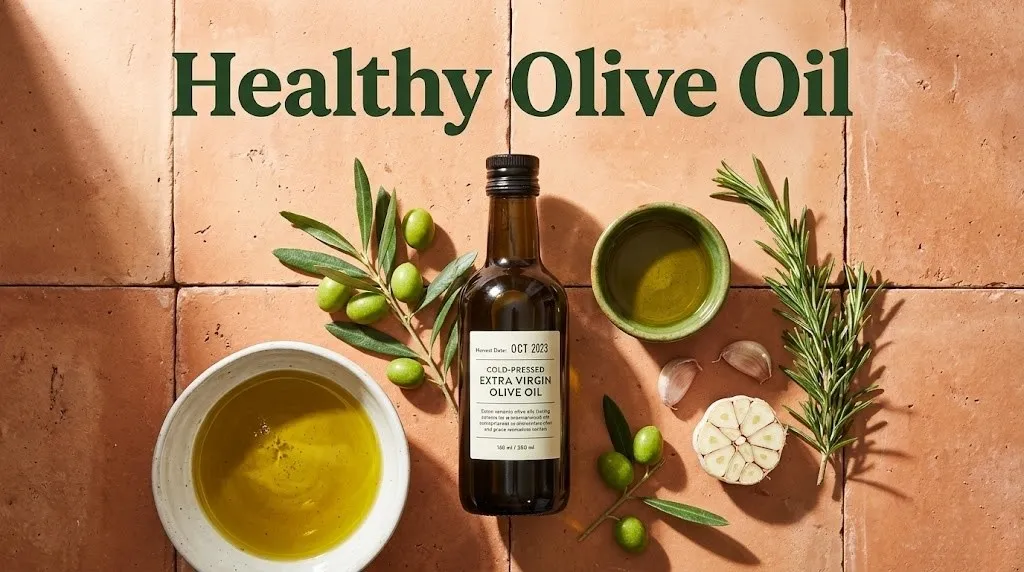
The health benefits degrade over time. Polyphenol content drops by roughly 30 to 40 percent within 12 months of harvest, even in properly stored oil. Oil older than 18 months from harvest retains the monounsaturated fat benefit but has lost most of its antioxidant and anti-inflammatory phenolic punch. The harvest date on the bottle is the single most honest indicator of health potential.
Best Healthy Olive Oil
The best healthy olive oil in 2026 is a single-estate, early-harvest extra virgin oil from a producer that prints both the harvest date and the polyphenol count on the label. Cobram Estate California Select, Terra Delyssa Organic, and Kirkland Signature Organic (when fresh) represent the best balance of quality and price.
Early-harvest oils are pressed from olives that are still green, not fully ripe. These oils are more bitter and pungent. They contain up to five times the polyphenol concentration of late-harvest oils. The bitterness is the taste of oleocanthal, the anti-inflammatory compound that stings the back of the throat.
Late-harvest oils are smoother, more buttery, and lower in polyphenols. They are not unhealthy, but they are not the “healthy olive oil” that drives the EFSA health claim. Choose early-harvest for health. Choose late-harvest for gentle flavor on delicate fish or fresh mozzarella.
| Feature | Early-Harvest EVOO | Late-Harvest EVOO |
|---|---|---|
| Polyphenol Count | 300-800 mg/kg | 80-200 mg/kg |
| Flavor Profile | Bitter, pungent, grassy | Buttery, mild, smooth |
| Best Use | Salads, finishing, dipping | Gentle cooking, baking |
| Shelf Life | 12-18 months | 18-24 months |
Healthy Olive Oil Brands
The healthiest olive oil brands in 2026 are those that submit to voluntary third-party testing and print the harvest date on every bottle. The California Olive Oil Council (COOC) seal is the most reliable indicator of authenticity in the United States.
Cobram Estate consistently wins international quality awards and prints polyphenol counts on select bottles. California Olive Ranch is the most widely available COOC-certified brand, found at Target, Kroger, and Whole Foods. Their 100% California blend is a reliable daily driver.
Bragg Organic is an affordable, widely available option. The bottle is small, which is actually a structural advantage. You finish it before it goes rancid. Partanna is a Sicilian brand in a tin, which protects the oil from light degradation. Graza is a newer brand that uses a squeezable bottle with a very clear harvest date.
Key Takeaway: The COOC seal, a harvest date within the last 12 months, and a container that blocks light are the three brand-independent indicators of a healthy olive oil.
Most Healthy Olive Oil
The single healthiest olive oil you can buy is a certified high-polyphenol extra virgin olive oil with a verified phenol count above 250 milligrams per kilogram. These oils meet the EFSA health claim threshold by a wide margin and deliver a potent dose of oleocanthal and oleuropein.
High-polyphenol oils are sold as functional health products in Europe. Brands like Oro del Desierto and MoroGreece print the phenol count on the label like a nutritional supplement. A 2019 study in the journal Nutrients found that daily consumption of high-polyphenol olive oil reduced oxidized LDL cholesterol and markers of inflammation in subjects with metabolic syndrome.
These oils are intense. They sting the throat and taste aggressively green, like fresh-cut grass and black pepper. They are meant for finishing and dipping, not for frying eggs. A tablespoon drizzled over warm beans or soup delivers the health benefit without subjecting the palate to a full shot of bitterness.
Healthy Olive Oils
The category of healthy olive oils includes extra virgin oils, virgin oils, and some refined oils in specific cooking contexts. Extra virgin is the gold standard. Virgin olive oil is a step down with slightly higher acidity and lower polyphenols. It is healthy but not exceptional.
Refined olive oil has been chemically treated to remove defects. It retains the monounsaturated fat profile but loses all polyphenols and most of the vitamin E. It is a neutral cooking oil with a good fatty acid profile. It is not a health food. It is a neutral cooking fat that is healthier than soybean or canola oil for high-heat applications.
“Pure olive oil” and “light olive oil” are marketing terms for blends of refined and virgin oils. They are shelf-stable, neutral-tasting, and have a moderate smoke point. They are the better choice for a neutral cooking oil if you are replacing vegetable oil. They are not the better choice for salad dressings or finishing where the polyphenol content matters.
Best Olive Oil Healthy
The best olive oil for health is the one you use consistently and finish before it degrades. A $20 bottle of fresh, COOC-certified extra virgin oil from California that you use daily is healthier than a $50 Tuscan estate oil that sits half-full on your counter for 18 months.
Daily use matters. Replacing butter, margarine, and vegetable oil with extra virgin olive oil across all cooking applications shifts the fatty acid profile of your entire diet. The American Heart Association notes that replacing 5 percent of saturated fat calories with monounsaturated fat is associated with a 15 percent lower risk of heart disease.
Do not reserve the good olive oil for special occasions. The clock is ticking from the moment the olives are crushed. The polyphenols degrade. The oil oxidizes. Use the good bottle every day. Finish it within three months of opening. Replace it with a fresh one. This rotation habit does more for your health than buying the most expensive bottle on the shelf.
What Is the Healthiest Olive Oil to Buy
The healthiest olive oil to buy is a domestic, COOC-certified extra virgin olive oil in a dark glass bottle or tin with a harvest date printed on the label. In 2026, that means Cobram Estate California Select, California Olive Ranch 100% California, or Kirkland Signature Organic from a high-turnover Costco warehouse.
The dark glass requirement is non-negotiable. Light degrades chlorophyll and accelerates lipid peroxidation. A clear glass bottle sitting under fluorescent grocery store lights is oxidizing in real time. The oil may be genuine extra virgin at the time of bottling. It may be a degraded, low-polyphenol shadow of itself by the time you buy it.
The harvest date is more important than the “best by” date. A “best by” date is typically 18 to 24 months after bottling. The harvest date tells you when the olives were actually crushed. Look for a harvest date within the last 12 months. If the bottle does not have a harvest date, assume the oil is older than it should be.
Key Takeaway: Buy dark glass, check the harvest date, look for the COOC seal, and finish the bottle within three months of opening.
Extra Virgin Olive Oil Health Benefits
Extra virgin olive oil is the only cooking fat clinically shown to reduce cardiovascular events in a large, randomized controlled trial. The PREDIMED study’s 31 percent risk reduction is a benchmark that no other cooking oil has matched in a trial of equivalent rigor.
Oleocanthal, the phenolic compound that causes the peppery sting in fresh oil, has anti-inflammatory properties comparable to ibuprofen in laboratory studies. A 2014 study in the Journal of Nutritional Biochemistry found that oleocanthal inhibits COX-1 and COX-2 enzymes, the same inflammatory pathways targeted by non-steroidal anti-inflammatory drugs.
The monounsaturated fat oleic acid improves blood lipid profiles. It lowers LDL cholesterol without reducing HDL cholesterol. It is stable at cooking temperatures and resists oxidation better than polyunsaturated vegetable oils. The combination of the stable fatty acid and the bioactive polyphenols creates a food that is both a cooking fat and a functional health product.
Polyphenol Rich Olive Oil
Polyphenols are the plant compounds that make extra virgin olive oil a functional food. Total polyphenol count in fresh, early-harvest oils ranges from 300 to 800 milligrams per kilogram. The EFSA health claim threshold is 250 milligrams per kilogram. Most grocery store oils fall below 100.
The polyphenol content is directly tasteable. A high-polyphenol oil is bitter and pungent. It stings the back of the throat and makes you cough. This is the oleocanthal effect. It is not a defect. It is the sensory confirmation of the oil’s health potential. A smooth, buttery oil with no bitterness and no throat sting has low polyphenols.
To maximize polyphenol intake, use the oil raw or at low heat. Polyphenols are heat-sensitive and degrade significantly above 350 degrees Fahrenheit. Drizzle the oil over finished dishes, use it in salad dressings, or stir it into soup just before serving. Do not use your most expensive, high-polyphenol oil for deep frying.
Is Extra Virgin Olive Oil Healthy
Yes, extra virgin olive oil is the healthiest widely available cooking fat. It is the only oil with a body of clinical evidence linking regular consumption to reduced cardiovascular disease, reduced inflammation, and improved longevity markers.
The healthfulness is not just about what it contains but what it replaces. Every tablespoon of extra virgin olive oil that displaces butter, margarine, shortening, or vegetable oil in your cooking shifts your dietary fat ratio toward the profile associated with the best health outcomes in the PREDIMED trial.
Extra virgin olive oil is calorie-dense at 120 calories per tablespoon. The health benefits do not override the energy balance equation. A tablespoon over a salad is a healthy addition. A quarter-cup of oil-soaked bread before every meal is a caloric surplus that adds up. The health benefits are dose-dependent but constrained by total energy intake.
Olive Oil Smoke Point
The smoke point of extra virgin olive oil is between 375 and 410 degrees Fahrenheit. This is higher than the standard sauteing and pan-frying temperature range. The widespread belief that you cannot cook with extra virgin olive oil because of its low smoke point is a myth.
A 2018 study in Acta Scientific Nutritional Health tested the stability of various cooking oils at high heat. Extra virgin olive oil produced the lowest levels of harmful polar compounds and trans fats compared to canola, grapeseed, and avocado oils. The polyphenols and vitamin E in the oil act as antioxidants that protect the fatty acids from breaking down.
The smoke point is a physical indicator of the oil degrading, but it is not the threshold of toxicity. Refined oils with higher smoke points lack the protective antioxidants. They produce fewer visible smoke signals but more invisible oxidative byproducts. Extra virgin olive oil smokes at a lower visible temperature but resists actual chemical damage better.
How to Choose Healthy Olive Oil
Choose a healthy olive oil by checking the label for four specific indicators in this order: the words “Extra Virgin,” a harvest or crush date within the last 12 months, a dark glass bottle or tin container, and a third-party certification seal like COOC or EVA.
Price is a signal, not a guarantee. A bottle under $10 per liter is unlikely to be genuine extra virgin. A bottle over $30 per 500ml is likely a premium product but not necessarily healthier than a $15 California oil. The sweet spot for genuine, healthy extra virgin olive oil in 2026 is $12 to $20 per 500ml bottle.
Smell the oil before you buy if possible. Fresh extra virgin olive oil smells like grass, green tomato, artichoke, or freshly cut herbs. Rancid oil smells like crayons, putty, or stale nuts. A bottle that has no smell at all is likely old or refined. Trust the sensory markers.
Best Extra Virgin Olive Oil 2026
Cobram Estate California Select is the best all-around healthy olive oil in 2026. It is COOC-certified, widely available at Costco and major grocery chains, and consistently scores high in independent quality tests. The flavor is balanced with medium bitterness and a clear green finish.
California Olive Ranch 100% California is the runner-up for daily use. It is slightly less expensive and more widely distributed. The flavor is milder than Cobram, making it a better entry point for people transitioning from butter or neutral oils.
Kirkland Signature Organic is the best value. A 1-liter bottle at Costco costs under $15 and carries both USDA Organic and COOC seals. The challenge is verifying freshness. Costco’s high turnover means the bottle on the shelf is likely fresher than a premium brand at a slower-selling specialty store.
| Brand | Price per 500ml | Polyphenols | Best Use |
|---|---|---|---|
| Cobram Estate CA Select | $16 | High (400+ mg/kg) | Finishing, salads |
| California Olive Ranch | $12 | Moderate (200+ mg/kg) | Daily cooking |
| Kirkland Organic | $7 | Moderate (150+ mg/kg) | Bulk cooking, baking |
| Bragg Organic | $10 | Moderate (200+ mg/kg) | All-purpose |
How to Store Olive Oil
Store olive oil in a dark, cool cabinet away from the stove. Heat and light are the primary accelerants of rancidity. The ideal storage temperature is between 57 and 70 degrees Fahrenheit. A cabinet next to the oven that warms up every time you bake is a poor choice.
Do not store olive oil in the refrigerator long-term. The oil will become cloudy and partially solidify. This does not damage the oil, but repeated cycles of chilling and warming create condensation inside the bottle, which introduces water and accelerates spoilage.
Finish an open bottle within two to three months. The headspace in a partially empty bottle contains oxygen. The oxygen reacts with the oil. A large, half-empty bottle is oxidizing faster than a smaller bottle of the same oil. Buy the size you can finish in a month or two, not the economy size that takes a year.
Olive Oil Fraud How to Spot It
Olive oil fraud is the practice of diluting extra virgin olive oil with cheaper refined oils like soybean, sunflower, or lower-grade olive pomace oil. Estimates from the FDA and industry watchdogs suggest that a percentage of imported oils labeled “extra virgin” do not meet the chemical or sensory standards for the grade.
Spot fraud by buying oils with third-party certifications. The COOC seal requires blind sensory testing and chemical analysis for every batch. The Extra Virgin Alliance (EVA) seal is similar. These seals are not marketing. They are legal proof that an independent lab has verified the oil as genuine extra virgin.
The at-home fridge test is a myth. Genuine extra virgin olive oil does partially solidify when chilled, but so do blends that contain olive oil. The fridge test cannot distinguish between a pure EVOO and a blend. The only reliable home verification is the harvest date, the certification seal, and your own nose. If it smells like crayons, it is rancid or adulterated.
Frequently Asked Questions About Healthy Olive Oil
What is the healthiest olive oil to cook with?
Extra virgin olive oil is the healthiest oil for cooking at standard sauteing and pan-frying temperatures.
Its polyphenols and vitamin E protect it from oxidation better than refined oils with higher smoke points.
Use a moderately priced daily EVOO for cooking and reserve the expensive high-polyphenol bottle for finishing.
Is extra virgin olive oil healthier than regular olive oil?
Yes, extra virgin olive oil is substantially healthier than regular or light olive oil.
The refining process that creates regular olive oil strips away the polyphenols and vitamin E.
Regular olive oil retains the healthy monounsaturated fat profile but loses all the bioactive antioxidant and anti-inflammatory compounds.
How can you tell if olive oil is real or fake?
Buy oils with a COOC or EVA certification seal on the label.
Real extra virgin olive oil smells grassy, green, and peppery; fake or rancid oil smells like crayons or stale nuts.
A harvest date printed on the bottle is the single best indicator of a transparent, quality-conscious producer.
Does olive oil go bad?
Yes, olive oil goes rancid through oxidation over time.
Unopened, it lasts 12 to 18 months from the harvest date stored in a cool, dark place.
Opened, finish it within 2 to 3 months for peak flavor and health benefits.
What does high polyphenol olive oil taste like?
High polyphenol olive oil tastes bitter, grassy, and intensely peppery.
It creates a stinging sensation at the back of the throat, which is the oleocanthal compound.
This bitterness is the flavor of the healthy antioxidants and is a positive quality indicator, not a defect.
The healthiest olive oil is fresh, dark-bottled, and stamped with a harvest date from the last harvest season. The brand is secondary. The chemistry is primary. The bottle you finish in three months is healthier than the prestige bottle you save for a year.
Pour it daily. Do not fear the heat. The 2018 science settled the smoke point debate. Extra virgin olive oil is the safest oil in your kitchen for cooking, not just for drizzling.
Buy the California bottle with the COOC seal. Store it in the dark. Finish it fast. The Mediterranean diet is not a museum piece. It is a daily pour.