Healthy homemade dog treats give you full control over what goes into your dog’s snacks, letting you skip the preservatives, artificial colorings, and ambiguous “meat by-products” found in many commercial options. With the right ingredients and a basic understanding of canine nutrition, you can make treats that are genuinely good for your dog rather than just tolerated by them.
Dog obesity is one of the most prevalent health problems in companion animals. According to the Association for Pet Obesity Prevention, an estimated 59% of dogs in the United States were classified as overweight or obese as of their most recent national survey. What a dog eats between meals, including treats, is a direct contributor to that number.
This guide covers what actually makes a treat healthy for a dog, which ingredients to use and which to avoid, six complete recipes across different textures and life stages, calorie management, storage, and how to adapt recipes for puppies, senior dogs, and dogs with common health conditions.
Healthy Homemade Dog Treats: What They Are and Why They Matter
Healthy homemade dog treats are snacks made from dog-safe whole food ingredients that support a dog’s nutritional needs without unnecessary additives, excess fat, or toxic compounds.
The word “healthy” here has specific meaning. A treat that is made at home is not automatically better than a commercial one. What makes it genuinely healthier is ingredient quality, caloric appropriateness, and the absence of known canine toxins.
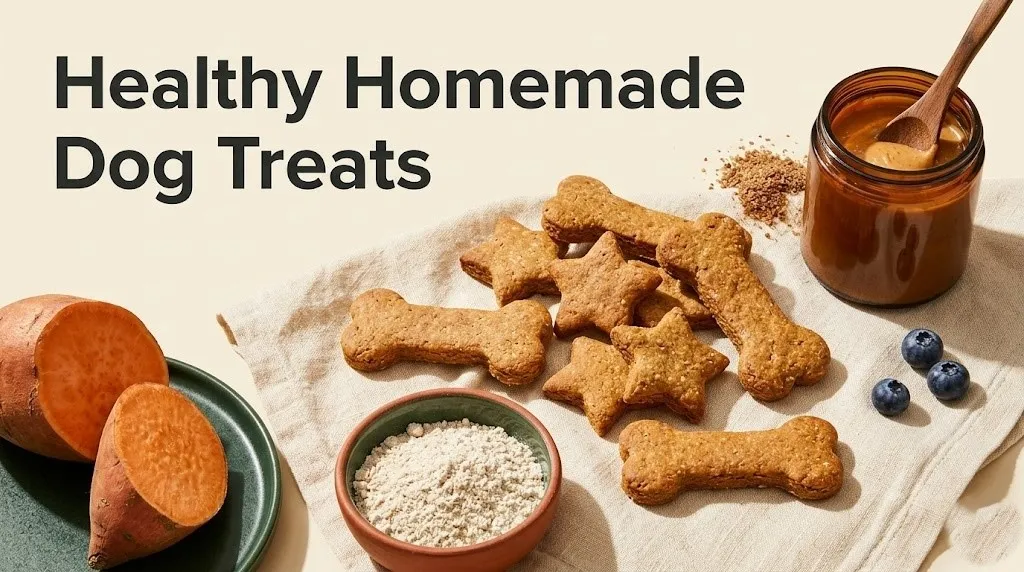
Commercial treats are regulated by the Association of American Feed Control Officials (AAFCO), but the category is broad. Some commercial treats are nutritionally sound. Others are calorie-dense, heavily processed, and contain ingredients like propylene glycol, artificial dyes, or high-sodium flavorings that offer no nutritional benefit to dogs.
Homemade treats shift that control to you. You choose the protein source, the binder, the fiber source, and the flavor. That transparency is the actual health advantage, not the act of baking itself.
| Factor | Homemade Treats | Many Commercial Treats |
|---|---|---|
| Ingredient visibility | Full control | Often vague (e.g., “poultry by-product”) |
| Preservatives | None needed if stored properly | Often present (BHA, BHT, ethoxyquin) |
| Sodium content | You control it | Often elevated for palatability |
| Calorie transparency | You calculate it | Often listed per 100g, not per treat |
| Allergen management | Precise | Difficult; shared equipment warnings common |
| Cost per treat | Lower at scale | Higher for premium brands |
Key Takeaway: The health advantage of homemade dog treats is ingredient transparency and your control over calories, allergens, and additives, not simply the fact that you made them yourself.
What Makes a Dog Treat Actually Healthy
A dog treat is genuinely healthy when it contributes useful nutrients, stays within a dog’s daily caloric budget, and contains no ingredients toxic to dogs.
Three criteria matter most. First, the treat should be made from ingredients that are documented as safe for canine consumption. Second, it should not be so calorie-dense that it disrupts a balanced diet. Third, it should not contain any of the recognized canine toxins, even in small amounts.
The American Kennel Club (AKC) and veterinary nutrition consensus consistently note that treats should make up no more than 10% of a dog’s total daily caloric intake. That is the practical benchmark, and it applies regardless of whether the treat is homemade or commercial.
Beyond caloric proportion, the ingredient profile matters. A treat made with oat flour (Avena sativa), pumpkin puree (Cucurbita pepo), and flaxseed (Linum usitatissimum) contributes dietary fiber, soluble beta-glucans, and alpha-linolenic acid (ALA, an omega-3 fatty acid). Those are functional nutrients. A treat made primarily of corn syrup, white flour, and artificial beef flavoring contributes mostly empty calories.
The texture also plays a minor role in dental health. Hard baked biscuits can help reduce mild plaque buildup through mechanical abrasion. They are not a substitute for tooth brushing, but they are preferable to soft, sticky treats that adhere to tooth surfaces.
Quick Tip:
- Check any peanut butter label for xylitol before use. This includes brands marketed as “natural.”
- Bake treats until fully firm and dry, not just golden, to reduce moisture and extend shelf life.
- For dogs under veterinary care for any chronic condition, bring your homemade recipe ingredient list to your next appointment for a specific review.
Homemade vs. Store-Bought Dog Treats
Homemade dog treats generally offer better ingredient transparency and allergen control than most commercial options, but they require more time and proper storage to remain safe.
This is not a blanket indictment of commercial treats. High-quality commercial treats from reputable manufacturers can be nutritionally sound and convenient. The issue is that the commercial treat market spans an enormous quality range, and identifying the better end of that range requires label reading that most pet owners don’t have time to do systematically.
When you make treats at home, you eliminate the uncertainty. You know exactly what went in. For dogs with documented food allergies or sensitivities, that precision can be genuinely therapeutic, not just sentimental.
The practical tradeoff is shelf life. Commercial treats contain preservatives that extend shelf life to months or years. Homemade treats, without those preservatives, last 3 to 7 days at room temperature, 2 to 3 weeks refrigerated, and up to 3 months frozen. That requires planning but is entirely manageable with batch baking.
| Comparison Factor | Homemade | Premium Commercial | Budget Commercial |
|---|---|---|---|
| Ingredient quality | You determine | Generally high | Often low |
| Transparency | Complete | Moderate | Low |
| Allergen control | Precise | Possible (LID options) | Difficult |
| Shelf life | Short without freezing | Long | Long |
| Cost per treat | Low to moderate | High | Low |
| Prep time required | Yes | None | None |
| Toxic ingredient risk | Only if you add them | Very low | Low to moderate |
Safe Ingredients for Homemade Dog Treats
The safest homemade dog treat ingredients are whole foods that dogs have been shown to digest well and that provide genuine nutritional value without causing toxicity or gastrointestinal disruption.
The following ingredients appear consistently in veterinary nutrition guidance as appropriate for healthy adult dogs. Each has a specific nutritional function:
- Oat flour or rolled oats (Avena sativa): Provides soluble dietary fiber (beta-glucans), supports digestive regularity, and serves as a low-glycemic carbohydrate source. Gluten-free oats are the right choice for dogs with wheat sensitivity.
- Sweet potato (Ipomoea batatas), cooked and mashed: Rich in beta-carotene (provitamin A), potassium, and dietary fiber. The beta-carotene is fat-soluble, so a small amount of fat in the recipe aids absorption.
- Pumpkin puree (Cucurbita pepo), plain and unsweetened: Contains soluble fiber (pectin) that supports both constipation and loose stool regulation. One of the most veterinarian-recommended digestive aids for dogs.
- Unsalted, xylitol-free peanut butter: Provides protein, monounsaturated fat, niacin (vitamin B3), and vitamin E. Always verify the label. Xylitol is acutely toxic to dogs even in small amounts.
- Egg (whole): A complete protein source. Provides all essential amino acids dogs require. Also functions as a binder in baked treat recipes.
- Plain, unsweetened Greek yogurt: Provides protein, calcium, and live probiotic cultures (Lactobacillus acidophilus). Use sparingly for dogs with lactose sensitivity.
- Blueberries: Contain anthocyanins (a class of flavonoids) and vitamin C (ascorbic acid). Low in calories. Appropriate as a mix-in or frozen treat ingredient.
- Carrot (Daucus carota): Low calorie, high in beta-carotene, and provides mild textural resistance that supports dental health.
- Flaxseed, ground (Linum usitatissimum): The best plant-based source of alpha-linolenic acid (ALA), an omega-3 fatty acid that supports coat health and reduces skin inflammation. Use ground, not whole, for digestibility.
- Plain cooked chicken or turkey (boneless, skinless): Lean protein. Appropriate for dogs with grain sensitivities who need a protein-first treat.
- Banana (ripe): Provides potassium and natural sugars. Higher in sugar than most treat ingredients, so use in moderation and keep portions small.
- Apple (cored, seeds removed, Malus domestica): Provides fiber and vitamin C. Seeds and core must be removed before use; apple seeds contain amygdalin, which breaks down to hydrogen cyanide.
Dogs with known food allergies or intolerances should have any new treat ingredient evaluated by a veterinarian before introduction. A novel protein limited ingredient approach is appropriate for dogs undergoing dietary elimination trials.
Key Takeaway: The best homemade dog treat ingredients each serve a nutritional function: fiber, protein, healthy fat, or micronutrient support. Ingredients that serve no function and add only sugar, sodium, or empty calories should be left out.
Toxic Ingredients to Avoid in Dog Treats
Several common human food ingredients are toxic to dogs, and some cause serious harm in quantities as small as a single serving.
This is not a list of foods that might cause mild stomach upset. These are ingredients with documented, sometimes fatal, toxicity mechanisms in dogs. The ASPCA Animal Poison Control Center maintains an active database of confirmed canine toxins, and the following appear at the top of every veterinary toxicology resource:
- Xylitol (birch sugar, sugar alcohol): Found in some peanut butters, sugar-free baked goods, and chewing gum. Causes rapid insulin release and hypoglycemia in dogs. Liver failure can follow. Even small amounts are dangerous.
- Chocolate (all varieties): Contains theobromine and caffeine. Dogs metabolize theobromine much more slowly than humans. Dark chocolate and baking chocolate are highest risk; milk chocolate is lower but still dangerous in meaningful quantities.
- Grapes and raisins (Vitis vinifera, dried): The toxic compound is not yet fully identified, but both fresh grapes and raisins cause acute kidney failure in dogs. No safe dose has been established.
- Onions, garlic, leeks, and chives (Allium species): Contain organosulfur compounds that cause oxidative damage to red blood cells, leading to hemolytic anemia. Garlic is significantly more concentrated than onion. Powdered forms are more toxic per gram than fresh.
- Macadamia nuts (Macadamia integrifolia): Cause weakness, vomiting, tremors, and hyperthermia in dogs. The mechanism is not fully understood but the toxicity is well-documented.
- Avocado (Persea americana): Contains persin, which is toxic to many animals. Dogs are less sensitive than birds or rabbits but avocado flesh, skin, and pit should all be excluded.
- Alcohol (ethanol): Even small amounts cause vomiting, disorientation, respiratory depression, and potentially death in dogs. Never use beer, wine, or liquor-based flavor extracts in dog treats.
- Nutmeg (Myristica fragrans): Contains myristicin. Causes tremors, seizures, and nervous system effects in dogs. A common baking spice that has no place in canine treats.
- Raw yeast dough: The yeast ferments sugars in the warm, moist environment of a dog’s stomach and produces ethanol and carbon dioxide. Can cause bloating, alcohol toxicity, and gastric dilatation-volvulus (GDV) in large breeds.
| Ingredient | Toxic Compound | Effect in Dogs | Risk Level |
|---|---|---|---|
| Xylitol | Xylitol (sugar alcohol) | Hypoglycemia, liver failure | Severe |
| Chocolate | Theobromine, caffeine | Cardiac arrhythmia, seizures | Severe |
| Grapes/raisins | Unknown | Acute kidney failure | Severe |
| Garlic | Organosulfur compounds | Hemolytic anemia | High |
| Macadamia nuts | Unknown | Tremors, weakness | High |
| Avocado | Persin | Vomiting, diarrhea | Moderate to high |
| Nutmeg | Myristicin | Seizures, CNS effects | Moderate |
| Raw yeast dough | Ethanol (produced in gut) | Bloating, alcohol toxicity | High |
If a dog ingests any of these, contact the ASPCA Animal Poison Control Center at their published emergency line or your nearest emergency veterinary clinic immediately.
Homemade Healthy Dog Treats Recipes: Full Collection
This collection of six homemade dog treat recipes covers baked biscuits, chewy snacks, and frozen options, using verified safe ingredients at specific measurements.
Each recipe below uses real quantities, real temperatures, and real bake times. These are developed for healthy adult dogs of average size. Portion sizes must be adjusted based on your dog’s size, age, and caloric needs. A 10-pound Chihuahua eating one 30-calorie biscuit is consuming a significantly larger caloric proportion of their daily needs than a 70-pound Labrador eating the same treat.
If your dog has a diagnosed health condition, discuss any new food introduction with your veterinarian before making these recipes. That applies especially to dogs managing obesity, diabetes mellitus, pancreatitis, or kidney disease.
All four baked recipes use an oven temperature of 350 degrees Fahrenheit (175 degrees Celsius) unless otherwise noted. Allow all baked treats to cool completely on a wire rack before serving or storing. Warm treats trap steam internally, which accelerates mold growth.
Healthy Dog Cookies Recipe: Peanut Butter and Oat Biscuits
This peanut butter and oat biscuit is one of the most reliable everyday healthy dog cookie recipes you can make at home, with minimal equipment and a predictable result.
The combination of oat flour, egg, and peanut butter produces a firm biscuit with good protein and fiber content. Oat flour contributes soluble beta-glucans that support digestive health. Peanut butter contributes protein, monounsaturated fat, and niacin (vitamin B3). Egg binds the dough and adds a complete amino acid profile.
Peanut Butter and Oat Dog Biscuits
Yield: approximately 30 small biscuits | Prep: 12 minutes | Bake: 22 minutes
Ingredients:
- 2 cups oat flour (certified gluten-free if your dog has wheat sensitivity)
- 1/2 cup unsalted, xylitol-free peanut butter (check label before use)
- 2 large eggs
- 1/3 cup water (room temperature)
- 1 teaspoon ground cinnamon (optional; safe for dogs in small amounts)
To make:
- Preheat your oven to 350 degrees Fahrenheit (175 degrees Celsius). Line a baking sheet with parchment paper.
- Combine oat flour and cinnamon (if using) in a large bowl. Whisk together briefly.
- Add peanut butter and eggs to the flour. Mix until a crumbly dough begins to form.
- Add water one tablespoon at a time, mixing between each addition, until the dough comes together and is firm enough to roll without sticking.
- Roll dough to 1/4-inch thickness on a lightly floured surface.
- Cut with a cookie cutter or knife into shapes approximately 1.5 inches across for small breeds, 2.5 inches for medium to large breeds.
- Place on prepared baking sheet. Bake for 20 to 22 minutes until treats are firm and dry throughout, not just golden on the surface.
- Cool completely on a wire rack before storing. Internal steam must fully escape before sealing in a container.
Approximate calories per small biscuit: 18 to 22 calories
Dogs with peanut allergies (documented, not assumed) should substitute sunflower seed butter. Dogs with egg intolerance can substitute 3 tablespoons of plain pumpkin puree per egg.
Peanut Butter Dog Treats Recipe: Deep Dive on Ingredient Safety
The most important step in any peanut butter dog treat recipe is verifying that the peanut butter you use contains no xylitol, hydrogenated oils, or added salt.
Peanut butter became a beloved dog treat ingredient for good reason. Dogs are generally enthusiastic about its flavor, and the ingredient delivers real nutritional value: protein supporting muscle maintenance, monounsaturated fatty acids supporting coat health, and vitamin E supporting immune function. The complication is xylitol.
Several widely available peanut butter brands have added xylitol as a sugar substitute in their reduced-sugar or “natural” lines. The ASPCA Animal Poison Control Center identifies xylitol as one of the most dangerous household food toxins for dogs. It triggers a rapid, disproportionate insulin release that causes life-threatening hypoglycemia within 30 to 60 minutes of ingestion.
Labels to read carefully: xylitol is also listed as “birch sugar,” “birch sweetener,” “sugar alcohol,” or “polyol” on some ingredient panels. Do not assume that a peanut butter labeled “natural” or “no added sugar” is xylitol-free. Read the full ingredient list every time, even for brands you have used before, because formulas change.
Safe choices are peanut butters with a short ingredient list: roasted peanuts, and perhaps a small amount of palm oil or salt. The salt is not ideal but is not toxic in the small amounts present in a biscuit-sized portion of peanut butter. Opt for unsalted where available, especially for dogs on low-sodium diets.
Approximate nutritional contribution of 2 tablespoons unsalted peanut butter:
| Nutrient | Amount |
|---|---|
| Calories | 188 kcal |
| Protein | 8g |
| Total fat | 16g (mostly monounsaturated) |
| Carbohydrate | 6g |
| Niacin (vitamin B3) | 4.2mg |
| Vitamin E | 2.9mg |
| Sodium | 5mg (unsalted) |
Key Takeaway: Peanut butter is a nutritionally solid treat ingredient when you confirm it is xylitol-free, unsalted, and not hydrogenated. Check the label every single time, not just the first time you buy a brand.
Sweet Potato Dog Treats Recipe
Sweet potato (Ipomoea batatas) is one of the most nutritionally dense vegetable ingredients you can use in homemade dog treats, offering beta-carotene, dietary fiber, and potassium in a naturally sweet package dogs tend to love.
The beta-carotene in sweet potato is a provitamin A carotenoid. Dogs can convert it to retinol (vitamin A), which supports immune function, vision in low-light conditions, and skin cell turnover. The dietary fiber in sweet potato supports healthy bowel transit time, which is relevant for dogs prone to constipation or irregular digestion.
Sweet potato dog chews are made by slicing and dehydrating or slow-baking the vegetable, which concentrates the nutrients and creates a chewy texture. They are one of the few single-ingredient treats you can make.
Sweet Potato Dog Chews
Yield: approximately 20 to 25 chews | Prep: 8 minutes | Bake: 2.5 to 3 hours
Ingredients:
- 2 large sweet potatoes, scrubbed clean
To make:
- Preheat oven to 225 degrees Fahrenheit (107 degrees Celsius). Line two baking sheets with parchment paper.
- Slice sweet potatoes lengthwise into 1/4-inch thick slabs. Do not peel; the skin provides additional fiber.
- Arrange slices in a single layer on baking sheets. Do not overlap.
- Bake for 2.5 to 3 hours, flipping once at the halfway point, until slices are dried, firm, and slightly leathery. They should not be crispy or brittle.
- Cool completely before serving. They will firm up slightly more as they cool.
Approximate calories per chew: 15 to 20 calories (varies by slice thickness and size)
Sweet potato is appropriate for most healthy adult dogs. Dogs managing diabetes mellitus should consume sweet potato-based treats in limited quantities due to the moderate glycemic index of the vegetable. A veterinarian familiar with your dog’s condition can advise on appropriate frequency.
Pumpkin Dog Treats for Digestion
Plain, unsweetened pumpkin puree (Cucurbita pepo) is one of the most veterinarian-recommended digestive support ingredients for dogs, and it doubles as an effective binder in homemade baked treats.
Pumpkin’s primary functional benefit comes from its soluble fiber content, particularly pectin. Soluble fiber absorbs water in the digestive tract and forms a gel-like substance that slows digestion and softens stool. Think of it as a regulator: it addresses both constipation (by adding bulk and moisture) and mild diarrhea (by absorbing excess fluid). Tufts University Cummings School of Veterinary Medicine has noted pumpkin as a practical, low-risk dietary fiber supplement for dogs experiencing minor digestive irregularity.
One important distinction: use plain, canned pumpkin puree, not pumpkin pie filling. Pie filling contains added sugar, nutmeg (toxic to dogs), and sometimes xylitol. The label should read: pumpkin, water, and nothing else.
Pumpkin and Flaxseed Dog Cookies
Yield: approximately 28 small cookies | Prep: 10 minutes | Bake: 20 minutes
Ingredients:
- 1.5 cups whole wheat flour (or oat flour for grain-sensitive dogs)
- 1/2 cup plain, unsweetened pumpkin puree
- 2 tablespoons ground flaxseed (Linum usitatissimum)
- 1 large egg
- 1/4 cup plain, unsweetened Greek yogurt
To make:
- Preheat oven to 350 degrees Fahrenheit (175 degrees Celsius).
- Whisk flour and ground flaxseed together in a bowl.
- Add pumpkin puree, egg, and Greek yogurt. Stir until a firm dough forms. If too sticky, add flour one tablespoon at a time.
- Roll to 1/4-inch thickness. Cut into shapes.
- Bake for 18 to 20 minutes until firm and dry throughout.
- Cool completely on a wire rack.
Approximate calories per cookie: 20 to 25 calories
The ground flaxseed in this recipe contributes alpha-linolenic acid (ALA), the plant-based omega-3 fatty acid that supports skin barrier function and coat luster. Always use ground flaxseed, not whole seeds. Whole flaxseeds pass through a dog’s digestive tract largely intact and deliver minimal nutritional benefit.
Key Takeaway: Pumpkin is a functional digestive ingredient, not just a seasonal flavor. The fiber type (pectin) addresses both constipation and loose stool, making these treats useful year-round for dogs with sensitive digestion.
Oat-Based Dog Biscuits Recipe
Oat-based dog biscuits are one of the most dietary-restriction-friendly homemade treats you can make, as oats (Avena sativa) are wheat-free, fiber-rich, and gentle on canine digestive systems.
Oats provide soluble fiber in the form of beta-glucans. According to research published in the Journal of Nutritional Science, beta-glucans support healthy gut microbiota and slow glucose absorption, which is relevant for dogs with blood sugar regulation concerns. Rolled oats and oat flour are functionally interchangeable in most treat recipes; oat flour produces a smoother texture while rolled oats create a slightly heartier bite.
For dogs with documented wheat or gluten sensitivity confirmed by veterinary testing, oat flour made from certified gluten-free oats avoids cross-contamination risk. Not all oats are processed in gluten-free facilities, so the certification matters if sensitivity is a genuine concern.
Banana Oat Dog Biscuits
Yield: approximately 24 biscuits | Prep: 10 minutes | Bake: 25 minutes
Ingredients:
- 2 cups oat flour
- 1 ripe banana, mashed
- 1 large egg
- 2 tablespoons plain, unsweetened Greek yogurt
- 1 tablespoon ground flaxseed
To make:
- Preheat oven to 350 degrees Fahrenheit (175 degrees Celsius).
- Mash the banana in a large bowl until smooth with no large chunks.
- Add egg and Greek yogurt. Stir to combine.
- Mix in oat flour and flaxseed until a stiff dough forms.
- Roll to 1/4-inch thickness on a lightly floured surface.
- Cut into shapes and place on a parchment-lined baking sheet.
- Bake for 23 to 25 minutes until fully dry and firm.
- Cool completely before serving or storing.
Approximate calories per biscuit: 22 to 28 calories
Banana is higher in natural sugars than most other dog-appropriate ingredients, with approximately 14 grams of sugar per 100 grams of raw banana. These biscuits are appropriate as an occasional treat rather than a daily staple for dogs managing weight or blood glucose levels.
Frozen Dog Treats for Summer
Frozen homemade dog treats are one of the most practical and low-effort options you can make, requiring no baking and lasting up to three months in the freezer.
Dogs regulate body temperature through panting, not sweating, and in warm months, a cold treat provides a genuinely cooling effect alongside the behavioral satisfaction of working through something frozen. Frozen treats also tend to keep dogs occupied longer than baked biscuits, which has a secondary calming benefit during high-stimulation situations like thunderstorms or fireworks.
The base formula for most frozen treats is a pourable mixture of dog-safe liquid and solid ingredients, frozen in silicone molds, ice cube trays, or Kong-style rubber toys.
Blueberry Banana Yogurt Pups
Yield: 12 to 16 pops (depending on mold size) | Prep: 5 minutes | Freeze: 3 hours minimum
Ingredients:
- 1 cup plain, unsweetened Greek yogurt
- 1/2 ripe banana, sliced
- 1/2 cup fresh or frozen blueberries
To make:
- Blend or mash banana until smooth.
- Stir banana into Greek yogurt until evenly combined.
- Fold in blueberries gently. Leave them whole for textural interest.
- Spoon mixture into silicone molds or ice cube trays, filling each cavity to the top.
- Freeze for a minimum of 3 hours or until completely solid.
- Pop out of molds and serve one at a time. Return the rest to the freezer in a sealed bag.
Approximate calories per pop (standard ice cube tray size): 20 to 30 calories
Dogs with lactose intolerance can show signs of digestive discomfort (gas, loose stool) with Greek yogurt. Plain, unsweetened coconut milk (not full-fat canned coconut cream) is a workable dairy-free alternative. Use 1 cup coconut milk in place of the yogurt. The caloric content will change slightly based on the fat content of the coconut milk chosen.
Key Takeaway: Frozen treats are the fastest path to a homemade, nutritious snack for your dog, especially in warmer months. The freezer does the work; you just need five minutes and a mold.
Easy Healthy Homemade Dog Treats Recipes for Beginners
If you have never made homemade dog treats before, starting with a two-to-three ingredient recipe removes most of the difficulty and still produces a result your dog will enjoy.
The recipes above range from straightforward to slightly more involved. For genuine beginners, the sweet potato chew requires only sweet potato and an oven set to a low temperature. The frozen blueberry yogurt pop requires no heat at all. Those are the two most accessible entry points.
Three beginner principles make every recipe more likely to succeed:
First, invest in a kitchen scale. Baking is more forgiving when you measure by weight rather than volume, especially with dense ingredients like peanut butter or mashed sweet potato.
Second, use parchment paper on every baking sheet. Baked dog treats stick without it, and parchment eliminates that problem completely.
Third, test your oven temperature. Home ovens can run 15 to 25 degrees Fahrenheit hotter or cooler than their dial setting. An inexpensive oven thermometer costs under ten dollars and prevents overbaked, rock-hard treats or underbaked, doughy ones that spoil quickly.
Beginner-Friendly Recipe Difficulty Overview:
| Recipe | Skill Level | Equipment Needed | Key Difficulty |
|---|---|---|---|
| Sweet Potato Chews | Very easy | Knife, oven, parchment | Slicing evenly |
| Frozen Yogurt Pops | Very easy | Mold or ice tray, freezer | None |
| Peanut Butter Oat Biscuits | Easy to moderate | Mixer or hands, oven, cutter | Dough consistency |
| Banana Oat Biscuits | Easy to moderate | Bowl, oven, cutter | Rolling thickness |
| Pumpkin Flaxseed Cookies | Easy to moderate | Bowl, oven, cutter | Dough stickiness |
Any baked recipe works with a hand mixer, a stand mixer, or simply strong hands and a good bowl. You do not need specialized equipment. A cookie cutter is optional. Cutting dough into squares or rectangles with a knife works just as well.
Puppy Treat Recipes: Healthy Options for Young Dogs
Puppies have different nutritional needs from adult dogs, and their homemade treats should reflect those differences in ingredient choice, size, and caloric density.
A puppy’s digestive system is still developing. The gut microbiota that helps adult dogs process a wider variety of foods is not yet fully established in young puppies. Because of this, novel ingredients should be introduced one at a time, with a gap of several days between new additions, so that any adverse reaction can be clearly attributed to a specific ingredient.
The most appropriate base ingredients for puppy treats are ones with well-established digestive tolerability: plain cooked chicken or turkey, oat flour, sweet potato, and pumpkin puree. These are low in complex flavor compounds and consistently well-tolerated by young digestive systems.
Treat size is equally important. Puppies less than four months old should receive very small treat pieces (pea-sized), as they are still developing their chewing mechanics and swallowing coordination. Large biscuits intended for adult dogs are a choking risk for very small puppies.
Caloric proportion matters more for puppies than any other life stage because puppies are eating for growth. The 10% treat rule still applies, but because a puppy’s total daily caloric intake is already carefully managed (often under 400 to 600 calories for small breed puppies), even a single adult-sized biscuit can represent a disproportionate caloric burden.
Puppies under 12 weeks of age should not receive homemade treats as a regular dietary addition without veterinary guidance. After that point, plain vegetable-based treats (carrot sticks, plain sweet potato pieces) are a sensible starting point.
| Puppy Age | Appropriate Treat Type | Max Size per Treat | Notes |
|---|---|---|---|
| Under 8 weeks | None | N/A | Rely on puppy food only |
| 8 to 12 weeks | Very small, plain pieces | Pea-sized | Vet guidance recommended |
| 3 to 6 months | Soft baked or plain vegetables | Fingernail-sized | Introduce one ingredient at a time |
| 6 to 12 months | Small versions of adult recipes | Half adult size | Monitor digestive response |
| 12 months+ | Standard adult recipes | Adjust by breed size | Apply 10% calorie rule |
Key Takeaway: Puppy treats need to be smaller, simpler, and introduced more gradually than adult dog treats. The 10% calorie rule is even more important for puppies because their total daily caloric budgets are significantly lower.
Homemade Treats for Senior Dogs and Dogs with Health Conditions
Senior dogs and dogs managing chronic conditions often benefit most from homemade treats, because precise ingredient control allows you to accommodate restrictions that commercial treats frequently ignore.
Dogs are generally considered senior at seven years of age, though this varies considerably by breed size. Giant breeds like Great Danes age faster and may be considered senior at five or six. Small breeds like Chihuahuas often remain physiologically middle-aged until eight or nine.
Senior dogs commonly develop one or more of the following conditions that affect what treat ingredients are appropriate:
Obesity: Reduce treat caloric density by choosing lower-fat recipes. Carrot sticks, plain apple slices (seedless, cored), and cucumber pieces are near-zero-calorie options that still provide enrichment. Avoid peanut butter-heavy recipes for obese dogs.
Diabetes mellitus: Dogs with diabetes require consistent carbohydrate intake to support stable blood glucose regulation. High-sugar ingredients like banana and sweet potato should be used sparingly or avoided. A board-certified veterinary nutritionist (DACVN) can help design a treat profile that fits within your dog’s glucose management protocol.
Kidney disease (chronic kidney disease, CKD): Dogs with CKD need low-phosphorus, low-protein diets. Most standard treat ingredients, including egg and peanut butter, are higher in phosphorus and protein than a CKD diet allows. Treat formulation for dogs with CKD should be reviewed by a veterinarian or veterinary nutritionist before implementation.
Pancreatitis: Dogs recovering from or managing pancreatitis require very low-fat treats. Sweet potato chews and plain pumpkin-based treats are the safest options. Peanut butter-based treats are inappropriate.
Joint disease (osteoarthritis): Ground flaxseed and fish-based ingredients (plain cooked salmon, for example) contribute omega-3 fatty acids that have anti-inflammatory properties studied in canine joint health research. A 2021 study in the Journal of Veterinary Internal Medicine found that omega-3 supplementation was associated with measurable improvements in mobility scores in dogs with osteoarthritis.
For any dog under veterinary management for a chronic condition, bring a specific list of your intended treat ingredients to your next veterinary appointment. What works for a healthy adult dog may be counterproductive or harmful for a dog with an active health condition.
How to Store Homemade Dog Treats
Homemade dog treats must be stored differently from commercial treats because they contain no preservatives to extend shelf life.
The absence of preservatives is a feature, not a flaw, but it requires a storage plan. The primary risk is mold, which grows when moisture, warmth, and organic material are combined. Treats that are fully baked dry (firm all the way through, not just on the surface) have the lowest moisture content and the longest room-temperature shelf life.
Storage guidelines by method:
- Room temperature: Store in an airtight container or resealable bag in a cool, dry location. Shelf life is 3 to 7 days for most baked treats. Check for mold or off-smell before serving each day.
- Refrigerator: Extends shelf life to 2 to 3 weeks for most baked treats. Use a sealed container. Frozen yogurt pops and other fresh-ingredient treats must be refrigerated or frozen.
- Freezer: The best option for batch baking. Most baked treats freeze well for up to 3 months. Freeze in a single layer first (on a baking sheet), then transfer to a sealed freezer bag. Pull out individual treats the night before to thaw at room temperature.
- Frozen treats (yogurt pops, etc.): Store in the freezer in a sealed container for up to 3 months. Serve directly from frozen.
| Storage Method | Shelf Life | Best For | Key Requirement |
|---|---|---|---|
| Room temperature | 3 to 7 days | Daily use | Airtight container, cool location |
| Refrigerator | 2 to 3 weeks | Weekly batches | Sealed container, below 40 degrees F |
| Freezer (baked) | Up to 3 months | Monthly batch baking | Freeze flat, then bag |
| Freezer (frozen treats) | Up to 3 months | Summer, daily frozen snacks | Airtight sealed freezer bag |
Signs that a treat has spoiled: visible mold (any color), an off or sour smell, unusual texture change (sliminess in refrigerated treats), or discoloration. Discard any treat that shows these signs. Do not attempt to remove a mold spot and serve the rest; mold penetrates deeper into moist food items than the visible surface area suggests.
Quick Tip:
- Label every batch with the date made and the batch contents. A piece of masking tape and a marker takes five seconds and prevents guessing.
- Freeze treats in weekly portions rather than one large batch. This limits freezer opens and temperature fluctuation, which degrades quality faster than time alone.
- If you live in a humid climate, room-temperature storage is riskier. Default to refrigeration even for short-term storage in high-humidity environments.
Frequently Asked Questions About Healthy Homemade Dog Treats
Can I give my dog homemade treats every day?
Yes, homemade dog treats can be given daily as long as they do not exceed 10% of your dog’s total daily caloric intake.
That percentage threshold is a consistent recommendation across the American Kennel Club (AKC) and veterinary nutrition guidance.
A 20-pound adult dog with a maintenance energy requirement of approximately 400 to 500 calories per day has a treat budget of 40 to 50 calories; one small biscuit of 20 to 25 calories fits comfortably within that range.
What is the healthiest ingredient to put in homemade dog treats?
Plain, unsweetened pumpkin puree (Cucurbita pepo) and oat flour (Avena sativa) are two of the most nutritionally functional base ingredients for dog treats.
Pumpkin provides soluble fiber (pectin) that supports digestive regularity, while oat flour contributes beta-glucans that support gut health and slow glucose absorption.
Ground flaxseed (Linum usitatissimum) is a strong addition for skin and coat support due to its alpha-linolenic acid (ALA) omega-3 fatty acid content.
Are homemade dog treats better than store-bought?
Homemade dog treats are not automatically better than all commercial treats, but they offer superior ingredient transparency and allergen control.
High-quality commercial treats from reputable manufacturers can be nutritionally appropriate, but they often contain preservatives, sodium enhancers, and vague protein sources that homemade recipes avoid entirely.
For dogs with food allergies, sensitivities, or health conditions, homemade treats give you a precision that most commercial products cannot match.
How do I know if a peanut butter is safe for dog treats?
Read the full ingredient list on the label and confirm that xylitol (also listed as birch sugar, birch sweetener, or sugar alcohol) is not present.
The peanut butter should ideally contain only roasted peanuts, with no added salt, hydrogenated oils, or artificial sweeteners.
Reformulations happen without packaging redesigns, so check the ingredient list every time you buy a brand, even one you have used before.
Can puppies eat the same homemade treats as adult dogs?
Puppies older than three months can eat small portions of most adult homemade treat recipes, but treat size must be significantly reduced and new ingredients introduced one at a time.
Very young puppies (under 12 weeks) should receive treats only with veterinary guidance, as their digestive systems are still establishing the microbial balance needed to process varied foods.
For puppies between three and six months, start with single-ingredient treats like small pieces of plain sweet potato or carrot before introducing multi-ingredient biscuit recipes.
Closing
Making healthy homemade dog treats is not complicated, but doing it well requires three things: knowing which ingredients are safe, understanding how much your dog can eat without disrupting their overall diet, and storing what you make correctly.
Start with one recipe. Pick the one that matches your dog’s life stage and any known dietary restrictions. Make a batch. See how your dog responds. Adjust from there.
For dogs with chronic health conditions, the ingredient list in any recipe is the starting point for a conversation with your veterinarian, not a finished plan. That one check takes five minutes and removes any uncertainty.