You keep your pancreas healthy by reducing the demand for digestive enzymes through a low-fat, high-fiber diet, protecting the insulin-producing beta cells by minimizing blood sugar spikes, and strictly avoiding the two primary toxins to the organ: alcohol and tobacco. The pancreas is a quiet, industrious gland buried deep in the abdomen. It performs two distinct jobs: secreting enzymes into the small intestine to digest fats, proteins, and carbohydrates, and releasing insulin and glucagon into the bloodstream to regulate blood sugar. When the pancreas fails, the consequences are catastrophic.
Pancreatic disease is disproportionately lethal. Pancreatic cancer has a five-year survival rate of roughly 12 percent, largely because it is rarely detected early. Chronic pancreatitis causes irreversible scarring and unrelenting pain. The 2026 guidelines from the American Gastroenterological Association emphasize that the vast majority of pancreatic disease is preventable through diet, weight management, and abstinence from alcohol and tobacco.
This guide explains the specific nutritional and lifestyle interventions that protect the pancreas. This is educational information for supporting your health. If you have persistent abdominal pain, unexplained weight loss, or a family history of pancreatic disease, see a gastroenterologist.
how to keep your pancreas healthy
Keeping your pancreas healthy requires three primary interventions: reducing dietary saturated fat to limit the enzymatic workload, stabilizing blood sugar to protect the beta cells, and eliminating alcohol and tobacco, which are direct toxins to pancreatic tissue. These three strategies address the two functional units of the organ: the exocrine pancreas that produces enzymes, and the endocrine pancreas that produces hormones.
The enzymatic workload of the pancreas is directly proportional to the fat content of the diet. A meal containing 40 grams of fat demands a massive release of lipase, the fat-digesting enzyme. A meal containing 10 grams of fat demands a fraction of that output. Over decades, a high-fat diet keeps the pancreas in a state of chronic overstimulation. The gland becomes inflamed. The enzyme ducts become congested. This is the physiological precursor to acute pancreatitis.
The blood sugar connection is equally critical. Every spike in blood glucose triggers a release of insulin from the beta cells in the islets of Langerhans. A diet high in refined carbohydrates forces the beta cells to work overtime. Over years, the beta cells exhaust themselves. This is the pathway to type 2 diabetes, a disease of pancreatic failure.
- Reduce dietary saturated fat.
- Stabilize blood sugar with fiber and protein.
- Eliminate alcohol and tobacco completely.
Key Takeaway: The pancreas is an engine. Fat is the throttle. Refined carbohydrates are the spark. Alcohol is the fire. Control the throttle, dampen the spark, and eliminate the fire.
how to keep pancreas healthy naturally
Keeping the pancreas healthy naturally involves eating a Mediterranean diet rich in olive oil, legumes, vegetables, and whole grains, exercising regularly, and maintaining a body mass index (BMI) below 25. The natural approach is simply the dietary pattern that has the strongest evidence for reducing pancreatic stress.
The Mediterranean diet is the gold standard for pancreatic health. A 2023 study in the journal Nutrients found that adherence to a Mediterranean diet was associated with a 30 percent lower risk of acute pancreatitis. The mechanism is the replacement of saturated fat with monounsaturated fat, specifically oleic acid from olive oil. Oleic acid stimulates pancreatic lipase more gently than saturated animal fats, reducing the risk of enzyme activation within the pancreas itself.
Exercise supports pancreatic health through weight management. Obesity is a major risk factor for both pancreatitis and pancreatic cancer. Visceral fat, the fat that surrounds the internal organs, directly inflames the pancreas. A 2022 study in Gastroenterology found that a 10 percent reduction in body weight reduced pancreatic fat infiltration by roughly 8 percent.
- Mediterranean diet as the baseline.
- Weight management through exercise.
- Hydration to support enzyme fluid balance.
foods for pancreas health
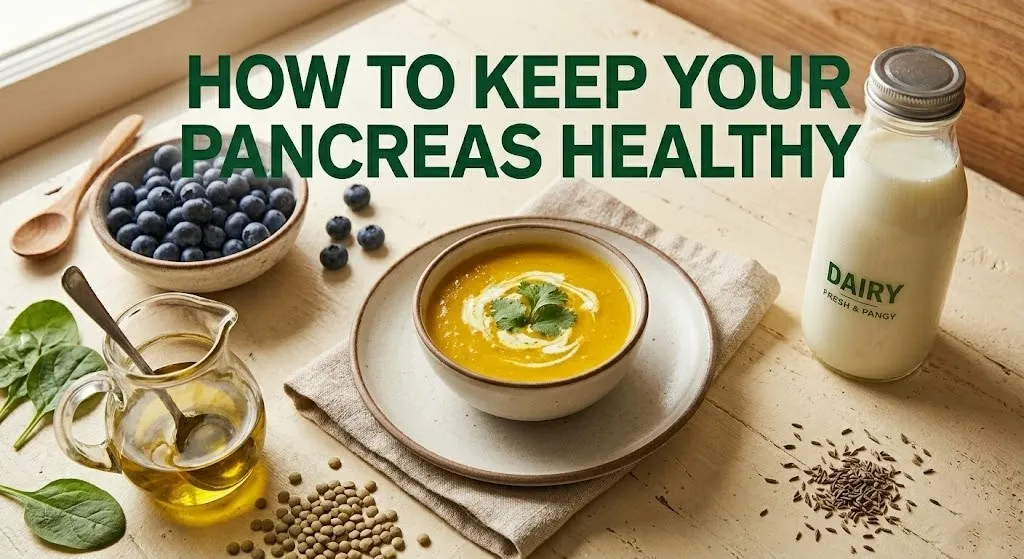
The best foods for pancreas health are olive oil, spinach, blueberries, lentils, salmon, and turmeric. These foods directly reduce inflammation, provide antioxidants, and minimize the pancreatic workload.
Olive oil is the single most important food for the pancreas. The oleic acid in olive oil gently stimulates the release of pancreatic enzymes without overstimulating the gland. It also contains oleocanthal, an anti-inflammatory compound that reduces pancreatic inflammation.
Spinach and other dark leafy greens are rich in magnesium, a mineral that supports insulin secretion and glucose metabolism. A 2021 meta-analysis found that higher dietary magnesium intake was associated with a 15 percent lower risk of developing type 2 diabetes. Blueberries contain anthocyanins, antioxidants that reduce oxidative stress in the pancreatic beta cells.
- Olive Oil: Oleic acid for gentle enzyme release.
- Spinach: Magnesium for insulin support.
- Blueberries: Anthocyanins for beta-cell protection.
- Lentils: Low-fat protein and fiber for blood sugar stability.
pancreatitis diet
A pancreatitis diet is a medically prescribed, very low-fat diet containing 30 to 50 grams of fat per day, with a strict emphasis on lean proteins, complex carbohydrates, and absolutely no alcohol. This diet is designed to rest the pancreas and prevent the recurrence of acute attacks.
In the acute phase of pancreatitis, the patient is often kept NPO (nothing by mouth) to completely rest the pancreas. As the inflammation subsides, the diet is slowly reintroduced. Clear liquids progress to full liquids, then to soft solids. The fat content starts at essentially zero and gradually increases. A dietitian typically guides this progression.
In the chronic phase, the pancreatitis diet is a lifelong commitment. The daily fat allowance is spread across multiple small meals. A single high-fat meal can trigger an attack, even after years of stability. The diet is rich in fruits, vegetables, whole grains, and lean proteins like skinless chicken breast, fish, and legumes. Red meat, fried foods, and butter are avoided entirely.
- Acute phase: NPO, then gradual reintroduction.
- Fat target: 30 to 50 grams per day.
- Meal pattern: Small, frequent meals.
how to maintain a healthy pancreas
Maintaining a healthy pancreas is a daily practice of eating small, low-fat meals, avoiding alcohol, and monitoring for early warning signs of pancreatic distress. The maintenance phase is the long game.
The small meal strategy reduces the enzymatic workload. Instead of three large meals, eat five to six small meals per day. Each meal contains roughly 5 to 10 grams of fat. The pancreas releases a small, manageable amount of enzymes with each meal, rather than a flood.
The warning signs of pancreatic distress should not be ignored. Upper abdominal pain that radiates to the back, particularly after eating a fatty meal, is the classic presentation of pancreatitis. Nausea, vomiting, and oily, foul-smelling stools that float are signs that the pancreas is not producing enough lipase. Jaundice, a yellowing of the skin and eyes, is a sign that a pancreatic tumor is blocking the bile duct.
- Small, frequent meals.
- Zero alcohol.
- Monitor warning signs.
Key Takeaway: Pancreatic maintenance is a quiet discipline. Small meals, clean food, and no alcohol. Year after year.
keeping pancreas healthy
Keeping the pancreas healthy is a lifestyle that mirrors general cardiovascular health. The same habits that protect the heart protect the pancreas. The overlap is nearly 100 percent.
The connection between heart health and pancreatic health is the shared risk factor of metabolic syndrome. High blood pressure, high triglycerides, low HDL cholesterol, and abdominal obesity collectively define metabolic syndrome and collectively damage both the cardiovascular system and the pancreas.
Hydration is a specific and often overlooked factor in pancreatic health. The pancreas secretes roughly 1.5 liters of enzyme-rich fluid per day into the small intestine. Dehydration thickens these secretions, increasing the risk of duct blockages and stone formation. The recommendation is simple: drink enough water that your urine is pale yellow.
- Heart health equals pancreas health.
- Hydration thins pancreatic secretions.
- Sleep and stress reduction support metabolic health.
pancreas detox myth
There is no such thing as a pancreas detox or a pancreas cleanse. The pancreas does not accumulate toxins that can be flushed out with juice or supplements. The concept of a “pancreas detox” is a dangerous marketing myth that preys on people’s fear of cancer.
The origin of the detox myth is a misunderstanding of how the pancreas works. The pancreas is not a filter. It is a gland that produces enzymes and hormones. It does not store toxins. It does not need to be cleansed. The liver and kidneys are the body’s detoxification organs.
The “pancreas cleanse” products sold online often contain herbs and supplements that are themselves toxic to the pancreas. High-dose herbal supplements have been documented to cause drug-induced pancreatitis. The only “cleanse” the pancreas needs is a break from alcohol, tobacco, and high-fat foods.
- The pancreas is not a filter.
- Cleanses can be toxic.
- The only “cleanse” is abstinence from alcohol and processed food.
healthy pancreas recipe
A healthy pancreas recipe is the Turmeric and Lentil Pancreas-Support Soup, a low-fat, high-fiber, anti-inflammatory meal that delivers 10 grams of fiber and 5 grams of fat per serving. The recipe is designed to nourish without overstimulating.
The ingredients work together to support pancreatic function. Lentils provide low-fat protein and soluble fiber. Turmeric contains curcumin, a potent anti-inflammatory. Black pepper increases the absorption of curcumin. Spinach provides magnesium. Olive oil provides oleic acid for gentle enzyme release.
The soup is made by sautéing onion, garlic, and grated turmeric in a tablespoon of olive oil. Lentils, vegetable broth, and diced carrots are added and simmered until the lentils are tender. Fresh spinach is stirred in at the end.
- Sauté 1 chopped onion and 3 minced garlic cloves in 1 tbsp olive oil.
- Add 1 tbsp grated fresh turmeric and 1/2 tsp black pepper. Stir for 1 minute.
- Add 1 cup dried lentils, 4 cups vegetable broth, and 2 diced carrots.
- Simmer for 25 to 30 minutes until lentils are tender.
- Stir in 2 cups fresh spinach. Serve with a squeeze of lemon.
Key Takeaway: The Turmeric and Lentil Soup is a pancreas-supporting meal that is low in fat, high in fiber, and rich in anti-inflammatory compounds.
Frequently Asked Questions About Pancreas Health
What are the first signs of pancreas problems?
The first signs of pancreas problems are upper abdominal pain radiating to the back, nausea, and oily stools.
These symptoms often worsen after eating a high-fat meal.
Unexplained weight loss and jaundice are later signs.
Does drinking water help your pancreas?
Drinking water helps the pancreas by keeping the enzyme secretions thin and flowing.
Dehydration thickens the secretions and increases the risk of duct blockages.
Pale yellow urine is a sign of adequate hydration.
Can the pancreas repair itself?
The pancreas can heal from mild acute pancreatitis with complete rest and a low-fat diet.
Chronic pancreatitis causes permanent scarring that does not heal.
Beta cells that have been destroyed by high blood sugar cannot regenerate.
Is coffee bad for your pancreas?
Coffee is not bad for the pancreas and may be protective.
Studies suggest that moderate coffee consumption is associated with a lower risk of pancreatitis.
Caffeine does not overstimulate the pancreas the way alcohol does.
Does a pancreas cleanse work?
A pancreas cleanse does not work because the pancreas is not a filter and does not store toxins.
Cleanse products can contain herbs that cause drug-induced pancreatitis.
The only effective “cleanse” is eliminating alcohol and tobacco.
The pancreas is a silent partner in your health. It does not announce itself with a pounding heartbeat or a lungful of air. It just works, day after day, secreting enzymes and hormones while you eat your breakfast and go about your life.
Treat it gently. Eat small, low-fat meals. Put olive oil on your vegetables. Eat lentils and spinach. Drink water. Stop drinking alcohol if you drink. Stop smoking if you smoke.
The pancreas does not demand grand gestures. It just needs you to stop hurting it. The food you eat today determines the health of your pancreas tomorrow.