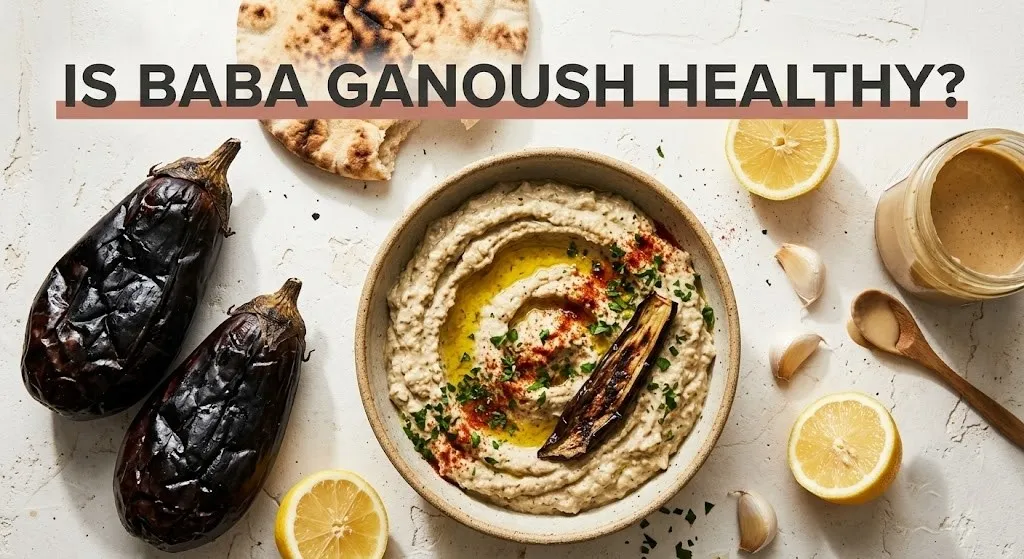
Baba ganoush is a genuinely healthy food that belongs in regular rotation for most people, offering a rare combination of high fiber, heart-healthy fats, and meaningful antioxidant content in a low-calorie, plant-based package. This Levantine eggplant dip delivers nutrition that aligns with the Mediterranean dietary pattern consistently associated with reduced cardiovascular disease risk in long-term cohort studies. Unlike many creamy dips that derive their texture from dairy or processed oils, baba ganoush gets its richness from roasted eggplant and sesame tahini.
The Mediterranean diet research tracked by the Harvard T.H. Chan School of Public Health identifies dishes like baba ganoush as examples of how traditional food patterns turn vegetables into centerpiece foods through simple preparation techniques. A quarter-cup serving provides roughly 70 to 100 calories, 2 to 4 grams of fiber, and a dose of monounsaturated fat from olive oil and tahini that supports cholesterol management. That is a nutritional profile few snack foods can match.
This article walks through exactly what is in baba ganoush, how many calories and nutrients you are getting per scoop, what the research says about eggplant and tahini specifically, how it compares to hummus, and who should approach it with caution. You will learn how to spot a quality store-bought version, when homemade is worth the extra time, and what to do if sesame is off your list.
Is baba ganoush healthy
Baba ganoush is healthy by virtually every standard nutritional metric, delivering fiber, healthy fats, and phytonutrients in a low-calorie, vegetable-forward format with no added sugar and minimal saturated fat. The dip centers on roasted eggplant, which contributes bulk and fiber for very few calories. Olive oil and tahini add richness and satiety through monounsaturated and polyunsaturated fats. Lemon juice and garlic round out the flavor while contributing vitamin C and organosulfur compounds with documented health properties.
What makes baba ganoush stand out from other dips is what it does not contain. There is no dairy, no added sugar, no refined grains, and no artificial stabilizers in traditional recipes. The creaminess that would normally come from sour cream, mayonnaise, or cheese is achieved through the natural softness of roasted eggplant and the emulsification of tahini with lemon juice. This whole-food construction means the calories in baba ganoush arrive packaged with fiber and nutrients rather than empty energy.
The Academy of Nutrition and Dietetics emphasizes that snacks built around vegetables, like baba ganoush served with raw vegetable dippers, help increase daily produce intake. Most American adults fall short of the recommended 2 to 3 cups of vegetables per day. Using a vegetable-based dip as a snack or meal component is a practical strategy for closing that gap. The fiber in the eggplant and the fat in the tahini and olive oil also slow digestion, producing a more gradual blood sugar response than a refined-carbohydrate snack with similar calories.
Key Takeaway: Baba ganoush is a nutritionally dense, whole-food dip that delivers fiber, healthy fats, and vegetables in every serving.
Is baba ghanouj healthy
Baba ghanouj, the alternate spelling of baba ganoush referring to the same Levantine eggplant and tahini dip, is identically healthy when prepared in the traditional manner. The spelling variation reflects transliteration differences from Arabic script to English and does not indicate a different recipe. Whether labeled baba ganoush, baba ghanouj, or mutabbal in some regions, the core ingredients of roasted eggplant, tahini, olive oil, lemon juice, and garlic remain consistent and nutritionally beneficial.
Regional variations in preparation can shift the nutritional profile slightly. Some Lebanese versions use more tahini, increasing the calcium and healthy fat content. Some Israeli versions incorporate mayonnaise or yogurt, which adds saturated fat and changes the dairy-free status. Syrian mutabbal is often spicier with additional chili but nutritionally similar. When evaluating whether a specific baba ghanouj is healthy, the ingredient list matters more than the name on the label or menu. A version heavy on olive oil is still healthy but more calorie-dense. A version with mayonnaise loses the dairy-free advantage and adds saturated fat.
The USDA FoodData Central database does not maintain a separate entry for baba ghanouj, classifying it under the broader baba ganoush nutritional profile. The nutritional data for commercial and homemade versions applies equally to both spellings. Restaurant baba ghanouj often arrives with an extra drizzle of olive oil on top, which adds roughly 40 calories per teaspoon. This is still a healthy addition of monounsaturated fat, not a nutritional problem. The drizzle is traditional and contributes to the dish’s satiety and mouthfeel.
Key Takeaway: Baba ghanouj is the same dish as baba ganoush with the same healthy nutritional profile, provided the ingredient list follows traditional preparation.
Baba ganoush nutrition facts
Baba ganoush nutrition facts for a standard quarter-cup serving of the traditional recipe break down as approximately 70 to 100 calories, 5 to 8 grams of total fat, 1 to 1.5 grams of saturated fat, 6 to 10 grams of carbohydrates, 2 to 4 grams of fiber, 2 to 3 grams of protein, and 150 to 300 milligrams of sodium. The ranges account for variation in the ratio of olive oil to tahini to eggplant across different recipes and brands.
The fat in baba ganoush is predominantly heart-healthy unsaturated fat from two sources. Olive oil provides monounsaturated fatty acids, primarily oleic acid, which the American Heart Association identifies as supportive of healthy cholesterol levels when it replaces saturated fat in the diet. Tahini contributes both monounsaturated and polyunsaturated fats, including the omega-6 fatty acid linoleic acid and the lignan compounds sesamin and sesamolin. These sesame-derived compounds have been studied for their antioxidant and cholesterol-modulating properties in animal and human trials.
The micronutrient profile of baba ganoush includes vitamin K from the tahini, potassium from the eggplant, and small amounts of manganese, magnesium, vitamin C, vitamin B6, folate, and calcium. A quarter-cup serving provides roughly 5% to 10% of the Daily Value for several of these nutrients. Baba ganoush is not a primary nutrient source in the way that a serving of leafy greens or dairy is. Its nutritional value comes from the combination of fiber, healthy fats, and phytonutrients delivered in a satisfying, low-calorie food that displaces less nutritious snacks.
Key Takeaway: Baba ganoush delivers 70 to 100 calories per serving with heart-healthy fats, 2 to 4 grams of fiber, and a modest spread of micronutrients.
Baba ganoush calories
Baba ganoush calories per serving are modest compared to other creamy dips and spreads, with a standard quarter-cup portion containing 70 to 100 calories. This low calorie density is a direct result of the eggplant base. Cooked eggplant is approximately 95% water by weight and provides only 35 calories per cup. When eggplant is the primary ingredient in a dip, the finished product inherits this low calorie density even after olive oil and tahini are added.
The calorie variation across recipes depends on the oil and tahini ratio. A baba ganoush made with a generous quarter-cup of olive oil per batch will run closer to 100 calories per serving. A lighter version that relies more on tahini for creaminess and uses less oil may come in at 70 calories. Restaurant versions, which often add a finishing drizzle of olive oil, can push a serving to 120 calories. Even at the high end, baba ganoush is a calorically reasonable food compared to cheese-based dips, mayonnaise-based spreads, or nut butter.
For portion context, a quarter-cup is roughly the amount you would scoop onto a plate as part of a mezze spread or use as a dip for a cup of raw vegetables. If you are eating baba ganoush with pita bread or pita chips, the vehicle contributes more calories than the dip itself. A full-size pita bread adds 150 to 200 calories. Pita chips can add 130 calories per ounce. The dip is not the calorie concern in that equation. The dipper is. Using cucumber slices, bell pepper strips, or celery reduces the total snack calories significantly.
Key Takeaway: Baba ganoush calories stay between 70 and 100 per serving because eggplant is mostly water, keeping the energy density low.
Baba ganoush ingredients
Baba ganoush ingredients in the traditional preparation are roasted eggplant, tahini, extra virgin olive oil, fresh lemon juice, garlic, and salt. Some recipes include a small amount of ground cumin or smoked paprika. The ingredient list is short, whole-food-based, and free of processed additives. This simplicity is a hallmark of Levantine cooking and a major reason the dish is considered healthy.
Eggplant forms the base and bulk of the dish. The eggplant is roasted whole over an open flame or under a broiler until the skin chars and the flesh collapses into a soft, smoky mass. The charred skin is peeled away, and the cooked flesh is drained to remove excess water. This step concentrates the eggplant flavor and prevents a watery finished dip. Tahini, a paste made from ground sesame seeds, provides creaminess and body. When tahini is mixed with lemon juice, it thickens and lightens in color through a chemical reaction that alters the sesame protein structure.
The olive oil in baba ganoush is typically extra virgin, added for richness and flavor. Garlic is mashed into a paste with salt, a technique that tames the raw garlic bite. Lemon juice brightens the deep, smoky eggplant flavor and balances the richness of the tahini and oil. No recipe uses dairy, eggs, or gluten-containing ingredients. The dish is naturally compatible with vegan, dairy-free, and gluten-free eating patterns. Store-bought versions may include citric acid as a preservative, xanthan gum as a stabilizer, or in less authentic products, mayonnaise or sour cream as cheap fillers.
Key Takeaway: Traditional baba ganoush contains only six or seven whole-food ingredients, making it one of the simplest and cleanest dips available.
Baba ganoush benefits
Baba ganoush benefits stem from the combined nutritional properties of its individual ingredients, each of which brings research-supported health contributions to the finished dish. The eggplant provides fiber and polyphenol antioxidants. The olive oil provides monounsaturated fat linked to cardiovascular health. The tahini provides calcium, lignans, and additional healthy fats. The garlic provides organosulfur compounds with antimicrobial and anti-inflammatory properties. Eaten together, these ingredients form a food that supports heart health, digestive function, and blood sugar regulation.
The fiber content of baba ganoush supports digestive health through multiple mechanisms. Soluble fiber in eggplant, including pectin, forms a gel in the digestive tract that slows glucose absorption and binds cholesterol for excretion. Insoluble fiber adds bulk to stool and supports regular bowel movements. The Harvard T.H. Chan School of Public Health notes that adequate fiber intake, defined as 25 to 30 grams per day, is associated with reduced risk of heart disease, type 2 diabetes, and colorectal cancer. A quarter-cup of baba ganoush provides 2 to 4 grams toward that daily target.
The monounsaturated fat in baba ganoush, primarily from olive oil and tahini, supports lipid profiles when it replaces saturated fat in the diet. The American Heart Association’s dietary guidance specifically identifies liquid plant oils, including olive oil and sesame oil, as preferred fat sources. Replacing a snack of cheese and crackers with baba ganoush and vegetables shifts the fat profile from predominantly saturated to predominantly unsaturated. This swap, repeated over time, contributes to the cholesterol improvements documented in Mediterranean diet intervention studies.
Key Takeaway: Baba ganoush supports heart health through unsaturated fat, digestive health through fiber, and blood sugar control through the combined effect of fiber and fat slowing carbohydrate absorption.
Eggplant health benefits
Eggplant health benefits include a high water and fiber content for very few calories, a meaningful antioxidant load from phenolic compounds concentrated in the skin, and a versatile culinary structure that makes vegetables the center of a dish rather than a side note. A cup of cooked eggplant contains approximately 35 calories, 2.5 grams of fiber, and measurable amounts of potassium, manganese, and vitamin K. The low energy density makes eggplant an effective food for adding volume and satiety to meals without adding calories.
The antioxidant compounds in eggplant have been studied for their potential health effects. Nasunin, an anthocyanin pigment found in purple eggplant skin, demonstrates free radical scavenging activity in laboratory studies. Chlorogenic acid, another polyphenol present in eggplant flesh, has been investigated for its effects on blood sugar regulation and blood pressure in animal and small human trials. The research on eggplant antioxidants is primarily in vitro and animal-based. Direct causal evidence linking eggplant consumption to specific human health outcomes is limited. The epidemiological evidence for vegetable-rich diets broadly is strong, and eggplant contributes to that dietary pattern.
One health consideration with eggplant involves the charring method used to prepare baba ganoush. When eggplant skin is blackened over an open flame, the high heat can produce small amounts of polycyclic aromatic hydrocarbons (PAHs) and other compounds formed during incomplete combustion. These are the same compounds produced when grilling meat. The charred skin is typically removed before making baba ganoush, which eliminates most of the direct PAH exposure. The flesh absorbs some smoky flavor compounds but not at levels that raise health concerns for moderate consumption. Scraping away any remaining blackened skin after roasting is a sensible precaution.
Key Takeaway: Eggplant provides fiber, antioxidants, and volume for few calories, and removing the charred skin before making baba ganoush addresses the main preparation-related health consideration.
Baba ganoush fiber content
Baba ganoush fiber content ranges from 2 to 4 grams per quarter-cup serving, derived almost entirely from the eggplant and, to a lesser extent, the tahini. This fiber is a mix of soluble and insoluble types that support different aspects of digestive and metabolic health. A single serving of baba ganoush provides 8% to 16% of the daily fiber target for women and 6% to 12% for men. That is a meaningful contribution from a food most people treat as a condiment or snack, not a fiber delivery vehicle.
The soluble fiber in eggplant, primarily pectin, forms a viscous gel when mixed with water in the digestive tract. This gel slows the rate at which stomach contents empty into the small intestine and delays glucose absorption. For someone eating baba ganoush with pita bread, the soluble fiber from the eggplant moderates the blood sugar impact of the refined carbohydrates from the bread. The insoluble fiber in eggplant skin, which is partially retained when the charred skin is peeled away, adds bulk to stool and supports colonic motility.
Tahini contributes a smaller amount of fiber from ground sesame seeds, roughly 1 gram per tablespoon. The sesame fiber is a mix of insoluble lignan-rich material and soluble gums. The combination of eggplant and sesame fiber in baba ganoush creates a more diverse fiber profile than a single-source fiber supplement. Whole-food fiber sources consumed together provide fermentable substrates for different bacterial species in the gut microbiome, supporting microbial diversity. Research on the gut microbiome and health, summarized by the American Gastroenterological Association, indicates that dietary fiber variety is at least as important as total quantity.
Key Takeaway: Baba ganoush provides 2 to 4 grams of mixed soluble and insoluble fiber per serving, a meaningful contribution from a snack or appetizer food.
Baba ganoush sodium content
Baba ganoush sodium content varies widely depending on preparation method, with homemade versions typically containing 150 to 250 milligrams per quarter-cup serving and commercial or restaurant versions sometimes reaching 300 to 500 milligrams. Salt is a necessary seasoning in baba ganoush that balances the bitterness of eggplant and tahini and amplifies the smoky, savory flavors. Without adequate salt, the dip tastes flat and the individual ingredients fail to cohere into a satisfying whole.
The American Heart Association recommends limiting sodium intake to 2,300 milligrams per day, with an ideal limit of 1,500 milligrams for people with hypertension or cardiovascular risk factors. A serving of homemade baba ganoush at 200 milligrams of sodium uses 9% to 13% of the daily limit. A high-sodium commercial version at 450 milligrams uses 20% to 30%. This difference matters for people actively managing blood pressure through sodium restriction. It is less concerning for healthy individuals with normal blood pressure who are not exceeding their overall daily sodium budget.
The sodium in baba ganoush is added salt, not hidden sodium from processed ingredients. This gives the cook or the consumer control. When making baba ganoush at home, you can reduce salt to half the recipe’s recommendation and compensate with additional lemon juice or garlic for flavor. When buying commercial baba ganoush, the nutrition facts panel tells you exactly what you are getting. Brands vary substantially. Some artisanal refrigerated baba ganoush contains 150 milligrams of sodium per serving. Some shelf-stable versions contain 400 milligrams. Reading the label is the only way to know.
Key Takeaway: Homemade baba ganoush typically contains 150 to 250 milligrams of sodium per serving, but commercial versions can double that, making label reading important for sodium management.
Baba ganoush tahini health
Tahini, the sesame seed paste that gives baba ganoush its characteristic richness, contributes healthy fats, plant protein, calcium, and unique antioxidant lignans to the dip’s nutritional profile. A tablespoon of tahini contains approximately 90 calories, 8 grams of fat, mostly unsaturated, 3 grams of protein, 1 gram of fiber, and 6% to 10% of the Daily Value for calcium, depending on whether the tahini is made from hulled or unhulled sesame seeds. Unhulled tahini retains more calcium and fiber but has a more bitter flavor.
The lignans in sesame seeds, specifically sesamin and sesamolin, are bioactive compounds that have attracted research attention for their potential metabolic effects. Animal studies and small human trials suggest that sesame lignans may support healthy cholesterol levels, reduce oxidative stress markers, and influence fat metabolism through interactions with peroxisome proliferator-activated receptors. The evidence is preliminary and not yet sufficient for formal dietary recommendations. The Academy of Nutrition and Dietetics notes that sesame seeds and tahini are nutritious foods that fit within healthy eating patterns, without making specific therapeutic claims.
The calcium in tahini makes baba ganoush one of the few non-dairy dips that contributes to bone health. A quarter-cup of baba ganoush with a generous tahini ratio can provide 4% to 8% of the Daily Value for calcium. This is modest compared to a glass of milk but meaningful in a plant-based eating pattern where calcium sources must be intentionally included. The absorption of calcium from sesame seeds is partially inhibited by oxalates naturally present in the seeds, so the bioavailable calcium is lower than the total calcium reported on the label. Soaking and grinding sesame seeds into tahini improves mineral availability compared to whole seeds.
Key Takeaway: Tahini adds healthy fats, plant protein, calcium, and antioxidant lignans to baba ganoush, making it the nutritional anchor of the dish beyond the eggplant.
Is baba ganoush healthier than hummus
Baba ganoush is not definitively healthier than hummus, but it has specific nutritional advantages that make it the better choice for certain health goals, while hummus holds advantages for others. The two dips share a similar architecture, a vegetable or legume base pureed with tahini, olive oil, lemon juice, and garlic. The difference is that baba ganoush uses low-calorie, high-water eggplant as its base, while hummus uses calorie-dense, protein-rich chickpeas. The base ingredient swap produces dips with different nutritional strengths.
Baba ganoush wins on calorie density. A quarter-cup of baba ganoush contains 70 to 100 calories compared to 100 to 160 calories for the same serving of hummus. The eggplant base provides volume and fiber for fewer calories than the chickpea base. For someone counting calories or trying to lose weight, baba ganoush allows a larger portion or more dippers for the same calorie budget. Baba ganoush is also slightly lower in carbohydrates per serving because chickpeas contain more starch than eggplant. This makes baba ganoush more compatible with low-carbohydrate and ketogenic eating patterns than hummus.
Hummus wins on protein and iron content. Chickpeas provide roughly 3 to 4 grams of protein per quarter-cup of hummus, compared to 2 to 3 grams in baba ganoush. The iron difference is more pronounced. Chickpeas contribute meaningful non-heme iron, while eggplant contributes negligible amounts. For vegetarians and vegans relying on plant proteins and plant-based iron sources, hummus offers a small nutritional advantage. The fiber content of the two dips is comparable, with both providing 2 to 4 grams per serving. The healthiest choice is whichever one you will eat consistently alongside vegetables, because both are excellent whole-food dips.
| Nutrient (per 1/4 cup) | Baba Ganoush | Hummus |
|---|---|---|
| Calories | 70-100 | 100-160 |
| Protein | 2-3g | 3-4g |
| Carbohydrates | 6-10g | 10-16g |
| Fiber | 2-4g | 2-4g |
| Fat | 5-8g | 5-9g |
| Iron | Low | Moderate |
| Calcium | 4-8% DV | 2-4% DV |
Key Takeaway: Baba ganoush is lower in calories and carbs than hummus. Hummus offers more protein and iron. Both are healthy choices.
Baba ganoush vs hummus nutrition
Baba ganoush and hummus nutrition differ primarily in calorie density, carbohydrate content, and protein amount, while sharing a similar healthy fat profile from the tahini and olive oil they have in common. The ingredient that separates them is the base. Baba ganoush uses eggplant, which is 95% water and contributes bulk, fiber, and antioxidants for minimal calories. Hummus uses chickpeas, which are approximately 60% water when cooked and contribute starch, protein, and fiber for more calories per cup.
The macronutrient breakdown reflects the base ingredient difference. A quarter-cup of baba ganoush provides roughly 6 to 10 grams of carbohydrates, while hummus provides 10 to 16 grams. The carbohydrate difference of 4 to 6 grams per serving is small for most eating patterns but relevant for people counting carbohydrates precisely for diabetes management or ketogenic diets. The net carbohydrate content, total carbs minus fiber, is approximately 4 to 6 grams for baba ganoush and 7 to 12 grams for hummus. Baba ganoush is the lower-net-carb choice.
The fat content is similar between the two dips because the tahini and olive oil additions are comparable. Both dips provide 5 to 9 grams of total fat per serving, mostly unsaturated. Both are low in saturated fat. Both are cholesterol-free. The shared ingredient list of tahini, olive oil, lemon, and garlic means the two dips are more nutritionally alike than different. The choice between them at a restaurant or grocery store can reasonably be made on taste preference rather than nutritional optimization, because both represent whole-food, plant-based options in a food environment saturated with processed alternatives.
Key Takeaway: Baba ganoush and hummus share a healthy fat profile. Baba ganoush is lower in carbs and calories. Hummus is higher in protein.
Is baba ganoush good for weight loss
Baba ganoush is a weight-loss-compatible food because it provides volume, fiber, and satiety for relatively few calories, making it useful for adding satisfaction to meals without exceeding calorie targets. The low energy density of eggplant-based foods allows larger portions than calorie-dense dips like cheese spreads, mayonnaise-based dips, or nut butters. A quarter-cup of baba ganoush at 70 to 100 calories can anchor a snack or appetizer that feels substantial without consuming a significant portion of a daily calorie budget.
The satiety equation for baba ganoush involves the combination of fiber and fat slowing gastric emptying. The fiber from eggplant absorbs water and expands in the stomach, triggering stretch receptors that signal fullness. The fat from olive oil and tahini stimulates the release of cholecystokinin, a hormone that slows stomach emptying and promotes satiety. This dual mechanism makes baba ganoush more filling than a fat-free, fiber-free snack with the same calorie count, such as pretzels or rice cakes. Feeling satisfied after eating reduces the likelihood of additional snacking later.
What you eat with baba ganoush determines whether the overall snack or meal supports weight loss. Using raw vegetables as dippers keeps the calorie count low and adds more fiber. A cup of cucumber slices, bell pepper strips, and celery provides roughly 25 to 40 calories and additional water and fiber. Using pita chips or toasted pita bread can add 150 to 300 calories and turn a light snack into a calorie-dense one. The dip is not the weight loss variable. The dipper and the portion size are. Measuring baba ganoush rather than eating directly from the container prevents the gradual portion inflation that undermines calorie awareness.
Key Takeaway: Baba ganoush supports weight loss through low calorie density and satiety, provided it is paired with vegetable dippers rather than calorie-dense chips or bread.
Is baba ganoush keto friendly
Baba ganoush is keto friendly because its net carbohydrate content falls well within the typical ketogenic diet allowance of 20 to 50 grams of net carbs per day. A quarter-cup serving contains 6 to 10 grams of total carbohydrates and 2 to 4 grams of fiber, yielding approximately 4 to 6 grams of net carbohydrates. This is low enough to fit comfortably into a ketogenic meal plan, even for those targeting the stricter end of the carbohydrate range.
The high fat content of baba ganoush, from olive oil and tahini, aligns with the macronutrient ratios of a ketogenic diet, which typically derives 70% to 80% of calories from fat. A quarter-cup serving with 7 grams of fat contributes meaningfully to the daily fat target. The fat is predominantly unsaturated, which is acceptable on a ketogenic diet. The protein content is low enough not to interfere with ketosis. The absence of added sugar or starchy fillers in traditional baba ganoush makes it a safer choice for keto dieters than many commercial dips that contain hidden carbohydrates from thickeners and sweeteners.
Store-bought baba ganoush requires label verification for keto compatibility. Some commercial versions add sugar, honey, or pomegranate molasses for sweetness, any of which adds digestible carbohydrates. Some use soybean oil or other refined oils instead of olive oil, which changes the fatty acid profile but not the carb count. The ingredient list and total carbohydrate line on the nutrition panel confirm whether a product is genuinely keto friendly. Artisanal and refrigerated baba ganoush tends to follow traditional recipes with no added sugar. Shelf-stable jarred versions are more likely to contain carbohydrate-adding ingredients.
Key Takeaway: With 4 to 6 grams of net carbs per serving, traditional baba ganoush fits well within ketogenic diet carbohydrate limits.
Is baba ganoush vegan
Baba ganoush is naturally vegan in its traditional preparation, containing only plant-derived ingredients: eggplant, tahini, olive oil, lemon juice, garlic, and salt. There are no animal products in authentic baba ganoush. The dish originated in Levantine cuisine, where dairy-free cooking is common due to the separation of meat and dairy in kosher dietary laws that influenced regional food culture. The creamy texture that might suggest yogurt or sour cream comes entirely from the emulsion of tahini with lemon juice and the soft flesh of roasted eggplant.
The vegan status of baba ganoush is not automatically guaranteed when dining out or buying packaged versions. Some restaurant interpretations incorporate yogurt or labneh to lighten the texture or add tanginess. Some commercial versions use whey protein or milk solids as stabilizers. Neither is traditional, but both appear in the marketplace. A baba ganoush with yogurt or dairy is technically a hybrid dish closer to mutabbal, a related Levantine eggplant preparation that sometimes includes yogurt. The distinction matters for strict vegans.
The simplest verification method is to ask at a restaurant or check the ingredient label on a package. Most restaurants that serve Mediterranean or Middle Eastern cuisine are familiar with vegan dietary requirements and can confirm whether their baba ganoush is dairy-free. Packaged baba ganoush with a certified vegan logo eliminates doubt. Without certification, the ingredient list tells the story. If the list contains only plant ingredients and no milk allergen warning, the product is vegan.
Key Takeaway: Traditional baba ganoush is made entirely from plants and is vegan. Restaurant and commercial versions may add yogurt or dairy, requiring verification.
Is baba ganoush gluten free
Baba ganoush is naturally gluten free in its traditional form, as none of the core ingredients contain wheat, barley, rye, or gluten-containing grains. Eggplant, tahini, olive oil, lemon juice, garlic, and salt are all inherently gluten free. This makes baba ganoush a safe dip for people with celiac disease or non-celiac gluten sensitivity, provided cross-contamination has not occurred during preparation or manufacturing.
The gluten risk with baba ganoush comes from two sources: the preparation environment and the dippers served alongside it. In a restaurant kitchen, baba ganoush may be prepared near flour-containing foods or may share utensils, cutting boards, or storage containers that have contacted gluten. The risk of cross-contamination is real for people with celiac disease, where even trace gluten exposure triggers an immune response. Asking the restaurant about their gluten handling protocols is reasonable and common practice.
Packaged baba ganoush with a certified gluten-free label has been tested to contain fewer than 20 parts per million of gluten, the FDA standard for gluten-free claims. Products without certification but with a clean ingredient list are likely gluten free but not verified. The pita bread or pita chips typically served with baba ganoush are the primary gluten source in the eating experience, not the dip itself. Gluten-free dippers like cucumber slices, carrot sticks, bell pepper strips, gluten-free crackers, or seed-based chips turn baba ganoush into a fully gluten-free snack or appetizer.
Key Takeaway: The ingredients in baba ganoush are naturally gluten free. Cross-contamination in restaurants and the pita bread served alongside it are the gluten concerns, not the dip itself.
Store bought baba ganoush healthy
Store-bought baba ganoush can be healthy, but the quality varies enough across brands that label reading is required to separate the authentic, whole-food versions from the ones padded with cheap oils, fillers, and preservatives. A good packaged baba ganoush has an ingredient list that mirrors a homemade recipe: eggplant, tahini, olive oil, lemon juice, garlic, and salt, with perhaps citric acid or ascorbic acid as a preservative. The nutrition panel shows 70 to 100 calories, 5 to 8 grams of fat, and 150 to 250 milligrams of sodium per quarter-cup serving.
The red flags on a store-bought baba ganoush label include water as the first ingredient instead of eggplant, soybean oil or canola oil replacing olive oil, sugar or sweeteners in the ingredient list, and a long list of stabilizers and gums. Some mass-produced versions contain mayonnaise, sour cream, or yogurt, which add saturated fat and remove the dairy-free and vegan attributes. These products are more accurately described as eggplant-flavored dip than baba ganoush. They are not necessarily unhealthy, but they are not nutritionally equivalent to the traditional dish.
Refrigerated baba ganoush in the deli or produce section tends to be closer to homemade than shelf-stable jarred versions. The refrigeration requirement forces a fresher, less processed product with fewer preservatives. Artisanal brands that make baba ganoush as a primary product rather than one item in a large portfolio often use better ingredients. The price per ounce correlates loosely with ingredient quality. An inexpensive jarred baba ganoush at three dollars is likely made with fillers and cheaper oils. A refrigerated artisanal baba ganoush at seven or eight dollars is closer to what you would make at home.
Quick Tip:
- Look for eggplant as the first ingredient, not water.
- Olive oil should appear before any other added oil.
- The ingredient list should be short enough to read in five seconds.
Key Takeaway: Refrigerated artisanal baba ganoush with a short ingredient list is the healthiest store-bought option. Check for water, cheap oils, and added sugar as red flags.
Baba ganoush healthy recipe
Making a healthy baba ganoush recipe at home requires only a few whole ingredients and one critical technique: properly charring and draining the eggplant. The roasting step develops the smoky flavor that defines the dish. Skipping it or rushing it produces a bland dip. The draining step removes the watery liquid that can make baba ganoush thin and diluted. Both steps matter more than the precise ingredient ratios.
To make healthy baba ganoush at home, follow this method:
- Pierce two medium eggplants with a fork and roast them over a gas flame, on a grill, or under a broiler, turning every 5 minutes, until the skin is completely blackened and the flesh collapses. This takes 15 to 20 minutes.
- Transfer the eggplants to a colander set over a bowl. Let them cool, then peel away the charred skin and let the flesh drain for 15 to 20 minutes to remove excess water.
- In a mixing bowl, combine the drained eggplant flesh with 3 tablespoons of tahini, 1 tablespoon of extra virgin olive oil, 1 to 2 tablespoons of fresh lemon juice, 1 small garlic clove mashed with salt, and a pinch of ground cumin.
- Mash and stir the ingredients together until combined but not completely smooth. Some texture should remain.
- Taste and adjust with more lemon juice, salt, or tahini. Transfer to a serving bowl, create a shallow well in the center with a spoon, and drizzle with additional olive oil. Sprinkle with smoked paprika or chopped parsley.
This recipe yields approximately four quarter-cup servings. Each serving provides roughly 80 to 100 calories, 7 grams of fat, 6 grams of carbohydrates, 3 grams of fiber, and 2 grams of protein. For a sesame-free version, replace the tahini with roasted sunflower seed butter. The flavor is slightly different, but the creamy texture and healthy fat profile remain intact.
Key Takeaway: Homemade baba ganoush is the healthiest version because you control the oil quantity, sodium level, and ingredient quality from start to finish.
Frequently Asked Questions About Baba Ganoush
Is baba ganoush healthier than hummus?
Baba ganoush is lower in calories and carbohydrates than hummus, making it slightly better for weight loss and low-carb diets.
Hummus provides more protein and iron from chickpeas, making it slightly better for plant-based eaters focused on those nutrients.
Both dips share a similar healthy fat profile and are excellent whole-food choices.
Can I eat baba ganoush if I have a sesame allergy?
Traditional baba ganoush contains tahini, which is made from sesame seeds, a major allergen that must be avoided by anyone with a sesame allergy.
A sesame-free version can be made at home by substituting tahini with roasted sunflower seed butter.
Restaurant and store-bought baba ganoush should be considered unsafe for sesame-allergic individuals unless specifically labeled sesame free.
Is baba ganoush good for losing weight?
Baba ganoush is good for weight loss because its low calorie density allows satisfying portions without exceeding calorie targets.
The fiber and healthy fat combination promotes satiety, reducing the likelihood of additional snacking.
Pairing it with raw vegetables instead of pita chips keeps the overall snack low in calories.
Is all baba ganoush gluten free?
Traditional baba ganoush ingredients are naturally gluten free, containing no wheat, barley, or rye.
Restaurant baba ganoush may be cross-contaminated with gluten from shared kitchen surfaces or utensils.
The pita bread served alongside baba ganoush contains gluten, so gluten-free diners should choose vegetable dippers instead.
How many calories are in a serving of baba ganoush?
A quarter-cup serving of traditional baba ganoush contains 70 to 100 calories, depending on the olive oil and tahini ratio.
Restaurant versions with an olive oil drizzle may reach 120 calories per serving.
The calorie count is low enough to fit easily into most eating patterns as a snack or appetizer.
Baba ganoush earns its reputation as a healthy food honestly. The ingredient list is short and recognizable. The nutritional profile hits the markers that matter: fiber, healthy fats, low calories, no added sugar. It is a vegetable-based dish that tastes like an indulgence because roasting eggplant over fire turns something watery and bland into something rich and complex. That alchemy is what cooking is supposed to do.
The most practical thing you can take away from this is simple. When you see baba ganoush on a menu or in a store, check the ingredient list if you can. Eggplant first. Olive oil. Tahini. Short list. If it passes that quick scan, you are holding a genuinely healthy food. Pair it with vegetables and you have a snack or appetizer that few other dips can match nutritionally. Pair it with pita and you still have a better choice than most alternatives in the appetizer lineup.