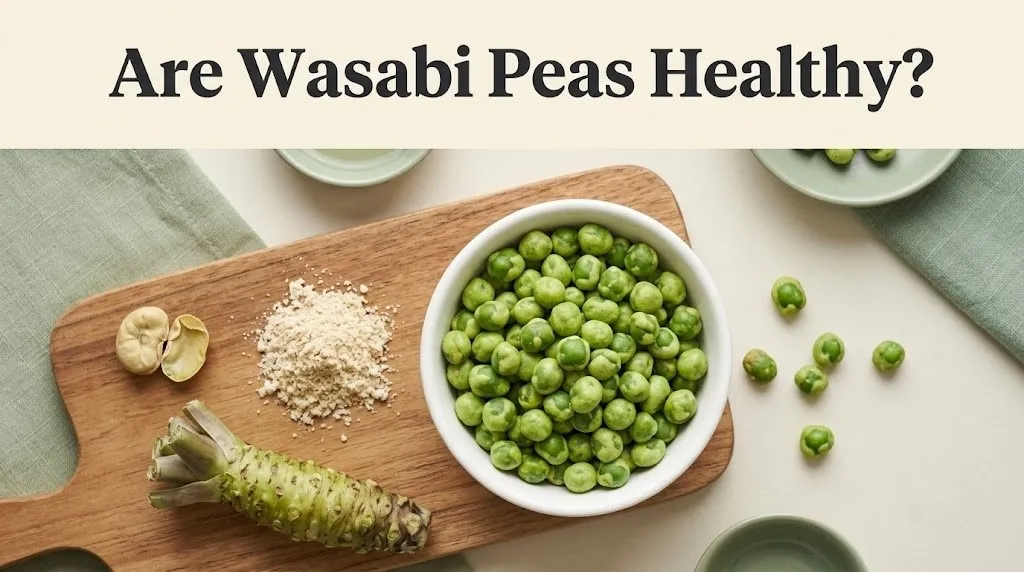
Wasabi peas are a mixed bag nutritionally. They are a fried, starchy snack that provides some fiber and protein from the pea but is often coated in a mix of refined starch, sugar, salt, and horseradish powder dyed green to look like real wasabi. The pea itself is a vegetable, but the final product is closer to a flavored chip in nutritional terms.
This matters because wasabi peas enjoy a powerful health halo. They are green. They are peas. They sound like something a health-conscious person would snack on at a bar instead of peanuts. But the reality of the ingredient list tells a different story. Most commercial wasabi peas start with dried marrowfat peas, which are naturally starchy, and coat them in a paste of wheat flour, corn starch, sugar, palm oil, salt, and horseradish powder with artificial green coloring. They are then deep-fried or roasted in oil until crunchy. The final snack is roughly 25 to 30 percent fat by weight and delivers a surprising amount of sodium in a small handful.
This guide will walk you through exactly what is in a wasabi pea, from the real nutritional value of the pea kernel to the identity of the green coating. You will learn how the sodium and processing affect the health equation, who should probably avoid them, and which crunchy snacks deliver a similar satisfaction with a better nutritional return.
Are Wasabi Peas a Healthy Snack
Wasabi peas can be a healthier snack than a potato chip if you stick to a small, measured portion, but they are not a health food and should not be eaten by the handful straight from the bag. The nutritional profile is a Jekyll and Hyde situation. The pea center is a whole food with fiber and plant protein. The coating is a processed blend of refined starch, sugar, and salt.
A standard one-ounce serving, roughly a third of a cup or a small handful, contains about 120 to 130 calories, 4 grams of fat, 16 grams of carbohydrate, 3 grams of fiber, and 4 grams of protein. The sodium content is the biggest variable and the biggest concern. Depending on the brand, sodium can range from 150 milligrams in a low-sodium variety to over 300 milligrams per ounce. That is a significant portion of the American Heart Association’s 2,300-milligram daily limit, and a significant amount of salt for a snack that does not taste salty because the wasabi heat masks it.
The protein and fiber numbers look good on paper, especially compared to a potato chip, which has 1 gram of protein and 1 gram of fiber in a similar serving. But the wasabi pea also delivers more fat, more carbohydrates, and a longer ingredient list than you might expect. The health verdict is “better than a chip, worse than a handful of plain roasted edamame.” It is a mid-tier snack. Not the worst thing you can eat. Not the best.
Wasabi Peas Nutrition Facts
A one-ounce serving of standard commercial wasabi peas contains approximately 120 calories, 4 grams of total fat including 1 to 2 grams of saturated fat, 16 to 18 grams of carbohydrates, 3 grams of dietary fiber, 3 to 5 grams of protein, and 1 to 3 grams of sugar. The sodium content typically falls between 180 and 300 milligrams.
These numbers come from the USDA FoodData Central database and averaged major brand labels like Hapi and Seapoint Farms. The fat content surprises many people because peas themselves contain almost no fat. The fat in wasabi peas comes almost entirely from the oil used in the frying or roasting process. Palm oil, soybean oil, and rice bran oil are the most common. These oils are not inherently unhealthy in small amounts, but they are calorie-dense and highly processed. The saturated fat content from palm oil is worth noting for anyone tracking cardiovascular risk factors.
The carbohydrate count is high for a snack, roughly equivalent to a slice of bread. The sugar content is low in absolute terms but notable because it comes from added sugars in the coating, not from the pea itself. A pea contains natural sugars. A wasabi pea contains added corn syrup, dextrin, or maltodextrin. The ingredient “sugar” or “corn syrup” on the label is a sign that the manufacturer is balancing the heat of the horseradish with sweetness, a flavor strategy that makes the snack highly palatable and hard to stop eating.
Standard Wasabi Pea Nutrition (1 oz / 28g):
| Nutrient | Amount | % Daily Value (approx.) |
|---|---|---|
| Calories | 120-130 | 6% |
| Total Fat | 4g | 5% |
| Saturated Fat | 1-2g | 5-10% |
| Sodium | 200-300mg | 9-13% |
| Total Carbs | 16-18g | 6% |
| Dietary Fiber | 3g | 11% |
| Protein | 3-5g | 6-10% |
| Sugar | 1-3g | Added |
Key Takeaway: Wasabi peas are a calorie-dense, moderate-fiber snack with a hidden sodium and added sugar load. The label looks better than the ingredient list.
How Many Calories in Wasabi Peas
A single one-ounce serving of wasabi peas contains roughly 120 to 130 calories. The danger with wasabi peas is not the calorie density per serving. It is the serving size. Most people eat two to three times the listed serving size in a single sitting.
The serving size on a bag of wasabi peas is typically 1 ounce, or about 28 grams, which is a third of a cup. That is a very small amount. It fits in the palm of your hand. If you pour wasabi peas into a bowl, you will almost certainly pour more than a third of a cup. A full cup of wasabi peas contains roughly 360 to 390 calories, plus over 12 grams of fat and close to 1,000 milligrams of sodium in some brands. A cup of wasabi peas is not an unreasonable snack volume for a hungry adult. It disappears quickly. The caloric consequence is more like a small meal than a light snack.
The calorie source is split between the pea starch and the coating oil. The peas provide complex carbohydrates. The frying oil provides fat. The combination of starch, fat, salt, and spicy heat triggers a potent flavor profile that makes portion control genuinely difficult. Wasabi peas are a textbook hyper-palatable snack, engineered to hit multiple sensory pleasure points at once and make the eater lose track of how many they have consumed.
Wasabi Peas Sodium Content
The sodium content of wasabi peas is the single biggest nutritional concern with this snack. A one-ounce serving can contain anywhere from 150 to over 300 milligrams of sodium. A larger, more realistic serving of a cup or so can deliver 600 to 1,000 milligrams.
Sodium enters the wasabi pea through several routes. The soy sauce powder in the coating is inherently salty. The salt itself is added directly. Even the monosodium glutamate (MSG) or yeast extract that some brands use for savory depth contributes sodium. The heat from the horseradish masks the saltiness, which is a documented sensory phenomenon. Spicy foods require higher salt concentrations to taste adequately salty because the capsaicin-like isothiocyanates in horseradish overwhelm the salt receptors on the tongue.
For someone with hypertension, heart failure, or kidney disease, this hidden sodium load is a legitimate concern. A snack that does not taste salty but delivers 300 milligrams of sodium per ounce is a stealth source of dietary sodium that can push a person over their daily limit without them realizing it. The American Heart Association’s ideal sodium target of 1,500 milligrams per day can be nearly one-third consumed by a single generous handful of wasabi peas.
What Are Wasabi Peas Made Of
Wasabi peas are made from dried marrowfat peas that are rehydrated, coated in a starch-based paste seasoned with horseradish, sugar, salt, and oil, and then deep-fried or roasted until crunchy. They are then dusted with additional seasoning powder and packaged. The ingredient list on a typical brand tells the full story.
A standard ingredient label for a commercial wasabi pea product reads: green peas, corn starch, sugar, palm oil, salt, horseradish powder, wheat flour, soy sauce powder, yeast extract, FD&C Yellow 5, and FD&C Blue 1. The green peas are the first ingredient, which is good. Everything else is the coating. The corn starch and wheat flour create the crispy shell. The sugar balances the heat. The palm oil adds richness and carries the fat-soluble flavors. The horseradish powder provides the nasal heat that the consumer experiences as “wasabi.” The artificial colors create the bright green visual cue that the brain associates with wasabi.
Almost none of the wasabi peas on the market contain actual wasabi. Real wasabi, Wasabia japonica, is a finicky, semi-aquatic plant that grows in cold, shaded mountain streams in Japan. It is expensive, roughly 80 to 100 dollars per pound for fresh rhizomes, and loses its volatile heat compounds within 15 to 20 minutes of being grated. It is never used in mass-produced snack foods. The ingredient that provides the heat in wasabi peas is horseradish, Armoracia rusticana, which is cheap, stable, and produces a very similar allyl isothiocyanate nasal burn when powdered.
Is the Wasabi on Wasabi Peas Real
The wasabi on wasabi peas is not real wasabi. It is a mixture of horseradish powder, mustard flour, cornstarch, and artificial green coloring designed to mimic the color, texture, and nasal-clearing heat of real wasabi paste. The ingredient label will list “horseradish powder” or “natural flavors,” never “wasabi.”
This substitution is not unique to snack foods. Approximately 95 percent of the “wasabi” served in sushi restaurants around the world, including in Japan, is actually horseradish paste tinted green. Real wasabi is expensive, rare, and does not travel well. The horseradish-based imitation captures the essential sensory experience, the volatile allyl isothiocyanate that travels up the back of the throat and clears the sinuses, at a tiny fraction of the cost. The flavor difference is subtle. Real wasabi has a more vegetal, slightly sweet, and less aggressive heat that fades quickly. Horseradish is harsher and lingers longer.
The green color in wasabi peas is almost always artificial. A combination of FD&C Yellow 5 and FD&C Blue 1 creates the vivid green. Some natural brands use spirulina extract or turmeric, but these are the exception. The color has no flavor and no nutritional significance. It is purely cosmetic, designed to make the product visually recognizable and appealing. A consumer who prefers to avoid artificial food dyes should look for a brand that uses natural colors or simply accept that the snack’s flavor comes from horseradish, not wasabi, and the color is a cosmetic fiction.
How Are Wasabi Peas Processed
Wasabi peas are processed through a multi-step industrial procedure that involves soaking, coating, frying or roasting, and seasoning. The process transforms a hard, dried legume into a crunchy, shelf-stable snack with a multi-month shelf life.
The process begins with dried marrowfat peas, a variety of pea with a particularly high starch content that makes them good for puffing and frying. The peas are soaked in water to rehydrate them partially. They are then tumbled in a large drum with a slurry of corn starch, wheat flour, sugar, salt, horseradish powder, oil, and food coloring. This coating adheres to the surface of each pea. The coated peas are then deep-fried in oil at high temperature, which drives off the remaining water, gelatinizes the starch coating into a crispy shell, and cooks the pea interior. Some manufacturers use a hot air roasting process instead of deep-frying, which reduces the final fat content slightly but produces a different, less crunchy texture.
After frying, the peas are dusted with additional seasoning powder, a dry blend of salt, sugar, horseradish, and sometimes MSG or yeast extract. They are cooled, sorted, and packaged in nitrogen-flushed bags to prevent oxidation and maintain crunch. The entire process from dried pea to finished snack takes less than an hour. The final product contains no water, which makes it stable on the shelf for months.
Key Takeaway: Wasabi peas are a deep-fried, seasoned starch snack that starts with a vegetable and ends with a product that is nutritionally similar to a flavored chip. The processing matters more than the pea.
Wasabi Peas Fiber and Protein
Wasabi peas provide approximately 3 grams of dietary fiber and 4 grams of protein per ounce, which is better than most crunchy snack foods but not enough to make them a high-fiber or high-protein food in the context of a full day. The pea base gives them a nutritional advantage over corn-based or potato-based snacks.
The fiber in wasabi peas is a mix of insoluble and soluble fiber from the pea. Insoluble fiber adds bulk to stool and supports regular digestion. Soluble fiber can help lower cholesterol and moderate blood sugar. Three grams per ounce is a meaningful contribution. For a person aiming for 25 to 30 grams of fiber per day, a serving of wasabi peas provides roughly 10 percent of the daily target. That is a real benefit compared to a snack that provides zero fiber.
The protein content, 4 grams per ounce, is similarly useful. It is not a protein bar, but it is not a protein desert either. The protein comes from the pea, which is a legume. Pea protein is incomplete, meaning it does not contain all nine essential amino acids in optimal ratios, but it is rich in lysine, which many grain-based snacks lack. Pairing wasabi peas with a handful of almonds or a piece of cheese rounds out the amino acid profile and improves satiety.
Wasabi Peas vs Roasted Chickpeas Nutrition
Roasted chickpeas are a nutritionally superior snack to wasabi peas across almost every metric. They contain more fiber, more protein, less fat, and less sodium per serving. They are also a single ingredient, a chickpea, with seasoning added, compared to the long ingredient list of a wasabi pea.
A one-ounce serving of dry-roasted chickpeas contains roughly 120 calories, 2 grams of fat, 18 grams of carbohydrates, 5 grams of fiber, and 6 grams of protein. The sodium content depends on the seasoning but can be controlled by choosing a low-salt variety or making them at home. The ingredient list for plain roasted chickpeas is one item: chickpeas. Seasoned versions add oil and spices, not a starch-based coating.
The textural experience is different. Roasted chickpeas are hard and crunchy rather than crispy-shelled. The flavor is nuttier, less processed, and does not have the nasal heat of wasabi. They are a better everyday snack from a nutritional standpoint, but they do not satisfy the specific wasabi pea craving. For someone who wants the heat, mixing roasted chickpeas with wasabi powder, salt, and a tiny amount of oil before roasting creates a homemade snack that delivers the same sensory profile with a much cleaner ingredient list.
Snack Nutrition Comparison (per 1 oz serving):
| Snack | Calories | Fat (g) | Fiber (g) | Protein (g) | Sodium (mg) |
|---|---|---|---|---|---|
| Wasabi Peas | 125 | 4 | 3 | 4 | 200-300 |
| Roasted Chickpeas | 120 | 2 | 5 | 6 | 100-200 |
| Salted Almonds | 160 | 14 | 3 | 6 | 0-100 |
| Potato Chips | 150 | 10 | 1 | 2 | 150-200 |
| Veggie Straws | 130 | 7 | 0 | 1 | 250 |
Best Healthy Crunchy Snack Alternatives
The best healthy crunchy snack alternatives to wasabi peas are dry-roasted edamame, roasted chickpeas, raw almonds, air-popped popcorn, and freeze-dried vegetables. These snacks provide the satisfying crunch without the starch coating, added sugar, artificial colors, and fried fat of wasabi peas.
Dry-roasted edamame is the closest direct substitute. It is a legume, like a pea, with a similar size and crunchy texture. It contains roughly 14 grams of protein and 8 grams of fiber per ounce, numbers that dwarf the wasabi pea’s 4 and 3. The flavor is nutty and savory, not spicy, but it can be seasoned with wasabi powder at home. Several brands now sell “wasabi edamame” that skips the sugary starch coating and uses a dry wasabi seasoning instead.
Air-popped popcorn is a whole grain, high-fiber snack that provides about 4 grams of fiber per 3-cup serving with very few calories. It is not a protein source, but it satisfies the crunchy, hand-to-mouth snack habit that drives many people toward wasabi peas. Seasoning popcorn with nutritional yeast, garlic powder, and a tiny pinch of cayenne creates a savory, complex flavor that scratches a similar itch as the wasabi heat.
Freeze-dried vegetables, especially green peas, corn, and bell peppers, are whole vegetables with no added fat, no added starch, and no added sugar. They are crunchy, flavorful, and nutritionally indistinguishable from the fresh vegetable except for the removal of water. A bag of freeze-dried peas with a sprinkle of wasabi powder and salt is a genuinely healthy snack.
Are Wasabi Peas Gluten Free
Most commercial wasabi peas are not gluten-free. The coating paste typically contains wheat flour, and the seasoning blend may include soy sauce powder, which is brewed from wheat. A wasabi pea snack that is not explicitly labeled gluten-free should be assumed to contain gluten.
The wheat flour in the coating serves as a binder and a crispness agent. It helps the starch shell adhere to the pea and fry into a crunchy crust. Gluten-free alternatives exist. Some brands use rice flour or tapioca starch instead of wheat flour, creating a gluten-free wasabi pea. These products are clearly labeled gluten-free on the package and are produced in dedicated gluten-free facilities to avoid cross-contamination with wheat-based products on shared equipment.
For someone with celiac disease or non-celiac gluten sensitivity, wasabi peas from a bulk bin are a high-risk food. Bulk bins are notorious for cross-contamination because scoops move between bins and customers are not careful. Packaged wasabi peas with a gluten-free certification mark are safe. Bulk bin wasabi peas are a gamble that a person with a serious gluten-related condition should not take.
Low Sodium Wasabi Peas Options
Low-sodium wasabi peas are available from a few specialty brands, but they are not common. Most wasabi peas rely on salt as a primary flavor driver, and the sodium is integrated into both the coating paste and the final seasoning dust. Low-sodium versions use potassium chloride or simply less salt, which changes the flavor profile.
Seapoint Farms offers a lower-sodium dry-roasted green pea snack that is not a traditional wasabi pea but provides a similar experience. Eden Foods makes a lightly seasoned wasabi pea with reduced sodium. These products sacrifice some of the aggressive, savory punch of standard wasabi peas in exchange for a more reasonable place in a low-sodium diet.
Making wasabi peas at home is the most reliable way to control sodium. Rehydrate freeze-dried peas briefly in warm water, toss them in a mixture of wasabi powder, rice flour, a small amount of oil, and a measured pinch of salt, and bake at a low temperature until crisp. The sodium content is whatever the cook decides it is. For someone on a medically restricted 1,500-milligram sodium diet, this level of control is the difference between a food that is off-limits and a food that fits.
Can Wasabi Peas Cause Acid Reflux
Yes, wasabi peas can trigger acid reflux in susceptible individuals. The combination of spicy isothiocyanates from the horseradish, the fat from the frying oil, and the acidic notes from any vinegar or citric acid in the seasoning can relax the lower esophageal sphincter and irritate the esophageal lining.
Allyl isothiocyanate, the volatile compound that gives horseradish and wasabi their heat, is a known irritant to mucous membranes. In a person with a healthy digestive tract, this irritation is mild and temporary. In a person with gastroesophageal reflux disease (GERD), a hiatal hernia, or gastritis, the irritation can trigger a painful reflux episode. The horseradish compound relaxes the muscular valve that separates the stomach from the esophagus. Stomach acid escapes upward. The result is heartburn, chest discomfort, and a sour taste in the back of the throat.
The fat content of wasabi peas also slows gastric emptying. Food stays in the stomach longer. The stomach produces more acid to process the fatty meal. A stomach full of acid and slowly digesting fried food, combined with a relaxed esophageal valve, is the perfect setup for reflux. Anyone who knows they are prone to heartburn should be cautious with wasabi peas, eat them in small amounts, and not lie down shortly after eating them.
Key Takeaway: Wasabi peas are a triple threat for reflux: spicy, fatty, and acidic. If you have a sensitive stomach, eat them in moderation and not before bed.
Healthy Wasabi Pea Recipe Homemade 2026
A healthy homemade wasabi pea recipe uses freeze-dried peas as the base, a baking method instead of frying, and a seasoning blend that skips the starch coating, added sugar, and artificial colors. The result is a crunchy, spicy snack with a fraction of the fat and sodium of the commercial version.
Freeze-dried green peas are available in the snack aisle or bulk section of most grocery stores. They are peas with the water removed through sublimation, not heat, so they retain their color, nutrients, and shape. They are naturally crunchy without being fried. To make them into wasabi peas, they need a light coating of wasabi oil and seasoning that clings to the surface and dries crisp.
Homemade Healthy Wasabi Peas Recipe:
- Preheat oven to 250 degrees Fahrenheit. Line a baking sheet with parchment paper.
- In a small bowl, whisk 1 tablespoon of rice flour with 2 teaspoons of wasabi powder, 1 teaspoon of coconut aminos, 1 teaspoon of avocado oil, and a pinch of salt.
- Add 2 cups of freeze-dried peas to a mixing bowl. Drizzle the wasabi mixture over the peas and toss gently until evenly coated.
- Spread the peas in a single layer on the baking sheet. Bake for 20 to 25 minutes, stirring once halfway through, until dry and crisp.
- Let cool completely on the baking sheet. The peas will get crunchier as they cool. Store in an airtight container.
Frequently Asked Questions About Wasabi Peas
Are wasabi peas good for weight loss?
Wasabi peas can fit into a weight loss plan in a strictly controlled, small portion.
They are calorie-dense and easy to overeat, which works against weight loss goals.
A one-ounce portion provides fiber and protein, but a full cup can derail a calorie deficit for the day.
Do wasabi peas contain real wasabi?
No, almost all commercial wasabi peas are flavored with horseradish powder, not real wasabi.
Real wasabi is expensive and loses its heat quickly, making it impractical for processed snacks.
The green color comes from artificial food dyes or spirulina in natural brands.
Can I eat wasabi peas if I have high blood pressure?
You should eat wasabi peas with caution if you have high blood pressure.
A one-ounce serving can contain up to 300 milligrams of sodium, and larger servings much more.
Look for low-sodium varieties or make your own at home to control the salt content.
Are wasabi peas OK for a gluten-free diet?
Most wasabi peas are not gluten-free because the coating contains wheat flour and soy sauce powder.
Look for brands specifically labeled gluten-free, which use rice flour or tapioca starch instead.
Bulk bin wasabi peas should be avoided due to cross-contamination risk.
What happens if you eat too many wasabi peas?
Eating too many wasabi peas can cause stomach irritation, heartburn, and a very high sodium intake.
The horseradish heat and fat content can trigger acid reflux in susceptible people.
The caloric and sodium load from a large serving can also contribute to bloating and water retention.
Wasabi peas are not a villain, and they are not a health food. They sit in the middle of the snack spectrum, a legume that has been deep-fried, coated in starch, dusted with salt and sugar, and dyed green to look like something fresher than it is. The pea itself is a real food. The final product is a processed snack that should be eaten with the same portion awareness you would bring to a bowl of potato chips.
If you love wasabi peas, eat them. Measure a third of a cup into a bowl, put the bag away, and enjoy the crunch and the heat without guilt. If you eat them daily or by the fistful, consider switching to dry-roasted edamame or making your own baked version with freeze-dried peas and real wasabi powder. You will get the same sensory experience, the same nasal-clearing rush, without the ingredient list that reads like a chemistry experiment and the sodium tally that reads like a deli sandwich.