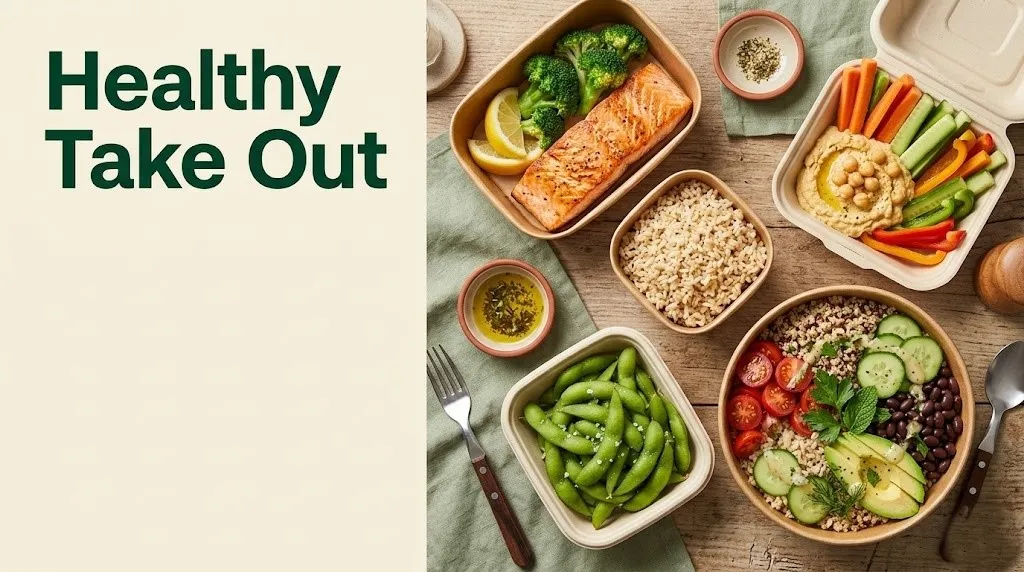
Healthy take out is not a contradiction in terms. With the right ordering strategy and the right cuisines, you can get a genuinely nutritious meal delivered to your door or picked up in under 15 minutes.
The stakes here are real. According to the Centers for Disease Control and Prevention, Americans consume roughly 70% of their daily sodium intake from restaurant and processed foods. A single standard restaurant entree can contain more sodium than the American Heart Association’s recommended daily ceiling of 2,300 milligrams.
This guide covers the best takeout options by cuisine, the chains actually worth ordering from, how to build a balanced meal from any menu, and which choices serve specific health goals. You’ll leave knowing exactly what to order and exactly what to avoid.
Healthy Take Out: What It Actually Means
Healthy take out refers to restaurant or delivery meals that provide a reasonable balance of lean protein, dietary fiber, and essential micronutrients without excessive sodium, saturated fat, or refined carbohydrates.
That definition sounds clinical. In practice, it means a grilled chicken bowl with brown rice and vegetables beats a deep-fried combo with white rice every time, but the margin between those two at the same restaurant can be 700 calories, 1,500 milligrams of sodium, and 30 grams of fat.
The USDA Dietary Guidelines for Americans 2020-2025 recommend building meals around vegetables, legumes, whole grains, and lean proteins regardless of whether you cook at home or order out. The guidelines also note that the average American’s eating pattern is consistently low in fiber and consistently high in added sugars and sodium, making restaurant ordering decisions consequential for long-term dietary quality.
The good news: takeout menus in 2026 have more genuinely useful options than ever. Fast casual chains, ethnic cuisine restaurants, and major delivery platforms have expanded their whole-food offerings considerably. Knowing what to look for makes the difference.
Key considerations when evaluating any takeout meal:
- Protein content: Aim for at least 25 to 35 grams of lean protein per meal to support satiety
- Fiber content: Look for dishes with vegetables, beans, or whole grains; target at least 5 to 8 grams of fiber per meal
- Sodium content: A single meal above 1,000 milligrams of sodium is worth scrutinizing
- Cooking method: Grilled, steamed, baked, or roasted beats fried or crispy in virtually every nutritional category
- Sauce and dressing placement: These are where hidden calories and sodium accumulate fastest
Is Takeout Food Actually Healthy?
Takeout food can be healthy, and the answer depends almost entirely on what you order and how the kitchen prepares it.
The blanket idea that restaurant food is always worse than home cooking does not hold up to nutritional scrutiny. A grilled salmon fillet with roasted vegetables from a good Japanese or Mediterranean spot genuinely competes with what most people would prepare at home. The problem is not restaurants; it’s the specific dishes most people default to ordering.
A 2022 analysis published in the American Journal of Clinical Nutrition found that Americans who eat at full-service and fast food restaurants regularly consume approximately 200 more calories per day than those who predominantly cook at home, with most of that difference coming from added fats and sodium rather than from inherently lower-quality ingredients.
The distinction matters. It is not the restaurant kitchen that makes takeout problematic. It is the deep-frying, the heavy saucing, the oversized portions, and the refined grain bases. Swap those variables out and the nutritional profile changes substantially.
| Meal Factor | Home Cooking Average | Restaurant Average | Smart Takeout Target |
|---|---|---|---|
| Calories per meal | 500-650 | 850-1,100 | 550-750 |
| Sodium per meal | 600-900mg | 1,400-2,300mg | 700-1,000mg |
| Fiber per meal | 6-10g | 3-6g | 7-12g |
| Lean protein per meal | 25-40g | 20-35g | 28-40g |
People managing specific conditions like hypertension, type 2 diabetes, or chronic kidney disease should check nutritional data directly with the restaurant before ordering, as restaurant sodium and carbohydrate levels vary considerably even within the same chain.
What Makes Takeout Unhealthy?
The four main culprits in unhealthy takeout are cooking oil volume, sodium in sauces, refined carbohydrate portions, and serving sizes that routinely exceed one standard meal.
Think of it like this: a chicken breast is a chicken breast. But deep-fry it in four tablespoons of oil, soak it in a sodium-heavy sweet glaze, pile it on a mountain of white rice, and you’ve turned 200 calories of lean protein into a 900-calorie meal with 1,800 milligrams of sodium. The ingredient itself wasn’t the problem.
The Academy of Nutrition and Dietetics notes that restaurant portions have grown by 30 to 40 percent since the 1980s. A standard restaurant pasta dish, for example, often contains two to three times the USDA’s recommended single serving of refined carbohydrates.
Specific red flags to watch for when ordering:
- Sauces described as “sweet,” “crispy,” “glazed,” or “creamy”: These typically signal high sugar, heavy oil, or both
- Anything “battered,” “breaded,” or “tempura-style”: Adds 200 to 400 calories of refined carbohydrate coating per serving
- “Fried rice” or “lo mein” as a base: Both start with refined grains and add oil; white rice or mixed greens are better foundations
- Combo meals or “loaded” versions: Restaurants design these to maximize palatability, which usually means maximizing fat, sodium, and sugar
- Appetizers before a full entree: In restaurant settings, appetizers often run 400 to 600 calories before the main course arrives
One easy rule that works across every cuisine: order sauces and dressings on the side, every time. That single habit consistently reduces calorie intake by 100 to 300 calories per meal without changing what you ordered.
Key Takeaway: Healthy takeout is achievable, but the biggest threats are cooking method, sauce sodium, oversized portions, and refined carbohydrate bases, not the protein or vegetable content of the dish itself.
Low Calorie Takeout Options
The best low-calorie takeout meals pair a lean protein with non-starchy vegetables and a modest portion of a whole grain or legume base, keeping the total between 450 and 700 calories.
That range is not arbitrary. Research from Harvard T.H. Chan School of Public Health consistently shows that meals in the 450 to 700 calorie range with adequate protein (25 grams or more) and fiber (7 grams or more) produce stronger satiety than higher-calorie meals built on refined carbohydrates and fat, partly because protein has a higher thermic effect than carbohydrates or fat, meaning the body burns more energy digesting it.
The best low-calorie picks across common takeout categories:
| Dish | Cuisine Type | Approx. Calories | Protein | Fiber |
|---|---|---|---|---|
| Sashimi platter (8 pieces) | Japanese | 200-280 kcal | 28-36g | 0g |
| Grilled chicken salad, dressing aside | American fast casual | 350-450 kcal | 30-38g | 6-9g |
| Miso soup + edamame + salmon roll | Japanese | 420-500 kcal | 26-32g | 5-7g |
| Chicken tikka (no naan) + dal | Indian | 450-550 kcal | 34-40g | 8-12g |
| Burrito bowl, grilled chicken, no sour cream | Mexican | 550-650 kcal | 36-42g | 10-14g |
| Tom yum soup + chicken larb | Thai | 380-480 kcal | 28-34g | 4-7g |
Calorie estimates reflect standard restaurant portions and will vary by location and preparation. Confirm with the restaurant’s published nutritional data when available.
People following a very low-calorie diet under medical supervision should confirm that any restaurant meal aligns with their specific caloric targets, since restaurant portion sizes are inconsistent even within the same chain.
High Protein Takeout Meals
The highest-protein takeout meals reliably come from dishes built around grilled or steamed animal proteins or legume combinations, with the best options delivering 35 to 50 grams of protein per serving.
Protein matters in a takeout context for a specific physiological reason: it slows gastric emptying, which extends the feeling of fullness well past the meal. A 2019 study in the journal Nutrients found that meals providing 35 grams or more of protein were associated with significantly lower calorie intake at the following meal compared to lower-protein meals of equal energy content.
The best high-protein options by cuisine:
- Japanese: Sashimi, grilled teriyaki salmon or chicken, miso-marinated black cod, edamame as a starter (11 grams of protein per half-cup)
- Indian: Chicken tikka, saag paneer (Indian cottage cheese in spinach sauce), dal makhani (black lentils with protein from the legume-grain pairing), tandoori prawns
- Mexican: Chicken or steak fajita bowl, black bean and chicken burrito bowl, carne asada without the flour tortilla
- Mediterranean: Grilled chicken shawarma bowl, falafel and hummus plate (chickpea-based; 14 to 18 grams of protein per serving), grilled branzino
- American fast casual: Turkey or chicken grain bowls, Greek yogurt-based dressings, egg-based breakfast bowls if ordering before noon
Vegetarians and vegans can reliably hit 30 grams of protein per takeout meal by combining legumes (black beans, lentils, chickpeas) with tofu or tempeh, particularly at Indian, Mexican, or plant-forward fast casual restaurants.
Key Takeaway: Low-calorie takeout works best when it pairs at least 25 grams of lean protein with fiber-rich vegetables or legumes; that combination does more to keep you full than cutting calories alone.
Low Sodium Takeout Choices
Low sodium takeout is possible, but it requires specific dish choices and direct customization requests, because most restaurant cooking uses salt as a default seasoning at every stage of preparation.
The American Heart Association recommends no more than 2,300 milligrams of sodium per day, with an ideal target of 1,500 milligrams for people with high blood pressure or cardiovascular disease risk. One standard restaurant entree frequently contains between 1,200 and 2,500 milligrams of sodium before any sides, sauces, or condiments are added.
The sodium is not usually in the protein itself. It accumulates in sauces (soy sauce alone contains 900 to 1,000 milligrams of sodium per tablespoon), marinades, broths, and condiments. A dish of grilled chicken over vegetables sounds low-sodium until you add the teriyaki glaze.
Practical strategies for lowering sodium in any takeout order:
- Ask for sauces on the side: This alone can cut sodium intake by 30 to 50% per dish
- Request “light sauce” or “low sodium” preparation: Many restaurants will accommodate this with a specific ask
- Choose steamed dishes over stir-fried: Stir-frying uses oil and sauce repeatedly; steaming uses neither
- Avoid soy-sauce-based dishes as your main protein: Soy sauce is among the highest-sodium ingredients in Asian cuisine; ask for coconut aminos or light soy sauce where offered
- Skip the broth-based sides: Restaurant soups are often extremely high in sodium; miso soup, for example, can contain 800 to 1,000 milligrams per cup
People managing hypertension, chronic kidney disease, or heart failure should confirm the sodium content of any restaurant meal by checking the chain’s published nutritional data, as restaurant sodium levels vary significantly by location and batch preparation.
Healthy Chinese Takeout Orders
The healthiest Chinese takeout orders center on steamed, braised, or lightly stir-fried dishes with lean proteins and vegetables, avoiding deep-fried items and heavy sweet-and-sour or General Tso’s-style sauces.
Chinese cuisine as a culinary tradition is built on high-vegetable-content dishes, minimal dairy, and a variety of protein sources including tofu, seafood, and poultry. The westernized versions served at most American Chinese takeout restaurants, though, often use more oil, more sugar, and more sodium than their regional Chinese counterparts.
| Chinese Takeout Dish | Approx. Calories | Sodium (mg) | Protein (g) | Better Choice? |
|---|---|---|---|---|
| Steamed chicken and broccoli, sauce on side | 280-350 | 600-800 | 30-38 | Yes |
| Beef with broccoli, light sauce | 380-450 | 900-1,200 | 28-34 | Yes |
| Moo shu vegetables with 2 pancakes | 300-380 | 700-950 | 12-18 | Yes |
| General Tso’s chicken | 700-900 | 1,800-2,400 | 26-32 | No |
| Fried rice (large) | 550-750 | 1,100-1,600 | 12-20 | No |
| Egg drop soup (1 cup) | 70-90 | 800-1,000 | 6-9 | Moderate |
| Kung pao chicken, light sauce | 400-520 | 1,000-1,400 | 28-36 | Moderate |
The clearest ordering rules for Chinese takeout: choose steamed dumplings over fried, brown or white rice over fried rice, and ask for sauce on the side for any protein dish.
Diners with peanut allergies should note that peanuts and peanut oil appear across many Chinese dishes including kung pao chicken. Those with celiac disease or gluten sensitivity should be aware that soy sauce (made from wheat) is a foundational ingredient in most Chinese restaurant cooking; tamari or gluten-free soy sauce may be available on request.
Key Takeaway: For Chinese takeout, “steamed” and “sauce on the side” are the two most effective phrases you can say when ordering; they consistently lower sodium and calorie totals by 30 to 50%.
Healthy Mexican Takeout Options
Healthy Mexican takeout is built around the bowl format: lean protein, beans, brown or cauliflower rice, fresh salsa, and vegetables, with sour cream and cheese used as accents rather than bases.
Mexican food’s core ingredients, including black beans (Phaseolus vulgaris), pinto beans, grilled chicken or lean beef, tomato-based salsas, avocado, and fresh vegetables, are genuinely nutritious. The problem at most Mexican restaurants is portion size, the flour tortilla, and the heavy use of refined carbohydrates as a platform for those otherwise-solid ingredients.
A large flour tortilla at most chains contains 290 to 320 calories and contributes minimal fiber or protein. Switching to a bowl format, with the same filling, consistently removes 300 calories without reducing protein or fiber content.
Smart Mexican takeout choices and what to watch for:
- Burrito bowl with grilled chicken: At Chipotle Mexican Grill, this with brown rice, black beans, fajita vegetables, and mild salsa provides approximately 580 to 640 calories, 38 to 42 grams of protein, and 12 to 15 grams of fiber
- Chicken or shrimp fajita plate: Skip the tortillas; eat the protein and vegetables directly, with fresh guacamole (avocado provides monounsaturated fat and potassium)
- Tacos on corn tortillas: Corn tortillas (Zea mays masa) are smaller, lower in calories, and naturally gluten-free compared to flour tortillas; two corn tacos with grilled protein and salsa run 300 to 380 calories
- Caldo de pollo (chicken broth soup): Common at Mexican family restaurants; naturally low in calories, high in vegetables and protein
- Avoid: Chimichangas (deep-fried burritos), nachos as a meal, and “loaded” queso dishes as starters
Guacamole is a nutrient-dense choice: avocados provide healthy monounsaturated fat, potassium, folate, and dietary fiber. A standard two-tablespoon portion adds about 50 calories. It’s the sour cream (which contributes saturated fat with minimal nutritional benefit at large quantities) that’s worth moderating.
Healthy Japanese Food Delivery Picks
Japanese cuisine consistently produces some of the healthiest takeout available, with sashimi, edamame, miso-marinated proteins, and vegetable-forward dishes providing high protein and micronutrient density at modest calorie counts.
Japan’s traditional dietary pattern, sometimes called the Japanese dietary pattern in nutrition research, is associated with some of the longest life expectancy figures in the world. The diet’s common features include high seafood consumption (omega-3 fatty acids including eicosapentaenoic acid and docosahexaenoic acid), fermented foods like miso, high vegetable intake, and small portion sizes across multiple dishes rather than one massive entree.
The best Japanese takeout orders:
- Sashimi (raw fish slices): The leanest, highest-protein Japanese option; 8 pieces of salmon sashimi provide approximately 240 calories and 32 grams of protein; rich in omega-3 fatty acids
- Edamame: Half a cup provides 11 grams of protein, 4 grams of dietary fiber, and significant folate and vitamin K; excellent as a starter
- Miso soup: One cup contains 70 to 90 calories; provides probiotic-friendly fermented soybean paste; moderate sodium (800 to 1,000 mg per cup, so be mindful in volume)
- Salmon teriyaki (sauce on side): Grilled salmon with brown rice provides omega-3 fatty acids, protein, and B vitamins; requesting sauce on the side drops sodium by 30 to 40%
- Yakitori (grilled skewered chicken): Lightly seasoned, low-calorie grilled protein; two skewers provide 180 to 220 calories and 26 to 30 grams of protein
- Avoid: Tempura (battered and deep-fried; adds 200 to 400 calories per portion), tonkotsu ramen (can contain 900 to 1,100 calories and 1,800 milligrams of sodium per bowl), spider rolls (deep-fried soft-shell crab)
People with soy allergies should note that miso, edamame, and most Japanese soy sauces (shoyu) are soy-derived and common across almost all Japanese restaurant menus.
Key Takeaway: Japanese takeout is the single most reliably healthy takeout cuisine; sashimi, edamame, grilled teriyaki proteins, and miso soup as a starter combination will consistently outperform any other takeout meal on protein quality and calorie efficiency.
Healthy Thai and Indian Takeout
Both Thai and Indian cuisines offer genuinely nutritious takeout options built on spices with documented anti-inflammatory properties, but both also have high-sodium, high-fat dishes that are easy to default to without realizing it.
Thai cuisine: At its best, Thai food features abundant fresh herbs, lean proteins, chili-based sauces, and vegetable-forward dishes. Tom yum soup (a hot and sour broth with mushrooms, lemongrass, galangal, and protein) is one of the lowest-calorie satisfying meals in any takeout cuisine at 150 to 220 calories per bowl. Larb (ground meat salad with herbs, lime, and toasted rice) and papaya salad (green papaya, tomato, chili, lime) are two more high-value, low-calorie picks.
The dishes to be cautious with in Thai takeout:
- Pad Thai: Can contain 600 to 900 calories per standard portion; high in refined rice noodles and often heavily sweetened with palm sugar and fish sauce
- Massaman or Panang curry: Made with full-fat coconut milk; one cup of these curries provides 400 to 550 calories and 30 to 40 grams of fat
Indian cuisine: Indian takeout offers tremendous variety in protein and legume options. Lentil-based dishes like dal (Lens culinaris preparations) provide an excellent protein-to-fiber ratio. Chicken tikka (marinated in yogurt and spices, then grilled) is one of the highest-protein, lowest-fat Indian restaurant proteins at approximately 200 to 280 calories per serving. Saag paneer (Indian cottage cheese in spiced spinach purée) provides calcium, iron, and folate.
| Indian Dish | Approx. Calories | Better/Use Caution |
|---|---|---|
| Chicken tikka (grilled) | 200-280 | Better choice |
| Dal makhani (black lentil) | 250-350 per cup | Better choice |
| Saag paneer | 300-380 per cup | Better choice |
| Butter chicken (murgh makhani) | 450-600 per cup | Use caution (high saturated fat) |
| Naan bread | 250-320 per piece | Use caution (refined carbohydrate) |
| Biryani (full portion) | 600-850 | Use caution (portion size) |
Both cuisines use tree nuts (cashews in Indian curries, peanuts in many Thai dishes) extensively. Anyone with nut allergies should confirm preparation methods directly with the restaurant.
Healthy Mediterranean Takeout
Mediterranean takeout consistently earns its reputation as among the most nutritious available, built on olive oil, legumes, fresh vegetables, grilled seafood and poultry, and whole grains rather than refined carbohydrates.
The Mediterranean dietary pattern, ranked number one in U.S. News and World Report’s Best Diets rankings for six consecutive years through 2024, is characterized by high intake of dietary fiber, monounsaturated fats (primarily from olive oil), plant-based proteins, and omega-3 fatty acids from fish. These characteristics map almost directly onto the best dishes available at Mediterranean restaurants.
The standout Mediterranean takeout orders:
- Hummus with vegetables or whole pita: Hummus (chickpea and tahini paste) provides 14 to 18 grams of protein per 100 grams, along with iron, folate, and fiber; pair with raw vegetables rather than pita chips
- Grilled chicken shawarma bowl: Over tabbouleh (bulgur wheat, parsley, tomato, lemon) or brown rice; provides lean protein, fiber, vitamin C, and iron
- Greek salad with grilled protein: Tomato, cucumber, olives, red onion, and feta provide vitamins C and K, potassium, and calcium; add grilled chicken or shrimp for protein
- Lentil soup (mercimek çorbası or similar): One cup provides 10 to 13 grams of plant protein and 8 grams of dietary fiber
- Grilled branzino or sea bass: Excellent source of lean protein and omega-3 fatty acids; lower in sodium than most sauced dishes
The dish to be careful with is the falafel when fried. Falafel made from ground chickpeas (Cicer arietinum) is nutritious in principle, but the deep-frying process adds 200 to 300 calories to what would otherwise be a modest protein and fiber source.
Key Takeaway: Mediterranean and Japanese cuisines are the two most nutritionally reliable takeout categories in 2026; both build around lean proteins, plant foods, and cooking methods that preserve nutrients rather than adding empty calories.
Best Healthy Fast Casual Restaurants
The best healthy fast casual restaurants in 2026 are those that offer visible ingredient selection, published nutritional data, and genuine whole-food components rather than heavily processed bases.
Fast casual dining sits between fast food and full-service restaurants. The format, pioneered by chains like Chipotle Mexican Grill, Sweetgreen, and Panera Bread, gives customers visible control over ingredients and preparation. That transparency is nutritionally meaningful: you can see the chicken being sliced, the salad being tossed, and the amount of dressing being added.
The most nutritionally reliable fast casual chains in 2026:
| Chain | Best Order | Approx. Calories | Key Strengths |
|---|---|---|---|
| Sweetgreen | Harvest bowl or Shroomami bowl | 480-620 | Whole grains, greens, lean protein |
| Chipotle Mexican Grill | Burrito bowl, grilled chicken, black beans | 550-680 | High protein, high fiber, visible ingredients |
| Panera Bread | You Pick Two: lentil soup + chicken salad | 420-580 | Varied protein and vegetable options |
| Cava | Greens + grains bowl, falafel or chicken | 520-680 | Mediterranean ingredients, legume proteins |
| Subway | 6-inch turkey on whole grain, no mayo | 340-420 | Portion control, whole grain option |
Menus, portion sizes, and nutritional data vary by location and change seasonally. Verify current nutritional information on each chain’s official website or in-store guide before ordering.
Panda Express stands out as a large chain where healthy ordering is possible but requires more active navigation. String bean chicken breast over mixed vegetables, without fried rice, is approximately 350 to 420 calories with 28 to 32 grams of protein.
How to Order Healthy at Any Restaurant
Ordering healthy at any restaurant follows a consistent set of principles regardless of cuisine type: control the cooking method, control the sauce, control the portion, and build the plate around protein and vegetables first.
This is where having a mental framework pays off every time you open a menu. Think of it the way a nutritionist would think about any meal: start with the protein, find your fiber source, then choose a base that doesn’t undermine either.
A five-step ordering framework that works across any cuisine:
- Identify the lean proteins: Grilled, baked, steamed, or roasted chicken, fish, shrimp, tofu, or legumes. These are your anchors.
- Find the vegetable options: Whether that’s steamed broccoli, a side salad, roasted vegetables, or a grain bowl with greens. Every meal needs a fiber component.
- Choose a modest, whole-grain base if one exists: Brown rice, whole-grain bread, quinoa, or lentils over white rice, white bread, or refined noodles.
- Order all sauces, dressings, and condiments on the side: Add them yourself in small amounts; you’ll use a fraction of what the kitchen would add.
- Skip or split the starter: Restaurant appetizers are often nutritionally equivalent to a full entree. If you want one, share it across the table.
Additional quick-ordering rules:
- Use the restaurant’s app or website to check nutritional information before you arrive; the data is publicly available at most major chains
- Ask how a dish is prepared if the menu description is vague; “pan-seared” versus “deep-fried” makes a 300-calorie difference in the same protein
- Water, unsweetened tea, or sparkling water instead of sweetened beverages saves 150 to 300 calories per meal without any change to the food itself
Key Takeaway: Building a healthy takeout meal is a skill that transfers across every cuisine; anchor to lean protein, add a fiber source, order sauces on the side, and the specific restaurant matters far less than those three decisions.
Healthy Takeout for Weight Loss
Healthy take out can support weight loss when total calorie content is managed, protein is prioritized, and the meal replaces rather than supplements home cooking.
The key mechanism is not magic; it’s math combined with satiety strategy. According to research from the Academy of Nutrition and Dietetics, people who reported eating restaurant food regularly were more likely to exceed their daily calorie targets, but those who specifically reported choosing high-protein, high-fiber restaurant options showed dietary quality scores comparable to home cooks.
The most weight-loss-compatible takeout choices share three qualities: they are protein-dense (at least 30 grams per meal), they contain significant dietary fiber (at least 7 grams), and they keep the calorie ceiling below 700 for the full meal.
Best takeout choices for a weight-loss eating pattern:
- Sashimi platter with miso soup and edamame: 380 to 450 calories total; 40 to 50 grams of protein; 5 to 7 grams of fiber
- Chicken tikka with dal and a half-portion of brown rice: 480 to 560 calories; 38 to 44 grams of protein; 9 to 13 grams of fiber
- Chipotle burrito bowl (grilled chicken, black beans, fajita veg, salsa, no sour cream): 540 to 620 calories; 38 to 44 grams of protein; 12 to 16 grams of fiber
- Sweetgreen harvest bowl without croutons: 480 to 560 calories; 30 to 36 grams of protein; 8 to 12 grams of fiber
- Tom yum soup and ground chicken larb: 350 to 430 calories; 30 to 36 grams of protein; 4 to 6 grams of fiber
One practical note: people in a structured, medically supervised weight-loss program should check how their chosen takeout meal fits within their specific calorie and macronutrient targets, since restaurant portions are not standardized and can vary by 15 to 25% even within the same chain.
Healthy Takeout for People with Diabetes
For people managing type 2 diabetes or insulin resistance, the most important factors in a takeout meal are the glycemic impact of the carbohydrate base, the overall carbohydrate load per meal, and the fiber content, which directly moderates the blood sugar response.
Think of dietary fiber as a buffer in your digestive system. It slows the rate at which glucose from carbohydrates enters the bloodstream, reducing the spike in blood sugar that can follow a meal. A bowl of white rice has a glycemic index of approximately 72 to 83; the same amount of brown rice registers at 50 to 58. Swap the base, and the glycemic response to the same meal changes meaningfully.
The most diabetes-friendly takeout choices:
| Dish | Carbs per Serving | Fiber | Glycemic Impact |
|---|---|---|---|
| Sashimi + edamame + miso soup | 8-14g | 5-7g | Low |
| Chicken tikka + dal (no rice) | 18-26g | 8-13g | Low-moderate |
| Cava or Sweetgreen greens bowl | 30-42g | 9-14g | Moderate |
| Grilled chicken fajita bowl (corn tortilla) | 28-38g | 7-11g | Moderate |
| Tom yum soup + larb | 10-18g | 3-6g | Low |
Foods to limit for blood sugar management when ordering takeout:
- White rice as a base (refined carbohydrate; high glycemic index)
- Sweet and sour sauces (contain concentrated added sugars)
- Sweetened beverages, including lemonade and sweet tea offered at fast casual chains
- Bread baskets and flour tortillas before or with a meal
- Desserts and sweet condiments like hoisin sauce in large quantities
People managing diabetes should work with a registered dietitian or their healthcare provider to determine specific carbohydrate targets per meal, as those targets vary significantly based on medication, activity level, and individual insulin response.
Key Takeaway: For blood sugar management, the carbohydrate base of a takeout meal matters more than the protein; choosing grilled proteins over a non-starchy vegetable base instead of white rice or refined noodles consistently produces a lower glycemic response.
Frequently Asked Questions About Healthy Take Out
What is the healthiest takeout food you can order?
Sashimi with edamame and miso soup is among the healthiest single takeout combinations available, providing 40 to 50 grams of protein, significant omega-3 fatty acids, and fiber at under 450 calories total.
Other top contenders include chicken tikka with dal (Indian), grilled chicken shawarma bowl (Mediterranean), and a high-protein grain bowl from a fast casual chain like Sweetgreen or Cava.
The common thread across all of them is a lean protein, a fiber-rich component, and minimal refined carbohydrate or heavy sauce.
Can you lose weight if you eat takeout regularly?
Yes, regular takeout can be compatible with weight loss when total calories, protein, and fiber are managed consciously.
Research from the Academy of Nutrition and Dietetics shows that dietary quality, not whether food comes from a restaurant or a home kitchen, is the primary driver of weight outcomes.
Choosing high-protein, high-fiber takeout meals consistently and avoiding oversized portions and calorie-heavy sauces makes a meaningful difference over time.
Which fast food chain has the healthiest options overall?
Sweetgreen consistently offers the highest concentration of whole-food, nutrient-dense menu items, with grain bowls, greens bowls, and warm protein bowls built on real vegetables and lean proteins.
Among chains with broader national reach, Chipotle Mexican Grill offers strong protein and fiber content in its bowl format when ordered without sour cream and extra cheese.
Nutritional content varies by location and menu season at all chains; verify current options on the chain’s official nutrition page.
How do I order healthy Chinese takeout without all the sodium?
The most effective strategy is to order steamed proteins and vegetables with the sauce on the side, then dip rather than coating the entire dish.
Egg drop soup, steamed chicken and broccoli, and moo shu vegetables ordered this way can reduce sodium intake by 30 to 50% compared to the same dishes prepared with full sauce integration.
Avoid soy-glazed and sweet-and-sour preparations, which are among the highest-sodium cooking styles in Chinese restaurant cuisine.
Is sushi healthy for a regular takeout choice?
Sashimi-focused sushi orders are genuinely healthy for regular consumption, providing lean protein, omega-3 fatty acids, and a low calorie count per serving.
Rolls with tempura ingredients, cream cheese, or spicy mayo add 200 to 400 calories and significant sodium per roll and are better treated as occasional choices.
People with certain immune conditions or during pregnancy should avoid raw fish; cooked sushi options including shrimp, crab, or vegetable rolls are available at most Japanese restaurants.
Making Healthy Take Out Work for Your Life
Healthy takeout in 2026 is more accessible than it has ever been. The chains are better, the menus are more transparent, and the nutritional data is easier to find than at any previous point in the history of restaurant dining.
Start with the protein and build the plate from there. Order sauces on the side. Choose cuisines that are built on vegetables and legumes rather than refined carbohydrate bases. Those three habits will move your takeout nutrition further than any single “healthy dish” ever will.
You don’t need to cook every meal to eat well. You need to know what you’re ordering and why.