Rice noodles are a genuinely healthy carbohydrate choice for most people, provided you watch your portion size and pay attention to what you serve them with. They’re naturally gluten-free, low in fat, and provide a moderate calorie count that fits into a balanced diet without much difficulty.
What makes this topic worth understanding carefully is that rice noodles are almost never eaten plain. The Academy of Nutrition and Dietetics consistently points out that the full nutritional value of any carbohydrate food depends heavily on the meal context around it. A bowl of rice noodles in a vegetable-rich broth is a very different nutritional event than the same noodles drenched in palm sugar sauce.
This guide covers everything that actually matters: the real nutrition numbers, how rice noodles compare to wheat pasta and other alternatives, what their glycemic index means for blood sugar, and which people should eat them thoughtfully rather than freely. You’ll also find practical preparation guidance that makes a measurable difference to how your body handles them.
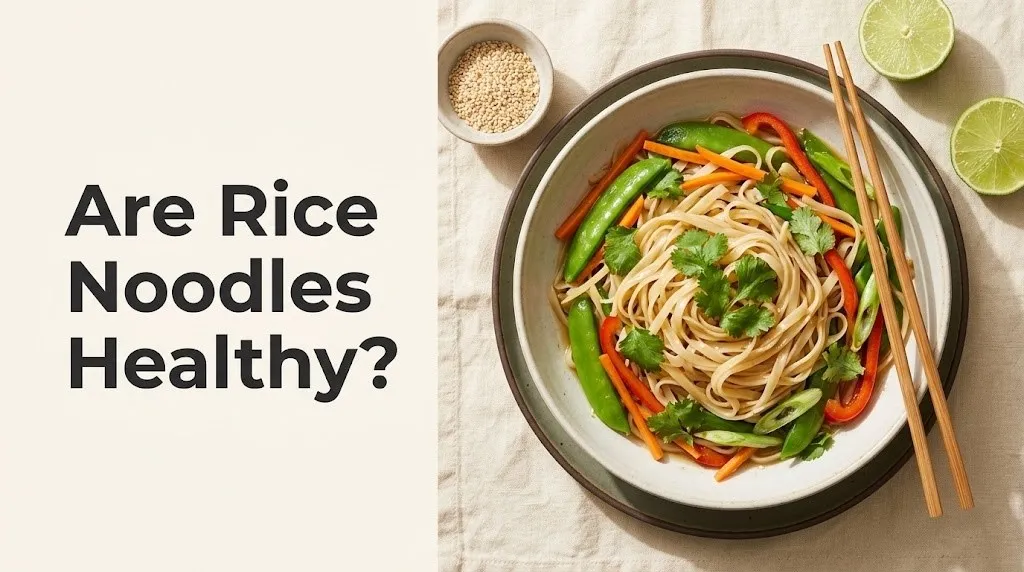
Are Rice Noodles Healthy?
Rice noodles are a healthy food for most adults when eaten in appropriate portions as part of a varied, balanced diet. They’re low in fat, free from gluten, easy to digest, and provide a usable source of carbohydrate energy without the digestive complications that wheat-based noodles cause for people with gluten sensitivity.
That said, they are a refined carbohydrate food. Most commercially sold rice noodles are made from milled white rice flour, which means the bran and germ layers of the rice grain have been removed. The result is a noodle lower in fiber and certain micronutrients than you’d get from a whole grain option.
The honest health picture is this: rice noodles occupy a solid middle ground. They’re not a nutritional powerhouse, but they’re not nutritionally empty either. Portion size and what you eat alongside them matter more than the noodles themselves.
| Health Factor | Rice Noodles | Context |
|---|---|---|
| Calories per cup cooked | 192 | Moderate; similar to white rice |
| Fat content | 0.4g | Very low |
| Gluten | None | Suitable for celiac disease |
| Fiber | 1.8g | Low compared to whole grain pasta |
| Sodium (dry, uncooked) | Under 10mg | Very low before sauces are added |
| Glycemic Index | 53 to 61 | Moderate range |
Quick Tip:
- Pair rice noodles with protein and non-starchy vegetables to balance their carbohydrate load.
- Eat them in a measured portion of roughly 1 to 1.5 cups cooked for most adults.
- The healthiness of rice noodles depends enormously on the dish context, not just the noodles.
What Are Rice Noodles Made Of?
Rice noodles are made primarily from rice flour (derived from Oryza sativa, the cultivated rice plant) combined with water, and sometimes a small amount of tapioca starch to improve the noodle’s texture and elasticity. That’s it. The ingredient list is genuinely short.
The rice flour used in most standard white rice noodles comes from milled, polished rice grains. Milling removes the outer bran layer and the germ, which is where most of the fiber, B vitamins, and minerals in the original rice grain are concentrated. What remains after milling is primarily the starchy endosperm.
This is why white rice noodles are a refined carbohydrate food, not a whole grain food. Brown rice noodles, which are made from rice flour that retains part of the bran layer, are a closer approximation to a whole grain product. They’re less common in most grocery stores but nutritionally more complete.
Key composition points:
- Primary ingredient: White rice flour (milled Oryza sativa)
- Secondary binder (in some products): Tapioca starch from the cassava plant
- No wheat, rye, or barley: Inherently gluten-free as manufactured
- No egg: Vegan by default
- No added sugar in the dry noodle itself
People with celiac disease should check packaging carefully. While rice noodles contain no gluten ingredients, some are manufactured in facilities that also process wheat products. A certified gluten-free label indicates testing was done to confirm the product falls below the 20 parts per million gluten threshold set by the U.S. Food and Drug Administration.
Rice Noodles Nutrition Facts Per Serving
One cup of cooked rice noodles (approximately 176 grams) contains the following, according to USDA FoodData Central:
| Nutrient | Amount per 1 Cup Cooked (176g) | % Daily Value (Approximate) |
|---|---|---|
| Calories | 192 | 10% |
| Total Carbohydrates | 44g | 16% |
| Dietary Fiber | 1.8g | 6% |
| Protein | 1.8g | 4% |
| Total Fat | 0.4g | 1% |
| Selenium | 8.3mcg | 15% |
| Manganese | 0.27mg | 12% |
| Phosphorus | 17mg | 1% |
| Iron | 0.24mg | 1% |
| Thiamine (B1) | 0.02mg | 2% |
| Sodium | Under 10mg | Under 1% |
The standout mineral here is selenium, a trace element that plays a role in thyroid function and antioxidant defense, according to the National Institutes of Health Office of Dietary Supplements. One cup of rice noodles provides roughly 15% of the daily value for selenium for an average adult, which is a meaningful contribution from a single ingredient.
Most other micronutrients are present in small quantities only. Unlike enriched wheat pasta, most rice noodles sold in the United States are not fortified with additional B vitamins or iron, so the B vitamin content remains low.
People eating rice noodles as a dietary staple should make sure the rest of their diet compensates for what rice noodles don’t provide, particularly fiber, protein, and B vitamins like folate, riboflavin (vitamin B2), and niacin (vitamin B3).
Rice Noodles Calories: What One Serving Actually Looks Like
A one-cup cooked serving of rice noodles contains 192 calories. But that serving size is smaller than most restaurant portions and home-cooked amounts.
Think of it like this: a restaurant bowl of pad thai or a generous home stir-fry often contains two to three cups of cooked rice noodles before the sauce, protein, and oil are added. That changes the base noodle calorie count from around 190 calories to 380 to 580 calories before anything else goes in the pan.
Understanding what a real portion looks like is the most practically useful piece of the calorie conversation.
| Serving Size (Cooked) | Approximate Calories | Approximate Carbohydrates |
|---|---|---|
| 0.5 cup (88g) | 96 | 22g |
| 1 cup (176g) | 192 | 44g |
| 1.5 cups (264g) | 288 | 66g |
| 2 cups (352g) | 384 | 88g |
| 3 cups (528g) | 576 | 132g |
Dry (uncooked) rice noodles weigh significantly less than their cooked weight. About 56 grams of dry noodles (roughly 2 ounces) produces approximately 1 cup when cooked. If you’re measuring dry noodles to control portions, that 2-ounce dry portion is your one-cup cooked reference point.
Calories from the noodles alone are only part of the picture. The cooking fat in stir-fries (typically 1 to 2 tablespoons of oil adds 120 to 240 calories), sauces, and added proteins determine the total calorie count of any rice noodle dish.
Key Takeaway: Rice noodles contain 192 calories per cooked cup and are naturally low in fat and sodium, but most people eat two to three times a standard serving in real-world dishes, so portion awareness matters far more than the per-cup number.
Rice Noodles Protein and Fiber Content
Rice noodles are low in both protein and dietary fiber, two nutrients that make a significant difference to satiety and blood sugar stability. One cup cooked contains just 1.8 grams of protein and 1.8 grams of fiber.
For context, the Academy of Nutrition and Dietetics recommends that adults aim for 25 to 38 grams of dietary fiber per day, depending on age and sex. A cup of rice noodles contributes roughly 5 to 7% of that daily target. Enriched wheat pasta of the same volume typically provides 2.5 to 3.5 grams of fiber, still low but meaningfully higher than rice noodles.
Protein at 1.8 grams per cup is also modest. Many adults aim for 20 to 30 grams of protein per main meal to support muscle maintenance and satiety. Rice noodles alone contribute very little toward that goal.
This is why the concept of meal composition matters so much with rice noodles. The noodles function well as an energy base, but they need to be paired strategically.
Good protein and fiber pairings for rice noodle dishes include:
- Firm tofu or edamame (adds plant protein and some fiber)
- Shrimp or chicken breast (adds lean protein with minimal fat)
- Bok choy, snap peas, or broccoli (adds fiber, vitamins, and volume)
- Eggs (adds protein and fat that slows carbohydrate absorption)
- Chickpeas (adds both protein and a meaningful fiber contribution)
People following higher-protein dietary approaches, including those managing weight or building muscle, should treat rice noodles as the carbohydrate component of the plate and plan the rest of the meal accordingly.
Health Benefits of Rice Noodles
Rice noodles offer several genuine health benefits, particularly for people who need or prefer a gluten-free carbohydrate option, are managing digestive conditions, or follow plant-based eating patterns.
Their most consistent benefit is digestibility. Because rice is a low-allergen grain with no gluten, the proteins in rice noodles are generally well-tolerated even by people with sensitive digestive systems. Research published in the Nutrients journal has found that rice-based foods are among the best-tolerated carbohydrate sources for individuals with irritable bowel syndrome (IBS) following a low-FODMAP (fermentable oligosaccharides, disaccharides, monosaccharides, and polyols) dietary approach.
A second genuine benefit is their low fat content. At 0.4 grams of fat per cooked cup, rice noodles are among the lowest-fat carbohydrate options available. For people managing cardiovascular risk factors or following a low-fat dietary pattern as recommended by the American Heart Association for certain heart disease risk profiles, this is a meaningful characteristic.
The selenium content is worth noting again. Selenium is a trace mineral that supports thyroid hormone synthesis and serves as a cofactor for glutathione peroxidase, an enzyme involved in the body’s antioxidant defense system. The NIH Office of Dietary Supplements notes that selenium deficiency is relatively uncommon in the United States but that consistent intake through food sources is the preferred approach.
Specific health benefits supported by rice noodles’ nutritional profile:
- Suitable for gluten-free dietary requirements (celiac disease, gluten sensitivity)
- Easy to digest; well-tolerated by most adults including those with sensitive digestive tracts
- Very low in fat; appropriate for low-fat dietary approaches
- Provides usable carbohydrate energy without saturated fat
- Low in sodium in their uncooked form, before sauces are added
- A source of selenium and manganese in meaningful amounts per serving
Rice Noodles Glycemic Index and Blood Sugar
The glycemic index (GI) of rice noodles ranges from approximately 53 to 61, placing them in the moderate GI category. Harvard T.H. Chan School of Public Health classifies foods with a GI of 55 or below as low, 56 to 69 as medium, and 70 or above as high.
Glycemic index and glycemic load are related but different concepts, and the difference matters practically. Glycemic index measures how quickly a standard portion of a food raises blood glucose relative to pure glucose. Glycemic load (GL) factors in how much carbohydrate is actually in the portion you eat. Because rice noodles are carbohydrate-dense, their glycemic load per cup is around 22 to 26, which is classified as high.
The practical translation: eating a large portion of plain rice noodles will produce a meaningful rise in blood glucose, even though the GI number alone appears moderate.
Two preparation factors significantly change this outcome. First, cooking time matters. Overcooked, very soft rice noodles have a higher glycemic response than noodles cooked to a firm, chewy texture. Second, cooling cooked rice noodles before eating them converts some of their digestible starch into resistant starch, a type of starch the small intestine cannot fully digest. A study published in the Nutrients journal found that cooling cooked starchy foods measurably increased their resistant starch content and lowered their glycemic response compared to eating them hot.
Quick Tip:
- Cook rice noodles only until they’re firm and chewy. Remove from heat while they still have some bite.
- For cold noodle dishes, letting cooked noodles cool for 30 minutes before eating lowers the glycemic response.
- Always pair rice noodles with protein, fat, and fiber-rich vegetables to further blunt the blood glucose rise.
Key Takeaway: Rice noodles have a moderate glycemic index but a high glycemic load per typical serving, meaning portion control and pairing them with protein and vegetables is the most effective way to keep blood sugar stable.
Rice Noodles vs. Wheat Noodles and Pasta
Rice noodles and wheat noodles each have distinct nutritional profiles, and neither is universally superior. The right choice depends on what your dietary needs and goals actually are.
The most direct comparison is rice noodles versus refined white wheat pasta, since that’s what most people are cooking or ordering. Per one cup cooked, here’s how they compare:
| Nutrient | Rice Noodles (1 cup, cooked) | White Wheat Pasta (1 cup, cooked) | Whole Wheat Pasta (1 cup, cooked) |
|---|---|---|---|
| Calories | 192 | 220 | 174 |
| Carbohydrates | 44g | 43g | 37g |
| Protein | 1.8g | 8g | 7.5g |
| Dietary Fiber | 1.8g | 2.5g | 6.3g |
| Fat | 0.4g | 1.3g | 0.8g |
| Gluten | None | Yes | Yes |
| Glycemic Index | 53 to 61 | 45 to 55 | 37 to 45 |
Wheat pasta, particularly whole wheat pasta, has more protein, more fiber, a lower glycemic index, and is typically enriched with B vitamins and iron. Rice noodles have the advantage of being gluten-free and lower in fat.
For people without gluten-related conditions, whole wheat pasta edges out rice noodles on several nutritional metrics. For people managing celiac disease or non-celiac gluten sensitivity, rice noodles are the more practical and often better-tolerated option.
The cultural context also matters. Rice noodles carry the flavors of broth-based dishes, stir-fries, and fresh spring rolls in a way that wheat pasta simply doesn’t replicate texturally. Nutritional comparisons matter, but meal enjoyment and adherence to a dietary pattern over time are also real variables.
Types of Rice Noodles and How They Differ
Not all rice noodles are the same, and the type you use changes both the texture of your dish and the practical serving size you end up eating.
The main categories, ordered from thinnest to widest:
| Type | Width | Common Use | Notes |
|---|---|---|---|
| Rice vermicelli | 1mm to 2mm | Spring rolls, Singapore noodles, light broths | Very thin; cooks in 2 to 3 minutes soaking in hot water |
| Thin rice noodles | 2mm to 3mm | Pho, Vietnamese soups, salads | Delicate texture; most commonly used in pho (banh pho) |
| Medium rice noodles (pad thai width) | 3mm to 5mm | Pad thai, drunken noodles, stir-fries | The most widely sold width outside Asia |
| Wide flat rice noodles | 8mm to 10mm | Char kway teow, beef ho fun, chow fun | More carbohydrate-dense per piece; absorbs sauce heavily |
| Extra-wide sheets (cut) | 15mm to 25mm | Cantonese stir-fries, dim sum | Difficult to find outside Asian grocery stores |
The nutritional difference between types is primarily about portion weight. Thinner noodles weigh less per cup and tend to absorb less oil and sauce. Wider noodles weigh more per comparable volume and absorb more sauce during cooking, which affects sodium and fat intake from the dish.
Brown rice versions of most of these noodle widths exist and are increasingly available. Brown rice noodles provide moderately more fiber (typically 2 to 3 grams per cup versus 1.8 grams) and retain more B vitamins because less of the grain layer has been milled away.
Are Rice Noodles Good for Weight Loss?
Rice noodles can fit into a weight loss eating plan, but they’re not inherently a weight loss food. The key variable is total calorie intake within your whole diet pattern, not whether any single food is “good for weight loss.”
At 192 calories per cup cooked, rice noodles are reasonably calorie-efficient as a carbohydrate source. The challenge is that their low protein and fiber content means they don’t create much satiety on their own. You’re more likely to eat a larger portion before feeling full compared to a higher-protein, higher-fiber carbohydrate like lentil pasta or whole wheat pasta.
A study published in the American Journal of Clinical Nutrition found that higher-protein meals consistently produced greater feelings of fullness and reduced total calorie intake over the following hours compared to lower-protein meals of equal calorie count. Rice noodles’ 1.8 grams of protein per cup means you’re relying on the rest of your dish to deliver satiety.
Practical strategies for making rice noodle dishes work within a weight-conscious approach:
- Keep the noodle portion to 1 cup cooked (around 56 grams dry)
- Build the rest of the bowl with lean protein (shrimp, chicken breast, tofu) and non-starchy vegetables
- Use broth-based sauces rather than oil-heavy or sugar-heavy sauces
- Choose thin rice vermicelli, which tends to feel more voluminous per calorie than wide noodles
- Avoid restaurant portions unless you’re splitting or taking half home
People following a very low-carbohydrate or ketogenic diet should note that rice noodles, at 44 grams of carbohydrates per cup, are not compatible with strict carbohydrate limits of 20 to 50 grams per day.
Key Takeaway: Rice noodles can support weight management when portioned carefully and paired with lean protein and vegetables, but their low satiety per calorie means the dish built around them matters more than the noodles themselves.
Are Rice Noodles Gluten Free?
Rice noodles are naturally gluten-free. Gluten is a protein complex found in wheat, rye, and barley. Rice contains none of these grains, so rice flour noodles contain no gluten by nature.
This makes rice noodles one of the most accessible gluten-free carbohydrate options available. They’re widely stocked in mainstream grocery stores, affordable, and don’t have the gummy or cardboard texture that some gluten-free pasta alternatives produce.
For people with celiac disease, an autoimmune condition in which gluten triggers damage to the small intestine’s lining, rice noodles are a generally safe carbohydrate choice. The critical caveat is cross-contamination. The FDA’s gluten-free labeling rule requires products labeled “gluten-free” to contain fewer than 20 parts per million of gluten. Packages without this label may have been processed in a facility that also handles wheat, which poses a risk for people with celiac disease who are highly sensitive.
For people with non-celiac gluten sensitivity, a condition in which gluten triggers digestive symptoms without the autoimmune intestinal damage seen in celiac disease, rice noodles are also appropriate.
Key points for people managing gluten-related conditions:
- Look for a certified gluten-free label, not just “made from rice”
- Asian rice noodle brands imported without gluten-free certification may not have been tested for cross-contamination
- Domestic brands that carry a certified gluten-free seal have undergone third-party testing
- Soy sauce served with rice noodle dishes typically contains wheat; tamari or certified gluten-free soy sauce is the appropriate substitute
Rice Noodles for People with Diabetes
Rice noodles require thoughtful portion management for people with type 2 diabetes or prediabetes, but they don’t need to be avoided entirely. The American Diabetes Association’s Standards of Medical Care in Diabetes recommends individualized carbohydrate counting rather than blanket food elimination for most people managing diabetes.
A one-cup serving of rice noodles contains 44 grams of carbohydrates. Many adults with type 2 diabetes work within a meal-time carbohydrate target of 30 to 60 grams per meal, set in consultation with a registered dietitian or diabetes care specialist. A one-cup portion of rice noodles fits within that range on its own; a two or three-cup portion does not.
The glycemic load issue discussed earlier is particularly relevant here. Eating a large portion of rice noodles without protein, fat, or fiber to slow digestion will produce a sharper, faster blood glucose rise than a smaller portion eaten as part of a mixed meal.
Evidence on resistant starch is also directly relevant for people managing blood sugar. According to research in the British Journal of Nutrition, the formation of resistant starch in cooked and cooled starchy foods reduced postprandial (after-meal) blood glucose response in study participants. This means cold rice noodle dishes, or leftovers that have been refrigerated overnight, may produce a somewhat lower blood glucose response than freshly cooked hot noodles.
Anyone with diabetes who wants to include rice noodles regularly should track their blood glucose response after specific rice noodle dishes, since individual glycemic responses to the same food vary considerably based on the overall meal composition, the amount eaten, medications, and metabolic factors specific to each person.
How to Cook Rice Noodles for Maximum Nutrition
The way you cook rice noodles has a measurable effect on their glycemic impact and how well they hold up in a dish. The most common mistake is overcooking, which turns them mushy, makes them more likely to clump, and raises their glycemic response.
To cook rice noodles with the best texture and lowest practical glycemic impact:
- Bring a pot of unsalted water to a full boil. Salting is optional since rice noodles absorb very little flavor from the cooking water.
- Add the dry noodles and cook for the minimum time specified on the package, typically 3 to 5 minutes for medium-width noodles.
- Test at the minimum time. The noodle should be firm with a slight bite in the center. Pull one strand out and check.
- Drain immediately into a colander and rinse under cold running water. This stops cooking, removes excess starch from the surface, and prevents clumping.
- Toss lightly with a small amount of neutral oil (less than 1 teaspoon) if you’re not adding the noodles directly to a sauce or broth. This prevents sticking.
- For cold dishes: spread rinsed noodles on a tray and refrigerate for 20 to 30 minutes before assembling. This increases resistant starch content.
- For stir-fries: add the pre-soaked or par-cooked noodles to the pan in the final 2 minutes of cooking. They don’t need long heat exposure once pre-cooked.
Quick Tip:
- Rice vermicelli often needs only 2 to 3 minutes; wide flat noodles may need 5 to 7 minutes.
- Many cooks soak rice noodles in room-temperature water for 30 minutes rather than boiling them before adding to a hot dish. This produces a better stir-fry texture because the noodles finish cooking in the pan.
- Never cook rice noodles in advance and leave them sitting dry; they’ll harden and clump irreversibly.
Key Takeaway: Cooking rice noodles only until firm and rinsing immediately in cold water produces a better texture and a lower glycemic response; overcooking is the single most common preparation mistake.
Are Rice Noodles Healthy in Stir Fry and Pho?
Rice noodles in a dish are a very different nutritional proposition from rice noodles on their own. The dish context determines whether a rice noodle meal is genuinely balanced or tilted toward excess sodium, sugar, or fat.
In a well-made pho, rice noodles sit in a bone broth that provides collagen-derived protein and some minerals, alongside lean beef or chicken, fresh herbs like Thai basil and cilantro, and crisp bean sprouts. The herbs and sprouts add vitamins A and C (as ascorbic acid), folate, and dietary fiber that the noodles themselves don’t provide. The concern in restaurant pho is sodium. A standard restaurant bowl of pho can contain 1,000 to 2,000 milligrams of sodium from the broth, and the WHO recommends keeping daily sodium intake below 2,000 milligrams. Asking for broth on the side or drinking less of it is the most direct way to manage sodium intake when eating pho.
Pad thai introduces a different variable: sugar. Authentic pad thai sauce typically contains palm sugar or tapioca syrup alongside fish sauce and tamarind. A restaurant order of pad thai can contain 15 to 25 grams of added sugar from the sauce alone, which puts it in a different nutritional category than a broth-based noodle soup.
| Dish | Approximate Calories | Approximate Sodium | Added Sugar | Key Nutritional Strength |
|---|---|---|---|---|
| Pho with chicken (restaurant, standard) | 350 to 450 | 1,000 to 2,000mg | Under 5g | Lean protein, herbs, low fat |
| Pad thai with shrimp (restaurant, standard) | 500 to 700 | 1,200 to 1,800mg | 15 to 25g | Protein and egg content |
| Homemade stir-fry (light oil, vegetables) | 300 to 450 | 400 to 900mg | Under 5g | Fiber-rich vegetables, controlled oil |
| Cold rice noodle salad with vegetables | 250 to 350 | 300 to 600mg | Under 5g | Lower glycemic, fresh vegetables |
The clearest pattern: homemade rice noodle dishes give you control over sodium, sugar, and fat that restaurant versions don’t.
Are Rice Noodles Processed or a Whole Food?
Rice noodles are a processed food, but not an ultra-processed food. Understanding the difference matters, because these terms are used interchangeably in a way that misleads people about real dietary risk.
Food processing exists on a spectrum. Minimally processed foods include things like washed salad greens or plain frozen vegetables. Processed foods include items that have been changed from their whole state through milling, cooking, or preservation, such as canned beans, cheese, or rice flour noodles. Ultra-processed foods are products made from industrially refined ingredients, with added flavors, colorings, emulsifiers, and preservatives that you’d never use in a home kitchen: packaged snack cakes, flavored chips, instant noodle packets with seasoning sachets.
Plain dry rice noodles, made from rice flour and water, fall into the processed category. The rice grain has been milled and reformed into a noodle shape. Some nutritional components of the whole grain are lost in this process, particularly fiber and B vitamins. But rice noodles don’t contain industrial additives, artificial flavors, or preservatives in their basic form.
The NOVA classification system, developed by researchers at the University of São Paulo and widely referenced in public health nutrition literature, categorizes plain rice noodles as NOVA Group 3 (processed foods), not NOVA Group 4 (ultra-processed). The distinction has real health implications: epidemiological research published in The BMJ associated high intake of ultra-processed foods with increased risk of cardiovascular disease and overall mortality, while processed foods in the NOVA 3 category did not show the same pattern.
Rice noodle instant cup products, by contrast, often contain flavor packets, sodium-heavy seasoning blends, and hydrogenated oils, which places those products in the ultra-processed category. Plain dry rice noodles and instant flavored rice noodle cups are not the same product nutritionally.
Frequently Asked Questions About Rice Noodles
Are rice noodles healthier than regular pasta?
Whether rice noodles are healthier than pasta depends on your specific dietary needs.
Whole wheat pasta provides more protein, more fiber, and a lower glycemic index than white rice noodles.
Rice noodles are the better choice for people with celiac disease, non-celiac gluten sensitivity, or wheat allergy.
Can I eat rice noodles if I have diabetes?
People with diabetes can eat rice noodles in moderate portions as part of a balanced meal.
The American Diabetes Association recommends individualized carbohydrate management rather than blanket elimination of carbohydrate foods.
Keeping the portion to 1 cup cooked and pairing rice noodles with lean protein, healthy fat, and non-starchy vegetables helps reduce the blood glucose impact.
Are rice noodles good for weight loss?
Rice noodles can fit into a weight-conscious eating pattern when portioned carefully and eaten with protein and vegetables.
A one-cup cooked serving contains 192 calories, which is moderate, but their low protein and fiber means they don’t produce strong feelings of fullness on their own.
Keeping portions to 1 cup and building the rest of the dish with lean protein and vegetables is the most practical approach.
Are rice noodles gluten free?
Rice noodles are naturally gluten-free because they’re made from rice flour, which contains no wheat, rye, or barley.
People with celiac disease should look for a certified gluten-free label on the packaging to confirm the product was manufactured in a gluten-controlled environment.
The sauces and condiments served with rice noodle dishes, particularly soy sauce, often contain gluten and should be chosen carefully.
How many calories are in a serving of rice noodles?
One cup of cooked rice noodles contains approximately 192 calories, according to USDA FoodData Central.
This serving weighs about 176 grams and contains 44 grams of carbohydrates, 1.8 grams of protein, and 0.4 grams of fat.
Most restaurant and home-cooked rice noodle dishes use two to three cups of cooked noodles per serving, which puts the noodle-only calorie count between 384 and 576 calories before sauce, protein, or vegetables.
The Bottom Line on Rice Noodles
Rice noodles are a reasonable, practical carbohydrate that works well in a balanced diet for most adults. They’re not a nutritional standout on their own, but they’re genuinely useful: gluten-free, low in fat, easy to digest, and versatile across a wide range of cooking styles.
The most useful thing to take from this guide is that the dish around the noodles matters more than the noodles themselves. Choose broth-based preparations over sugar-heavy sauces. Add lean protein and fiber-rich vegetables to every bowl. Keep your portion to around one cup cooked. And if you’re cooking at home, pull them off the heat while they still have some chew left.
Brown rice noodles are worth trying if you want a modest nutritional upgrade in fiber and mineral content. They’re available in most natural food stores and cook the same way as white rice versions.