A healthy syrup is one that delivers sweetness with either nutritional value from naturally occurring minerals and antioxidants or zero glycemic impact from non-nutritive sweeteners. The syrups that qualify depend on your health priorities. Pure maple syrup is the healthiest natural syrup because it provides manganese, zinc, and antioxidants alongside its sugar. Monk fruit syrup and allulose syrup are the healthiest sugar-free syrups because they deliver sweetness with zero glycemic impact and clean ingredient lists. The least healthy syrups are commercial pancake syrups made from high fructose corn syrup, artificial flavors, and caramel color. They deliver sugar with nothing else.
The American Heart Association recommends that women limit added sugar to no more than 25 grams per day and men to 36 grams. A single tablespoon of maple syrup contains 12 grams of naturally occurring sugar. A tablespoon of commercial pancake syrup contains 15 to 17 grams of added sugar. Both use a significant portion of the daily sugar budget. The difference is that maple syrup comes with nutrients. The commercial pancake syrup comes with nothing but sweetness. Neither is a health food. Both are concentrated sugar sources. The healthy choice is the one that delivers the most nutritional value for the sugar grams it costs.
This guide compares every major syrup type available in 2026: natural syrups (maple, honey, agave, date, coconut, sorghum, molasses), sugar-free syrups (monk fruit, allulose, stevia, sucralose-based), and homemade alternatives. It provides a master nutritional comparison table, evaluates each syrup for specific dietary conditions including diabetes and FODMAP sensitivity, and offers practical guidance on what to buy and how to use it.
Healthy Syrup
A healthy syrup, in the context of this guide, means a liquid sweetener that provides either nutritional value beyond empty calories or sweetness with minimal metabolic impact. The definition intentionally excludes commercial pancake syrups made from high fructose corn syrup, corn syrup, artificial flavors, and caramel color. These products are not syrups in the culinary sense. They are flavored sugar delivery systems. The FDA standard of identity distinguishes between “maple syrup,” which must be derived entirely from the sap of maple trees, and “pancake syrup,” which is a formulated product typically containing corn syrup and flavorings.
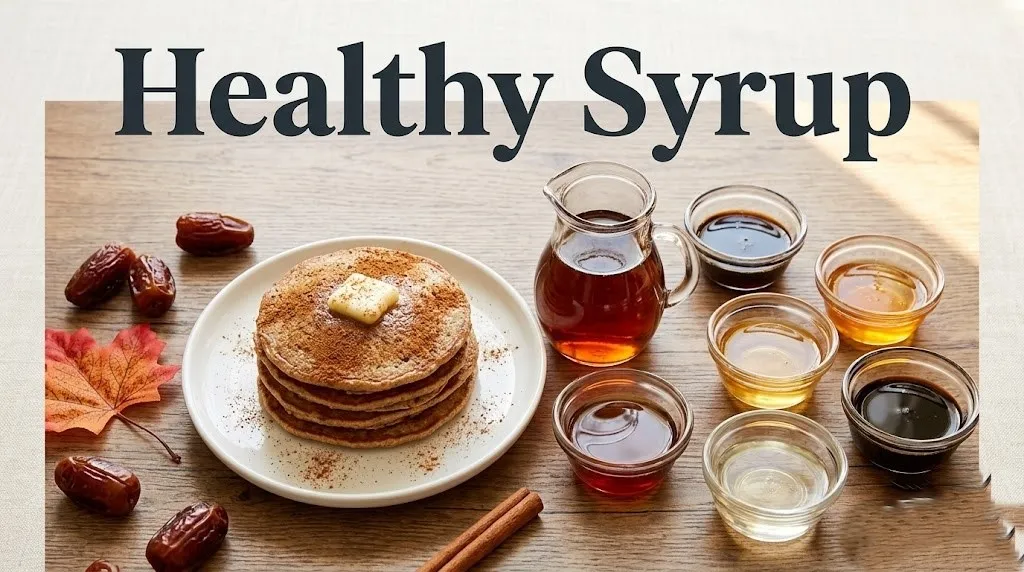
The syrups that qualify as healthy fall into two categories. The first category is natural syrups produced from plants: maple syrup, honey, agave nectar, date syrup, coconut nectar, sorghum syrup, and molasses. These syrups are concentrated plant sugars. They contain calories and carbohydrates comparable to table sugar. They also contain varying amounts of minerals, antioxidants, and bioactive compounds that table sugar lacks. The health case for these syrups is that they provide more nutritional value per gram of sugar than refined sugar or high fructose corn syrup.
The second category is sugar-free syrups sweetened with non-nutritive sweeteners: monk fruit syrup, allulose syrup, stevia-sweetened syrup, and blends containing erythritol or sucralose. These syrups provide sweetness with zero or near-zero calories and no glycemic impact. The health case for these syrups is that they satisfy the desire for sweetness without contributing to daily sugar or calorie intake. The trade-off is that they are more processed than natural syrups and may contain sugar alcohols that cause digestive discomfort in some people.
| Syrup Category | Examples | Calories per tbsp | Sugar (g) | Key Nutrients/Features |
|---|---|---|---|---|
| Natural (tree sap) | Maple syrup | 52 | 12 | Manganese, zinc, antioxidants |
| Natural (bee-produced) | Honey | 64 | 17 | Trace minerals, antimicrobial compounds |
| Natural (plant nectar) | Agave nectar, coconut nectar | 60 | 13 to 16 | Fructose-dominant, low GI (agave) |
| Natural (fruit-based) | Date syrup | 60 | 13 | Potassium, magnesium, fiber trace |
| Natural (sugar byproduct) | Molasses | 60 | 14 | Iron, calcium, potassium, magnesium |
| Sugar-free (monk fruit) | Monk fruit syrup | 0 to 5 | 0 | Zero glycemic impact, erythritol or allulose base |
| Sugar-free (rare sugar) | Allulose syrup | 2 to 5 | 0 | Zero glycemic impact, no digestive issues |
| Commercial (not healthy) | Pancake syrup | 100 to 110 | 15 to 17 | High fructose corn syrup, no nutrients |
Key Takeaway: A healthy syrup is maple syrup for natural nutrition or monk fruit/allulose syrup for zero-calorie sweetness. Commercial pancake syrups made from corn syrup are not healthy syrups by any standard.
Healthy Pancake Syrup
Healthy pancake syrup is pure maple syrup or a sugar-free alternative. The distinction between pancake syrup and maple syrup is regulatory, nutritional, and practical. The FDA requires that products labeled “maple syrup” contain only sap from maple trees that has been concentrated by evaporation. Products labeled “pancake syrup” or “table syrup” are formulated foods typically containing corn syrup, high fructose corn syrup, water, artificial flavors, and caramel color. The ingredient list tells you which one is in the bottle.
The nutritional difference is stark. A tablespoon of pure maple syrup contains 52 calories and 12 grams of naturally occurring sugar with measurable amounts of manganese (22 percent of the daily value), riboflavin, and zinc. A tablespoon of commercial pancake syrup contains 100 to 110 calories and 15 to 17 grams of added sugar, typically from high fructose corn syrup, with zero micronutrients. The pancake syrup has nearly twice the calories and more sugar with none of the nutritional value.
The taste difference is equally significant. Maple syrup has a complex flavor profile with notes of caramel, vanilla, and woodsy undertones that vary by grade. Grade A Golden has a delicate flavor. Grade A Dark has a robust flavor suitable for cooking and baking. Grade A Very Dark, formerly Grade B, has the strongest maple flavor and the highest antioxidant content. Commercial pancake syrup has a one-note sweetness with artificial maple flavoring. Once a palate adjusts to real maple syrup, the artificial version becomes unpleasant.
| Syrup Type | Calories per tbsp | Sugar (g) | Key Nutrients | Flavor Profile |
|---|---|---|---|---|
| Pure maple syrup | 52 | 12 | Manganese, zinc, antioxidants | Complex, caramel, vanilla |
| Commercial pancake syrup | 100 to 110 | 15 to 17 | None | One-note sweet, artificial maple |
| Sugar-free pancake syrup | 0 to 10 | 0 | None | Varies, some have cooling aftertaste |
Quick Tip:
- Maple syrup grading changed in 2015. All maple syrup is now Grade A with color and flavor descriptors: Golden (Delicate Taste), Amber (Rich Taste), Dark (Robust Taste), Very Dark (Strong Taste). The old Grade B, which was marketed as lower quality but was actually preferred by chefs for its strong flavor, is now Grade A Very Dark.
Is Maple Syrup Healthy
Maple syrup is healthy in the context of a sweetener. It is not a health food. It is a concentrated sugar source that delivers 12 grams of sugar per tablespoon. It also delivers nutrients that refined sugar and high fructose corn syrup do not. The manganese content is the most notable: 22 percent of the daily value per tablespoon. Manganese functions as a cofactor for antioxidant enzymes and supports bone formation and wound healing. Maple syrup also contains zinc, riboflavin, calcium, and potassium in small amounts, along with phenolic compounds with documented antioxidant activity.
The glycemic index of maple syrup is 54, which places it in the moderate range. Table sugar has a glycemic index of 65. Agave nectar, paradoxically, has a glycemic index of 15 but a very high fructose content that shifts the metabolic burden to the liver. The glycemic index is not the whole story for syrup health. The total sugar load, the fructose-to-glucose ratio, and the presence of micronutrients all matter.
The USDA FoodData Central nutrition data for pure maple syrup confirms that it is approximately 67 percent sucrose with smaller amounts of glucose and fructose. Sucrose is a disaccharide composed of one glucose and one fructose molecule. It is metabolized similarly to table sugar, which is 100 percent sucrose. The health advantage of maple syrup over table sugar is the micronutrient and antioxidant content, not a difference in how the sugar itself is metabolized. Maple syrup is a better sweetener than white sugar. It is not a free pass on sugar.
| Nutrient (per tbsp maple syrup) | Amount | Percent Daily Value |
|---|---|---|
| Calories | 52 | N/A |
| Total Carbohydrate | 13g | 5% |
| Sugars | 12g | N/A (naturally occurring) |
| Manganese | 0.5mg | 22% |
| Riboflavin (B2) | 0.07mg | 5% |
| Zinc | 0.2mg | 3% |
| Calcium | 20mg | 2% |
| Potassium | 40mg | 1% |
| Glycemic Index | 54 | Moderate |
People with diabetes should count maple syrup as a carbohydrate source identical to sugar. The 12 grams of sugar per tablespoon will raise blood glucose. The micronutrients do not change the insulin requirement. Maple syrup can be part of a diabetic eating plan when the carbohydrate is counted and the portion is controlled. A registered dietitian or certified diabetes educator can provide individualized guidance on incorporating sweeteners.
Key Takeaway: Maple syrup is the healthiest natural sweetener because it provides manganese, zinc, and antioxidants. It is still 12 grams of sugar per tablespoon. The nutrients are a bonus. The sugar content is the primary nutritional fact.
Healthy Syrup Alternatives
Healthy syrup alternatives are the products you can use instead of commercial pancake syrup or table sugar in liquid form. The alternatives range from natural syrups with nutritional benefits to sugar-free syrups with zero glycemic impact. The best alternative depends on your health goal. If your goal is to reduce added sugar while maintaining the flavor of natural sweetness, choose date syrup or a blend of maple syrup with a sugar-free syrup. If your goal is to eliminate sugar entirely, choose monk fruit or allulose syrup.
Date syrup is the best whole-food syrup alternative. It is made from dates and water, blended or pressed into a syrup. It contains the fiber, potassium, and magnesium of whole dates in a pourable form. The sugar is the naturally occurring sugar from the dates. There is no added sugar. The glycemic index is 47, lower than maple syrup. The flavor is rich and caramel-like, similar to molasses but fruitier. It works on pancakes, in oatmeal, and in baking. It is the healthiest natural syrup for someone who wants the most nutritional value per tablespoon.
Coconut nectar is the sap of coconut palm flowers, heated to evaporate water and concentrate the sugars. It has a glycemic index of 35, lower than maple syrup and honey. It contains trace amounts of minerals and B vitamins. The sugar composition is primarily sucrose. The flavor is mild and caramel-like, less assertive than maple syrup. It is a good alternative for someone who wants a lower glycemic index natural syrup with a neutral flavor.
| Healthy Syrup Alternative | Calories per tbsp | Sugar (g) | Glycemic Index | Best For |
|---|---|---|---|---|
| Date syrup | 60 | 13 | 47 | Whole-food sweetness, baking |
| Coconut nectar | 45 | 10 | 35 | Lower GI, neutral flavor |
| Sorghum syrup | 60 | 15 | 50 | Southern cooking, mineral content |
| Molasses (blackstrap) | 45 | 10 | 55 | Iron, calcium, strong flavor |
| Monk fruit syrup | 0 to 5 | 0 | 0 | Zero calorie, zero sugar |
| Allulose syrup | 2 to 5 | 0 | 0 | Zero glycemic impact, no aftertaste |
Best Healthy Syrup
The best healthy syrup depends on the priority. If the priority is nutritional density, pure maple syrup is the best natural syrup. It delivers the most documented micronutrients and antioxidants of any natural syrup available in standard grocery stores. If the priority is zero sugar and zero glycemic impact, allulose syrup is the best sugar-free syrup. It has the cleanest taste, no aftertaste, and no digestive side effects for most people. If the priority is whole-food processing and fiber content, date syrup is the best choice.
The table below ranks syrups by nutritional priority. The ranking is not universal. It is priority-specific. A person managing diabetes will rank sugar-free syrups higher. A person seeking whole foods will rank date syrup and maple syrup higher. A person managing FODMAPs will avoid honey and agave and choose maple syrup or sugar-free options.
| Health Priority | Best Syrup | Why |
|---|---|---|
| Nutritional density | Maple syrup | Manganese, zinc, antioxidants |
| Zero sugar/calories | Allulose syrup | Zero GI, no aftertaste, no digestive issues |
| Whole food | Date syrup | Made from whole dates, contains fiber and minerals |
| Low glycemic index | Agave nectar (with caution) | GI 15 but high fructose, liver metabolism concern |
| Iron and calcium | Blackstrap molasses | 20% DV iron, 10% DV calcium per tbsp |
| Gut health (low FODMAP) | Maple syrup, monk fruit syrup | Low FODMAP in standard serving |
| Budget | Store-brand pure maple syrup | Same nutrition as premium at lower cost |
Quick Tip:
- If you cannot afford pure maple syrup or find the flavor too strong, mix a bottle of pure maple syrup with an equal amount of monk fruit or allulose syrup. You get half the sugar, the maple flavor, and a lower cost per ounce. This hybrid approach works for families transitioning to healthier syrup.
Sugar Free Syrup Healthy
Sugar-free syrups are healthy when they use clean-ingredient non-nutritive sweeteners and are consumed in moderation. The health case for sugar-free syrups is that they provide the sweetness and texture of syrup without contributing to daily sugar intake, calorie load, or blood glucose elevation. The health concerns about sugar-free syrups involve the specific sweeteners used and their potential digestive effects.
Monk fruit syrup is the cleanest sugar-free option. Monk fruit extract, derived from the Siraitia grosvenorii fruit, is 200 to 300 times sweeter than sugar. It is typically blended with erythritol or allulose to provide bulk and syrup texture. Monk fruit extract itself has zero calories and zero glycemic impact. Erythritol, the common bulking agent, is a sugar alcohol that passes through the body largely unabsorbed and does not raise blood glucose. Some people experience digestive discomfort from erythritol at high doses above 30 to 40 grams. A tablespoon of monk fruit syrup contains 3 to 4 grams of erythritol, well within tolerance for most adults.
Allulose syrup is the best-tasting sugar-free option. Allulose is a rare sugar found naturally in figs, raisins, and maple syrup in small amounts. It is manufactured from corn through an enzymatic process. It has the same molecular formula as fructose but a different structure that the body does not metabolize. It passes through the body and is excreted in urine. It has zero glycemic impact and does not cause the digestive issues associated with sugar alcohols. It caramelizes, browns, and provides the mouthfeel of sugar syrup. The FDA has affirmed allulose as GRAS (Generally Recognized As Safe).
| Sugar-Free Sweetener | Calories per tbsp | Glycemic Impact | Digestive Tolerance | Taste Profile |
|---|---|---|---|---|
| Monk fruit + erythritol | 0 to 5 | Zero | May cause gas/bloating at high doses | Sweet, slight cooling |
| Monk fruit + allulose | 2 to 5 | Zero | Well tolerated | Sweet, clean, no aftertaste |
| Allulose | 2 to 5 | Zero | Well tolerated | Sweet, clean, most sugar-like |
| Stevia + erythritol | 0 to 5 | Zero | May cause gas/bloating | Sweet, possible bitter aftertaste |
| Sucralose (Splenda) | 0 | Zero | Well tolerated | Sweet, artificial aftertaste |
People with irritable bowel syndrome (IBS) or sensitivity to sugar alcohols should choose allulose syrup over erythritol-based syrups. Allulose is generally well tolerated even at moderate doses. A small minority of people report mild digestive effects from allulose at very high doses above 30 to 40 grams. A tablespoon of allulose syrup contains 3 to 4 grams, far below the threshold for most individuals.
Key Takeaway: Monk fruit syrup and allulose syrup are healthy sugar-free options. Allulose has the best taste and digestive tolerance. Erythritol-based syrups are safe for most people but may cause digestive discomfort in sensitive individuals.
Date Syrup vs Maple Syrup
Date syrup and maple syrup are the two healthiest natural syrups, and they have different nutritional strengths. Maple syrup leads on manganese and antioxidant content. Date syrup leads on potassium, magnesium, and whole-food processing. The choice depends on the nutritional priority.
Maple syrup is the concentrated sap of maple trees. It is produced by boiling the sap to evaporate water. No additives. No processing beyond heat. The sugars are naturally occurring sucrose, glucose, and fructose from the tree sap. The micronutrient highlight is manganese at 22 percent of the daily value per tablespoon. Maple syrup also contains zinc and phenolic antioxidants. The flavor is sweet with caramel, vanilla, and woodsy notes.
Date syrup is made from dates and water. Dates are blended or pressed, and the resulting liquid is reduced to syrup consistency. It is a whole-food sweetener. The sugars are the naturally occurring sugars from whole dates. The micronutrient highlights are potassium (2 percent DV per tablespoon) and magnesium (1 to 2 percent DV). Date syrup also contains trace fiber from the whole fruit. The flavor is rich, deep caramel, and fruity, similar to molasses but sweeter and less bitter.
| Nutrient (per tbsp) | Maple Syrup | Date Syrup |
|---|---|---|
| Calories | 52 | 60 |
| Sugar (g) | 12 | 13 |
| Manganese | 22% DV | 0% DV |
| Potassium | 1% DV | 2% DV |
| Magnesium | 0% DV | 1 to 2% DV |
| Zinc | 3% DV | 0% DV |
| Fiber | 0g | Trace (0.1 to 0.3g) |
| Glycemic Index | 54 | 47 |
| Processing | Boiled tree sap | Blended whole dates |
| Cost per ounce | $0.40 to $0.80 | $0.50 to $1.00 |
Quick Tip:
- Date syrup thickens and crystallizes in the refrigerator. Store it at room temperature. If it does crystallize, place the sealed container in warm water for 10 minutes and shake. It will return to pourable consistency.
Monk Fruit Syrup
Monk fruit syrup is a sugar-free syrup sweetened with monk fruit extract, a natural non-nutritive sweetener derived from the Siraitia grosvenorii fruit native to Southeast Asia. The extract is 200 to 300 times sweeter than sugar. It is combined with a bulking agent, typically erythritol or allulose, to create a syrup with the viscosity and sweetness of maple syrup. Monk fruit syrup contains 0 to 5 calories per tablespoon and zero grams of sugar. It has zero glycemic impact.
The safety of monk fruit extract is well established. The FDA has affirmed monk fruit extract as GRAS (Generally Recognized As Safe). It has been consumed in China for centuries as a traditional food and medicine. No adverse effects have been documented in human studies at the doses used in food products. The safety considerations for monk fruit syrup relate to the bulking agents, not the monk fruit itself.
The taste of monk fruit syrup varies by brand and bulking agent. Monk fruit extract has a clean sweetness but can have a slight fruity aftertaste. When blended with erythritol, the syrup has a cooling mouthfeel similar to mint, which some people find unpleasant. When blended with allulose, the syrup has a cleaner, more sugar-like taste. The best-tasting monk fruit syrups in 2026 use an allulose base.
| Monk Fruit Syrup Brand | Sweetener Blend | Calories per tbsp | Taste Notes |
|---|---|---|---|
| Lakanto | Monk fruit + erythritol | 5 | Sweet, slight cooling |
| ChocZero | Monk fruit + allulose | 5 | Sweet, clean, no aftertaste |
| NOW Foods | Monk fruit + erythritol | 5 | Sweet, moderate cooling |
| Primal Kitchen | Monk fruit + allulose | 5 | Sweet, clean, organic option |
Allulose Syrup
Allulose syrup is a sugar-free syrup made from allulose, a rare sugar that occurs naturally in figs, raisins, and maple syrup in small amounts. It is commercially produced from corn through an enzymatic conversion process. Allulose has the molecular formula of fructose but a different three-dimensional structure. The body does not metabolize it. It passes through the digestive system and is excreted in urine. It contributes 0.2 to 0.4 calories per gram, which the FDA requires be counted as 0.4 calories per gram on nutrition labels.
Allulose syrup is the most sugar-like sugar-free syrup available in 2026. It caramelizes, browns, and dissolves like sugar syrup. It has the same viscosity and mouthfeel as maple syrup. It has no aftertaste. It does not cause the digestive issues associated with sugar alcohols. It does not raise blood glucose or insulin. These properties make it the preferred sugar-free syrup for people who want the closest possible experience to sugar syrup without the metabolic effects.
The safety of allulose is well established. The FDA has affirmed allulose as GRAS. It has been studied in multiple human trials without documented adverse effects at doses up to 30 to 40 grams per day. A tablespoon of allulose syrup contains 3 to 4 grams of allulose. The digestive tolerance is excellent for most people. A small minority report mild bloating or loose stools at very high doses.
| Allulose Syrup Brand | Sweetener | Calories per tbsp | Glycemic Impact |
|---|---|---|---|
| RxSugar | Allulose | 5 | Zero |
| Wholesome Yum | Allulose | 5 | Zero |
| All-u-Lose | Allulose | 5 | Zero |
| Splenda Allulose | Allulose | 5 | Zero |
Key Takeaway: Allulose syrup is the best-tasting and most sugar-like sugar-free syrup. It caramelizes, has no aftertaste, and causes no digestive issues for most people. It is the top recommendation for a zero-sugar syrup.
Is Agave Syrup Healthy
Agave syrup is not healthy by the nutritional density standard. It has a low glycemic index of 15, which is often cited as a health benefit. The low glycemic index is achieved because agave is 70 to 90 percent fructose. Fructose does not raise blood glucose directly because it is metabolized in the liver rather than absorbed into the bloodstream as glucose. However, high fructose intake, particularly from concentrated sources like agave syrup, places a metabolic load on the liver that is associated with increased liver fat production, insulin resistance, and elevated triglycerides when consumed in excess.
Agave syrup contains more calories per tablespoon (60) than maple syrup (52) and has no meaningful micronutrient content. It is not a whole food. It is a processed syrup derived from the agave plant, and the processing method involves enzymatic conversion of the plant’s natural inulin fiber into fructose. The resulting syrup is more concentrated in fructose than high fructose corn syrup, which is typically 55 percent fructose. The health claims made for agave syrup are based on the low glycemic index without accounting for the metabolic effects of the high fructose load.
The Academy of Nutrition and Dietetics and the American Heart Association do not single out agave for specific warnings, but their general guidance on added sugar applies. Agave syrup is an added sugar source. It should be limited within the AHA guidelines of 25 grams for women and 36 grams for men. The low glycemic index does not give it a free pass.
| Sweetener | Calories per tbsp | Sugar (g) | Fructose Content | Glycemic Index |
|---|---|---|---|---|
| Agave nectar | 60 | 16 | 70 to 90% | 15 |
| Maple syrup | 52 | 12 | ~5% | 54 |
| Honey | 64 | 17 | ~50% | 58 |
| Table sugar | 49 | 13 | 50% | 65 |
| High fructose corn syrup | 50 | 13 | 55% | 58 |
People with non-alcoholic fatty liver disease (NAFLD), insulin resistance, or elevated triglycerides should avoid agave syrup entirely. The high fructose load is metabolized in the liver and contributes to the metabolic processes that drive these conditions. Maple syrup, with its lower fructose content and higher micronutrient profile, is the healthier natural syrup for people with these metabolic concerns.
Healthy Syrup for Coffee
Healthy syrup for coffee is a liquid sweetener that dissolves in hot coffee without leaving a residue and aligns with the drinker’s health goals. The options are divided into natural syrups and sugar-free syrups. The natural options are maple syrup and honey. The sugar-free options are monk fruit syrup and allulose syrup. Flavored syrups, vanilla, caramel, hazelnut, can be made at home using these bases.
Maple syrup in coffee is an acquired taste. The maple flavor is distinct and does not disappear into the coffee the way neutral sugar does. It pairs well with medium and dark roasts. The amount is small: one teaspoon (about 17 calories, 4 grams of sugar) is sufficient to sweeten a cup of coffee for most people. A tablespoon (52 calories, 12 grams) is a full serving that should be accounted for in the daily sugar budget.
Allulose syrup is the best sugar-free option for coffee. It dissolves completely, has no aftertaste, and provides the same mouthfeel as sugar syrup. One tablespoon of allulose syrup sweetens coffee comparably to one teaspoon of sugar syrup. The calorie contribution is negligible. Monk fruit syrup also works but may have a slight cooling aftertaste when used in hot beverages.
| Coffee Syrup | Calories per tsp equivalent | Sugar (g) | Flavor Impact |
|---|---|---|---|
| Maple syrup | 17 | 4 | Distinct maple flavor, pairs with dark roast |
| Honey | 21 | 6 | Floral, pairs with light and medium roasts |
| Allulose syrup | 1 to 2 | 0 | Neutral, closest to sugar |
| Monk fruit syrup | 0 to 2 | 0 | Neutral to slight fruity note |
| Homemade vanilla (maple + vanilla extract) | 17 | 4 | Vanilla without artificial flavors |
Quick Tip:
- To make flavored coffee syrup at home, combine 1/4 cup maple syrup or allulose syrup with 1 teaspoon vanilla extract, 1/4 teaspoon almond extract, or 1/2 teaspoon cinnamon. Store in a small jar in the refrigerator for up to 2 weeks. This replaces commercial flavored syrups that are made from high fructose corn syrup and artificial flavors.
Homemade Healthy Syrup
Homemade healthy syrup is syrup made from whole-food ingredients without added refined sugar. The two easiest homemade syrups are date syrup and fruit-sweetened syrup. Both require a blender and minimal active time. They are less expensive per ounce than store-bought natural syrups and allow full control of ingredients.
Homemade date syrup: Combine 1 cup pitted Medjool dates with 1 cup hot water. Let soak for 10 minutes. Blend until completely smooth. Add more water, one tablespoon at a time, to reach desired syrup consistency. The syrup stores in the refrigerator for up to 2 weeks. One tablespoon contains approximately 30 calories and 7 grams of natural sugar, half the sugar of maple syrup. The flavor is rich caramel. The texture is thicker than maple syrup. This syrup works on pancakes, in oatmeal, in smoothies, and in baking.
Homemade berry syrup: Combine 1 cup frozen blueberries or strawberries with 1/4 cup water and 1 tablespoon maple syrup or allulose syrup (optional, for added sweetness). Simmer in a saucepan over medium heat for 10 minutes until the berries break down and the mixture thickens. Mash with a fork or blend for a smoother texture. The syrup stores in the refrigerator for up to 1 week. One tablespoon contains approximately 10 to 15 calories and 2 to 3 grams of natural sugar. The flavor is bright and fruity. This syrup is best on pancakes, waffles, and yogurt.
| Homemade Syrup | Ingredients | Calories per tbsp | Sugar (g) | Shelf Life |
|---|---|---|---|---|
| Date syrup | Dates, water | 30 | 7 | 2 weeks refrigerated |
| Berry syrup | Berries, water, optional sweetener | 10 to 15 | 2 to 3 | 1 week refrigerated |
| Cinnamon maple | Maple syrup, cinnamon stick, vanilla | 52 | 12 | Indefinite at room temp |
| Ginger honey | Honey, fresh ginger slices | 64 | 17 | 1 month refrigerated |
Best Syrup for Diabetics
The best syrup for diabetics is allulose syrup or monk fruit syrup because they have zero glycemic impact and do not require insulin for metabolism. A person with diabetes can use these syrups without counting them as carbohydrates or adjusting insulin. The taste and texture are close enough to sugar syrup to be satisfying in most applications.
If a natural syrup is preferred, pure maple syrup is the best choice among the natural options. The carbohydrate content, 13 grams per tablespoon, must be counted in the carbohydrate budget. The 12 grams of sugar will raise blood glucose and require insulin for a person using insulin therapy. The advantage of maple syrup over table sugar or high fructose corn syrup is the micronutrient content, not a difference in glycemic impact. The glycemic index of maple syrup (54) is slightly lower than table sugar (65), but the practical difference for insulin dosing is small.
Date syrup and coconut nectar have lower glycemic indices than maple syrup (47 and 35, respectively). The lower glycemic index may produce a slightly slower blood glucose rise. The total carbohydrate content is similar. The portion still needs to be counted. The lower glycemic index is a marginal benefit, not a reason to consume freely.
| Syrup for Diabetics | Carbs per tbsp | Glycemic Impact | Insulin Required? |
|---|---|---|---|
| Allulose syrup | 0g | Zero | No |
| Monk fruit syrup | 0g | Zero | No |
| Maple syrup | 13g | Moderate (GI 54) | Yes, count as 13g carb |
| Date syrup | 13g | Low-moderate (GI 47) | Yes, count as 13g carb |
| Agave nectar | 16g | Low (GI 15) but high fructose | Yes, count as 16g carb, liver metabolism concern |
A registered dietitian or certified diabetes educator can provide individualized guidance on incorporating sweeteners into a diabetes meal plan. The general guidance from the American Diabetes Association is that sugar-free sweeteners can be useful tools for reducing carbohydrate intake. Natural sweeteners should be counted as carbohydrates and used in moderation.
Key Takeaway: Allulose syrup and monk fruit syrup are the best syrups for diabetics because they have zero glycemic impact. Maple syrup is the best natural option but must be counted as 13 grams of carbohydrate per tablespoon.
Healthy Chocolate Syrup
Healthy chocolate syrup is syrup made from cocoa powder and a healthy liquid sweetener, without the high fructose corn syrup, artificial flavors, and preservatives found in commercial chocolate syrups. A tablespoon of standard chocolate syrup contains 50 to 60 calories and 10 to 12 grams of added sugar. A homemade or naturally sweetened chocolate syrup can reduce the sugar load significantly.
Homemade healthy chocolate syrup recipe: Whisk together 1/4 cup unsweetened cocoa powder, 1/4 cup maple syrup or allulose syrup, 1/4 cup water, 1/2 teaspoon vanilla extract, and a pinch of salt in a small saucepan. Heat over medium-low, whisking constantly, until the cocoa dissolves and the mixture is smooth, about 3 minutes. Do not boil. Let cool. Store in a glass jar in the refrigerator for up to 2 weeks. This syrup contains approximately 25 calories and 3 grams of sugar per tablespoon when made with maple syrup, or 10 calories and 0 grams of sugar when made with allulose syrup.
Store-bought healthy chocolate syrup options include ChocZero (sweetened with monk fruit and allulose, 5 calories per tablespoon) and Lakanto (sweetened with monk fruit and erythritol, 5 calories per tablespoon). These are sugar-free, low-calorie alternatives to Hershey’s and other commercial chocolate syrups.
| Chocolate Syrup | Sweetener | Calories per tbsp | Sugar (g) |
|---|---|---|---|
| Homemade (maple syrup) | Maple syrup | 25 | 3 |
| Homemade (allulose syrup) | Allulose | 10 | 0 |
| ChocZero | Monk fruit + allulose | 5 | 0 |
| Hershey’s (standard) | High fructose corn syrup | 50 | 11 |
Quick Tip:
- A tablespoon of homemade or sugar-free chocolate syrup stirred into a cup of warm milk makes a healthy hot chocolate with 10 to 25 calories and 0 to 3 grams of sugar. A commercial hot chocolate packet contains 100 to 160 calories and 15 to 25 grams of sugar.
Healthy Simple Syrup
Healthy simple syrup is a liquid sweetener used in cocktails, mocktails, iced coffee, and iced tea that aligns with health goals. Traditional simple syrup is equal parts sugar and water. It adds sugar and calories without flavor. Healthy simple syrup replaces the sugar with a lower-calorie, lower-glycemic, or nutrient-containing alternative.
Allulose simple syrup is the best all-purpose healthy simple syrup. Allulose dissolves in water at room temperature, unlike erythritol, which requires heating. To make allulose simple syrup, combine equal parts allulose and water. Stir until dissolved. No heating required. Store in the refrigerator indefinitely. This syrup adds sweetness without sugar or calories to iced coffee, tea, lemonade, and cocktails.
Maple simple syrup combines maple syrup with water to reduce the sugar concentration and add maple flavor. Combine 1/2 cup maple syrup with 1/2 cup water. Stir. Store in the refrigerator. Use in whiskey cocktails, coffee, and fall-flavored beverages. This syrup adds maple flavor and the micronutrients of maple syrup with half the sugar concentration of straight maple syrup.
| Simple Syrup Type | Ratio | Calories per tbsp | Sugar (g) | Best Use |
|---|---|---|---|---|
| Traditional (sugar) | 1:1 sugar:water | 36 | 9 | General cocktails |
| Allulose | 1:1 allulose:water | 2 to 5 | 0 | Iced coffee, tea, cocktails |
| Maple | 1:1 maple syrup:water | 26 | 6 | Whiskey cocktails, coffee |
| Honey | 1:1 honey:water | 32 | 8.5 | Tea, lemonade, gin cocktails |
| Date | 1:1 date syrup:water | 30 | 6.5 | Dark spirits, coffee |
Syrup is a concentrated sweetener. It will never be a health food. The choice is about which syrup delivers the most value for the sugar it costs or which syrup delivers the sweetness without the sugar at all. Pure maple syrup is the best natural choice. It provides manganese, zinc, and antioxidants alongside the sweetness. Allulose syrup is the best sugar-free choice. It provides the closest experience to sugar syrup with no metabolic impact.
Choose based on your priority. If you want natural sweetness with nutrients, buy pure maple syrup or make date syrup. If you want to eliminate sugar, buy allulose syrup or monk fruit syrup. If you have diabetes, choose the sugar-free options and count any natural syrup carbohydrates. If you are feeding a family, mix maple syrup with a sugar-free syrup to reduce sugar and cost while keeping the flavor. Whatever you choose, measure the pour. The tablespoon is the difference between a condiment and a sugar bomb.