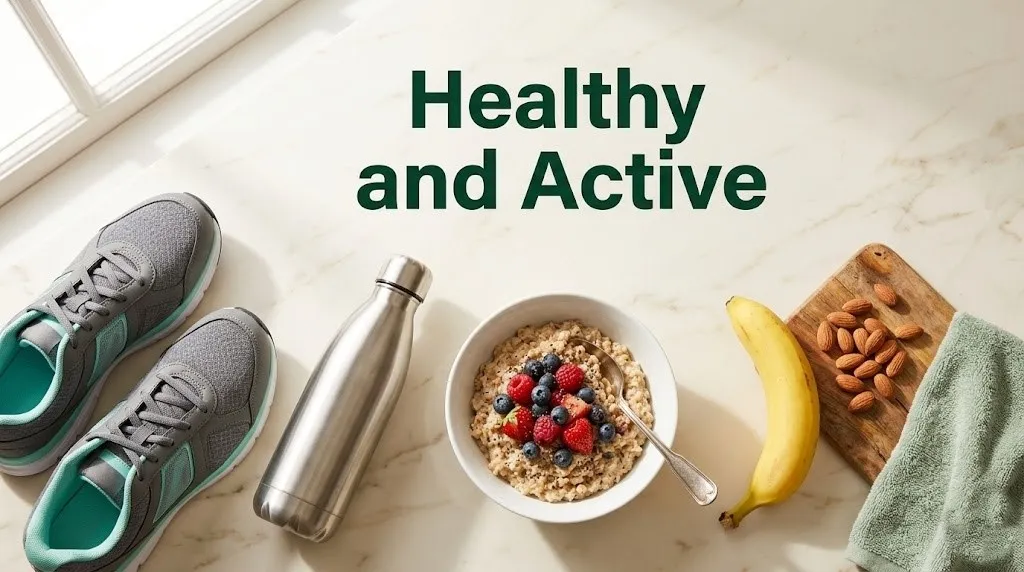
Being healthy and active is not about following a rigid diet or training protocol. It means eating and moving in a way that supports your energy, your recovery, and your long-term well-being, with your food choices directly fueling the activities you enjoy rather than being a separate chore you have to manage. The food is the fuel. The movement is the engine. They are not separate projects.
The CDC recommends that adults get at least 150 minutes of moderate-intensity aerobic activity and two days of muscle-strengthening activity per week. Nutritionally, this means your body has a higher demand for protein to repair muscle tissue, carbohydrate to replenish glycogen stores, and fluids and electrolytes to replace what is lost through sweat. The American College of Sports Medicine estimates that athletes and active individuals need 1.2 to 2.0 grams of protein per kilogram of body weight per day, roughly 50 to 100 percent more than sedentary adults.
This guide translates sports nutrition science into real food strategies. You will learn what to eat before a workout to avoid hitting a wall, what to eat afterward to rebuild and recover, how to manage the intense hunger that can accompany regular exercise, and how to hydrate effectively. No supplements are required. No meal plans are prescribed. You will walk away knowing how to feed your activity level with food you can buy at any grocery store.
healthy and active
Being healthy and active means maintaining a lifestyle where regular physical movement and nourishing food choices reinforce each other, creating a cycle where exercise supports better sleep and mood, which supports better food choices, which supports better exercise performance. It is a feedback loop, not a checklist.
The USDA Dietary Guidelines for Americans define a healthy dietary pattern as one that includes vegetables, fruits, whole grains, lean proteins, and healthy fats, with limited added sugars, saturated fat, and sodium. For an active person, this pattern provides the micronutrients needed for energy metabolism, the protein needed for tissue repair, and the carbohydrate needed to sustain physical activity. The guidelines do not change for active people. The quantities and the timing do.
The Academy of Nutrition and Dietetics emphasizes that active individuals have higher energy and nutrient needs, but those needs are best met through whole foods rather than supplements. A runner who needs an extra 500 calories per day to maintain weight should get those calories from an extra sandwich, a larger portion of rice at dinner, or a bigger breakfast, not from a processed recovery bar or a sugary sports drink. The food matrix matters. Whole foods deliver vitamins, minerals, and phytonutrients that isolated macronutrients do not.
what does it mean to be healthy and active
Being healthy and active means that your daily eating pattern and your regular physical activity are in balance, providing enough energy to support your workouts, your recovery, and your baseline metabolic needs without chronic undereating that leads to fatigue, injury, or hormonal disruption. It is a state of energy balance, not a state of perfection.
The concept of energy availability is useful here. Energy availability is defined as dietary energy intake minus exercise energy expenditure, divided by fat-free mass. When energy availability drops too low, below roughly 30 calories per kilogram of fat-free mass per day, the body begins to downregulate non-essential functions including reproductive hormone production and bone turnover. This condition, known as Relative Energy Deficiency in Sport, affects both elite athletes and recreational exercisers who chronically undereat relative to their activity level.
The practical takeaway is that being healthy and active requires eating enough. A person who exercises intensely five days a week and eats like a sedentary office worker will eventually break down. The first signs are subtle: poor sleep, irritability, frequent minor illnesses, and workouts that feel harder than they should. The solution is not to train less. It is to eat more, specifically more carbohydrate to replenish glycogen and more total calories to close the energy gap.
how nutrition supports an active lifestyle
Nutrition supports an active lifestyle by providing the raw materials for three distinct physiological processes: fueling performance with carbohydrate and fat, repairing and building tissue with protein, and maintaining fluid and electrolyte balance with water and minerals. Each process has specific timing and composition requirements.
The fueling process is primarily about glycogen, the stored form of carbohydrate in muscle and liver tissue. A 90-minute endurance session can deplete muscle glycogen by 60 to 80 percent. If that glycogen is not replenished through dietary carbohydrate, the next workout will feel sluggish and heavy. The International Society of Sports Nutrition recommends that athletes engaged in moderate to high volume training consume 5 to 8 grams of carbohydrate per kilogram of body weight per day. For a 150-pound person, that is 340 to 545 grams of carbohydrate daily, a level that requires intentional inclusion of rice, potatoes, oats, bread, and fruit at most meals.
The repair process is about muscle protein synthesis, the creation of new muscle protein to replace what was broken down during exercise. This process is stimulated by dietary protein, particularly the amino acid leucine, which acts as a trigger for the mTOR signaling pathway. A post-workout meal containing 0.25 to 0.4 grams of protein per kilogram of body weight, roughly 20 to 35 grams for an average adult, maximizes muscle protein synthesis for the next several hours.
Key Takeaway: Active nutrition has three pillars: carbohydrate for fuel, protein for repair, and fluid for hydration. Each pillar has specific targets that vary based on your activity type, intensity, and duration.
best foods for energy and stamina
The best foods for sustained energy and stamina are whole-food carbohydrate sources that digest at different rates: oatmeal, sweet potatoes, bananas, brown rice, and whole-grain bread for long-lasting energy; white rice, pasta, and dried fruit for quick-access energy before a workout. The goal is to match the food’s digestion speed to your activity timeline.
Oatmeal is the gold standard for sustained energy. A bowl of rolled oats contains roughly 27 grams of carbohydrate and 4 grams of fiber per half-cup dry serving. The soluble fiber, beta-glucan, forms a gel in the stomach that slows gastric emptying and produces a steady release of glucose into the bloodstream over two to three hours. This makes oatmeal ideal for a pre-race breakfast or a morning meal that needs to hold you through a long workout.
Bananas are the most convenient pre-workout food in existence. A medium banana contains roughly 27 grams of carbohydrate, mostly in the form of sucrose, glucose, and fructose, plus 422 milligrams of potassium. They require no preparation, no refrigeration, and no utensils. Eat one 30 to 60 minutes before a workout for a rapid, easily digestible carbohydrate boost. The potassium also supports muscle contraction and fluid balance.
what to eat before a workout
Before a workout, eat a meal or snack that is rich in easily digestible carbohydrate, moderate in protein, and low in fat and fiber to minimize the risk of gastrointestinal distress during exercise. The timing determines the size: a full meal 2 to 3 hours before, a small snack 30 to 60 minutes before.
A pre-workout meal eaten 2 to 3 hours before exercise should include roughly 1 to 2 grams of carbohydrate per kilogram of body weight and 20 to 30 grams of protein. For a 150-pound person, that is roughly 70 to 140 grams of carbohydrate. A turkey sandwich on whole-grain bread with a piece of fruit fits this profile. The carbohydrate from the bread and fruit tops off glycogen stores. The protein from the turkey provides amino acids that will be available during and after the workout.
A pre-workout snack eaten 30 to 60 minutes before exercise should be smaller, roughly 25 to 40 grams of carbohydrate and 5 to 10 grams of protein, and consist of foods that are low in fiber and fat to speed gastric emptying. A banana with a teaspoon of almond butter or a small bowl of applesauce with a hard-boiled egg white works well. The goal is to provide accessible blood glucose for the working muscles without leaving food sitting in the stomach when the heart rate rises.
| Timing Before Workout | What to Eat | Example |
|---|---|---|
| 2-3 hours | Full meal: 1-2 g carb per kg, 20-30 g protein | Turkey sandwich, fruit, water |
| 1-2 hours | Light meal: 0.5-1 g carb per kg, 10-15 g protein | Oatmeal with berries, small yogurt |
| 30-60 minutes | Small snack: 25-40 g carb, 5-10 g protein | Banana, rice cakes with honey |
| < 30 minutes | Very small, fast-digesting carb only | Half a banana, a few dates |
what to eat after a workout
After a workout, eat a meal or snack that contains 0.25 to 0.4 grams of protein per kilogram of body weight and 0.5 to 0.8 grams of carbohydrate per kilogram, consumed within roughly two hours of finishing exercise, to maximize muscle protein synthesis and glycogen replenishment.
The “anabolic window,” the idea that you must consume protein within 30 minutes of finishing a workout or the benefits are lost, has been overstated in popular fitness culture. The International Society of Sports Nutrition’s 2023 position stand on nutrient timing clarifies that the post-exercise window is several hours wide for most people, provided you did not train in a fasted state. If you ate a pre-workout meal containing protein, the amino acids from that meal are still circulating and available for repair. The urgency of the post-workout shake applies primarily to athletes training twice a day or those who trained fasted.
A practical post-workout meal is a bowl of Greek yogurt with berries and a handful of granola, a chicken and rice bowl with vegetables, or a smoothie made with milk, banana, and protein powder. The yogurt and chicken provide the protein and leucine needed to trigger muscle protein synthesis. The granola, rice, and banana provide the carbohydrate needed to replenish glycogen. The vegetables and berries provide antioxidants that may help manage exercise-induced oxidative stress.
protein needs for active people
Active people need more protein than sedentary adults, with the current evidence supporting an intake of 1.2 to 2.0 grams of protein per kilogram of body weight per day, depending on the type, intensity, and volume of exercise, with the higher end of the range reserved for those in a calorie deficit or engaged in heavy strength training.
For a 150-pound person, which is 68 kilograms, 1.2 grams per kilogram equals 82 grams of protein per day. Two grams per kilogram equals 136 grams. The Recommended Dietary Allowance for sedentary adults is 0.8 grams per kilogram, or 54 grams for that same 150-pound person. The active range is 50 to 150 percent higher. This is achievable with whole foods. Three eggs at breakfast deliver 18 grams. A chicken breast at lunch delivers 35 grams. A serving of salmon at dinner delivers 30 grams. A cup of Greek yogurt as a snack delivers 15 grams. That totals 98 grams without any protein supplements.
Protein distribution across the day matters for maximizing muscle protein synthesis. The ISSN recommends consuming 0.25 to 0.4 grams of protein per kilogram of body weight, roughly 20 to 35 grams, at three to four meals spread evenly throughout the day. A single large protein meal at dinner does not stimulate muscle protein synthesis as effectively as the same total protein divided across the day.
how to manage hunger when you exercise regularly
Exercise increases hunger, particularly in the hours after intense or long-duration activity, because your body is signaling for the energy and nutrients it needs to repair and replenish. Managing this hunger without overeating requires eating enough during and immediately after your workout window, prioritizing protein and fiber at meals, and distinguishing between true physiological hunger and the psychological desire to reward yourself for exercising.
The hunger hormone ghrelin rises during a calorie deficit and after intense exercise. The satiety hormone leptin falls. The combination can drive an appetite that feels bottomless, particularly in the evening after a hard afternoon workout. The most effective strategy is to eat a substantial post-workout meal that includes both protein and carbohydrate, rather than trying to suppress the hunger with willpower. Your body is asking for fuel for a legitimate physiological reason. Give it the fuel in the form of whole foods, and the hunger will regulate.
Protein and fiber are the two most effective dietary tools for managing appetite. Protein stimulates the release of satiety hormones including peptide YY and GLP-1. Fiber adds bulk to the stomach and slows gastric emptying. A post-workout meal that includes 30 grams of protein and 10 grams of fiber from vegetables will produce a different hunger trajectory than a post-workout meal of 15 grams of protein and 2 grams of fiber. The first meal keeps you full for hours. The second meal leaves you staring into the pantry within 90 minutes.
eating for muscle recovery
Eating for muscle recovery means providing your body with adequate total calories, sufficient protein distributed across the day, and the micronutrients, particularly vitamin C, zinc, and omega-3 fatty acids, that support tissue repair and reduce excessive inflammation. Recovery is not a single post-workout shake. It is the cumulative effect of your entire dietary pattern.
Omega-3 fatty acids, particularly EPA and DHA from fatty fish like salmon, mackerel, and sardines, have been studied for their role in modulating exercise-induced inflammation. A 2023 review in the journal Sports Medicine found that omega-3 supplementation modestly reduced delayed onset muscle soreness in some studies, though the effect size was small and inconsistent. Eating fatty fish twice a week provides a dietary dose of omega-3s that supports overall health, with muscle recovery as a potential secondary benefit.
Vitamin C is a cofactor for collagen synthesis, the process that repairs the connective tissue that gets stressed during exercise. Citrus fruits, bell peppers, strawberries, and broccoli are excellent sources. A post-workout smoothie with a handful of frozen strawberries and a scoop of protein powder covers both the protein and the vitamin C in one drink. The body does not store vitamin C, so daily intake matters.
Key Takeaway: Recovery eating is not about a single post-workout meal. It is about consistently eating enough protein, total calories, and micronutrient-rich foods across the entire day and week.
healthy meal prep for active lifestyles
Meal prep for an active lifestyle involves cooking staple foods in batches, carbohydrates, proteins, and vegetables, and assembling them into different meals throughout the week so that a nutritious pre-workout or post-workout meal is always 5 minutes away. The goal is to remove friction between you and a good food choice.
The most efficient meal prep system for active people is the “component prep” method. Cook a large batch of a neutral carbohydrate, a large batch of a versatile protein, and two or three vegetable options on Sunday. Store each component separately in the refrigerator. During the week, assemble bowls, wraps, or plates based on what sounds appealing and what your training schedule demands that day. A pre-workout meal might be a bowl of rice with a small amount of chicken and a banana. A post-workout meal might be a larger portion of chicken and rice with roasted vegetables and a sauce.
Components to batch-cook on Sunday:
- Carbohydrate: Brown rice, quinoa, roasted sweet potatoes, or a large pot of oatmeal
- Protein: Grilled chicken breast, hard-boiled eggs, baked salmon, or a pot of lentils
- Vegetables: Roasted broccoli, sauteed spinach, bell pepper strips, or shredded cabbage
- Sauce/dressing: A jar of lemon-tahini dressing, a container of salsa, or a batch of yogurt-herb sauce
best snacks for active people
The best snacks for active people are portable, shelf-stable, and provide a mix of carbohydrate for quick energy and protein or healthy fat for staying power. A snack that is pure carbohydrate will spike blood glucose and leave you hungry. A snack that is pure fat will digest too slowly to provide usable energy.
Trail mix with dried fruit and nuts is the classic active snack for good reason. The dried fruit provides rapidly available glucose and fructose. The nuts provide fat and protein that slow digestion and extend the energy release. Make your own trail mix with almonds, walnuts, dried cherries, and a small amount of dark chocolate chips. A half-cup serving provides roughly 300 calories, 10 grams of protein, and 5 grams of fiber. This is a substantial snack for a long hike or a bike ride, not a desk snack.
Greek yogurt with a piece of fruit is a higher-protein option suitable for post-workout or an afternoon gap between lunch and an evening workout. A single-serve container of plain Greek yogurt with a small apple provides roughly 20 grams of protein and 25 grams of carbohydrate. The protein supports muscle repair. The apple provides fiber and quercetin, an antioxidant flavonoid.
- Greek yogurt with berries and a drizzle of honey (20g protein)
- Trail mix with almonds and dried cherries (energy for long activities)
- Rice cakes with almond butter and banana slices (quick pre-workout)
- Hard-boiled eggs with a piece of fruit (portable protein)
- String cheese with whole-grain crackers (calcium and carb)
hydration for active people
Hydration for active people means drinking enough fluid to replace what is lost through sweat and respiration, which for most people means 2 to 3 liters of water per day as a baseline, with additional fluid before, during, and after exercise to match sweat losses. Electrolytes, particularly sodium, become relevant for activities lasting longer than 90 minutes or performed in high heat.
The American College of Sports Medicine recommends drinking 5 to 10 milliliters of fluid per kilogram of body weight in the 2 to 4 hours before exercise. For a 150-pound person, that is roughly 340 to 680 milliliters, or 12 to 24 ounces. During exercise, the goal is to prevent body weight loss of more than 2 percent from fluid losses. For most people, drinking 7 to 10 ounces of water every 10 to 20 minutes during exercise achieves this.
After exercise, the rehydration goal is to replace 150 percent of the fluid lost, because some of what you drink will be excreted as urine. Weigh yourself before and after a workout to estimate your sweat rate. For every pound lost during exercise, drink 16 to 24 ounces of fluid over the next several hours. If the exercise was intense or lasted more than 90 minutes, include a source of sodium, like a salty snack or an electrolyte drink, to replace sweat sodium losses.
best breakfast for active mornings
The best breakfast for an active morning is a meal that provides 40 to 80 grams of carbohydrate, 15 to 25 grams of protein, and a small amount of healthy fat, eaten 1 to 3 hours before the workout, depending on how your stomach handles food during exercise. Oatmeal with protein, eggs with toast, and smoothies are all strong options.
Overnight oats are a meal-prep-friendly breakfast that can be customized for your training load. Combine a half-cup of rolled oats, a half-cup of milk, a quarter-cup of Greek yogurt, a tablespoon of chia seeds, and a handful of berries in a jar. Refrigerate overnight. In the morning, you have a cold, creamy, no-cook breakfast with roughly 40 grams of carbohydrate, 20 grams of protein, and 10 grams of fiber. Eat it 2 hours before a long run or a morning gym session.
Eggs on whole-grain toast is a savory option that provides high-quality protein and complex carbohydrate. Two scrambled eggs on two slices of whole-grain toast with half an avocado deliver roughly 25 grams of protein, 35 grams of carbohydrate, and healthy monounsaturated fat. This breakfast works well 2 to 3 hours before exercise. If you need to eat closer to your workout, reduce the fat by skipping the avocado or using egg whites instead of whole eggs.
pre-workout meal timing
Pre-workout meal timing depends on the size of the meal and your individual digestive tolerance, but the general guideline is 2 to 3 hours before exercise for a full meal, 1 to 2 hours for a light meal, and 30 to 60 minutes for a small snack. The closer you get to exercise, the smaller and more carbohydrate-focused the food should be.
The reason for this timing is blood flow. During exercise, blood is diverted from the gastrointestinal tract to the working muscles. If there is a large, fatty, fibrous meal sitting in your stomach, it will not be digested efficiently, and it may cause nausea, cramping, or reflux. A small, carbohydrate-rich snack empties from the stomach in 30 to 60 minutes and provides usable glucose without gastrointestinal distress.
Tolerance is highly individual. Some people can eat a full breakfast and run 30 minutes later with no issues. Others need a full 3 hours between their last bite and their first step. Experiment during training, not on race day or before an important workout. Pay attention to how your stomach feels at different intervals. Keep a simple log of what you ate and when, and how you felt during the workout. Patterns will emerge that are specific to your body.
post-workout meal examples
Post-workout meals should combine protein and carbohydrate in roughly a 1 to 3 ratio by grams, with vegetables for micronutrients and fluids for rehydration. The examples below cover different eating patterns and preparation time requirements.
A chicken and rice bowl is the classic post-workout meal for good reason. Four ounces of grilled chicken breast provides 35 grams of protein. One cup of cooked white rice provides 45 grams of carbohydrate. Add a cup of steamed broccoli and a drizzle of soy sauce or a yogurt-based dressing. Total: roughly 450 calories, 40 grams of protein, 50 grams of carbohydrate, and 10 grams of fat. This meal can be assembled from batch-cooked components in under 5 minutes.
A post-workout smoothie is the fastest option and is ideal for people who do not feel hungry immediately after exercise. Blend 1 cup of milk, 1 scoop of whey or plant-based protein powder, 1 banana, a handful of spinach, and a tablespoon of almond butter. Total: roughly 400 calories, 30 grams of protein, 45 grams of carbohydrate, and 12 grams of fat. The liquid format speeds gastric emptying and rehydration.
| Post-Workout Meal | Protein | Carbs | Best For |
|---|---|---|---|
| Chicken, rice, broccoli bowl | 40 g | 50 g | Lunch or dinner after gym |
| Greek yogurt, berries, granola | 25 g | 40 g | Quick snack or light breakfast |
| Smoothie with protein, banana, milk | 30 g | 45 g | When not hungry post-exercise |
| Eggs, toast, avocado | 25 g | 35 g | Morning workout recovery |
| Salmon, sweet potato, greens | 35 g | 40 g | Dinner after afternoon training |
Frequently Asked Questions About Eating for an Active Lifestyle
What should I eat 30 minutes before a workout?
Eat a small, easily digestible carbohydrate snack like a banana, a few dates, or a rice cake with honey.
The goal is 25 to 40 grams of carbohydrate with minimal fat, fiber, and protein.
Avoid large meals, spicy foods, and anything high in fat within an hour of exercise.
How much protein do I need if I work out every day?
If you work out daily, aim for 1.2 to 2.0 grams of protein per kilogram of body weight per day, distributed across three to four meals.
For a 150-pound person, this is roughly 82 to 136 grams of protein daily.
Endurance athletes can aim for the lower end of the range, while strength athletes and those in a calorie deficit should aim for the higher end.
Is it better to eat before or after a workout?
Both meals matter, but the post-workout meal is more important for recovery and adaptation than the pre-workout meal.
If you must choose one, eat after your workout, prioritizing protein and carbohydrate within two hours of finishing.
Training fasted occasionally is acceptable for low-intensity exercise but not for high-intensity or long-duration sessions.
What are the best snacks for long hikes?
Trail mix with nuts and dried fruit, energy bars made from whole-food ingredients, and fresh fruit like apples or bananas are ideal.
Aim for a mix of carbohydrate for immediate energy and fat or protein for sustained release.
Pack more food than you think you need, and include a source of sodium if the hike is longer than two hours or in hot weather.
How do I stop feeling so hungry after I exercise?
Eat a substantial post-workout meal with at least 30 grams of protein and a generous portion of vegetables for fiber.
The combination of protein and fiber triggers satiety hormones and slows gastric emptying.
If hunger persists, increase the total calorie content of your post-workout meal rather than trying to suppress the hunger with willpower.
Eating to support an active lifestyle is about consistency, not perfection. The body is remarkably adaptable. It can perform well on a wide range of dietary patterns, provided the total energy, protein, and micronutrients are adequate over time. Your job is not to optimize every meal. It is to build a default pattern that supports your activity level without requiring constant mental energy.
The three most practical things you can do this week are to eat a source of protein at every meal, drink water consistently across the day rather than chugging it around your workout, and eat a carbohydrate-rich snack before and a protein-rich meal after your hardest training sessions. These three habits cover 80 percent of sports nutrition. The other 20 percent, nutrient timing down to the minute, supplement protocols, and precise macronutrient ratios, matters for elite athletes and can be safely ignored by everyone else.
Move your body in ways you enjoy. Feed it with food that nourishes. Pay attention to how you feel during workouts and throughout the day. Adjust based on what you learn. The system is simple. The execution is the work of a lifetime.