Healthy spaghetti replaces refined white pasta with whole wheat, legume-based, or vegetable noodles, pairs a modest portion with a sauce built from lean protein and vegetables rather than heavy cream or excessive oil, and fills at least half the plate with non-starchy vegetables, transforming a 600 to 800-calorie restaurant plate into a 400 to 500-calorie balanced meal.
A plate of spaghetti and meat sauce is one of the most satisfying meals in the comfort food canon. It is also one of the easiest to overdo. Restaurant portions deliver two to three cups of pasta swimming in a sauce heavy with oil and cheese. The refined white pasta spikes blood glucose. The sauce is often more fat than tomato. The vegetables, if present, are a garnish.
The healthy version does not taste like deprivation. It tastes like spaghetti. The difference is in the proportions: more vegetables, leaner protein, a smarter pasta choice, and a sauce that tastes like tomatoes instead of butter. This article covers the pasta options, the sauce strategies, the master recipes, and the framework for building a healthy spaghetti plate any night of the week.
What Makes Traditional Spaghetti Unhealthy
Traditional spaghetti is unhealthy because a standard restaurant portion combines two to three cups of refined white pasta with a sauce heavy in oil, butter, or fatty meat, and a blanket of cheese, delivering 600 to 800 calories, 60 to 80 grams of refined carbohydrates, and 20 to 30 grams of saturated fat with minimal fiber or vegetables.
A classic spaghetti with meat sauce from a chain restaurant breaks down like this:
| Nutrient | Restaurant Spaghetti (1 plate) |
|---|---|
| Calories | 700 |
| Total Fat | 28g |
| Saturated Fat | 12g |
| Carbohydrates | 85g |
| Dietary Fiber | 5g |
| Protein | 30g |
| Sodium | 1,500mg |
The problems are threefold. The pasta is refined white flour, stripped of fiber and nutrients, with a high glycemic index that spikes blood glucose. The portion is two to three times what a reasonable serving should be. The sauce is often built on a foundation of oil or butter with ground beef that is 20 to 30 percent fat. The vegetables are an afterthought, a few tablespoons of tomato sauce and maybe a basil leaf.
The USDA Dietary Guidelines recommend making at least half of grain intake whole grain and filling half the plate with vegetables. Traditional spaghetti fails both recommendations.
Key Takeaway: Traditional spaghetti is a refined carbohydrate bomb with too much saturated fat, too little fiber, and a serving size that has drifted far from reasonable. The healthy version fixes all three problems.
Key Strategies for Healthier Spaghetti
Make spaghetti healthier by choosing whole wheat or legume pasta for more fiber and protein, building a sauce with lean protein and extra vegetables, using a measured amount of olive oil instead of free pouring, and serving a modest pasta portion alongside a large serving of vegetables.
These four strategies transform spaghetti from a nutritional liability into a balanced meal.
Pasta swap: Replace refined white spaghetti with whole wheat spaghetti, chickpea pasta, lentil pasta, or a mix of regular pasta and zucchini noodles. Whole wheat pasta adds fiber and nutrients. Legume pasta adds protein and fiber. Vegetable noodles reduce calorie and carbohydrate density.
Sauce rebuild: Build the sauce around canned tomatoes, garlic, onions, and lean protein like ground turkey, chicken breast, or lentils. Add finely chopped or grated vegetables: carrots, zucchini, mushrooms, bell peppers. They disappear into the sauce and add fiber, vitamins, and volume for almost no calories.
Fat control: Measure olive oil by the tablespoon rather than free pouring. One tablespoon of olive oil is 120 calories. A free pour can easily be three to four tablespoons. Sauté aromatics in a measured tablespoon and let the tomato sauce provide the moisture.
Portion awareness: Serve 2 ounces of dry pasta per person (about 1 cup cooked) rather than the 3 to 4 ounces common in restaurants. Fill the rest of the plate with a side salad, steamed broccoli, or roasted vegetables.
Dietary Sensitivity Note: Whole wheat pasta contains gluten. For gluten-free spaghetti, use chickpea pasta, lentil pasta, brown rice pasta, or zucchini noodles.
Healthy Spaghetti Recipe With Meat Sauce
This healthy spaghetti with turkey meat sauce uses whole wheat spaghetti, lean ground turkey, a homemade tomato sauce packed with finely chopped vegetables, and a measured amount of olive oil and Parmesan, delivering a satisfying plate at approximately 440 calories and 30 grams of protein per serving.
Ingredients (serves 6):
- 12 ounces whole wheat spaghetti
- 1 tablespoon olive oil
- 1 medium onion, finely chopped
- 3 garlic cloves, minced
- 1 medium carrot, finely grated
- 1 medium zucchini, finely grated
- 8 ounces cremini mushrooms, finely chopped
- 1 pound lean ground turkey (93/7)
- 1 teaspoon salt, divided
- 1/2 teaspoon black pepper
- 1 teaspoon dried oregano
- 1/2 teaspoon dried basil
- 1/4 teaspoon red pepper flakes (optional)
- 1 can (28 ounces) crushed tomatoes
- 1 can (15 ounces) diced tomatoes
- 2 tablespoons tomato paste
- 1/4 cup fresh basil, torn
- 1/4 cup grated Parmesan cheese
Instructions:
- Bring a large pot of salted water to a boil. Cook the spaghetti 1 minute less than package directions for al dente. Reserve 1 cup of pasta water before draining.
- While the water heats, warm the olive oil in a large skillet or Dutch oven over medium heat. Add the onion and cook for 3 to 4 minutes until softened.
- Add the garlic, grated carrot, zucchini, and mushrooms. Cook for 5 to 6 minutes, stirring occasionally, until the vegetables release their moisture and begin to brown.
- Push the vegetables to the side. Add the ground turkey, 1/2 teaspoon salt, and pepper. Cook, breaking up the meat, until no longer pink.
- Stir in the oregano, basil, and red pepper flakes. Add the crushed tomatoes, diced tomatoes, and tomato paste. Stir to combine.
- Bring the sauce to a simmer. Reduce heat to low and cook for 15 to 20 minutes, stirring occasionally. Add the remaining 1/2 teaspoon salt and adjust seasoning.
- Add the cooked spaghetti to the sauce. Toss with tongs, adding splashes of reserved pasta water as needed to create a light sauce that coats the noodles.
- Serve in bowls topped with fresh basil and a tablespoon of grated Parmesan.
Nutrition per serving: Approximately 440 calories, 30g protein, 12g fat, 3g saturated fat, 52g carbohydrates, 10g fiber, 8g sugar, 600mg sodium.
Quick Tip:
- The grated vegetables disappear into the sauce but add 5 grams of fiber per serving. This is the single most effective trick for making spaghetti healthier without changing the experience.
Whole Wheat Spaghetti vs Regular Pasta Nutrition
Whole wheat spaghetti contains more fiber, more protein, and more micronutrients than regular white spaghetti because it retains the bran and germ of the wheat kernel that are removed during refining, making it a meaningfully healthier choice for about the same number of calories.
Here is the nutritional comparison per 2-ounce dry serving:
| Nutrient (2 oz dry) | Regular Spaghetti | Whole Wheat Spaghetti |
|---|---|---|
| Calories | 200 | 200 |
| Protein | 7g | 8g |
| Total Fat | 1g | 1.5g |
| Carbohydrates | 42g | 41g |
| Dietary Fiber | 2g | 6g |
| Iron | 1.8mg (10% DV) | 2.5mg (14% DV) |
| Magnesium | 30mg (7% DV) | 80mg (19% DV) |
The fiber difference is the most meaningful. Six grams of fiber in whole wheat versus 2 grams in white pasta. The USDA Dietary Guidelines recommend 25 grams of fiber per day for women and 38 grams for men. A serving of whole wheat spaghetti contributes nearly a quarter of the daily recommendation.
The flavor difference is real. Whole wheat spaghetti has a nuttier, slightly earthier taste. The texture is chewier. It pairs well with robust sauces like marinara, bolognese, and pesto. For delicate sauces, a 50/50 mix of whole wheat and regular spaghetti offers a compromise.
Cooking whole wheat spaghetti requires attention. It goes from al dente to mushy faster than white pasta. Check it 2 minutes before the package time.
Key Takeaway: Whole wheat spaghetti has the same calories as white pasta with triple the fiber, more protein, and more minerals. It is the simplest healthy spaghetti upgrade.
Chickpea and Lentil Pasta for Healthy Spaghetti
Chickpea and lentil pasta provide more protein and fiber than even whole wheat pasta, with chickpea spaghetti containing 13 grams of protein and 6 grams of fiber per serving, making it the best choice for high-protein, high-fiber, and gluten-free spaghetti.
Legume pasta has transformed the healthy pasta category. Made from chickpea flour or red lentil flour, these pastas contain roughly double the protein and fiber of wheat pasta.
| Nutrient (2 oz dry) | Whole Wheat | Chickpea Pasta | Red Lentil Pasta |
|---|---|---|---|
| Calories | 200 | 190 | 190 |
| Protein | 8g | 13g | 14g |
| Total Fat | 1.5g | 3g | 1.5g |
| Carbohydrates | 41g | 35g | 34g |
| Dietary Fiber | 6g | 6g | 6g |
The protein content of 13 to 14 grams per serving is the standout feature. This is double what regular pasta provides. For a vegetarian or vegan spaghetti meal, legume pasta combined with a vegetable-rich sauce can deliver 25 to 30 grams of protein without meat.
The texture is different. Chickpea pasta is slightly firmer and can become gummy if overcooked. Lentil pasta holds its shape well but has an earthy flavor that pairs better with robust sauces than delicate ones. Both are naturally gluten-free.
Cooking tips for legume pasta:
- Watch the cooking time carefully. Legume pasta overcooks quickly.
- Rinse with cool water after draining to remove excess starch that can make the pasta gummy.
- Toss immediately with sauce. Legume pasta absorbs less sauce than wheat pasta.
Dietary Sensitivity Note: Chickpea and lentil pasta are gluten-free and made from legumes. They are suitable for gluten-free, vegan, and high-protein diets.
Zucchini Noodles and Spaghetti Squash as Low Carb Alternatives
Zucchini noodles (zoodles) and spaghetti squash reduce the calorie and carbohydrate content of a spaghetti meal by 80 to 90 percent, with a full plate of zucchini noodles containing approximately 30 calories and 5 grams of carbohydrates compared to 200 calories and 42 grams of carbohydrates for the same volume of regular pasta.
Vegetable noodles are the ultimate calorie and carbohydrate reduction tool for spaghetti lovers. They are not a perfect substitute for pasta. They do not taste like pasta. They taste like vegetables with sauce on them. For someone managing calories, carbohydrates, or simply wanting to eat more vegetables, they are effective.
Here is how they compare to traditional pasta per 2-cup serving:
| Noodle Type (2 cups) | Calories | Carbohydrates | Fiber | Protein |
|---|---|---|---|---|
| Regular spaghetti (cooked) | 400 | 84g | 4g | 14g |
| Zucchini noodles (raw) | 35 | 6g | 2g | 2g |
| Spaghetti squash (cooked) | 55 | 10g | 2.5g | 1g |
| Half pasta, half zucchini | 220 | 45g | 3g | 8g |
Zucchini noodles are made by spiralizing raw zucchini into long strands. They can be eaten raw with hot sauce ladled over them, which warms them without turning them mushy. They can also be sautéed for 1 to 2 minutes. Do not overcook. Zucchini noodles release water and become a puddle if cooked too long.
Spaghetti squash naturally separates into spaghetti-like strands when cooked. Halve the squash, remove the seeds, and roast cut-side down at 400 degrees Fahrenheit for 40 to 50 minutes. Scrape the flesh with a fork to release the strands. The texture is slightly crunchy. The flavor is mild and sweet.
The hybrid approach, half regular pasta and half zucchini noodles, is the most successful strategy for pasta lovers trying vegetable noodles for the first time. It cuts the calories and carbohydrates significantly while maintaining the pasta texture.
Dietary Sensitivity Note: Zucchini noodles and spaghetti squash are naturally gluten-free, low-carb, vegan, and paleo-friendly.
Key Takeaway: Vegetable noodles are the lowest-calorie, lowest-carb spaghetti option. The hybrid approach of half pasta, half vegetable noodles offers the best compromise of texture and nutrition.
Healthy Spaghetti Bolognese Recipe
Healthy spaghetti bolognese uses lean ground beef or turkey, a soffritto of finely chopped vegetables, canned tomatoes, a splash of milk for tenderness, and whole wheat spaghetti, simmered low and slow to develop deep flavor without the heavy cream, pancetta, or cups of oil in traditional versions.
A traditional bolognese is built on a foundation of pancetta, ground beef, and sometimes pork, cooked in significant oil, with milk or cream added for richness. It is luxurious and calorically dense. The healthy version preserves the soul of the dish while cutting the saturated fat and adding vegetables.
Healthy spaghetti bolognese (serves 6):
- 1 tablespoon olive oil
- 1 onion, finely chopped
- 2 carrots, finely chopped
- 2 celery stalks, finely chopped
- 3 garlic cloves, minced
- 1 pound lean ground beef (90/10) or ground turkey
- 1/2 teaspoon salt
- 1/4 teaspoon black pepper
- 1/2 cup dry red wine (optional)
- 1 can (28 ounces) crushed tomatoes
- 2 tablespoons tomato paste
- 1/4 cup milk (any kind)
- 1/4 teaspoon nutmeg (optional)
- 12 ounces whole wheat spaghetti
- Grated Parmesan for serving
Instructions:
- Warm the olive oil in a large pot over medium heat. Add the onion, carrot, and celery. Cook for 8 to 10 minutes until softened and beginning to brown. This soffritto is the flavor foundation.
- Add the garlic and cook 1 minute. Push vegetables aside. Add the ground beef, salt, and pepper. Cook, breaking up the meat, until browned.
- Pour in the wine if using. Cook until mostly evaporated, about 2 minutes.
- Add the crushed tomatoes and tomato paste. Stir. Bring to a simmer. Reduce heat to low. Cook for at least 30 minutes, ideally 1 hour, stirring occasionally.
- Stir in the milk and nutmeg. The milk rounds out the acidity of the tomatoes. Simmer 5 more minutes.
- Cook the spaghetti al dente. Toss with the sauce. Serve with a tablespoon of grated Parmesan.
Nutrition per serving: Approximately 420 calories, 28g protein, 10g fat, 3g saturated fat, 50g carbohydrates, 9g fiber.
Dietary Sensitivity Note: For dairy-free, omit the milk or use unsweetened plant milk. The milk is traditional but optional.
Healthy Spaghetti With Vegetables
Healthy spaghetti with vegetables makes the vegetables the star and the pasta the supporting actor, using a generous mix of sautéed or roasted vegetables, a light olive oil or tomato-based sauce, and a modest portion of whole wheat spaghetti.
This is the template for a vegetable-forward spaghetti that uses the USDA Dietary Guidelines’ plate method: half vegetables, one-quarter pasta, one-quarter protein.
Vegetable spaghetti formula (serves 4):
- 8 ounces whole wheat spaghetti (half the usual amount)
- 1 tablespoon olive oil
- 4 cups mixed vegetables: broccoli florets, sliced bell peppers, cherry tomatoes, zucchini, spinach, mushrooms
- 3 garlic cloves, sliced
- 1/4 teaspoon red pepper flakes
- Salt and pepper
- Juice of half a lemon
- 1/4 cup fresh herbs (basil, parsley, or oregano)
- 1/4 cup grated Parmesan or nutritional yeast
Instructions:
- Cook the spaghetti al dente. Reserve 1 cup of pasta water.
- While the pasta cooks, heat the olive oil in a large skillet over medium-high heat.
- Add the vegetables in order of cooking time. Hard vegetables like broccoli and bell peppers first, cook 3 to 4 minutes. Add softer vegetables like zucchini and mushrooms, cook 2 to 3 minutes. Add quick-cooking vegetables like spinach and tomatoes last.
- Add the garlic and red pepper flakes. Cook 1 minute.
- Add the cooked spaghetti to the skillet. Toss with tongs. Add splashes of pasta water to create a light sauce.
- Finish with lemon juice, fresh herbs, and cheese.
Nutrition per serving: Approximately 320 calories, 13g protein, 8g fat, 48g carbohydrates, 10g fiber.
Dietary Sensitivity Note: This recipe is easily adapted to vegan by using nutritional yeast instead of Parmesan. It is gluten-free when made with legume pasta or zucchini noodles.
Healthy Spaghetti Sauce From Scratch
A healthy spaghetti sauce from scratch starts with canned whole or crushed tomatoes, garlic, onion, and olive oil, simmered with herbs, and avoids the added sugar, excess sodium, and preservatives found in jarred sauces.
Jarred pasta sauce is convenient but often contains added sugar (3 to 6 grams per half-cup), high sodium (400 to 600 milligrams per serving), and preservatives. Making sauce from scratch takes 20 to 30 minutes and gives you complete control.
Simple healthy marinara (makes about 4 cups):
- 1 tablespoon olive oil
- 1 onion, finely chopped
- 4 garlic cloves, minced
- 1 can (28 ounces) whole San Marzano tomatoes, crushed by hand
- 1/2 teaspoon salt
- 1/4 teaspoon black pepper
- 1/2 teaspoon dried oregano
- 1/4 cup fresh basil, torn
- 1 teaspoon balsamic vinegar (optional, adds depth)
Instructions:
- Warm the olive oil in a saucepan over medium heat. Add the onion and cook 5 to 6 minutes until soft.
- Add the garlic and cook 1 minute.
- Pour in the tomatoes with their juices. Crush whole tomatoes by hand into the pot.
- Add salt, pepper, and oregano. Simmer for 20 to 30 minutes, stirring occasionally.
- Remove from heat. Stir in the fresh basil and balsamic vinegar.
The sauce can be used immediately, refrigerated for 5 days, or frozen for 3 months. It contains approximately 40 calories per half-cup, compared to 60 to 90 calories for jarred sauces with added oil and sugar.
Dietary Sensitivity Note: This sauce is naturally vegan, gluten-free, and dairy-free. It serves as the base for meat sauces, bolognese, and vegetable spaghetti.
Quick Tip:
- Crushing whole tomatoes by hand produces a chunkier, more rustic sauce than using pre-crushed tomatoes. The texture is closer to what you get at a good Italian restaurant.
Gluten Free Healthy Spaghetti Options
Gluten free healthy spaghetti options include chickpea pasta for highest protein, lentil pasta for best texture, brown rice pasta for most neutral flavor, and zucchini noodles or spaghetti squash for lowest carbohydrate.
Celiac disease and gluten sensitivity require strict gluten avoidance. The gluten-free pasta category has improved dramatically in texture and nutrition.
| Gluten-Free Pasta (2 oz dry) | Calories | Protein | Fiber | Texture Notes |
|---|---|---|---|---|
| Chickpea pasta | 190 | 13g | 6g | Firm, can be gummy if overcooked |
| Red lentil pasta | 190 | 14g | 6g | Earthy, holds shape well |
| Brown rice pasta | 200 | 4g | 2g | Neutral, closest to wheat pasta |
| Quinoa pasta | 200 | 5g | 3g | Slightly nutty, good texture |
| Zucchini noodles | 35 | 2g | 2g | Soft, vegetable texture |
Chickpea and lentil pasta are the nutritional winners for gluten-free spaghetti. Brown rice pasta is the best choice for a neutral flavor and texture closest to traditional pasta.
Cross-contamination is a concern with oat-based and some grain-based gluten-free pastas. Look for “certified gluten-free” on the label if you have celiac disease.
Dietary Sensitivity Note: Verify that all sauce ingredients, including tomato paste and seasonings, are gluten-free. Some commercial tomato pastes and spice blends contain wheat-derived anti-caking agents.
Vegan Healthy Spaghetti Recipes
Vegan healthy spaghetti uses legume pasta or whole wheat pasta, a tomato-based or vegetable-forward sauce, lentils or mushrooms for meaty texture, and nutritional yeast or cashew cream for richness in place of cheese and cream.
Italian cuisine is surprisingly adaptable to vegan eating. Olive oil, tomatoes, garlic, herbs, and pasta are all plant-based. The substitutions needed are for meat, cheese, and cream.
Vegan spaghetti strategies:
Replace meat with:
- Cooked lentils (brown or green hold their shape best)
- Finely chopped mushrooms cooked until browned
- Crumbled firm tofu seasoned with Italian herbs
- Commercial plant-based ground meat alternatives
Replace cheese with:
- Nutritional yeast (cheesy, nutty flavor, B vitamins)
- Cashew Parmesan (blend raw cashews, nutritional yeast, garlic powder, salt)
- Store-bought vegan Parmesan alternatives
Replace cream with:
- Cashew cream (blend soaked raw cashews with water until smooth)
- Full-fat canned coconut milk (use sparingly; coconut flavor may come through)
- Blended silken tofu (neutral flavor, high protein)
A vegan spaghetti marinara with lentils and nutritional yeast delivers approximately 380 calories, 22g protein, and 12g fiber per serving.
Dietary Sensitivity Note: Nutritional yeast is naturally gluten-free and provides B vitamins. Some brands are fortified with B12, which is important for vegan diets.
Key Takeaway: Vegan spaghetti is protein-rich and satisfying when built on legume pasta, lentils or mushrooms, and nutritional yeast for a cheesy flavor.
High Protein Healthy Spaghetti
High protein healthy spaghetti combines legume pasta (13 to 14 grams of protein per serving), lean meat or plant protein in the sauce (20 to 25 grams), and a sprinkle of cheese or nutritional yeast, delivering 35 to 45 grams of protein per plate.
For athletes, people in a calorie deficit, or anyone wanting more protein, spaghetti can be a high-protein meal with the right choices.
Protein stacking strategy:
- Pasta base: Chickpea or lentil pasta adds 13 to 14 grams protein
- Sauce protein: 4 ounces of ground turkey, chicken breast, or lean beef adds 20 to 25 grams
- Finisher: 2 tablespoons of Parmesan or nutritional yeast adds 3 to 4 grams
- Total: 36 to 43 grams of protein per plate
Protein content by choice:
| Component | Protein Contribution |
|---|---|
| 2 oz chickpea pasta | 13g |
| 2 oz whole wheat pasta | 8g |
| 4 oz ground turkey (93/7) | 22g |
| 4 oz lean ground beef (90/10) | 23g |
| 1/2 cup cooked lentils | 9g |
| 2 tbsp Parmesan | 4g |
| 2 tbsp nutritional yeast | 5g |
A plate with chickpea spaghetti, turkey meat sauce, and Parmesan delivers roughly 40 grams of protein for about 480 calories.
Dietary Sensitivity Note: Whey and casein in cheese contain dairy. Nutritional yeast is dairy-free and vegan.
Low Calorie Healthy Spaghetti for Weight Loss
Low calorie healthy spaghetti uses zucchini noodles or a 50/50 mix of regular pasta and vegetable noodles, a light tomato-based sauce with lean protein, and measured oil and cheese, bringing a full plate to 300 to 400 calories.
Weight loss requires a calorie deficit. Spaghetti can fit that deficit when the pasta portion is controlled and the sauce is light.
Low calorie spaghetti strategies:
- Use zucchini noodles or a half pasta, half zoodle mix
- Build the sauce around canned tomatoes, not oil or cream
- Use lean ground turkey or shrimp for protein
- Measure olive oil at 1 tablespoon for the entire batch
- Use nutritional yeast (20 calories per tablespoon) instead of Parmesan (30 calories)
- Fill half the plate with steamed vegetables or a side salad
Low calorie spaghetti with turkey marinara (serves 4):
- 8 ounces whole wheat spaghetti plus 2 medium zucchini, spiralized
- 1 tablespoon olive oil
- 1 pound lean ground turkey
- 1 can (28 ounces) crushed tomatoes
- Garlic, onion, herbs
- 2 tablespoons nutritional yeast
- Approximately 340 calories per serving
Dietary Sensitivity Note: The lowest-calorie spaghetti option is zucchini noodles with marinara sauce and shrimp, at approximately 200 calories per plate.
Healthy Spaghetti Carbonara Recipe
Healthy spaghetti carbonara replaces heavy cream and pancetta with a sauce of eggs, Parmesan, and pasta water, uses turkey bacon or lean pancetta, and adds peas for vegetable volume, producing a creamy, satisfying plate at approximately 420 calories.
Traditional carbonara contains no cream. The creamy sauce is made from eggs, cheese, and starchy pasta water. The healthy version is closer to the authentic recipe than the cream-heavy Americanized version.
Healthy carbonara (serves 4):
- 8 ounces whole wheat spaghetti
- 4 ounces turkey bacon or center-cut bacon, diced
- 2 large eggs plus 2 egg yolks
- 1/2 cup grated Parmesan
- 1/2 teaspoon black pepper
- 1 cup frozen peas, thawed
- Fresh parsley
Instructions:
- Cook the spaghetti al dente. Reserve 1 cup of pasta water.
- While the pasta cooks, cook the turkey bacon in a skillet until crisp. Set aside on paper towels.
- In a bowl, whisk the eggs, egg yolks, Parmesan, and pepper.
- Drain the spaghetti. Return the pot to low heat. Add the spaghetti back to the pot.
- Remove the pot from heat. Pour the egg mixture over the pasta. Toss vigorously with tongs, adding splashes of pasta water. The residual heat cooks the eggs into a creamy sauce. Do not return to heat or the eggs will scramble.
- Add the peas and bacon. Toss. Serve immediately.
Nutrition per serving: Approximately 420 calories, 22g protein, 14g fat, 5g saturated fat, 48g carbohydrates, 8g fiber.
Dietary Sensitivity Note: Traditional carbonara contains raw egg. The pasta water method heats the eggs to a safe temperature, but people with compromised immune systems should ensure eggs reach 160 degrees Fahrenheit.
How to Build a Balanced Healthy Spaghetti Plate
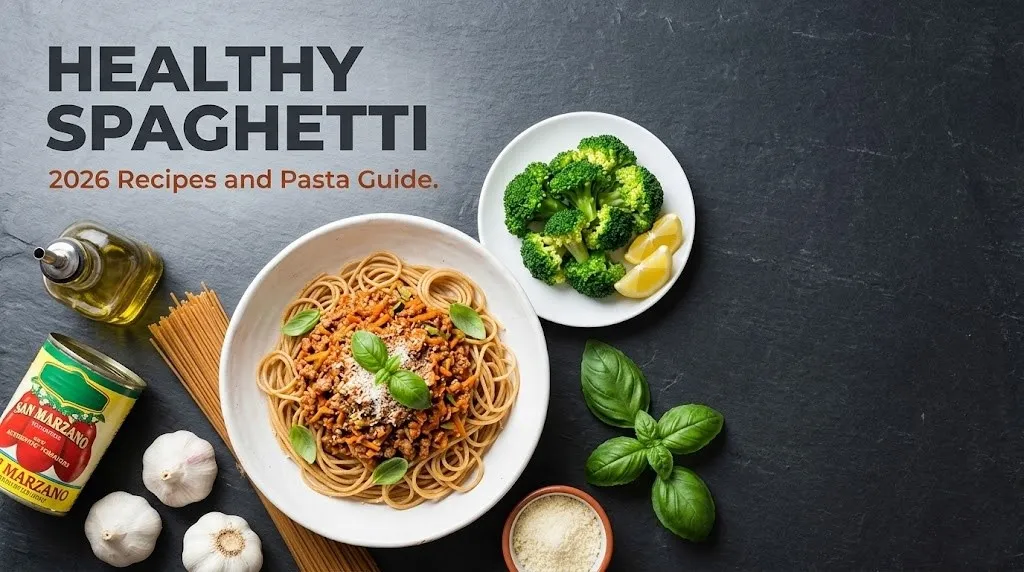
Build a balanced healthy spaghetti plate by filling half the plate with non-starchy vegetables, one-quarter with protein-rich sauce, and one-quarter with whole wheat or legume pasta, finished with a measured tablespoon of cheese or healthy fat.
This is the USDA Dietary Guidelines plate method applied to spaghetti. It ensures the meal is balanced, satisfying, and nutrient-dense without calorie counting.
The balanced spaghetti plate formula:
- Half the plate: Steamed broccoli, roasted zucchini, sautéed spinach, or a mixed green salad
- One-quarter of the plate: Whole wheat, chickpea, or lentil spaghetti (about 1 cup cooked)
- One-quarter of the plate: Lean protein in sauce (turkey bolognese, lentil marinara, grilled chicken, shrimp)
- Finishing fat: 1 tablespoon Parmesan, nutritional yeast, or a drizzle of olive oil
For meal prep, store the pasta, sauce, and vegetables in separate containers. Assemble the plate fresh for each meal. The pasta and sauce can be combined and reheated. The vegetables should be cooked fresh or added raw.
Dietary Sensitivity Note: This framework accommodates every dietary pattern. Swap pasta, protein, and vegetables to meet gluten-free, vegan, low-carb, or other needs.
Key Takeaway: A balanced spaghetti plate is half vegetables, one-quarter pasta, one-quarter protein. This formula produces a satisfying, nutritious meal every time.
Frequently Asked Questions About Healthy Spaghetti
Is whole wheat spaghetti healthier than regular spaghetti?
Yes, whole wheat spaghetti is healthier because it contains triple the fiber (6g vs 2g), more protein, and more minerals like magnesium and iron for the same number of calories.
The USDA Dietary Guidelines recommend making at least half of grain intake whole grain.
The flavor is nuttier and the texture is chewier, which pairs well with robust sauces.
Can spaghetti be healthy for weight loss?
Yes, spaghetti can fit a weight loss plan when the pasta portion is controlled to 2 ounces dry per person and the plate is built with half vegetables and a light, tomato-based sauce.
Zucchini noodles or a half pasta, half zoodle mix reduces calories further.
Measure oil and cheese. Free pouring can add 200 to 300 calories to a batch.
What is the healthiest pasta for spaghetti?
Chickpea and lentil pasta are the healthiest for protein and fiber at 13 to 14 grams of protein and 6 grams of fiber per serving.
Whole wheat spaghetti is the healthiest wheat-based option with 8 grams of protein and 6 grams of fiber.
Zucchini noodles and spaghetti squash are the healthiest for lowering calories and carbohydrates.
Is spaghetti squash actually a good substitute for pasta?
Spaghetti squash is a good substitute for lowering calories and carbohydrates, with 55 calories and 10 grams of carbs per 2-cup serving compared to 400 calories and 84 grams in regular pasta.
The texture is different. It is a vegetable, not pasta. It works best with robust tomato or meat sauces.
A hybrid of half pasta and half spaghetti squash offers the best compromise of texture and nutrition.
How can I make spaghetti sauce healthier?
Make spaghetti sauce healthier by starting with canned whole or crushed tomatoes, using a measured tablespoon of olive oil, adding finely chopped or grated vegetables (carrots, zucchini, mushrooms), and avoiding added sugar.
Homemade sauce has roughly 40 calories per half-cup compared to 60 to 90 for jarred sauces with added oil and sugar.
Simmering with a Parmesan rind adds richness without significant calories.
Spaghetti is not the problem. The proportions are. A reasonable serving of pasta with a tomato-rich sauce, lean protein, and a pile of vegetables is a balanced meal that fits every healthy eating pattern. The problem is that somewhere along the way, the pasta became the entire plate and the sauce became a vehicle for butter and cheese.
The fix is not to give up spaghetti. It is to eat it the way it was originally meant to be eaten: as part of a meal that includes vegetables and a modest amount of protein. Whole wheat or legume pasta. A sauce made from tomatoes, not cream. A measured pour of olive oil. A sprinkle of cheese, not a blanket. A side of broccoli or a salad that takes up half the plate.
That is healthy spaghetti. It tastes like the real thing because it is the real thing, just built in proportions that support your health instead of working against it.