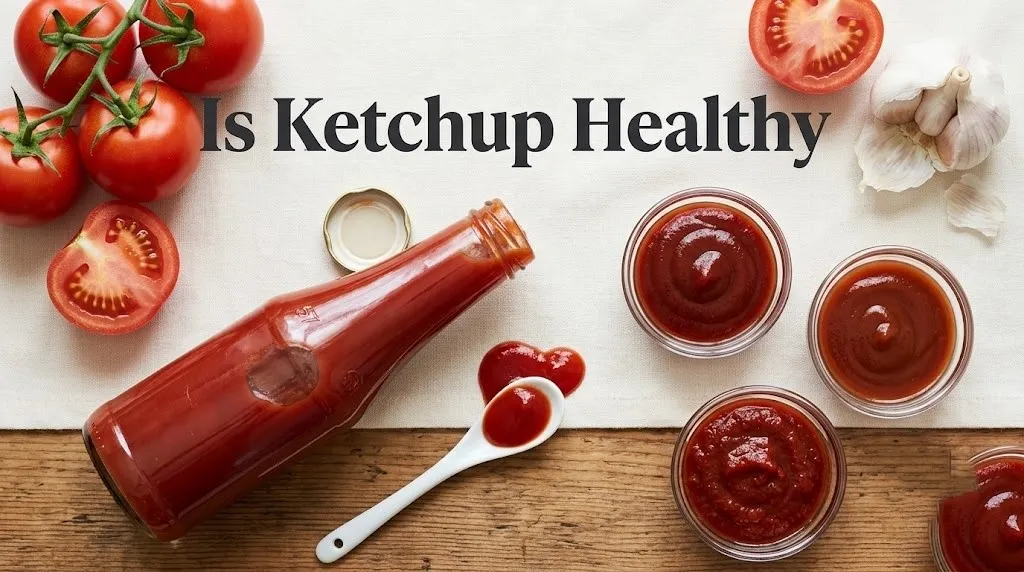
Ketchup is healthy in the way that any condiment is healthy: it is fine in small amounts and a problem in large amounts. One tablespoon contains 15 to 20 calories, 3 to 4 grams of sugar, and 130 to 160 milligrams of sodium. The American Heart Association recommends that women limit added sugar to no more than 25 grams per day and men to 36 grams. A tablespoon of ketchup uses roughly 12 to 16 percent of the daily added sugar budget for women. That is reasonable. The problem is that most people do not eat one tablespoon. They squeeze generously from the bottle or dip repeatedly from a pool on the plate. The portion is the pivot point between ketchup as a harmless flavoring and ketchup as a hidden sugar and sodium source.
Ketchup is also one of the few condiments that delivers a bioactive compound with documented health benefits. Lycopene, the carotenoid that gives tomatoes their red color, survives the cooking and concentration process that turns tomatoes into ketchup. In fact, cooked and processed tomato products deliver more bioavailable lycopene than raw tomatoes because heat breaks down cell walls and releases the compound. A tablespoon of ketchup contains 2.5 to 3.5 milligrams of lycopene. Research from the Harvard T.H. Chan School of Public Health and other institutions has associated higher lycopene intake with reduced risk of prostate cancer and cardiovascular disease, though the evidence is observational and cannot establish causation.
This guide breaks down ketchup’s nutritional profile, compares major brands side by side, explains the FDA regulation that defines what ketchup must be, evaluates no-sugar-added and organic options, and addresses ketchup’s health implications for diabetes, hypertension, weight management, and acid reflux. You will finish knowing whether the bottle in your refrigerator is a problem and, if it is, what to replace it with.
Is Ketchup Healthy
Ketchup is a condiment, not a health food. It delivers a small amount of lycopene alongside added sugar and sodium. In a one-tablespoon serving, the sugar and sodium are modest. In the amounts many people actually consume, they accumulate. Ketchup is not inherently unhealthy. It becomes unhealthy when the portion is uncontrolled or when it is one of several high-sugar, high-sodium condiments and processed foods in the same meal.
The nutritional case for ketchup rests on lycopene. Lycopene is an antioxidant carotenoid that gives tomatoes, watermelon, pink grapefruit, and guava their red color. It neutralizes free radicals and reduces oxidative stress. Observational studies have linked higher lycopene intake to lower risk of prostate cancer, cardiovascular disease, and age-related macular degeneration. A 2017 meta-analysis in the journal Nutrients found that higher dietary lycopene intake was associated with a 13 percent reduction in cardiovascular disease risk. The evidence is consistent but observational. Ketchup is a source of lycopene. It is not a lycopene supplement. A tablespoon provides 2.5 to 3.5 milligrams. A typical lycopene supplement provides 10 to 15 milligrams. Ketchup’s lycopene contribution is meaningful in the context of a diet that includes multiple tomato sources. It is not sufficient as a standalone health intervention.
The nutritional case against ketchup rests on added sugar and sodium. Standard ketchup contains high fructose corn syrup or sugar as the third ingredient after tomato concentrate and distilled vinegar. The FDA standard of identity for ketchup, established in 21 CFR 155.194, defines ketchup as a product made from tomato concentrate, vinegar, a nutritive sweetener, salt, and spices. The sweetener is required. A product without a sweetener cannot legally be labeled as ketchup. This regulatory requirement is why all standard ketchups contain sugar. The sodium in ketchup comes from the added salt required by the standard of identity and the natural sodium in tomatoes.
| Serving Size | Calories | Sugar (g) | Sodium (mg) | Lycopene (mg) | Health Assessment |
|---|---|---|---|---|---|
| 1 tablespoon | 15 to 20 | 3 to 4 | 130 to 160 | 2.5 to 3.5 | Reasonable |
| 2 tablespoons | 30 to 40 | 6 to 8 | 260 to 320 | 5 to 7 | Moderate |
| 1/4 cup (4 tbsp) | 60 to 80 | 12 to 16 | 520 to 640 | 10 to 14 | Excessive for daily use |
Key Takeaway: Ketchup is a condiment with a small lycopene benefit and a moderate sugar and sodium load. One tablespoon is reasonable. Larger portions turn ketchup into a meaningful source of added sugar and sodium. The portion is the pivot point.
Is Ketchup Bad for You
Ketchup is not bad for you in a one-tablespoon serving. It becomes problematic when consumption is high, when the rest of the diet is already high in added sugar and sodium, or when you have a specific health condition that requires limiting sugar, sodium, or acidic foods. The answer is not that ketchup is universally bad. The answer is that ketchup requires portion awareness and, for some people, brand selection or limitation.
The primary health concern with ketchup is added sugar. The USDA Dietary Guidelines for Americans recommend that added sugar account for less than 10 percent of daily calories. On a 2,000-calorie diet, that is 50 grams or less. The American Heart Association is stricter, recommending 25 grams or less for women and 36 grams or less for men. A single tablespoon of standard ketchup uses 3 to 4 grams, roughly 12 to 16 percent of the AHA limit for women. The portion context matters. A breakfast with two eggs and a tablespoon of ketchup is reasonable. A lunch with a burger, fries with ketchup for dipping, and a soda is a meal where the ketchup sugar adds to an already high-sugar meal.
The secondary concern is sodium. A tablespoon of ketchup contains 130 to 160 milligrams of sodium. The AHA recommends an ideal limit of 2,300 milligrams per day. A tablespoon of ketchup uses 6 to 7 percent of that limit. Two tablespoons, a more realistic portion for a burger and fries meal, uses 12 to 14 percent. This is manageable in a low-sodium diet but adds up alongside other sodium sources in a typical American meal.
The tertiary concern is that ketchup is often paired with foods that are themselves high in calories, saturated fat, and sodium: burgers, hot dogs, fries, and fried foods. The ketchup is not the primary nutritional problem in that meal. It is the condiment on top of a meal that is already indulgent. Removing ketchup does not transform a bacon cheeseburger and fries into a health food. The meal context matters more than the condiment.
| Ketchup Concern | One Tablespoon | Two Tablespoons | Who Should Be Most Cautious |
|---|---|---|---|
| Added sugar | 3 to 4g (12 to 16% AHA women) | 6 to 8g (24 to 32% AHA women) | People with diabetes, prediabetes, or weight management goals |
| Sodium | 130 to 160mg (6 to 7% AHA) | 260 to 320mg (12 to 14% AHA) | People with hypertension, heart failure, or kidney disease |
| Acidity | pH 3.9 to 4.2 | Same | People with GERD, acid reflux, or gastritis |
| Nightshade | Contains tomato | Same | People with nightshade sensitivity or allergy |
Key Takeaway: Ketchup is not universally bad. One tablespoon adds a modest amount of sugar and sodium to a meal. Larger portions, high baseline sugar or sodium intake, and specific health conditions change the calculus.
Ketchup Nutrition Facts
A one-tablespoon serving of standard ketchup, approximately 17 grams, contains the following nutritional profile based on USDA FoodData Central values for a typical brand. Specific brands vary slightly in sugar, sodium, and ingredient list. The values below represent a standard high fructose corn syrup-sweetened ketchup.
| Nutrient | Amount per 1 tbsp (17g) | Percent Daily Value |
|---|---|---|
| Calories | 15 to 20 | N/A |
| Total Fat | 0g | 0% |
| Sodium | 130 to 160mg | 6 to 7% |
| Total Carbohydrate | 4g | 1% |
| Dietary Fiber | 0g | 0% |
| Total Sugars | 3 to 4g | N/A |
| Added Sugars | 3 to 4g | 6 to 8% |
| Protein | 0g | 0% |
| Vitamin A | 2% DV | From tomato concentrate |
| Vitamin C | 0% DV | Lost during processing |
| Potassium | 30 to 40mg | 1% |
| Lycopene | 2.5 to 3.5mg | No DV established |
The nutrition facts panel reveals that ketchup is essentially a sugar-salt-acid flavoring with a small lycopene contribution. It provides no protein, no fiber, and minimal micronutrients. The vitamin C that was present in the raw tomatoes is largely destroyed during the cooking and concentration process. The lycopene survives and becomes more bioavailable. The potassium is residual from the tomatoes.
The ingredient list for standard ketchup reads: tomato concentrate (water and tomato paste), high fructose corn syrup, distilled vinegar, salt, natural flavoring, onion powder, garlic powder, spices. The “natural flavoring” is typically a proprietary blend that standardizes the flavor across batches. The spices are typically a combination of allspice, cloves, cinnamon, and other warm spices in amounts too small to identify individually. The high fructose corn syrup or sugar is the third ingredient, which indicates a significant quantity relative to the total product.
Ketchup Sugar Content
The sugar content of ketchup is the most frequently cited nutritional concern. A tablespoon of standard ketchup contains 3 to 4 grams of sugar, all of it added sugar. The sugar comes from high fructose corn syrup in most major brands (Heinz, Hunt’s, store brands) or from cane sugar in some organic and premium brands. The FDA standard of identity requires a nutritive sweetener, which is why sugar-free ketchup cannot legally be labeled as ketchup. It must be labeled as “tomato ketchup style sauce” or a similar descriptive term.
The sugar in ketchup serves a functional purpose beyond sweetness. Sugar balances the acidity of the vinegar and the umami of the tomato concentrate. Without sugar, ketchup tastes sharply acidic and one-dimensionally savory. The sugar creates the sweet-tangy balance that defines ketchup’s flavor profile. This is why homemade and no-sugar-added versions taste different from standard ketchup. They are not just ketchup minus sugar. They are a different flavor balance.
The portion size of ketchup is the practical problem. A typical squirt from a squeeze bottle is 1.5 to 2 tablespoons. A fast-food ketchup packet contains approximately 1 tablespoon. A person who dips fries in a pool of ketchup may consume 3 to 4 tablespoons in a single meal. At 3 to 4 grams of sugar per tablespoon, 4 tablespoons contain 12 to 16 grams of added sugar. That is half to two-thirds of the AHA daily limit for women, from ketchup alone.
| Ketchup Serving | Sugar (g) | AHA Daily Limit Used (Women, 25g) | AHA Daily Limit Used (Men, 36g) |
|---|---|---|---|
| 1 packet (1 tbsp) | 3 to 4 | 12 to 16% | 8 to 11% |
| 2 tbsp (burger and fry dip) | 6 to 8 | 24 to 32% | 17 to 22% |
| 1/4 cup (4 tbsp) | 12 to 16 | 48 to 64% | 33 to 44% |
| 1/2 cup (8 tbsp, a small ramekin) | 24 to 32 | 96 to 128% | 67 to 89% |
Quick Tip:
- Measure your ketchup once. Squeeze the amount you normally use onto a tablespoon. You may be surprised by the volume. Most people underestimate their ketchup portion. Knowing your actual portion is the first step to managing it.
Key Takeaway: Ketchup sugar content is 3 to 4 grams per tablespoon. The portion is the issue. A typical serving of 2 to 4 tablespoons delivers 6 to 16 grams of added sugar. No-sugar-added versions eliminate the added sugar entirely.
Healthiest Ketchup Brands
The healthiest ketchup brands are those with the lowest added sugar and sodium while maintaining an ingredient list free from artificial preservatives, colors, and flavors. The table below compares major ketchup brands available in 2026 based on nutrition per tablespoon and ingredient quality.
| Brand | Calories | Sugar (g) | Sodium (mg) | Sweetener Type | Notable Features |
|---|---|---|---|---|---|
| Primal Kitchen | 10 | 0 | 120 | None (unsweetened) | No added sugar, Whole30 approved |
| Heinz No Sugar Added | 10 | 0 | 130 | Stevia | No added sugar, tastes close to original |
| G Hughes Sugar Free | 5 | 0 | 130 | Sucralose | Lowest calorie, artificial sweetener |
| Sir Kensington’s | 20 | 3 | 140 | Cane sugar, honey | Organic, non-GMO, no HFCS |
| Annie’s Organic | 20 | 3 | 140 | Cane sugar | Organic, no HFCS |
| Heinz Original | 20 | 4 | 160 | High fructose corn syrup | Industry standard |
| Hunt’s | 20 | 4 | 150 | High fructose corn syrup | Similar to Heinz |
| Store brand (typical) | 20 | 4 | 130 to 160 | High fructose corn syrup | Varies by retailer |
Primal Kitchen ketchup is the healthiest by the numbers: zero added sugar, lower sodium than most brands, and a clean ingredient list. The flavor is tangier and less sweet than standard ketchup. It is an acquired taste for those accustomed to Heinz. Heinz No Sugar Added is the closest taste match to standard Heinz with zero added sugar, sweetened with stevia. It is the easiest transition for a household that wants to reduce sugar without a flavor revolution.
Sir Kensington’s and Annie’s Organic use cane sugar instead of high fructose corn syrup. The sugar content is slightly lower than Heinz (3 grams versus 4 grams). The ingredient lists are cleaner. They do not use artificial preservatives. They are more expensive. The health advantage over standard ketchup is modest, a 1-gram sugar reduction and the absence of high fructose corn syrup. For people who prefer organic or non-GMO products, these are the best choices in the conventional sugar category.
Quick Tip:
- If your household resists the taste of unsweetened ketchup, transition gradually. Mix a bottle of Heinz No Sugar Added with a bottle of standard Heinz. Start with 25 percent no-sugar and 75 percent standard. Increase the no-sugar proportion each time you refill until the household palate has adjusted to the lower sweetness.
No Sugar Added Ketchup
No sugar added ketchup is ketchup made without added sugar, sweetened either with non-nutritive sweeteners like stevia, monk fruit, sucralose, or allulose, or left entirely unsweetened. The FDA standard of identity for ketchup requires a nutritive sweetener. Products labeled “ketchup” without sugar use a non-nutritive sweetener or are technically mislabeled. Products labeled “tomato ketchup style sauce” or “keto ketchup” are legally accurate because they do not meet the federal standard for ketchup.
The nutritional advantage of no-sugar-added ketchup is the elimination of added sugar. A tablespoon contains 0 grams of added sugar versus 3 to 4 grams in standard ketchup. The calorie reduction is modest, 5 to 10 calories per tablespoon. The daily sugar savings, for a person who consumes 2 to 4 tablespoons of ketchup daily, is 6 to 16 grams. That is a meaningful reduction equivalent to removing a small soda or a cookie from the daily intake.
The taste difference between standard and no-sugar-added ketchup is real. Sugar provides more than sweetness. It provides body, mouthfeel, and a specific flavor balance with the acid and salt. Unsweetened ketchup like Primal Kitchen is tangier, thinner, and more acidic. Stevia-sweetened ketchup like Heinz No Sugar Added has a slight stevia aftertaste that some people detect and others do not. The taste adjustment period is typically 1 to 2 weeks. The palate adapts. After the adjustment, standard ketchup tastes cloyingly sweet to many people who have switched.
| No Sugar Added Brand | Sweetener | Calories per tbsp | Sugar (g) | Taste Comparison to Heinz |
|---|---|---|---|---|
| Primal Kitchen | None | 10 | 0 | Tangier, less sweet, thinner |
| Heinz No Sugar Added | Stevia | 10 | 0 | Closest to original, slight stevia note |
| G Hughes Sugar Free | Sucralose | 5 | 0 | Sweet, artificial sweetener flavor |
| AlternaSweets | Monk fruit, allulose | 10 | 0 | Balanced, less aftertaste |
People with diabetes should note that no-sugar-added ketchup does not raise blood glucose. The total carbohydrate is 1 to 2 grams per tablespoon, primarily from the tomato concentrate. Standard ketchup contains 4 grams of carbohydrate per tablespoon, all of which is sugar that will raise blood glucose. For a person carefully counting carbohydrates, the 3-gram difference per tablespoon is worth accounting for.
Key Takeaway: No-sugar-added ketchup eliminates the 3 to 4 grams of added sugar per tablespoon. Heinz No Sugar Added tastes closest to the original. Primal Kitchen is the cleanest ingredient list. A 1 to 2 week palate adjustment period is normal.
Ketchup Lycopene
Lycopene is the nutritional bright spot in ketchup. It is a carotenoid antioxidant that gives tomatoes their red color. Cooked and processed tomato products, including ketchup, tomato paste, tomato sauce, and tomato soup, deliver lycopene in a more bioavailable form than raw tomatoes. The heat of processing breaks down the tomato cell walls and releases lycopene from the fiber matrix. The small amount of oil used in some tomato products further increases absorption because lycopene is fat-soluble.
A tablespoon of ketchup contains 2.5 to 3.5 milligrams of lycopene. A half cup of tomato sauce contains 15 to 25 milligrams. A half cup of canned tomatoes contains 10 to 15 milligrams. A slice of raw tomato contains 0.5 to 1 milligram. Ketchup is a modest lycopene source compared to other tomato products. It contributes to the daily total but is not the most efficient source.
The health benefits associated with lycopene are primarily cardiovascular and cancer-related. Observational studies have linked higher lycopene intake to reduced risk of prostate cancer, cardiovascular disease, and stroke. A 2017 meta-analysis in Nutrients found that higher dietary lycopene was associated with a 13 percent reduction in cardiovascular disease risk and an 11 percent reduction in stroke risk. The evidence is observational, not from randomized controlled trials. Lycopene is correlated with better health outcomes. It may be causative. It may be a marker for a dietary pattern rich in tomato products and other vegetables. The distinction matters for honest nutritional communication.
| Tomato Product | Lycopene (mg) | Serving Size | Calories |
|---|---|---|---|
| Ketchup | 2.5 to 3.5 | 1 tbsp | 15 to 20 |
| Tomato paste | 5 to 7 | 1 tbsp | 15 to 20 |
| Tomato sauce | 15 to 25 | 1/2 cup | 40 to 50 |
| Canned tomatoes | 10 to 15 | 1/2 cup | 25 to 35 |
| Raw tomato | 0.5 to 1 | 1 slice | 5 |
People who want to increase lycopene intake efficiently should use tomato paste, tomato sauce, and canned tomatoes in cooking. Ketchup adds lycopene in small amounts alongside sugar and sodium. It is a contributor, not a primary source. The lycopene in ketchup does not cancel out the added sugar. It is a nutritional feature, not a health halo.
Is Ketchup Good for Weight Loss
Ketchup is neutral for weight loss at a one-tablespoon serving. At 15 to 20 calories per tablespoon, it is not a significant calorie contributor. The sugar content is 3 to 4 grams. The concern for weight loss is not the ketchup itself. It is the foods that ketchup accompanies and the portion size of the ketchup.
The calorie density of ketchup is moderate, approximately 1 calorie per gram, similar to other condiments and lower than mayonnaise (6 calories per gram) or ranch dressing (4 to 5 calories per gram). Replacing high-calorie condiments with ketchup reduces meal calorie density. Replacing ketchup with mustard (0 calories per teaspoon, 5 calories per tablespoon) reduces it further. Ketchup is a calorie reducer compared to creamy condiments. It is a calorie adder compared to vinegar-based condiments, salsa, or lemon juice.
The weight loss context for ketchup is about the meal, not the condiment. Ketchup on a grilled chicken sandwich with vegetables is a reasonable calorie addition. Ketchup as a dipping sauce for fried foods adds sugar and sodium to a meal that is already calorie-dense. The ketchup is not the primary driver of the meal’s calorie count. The fried food is. Focusing on ketchup while ignoring the burger and fries underneath it misses the larger nutritional picture.
| Condiment (1 tbsp) | Calories | Sugar (g) | Fat (g) | Weight Loss Compatibility |
|---|---|---|---|---|
| Mustard | 5 | 0 | 0 | Excellent |
| Salsa | 5 | 1 | 0 | Excellent |
| Ketchup | 15 to 20 | 3 to 4 | 0 | Good in moderation |
| BBQ sauce | 25 to 35 | 5 to 7 | 0 | Moderate, higher sugar |
| Ranch dressing | 60 to 70 | 1 | 6 to 7 | Low, high calorie density |
| Mayonnaise | 90 to 100 | 0 | 10 to 11 | Low, highest calorie density |
Quick Tip:
- Mix ketchup with an equal amount of plain Greek yogurt to create a creamy, lower-calorie “fry sauce” or burger spread. The mixture has half the calories of ketchup alone and adds protein. Add a dash of hot sauce, garlic powder, or smoked paprika for flavor depth.
Ketchup Diabetes
Ketchup and diabetes require carbohydrate awareness. One tablespoon of standard ketchup contains 4 grams of carbohydrate, all of which is sugar. That sugar enters the bloodstream and requires insulin. For a person with type 1 diabetes counting carbohydrates for insulin dosing, 4 grams is a small amount that is easy to overlook. For a person with type 2 diabetes managing post-meal blood glucose, the 4 grams from ketchup adds to the carbohydrate total from the meal’s other components.
The glycemic impact of ketchup is moderated by the small amount typically consumed and the fact that ketchup is rarely eaten alone. It is consumed with protein (burger, eggs) and fat (fries, burger), which slow gastric emptying and blunt the blood glucose response. A tablespoon of ketchup eaten with a burger has a smaller glycemic impact than a tablespoon of sugar eaten alone. The food matrix and the meal context matter.
No-sugar-added ketchup is the better choice for diabetes management. It contains 1 to 2 grams of carbohydrate per tablespoon, primarily from the tomato concentrate. The carbohydrate reduction is 2 to 3 grams per tablespoon, which adds up over a day of meals for a person who uses ketchup at breakfast (eggs), lunch (burger or sandwich), and dinner (meatloaf or dipping).
| Ketchup Type | Carbohydrate per tbsp | Sugar per tbsp | Diabetes Compatibility |
|---|---|---|---|
| Standard ketchup | 4g | 3 to 4g | Count in carb budget |
| No sugar added (Heinz) | 1 to 2g | 0g | Better choice |
| Unsweetened (Primal Kitchen) | 1g | 0g | Best choice |
| Ketchup packet | 4g | 3 to 4g | Count as 4g carb |
People with diabetes should be aware that ketchup is often an unaccounted carbohydrate source. It is squeezed onto a plate without measuring. The 4 grams per tablespoon is small enough to ignore, but multiple tablespoons across a day can contribute 8 to 16 grams of unaccounted carbohydrate. Measuring ketchup or switching to no-sugar-added versions removes this variable.
Key Takeaway: Standard ketchup contains 4 grams of carbohydrate per tablespoon. No-sugar-added versions contain 1 to 2 grams. For diabetes management, the no-sugar-added versions are the better choice. Portion measurement prevents unaccounted carbohydrate creep.
Is Ketchup High in Sodium
Ketchup is moderately high in sodium at 130 to 160 milligrams per tablespoon. It is not the highest-sodium condiment. Soy sauce (900 to 1,000 milligrams per tablespoon) and fish sauce (1,400 milligrams) are significantly higher. Ketchup is in the middle range with mustard (60 to 120 milligrams) and BBQ sauce (150 to 250 milligrams). The sodium in ketchup comes from added salt and the naturally occurring sodium in tomatoes.
The sodium concern with ketchup is cumulative. A tablespoon contains 130 to 160 milligrams. Two tablespoons contain 260 to 320 milligrams. A person who uses ketchup at multiple meals daily can consume 400 to 600 milligrams of sodium from ketchup alone, which is 17 to 26 percent of the AHA ideal limit of 2,300 milligrams. This is manageable if the rest of the diet is low in sodium. It is problematic if the diet also includes processed foods, restaurant meals, and other high-sodium items.
Low-sodium ketchup options exist but are less common than no-sugar-added options. Heinz makes a reduced-sodium version with approximately 100 milligrams per tablespoon. No-salt-added ketchup is rare. Homemade ketchup allows full control of the sodium content.
| Condiment (1 tbsp) | Sodium (mg) | Percent of AHA 2,300mg Limit |
|---|---|---|
| Soy sauce | 900 to 1,000 | 39 to 43% |
| Fish sauce | 1,400 | 61% |
| BBQ sauce | 150 to 250 | 7 to 11% |
| Ketchup (standard) | 130 to 160 | 6 to 7% |
| Mustard (yellow) | 60 to 120 | 3 to 5% |
| Salsa (no salt added) | 0 to 50 | 0 to 2% |
| Hot sauce | 60 to 200 | 3 to 9% |
People following the DASH diet for hypertension should measure ketchup by the tablespoon and limit to 1 to 2 tablespoons daily. The DASH diet sodium targets are 1,500 to 2,300 milligrams per day. Ketchup’s 130 to 160 milligrams per tablespoon fits within that budget when the rest of the diet is low-sodium.
Ketchup vs Tomato Sauce Nutrition
Ketchup and tomato sauce are not nutritionally interchangeable. Ketchup is a condiment with concentrated sugar, salt, and acid. Tomato sauce is a cooking ingredient with lower sugar, lower sodium (if no salt added), and a thinner consistency. The nutritional differences reflect their different purposes. Ketchup is designed to be a flavorful accent eaten in small amounts. Tomato sauce is designed to be the base of a dish eaten in larger portions.
A tablespoon of standard ketchup contains 15 to 20 calories, 3 to 4 grams of sugar, and 130 to 160 milligrams of sodium. A tablespoon of plain tomato sauce (canned, no salt added) contains 5 to 10 calories, 1 gram of sugar, and 0 to 5 milligrams of sodium. The sugar in ketchup is added. The sugar in tomato sauce is the natural sugar from the tomatoes. The sodium in ketchup is added. The sodium in plain tomato sauce is naturally occurring unless salt is added during canning.
Ketchup cannot be directly substituted for tomato sauce in cooking. Ketchup is sweeter, tangier, and thicker. A recipe that calls for a cup of tomato sauce cannot be made with a cup of ketchup without producing an inedibly sweet result. Conversely, tomato sauce cannot be used as a direct replacement for ketchup at the table without adding sweetener, acid, and salt.
| Nutrient (per 1/4 cup) | Ketchup | Tomato Sauce (no salt added) |
|---|---|---|
| Calories | 60 to 80 | 20 to 25 |
| Sugar | 12 to 16g | 4g (natural) |
| Added Sugar | 12 to 16g | 0g |
| Sodium | 520 to 640mg | 10 to 20mg |
| Lycopene | 10 to 14mg | 10 to 15mg |
Quick Tip:
- To make a quick, low-sugar ketchup substitute from tomato paste: mix 1/4 cup tomato paste, 2 tablespoons apple cider vinegar, 1/2 teaspoon garlic powder, 1/4 teaspoon salt, and water to thin to ketchup consistency. Sweeten to taste with a small amount of honey or a few drops of stevia. This produces a ketchup-like sauce with no added sugar and controlled sodium.
Homemade Ketchup Healthy
Homemade ketchup is healthier than standard commercial ketchup because you control the sweetener type, sweetener amount, and sodium level. The FDA standard of identity does not apply to food made in your own kitchen. You can legally make ketchup with no sweetener at all and call it ketchup.
A basic homemade ketchup recipe: 6 ounces tomato paste, 1/4 cup apple cider vinegar, 1/4 cup water, 1/2 teaspoon salt, 1/2 teaspoon garlic powder, 1/2 teaspoon onion powder, 1/4 teaspoon allspice, optional 1 to 2 teaspoons honey or maple syrup. Whisk together. Adjust water for desired consistency. Refrigerate for up to 2 weeks.
This homemade version contains approximately 5 to 10 calories per tablespoon (depending on sweetener), 0 to 2 grams of sugar, and 50 to 80 milligrams of sodium. The lycopene content is higher than commercial ketchup because tomato paste is more concentrated. The flavor is different from Heinz. It is tangier, spicier, and less sweet. It is a different product with a different flavor profile. It is not a replica. It is an alternative.
| Nutrient (per tbsp) | Homemade (1 tsp honey) | Heinz Original |
|---|---|---|
| Calories | 8 | 20 |
| Sugar | 1g | 4g |
| Added Sugar | 1g | 4g |
| Sodium | 60mg | 160mg |
| Lycopene | 5 to 7mg | 2.5 to 3.5mg |
The time cost of homemade ketchup is approximately 5 minutes of active preparation plus refrigeration. A batch of approximately 1 cup costs $1.50 to $2.50 in ingredients, comparable to or slightly less than a bottle of premium ketchup. The shelf life is shorter, 2 weeks in the refrigerator, because homemade ketchup lacks the preservatives and the precise acid balance that give commercial ketchup its long shelf life.
Key Takeaway: Homemade ketchup gives you control over sweetener and sodium. It is higher in lycopene from tomato paste and costs less than premium brands. The flavor is different from commercial ketchup and requires adjustment. The shorter shelf life means smaller batches.
Is Organic Ketchup Healthier
Organic ketchup is marginally healthier than conventional ketchup in terms of ingredient quality but not in terms of sugar or sodium content. Organic ketchup uses organic tomato concentrate, organic sugar or organic high fructose corn syrup, organic vinegar, and organic spices. The nutritional profile, calories, sugar, and sodium, is nearly identical to conventional ketchup. The sugar is organic. It is still sugar.
The health argument for organic ketchup is about pesticide exposure, not macronutrient content. Tomatoes are on the Environmental Working Group’s list of produce with moderate pesticide residues. Organic tomatoes are grown without synthetic pesticides. The tomato concentrate used in ketchup concentrates not only the lycopene and flavor but also any pesticide residues that were present on the raw tomatoes. Choosing organic ketchup reduces this exposure. The nutritional significance of this reduction is debated and depends on an individual’s overall pesticide exposure from other foods and environmental sources.
Organic ketchup typically uses cane sugar rather than high fructose corn syrup, though organic high fructose corn syrup exists and is used in some brands. The sugar type does not change the calorie or sugar content. High fructose corn syrup and cane sugar are metabolically similar. Both contain roughly equal amounts of glucose and fructose. Both contribute the same number of calories per gram. The choice between them is a personal preference, not a nutritional distinction with meaningful health implications.
| Ketchup Type | Calories per tbsp | Sugar (g) | Sodium (mg) | Organic? |
|---|---|---|---|---|
| Heinz Original | 20 | 4 | 160 | No |
| Annie’s Organic | 20 | 3 | 140 | Yes |
| Sir Kensington’s | 20 | 3 | 140 | Yes |
| Primal Kitchen (unsweetened) | 10 | 0 | 120 | Yes, and no sugar |
Quick Tip:
- If you buy organic ketchup for the pesticide reduction, choose a brand with lower sugar (Annie’s, Sir Kensington’s) or no sugar (Primal Kitchen) to gain both the organic benefit and the sugar reduction. Organic ketchup with 3 to 4 grams of sugar per tablespoon is still a sugar-sweetened condiment.
Ketchup and Blood Pressure
Ketchup contributes sodium to the diet, which is relevant for blood pressure management. A tablespoon contains 130 to 160 milligrams of sodium. The American Heart Association recommends an ideal sodium limit of 2,300 milligrams per day, with an optimal limit of 1,500 milligrams for people with hypertension. A tablespoon of ketchup uses 6 to 7 percent of the 2,300-milligram limit or 9 to 11 percent of the 1,500-milligram limit.
The sodium in ketchup is not the primary concern for blood pressure management. The primary concerns are the high-sodium processed foods, restaurant meals, bread, cheese, and cured meats that contribute the majority of dietary sodium. Ketchup is a secondary contributor. For a person who has already reduced the primary sodium sources and is looking for additional reductions, switching to a lower-sodium ketchup or reducing ketchup portions is a reasonable step.
The potassium in ketchup, approximately 30 to 40 milligrams per tablespoon, is negligible for blood pressure management. The DASH diet emphasizes potassium intake of 4,700 milligrams per day. Ketchup is not a meaningful potassium source. The lycopene in ketchup may support vascular health through antioxidant mechanisms. The evidence is observational and does not override the sodium content for blood pressure management purposes.
| Blood Pressure Factor | Ketchup’s Role |
|---|---|
| Sodium contribution | 130 to 160mg per tbsp, moderate, manageable with portion control |
| Potassium contribution | 30 to 40mg per tbsp, negligible |
| Lycopene | 2.5 to 3.5mg per tbsp, potential vascular benefit, observational evidence |
| Sugar contribution | 3 to 4g per tbsp, indirect effect via weight and metabolic health |
People with hypertension should measure ketchup by the tablespoon, limit to 1 to 2 tablespoons daily, and choose lower-sodium brands when available. The sodium savings from switching to a lower-sodium ketchup are 30 to 60 milligrams per tablespoon, a small but cumulative reduction when combined with other low-sodium choices.
Is Ketchup Acidic
Ketchup is acidic with a pH of 3.9 to 4.2. The acidity comes from the distilled vinegar, which is the second ingredient after tomato concentrate. The tomatoes themselves are acidic (pH 4.3 to 4.9). The vinegar lowers the pH further to create the tangy flavor and to preserve the ketchup by inhibiting bacterial growth.
For people with gastroesophageal reflux disease (GERD), acid reflux, or gastritis, acidic foods can trigger symptoms. Ketchup is a common trigger food because of its acidity and because it is often consumed with other trigger foods: fried foods, fatty meals, and spicy dishes. The ketchup is rarely the sole cause of reflux. It is one acidic component in a meal that may also include coffee, soda, citrus, and high-fat foods.
People with GERD who tolerate small amounts of acidic foods may be able to eat ketchup in one-tablespoon portions without symptoms. People with severe reflux may need to eliminate ketchup entirely during a symptom flare and reintroduce it cautiously when symptoms are controlled. A lower-acid alternative is to mix tomato paste with a small amount of water and a pinch of sugar and salt. Tomato paste has a higher pH than ketchup because it lacks the added vinegar.
| Food/Condiment | Approximate pH | GERD Trigger Potential |
|---|---|---|
| Ketchup | 3.9 to 4.2 | Moderate to high |
| Mustard (yellow) | 3.5 to 4.0 | Moderate to high |
| Mayonnaise | 4.0 to 4.5 | Low (low acid, high fat) |
| Salsa | 3.5 to 4.0 | Moderate to high |
| Tomato sauce (plain) | 4.3 to 4.9 | Moderate |
| Lemon juice | 2.0 to 2.5 | High |
Key Takeaway: Ketchup is acidic at pH 3.9 to 4.2. It can trigger GERD and acid reflux symptoms in susceptible individuals. One-tablespoon portions are tolerated by some. Elimination during flares with cautious reintroduction is the standard dietary approach.
Frequently Asked Questions About Ketchup
Does ketchup have any health benefits?
Ketchup provides lycopene, an antioxidant carotenoid from tomatoes that is associated with reduced cardiovascular disease and prostate cancer risk in observational studies.
A tablespoon contains 2.5 to 3.5 milligrams of lycopene, a modest contribution to daily intake.
The lycopene benefit does not cancel out the added sugar and sodium. Ketchup is a condiment with one nutritional strength, not a health food.
What is the healthiest ketchup to buy?
Primal Kitchen is the healthiest ketchup by nutritional numbers: zero added sugar, 120 milligrams of sodium, and a clean ingredient list.
Heinz No Sugar Added is the closest taste match to standard ketchup with zero added sugar, sweetened with stevia.
For those who prefer standard sweetened ketchup, Annie’s Organic and Sir Kensington’s use cane sugar and no high fructose corn syrup.
Is ketchup OK for diabetics?
Standard ketchup contains 4 grams of carbohydrate per tablespoon, which must be counted in the carbohydrate budget.
No-sugar-added ketchup (Heinz No Sugar Added, Primal Kitchen) contains 1 to 2 grams per tablespoon and is the better choice.
Measure ketchup by the tablespoon. Unmeasured squirts from a bottle can add 8 to 16 grams of unaccounted carbohydrate to a meal.
How much sugar is in a packet of ketchup?
A standard fast-food ketchup packet contains approximately one tablespoon (17 grams) and 3 to 4 grams of sugar, all of which is added sugar.
A typical burger meal with two packets adds 6 to 8 grams of added sugar from ketchup alone.
This is roughly 24 to 32 percent of the AHA daily added sugar limit for women.
Can ketchup cause acid reflux?
Yes, ketchup can trigger acid reflux in susceptible individuals due to its acidity (pH 3.9 to 4.2) from vinegar and tomatoes.
It is a common GERD trigger food, particularly when consumed with other triggers like fried foods, fatty meals, and carbonated beverages.
People with GERD may need to limit ketchup to small portions or eliminate it during symptom flares.
Ketchup is a condiment, not a villain. It delivers a small amount of lycopene alongside a moderate amount of sugar and sodium. The health impact depends on the portion and the brand. One tablespoon of standard ketchup is a reasonable addition to a meal. Two to four tablespoons, a more realistic portion for many people, pushes the sugar and sodium numbers into territory that matters for daily dietary targets.
The easiest upgrade is to switch to a no-sugar-added ketchup. Heinz No Sugar Added tastes close enough to the original that most people adjust within a week or two. Primal Kitchen is the cleanest option if you are willing to adjust to a tangier flavor. If you prefer standard sweetened ketchup, measure your portion and know that one tablespoon is 15 to 20 calories and 3 to 4 grams of sugar. Two tablespoons is 6 to 8 grams. The bottle does not control the portion. You do.