
BODYARMOR sports drinks can be a reasonable hydration option in the right context, but they are not a universally healthy everyday beverage. The original formulation carries 32 grams of added sugar per 16-ounce bottle, which puts it in a category that requires honest scrutiny.
That number matters because the American Heart Association recommends no more than 25 grams of added sugar per day for women and 36 grams for men. One bottle of original BODYARMOR exceeds the daily limit for most women in a single serving.
This article breaks down every BODYARMOR product line by its actual nutrition label, examines what the electrolytes and vitamins genuinely do, identifies who benefits from drinking it and who should think twice, and gives you a direct comparison against the most popular competing drinks on the market.
Is Body Armor Healthy?
BODYARMOR is conditionally healthy: it offers real electrolytes and B vitamins, but its sugar content makes it unsuitable as a daily drink for most sedentary adults. Whether it qualifies as a healthy choice depends almost entirely on when you drink it, how active you are, and which product line you choose.
Think of it like a protein bar. The ones loaded with 30 grams of sugar can technically refuel a marathon runner mid-race. For someone who just sat at a desk all day, that same bar is closer to a candy bar with good marketing.
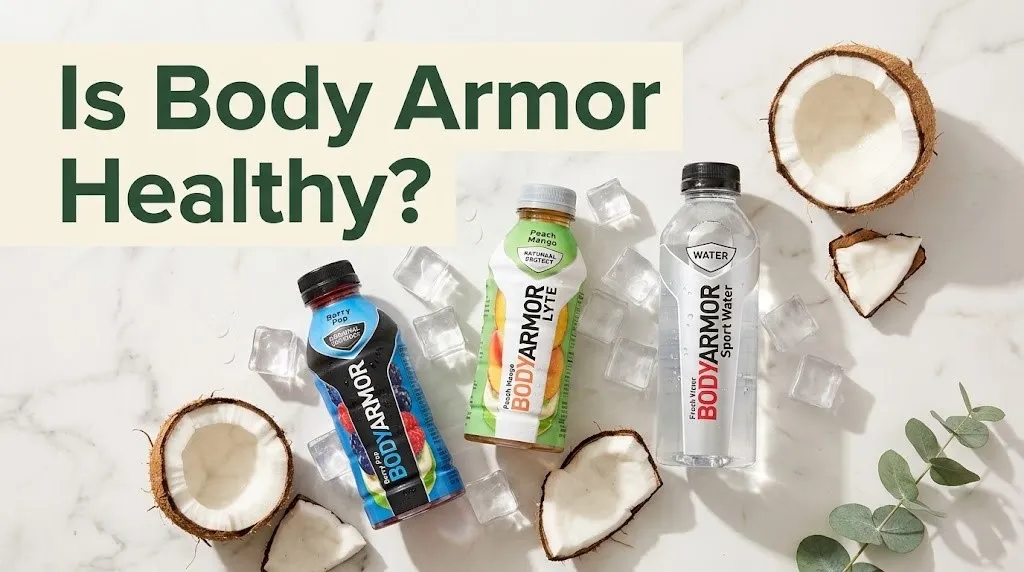
BODYARMOR’s core strengths are its coconut water base, its meaningful potassium content (700mg per 16 fl oz in the original), and its lack of artificial colors and flavors. Those are genuine differentiators from older sports drinks.
But the sugar load is real. And it doesn’t disappear because the packaging is made of recycled plastic or uses the word “natural” prominently.
Key factors that determine whether BODYARMOR is healthy for you specifically:
- Your daily activity level and sweat rate
- Which BODYARMOR product you choose (five lines exist with very different nutrition profiles)
- How frequently you drink it and what else you consume that day
- Whether you have a medical condition affected by sugar, potassium, or carbohydrate intake
What Is BODYARMOR Drink Made Of?
BODYARMOR drinks are made primarily from filtered water, coconut water (Cocos nucifera fruit water), pure cane sugar, and a blend of B vitamins, vitamin C (ascorbic acid), and electrolyte minerals. The brand positions coconut water as a functional ingredient that provides naturally occurring potassium, rather than synthetic mineral salts alone.
The ingredient list for the original BODYARMOR SuperDrink includes: filtered water, coconut water, pure cane sugar, citric acid, dipotassium phosphate, magnesium oxide, ascorbic acid, niacinamide, D-calcium pantothenate, pyridoxine hydrochloride, cyanocobalamin, natural flavors, and vegetable juice (for color).
There are no artificial dyes, which sets it apart from first-generation sports drinks that used petroleum-derived colorants like Yellow 5 and Red 40. The color comes from vegetable juice concentrate.
The potassium primarily originates from two sources: the coconut water itself and added dipotassium phosphate. Both are legitimate electrolyte contributors. Coconut water is not a decoration on the label; it is a genuine component of the formulation.
The brand is now owned by The Coca-Cola Company, which completed its full acquisition in 2021. The formulations have remained consistent with pre-acquisition versions, though it is always reasonable to check current labels, as large beverage companies periodically adjust ingredient profiles.
Is Body Armor Drink Healthy for Everyday Use?
Drinking BODYARMOR every day is not ideal for most adults, primarily because of the recurring added sugar load from the original formulation. Daily consumption of the full-sugar version adds up quickly against established dietary guidance.
According to the USDA Dietary Guidelines for Americans 2020 to 2025, added sugars should represent no more than 10% of total daily calories. For a 2,000-calorie diet, that cap is 50 grams per day. One BODYARMOR original covers 64% of that daily limit before you have eaten a single meal.
For people who train intensely on a daily basis, the picture shifts. Athletes losing significant electrolytes through sweat can justify the caloric and sugar intake as part of a deliberate fueling strategy. For everyone else, frequent consumption of the original formula can contribute to excess sugar intake in a diet that likely already includes sugar from other sources.
The BODYARMOR LYTE line (discussed fully in its own section) changes this calculation meaningfully, using erythritol and stevia leaf extract to reduce sugar to 3 grams per 16-ounce bottle. That makes daily use far more defensible for non-athletes.
If you want the electrolyte benefit without the sugar burden, BODYARMOR LYTE or BODYARMOR Water are the two product lines worth evaluating for daily habits. The original formulation is better reserved for post-workout recovery or high-sweat situations.
Key Takeaway: BODYARMOR can be a smart sports drink choice in active contexts, but the original formulation’s sugar content makes it a poor fit for daily non-athletic consumption, while the LYTE line offers a meaningfully lower-sugar alternative worth considering.
BODYARMOR Nutrition Facts: Calories, Sugar, and Electrolytes
A standard 16-ounce bottle of BODYARMOR SuperDrink Original contains 130 calories, 32 grams of total sugar, 700mg of potassium, 70mg of sodium, and 40mg of magnesium. These figures come directly from the BODYARMOR nutrition label and represent the most common bottle size sold at retail.
Here is a full comparison across the main BODYARMOR product lines:
| Product | Serving Size | Calories | Total Sugar | Potassium | Sodium |
|---|---|---|---|---|---|
| BODYARMOR SuperDrink Original | 16 fl oz | 130 | 32g | 700mg | 70mg |
| BODYARMOR LYTE | 16 fl oz | 20 | 3g | 700mg | 60mg |
| BODYARMOR Flash | 12 fl oz | 90 | 22g | 460mg | 50mg |
| BODYARMOR SuperDrink (28 fl oz) | 28 fl oz | 220 | 54g | 1,190mg | 110mg |
| BODYARMOR SportWater | 16 fl oz | 0 | 0g | 0mg | 0mg |
The 28-ounce large bottle deserves attention. Many convenience store customers reach for the bigger bottle assuming it is one serving. It is not. Drinking the full 28 fl oz in one sitting means 54 grams of sugar in a single drink, which exceeds the AHA daily recommendation for both men and women.
Sodium content is deliberately low across all BODYARMOR products. This is a debated formulation choice. Sports nutrition research, including studies published in the Journal of the International Society of Sports Nutrition, suggests that adequate sodium replacement during prolonged exercise (beyond 60 to 90 minutes) is important for preventing hyponatremia (dangerously low blood sodium). BODYARMOR’s sodium levels may be insufficient for endurance athletes in high-heat conditions.
How Much Sugar Is in BODYARMOR?
BODYARMOR Original contains 32 grams of sugar per 16-ounce bottle, all of it from pure cane sugar and the naturally occurring sugars in coconut water. There are no high-fructose corn syrup variants in the current lineup.
For context, a 12-ounce can of Coca-Cola contains 39 grams of sugar. BODYARMOR Original, at 32 grams per 16 ounces, is meaningfully lower per ounce but still substantial. The comparison to soda is worth making because some consumers assume a sports drink is categorically healthier than soda, when the sugar profiles can overlap considerably.
The sugar in BODYARMOR comes from cane sugar (sucrose, a 50/50 split of glucose and fructose). This is not meaningfully different metabolically from other common sugar sources. The fact that it is labeled “pure cane sugar” rather than “high-fructose corn syrup” is a sourcing distinction, not a health distinction, when consumed in comparable quantities.
According to Harvard T.H. Chan School of Public Health research, regular consumption of sugar-sweetened beverages is associated with increased risk of type 2 diabetes, cardiovascular disease, and weight gain. This association applies regardless of whether the sugar source is corn syrup or cane sugar.
One note for people following a vegan or plant-based diet: most commercially produced cane sugar in the U.S. is processed using bone char filtration. BODYARMOR does not currently publish a statement confirming bone-char-free sugar sourcing, so strict vegans may wish to contact the brand directly for clarification.
What Vitamins and Minerals Are in BODYARMOR?
BODYARMOR contains vitamin C (ascorbic acid) and four B vitamins: niacinamide (vitamin B3), D-calcium pantothenate (vitamin B5), pyridoxine hydrochloride (vitamin B6), and cyanocobalamin (vitamin B12), along with the electrolyte minerals potassium, sodium, and magnesium.
Here is what each of those actually does in the body:
| Nutrient | Technical Name | Primary Function |
|---|---|---|
| Vitamin C | Ascorbic acid | Antioxidant, collagen synthesis, immune support |
| Vitamin B3 | Niacinamide | Energy metabolism, DNA repair |
| Vitamin B5 | D-calcium pantothenate | Fatty acid synthesis, energy metabolism |
| Vitamin B6 | Pyridoxine hydrochloride | Amino acid metabolism, neurotransmitter production |
| Vitamin B12 | Cyanocobalamin | Red blood cell formation, neurological function |
| Potassium | Potassium (from coconut water + dipotassium phosphate) | Fluid balance, muscle contraction, heart rhythm |
| Sodium | Sodium (from trace sources) | Fluid balance, nerve signaling |
| Magnesium | Magnesium oxide | Muscle function, enzyme activity, energy production |
The B vitamins in BODYARMOR represent between 10% and 25% of the recommended daily value per bottle, depending on the specific B vitamin. According to the NIH Office of Dietary Supplements, most adults consuming a varied diet already meet their B vitamin requirements through food. The added B vitamins in BODYARMOR are a genuine functional contribution for someone with a dietary gap, but they are not a substitute for a nutritious diet.
Key Takeaway: The vitamin and mineral profile in BODYARMOR is real and functional, but the electrolyte content is more meaningful than the vitamin additions for most people, and the original formulation’s sugar cost should factor into any honest assessment of those benefits.
BODYARMOR LYTE: Is It Healthier Than the Original?
BODYARMOR LYTE is meaningfully lower in calories and sugar than the original, making it the better daily choice for people who want BODYARMOR’s electrolyte profile without the full sugar load. It contains 20 calories and 3 grams of sugar per 16-ounce bottle, compared to 130 calories and 32 grams in the original.
BODYARMOR LYTE achieves its reduced sugar content by replacing most of the cane sugar with erythritol and stevia leaf extract (specifically, Rebaudioside A, the purified form of steviol glycoside from Stevia rebaudiana). Erythritol is a sugar alcohol that provides minimal calories and does not raise blood glucose levels in the same way sucrose does. Stevia-based sweeteners like Rebaudioside A are generally recognized as safe by the FDA.
Some people experience mild digestive discomfort from erythritol, particularly at higher doses. A single 16-ounce BODYARMOR LYTE contains a modest amount that most adults tolerate without issue. People with irritable bowel syndrome or high sensitivity to fermentable carbohydrates (FODMAPs) may wish to start with a smaller portion.
Importantly, BODYARMOR LYTE maintains the same potassium level (700mg per 16 fl oz) as the original. The electrolyte function is preserved. The caloric and sugar reduction is genuine.
For anyone evaluating BODYARMOR for daily or frequent use, LYTE is the version that holds up better against standard dietary guidance. The flavor range is slightly narrower than the original line, but the trade-off in sugar savings is worth it for most non-elite-athletes.
Is BODYARMOR Water Healthy?
BODYARMOR SportWater is simply filtered water with an adjusted alkaline pH (approximately pH 9+) and no added electrolytes, vitamins, sugars, or calories. It is water. The health claims attached to its alkaline pH are not supported by substantial clinical evidence.
The alkaline water segment has grown substantially as a marketing category. The premise is that higher pH water neutralizes excess acid in the body and improves hydration efficiency. The Mayo Clinic and the broader consensus among registered dietitians are that the human body tightly regulates blood pH through the lungs and kidneys regardless of the pH of water consumed. Drinking alkaline water does not meaningfully alter blood pH in healthy individuals.
That said, BODYARMOR SportWater is still water. Replacing sugary beverages with it is a straightforward improvement. Choosing it over other bottled waters comes down to taste preference and cost, not a measurable health advantage.
People with healthy kidney function who prefer the taste of alkaline water and find it encourages them to drink more fluids overall will not be harmed by it. Those with compromised kidney function who are managing blood pH for medical reasons should follow the guidance of their treating nephrologist rather than selecting alkaline water independently.
BODYARMOR Water contains no sugar, no calories, no sodium, and no potassium. It adds nothing to your diet and replaces nothing. For pure hydration without any nutrition label consideration, it is a perfectly acceptable option.
Is Body Armor Good for Hydration?
BODYARMOR is effective at supporting hydration, particularly during or after physical activity, because its potassium content (700mg per 16 fl oz) helps the body retain and distribute fluids more efficiently than plain water alone. Electrolytes work by maintaining the osmotic balance that keeps water inside cells where it is needed.
Think of electrolytes the way a sponge works in a bowl of water. Without the right mineral balance, your body can absorb plenty of fluid but struggle to hold it in the right compartments at the cellular level. Electrolytes are the structural element that makes absorption efficient.
Plain water is adequate for hydration in most everyday situations. The Academy of Nutrition and Dietetics notes that electrolyte replacement becomes more relevant when exercise extends beyond 60 minutes, when sweat rates are high due to heat or intensity, or when someone is recovering from vomiting or diarrhea that causes electrolyte loss.
BODYARMOR’s potassium-to-sodium ratio is notably potassium-heavy. The original delivers 700mg potassium but only 70mg sodium. During prolonged sweating, sodium loss is actually greater than potassium loss. This means BODYARMOR is better suited as a general hydration drink than a precision electrolyte replacement tool for serious endurance athletes.
For everyday hydration without heavy sweat loss, BODYARMOR LYTE offers the electrolyte benefit without the sugar cost. For high-intensity, prolonged exercise, a drink with more sodium (such as formulations closer to the WHO Oral Rehydration Solution standard) may serve better.
Key Takeaway: BODYARMOR hydrates effectively through its electrolyte content, but its low sodium relative to potassium makes plain water or higher-sodium formulations more appropriate for endurance athletes and illness recovery situations.
Is Body Armor Drink Good for Working Out?
BODYARMOR can support workout hydration for moderate to high-intensity exercise lasting 45 minutes or more, but it is unnecessary and calorically excessive for shorter or lower-intensity sessions. A 30-minute walk does not generate enough electrolyte loss to require a 130-calorie sports drink.
A study published in the Journal of the International Society of Sports Nutrition found that carbohydrate-electrolyte beverages outperformed plain water for performance maintenance during exercise lasting longer than 60 minutes at moderate-to-high intensity. BODYARMOR’s formulation fits within this category.
For strength training sessions under 60 minutes in a temperature-controlled gym, water remains the appropriate hydration choice for most people. The added sugar from BODYARMOR Original does not contribute meaningfully to performance in this context and simply adds to the day’s caloric intake.
Post-workout, the carbohydrate content of BODYARMOR Original (32 grams of sugar per 16 fl oz) can contribute to glycogen replenishment within the recommended 30 to 60 minute post-exercise window. This is a legitimate use case that aligns with sports nutrition guidance.
Athletes who are managing caloric intake closely should weigh whether the sugar in BODYARMOR Original serves their goals or works against them. BODYARMOR LYTE provides the electrolyte support with negligible carbohydrate contribution, making it a better fit for people in a caloric deficit.
Diabetic athletes should consult with a registered dietitian who specializes in sports nutrition before incorporating BODYARMOR Original into a workout routine, as the carbohydrate load requires careful management around insulin and blood glucose monitoring.
Is Body Armor Good When You’re Sick?
BODYARMOR can help with mild fluid and electrolyte replacement when someone is sick with a condition that causes vomiting, diarrhea, or significant fluid loss, but it is not a medical rehydration solution and should not replace clinical rehydration therapy in serious cases. The distinction matters.
The World Health Organization developed the Oral Rehydration Solution (ORS) standard specifically for rehydration during illness, particularly gastrointestinal illness. The ORS formula prioritizes a specific sodium-to-glucose ratio that optimizes intestinal absorption. BODYARMOR’s low sodium content (70mg per 16 fl oz) falls well below the sodium levels in standard ORS formulations (approximately 520mg sodium per liter).
For mild illness like a common cold or mild upset stomach, BODYARMOR LYTE can provide palatable fluid intake and some electrolyte support. The lower sugar content makes it easier on a sensitive stomach than the full-sugar original.
Children under five experiencing vomiting or diarrhea should receive pediatric oral rehydration solutions such as Pedialyte rather than sports drinks. Sports drinks, including BODYARMOR, have inappropriate sodium-to-sugar ratios for managing childhood gastrointestinal illness. If a child is showing signs of dehydration (sunken eyes, dry mouth, absence of tears, or reduced urination), a pediatrician should be consulted promptly rather than relying on any sports drink as the primary intervention.
For adults recovering from mild food poisoning or a stomach virus with no signs of severe dehydration, alternating BODYARMOR LYTE with water can be reasonable. Beyond mild illness, electrolyte solutions formulated to clinical standards are more appropriate.
BODYARMOR vs Gatorade: Which Is Healthier?
In a direct comparison, BODYARMOR Original contains more potassium and fewer artificial ingredients than Gatorade Thirst Quencher, but Gatorade has more sodium, which is more relevant for serious athletes managing sweat-related electrolyte loss. Neither is categorically healthier; they serve overlapping but distinct hydration needs.
| Metric | BODYARMOR Original (16 fl oz) | Gatorade Thirst Quencher (16 fl oz) |
|---|---|---|
| Calories | 130 | 100 |
| Total Sugar | 32g | 25g |
| Sodium | 70mg | 270mg |
| Potassium | 700mg | 75mg |
| Artificial Colors | No | Yes (in original formulas) |
| Artificial Sweeteners | No | No (in Thirst Quencher) |
| Coconut Water Base | Yes | No |
| B Vitamins | Yes | No |
Gatorade Thirst Quencher has 270mg of sodium per 16 fl oz versus BODYARMOR’s 70mg. During prolonged endurance exercise in heat, sodium replacement is the higher-priority electrolyte for most athletes. Gatorade’s formulation more closely matches sweat electrolyte concentrations in that specific dimension.
BODYARMOR wins on potassium (700mg vs Gatorade’s 75mg). Potassium supports fluid balance and muscle function, and many American adults are below the recommended daily intake of 3,400mg (men) and 2,600mg (women) according to the USDA Dietary Guidelines. That gap is worth noting.
For a casual exerciser focused on general health, BODYARMOR LYTE beats both regular BODYARMOR and regular Gatorade on the sugar metric. Gatorade G2 (the reduced-calorie version) competes more directly with BODYARMOR LYTE. Neither product is necessary for office workers or light exercisers who can meet hydration needs with water.
Key Takeaway: BODYARMOR beats Gatorade on potassium and ingredient cleanliness, Gatorade beats BODYARMOR on sodium replacement for endurance exercise, and neither beats plain water for everyday non-athletic hydration.
Is Body Armor Healthy for Kids?
BODYARMOR is not formulated for children, and the original version’s sugar content makes it an inappropriate daily beverage choice for most children and adolescents. The American Academy of Pediatrics advises that sports drinks should be reserved for physically active children involved in prolonged, vigorous exercise, not for general hydration or as a replacement for water.
Children are more susceptible to overconsumption of sweet beverages because the palatability of sweetened drinks is high and natural thirst-cues do not always override preference for sweet flavors. A child who drinks BODYARMOR Original regularly is receiving a significant and recurring sugar load that contributes to the overall added sugar burden in a diet already likely to contain other sweet foods and drinks.
The Centers for Disease Control and Prevention identifies sugar-sweetened beverage consumption in children as a contributing factor to childhood obesity, dental caries, and early indicators of metabolic dysfunction. Sports drinks are included in this category when consumed outside of genuine athletic need.
For children who participate in organized sports with practices or games lasting more than 60 minutes in warm conditions, BODYARMOR LYTE is a more defensible option than the original formulation. However, even BODYARMOR LYTE is not necessary if adequate water and normal food intake are maintained.
Children with kidney conditions, diabetes, or cardiac issues should not consume any sports drink, including BODYARMOR, without specific clearance from their treating physician, given the potassium content from coconut water.
Plain water remains the appropriate default hydration choice for children in all non-elite-athletic contexts. Flavored water, diluted fruit juice, or low-sugar electrolyte solutions are preferable to regular sports drinks for everyday family use.
Can People With Diabetes Drink BODYARMOR?
People managing type 2 diabetes should approach BODYARMOR Original with significant caution due to its 32 grams of rapidly absorbed carbohydrates per 16-ounce bottle, which can cause a notable spike in blood glucose levels. The sugar in BODYARMOR is sucrose, which digests quickly and enters the bloodstream without the slowing effect of dietary fiber.
The American Diabetes Association recommends that people with diabetes minimize sugar-sweetened beverage consumption as a primary dietary strategy. BODYARMOR Original falls squarely into this category.
BODYARMOR LYTE is a substantially different situation. With only 3 grams of sugar per 16-ounce bottle and its remaining sweetness derived from erythritol and stevia leaf extract (Rebaudioside A), it has a negligible effect on blood glucose in most people with type 2 diabetes. Erythritol is a sugar alcohol that is mostly absorbed in the small intestine and excreted unchanged, contributing essentially no glucose to the bloodstream.
However, individual responses to sugar alcohols vary. Anyone managing diabetes with medication or insulin should test their blood glucose response to BODYARMOR LYTE as they would with any new food or beverage introduction, since individual metabolic responses differ.
The potassium content also requires attention for people with diabetes who have diabetic nephropathy (kidney disease related to diabetes). Kidney disease affects potassium regulation, and consistent high-potassium intake can become medically problematic. A registered dietitian specializing in diabetes management is the appropriate person to help a diabetic patient determine whether any BODYARMOR product fits safely within their dietary plan.
How Much BODYARMOR Should You Drink Per Day?
For most healthy adults who are not engaged in prolonged physical activity, one 16-ounce BODYARMOR Original per day is at or near the upper limit of what can reasonably fit within dietary sugar guidelines, and zero bottles per day is perfectly fine from a hydration standpoint. Water remains the only beverage the body genuinely requires for hydration.
The AHA’s added sugar limits (25g per day for women, 36g per day for men) mean that one bottle of BODYARMOR Original already accounts for the full daily sugar allotment for women. If the rest of your diet contains any added sugar at all, one bottle of original BODYARMOR means you have exceeded the recommended limit before your first meal.
Practical guidance by context:
- Sedentary adults: BODYARMOR Original is unnecessary. If you want the electrolyte benefit, BODYARMOR LYTE is the only version worth considering, at one bottle or less per day.
- Recreational exercisers (under 60 minutes of moderate activity): Water is sufficient. BODYARMOR LYTE is an acceptable occasional option. BODYARMOR Original adds more sugar than the activity level justifies.
- Athletes training intensely for 60 to 120 minutes: One 16-ounce BODYARMOR Original during or immediately after exercise is defensible. More than one bottle in a day adds significant sugar without proportional electrolyte benefit.
- Endurance athletes (over 90 minutes of continuous exercise): BODYARMOR may benefit from supplementation with higher-sodium electrolyte products. Relying solely on BODYARMOR for long-duration events risks under-replacing sodium.
Quick Tip:
- Match the BODYARMOR product to your actual activity level, not to marketing imagery of elite athletes
- Check the label before buying the large format bottle; 28 fl oz contains 54 grams of sugar and is not a single serving for casual drinkers
- Pair BODYARMOR LYTE with a real food source of complex carbohydrates after harder workouts rather than relying on the sugar in BODYARMOR Original for recovery
Key Takeaway: One bottle of BODYARMOR Original per day already meets or exceeds the AHA added sugar limit for most women, making quantity management as important as product selection when deciding how BODYARMOR fits into your diet.
Frequently Asked Questions About BODYARMOR Drink
Is BODYARMOR better for you than Gatorade?
BODYARMOR contains significantly more potassium and no artificial dyes, while Gatorade Thirst Quencher has nearly four times more sodium per serving.
For general daily hydration and light activity, BODYARMOR LYTE compares favorably.
For prolonged endurance exercise where sodium replacement is the priority, Gatorade’s sodium content is a more relevant advantage.
Does BODYARMOR have a lot of sugar?
BODYARMOR Original contains 32 grams of sugar per 16-ounce bottle, which exceeds the American Heart Association’s daily added sugar limit for women in one drink.
The BODYARMOR LYTE formulation contains only 3 grams of sugar per 16 fl oz, making it a substantially different product on this metric.
Context and activity level determine whether either amount is appropriate for a given person.
Can I drink BODYARMOR every day?
Drinking BODYARMOR LYTE daily is considerably more defensible than daily consumption of BODYARMOR Original, given the sharp difference in sugar content.
Daily consumption of BODYARMOR Original is not recommended for sedentary or lightly active adults, as it consistently uses up a significant portion of the daily added sugar allowance.
For athletes training daily at moderate to high intensity, occasional daily use of the original formulation within a well-managed diet is less problematic.
Is BODYARMOR LYTE actually healthier?
Yes, BODYARMOR LYTE is a materially healthier option than BODYARMOR Original for most people, delivering the same potassium content with only 3 grams of sugar and 20 calories per 16-ounce bottle.
The sweetness comes from erythritol (a sugar alcohol) and Rebaudioside A (a purified stevia-derived sweetener), both of which have minimal impact on blood glucose.
People with sensitivity to sugar alcohols may experience mild digestive discomfort, but the trade-off is a dramatically lower sugar burden.
Is BODYARMOR safe for kids to drink?
BODYARMOR Original is not recommended as a regular beverage for children because of its sugar content and its formulation for adult athletic use.
The American Academy of Pediatrics recommends reserving sports drinks for children engaged in prolonged, vigorous physical activity rather than as an everyday drink.
BODYARMOR LYTE has lower sugar, but water and age-appropriate beverages remain the standard recommendation for most children outside of extended athletic activity.
The Bottom Line on BODYARMOR
BODYARMOR is a legitimately better-formulated sports drink than many older options: no artificial dyes, real coconut water, meaningful potassium, and a low-sugar alternative in BODYARMOR LYTE. Those are real positives.
But the original formulation’s 32 grams of sugar per bottle is a number you cannot ignore. Drink it after an hour of hard training and it earns its place. Drink it at your desk because the label has a palm tree on it, and you are just adding sugar to your day without the physical activity that would make it useful.
Match the product to your life honestly. Reach for BODYARMOR LYTE if you want the electrolyte benefit without the sugar cost. Reach for plain water if you are not exercising. And save the original for the days when you have genuinely earned it.