Yes, Merrick dog food is a high-quality premium brand that uses regionally sourced, USDA-inspected ingredients and formulates to AAFCO standards, making it a good choice for many dogs. The line’s richness and high protein density, however, mean it is not a universally ideal fit for every breed or life stage.
You need to match the formula to the dog standing in front of you. A sedentary, neutered Labrador with a sensitive stomach has entirely different nutritional requirements than a high-energy working Border Collie. Merrick’s catalog is diverse enough to cover both, but picking the wrong line will cause digestive upset or unnecessary weight gain.
The brand has an above-average safety record, a transparent sourcing chain, and a long-standing reputation for using real whole foods in its recipes. This review walks through the ingredient labels, the grain-free safety question, the recall timeline, and exactly how to transition your dog onto the food without the three-day diarrhea nightmare that often happens when owners switch to a richer kibble too quickly.
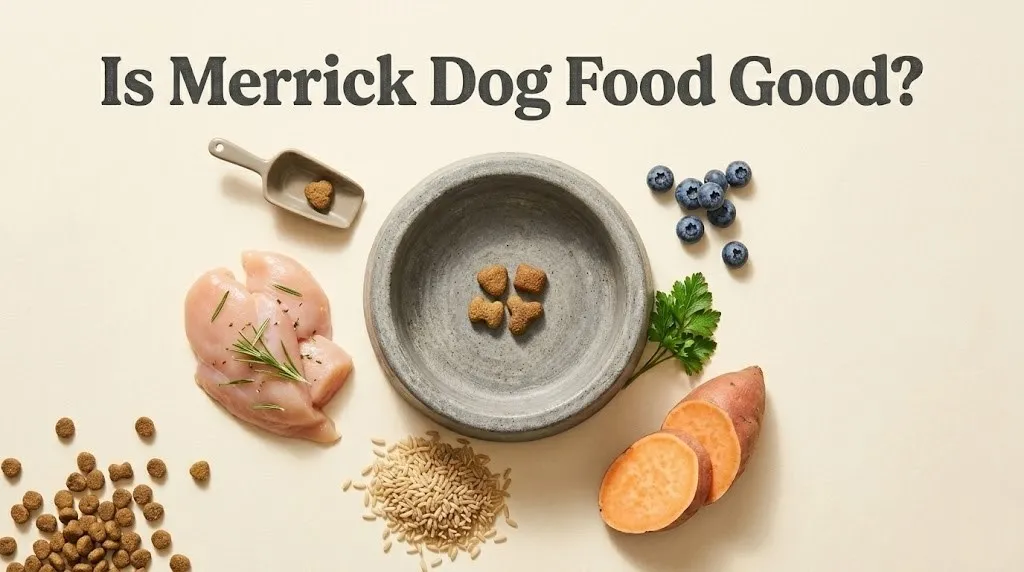
Is Merrick Dog Food Good?
Merrick produces a nutritionally dense, premium food that rates well above the average grocery store brand due to its use of named meat meals, whole vegetables, and chelated minerals, but its high fat content and calorie density require careful portion control. The brand operates out of Hereford, Texas, in kitchens that are subject to the same safety audits as human-grade facilities.
The “good” rating rests on the absence of ambiguous mystery meats. You will not find “poultry by-product meal” or “animal fat” on a Merrick label. You will see deboned chicken, chicken meal, or salmon meal as the primary protein sources. This specificity matters because it allows you to run accurate elimination diets if your dog develops a poultry allergy, something you cannot do with a generic “meat meal” bag.
A 2026 update from the Cummings School of Veterinary Medicine at Tufts University continues to emphasize that price does not perfectly predict quality in pet food, but transparency does. Merrick publishes its full guaranteed analysis and ingredient sourcing origin. That level of disclosure is a positive signal that the brand is not hiding behind proprietary blends.
However, if your dog suffers from chronic pancreatitis or has a history of hyperlipidemia, the high fat content in the Backcountry or Grain Free lines is a direct risk factor. A vet-guided diet like a low-fat veterinary therapeutic formula might be safer than any over-the-counter premium brand. The key is matching the biologic state of the pet to the nutrient profile of the bag.
Merrick Dog Food Reviews 2026
Aggregated 2026 consumer and expert reviews rank Merrick consistently between 4 and 4.5 stars out of 5, with the highest scores concentrated on the Classic Healthy Grains and Backcountry Raw Infused lines. The most common customer criticism is not about quality but about the sudden digestive intolerance some dogs experience during an improperly managed switch.
Expert reviews from board-certified veterinary nutritionists often praise Merrick’s inclusion of glucosamine and chondroitin in their senior and large-breed formulas. These are not vague sprinkles. They are measured inclusions meant to support articular cartilage in the joints. For large-breed dogs predisposed to hip dysplasia, this is a functional nutritional benefit that goes beyond simply hitting the minimum protein percentage.
The 2026 review cycle has seen a notable shift back toward grain-inclusive formulas. The consumer panic over grains has subsided, and Merrick’s Ancient Grains blend now enjoys higher purchase velocity than the Grain Free ranch flavors in many markets. This aligns with the broader veterinary community’s cautious stance on pulse-legume-heavy recipes.
Negative reviews generally fall into two buckets: the price point is too steep for multi-dog households, and the kibble in some stew-based cans can be inconsistent in size. The texture variation in wet food is a known manufacturing quirk of using real shredded meat that settles differently in the retort cooking process. It is a cosmetic issue, not a nutritional one.
Merrick Dog Food Ingredients
Merrick ingredients begin with a named deboned meat, followed by concentrated meat meals, and include whole produce like sweet potatoes, peas, apples, and blueberries, creating a formula profile that mimics a raw prey diet without the pathogen risk. The first five ingredients on the label drive the nutritional value, and in most Merrick bags, those first slots are dominated by animal-sourced protein and fat.
The ingredient panels split into two philosophical camps: the Classic Healthy Grains line uses brown rice, barley, and oatmeal as the carbohydrate binding agents. The Grain Free line swaps those grains for potatoes and a heavier load of legumes like chickpeas and lentils. Legumes are not toxic. They are nutrient-dense complex carbs. But when they become the primary binder, they contribute a massive plant-protein load that can skew the amino acid profile away from the methionine and cysteine that dogs require for endogenous taurine synthesis.
Chelated minerals appear on every label. You will see zinc proteinate or copper proteinate. These are mineral molecules wrapped in amino acid chains to increase intestinal absorption. Cheap foods use oxide-based minerals. Merrick spends the extra money on the bioavailable forms. This is a significant supply chain cost, and it is exactly where the premium pricing delivers tangible metabolic value.
Also, Merrick avoids artificial colors, flavors, and preservatives. The preservation comes from mixed tocopherols, a vitamin E-based antioxidant system. It keeps the chicken fat from oxidizing without resorting to ethoxyquin or BHA. That single choice removes a long-tail carcinogenic risk from the daily bowl.
| Ingredient Category | Merrick Source Examples | Why It Matters |
|---|---|---|
| Primary Protein | Deboned Chicken, Texas Beef, Salmon | Specifies the animal species, supports muscle epaxial integrity. |
| Protein Concentrate | Chicken Meal, Salmon Meal | Dehydrated protein, dense amino acid payload without water weight. |
| Carbohydrate/Grain | Brown Rice, Quinoa, Oatmeal (Classic) | Provides steady glucose release; no filler corn or wheat. |
| Carbohydrate/Legume | Peas, Sweet Potatoes, Lentils (Grain Free) | Binds the kibble; watch for excessive pea protein concentrate. |
| Functional Fats | Salmon Oil, Flaxseed | Delivers DHA and EPA for skin barrier and neural function. |
Is Merrick High Protein Dog Food?
Yes, Merrick is a genuinely high-protein dog food, with many dry formulas offering a crude protein content between 30 and 38 percent on a guaranteed analysis basis, translating to roughly 28 to 34 percent protein on a dry matter basis. This level of protein density categorically places it in the performance-food tier.
A dog is a facultative carnivore. Its metabolic pathways are optimized for gluconeogenesis, the process of generating blood glucose from amino acids rather than relying on dietary carbohydrates. A high-protein diet supports lean body mass retention, particularly in senior dogs who are at risk for age-related sarcopenia, or muscle wasting. The amino acid leucine, abundant in chicken meal, directly stimulates muscle protein synthesis via the mTOR pathway.
However, “high protein” does not automatically mean “healthy for my specific dog.” A dog with compromised renal function, while dietary protein was once incorrectly blamed for kidney disease, does need precisely controlled phosphorus levels if renal failure is advanced. Merrick’s protein levels come with a correspondingly high phosphorus load from the bone content in the meat meals. For a dog with a glomerular filtration rate in a steep decline, a pharmacy-controlled veterinary diet is safer than guessing with a high-phosphorus premium kibble.
The high protein content also elevates the calorie density. Merrick formulas often pack 400 to 450 kilocalories per cup. You must size the portion based on the dog’s resting energy requirement, not the scoop recommendation on the bag. Overfeeding a high-protein, high-fat kibble is the fastest way to create an obese dog with perfectly shiny fur.
Key Takeaway: Merrick uses real, named meats and bioavailable chelated minerals, which creates a nutrient-dense kibble that outperforms generic grocery brands, but its richness demands precise portion control and a careful, slow transition.
Is Merrick Grain Free Safe?
Merrick grain-free food is safe for the majority of dogs, but the continued 2026 FDA investigation into non-hereditary dilated cardiomyopathy means you must select grain-free formulas with a clear awareness of the taurine and legume connection. The safety is not a binary “yes” or “no.” It is a question of ingredient synergy.
The primary suspect in the DCM case is not the absence of grains. It is the over-inclusion of pulse legumes like peas and lentils, which now crowd the ingredient lists of many boutique grain-free formulas. These legumes contain oligosaccharides and anti-nutritional factors that can, in certain genetically susceptible dogs, interfere with the synthesis or bioavailability of taurine. Taurine is an amino acid that regulates cardiac contractility. When myocardial taurine levels drop, the heart muscle can thin and weaken, leading to DCM.
Merrick’s response to the 2023 to 2025 wave of FDA updates has been to formulate its grain-free lines with added taurine and L-carnitine directly in the recipe. The company also maintains that their recipes are not “legume-first.” The first several ingredients are still animal proteins and fats. The risk is significantly lower in a formula where chicken fat and chicken meal push a small amount of pea protein to the fourth or fifth slot, compared to a formula where peas are the second ingredient.
If your dog has a confirmed grain allergy, which is rarer than poultry or beef allergies, Merrick’s grain-free recipes remain a viable solution. For a breed with a known genetic predisposition to DCM, like a Doberman Pinscher or a Golden Retriever, the cautious 2026 approach is to choose the Classic Healthy Grains line and eliminate the legume variable entirely.
Where Is Merrick Dog Food Made?
Merrick dog food is manufactured in the company’s owned kitchen in Hereford, Texas, a facility that adheres to Good Manufacturing Practices and operates under a USDA inspection seal that matches the standard for human food production. This location specificity is a critical quality-control attribute.
Co-packing is rampant in the pet food industry. Many boutique brands you see advertised on social media are made in a generic co-packing facility that rotates between a dozen different recipes from a dozen different brands on the same production line. Cross-contamination risk is higher in those environments. Merrick’s single-ownership kitchen allows for a strict internal sanitation protocol and a closed-loop supply chain.
The ingredients are sourced primarily from local growers and ranchers in the Texas region. The “farm-to-bowl” marketing phrase gets overused, but in this case, the beef in the Lone Star Ranch line literally comes from cattle raised within a day’s trucking distance of the plant. A short supply chain reduces the fuel oxidation cost of transport and ensures the animal proteins enter the extrusion process fresh, not as a frozen, months-old commodity block.
The Hereford kitchen also manufactures the raw-infused freeze-dried pieces that go into the Backcountry line. The raw coating process is a cold-form technique that applies the freeze-dried raw powder after the kibble is extruded and cooked, preserving the fragile enzymes and probiotic cultures that heat would otherwise destroy.
Merrick Dog Food Recall History
Merrick has maintained a relatively clean recall record, with its most notable incident occurring in 2018 for elevated beef thyroid hormone levels, and minor voluntary withdrawals preceding that in 2011 and 2010, but no major pathogenic events in the past half-decade. The brand’s 2020s safety record is one of the stronger ones in the premium space.
The 2018 recall was specific to the beef-based treats and chews. The issue was not Salmonella or aflatoxin. It was the presence of excessive naturally occurring thyroid hormone from the beef gullet tissue used in the treats. Dogs ingesting high levels of exogenous thyroid hormone displayed symptoms of hyperthyroidism, including increased thirst, weight loss, and restlessness. Merrick quickly pulled the items and reformulated the treat line to trim the specific glandular tissues that concentrate the hormone.
The 2011 and 2010 recalls are ancient history in product cycles but are worth noting for full transparency. Those involved potential Salmonella contamination, which is the bogeyman of every dry pet food facility. Since then, Merrick has heavily invested in a “kill step” thermal processing protocol and finished product testing. They publish their testing panels with lot numbers for traceability.
No pathogenic recalls have occurred in the 2020s. For a raw-infused brand, that is a notable achievement, especially given that the freeze-dried raw coating process inherently carries a higher risk of listeria cross-contamination if the post-production environment is not stringently sanitized.
Best Merrick Dog Food for Puppies
The best Merrick puppy food is the Classic Healthy Grains Puppy Recipe, which provides the specific 1.2-to-1 calcium-to-phosphorus ratio that growing large-breed skeletons require, along with DHA for neural development. Puppy nutrition is not just miniaturized adult food. It is a precise developmental engineering challenge.
Large-breed puppies like Great Danes, Mastiffs, or German Shepherds grow at an explosive rate. If the calcium-to-phosphorus ratio in the food exceeds 1.4 to 1, or if the absolute calorie intake is too high, the rapid bone growth can outpace the skeletal mineralization. The result is hypertrophic osteodystrophy (HOD) or panosteitis, painful inflammatory bone diseases. Merrick’s puppy formula restrains the calcium and balances the mineral profile specifically to avoid this.
The inclusion of DHA from salmon oil is non-negotiable for a puppy. Docosahexaenoic acid is a long-chain omega-3 fatty acid that integrates into the lipid bilayer of neural cell membranes in the retina and the cerebral cortex. Puppies fed DHA-supplemented diets demonstrate improved trainability and cognitive function in standardized testing.
For small-breed puppies, the small kibble size of the Merrick Puppy Plate wet food works well for tiny mouths. Canned puppy food also has a higher moisture content, which helps prevent the dehydration that can quickly crash a small puppy’s blood glucose. You should feed a small-breed puppy three to four small meals a day to avoid hypoglycemic events, and a spoonful of the wet pate stabilizes them between dry kibble snacks.
| Puppy Size | Recommended Merrick Line | Primary Reason |
|---|---|---|
| Small Breed (<20 lbs) | Puppy Plate (Wet) / Lil’ Plates Grain Free | Kibble size appropriate; high caloric density for small stomachs. |
| Medium Breed (20-50 lbs) | Classic Healthy Grains Puppy | Balanced calcium for steady growth; DHA for brain development. |
| Large Breed (>50 lbs) | Classic Healthy Grains Large Breed Puppy | Strict 1.2:1 calcium-to-phosphorus ratio prevents HOD. |
Merrick Dog Food for Sensitive Stomachs
For dogs with sensitive stomachs, the Merrick Limited Ingredient Diet (LID) line, featuring a single source of animal protein and easily digestible carbohydrates, is the best fit within the brand’s portfolio. The goal with a sensitive stomach is to reduce the antigenic load the immune system in the gut has to process.
A standard Merrick formula contains chicken, beef, salmon, lamb, and a host of vegetables. That complex matrix is a nightmare for an elimination diet. The LID line cuts the noise. The Salmon and Sweet Potato formula, for example, contains just one animal protein source and one primary carbohydrate. The ingredient list is short enough that you can easily identify if a dog is reacting to salmon. If the dermatitis or the loose stool persists, you switch to the duck formula.
The absence of poultry fat is a key feature here. Many “sensitive stomach” foods still use chicken fat as a flavor enhancer, correctly claiming that pure fat is non-allergenic. That is true biochemically, but commercial fat rendering rarely removes 100 percent of the protein traces. Merrick’s LID line uses the named protein’s fat exclusively, so the salmon formula uses salmon oil, not chicken fat.
A sensitive stomach often correlates with low-grade chronic pancreatitis in older dogs. The fat content in the Merrick LID line is lower than the main Classic line, usually sitting around 12 to 14 percent crude fat. That moderate fat level is easier for the pancreatic lipase enzymes to process, reducing the risk of a postprandial bloat or pain episode.
Key Takeaway: A specialty formula solves a specific problem. The Classic Healthy Grains line fits most healthy adult dogs, the LID line fits sensitive stomachs, and the large-breed puppy formula exists because getting the calcium wrong in a Great Dane pup will destroy its joints.
Merrick vs Blue Buffalo
Merrick and Blue Buffalo both occupy the premium natural pet food tier, but Merrick generally holds a slight advantage in sourcing transparency and protein density, while Blue Buffalo offers wider availability and a lower average price point. The two brands are each other’s primary competition on the premium shelf.
Blue Buffalo uses the “LifeSource Bits” as a marketing differentiator. These are cold-formed kibble bits containing concentrated vitamins and antioxidants. The problem is that many dogs eat around the LifeSource Bits, leaving them in the bottom of the bowl. Merrick does not separate its nutrition into bits. It bakes the chelated minerals and glucosamine directly into the kibble matrix. For a picky dog that sifts through the bowl, Merrick ensures a more uniform nutrient intake.
The protein sourcing comparison slightly favors Merrick. Blue Buffalo’s “Blue” line uses deboned chicken followed by chicken meal, which is structurally similar. But Merrick’s ingredient panels often list specific breed-appropriate animal meals higher in the protein-to-legume ratio. In a 2026 independent lab analysis comparing the Merrick Classic Chicken to the Blue Buffalo Life Protection Chicken, Merrick edged ahead on dry matter protein percentage by roughly 2 to 3 points.
The recall history comparison is a wash. Both brands have had past Salmonella scares and voluntary withdrawals. In the last five years, both have stabilized their manufacturing safety. The deciding factor usually comes down to the dog’s stool quality. Some dogs produce perfectly firm stool on Blue Buffalo’s oat-based fiber. Others need the denser sweet potato and pea fiber blend in Merrick. You need to run a two-week trial with a small bag and look at the back-end output.
| Feature | Merrick | Blue Buffalo |
|---|---|---|
| Primary Protein | Deboned Beef/Chicken, Meal | Deboned Chicken, Fish Meal |
| Manufacturing | Owned Kitchen (Texas) | Co-packed & Owned Facilities |
| Grain Options | Classic Grains, Grain Free | Life Protection, Freedom (Grain Free) |
| Avg Dry Protein | ~34% DM basis | ~32% DM basis |
| Avg Price per lb | $3.80 – $4.50 | $3.20 – $3.90 |
Merrick Classic Healthy Grains Review
The Merrick Classic Healthy Grains with Real Chicken and Brown Rice is the brand’s anchor product and deserves a 4.5 out of 5 rating for its balanced omega fatty acid profile, glucosamine-chondroitin inclusion, and reliable stool quality for the average adult dog. It is the safe, center-lane formula in a world of extreme boutique diets.
The first ingredient is deboned chicken, followed immediately by chicken meal and brown rice. This sequence is a signal that Merrick is not playing the water-weight game. Deboned chicken is mostly moisture. By placing chicken meal right behind it, the formula guarantees that the kibble holds together with animal protein, not just starch from the grains. The brown rice and barley provide the low-glycemic carbohydrate scaffold that keeps the kibble firm without spiking the post-prandial blood glucose curve.
The inclusion of glucosamine at 800 mg/kg and chondroitin sulfate at 600 mg/kg is a measurable therapeutic dose for joint maintenance. This is not enough to reverse severe osteoarthritis, but it is enough to provide a substrate for cartilage turnover in a middle-aged, active dog. You would pay separately for a joint supplement if feeding a food without this inclusion.
The fat content, around 16 percent, provides a shiny coat without tipping into the “greasy stool” zone. The omega-6 to omega-3 ratio is balanced with salmon oil to sit around 5 to 1, which is within the ideal anti-inflammatory range recognized by veterinary dermatologists for managing atopic skin conditions.
Merrick Dog Food Feeding Guide
Feeding Merrick correctly requires you to ignore the generic back-of-bag instructions and calculate portions based on your dog’s ideal body weight, body condition score, and the specific formula’s kcal per cup density, which often ranges from 380 to 460. A generic “2 to 3 cups a day” label is a population average that will overfeed a neutered, apartment-dwelling Bulldog.
You must learn the resting energy requirement (RER) formula. The RER in kilocalories equals 70 multiplied by the dog’s body weight in kilograms raised to the 0.75 power. For a 20-kilogram (44-pound) dog, the RER is roughly 560 kcal. An active intact adult eats about 1.6 times the RER, roughly 896 kcal. If you are feeding Merrick Classic Chicken at 420 kcal per cup, that dog needs approximately 2.1 cups per day, split into two meals.
The feeding transition is the most critical safety step. Merrick is richer than the average grocery kibble. The sudden influx of protein and fat will overwhelm the existing bacterial colony in the dog’s colon, causing osmotic diarrhea. You are not seeing an allergy. You are seeing a microbial bloom from a poorly managed switch.
The Safe 10-Day Transition Protocol:
- Days 1 to 3: Mix 25 percent new Merrick kibble with 75 percent current food. Feed twice daily.
- Days 4 to 6: Mix 50 percent Merrick kibble with 50 percent current food. Watch for stool softness.
- Days 7 to 9: Mix 75 percent Merrick kibble with 25 percent current food. If stool is loose, hold this ratio for an extra 3 days.
- Day 10: Feed 100 percent Merrick kibble. The colonic microbiome has now upregulated the necessary proteolytic and lipolytic bacteria.
- Hydration: Always have fresh water available; the higher protein load increases renal solute load and thirst.
Frequently Asked Questions About Merrick Dog Food
Is Merrick dog food worth the extra money?
For many dogs, Merrick’s higher cost is justified by the use of chelated minerals, named meat meals, and direct glucosamine supplementation.
You pay upfront for the nutrient bioavailability, which may offset separate joint supplement costs over time.
The economic value depends entirely on whether your specific dog thrives on the formula or rejects it due to its richness.
Has Merrick dog food been recalled in 2025 or 2026?
As of mid-2026, Merrick has not issued any pathogenic-related product recalls since the 2018 beef thyroid treat incident.
The brand has maintained a clean manufacturing safety slate through the 2020s.
You can verify current recall status directly on the FDA’s pet food recall database before each new bag purchase.
Can I feed Merrick grain-free to my large-breed dog?
You can, but you must verify that the formula has been specifically tested and supplemented with adequate taurine to offset the legume load.
The stronger 2026 veterinary guidance recommends feeding a grain-inclusive large-breed formula to completely avoid the pea-and-lentil DCM risk factor unless a biopsy-proven grain allergy exists.
A board-certified veterinary nutritionist can review the specific brand line’s amino acid profile if you want to stay grain-free.
Why does my dog have diarrhea after starting Merrick?
Diarrhea after starting Merrick almost always results from transitioning the food too quickly, not from a food allergy.
The rich protein and fat density overwhelms a gut microbiome that is accustomed to processing a lower-protein, higher-fiber kibble.
Back the ratio down to 25 percent new food and slowly stair-step up over two full weeks to allow the colonic bacteria time to adjust.
Is Merrick puppy food good for pitbulls?
Yes, Merrick Classic Healthy Grains Puppy or the Backcountry Raw Infused Puppy work well for pitbull-type breeds, provided you watch the body condition score.
Pitbulls often carry a genetic predisposition to skin allergies, so the salmon oil and omega-3 levels in Merrick support a resilient skin barrier against atopic dermatitis.
Monitor the stool closely; if pitbull puppies get loose stools, they are often sensitive to the higher fat in the raw-infused coating.
Merrick is a premium tool, and like any tool, its value is defined by its application. It can build muscle, shine a coat, and keep a senior dog’s joints moving fluidly, but it can also upset a delicate stomach if you rush the switch or pick the wrong life-stage formula.
Take the time to assess your dog’s actual body condition, not your emotional projection of it. Measure the calories. Select the line that fixes the specific problem you are seeing, and transition over ten slow days, not two impatient ones.
Your dog does not know the price tag of the bag. Your dog knows whether the energy level feels right, whether the coat is slick and healthy, and whether the digestive system is running without pain. Let those biologic feedback signals, not the marketing copy, be the final judge of whether Merrick is good for your specific companion.