Lebanese food is the culinary tradition of Lebanon, a small country on the eastern shore of the Mediterranean Sea, characterized by an abundance of fresh vegetables, whole grains, legumes, olive oil, grilled meats, and aromatic spices arranged around the social ritual of mezze, a table filled with small shared dishes that turn a meal into a conversation. It is not a single dish or a single flavor. It is a way of eating that prioritizes freshness, variety, and the company you eat with.
The Harvard T.H. Chan School of Public Health identifies the Mediterranean dietary pattern, of which Lebanese cuisine is a regional expression, as one of the healthiest eating patterns in the world. Research consistently associates Mediterranean-style diets with reduced risk of cardiovascular disease, type 2 diabetes, and cognitive decline. Lebanese food earns this association honestly. Its foundation is vegetables, legumes, whole grains, nuts, seeds, olive oil, and moderate amounts of lean protein from poultry, fish, and lamb.
This guide introduces you to Lebanese food as a cultural experience, a nutritional framework, and a practical eating strategy. You will learn about the mezze tradition, the essential dishes, the key ingredients and spices, how Lebanese food compares to other Mediterranean cuisines, and how to eat Lebanese food healthfully whether you are at a restaurant or cooking at home.
What is Lebanese food like
Lebanese food is fresh, bright, and aromatic. It tastes of lemon and olive oil, garlic and mint, sumac and za’atar. The flavors are bold without being heavy, and the food is satisfying without being rich. A Lebanese meal is a progression of textures and temperatures: cold, creamy hummus and smoky baba ganoush, warm flatbread, crisp tabbouleh and fattoush, grilled meats on skewers, and a small sweet finish of baklava or fresh fruit.
The experience of eating Lebanese food is communal by design. Dishes arrive together on small plates rather than in sequential courses. Everyone at the table reaches across, shares, and constructs their own perfect bite from the spread. This mezze style is not an appetizer. It is the meal. At a Lebanese restaurant, the mezze is what you are there for. The grilled meats are an extension of the mezze, not a separate course.
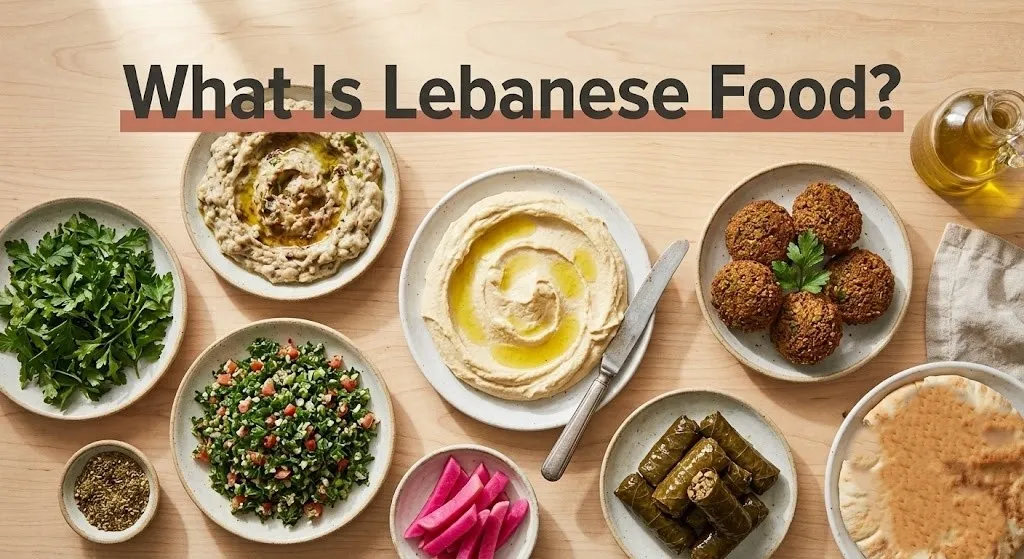
The Lebanese table is colorful. The deep green of parsley in tabbouleh, the pale cream of hummus drizzled with amber olive oil, the bright pink of pickled turnips, the deep brown of spiced kafta, the ruby red of pomegranate seeds scattered over a salad. The visual variety is part of the appeal and part of the nutrition. Colorful plant foods are where the phytonutrients live.
Key Takeaway: Lebanese food is fresh, bright, and communal, built around shared mezze plates with bold but balanced flavors of lemon, olive oil, herbs, and spices.
What kind of food is Lebanese
Lebanese food is Mediterranean food with Middle Eastern depth. It shares the olive oil, vegetables, and seafood of Greek and Italian cuisines while adding the spices, legumes, and grilled meats of the broader Levantine and Arab culinary traditions. The cuisine sits at a geographic and cultural crossroads, and the food reflects this with influences from Turkish, Persian, and French cooking woven into a distinctly Lebanese identity.
The foundation ingredients of Lebanese cooking are olive oil, lemons, garlic, chickpeas, parsley, bulgur wheat, lamb, and yogurt. These ingredients appear across the menu in different combinations. Olive oil and lemon dress almost everything. Garlic is pounded into sauces and marinades. Chickpeas become hummus and falafel. Parsley becomes tabbouleh. Bulgur becomes kibbeh and pilafs. Lamb becomes kafta and shawarma. Yogurt becomes labneh and sauces.
Lebanese food includes both everyday home cooking and elaborate celebration dishes. The everyday food is simple: labneh and vegetables with bread for breakfast, a lentil and rice pilaf for lunch, grilled fish or chicken with a salad for dinner. The celebration food is more elaborate: kibbeh nayeh (raw lamb with bulgur), stuffed lamb, and multiple mezze dishes prepared for hours.
Key Takeaway: Lebanese food is Mediterranean with Middle Eastern depth, built on olive oil, lemon, garlic, chickpeas, parsley, bulgur, lamb, and yogurt.
What’s Lebanese food
What is Lebanese food is a question best answered by describing a typical meal. A Lebanese meal begins with mezze, a collection of small dishes that covers the table. Hummus (chickpea and tahini puree), baba ganoush (smoky eggplant dip), tabbouleh (parsley and bulgur salad), fattoush (toasted bread salad with sumac), labneh (strained yogurt), stuffed grape leaves, and falafel (fried chickpea patties) all appear together.
After the mezze come the grilled meats. Shish taouk (marinated chicken skewers), kafta (spiced ground lamb or beef formed around skewers), and shawarma (spit-roasted, thinly sliced meat) are the most common. They are served with grilled vegetables, more bread, and garlic sauce or tahini sauce. The meats are seasoned, not sauced. The flavor comes from the marinade and the fire.
Dessert is small and often fruit-based, though baklava (layered phyllo with nuts and honey) is the most famous sweet. Fresh fruit, particularly figs, dates, and citrus, is the everyday dessert. A small piece of baklava with strong Arabic coffee is the celebration finish.
Key Takeaway: A Lebanese meal is mezze first (hummus, baba ganoush, tabbouleh, falafel), grilled meats second, and a small sweet or fruit finish.
What food is Lebanon famous for
What food is Lebanon famous for includes a roster of dishes that have traveled far beyond the country’s borders and become global culinary staples. Hummus, the chickpea and tahini puree drizzled with olive oil, is Lebanon’s most famous food export. It appears on menus from London to Los Angeles and is synonymous with Lebanese cuisine in the global imagination.
Tabbouleh is the second most famous Lebanese dish, a parsley salad with bulgur wheat, tomato, mint, lemon, and olive oil. The Lebanese version is predominantly parsley. The bulgur is a accent, not the base. Kibbeh, the national dish of Lebanon, is a mixture of bulgur wheat and finely ground lamb, formed into balls or patties and fried, baked, or eaten raw (kibbeh nayeh).
Falafel, deep-fried chickpea or fava bean patties, is shared across the Levant but is a staple of Lebanese street food. Shawarma, marinated meat stacked on a vertical spit and shaved thin, is the Lebanese answer to fast food. Baklava, layered phyllo dough with nuts and honey, is the most famous Lebanese dessert. Manakish, a flatbread topped with za’atar and olive oil, is the Lebanese breakfast that visitors remember.
Key Takeaway: Lebanon is famous for hummus, tabbouleh, kibbeh, falafel, shawarma, baklava, and manakish. These dishes define Lebanese cuisine globally.
Lebanese mezze
Lebanese mezze is the defining ritual of Lebanese dining, a spread of small dishes served simultaneously that turns eating into a shared, social experience. Mezze is not an appetizer course. It is the meal. A proper mezze table includes 20 to 40 small plates covering cold dips, hot dishes, salads, pickles, and bread. You eat mezze by tearing bread, scooping, dipping, and combining bites across the table.
The cold mezze dishes are the backbone. Hummus (chickpea and tahini), baba ganoush (smoky eggplant dip), labneh (strained yogurt drizzled with olive oil), mouhammara (red pepper and walnut dip), and stuffed grape leaves are always present. Tabbouleh and fattoush provide the fresh, herbaceous contrast to the creamy dips.
The hot mezze include falafel, kibbeh (fried bulgur and meat croquettes), sambousek (meat or cheese pastries), and fried cauliflower with tahini sauce. Pickled turnips, olives, and fresh vegetables are scattered across the table. The mezze experience is about variety and abundance. You are meant to taste everything, not fill up on one dish.
Key Takeaway: Mezze is the defining Lebanese meal format, a table covered with small shared plates of dips, salads, hot dishes, and pickles eaten with flatbread.
Traditional Lebanese dishes
Traditional Lebanese dishes span everyday home cooking and elaborate celebration food, with recipes passed down through generations. The dishes that define Lebanese cuisine at home and in restaurants include the mezze standards plus heartier mains and special occasion plates.
Kibbeh is considered Lebanon’s national dish. It is a mixture of finely ground bulgur wheat and lamb, seasoned with onion and spices, and formed into balls, patties, or a layered casserole. Kibbeh can be fried, baked, grilled, or eaten raw as kibbeh nayeh, which is the most traditional and celebratory preparation.
Kafta is ground lamb or beef mixed with parsley, onion, and spices, formed around skewers, and grilled. It is simple, flavorful, and served with grilled vegetables and bread. Shish taouk is marinated chicken cubes grilled on skewers. Shawarma is marinated meat stacked and slow-roasted on a vertical spit, then shaved thin. Mujadara is a humble lentil and rice pilaf topped with caramelized onions, a vegetarian staple that is comfort food.
Fattoush is the Lebanese bread salad, made with toasted or fried pita, mixed greens, tomatoes, cucumbers, radishes, and a sumac-forward dressing. Tabbouleh is the parsley salad that is more green than grain.
Key Takeaway: Traditional Lebanese dishes include kibbeh (the national dish), kafta, shawarma, mujadara, fattoush, and tabbouleh, spanning everyday and celebration cooking.
Lebanese food ingredients
Lebanese food ingredients are the products of the Mediterranean climate and the Levantine agricultural tradition. The ingredient list is not long, but the combinations are endless. Understanding the core ingredients is understanding the cuisine.
The foundation ingredients are:
- Olive oil: Used in almost every dish, both cooked and raw as a finishing drizzle.
- Lemon: The primary acid, brightening salads, dips, and grilled meats.
- Garlic: Pounded into pastes, minced into marinades, and whipped into sauces.
- Chickpeas: The base of hummus and falafel, and added to soups and stews.
- Parsley: The primary herb, used in large quantities in tabbouleh and as a garnish.
- Bulgur wheat: Cracked parboiled wheat used in tabbouleh, kibbeh, and pilafs.
- Lamb: The primary red meat, used in kafta, kibbeh, and shawarma.
- Yogurt: Used fresh as a side, strained into labneh, and cooked into sauces.
- Tahini: Sesame seed paste essential to hummus and baba ganoush.
- Pine nuts: Toasted and scattered over rice, meats, and salads.
Key Takeaway: Olive oil, lemon, garlic, chickpeas, parsley, bulgur, lamb, yogurt, tahini, and pine nuts are the ten foundational ingredients of Lebanese cooking.
What spices are used in Lebanese food
What spices are used in Lebanese food is a mix of warming, earthy, and bright flavors that enhance the fresh ingredients without overpowering them. Lebanese cooking is spiced but not spicy in the chili-heat sense. The spices add depth, not fire.
Za’atar is the most important spice blend in Lebanese cuisine. It is a mixture of dried thyme, sumac, sesame seeds, and salt. Za’atar is mixed with olive oil and spread on flatbread, sprinkled over labneh, and used as a seasoning for meats and vegetables. It is the taste of Lebanon in a single blend.
Sumac is a deep red, tangy spice made from ground sumac berries. It provides a lemony acidity without liquid and is essential to fattoush and grilled meats. Cinnamon, allspice, and nutmeg are used in meat dishes, particularly kibbeh and kafta, giving Lebanese meat dishes their characteristic warmth. Cumin appears in falafel and some meat preparations. Cardamom and rose water flavor desserts and coffee.
Key Takeaway: Lebanese spices include za’atar, sumac, cinnamon, allspice, and cumin. The flavors are warm and aromatic, not chili-hot. Za’atar is the essential Lebanese spice blend.
Lebanese grilled meats
Lebanese grilled meats are the protein centerpiece of the cuisine, cooked over charcoal and seasoned with marinades rather than heavy sauces. The grilling tradition is central to Lebanese cooking and produces meats that are charred on the outside, tender inside, and flavored with the smoke of the fire.
Shish taouk is the most popular Lebanese grilled chicken dish. Cubes of chicken breast are marinated in lemon, garlic, yogurt, and spices, then threaded onto skewers and grilled. The yogurt tenderizes the meat and the lemon and garlic provide the characteristic Lebanese brightness.
Kafta is ground lamb or beef mixed with finely chopped parsley, onion, and spices, formed around flat skewers, and grilled. It is the Lebanese hamburger, and it is juicier and more flavorful than a plain ground meat patty. Lahem meshwi is simply grilled lamb or beef cubes, marinated and cooked over charcoal.
Grilled meats are served with grilled vegetables (tomatoes, onions, peppers), flatbread, and garlic sauce or tahini sauce. The meat is never served alone. The accompaniments complete the dish.
Key Takeaway: Lebanese grilled meats include shish taouk (chicken), kafta (ground lamb), and lahem meshwi (lamb cubes), all marinated and charcoal-grilled.
Lebanese vegetarian food
Lebanese vegetarian food is abundant and central to the cuisine, not an afterthought. The mezze tradition is naturally plant-forward. A table covered with hummus, baba ganoush, tabbouleh, fattoush, falafel, stuffed grape leaves, mouhammara, and labneh is a complete vegetarian meal that does not feel like it is missing anything.
Falafel is the most famous Lebanese vegetarian protein. Deep-fried chickpea or fava bean patties seasoned with garlic, cumin, and herbs, served in pita with pickles, tomatoes, and tahini sauce. Mujadara, lentils and rice with caramelized onions, is a protein-rich vegetarian comfort food. Ful medames, slow-cooked fava beans with lemon, garlic, and olive oil, is a Lebanese breakfast staple.
The vegetable dishes are not sides. They are the meal. Stuffed grape leaves (warak enab) are filled with rice, herbs, and sometimes tomatoes, cooked in olive oil and lemon. Stuffed zucchini (kousa mahshi) follows the same principle. Loubieh bi zeit is green beans braised in olive oil with tomatoes and onions, served at room temperature.
Key Takeaway: Lebanese vegetarian food is abundant. Hummus, falafel, tabbouleh, mujadara, and stuffed vegetables form a complete, satisfying plant-based cuisine.
Is Lebanese food Mediterranean
Lebanese food is Mediterranean in geography, ingredient profile, and nutritional pattern. Lebanon sits on the eastern shore of the Mediterranean Sea, and its cuisine shares the olive oil, fresh vegetables, legumes, whole grains, seafood, and moderate dairy that define the Mediterranean dietary pattern from Spain to Syria.
The Harvard T.H. Chan School of Public Health includes the eastern Mediterranean, including Lebanon, in its definition of the Mediterranean diet. The diet is characterized by high intake of vegetables, fruits, whole grains, legumes, nuts, and olive oil; moderate intake of fish, poultry, and dairy; and low intake of red meat and sweets. Lebanese cuisine maps onto this pattern almost perfectly.
What distinguishes Lebanese Mediterranean food from Greek or Italian Mediterranean food is the spice palette and specific dishes. The za’atar, sumac, tahini, and chickpea-forward mezze are uniquely Levantine. The nutritional pattern is the same. The flavors are different.
Key Takeaway: Lebanese food is a regional expression of the Mediterranean dietary pattern, sharing the nutritional profile of Greek and Italian cuisines with distinct Levantine flavors.
Lebanese food healthy
Lebanese food is healthy because it is built on the Mediterranean dietary pattern that decades of research have associated with reduced risk of cardiovascular disease, type 2 diabetes, and overall mortality. The foundational ingredients, olive oil, vegetables, legumes, whole grains, nuts, herbs, and lean proteins, are the foods that nutrition science consistently recommends.
A 2023 study in the Journal of the American College of Cardiology found that higher adherence to the Mediterranean diet was associated with a 25% reduction in cardiovascular disease risk. Lebanese cuisine aligns with this diet through its emphasis on olive oil as the primary fat, abundant vegetable and herb consumption, legumes as a protein source, and red meat as an occasional rather than daily food.
The Lebanese meal structure supports healthy eating. The mezze format naturally limits portion sizes of any single dish. The abundance of vegetable and legume dishes means plant foods occupy most of the plate. Grilled meats are served in reasonable portions alongside vegetables. The dessert course is small, often fruit-based, and not the focus of the meal.
Key Takeaway: Lebanese food is healthy because it follows the Mediterranean dietary pattern associated with 25% lower cardiovascular disease risk. Vegetables and legumes dominate the plate.
Lebanese food vs Greek food
Lebanese food and Greek food share the Mediterranean foundation of olive oil, vegetables, legumes, and grilled meats but differ in their spice palettes, specific dishes, and cultural presentation. The similarities reflect the shared geography. The differences reflect distinct culinary traditions.
The similarities are substantial. Both cuisines use olive oil as the primary fat. Both feature grilled lamb and chicken. Both have yogurt-based dips and sauces (labneh and tzatziki). Both have stuffed vegetables (grape leaves in both traditions). Both have phyllo-based pastries (baklava in both, though the nut and syrup composition differs).
The differences are in the spices and the meal structure. Lebanese food uses za’atar, sumac, and warming spices like cinnamon and allspice. Greek food uses oregano, dill, and mint more prominently. Lebanese mezze is a table-filling spread of small plates. Greek meze is a smaller selection of appetizers before a main course. Lebanese cuisine is more legume-forward with chickpeas as a central ingredient. Greek cuisine is more cheese-forward with feta appearing everywhere.
Key Takeaway: Lebanese and Greek food share the Mediterranean foundation but differ in spices (za’atar vs oregano), meal structure (mezze as meal vs meze as starter), and key ingredients (chickpeas vs feta).
Best Lebanese dishes to try
The best Lebanese dishes to try for a first-time diner cover the essential flavors and textures of the cuisine across the mezze, main course, and dessert categories. This is the list to order from when you sit down at a Lebanese restaurant.
For your first Lebanese meal, order: hummus (creamy chickpea dip), baba ganoush (smoky eggplant dip), tabbouleh (parsley salad), fattoush (bread salad), falafel (fried chickpea patties), and stuffed grape leaves from the cold mezze section. From the hot mezze, add kibbeh if available.
For mains, order shish taouk (chicken skewers) or kafta (ground lamb skewers). These are served with grilled vegetables and bread. If you are with a group, add a mixed grill platter that includes multiple meats. For dessert, order baklava and Arabic coffee. If you are still hungry, order more mezze. That is how Lebanese dining works.
Key Takeaway: For a first Lebanese meal, order hummus, baba ganoush, tabbouleh, fattoush, falafel, shish taouk or kafta, and baklava.
How to eat Lebanese food
How to eat Lebanese food involves the mezze ritual of tearing bread, scooping dips, and combining bites across the table. There is no individual plate of food at a Lebanese meal. The table is shared, and your bread is your utensil.
To eat hummus or baba ganoush, tear a piece of pita bread and scoop the dip directly from the communal plate. To eat tabbouleh or fattoush, use a spoon to transfer a portion to your small plate or scoop it with bread. To eat falafel, pick it up with your fingers or tear it and dip it in tahini sauce. Grilled meats are eaten with bread or fork and knife, depending on the setting.
The etiquette is relaxed and communal. Reach across the table. Share. Comment on the food. A Lebanese meal is a conversation. The food is the topic and the medium. There is no rush. Mezze is meant to be eaten slowly over an hour or more.
Key Takeaway: Lebanese food is eaten communally. Use bread to scoop dips, share everything, and take your time. The meal is the conversation.
Lebanese food for beginners
Lebanese food for beginners starts with the dishes that are most accessible and widely liked. If you have never eaten Lebanese food, the following approach will guide you through your first experience without overwhelm.
Start with hummus and pita bread. This is the gateway dish. Almost everyone likes hummus. Once you are comfortable, try baba ganoush, which is similar in texture to hummus but made from eggplant with a smoky flavor. Add tabbouleh for a fresh, herbaceous contrast. Order falafel for something crispy and satisfying.
For a main, shish taouk (chicken skewers) is the safest introduction. It is familiar grilled chicken with Lebanese spices. Kafta (ground lamb) is the next step. For dessert, baklava is universally loved. Once you have eaten these six dishes, you have experienced the core of Lebanese cuisine and are ready to explore the wider mezze menu.
Key Takeaway: Beginners should start with hummus, baba ganoush, tabbouleh, falafel, shish taouk, and baklava. These six dishes provide a complete introduction to Lebanese cuisine.
Lebanese street food
Lebanese street food is the everyday, affordable, handheld version of the cuisine, designed to be eaten on the go or at a quick counter. The street food of Lebanon is some of the best food in the country and represents the dishes that Lebanese people actually eat daily.
Falafel is the king of Lebanese street food. Crisp, fried chickpea patties stuffed into pita with pickled turnips, tomatoes, lettuce, and tahini sauce. A falafel sandwich costs a few dollars and is a complete meal. Shawarma is the second pillar of Lebanese street food. Thinly sliced marinated chicken or beef, shaved from the rotating spit, wrapped in pita with garlic sauce, pickles, and sometimes fries inside the sandwich.
Manakish is the Lebanese breakfast street food, a flatbread topped with za’atar and olive oil, or cheese, or ground meat, baked in a dome oven and served hot, folded in paper. Kaak is a sesame-covered bread ring sold by street vendors, often filled with za’atar or cheese.
Key Takeaway: Lebanese street food includes falafel sandwiches, shawarma wraps, manakish flatbreads, and kaak bread rings. These are the everyday foods of Lebanon.
Frequently Asked Questions About Lebanese Food
Is Lebanese food healthy?
Lebanese food is healthy because it follows the Mediterranean dietary pattern with olive oil, vegetables, legumes, whole grains, and lean proteins.
Research associates the Mediterranean diet with a 25% reduction in cardiovascular disease risk.
The mezze format naturally limits portion sizes, and vegetables and legumes dominate the plate.
What is the most famous Lebanese food?
Hummus is the most famous Lebanese food globally, a creamy dip made from chickpeas, tahini, lemon, and olive oil.
Tabbouleh and kibbeh are also internationally recognized Lebanese dishes.
Shawarma and falafel are the most famous Lebanese street foods.
Is Lebanese food similar to Greek food?
Lebanese and Greek food share the Mediterranean foundation of olive oil, vegetables, grilled meats, and yogurt.
They differ in spices (za’atar and sumac vs oregano and dill), meal structure (mezze as meal vs meze as starter), and key ingredients (chickpeas vs feta).
Both are healthy Mediterranean cuisines with distinct cultural identities.
What is a traditional Lebanese breakfast?
A traditional Lebanese breakfast includes labneh (strained yogurt) with olive oil, fresh vegetables, olives, and pita bread.
Manakish, a flatbread topped with za’atar or cheese, is the most common prepared breakfast.
Ful medames (slow-cooked fava beans) is another traditional breakfast dish.
Can you eat Lebanese food if you are vegetarian?
Lebanese food is one of the most vegetarian-friendly cuisines in the world.
Hummus, baba ganoush, tabbouleh, fattoush, falafel, stuffed grape leaves, mujadara, and loubieh bi zeit are all vegetarian or vegan.
A vegetarian can eat abundantly at a Lebanese restaurant without modification or compromise.
Lebanese food is not a trend. It is one of the oldest continuous culinary traditions in the world, and it has survived and thrived because it got the fundamentals right a long time ago. Fresh ingredients. Olive oil. Lemon and garlic. Vegetables and grains treated with the same care as meat. Meals eaten together. The cuisine does not need to be updated or health-washed. It was healthy before healthy was a marketing term.
The most practical thing you can do is find a Lebanese restaurant and order the mezze. Take friends. Eat slowly. Let the table fill with small plates. Taste everything. This is not just dinner. It is how Lebanese people have been eating for centuries, and there is a reason the Mediterranean diet researchers keep pointing to this part of the world and telling us to eat like the people who live there.