For the vast majority of people, sulfur dioxide in food is not bad for you at regulated levels. The FDA classifies it as GRAS, Generally Recognized As Safe. For the roughly 1 in 100 people in the general population who are sulfite-sensitive, and the 3 to 10 percent of asthmatics who react to it, this preservative can trigger anything from mild wheezing to life-threatening bronchoconstriction.
The FDA banned sulfites from fresh fruits and vegetables in 1986 after 13 deaths were linked to sulfite-treated produce on salad bars. The ban was specific and permanent. The lesson was that a generally safe preservative becomes dangerous when applied to the wrong food in the wrong context, a nuance lost in the simple question “is it bad?”
This guide will explain exactly what this chemical does in your food, which foods contain the highest concentrations, the specific mechanism by which it triggers asthma attacks, and the 2026 clean-label movement that is slowly replacing it with rosemary extract and ascorbic acid.
Is Sulfur Dioxide in Food Bad for You
Sulfur dioxide is not bad for you if you are part of the roughly 99 percent of the general population without sulfite sensitivity and you consume it within the WHO Acceptable Daily Intake of 0.7 milligrams per kilogram of body weight. For a 150-pound adult, that is roughly 50 milligrams per day.
The risk is not distributed evenly across the population. Sulfite sensitivity is strongly correlated with asthma. The FDA estimates that 3 to 10 percent of asthmatics experience respiratory symptoms after consuming sulfites. The mechanism is not fully understood but involves the inhalation of sulfur dioxide gas released from the food or beverage, which triggers bronchoconstriction in sensitive airways.
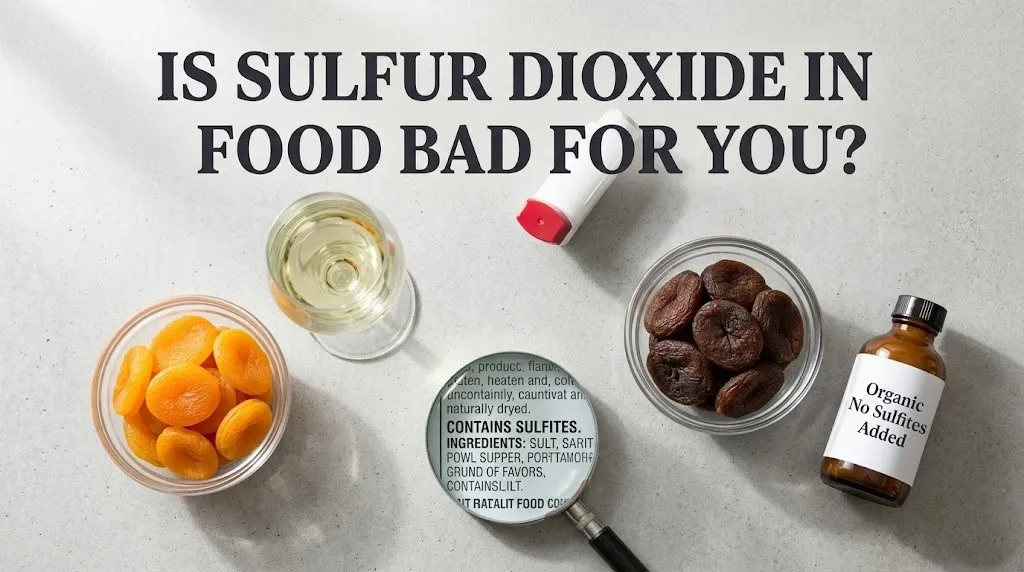
The risk is dose-dependent and food-specific. Dried apricots contain up to 2,000 parts per million of sulfites. A handful of bright orange dried apricots delivers a higher sulfite dose than a glass of wine. The food matters as much as the preservative when evaluating risk.
What Is Sulfur Dioxide in Food
Sulfur dioxide is a chemical compound, one sulfur atom bonded to two oxygen atoms, used as a food preservative since the ancient Romans burned sulfur wicks inside wine amphorae to prevent spoilage. It is an antimicrobial, an antioxidant, and an anti-browning agent all in one molecule.
The term “sulfur dioxide” on a food label refers to the gaseous form pumped into the food or, more commonly, to sulfite salts like sodium metabisulfite, potassium metabisulfite, sodium bisulfite, and sodium sulfite that dissolve in water and release sulfur dioxide. The labeling is standardized under the umbrella term “sulfiting agents.”
These compounds are designated by E numbers in the European Union: E220 through E228. Any of these numbers on an ingredient list indicates the presence of sulfites. The FDA requires explicit labeling of sulfites at concentrations of 10 parts per million or higher.
What Is Sulphur Dioxide in Food
Sulphur dioxide, spelled with “ph,” is the identical chemical compound as sulfur dioxide, spelled with “f.” The spelling difference is a regional convention. “Sulphur” is the British English spelling. “Sulfur” is the American English spelling adopted by the International Union of Pure and Applied Chemistry (IUPAC) in 1990.
The chemical itself is unchanged regardless of spelling. The health implications are identical. A bag of dried fruit labeled “contains sulphur dioxide” in the UK is chemically equivalent to a bag labeled “contains sulfur dioxide” in the US.
The confusion between the two spellings on food labels leads some consumers to mistakenly believe they are different preservatives with different risk profiles. They are not. The “f” and “ph” spellings are interchangeable on ingredient labels and refer to exactly the same compound.
Key Takeaway: Sulfur dioxide and sulphur dioxide are the same chemical; the spelling does not change the health risk.
Is Sulphur Dioxide in Food Bad for You
The health risk of sulphur dioxide in food is identical to that of sulfur dioxide. The spelling is a regional convention, not a chemical distinction. The same dose-response relationship and the same sulfite sensitivity prevalence apply.
The UK’s Food Standards Agency and the European Food Safety Authority (EFSA) have set the Acceptable Daily Intake for sulfites at 0.7 milligrams per kilogram of body weight, matching the WHO standard. The regulatory framework is consistent across spelling conventions.
The at-risk population is the same. Asthmatics and those with a diagnosed sulfite sensitivity should read labels for both “sulfur dioxide” and “sulphur dioxide” as well as all E220-E228 designations. The spelling does not change the physiological response.
Is Sulfur Dioxide Bad for You in Food
In food at regulated concentrations, sulfur dioxide is bad for a specific, identifiable minority and neutral for the majority. It is not a universal toxin. It is an allergen-like trigger for susceptible individuals.
The distinction between “bad for everyone” and “bad for a specific group” is the central point of confusion. Sulfur dioxide is not a carcinogen. It is not an endocrine disruptor. It is a respiratory irritant that triggers bronchoconstriction in sulfite-sensitive individuals, primarily those with asthma.
The same chemical that preserves the bright color of dried apricots can cause an asthma attack in a sensitive person. The food is not poisoned. The person’s physiology responds to the preservative as an irritant. This is a crucial distinction for understanding the actual risk profile.
What Is Sulfur Dioxide Used for in Food
Sulfur dioxide is used in food for three primary purposes. It prevents enzymatic browning in dried fruits and vegetables. It inhibits the growth of bacteria, yeasts, and molds. It prevents oxidative spoilage that would cause off-flavors and discoloration.
The anti-browning function is the most visible. A dried apricot treated with sulfur dioxide remains bright orange. An unsulfured dried apricot turns brown, shriveled, and prune-like. The difference is cosmetic but commercially meaningful. Consumers buy bright orange apricots.
The antimicrobial function extends shelf life. Sulfites inhibit the growth of acetic acid bacteria in wine and prevent spoilage in frozen shrimp. The preservative does its work invisibly. You cannot taste sulfur dioxide in a dried apricot the way you can taste salt or sugar. This invisibility is part of why it alarms consumers who read the label.
Why Is Sulfur Dioxide Used as a Food Preservative
Sulfur dioxide is used as a food preservative because it is cheap, effective at low concentrations, and multifunctional. A single additive performs the work of an antioxidant, an antimicrobial, and an anti-browning agent. Few natural alternatives can match all three functions.
The wine industry depends on sulfites. Without them, wine oxidizes into vinegar within months. Sulfur dioxide is added after fermentation to bind oxygen and prevent the growth of spoilage organisms. The concentration in wine is lower than in dried fruit, typically 50 to 150 parts per million.
The 2026 food industry is exploring alternatives. Ascorbic acid, rosemary extract, and fermented rice flour are replacing sulfur dioxide in organic and clean-label dried fruits. These alternatives are more expensive and less shelf-stable. The bright orange, year-round dried apricot may become a paler, seasonal product as sulfite use declines.
Key Takeaway: Sulfur dioxide preserves color, kills microbes, and prevents spoilage all at once; replacing it requires multiple alternative ingredients, not a single swap.
Sulfur Dioxide Side Effects
The primary side effect of sulfur dioxide exposure through food is respiratory distress in sulfite-sensitive individuals. Symptoms include wheezing, chest tightness, coughing, and shortness of breath. These symptoms typically begin within 15 to 30 minutes of ingestion.
Less common side effects include gastrointestinal distress, hives, and in rare cases, anaphylaxis. True IgE-mediated sulfite allergy is extremely rare. Most sulfite reactions are non-IgE-mediated irritant responses. This means a standard allergy test will often not detect sulfite sensitivity.
The FDA adverse event reporting system has documented 13 confirmed deaths linked to sulfite exposure, all occurring before the 1986 ban on fresh produce use. Since the ban, severe reactions have been limited to processed foods where the consumer can identify the sulfites on the label and make an informed choice.
Sulfur Dioxide Allergy
Sulfur dioxide allergy is a misnomer. The medical community refers to sulfite sensitivity or sulfite hypersensitivity, not a true allergy. The mechanism is usually a non-IgE-mediated irritant response in the airways.
The sulfur dioxide gas released from the food dissolves in the moisture of the mouth and airways, forming sulfurous acid. This acid irritates the respiratory tract. In susceptible asthmatics, the irritation triggers bronchoconstriction. The airway muscles contract. Breathing becomes difficult.
Avoidance is the only management strategy. There is no desensitization protocol for sulfite sensitivity. An asthmatic with a confirmed sulfite sensitivity must read every food label and avoid all products listing sulfites, sulfur dioxide, or E220-E228.
Foods That Contain Sulfur Dioxide
Sulfur dioxide is present in a wide range of processed foods. The highest concentrations are found in dried fruit, particularly apricots, raisins, and golden raisins. Wine, molasses, frozen shrimp, lemon juice concentrate, pickled onions, and frozen potato products also contain measurable sulfites.
Dried apricots can contain up to 2,000 parts per million of sulfites. A 40-gram serving, roughly 5 to 6 apricots, can deliver 80 milligrams of sulfites. This exceeds the WHO Acceptable Daily Intake for a small adult. A single food can push a sensitive person past the safety threshold.
Canned vegetables, baked goods, and condiments sometimes contain sulfites as dough conditioners or anti-browning agents. The presence is less consistent than in dried fruit and wine, but the labeling requirement of 10 parts per million or higher means any product with detectable sulfites must declare it.
| Food Product | Typical Sulfite Level (ppm) | Risk Level for Sensitive Individuals |
|---|---|---|
| Dried Apricots | 500 to 2,000 | High |
| Golden Raisins | 500 to 1,500 | High |
| Wine (White) | 50 to 150 | Moderate |
| Frozen Shrimp | 50 to 100 | Moderate |
| Molasses | 100 to 300 | High |
| Lemon Juice (Bottled) | 50 to 200 | Low-Moderate |
| Frozen French Fries | 20 to 50 | Low |
Sulfur Dioxide in Dried Fruit
Sulfur dioxide in dried fruit is the highest-concentration food source the average consumer encounters. The preservative maintains the original fruit color. An unsulfured apricot oxidizes to a dark brown, leathery slab. A sulfured apricot remains bright, soft, and orange.
The 2026 organic dried fruit market has largely eliminated sulfites. Organic certification prohibits the use of sulfur dioxide. Organic dried apricots are brown, chewy, and visibly different from their conventional counterparts. The color difference is the consumer’s immediate visual signal of sulfite presence or absence.
The trade-off is aesthetic and textural. Unsulfured dried fruit is darker, firmer, and has a shorter shelf life. It tastes slightly different, more caramelized, less bright. The nutritional content is similar. The choice between sulfured and unsulfured dried fruit is a choice between conventional appearance and natural oxidation.
Sulfur Dioxide in Wine
Sulfur dioxide in wine is a byproduct of fermentation and an added preservative. Yeasts naturally produce 10 to 30 parts per million of sulfites during fermentation. Winemakers add additional sulfites to stabilize the wine against oxidation and microbial spoilage.
Red wine contains less added sulfites than white wine. The tannins in red wine act as natural antioxidants, reducing the need for sulfur dioxide. White wines typically contain 50 to 150 parts per million total sulfites. Sweet wines contain the highest levels, sometimes exceeding 200 parts per million.
The wine headache often attributed to sulfites is likely caused by other compounds. Histamines in red wine, dehydration from alcohol, and the alcohol itself are more plausible headache triggers. A 2018 review in the journal Headache found no consistent evidence linking sulfites in wine to headaches in non-sensitive individuals.
Sulfites vs Sulfur Dioxide
Sulfites are the salt forms of sulfur dioxide. When sodium metabisulfite or potassium metabisulfite dissolve in water, they release sulfur dioxide gas. The two terms are used interchangeably on food labels because the active preservative agent is the same.
Sulfates are a completely different compound. Sulfates are SO4, one sulfur atom bonded to four oxygen atoms. Sulfates are not preservatives and do not trigger sulfite sensitivity. Confusing sulfates, sulfites, and sulfur dioxide is common and leads to unnecessary food avoidance.
A consumer with sulfite sensitivity needs to avoid sulfites and sulfur dioxide, not sulfates. Magnesium sulfate, for example, is Epsom salt. It is not a problem for sulfite-sensitive individuals.
Sulfur Dioxide Asthma
Sulfur dioxide exposure is a known trigger for asthma exacerbation in sulfite-sensitive individuals. The mechanism involves the release of SO2 gas in the mouth and throat, which is inhaled into the airways and dissolves into sulfurous acid on the moist respiratory surfaces.
A 2017 study in the Journal of Allergy and Clinical Immunology found that 3 to 10 percent of adult asthmatics demonstrate a measurable bronchoconstrictive response to sulfite challenge. The response is dose-dependent. A small amount of sulfites from a glass of wine may be tolerated. A large dose from dried fruit may trigger a significant attack.
Asthmatics with sulfite sensitivity should carry a rescue inhaler when eating foods that may contain undeclared sulfites. Restaurant foods, particularly potato products and shrimp, are common sources of accidental exposure.
Key Takeaway: Sulfur dioxide asthma reactions are dose-dependent and most common in individuals with severe, steroid-dependent asthma; the dried fruit bowl is a higher-risk item than the wine glass.
How to Avoid Sulfur Dioxide in Food
Avoiding sulfur dioxide in food requires reading ingredient labels on every packaged food product. The FDA mandates that sulfites be declared when present at 10 parts per million or higher. Look for the words sulfur dioxide, sodium metabisulfite, potassium metabisulfite, sodium bisulfite, or any variation of sulfite on the label.
Buy organic dried fruit. The USDA National Organic Program prohibits the use of sulfur dioxide in organic products. Organic dried apricots, organic raisins, and organic dried mango are sulfite-free by regulation, not just by marketing.
Ask in restaurants if the shrimp, potatoes, or dried fruit are treated with sulfites. Restaurant workers may not know the answer. If you have a severe sulfite sensitivity, avoid these items entirely when dining out. The risk of an undeclared exposure is not worth the meal.
Frequently Asked Questions About Sulfur Dioxide in Food
Is sulfur dioxide safe to eat?
Yes, sulfur dioxide is safe for the vast majority of people at FDA-regulated levels.
The FDA classifies it as Generally Recognized As Safe (GRAS).
Roughly 1 in 100 people are sulfite-sensitive, and 3 to 10 percent of asthmatics may react.
What are the symptoms of sulfite sensitivity?
Symptoms include wheezing, chest tightness, coughing, and shortness of breath within 15 to 30 minutes of eating sulfite-containing food.
Less common symptoms include hives, stomach pain, and diarrhea.
True life-threatening anaphylaxis is rare but has been documented.
Why is sulfur dioxide added to dried fruit?
It prevents enzymatic browning, keeping the fruit bright orange or yellow instead of dark brown.
It also acts as an antimicrobial, extending shelf life by months.
Unsulfured organic dried fruit is brown and firmer but nutritionally similar.
Can sulfur dioxide in wine cause a headache?
Research does not consistently support sulfites as a primary cause of wine headaches.
Histamines, tannins, alcohol, and dehydration are more likely triggers.
People with a confirmed sulfite sensitivity may experience headaches as part of a broader reaction.
How do I know if a food contains sulfites?
Read the ingredient label for sulfur dioxide, sodium metabisulfite, potassium metabisulfite, sodium bisulfite, or any word containing “sulfite.”
The FDA requires sulfite labeling at 10 parts per million or higher.
Buy organic dried fruit and wine labeled “no sulfites added” to avoid the preservative.
Sulfur dioxide in food is a precise, dose-dependent risk, not a universal poison. For the vast majority of eaters, the bright orange dried apricot is safe. For the asthmatic few, it is a respiratory irritant that requires reading labels and choosing organic, unsulfured alternatives.
The FDA ban on fresh produce sulfites in 1986 solved the most acute danger. The labeling requirement that followed gives you the information to protect yourself. Read the label. Know your status. Choose accordingly.
If you do not have asthma and have never reacted to dried fruit or wine, sulfur dioxide is almost certainly not the ingredient in your food that deserves your worry. The added sugar, the sodium, and the ultra-processing are the bigger fights.