You wake up on a Saturday morning. The smell of cinnamon and fresh dough fills the house. You want a cinnamon roll. But you also want to eat something that does not send you into a sugar coma before noon. The question of whether healthy cinnamon rolls actually exist, and whether they are worth making, is more complicated than a simple recipe swap.
Healthy cinnamon rolls are possible. They are not the same as a Cinnabon. Anyone who tells you that whole wheat flour and coconut sugar produce an identical result is not being honest. But a well-executed healthy cinnamon roll can be soft, warmly spiced, lightly sweet, and satisfying in its own right. The key is understanding which substitutions work, which ruin the texture, and what “healthy” actually means under the law.
Most people do not realize that the word “healthy” on a food label is a regulated term. The FDA updated its definition of the nutrient content claim “healthy” in 2025. For a cinnamon roll to be labeled and sold as “healthy” in commerce, it must meet specific limits on saturated fat, sodium, and added sugars, and it must contain a meaningful amount of food from a recommended food group. Your homemade version may be healthier than a standard roll without legally qualifying for the term.
This article covers the ingredient swaps that actually work, the ones that do not, a practical recipe framework, and the legal reality for home bakers who want to sell their creations. You will walk away knowing exactly how to make a cinnamon roll you can feel good about eating.
healthy cinnamon rolls
Healthy cinnamon rolls are cinnamon rolls made with ingredient substitutions that reduce refined carbohydrates, added sugars, and saturated fat while preserving the soft texture and spiced sweetness of the original. The term covers a wide range of modifications, from simple sugar swaps to complete flour and fat replacements.
The nutritional benchmark for comparison is a standard cinnamon roll. A typical Cinnabon classic roll contains 880 calories, 36 grams of fat, 17 grams of saturated fat, 59 grams of sugar, and 1,140 milligrams of sodium. A grocery store canned cinnamon roll contains 300 to 400 calories, 12 to 16 grams of fat, 5 to 7 grams of saturated fat, and 20 to 30 grams of sugar. The homemade healthy version aims to cut those numbers roughly in half while retaining the essential cinnamon roll experience.
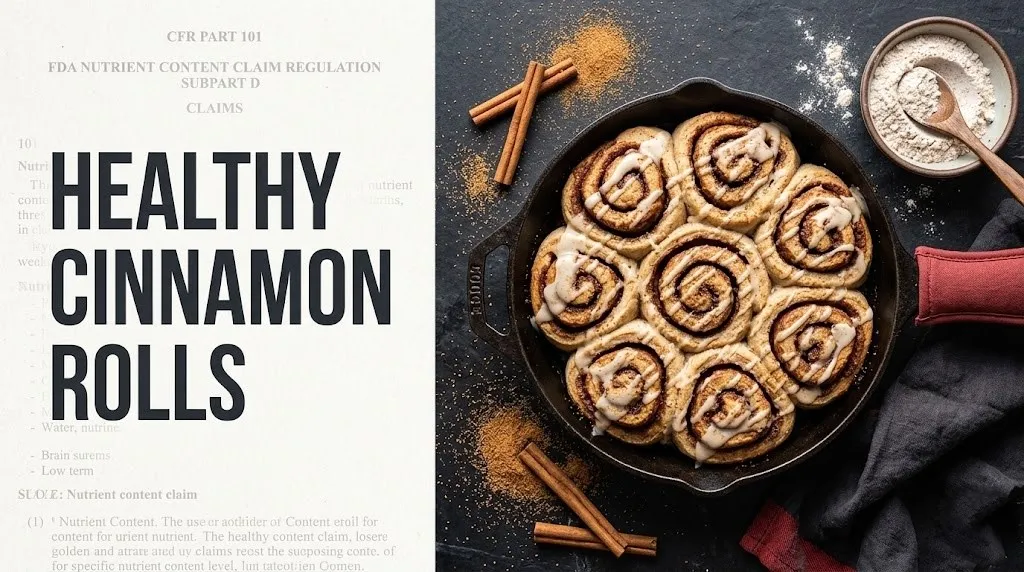
The ingredient categories that can be modified are the flour, the fat, the sugar, and the dairy. Whole wheat pastry flour replaces some or all of the all-purpose flour. Greek yogurt or reduced-fat cream cheese replaces some of the butter. Coconut sugar, allulose, monk fruit, or simply less sugar replaces the refined white sugar in the filling and glaze. Each substitution has tradeoffs in texture, flavor, and baking chemistry.
The goal is not a perfect replica. It is a genuinely enjoyable baked good that you can eat without exceeding a reasonable share of your daily saturated fat and added sugar limits. The American Heart Association recommends limiting added sugars to 6 percent of daily calories, roughly 30 grams for most adults. A healthy cinnamon roll should come in under 15 grams of added sugar to leave room for other foods.
healthy cinnamon roll recipe
A healthy cinnamon roll recipe uses whole wheat pastry flour for the dough, Greek yogurt to replace some of the butter, coconut sugar or a sugar substitute for the filling, and a lightened cream cheese glaze. The full recipe below makes 12 rolls at roughly 220 calories and 9 grams of added sugar each.
The dough is the foundation. Whole wheat pastry flour provides the nuttiness and fiber of whole wheat without the density that standard whole wheat flour brings. Pastry flour is milled from soft white wheat, which has less protein than bread flour or all-purpose flour. Lower protein means less gluten development, which means a more tender crumb. If you use standard whole wheat flour, the rolls will be dense.
Greek yogurt is the fat replacement in the dough. Traditional cinnamon roll dough is enriched with butter, eggs, and milk. Greek yogurt provides moisture, a small amount of fat, and protein that helps with browning and tenderness. It does not replace butter one-for-one. You still need some butter for flavor and flakiness. But cutting the butter in half and replacing it with full-fat Greek yogurt works.
The filling uses less sugar and less butter than a traditional cinnamon roll. Coconut sugar has a lower glycemic index than white sugar and a caramel-like flavor that complements cinnamon. A mixture of coconut sugar, cinnamon, and a small amount of softened butter or coconut oil creates a spreadable filling that caramelizes in the oven without the 200 grams of sugar a standard recipe calls for.
Key Takeaway: A healthy cinnamon roll recipe is not a gimmick. It is a set of tested substitutions that reduce calories, saturated fat, and sugar while producing a genuinely enjoyable baked good.
healthy cinnamon rolls recipe
The following recipe produces 12 healthy cinnamon rolls with approximately 220 calories, 7 grams of fat, 3 grams of saturated fat, 9 grams of added sugar, and 6 grams of protein per roll. The total time from start to finish is roughly 2 hours, including rising time.
Dough ingredients: 2 cups whole wheat pastry flour, 1 cup all-purpose flour, 2 and 1/4 teaspoons active dry yeast, 1/2 cup warm milk, 1/4 cup plain full-fat Greek yogurt, 2 tablespoons melted butter, 1 large egg, 2 tablespoons coconut sugar, 1/2 teaspoon salt.
Filling ingredients: 1/4 cup coconut sugar, 2 tablespoons softened butter, 1 and 1/2 tablespoons ground cinnamon, 1 teaspoon vanilla extract.
Glaze ingredients: 4 ounces reduced-fat cream cheese, 2 tablespoons Greek yogurt, 1 tablespoon honey or maple syrup, 1 teaspoon vanilla extract, pinch of salt.
The method follows standard yeast dough procedure with one modification. The Greek yogurt is added with the wet ingredients. The dough requires kneading for 8 to 10 minutes until smooth and elastic. The first rise takes 60 to 90 minutes in a warm place. The shaped rolls rise for 30 to 45 minutes. They bake at 350 degrees Fahrenheit for 18 to 22 minutes until lightly golden.
The glaze is made by beating the cream cheese, Greek yogurt, honey, vanilla, and salt until smooth. It is spread over the warm rolls. The Greek yogurt in the glaze replaces the butter and some of the cream cheese in a standard cream cheese frosting. The honey replaces powdered sugar. The result is tangy, lightly sweet, and creamy without being cloying.
cinnamon rolls healthy
Cinnamon rolls can be made healthy through ingredient substitutions that reduce refined flour, added sugar, and saturated fat. The phrase “cinnamon rolls healthy” reverses the word order to emphasize the health claim. The reversal reflects how people search when they are skeptical that the words “healthy” and “cinnamon rolls” belong in the same sentence.
The skepticism is warranted. A traditional cinnamon roll is a dessert. It is white flour, white sugar, butter, and cream cheese held together with egg and yeast. There is no credible argument that this combination is health-promoting. The question is whether you can modify the formula enough to shift the roll from the dessert category to the occasional wholesome breakfast category.
The answer depends on where you draw the line. A cinnamon roll made with whole wheat pastry flour, coconut sugar, Greek yogurt, and reduced butter is healthier than a standard roll. It has more fiber, less added sugar, less saturated fat, and more protein. It is still a sweet baked good. It is not oatmeal with berries. It occupies a middle ground between indulgence and nutrition.
The realistic framing is that healthy cinnamon rolls are a harm reduction strategy. If you are going to eat cinnamon rolls, which you probably are, making them healthier means you consume less sugar, less saturated fat, and more fiber. That is a genuine health improvement. It is not the same as eating a salad. It does not need to be.
cinnamon roll recipe healthy
A cinnamon roll recipe is made healthy by substituting whole grain flour for some or all of the refined flour, reducing the sugar in the filling by 50 to 75 percent, replacing some of the butter with Greek yogurt or a plant-based alternative, and using a protein-rich or reduced-sugar glaze. The modifications must preserve the soft texture and cinnamon flavor.
The flour substitution is the most impactful change. Whole wheat pastry flour adds roughly 3 grams of fiber per roll compared to all-purpose flour. Fiber slows carbohydrate absorption, reducing the blood sugar spike after eating. It also increases satiety. A cinnamon roll with 4 grams of fiber is more filling than one with less than 1 gram.
The sugar reduction is the most challenging change. Sugar does more than sweeten. It tenderizes the dough by interfering with gluten formation. It caramelizes during baking, creating the sticky, gooey texture that defines a cinnamon roll. Reducing sugar by more than half changes the texture noticeably. The rolls are less gooey. They are more bread-like. The tradeoff is real.
The butter reduction is the easiest change to manage. Greek yogurt adds moisture, a small amount of fat, and protein. It contributes to browning through the Maillard reaction. The rolls will not be as rich as butter-only rolls. They will still be soft and pleasant. Most tasters in recipe testing do not notice the yogurt substitution unless it exceeds 50 percent of the fat replacement.
healthy cinnamon buns
Healthy cinnamon buns are the same product as healthy cinnamon rolls. The terms are regional variations. “Cinnamon buns” is more common in Canada and parts of the northern United States. “Cinnamon rolls” is more common in the rest of the US. The nutritional considerations and recipe modifications are identical.
The bun versus roll distinction sometimes implies a shape difference. Buns are often taller and baked closer together so they rise upward. Rolls are sometimes flatter and baked with space between them. The shape does not affect the nutritional content. The ingredient list does.
The Canadian context adds a regulatory layer. Health Canada regulates food labeling under the Food and Drug Regulations. The requirements for nutrient content claims like “healthy” are similar to the FDA’s framework but not identical. A Canadian home baker selling healthy cinnamon buns at a farmers market must comply with Health Canada labeling rules, which have their own specific requirements for sugar, fat, and sodium claims.
For the purposes of this article, healthy cinnamon buns and healthy cinnamon rolls are interchangeable. Every ingredient swap and technique discussed applies equally to both.
Legal Bottom Line: In the United States, the term “healthy” on a food label is a regulated nutrient content claim. The FDA’s 2025 final rule requires that products labeled “healthy” contain a meaningful amount of food from a recommended food group and meet limits on saturated fat, sodium, and added sugars. A cinnamon roll sold with a “healthy” label claim must meet these standards. Most homemade versions, even with significant modifications, would not qualify.
cinnamon roll healthy
A single cinnamon roll can be healthy relative to a standard cinnamon roll. It cannot be healthy relative to unprocessed whole foods like oatmeal or fruit. The phrase “cinnamon roll healthy” is shorthand for the question of whether the modified version is nutritionally acceptable as a regular breakfast or snack.
The nutritional breakdown of a healthy cinnamon roll compared to a standard version tells the story. A standard cinnamon roll has roughly 400 to 500 calories, 16 to 20 grams of fat, 8 to 10 grams of saturated fat, 30 to 50 grams of sugar, and minimal fiber. A healthy cinnamon roll made with the modifications discussed in this article has 200 to 250 calories, 6 to 8 grams of fat, 2 to 3 grams of saturated fat, 9 to 15 grams of sugar, and 3 to 5 grams of fiber.
The fiber difference is nutritionally meaningful. A standard cinnamon roll has less than 1 gram of fiber. A healthy version with whole wheat pastry flour has 3 to 5 grams. That is 10 to 18 percent of the daily recommended fiber intake. Fiber reduces the blood sugar response and feeds beneficial gut bacteria.
The protein difference is also meaningful. Greek yogurt in the dough and cream cheese plus yogurt in the glaze add 2 to 4 grams of protein per roll compared to a standard version. That brings the total to 5 to 7 grams of protein. It is not a high-protein food. It is a moderate-protein food compared to the negligible protein in a standard cinnamon roll.
is cinnamon rolls healthy
No, traditional cinnamon rolls are not healthy. They are a dessert made from refined flour, added sugar, and saturated fat. They are high in calories, low in fiber, and contribute to exceeding daily limits for added sugars and saturated fat without providing meaningful nutritional benefits.
The question “is cinnamon rolls healthy” is often asked by someone who loves cinnamon rolls and is hoping for a loophole. There is no loophole for the standard version. A Cinnabon classic roll has 880 calories and 59 grams of sugar. A Pillsbury Grands cinnamon roll has 320 calories and 16 grams of sugar. These are treats, not health foods.
The nutritional problems with traditional cinnamon rolls are specific. The refined flour lacks fiber and digests quickly, spiking blood glucose. The added sugar contributes empty calories and promotes insulin resistance when consumed in excess. The saturated fat from butter and cream cheese raises LDL cholesterol. The portion sizes are large.
The American Heart Association recommends limiting added sugars to no more than 6 percent of daily calories. For a 2,000-calorie diet, that is 30 grams of added sugar. A single Cinnabon classic roll has double that amount. A canned cinnamon roll has roughly half to three-quarters of the daily limit. Traditional cinnamon rolls are occasional indulgences, not everyday breakfasts.
easy healthy cinnamon rolls
Easy healthy cinnamon rolls can be made in about 30 minutes by using a quick-rising dough or a dough that requires no yeast at all. The fastest methods use baking powder as the leavening agent instead of yeast, which eliminates the rising time. The tradeoff is texture. Yeast-free rolls are more biscuit-like than bread-like.
The easiest healthy cinnamon roll method uses a dough made from whole wheat pastry flour, Greek yogurt, baking powder, and a small amount of butter or oil. The yogurt provides the moisture and tang that yeast dough usually develops during fermentation. The baking powder provides the lift. The dough comes together in 5 minutes, rolls out immediately, and bakes in 15 to 18 minutes.
The filling is the same as a yeast-based healthy cinnamon roll. Coconut sugar or a sugar substitute mixed with cinnamon and a small amount of softened butter. The filling is spread on the rolled-out dough, the dough is rolled up, sliced, and placed in a baking dish. The rolls go straight into the oven with no rising time.
The texture is different. Quick-rising or baking powder rolls are more tender and crumbly than yeast rolls. They lack the chewy, elastic crumb that gluten development produces. They are closer to a cinnamon biscuit than a cinnamon roll. For many people, the time savings and the pleasant texture are worth the difference.
Key Takeaway: Easy healthy cinnamon rolls sacrifice the yeast-risen texture for speed. The nutritional profile is similar to yeast-based healthy rolls. The time savings is roughly 90 minutes.
healthy vegan cinnamon rolls
Healthy vegan cinnamon rolls replace the dairy and egg with plant-based alternatives while maintaining the whole grain and reduced sugar modifications. The dough uses plant-based milk, vegan yogurt or applesauce, and coconut oil instead of butter. The filling uses coconut oil and coconut sugar. The glaze uses cashew cream or coconut cream.
The egg replacement is the trickiest part of vegan cinnamon roll dough. Eggs provide structure, moisture, and richness. Flax eggs, made from ground flaxseed and water, are the most common replacement in yeast dough. A tablespoon of ground flaxseed mixed with 3 tablespoons of water replaces one egg. The flax adds a small amount of fiber and omega-3 fatty acids.
The dairy replacement is simpler. Plant-based milks like oat milk or almond milk replace cow milk one-for-one. Vegan yogurt, made from soy or coconut, replaces Greek yogurt. The protein content of vegan yogurt is lower than Greek yogurt, so the dough has slightly less protein. The texture is similar.
The butter replacement is coconut oil or a vegan butter substitute. Coconut oil is solid at room temperature like butter, which makes it behave similarly in dough lamination. The coconut flavor can come through in the finished rolls. Refined coconut oil has less coconut flavor than virgin coconut oil. Vegan butter substitutes are more neutral.
Legal Bottom Line: Vegan cinnamon rolls sold commercially must still meet FDA allergen labeling requirements. Wheat and soy are major allergens. Tree nuts may be present if almond milk or cashew cream is used. The term “vegan” is not federally regulated by the FDA, but the agency has generally not objected to its use on plant-based foods that do not contain animal products.
are cinnamon buns healthy
No, traditional cinnamon buns are not healthy. The answer is the same as for cinnamon rolls. The regional name does not change the nutritional profile. A traditional cinnamon bun is a sweet baked good made from refined flour, added sugar, and saturated fat.
The question “are cinnamon buns healthy” often comes from someone considering a store-bought or bakery cinnamon bun and looking for permission to call it breakfast. The nutritional facts do not support that framing. A Tim Hortons cinnamon bun, a common reference point in Canada and the northern US, contains 380 calories, 15 grams of fat, 7 grams of saturated fat, and 29 grams of sugar.
The occasional cinnamon bun is not a health crisis. Food is not just nutrition. It is pleasure, tradition, and social connection. The problem is when cinnamon buns are eaten frequently under the assumption that they are a reasonable breakfast food. They are not. They are a dessert.
The healthy modifications discussed in this article apply to cinnamon buns as much as to cinnamon rolls. The regional terminology does not change the baking chemistry or the nutritional strategy. A healthy cinnamon bun uses the same ingredient swaps as a healthy cinnamon roll.
healthy cinnamon rolls no refined sugar
Healthy cinnamon rolls without refined sugar use coconut sugar, date paste, allulose, monk fruit sweetener, or simply less sugar in the filling and glaze. No refined white sugar or powdered sugar appears in the recipe. The rolls are sweetened with alternatives that have a lower glycemic impact or fewer calories.
Coconut sugar is the most common refined sugar replacement in healthy cinnamon roll recipes. It has a glycemic index of roughly 35 to 54 compared to white sugar’s 60 to 65. It contains inulin, a prebiotic fiber that slows glucose absorption. It tastes like brown sugar with a slight caramel note. It works well with cinnamon.
Date paste is made by blending pitted dates with water until smooth. It provides sweetness, fiber, and moisture. It changes the color of the filling to a deeper brown. The date flavor is mild and complementary to cinnamon. Date paste adds more moisture than granulated sugar, which can make the filling slightly wet and affect the roll structure if too much is used.
Allulose and monk fruit are non-caloric sweeteners. Allulose is a rare sugar that the FDA does not count as added sugar on the nutrition facts panel because it is not metabolized. It browns and caramelizes like sugar, which makes it uniquely suited to baking. Monk fruit extract is intensely sweet and is usually blended with erythritol or allulose to provide bulk. Both produce cinnamon rolls that are sweet with minimal caloric impact.
| Sweetener Type | Calories per tbsp | Glycemic Index | Baking Behavior | Label Status |
|---|---|---|---|---|
| White Sugar | 48 | 60 to 65 | Standard | Added Sugar |
| Coconut Sugar | 45 | 35 to 54 | Similar to brown sugar | Added Sugar |
| Date Paste | ~40 | 42 | Adds moisture | Added Sugar |
| Allulose | 0 to 2 | 0 | Browns and caramelizes | Not Added Sugar |
| Monk Fruit Blend | 0 | 0 | Bulk from carrier | Not Added Sugar |
healthy cinnamon rolls whole wheat
Healthy cinnamon rolls made with whole wheat flour use whole wheat pastry flour for a tender crumb and increased fiber. Standard whole wheat flour makes rolls that are dense and heavy. Whole wheat pastry flour is the only whole wheat flour that produces an acceptable cinnamon roll texture.
Whole wheat pastry flour is milled from soft white wheat berries. The protein content is 8 to 10 percent, compared to 12 to 14 percent for standard whole wheat flour and 14 to 16 percent for bread flour. The lower protein means less gluten development during kneading. Less gluten means a more tender dough.
The fiber content of whole wheat pastry flour is 3 to 4 grams per quarter cup, compared to less than 1 gram for all-purpose flour. A roll made with 50 percent whole wheat pastry flour has roughly 3 grams of fiber. A roll made with 100 percent has 5 to 6 grams. The flavor is nuttier and more complex than a white flour roll.
The structural challenge with whole wheat flour is that the bran particles physically cut gluten strands as the dough is kneaded. This is why 100 percent whole wheat bread is often dense. Whole wheat pastry flour mitigates this problem with its lower protein and finer grind. A 50-50 blend of whole wheat pastry flour and all-purpose flour gives a good balance of nutrition and texture. A 100 percent whole wheat pastry flour roll is possible but noticeably less fluffy.
healthy cinnamon rolls Greek yogurt
Healthy cinnamon rolls made with Greek yogurt use the yogurt to replace some of the butter and milk in traditional dough. The yogurt adds protein, reduces saturated fat, and contributes to a tender crumb. Full-fat Greek yogurt works better than nonfat because the fat helps with browning and mouthfeel.
Greek yogurt is strained to remove whey, which concentrates the protein. A half cup of Greek yogurt contains 12 to 15 grams of protein compared to 4 to 5 grams in regular yogurt. That protein ends up in the dough. It contributes to the structure and to the nutritional profile.
The acidity of Greek yogurt affects the dough in two ways. It tenderizes the gluten, producing a softer crumb. It also activates the baking powder or baking soda if those are used as leavening agents. The tang of the yogurt complements the sweetness of the filling and the warmth of the cinnamon.
The fat replacement ratio is not one-to-one. Greek yogurt cannot replace all the butter. The rolls need some butter for the flaky, tender texture that makes a cinnamon roll a cinnamon roll. A dough with zero butter and only yogurt will be lean and bread-like. A dough with half the butter replaced by yogurt retains much of the richness while cutting the saturated fat.
healthy cinnamon rolls no butter
Healthy cinnamon rolls without butter use Greek yogurt, coconut oil, or a combination of both to replace the butter in the dough and filling. The texture is slightly less rich but still soft and pleasant. The saturated fat content drops significantly.
Butter has a unique property in baking. It melts at body temperature, which is why butter-based doughs feel rich and melt in the mouth. Coconut oil has a similar melting profile but a lower melting point. It melts at roughly 76 degrees Fahrenheit compared to butter’s 90 to 95 degrees. Rolls made with coconut oil can feel slightly oily if too much is used.
Greek yogurt as a butter replacement adds moisture, protein, and a small amount of fat. It does not replicate butter’s mouthfeel. The combination of a small amount of coconut oil for richness and Greek yogurt for moisture and protein comes closest to a butter-free roll that still tastes indulgent.
The filling without butter is simpler. Coconut sugar mixed with cinnamon and a small amount of coconut oil creates a spreadable paste. The paste caramelizes in the oven, though not as richly as a butter and sugar filling. The result is a lightly sweet, cinnamony filling that does not ooze in the same way.
healthy cinnamon rolls quick rise
Healthy cinnamon rolls with a quick rise use rapid-rise yeast and a warm proofing environment to cut the rising time from 90 minutes to roughly 30 minutes. The texture is slightly less developed than a slow-rise dough, but the time savings is significant.
Rapid-rise yeast, also called instant yeast, is a strain of Saccharomyces cerevisiae that has been processed into smaller granules that hydrate faster. It can be mixed directly into the flour without proofing in warm water first. The dough rises in roughly half the time of active dry yeast dough.
The warm proofing environment accelerates yeast activity. Yeast is most active at 80 to 90 degrees Fahrenheit. A slightly warm oven, turned on for 30 seconds and then turned off, provides an ideal proofing environment. A bowl of dough placed in a warm spot, covered with a damp towel, rises predictably in 30 to 40 minutes.
The flavor tradeoff is real. Slow-rising dough develops more complex flavors as the yeast produces fermentation byproducts. Quick-rising dough tastes simpler. The cinnamon and sweetener in the filling carry the flavor more than the dough itself. For a healthy cinnamon roll that is already making ingredient compromises, the quick rise is a reasonable additional compromise.
healthy cinnamon rolls with protein
Healthy cinnamon rolls with added protein use Greek yogurt in the dough, protein powder in the dough or filling, or a high-protein glaze to increase the protein content to 10 to 15 grams per roll. The added protein improves satiety and makes the roll more suitable as a post-workout snack or a sustaining breakfast.
Protein powder in yeast dough is tricky. Protein absorbs water and can make the dough stiff and dry. Whey protein is particularly problematic because it denatures during baking and produces a rubbery texture. Plant-based protein powders are gentler but can add a gritty texture.
The most reliable way to add protein is through Greek yogurt in the dough and a high-protein glaze. Greek yogurt in the dough adds 3 to 5 grams of protein per roll. A glaze made from Greek yogurt, protein powder, and a small amount of sweetener adds another 5 to 8 grams.
Collagen peptides are the easiest protein powder to add to cinnamon roll dough. They dissolve completely and do not affect texture. They do not provide a complete amino acid profile, so they are not a substitute for whey or plant protein if complete protein is the goal. But for adding protein grams without ruining the dough, collagen is the most reliable choice.
Key Takeaway: Protein-enriched healthy cinnamon rolls are a post-workout food masquerading as a treat. The protein content can reach 15 grams per roll with the right modifications.
healthy cinnamon rolls for weight loss
Healthy cinnamon rolls can fit into a weight loss plan if they are portion-controlled, made with the modifications discussed in this article, and eaten as part of a calorie-managed diet. A 220-calorie roll with 9 grams of sugar is a reasonable breakfast or snack. A 500-calorie roll is not.
The calorie reduction comes from three changes. Less butter in the dough and filling. Less sugar in the filling and glaze. And portion control. A standard bakery cinnamon roll is massive, 6 to 8 ounces. A homemade roll is 2 to 3 ounces. The portion size alone cuts the calories in half.
The satiety factor matters for weight loss. A healthy cinnamon roll with 3 to 5 grams of fiber and 5 to 7 grams of protein is more filling than a standard roll with minimal fiber and protein. The increased satiety means you are less likely to be hungry an hour after eating.
The sugar reduction matters for weight loss indirectly. High sugar intake promotes insulin release, which can trigger hunger and cravings. A lower-sugar cinnamon roll produces a smaller insulin response and less subsequent hunger. This is not a magic metabolic trick. It is the predictable result of replacing refined sugar with fiber, protein, and lower-glycemic sweeteners.
Legal Bottom Line: If you sell healthy cinnamon rolls with weight loss claims, you enter FDA-regulated territory. Claims about weight loss turn the food into a drug under the Federal Food, Drug, and Cosmetic Act. A cinnamon roll sold with a “weight loss” claim must be supported by competent and reliable scientific evidence. Home bakers should avoid making weight loss claims about their products.
Common Questions About Healthy Cinnamon Rolls
Can cinnamon rolls actually be healthy?
Yes, cinnamon rolls can be made significantly healthier than traditional versions through ingredient substitutions.
The modified rolls are lower in calories, saturated fat, and added sugars, and higher in fiber and protein.
They are not health foods in the way vegetables are health foods.
They are healthier versions of a traditionally indulgent baked good.
What is the healthiest flour for cinnamon rolls?
Whole wheat pastry flour is the healthiest flour that still produces an acceptable cinnamon roll texture.
It provides 3 to 4 grams of fiber per serving while remaining tender enough for a soft dough.
Standard whole wheat flour makes rolls that are too dense.
A 50-50 blend of whole wheat pastry flour and all-purpose flour balances nutrition and texture.
How do I reduce sugar in cinnamon rolls without ruining them?
Replace white sugar with coconut sugar, date paste, or a sugar substitute like allulose or monk fruit.
Reduce the total amount of sweetener in the filling by 50 to 75 percent.
Use a tangy glaze made from Greek yogurt and cream cheese to balance the reduced sweetness.
Accept that the rolls will be less gooey than traditional versions.
Can I make healthy cinnamon rolls that taste like Cinnabon?
No, healthy cinnamon rolls cannot replicate the Cinnabon experience exactly.
Cinnabon rolls rely on large amounts of butter, sugar, and cream cheese for their signature taste and texture.
A healthy version will be less rich, less sweet, and less gooey.
It can still be warm, soft, cinnamony, and satisfying on its own terms.
Are healthy cinnamon rolls lower in calories?
Yes, healthy cinnamon rolls are lower in calories than traditional cinnamon rolls.
A healthy roll contains 200 to 250 calories compared to 400 to 880 for a traditional roll.
The calorie reduction comes from less butter, less sugar, and smaller portion sizes.
The exact calorie count depends on the specific recipe and portion size.
The most important thing to understand about healthy cinnamon rolls is that they are a compromise, not a miracle. You are trading some richness, some gooeyness, and some sweetness for fewer calories, less saturated fat, less sugar, and more fiber. The trade is worth it if you want to eat cinnamon rolls more often without the metabolic consequences.
The ingredient swaps that work are whole wheat pastry flour, Greek yogurt, coconut sugar or allulose, and a lightened cream cheese glaze. The swaps that do not work are standard whole wheat flour, complete butter removal, and drastic sugar cuts without flavor compensation.
Make a batch this weekend. See what you think. You might find that a warm, soft, lightly sweet cinnamon roll with a tangy glaze is exactly what you wanted, even if it is not what the food court sells.