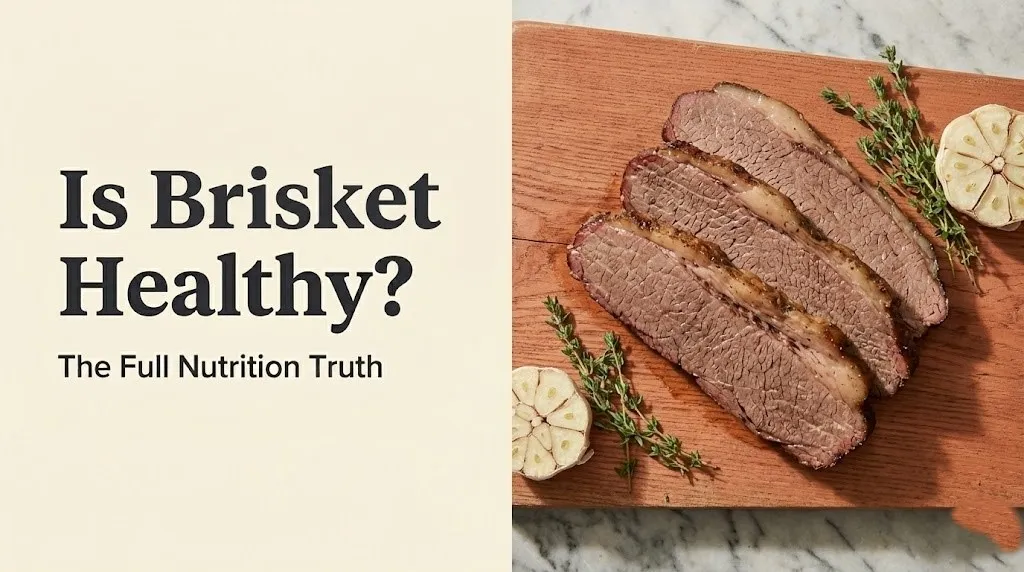
Brisket is healthy in moderate portions when prepared without heavy sodium, and it delivers an impressive amount of protein, iron, and zinc per serving. The full picture depends on which cut you choose, how it’s cooked, and what gets added to it before it hits the plate.
Beef is one of the most nutrient-dense animal proteins available. The USDA reports that a 3 oz (85g) serving of cooked lean beef brisket provides roughly 28 grams of protein and meaningful amounts of heme iron, zinc, and vitamin B12 (cobalamin), three nutrients that many adults fall short on.
This guide covers everything you actually need to know: the full nutritional breakdown, how the flat cut differs from the point cut, what smoking and BBQ sauce do to the numbers, and how brisket fits into different eating patterns in 2026.
Is Brisket Healthy?
Brisket can be a healthy choice when eaten in reasonable portions and prepared without excessive added sodium or sugar. It’s an unprocessed red meat that delivers complete protein along with several micronutrients your body uses every day.
The answer gets more complicated depending on the cut and preparation. A lean flat cut brisket braised in broth looks very different nutritionally from a heavily rubbed, smoked point cut glazed with BBQ sauce. Both are still “brisket,” but their calorie, fat, and sodium counts can vary by 50% or more.
Unprocessed red meat like brisket is not the same nutritional category as processed meats such as sausage, hot dogs, or cured deli beef. The World Health Organization classifies processed meats as Group 1 carcinogens; unprocessed red meat is categorized as Group 2A, meaning the evidence is limited and far less certain. Brisket in its plain form falls into the unprocessed category.
Key points about brisket’s nutritional standing:
- High-quality complete protein with all essential amino acids
- Rich in bioavailable heme iron, which absorbs more efficiently than plant-based iron
- Good source of zinc, selenium, and vitamin B12 (cobalamin)
- Contains saturated fat, which warrants attention for people with cardiovascular risk factors
- Nutritional profile shifts significantly based on cut, cooking method, and added ingredients
Is Beef Brisket Healthy to Eat Regularly?
Beef brisket is healthy to eat regularly for most people when portion sizes are appropriate and preparation stays low-sodium. The USDA Dietary Guidelines for Americans recommend keeping lean meat and poultry as part of a protein-varied diet, which can include lean beef.
“Regularly” needs a practical definition here. The American Heart Association recommends limiting red meat intake to roughly 1 to 2 servings per week, particularly for people managing cardiovascular risk. A serving is typically 3 to 4 oz of cooked meat, which is smaller than most restaurant portions.
For people without cardiovascular concerns or cholesterol issues, lean brisket two to three times per week can fit comfortably into a balanced diet. The key is treating it as part of a varied protein rotation that includes fish, legumes, poultry, and plant-based sources, rather than as a daily staple.
Think of brisket like a reliable car rather than a sports car. Driven at the right pace and maintained well, it gets you where you need to go efficiently. Driven recklessly or loaded with extras, the costs start adding up fast.
| Eating Pattern | Brisket Frequency That Fits |
|---|---|
| General balanced diet | 2 to 3 times per week, lean flat cut |
| AHA heart-health guidelines | 1 to 2 times per week, lean cut, low-sodium prep |
| DASH diet | Occasional, small portions, minimal added sodium |
| Keto/low-carb diet | Regular, but watch total saturated fat load |
| Mediterranean diet | Occasional, smaller portion alongside vegetables |
Brisket Nutrition Facts Per Serving
A standard 3 oz (85g) serving of cooked lean flat cut brisket, braised, contains approximately 174 calories according to USDA nutrient data.
That serving size reflects what a nutrition professional considers a single portion of cooked beef. Most restaurant and BBQ platters serve 6 to 8 oz, which doubles or triples these numbers. Always factor that in when calculating your actual intake.
Here is the full nutritional profile for a 3 oz (85g) cooked lean brisket flat cut, braised, based on USDA data:
| Nutrient | Amount Per 3 oz Serving | % Daily Value |
|---|---|---|
| Calories | 174 kcal | |
| Protein | 28g | 56% |
| Total Fat | 6g | 8% |
| Saturated Fat | 2.2g | 11% |
| Monounsaturated Fat | 2.6g | |
| Cholesterol | 77mg | 26% |
| Sodium | 56mg (plain) | 2% |
| Carbohydrates | 0g | 0% |
| Heme Iron | 2.4mg | 13% |
| Zinc | 5.3mg | 48% |
| Selenium | 21mcg | 38% |
| Vitamin B12 (cobalamin) | 2.8mcg | 117% |
| Niacin (vitamin B3) | 3.7mg | 23% |
| Phosphorus | 217mg | 17% |
Note: These figures are for plain braised brisket with no added rub, brine, sauce, or seasoning beyond natural cooking. Sodium figures increase substantially when any commercial seasoning or BBQ preparation is involved.
People following a gluten-free diet should verify that any rubs, marinades, or sauces used are certified gluten-free, as many commercial BBQ seasonings contain wheat-based ingredients.
Key Takeaway: Brisket is a protein-dense, micronutrient-rich cut of beef that fits most balanced diets when portioned correctly. The flat cut is leaner than most people expect, and the real nutritional risk comes from preparation choices rather than the meat itself.
How Many Calories Are in Brisket?
A 3 oz (85g) serving of lean braised brisket contains approximately 174 calories, making it a moderate-calorie, high-protein food by most dietary standards.
That calorie count changes fast depending on the cut and the cooking. Point cut brisket, which carries significantly more intramuscular fat, can reach 250 to 290 calories for the same 3 oz portion. Add a BBQ glaze, a commercial rub with added sugar, or a smoking process that incorporates rendered fat back into the meat, and you can reach 300 to 350 calories per serving without changing the portion size.
The practical math for a BBQ restaurant plate is worth knowing. A typical brisket plate at a Texas-style BBQ restaurant often contains 6 to 8 oz of smoked brisket. That puts the calorie range at approximately 350 to 700 calories from the meat alone, before sides.
| Brisket Preparation | Approx. Calories per 3 oz |
|---|---|
| Lean flat cut, braised, no added sauce | 174 kcal |
| Point cut, braised | 250 to 290 kcal |
| Smoked flat cut, no sauce | 190 to 210 kcal |
| Smoked point cut, no sauce | 270 to 310 kcal |
| BBQ-glazed brisket (with sauce) | 290 to 380 kcal |
| Corned beef brisket, cooked | 210 to 230 kcal |
Quick Tip:
- Restaurant brisket portions are typically 2 to 3 times larger than a clinical serving size
- Asking for a half portion or packing half away before eating is a reliable way to manage calorie intake without sacrificing the experience
- Lean flat cut without sauce is your lowest-calorie brisket option at any BBQ setting
Brisket Protein Content: What You’re Actually Getting
Brisket delivers approximately 28 grams of complete protein per 3 oz (85g) cooked serving, making it one of the higher-protein beef cuts available per calorie.
Complete protein means brisket contains all nine essential amino acids that your body cannot produce on its own. These include leucine, isoleucine, and valine (the branched-chain amino acids), which play a direct role in muscle protein synthesis after exercise, according to research published in the American Journal of Clinical Nutrition.
Brisket also contains meaningful amounts of creatine and carnosine, two bioactive compounds found in muscle tissue. Creatine supports energy production in muscle cells during short, high-intensity activity. Carnosine acts as a buffering agent in muscle tissue and has been associated with reduced exercise-related fatigue in multiple studies.
For people focused on protein intake, here’s how brisket compares to other common protein sources at the same serving size:
| Protein Source | Protein per 3 oz Cooked | Approx. Calories |
|---|---|---|
| Brisket flat cut | 28g | 174 kcal |
| Chicken breast, skinless | 26g | 128 kcal |
| Salmon, Atlantic | 22g | 177 kcal |
| Egg (whole, large) | 6g | 72 kcal |
| Lentils (cooked, 3 oz) | 7g | 86 kcal |
| Tofu, firm | 7g | 60 kcal |
Brisket’s protein density makes it particularly relevant for older adults, who require more dietary protein to maintain muscle mass. The Academy of Nutrition and Dietetics notes that adults over 65 may benefit from intakes above the standard 0.8g per kilogram of body weight to counteract age-related muscle loss (sarcopenia).
Brisket Fat Content: What the Numbers Mean
Lean brisket flat cut contains about 6 grams of total fat per 3 oz cooked serving, with 2.2 grams of that being saturated fat. That’s a moderate fat level within the context of most dietary guidelines.
The breakdown of fat types matters here. Of the 6g total fat in a lean flat cut serving, approximately 2.6g is monounsaturated fat, primarily in the form of oleic acid, the same fatty acid dominant in olive oil. Oleic acid has been associated with neutral or favorable effects on LDL cholesterol in several clinical studies. The American Heart Association notes that replacing saturated fat with unsaturated fat is preferable for heart health, but the presence of monounsaturated fat in brisket is a nuance most articles miss entirely.
The point cut tells a different story. It can contain 14 to 18 grams of total fat per 3 oz serving, with 5 to 7 grams of saturated fat. This matters for anyone monitoring their cardiovascular risk.
| Fat Type | Flat Cut (per 3 oz) | Point Cut (per 3 oz) |
|---|---|---|
| Total Fat | 6g | 14 to 18g |
| Saturated Fat | 2.2g | 5 to 7g |
| Monounsaturated Fat | 2.6g | 5 to 8g |
| Polyunsaturated Fat | 0.2g | 0.5g |
| Cholesterol | 77mg | 85 to 95mg |
People with familial hypercholesterolemia or a history of cardiovascular disease should pay particular attention to the saturated fat content in the point cut. Choosing the flat cut and trimming visible fat before cooking reduces saturated fat intake meaningfully at the same serving size.
Key Takeaway: The flat cut and point cut are nutritionally very different animals. If fat content is a concern for you, the flat cut with visible fat trimmed before cooking is a meaningfully better choice, with less than half the total fat of the point cut.
Flat Cut vs. Point Cut Brisket: Which Is Healthier?
The flat cut is the healthier choice between the two brisket cuts because it contains significantly less fat per serving at approximately 6g total fat versus 14 to 18g in the point cut.
Beef brisket comes from the chest or pectoral region of cattle and is sold as two distinct sections. The flat cut (also called the “first cut”) is a leaner, more uniform slab of muscle. The point cut (also called the “second cut” or “deckle”) is thicker, fattier, and contains more connective tissue and intramuscular fat marbling.
The point cut has its advantages in the kitchen. More fat means more flavor and more collagen, which breaks down during long cooking to create that melt-in-your-mouth texture brisket is known for. From a strictly nutritional standpoint, however, the flat cut wins consistently.
The collagen in both cuts is worth noting separately. During braising or slow smoking, collagen (the structural protein in connective tissue) converts to gelatin. Gelatin is not a bioavailable protein in a meaningful sense for muscle building, but it has demonstrated some benefits for joint health in research published in the journal Nutrients.
| Attribute | Flat Cut | Point Cut |
|---|---|---|
| Fat content | Lower (6g/3 oz) | Higher (14 to 18g/3 oz) |
| Saturated fat | Lower (2.2g) | Higher (5 to 7g) |
| Texture when cooked | Leaner, sliceable | Richer, more tender |
| Best cooking method | Braising, roasting | Smoking, long braise |
| Better for calorie control | Yes | No |
| Better for intense flavor | No | Yes |
Quick Tip:
- Ask for the flat cut specifically at butcher counters and BBQ restaurants
- Trim any external fat cap before cooking to further reduce total fat intake
- The flat cut holds up better for sliced brisket presentations in recipes
Is Smoked Brisket Healthy?
Smoked brisket is generally healthy in moderate portions when prepared without heavy sodium rubs, though the smoking process introduces some considerations worth knowing.
Wood-smoking beef brisket at low temperatures (225°F to 275°F, or 107°C to 135°C) for extended periods does not dramatically change the macronutrient profile compared to braising. Some fat renders and drips away during smoking, which can modestly reduce total fat per serving compared to braised preparations.
The more relevant concern with smoking is the formation of polycyclic aromatic hydrocarbons (PAHs) and heterocyclic amines (HCAs), compounds that form when meat is exposed to smoke and high heat. Research published in the American Journal of Clinical Nutrition has linked high intake of well-done or heavily smoked meat with increased colorectal cancer risk in observational studies. The key word is “high intake,” meaning regular large portions. Occasional smoked brisket at reasonable portions has not been shown to carry a measurable risk increase in most healthy adults.
Practical steps that reduce PAH exposure during smoking include:
- Using hardwoods like oak, hickory, or applewood rather than treated or resinous wood
- Maintaining consistent low heat below 275°F (135°C) rather than allowing flare-ups
- Avoiding direct flame contact with the meat surface
- Trimming charred exterior portions if they form
- Not eating the darkened crust (the “bark”) in large amounts regularly
People with a history of colorectal cancer or those with a strong family history of digestive cancers may want to consult a gastroenterologist about smoked meat frequency as part of their overall dietary pattern, not as an isolated concern.
Is BBQ Brisket Healthy?
BBQ brisket’s healthiness depends heavily on the sauce and seasoning applied, not just the meat itself. Plain smoked or braised brisket and BBQ-glazed brisket are nutritionally distinct despite looking similar on the plate.
A standard commercial BBQ sauce adds roughly 60 to 80 calories, 14 to 17 grams of sugar, and 300 to 500mg of sodium per 2-tablespoon serving. Most brisket preparations at restaurants use far more than 2 tablespoons per portion. This transforms an otherwise moderate protein food into a high-sugar, high-sodium meal quickly.
The sodium load is particularly worth watching. According to the American Heart Association, most American adults consume well above the recommended maximum of 2,300mg of sodium per day. A single BBQ brisket plate with sauce can contribute 800 to 1,400mg of sodium from the sauce alone, depending on the brand and application.
| BBQ Sauce Factor | Typical Impact |
|---|---|
| Added sugar per 2 tbsp | 14 to 17g |
| Added sodium per 2 tbsp | 300 to 500mg |
| Additional calories per serving | 60 to 80 kcal |
| High-fructose corn syrup | Present in most commercial sauces |
Healthier approaches to BBQ brisket without sacrificing flavor:
- Use a dry rub made from smoked paprika, garlic powder, black pepper, and a small amount of brown sugar instead of a sugary sauce
- Choose a sauce labeled “no added sugar” or make a vinegar-based BBQ sauce at home
- Apply sauce at the table rather than during cooking so you control the quantity
- Look for sauces with under 150mg of sodium per 2 tablespoons when shopping
People managing type 2 diabetes or prediabetes should pay close attention to BBQ sauce sugar content, as the combination of a protein-dense meat and a high-glycemic sauce can affect postprandial blood glucose more than the protein alone would suggest.
Key Takeaway: The BBQ sauce matters as much as the brisket itself. A lean flat cut brisket under a heavy commercial glaze can end up delivering more sugar and sodium per serving than a cheeseburger. Dry rubs and low-sugar sauce options give you the experience without the numbers.
Is Brisket Good for Weight Loss?
Brisket can fit a weight loss eating plan when the lean flat cut is chosen, portions are kept to 3 to 4 oz, and high-sugar or high-sodium preparations are avoided.
Weight management comes down to total energy balance, protein satiety, and diet adherence. Brisket’s high protein content works in its favor on all three counts. Protein is the most satiating macronutrient. Research from Harvard T.H. Chan School of Public Health confirms that higher protein intake is associated with reduced hunger and better weight maintenance in adults across multiple dietary patterns.
A 4 oz (113g) lean flat cut brisket serving provides approximately 37 grams of protein at around 232 calories. That protein-to-calorie ratio is competitive with grilled chicken breast and considerably better than most other beef cuts.
The challenge with brisket and weight loss is the typical eating context. BBQ settings, restaurant portions, and social gatherings tend toward larger portions, richer accompaniments (creamed corn, mac and cheese, white bread), and sauced preparations. The food itself may be fine; the portion and the context often are not.
Practical strategies for including brisket in a weight management plan:
- Choose lean flat cut and trim external fat before cooking
- Stick to a 3 to 4 oz portion as a protein anchor, not the centerpiece of the plate
- Pair with fiber-rich sides: roasted vegetables, a green salad, or a bean-based side dish
- Skip the white bread and use brisket as a protein topping on a large green salad instead
- Avoid commercial BBQ sauces; use a vinegar-based or hot sauce option instead
People following a structured calorie-deficit plan should weigh portions before eating rather than estimating visually, as brisket is dense and small differences in portion size add up.
Is Brisket High in Cholesterol?
Brisket contains approximately 77mg of cholesterol per 3 oz (85g) cooked lean serving, which is moderate compared to other protein sources. For context, the previous US Dietary Guideline recommendation of limiting dietary cholesterol to 300mg per day was dropped from the 2015 to 2020 guidelines.
Current understanding of dietary cholesterol has shifted. The USDA Dietary Guidelines for Americans now state that dietary cholesterol does not have a strongly demonstrated independent effect on blood cholesterol for most healthy people. Saturated fat and trans fat have a larger impact on LDL cholesterol levels than dietary cholesterol itself.
That said, individuals with familial hypercholesterolemia or those who are “hyper-responders” to dietary cholesterol (estimated at roughly 25% of the population based on genetic research) may see LDL increases from high dietary cholesterol intake. For these individuals, limiting high-cholesterol animal protein sources and choosing lean cuts is a sensible approach.
| Food | Cholesterol per 3 oz Cooked |
|---|---|
| Brisket flat cut | 77mg |
| Chicken breast, skinless | 73mg |
| Salmon | 63mg |
| Shrimp | 166mg |
| Beef liver | 311mg |
| Whole egg (1 large) | 186mg |
The point cut brisket raises cholesterol slightly higher per serving due to higher fat content, reaching approximately 85 to 95mg per 3 oz. Trimming fat and choosing the flat cut remains the most practical tool for moderating cholesterol intake from brisket.
Key Takeaway: Brisket’s cholesterol content is moderate and unlikely to concern most healthy adults under current dietary science. The saturated fat in the point cut is a larger concern for cardiovascular health than the cholesterol count itself.
Brisket Sodium Content: Where the Salt Really Comes From
Plain cooked brisket contains only about 56mg of sodium per 3 oz serving, but most brisket people actually eat has been marinated, rubbed, brined, or sauced to far higher levels.
The word “brisket” covers a wide range of preparations. Plain braised brisket with no added seasoning is genuinely low in sodium. The same cut after a commercial dry rub, an overnight brine, or a BBQ sauce application can deliver 600 to 1,400mg of sodium per 4 oz serving.
Corned beef brisket is a separate case entirely. Corning is a traditional curing process using a salt brine with sodium nitrates. A 3 oz serving of corned beef contains approximately 827mg of sodium, making it one of the highest-sodium beef preparations available. People managing hypertension should note this distinction clearly.
The American Heart Association recommends that adults with high blood pressure aim for no more than 1,500mg of sodium per day. A heavily brined or sauced brisket serving can represent the majority of that entire daily target in a single meal.
Sodium sources in typical brisket preparations:
- Dry rubs: Often contain salt as the first ingredient; 1 tablespoon can add 300 to 600mg of sodium
- Injections: Competition BBQ often injects brisket with butter and broth mixtures that dramatically increase sodium
- BBQ sauce: Adds 300 to 500mg per 2-tablespoon serving
- Commercial seasoning blends: Usually contain salt, garlic salt, and onion salt simultaneously
- Corning/curing brine: Adds 800mg or more per serving
Making your own rub with limited salt and using herb-based flavor sources such as smoked paprika, cumin, black pepper, and garlic powder gives you full control over the sodium content of your brisket.
Is Lean Brisket Healthy?
Lean brisket, specifically the trimmed flat cut with less than 10g of total fat per 3 oz serving, meets the USDA definition of a lean beef cut and is among the healthier red meat options available.
The USDA defines lean beef as containing fewer than 10g total fat, 4.5g saturated fat, and 95mg cholesterol per 3 oz cooked serving. Trimmed flat cut brisket meets all three criteria when properly prepared. This puts it in the same nutritional category as eye of round roast, top round steak, and 95% lean ground beef, cuts that registered dietitians generally consider reasonable protein sources for heart-conscious eating.
A Harvard T.H. Chan School of Public Health analysis reviewing multiple dietary cohort studies found that replacing one serving of processed red meat per day with an unprocessed lean red meat source was associated with lower long-term cardiovascular risk. Lean brisket falls into the unprocessed, lower-fat category that benefits from this distinction.
| Lean Beef Cut (3 oz cooked) | Total Fat | Saturated Fat | Calories |
|---|---|---|---|
| Eye of round roast | 2.6g | 0.9g | 138 kcal |
| Top round roast | 4.6g | 1.6g | 157 kcal |
| Flat cut brisket, trimmed | 6g | 2.2g | 174 kcal |
| Top sirloin | 5g | 1.9g | 160 kcal |
| 95% lean ground beef | 5g | 2.3g | 164 kcal |
For people who enjoy beef and want to maintain a heart-conscious diet, lean flat cut brisket is a real option rather than a compromise. The protein and micronutrient profile is strong, and the fat content is within guidelines when portions are controlled.
How to Make Brisket Healthier
You can make brisket significantly healthier by choosing the flat cut, trimming visible fat, controlling sodium in the seasoning, and pairing it with fiber-rich sides rather than refined starches.
These are not complicated modifications. Most of them happen before cooking, which means you don’t sacrifice the eating experience at all.
To prepare a healthier brisket at home:
- Buy a flat cut brisket with the fat cap trimmed to no more than 1/4 inch (0.6cm) before cooking.
- Make a dry rub using 1 tsp smoked paprika, 1 tsp garlic powder, 1 tsp black pepper, 1/2 tsp cumin, and 1/4 tsp salt per pound of meat. This keeps sodium under 150mg per serving.
- Sear the brisket in a Dutch oven at medium-high heat for 3 to 4 minutes per side to build a crust without charring.
- Braise in 1 to 2 cups of low-sodium beef broth at 300°F (150°C) for 3.5 to 4 hours, covered tightly.
- Rest the cooked brisket for at least 20 minutes before slicing. Always slice against the grain for tender results.
- Serve with roasted Brussels sprouts, a mixed green salad, or steamed vegetables rather than white bread or creamy sides.
Additional quick adjustments:
- Substitute coconut aminos for soy sauce in marinades to reduce sodium by roughly 70%
- Add fresh herbs (thyme, rosemary, bay leaves) to the braise liquid for flavor without any sodium or calories
- Use a vinegar-based slaw instead of a creamy coleslaw as your side dish
People following a low-FODMAP diet should check dry rub and broth ingredients, as garlic and onion powder can trigger symptoms in those with irritable bowel syndrome (IBS).
Key Takeaway: Making brisket healthier is genuinely achievable without changing the essential experience of eating it. The flat cut, a smart rub, a low-sodium braise, and vegetable sides transform brisket from an occasional indulgence into a reasonable weekly protein option.
Is Brisket Healthier Than Other Beef Cuts?
Lean flat cut brisket is healthier than short ribs, ribeye, and T-bone steak on a per-serving fat and calorie basis, and it’s comparable to top round and top sirloin in overall nutritional profile.
The comparison gets interesting when you line up the actual numbers. Brisket is often dismissed as a fatty cut because of how it looks before cooking (it has a visible fat cap) and because BBQ culture tends to feature the fattier point cut. The flat cut, trimmed, is a different story.
| Beef Cut (3 oz cooked, lean) | Calories | Total Fat | Saturated Fat | Protein |
|---|---|---|---|---|
| Flat cut brisket, trimmed | 174 kcal | 6g | 2.2g | 28g |
| Top sirloin | 160 kcal | 5g | 1.9g | 26g |
| Top round roast | 157 kcal | 4.6g | 1.6g | 27g |
| Ribeye steak, trimmed | 214 kcal | 13g | 5.3g | 21g |
| Short ribs, braised | 251 kcal | 18g | 7.6g | 22g |
| T-bone steak, lean | 182 kcal | 8.8g | 3.5g | 24g |
| 80% lean ground beef | 218 kcal | 14g | 5.4g | 22g |
Brisket’s protein content at 28g per 3 oz is actually higher than ribeye, short ribs, and most ground beef preparations at equivalent portions. The leaner cuts (top round, eye of round) do beat brisket on fat, but they also tend to be tougher and less satisfying without the long braise that brisket inherently demands, making brisket the more practical high-protein option for slow-cooked meals.
The USDA’s “Beef. It’s What’s for Dinner.” nutrition resources confirm that flat cut brisket qualifies as a lean cut, placing it alongside the cuts most nutrition professionals consider appropriate for heart-conscious eating plans.
Frequently Asked Questions About Brisket and Health
How many calories are in a 3 oz serving of brisket?
A 3 oz (85g) serving of cooked lean flat cut brisket contains approximately 174 calories, according to USDA nutrient data.
Point cut brisket at the same serving size contains 250 to 290 calories due to its higher fat content.
BBQ glazed or heavily seasoned preparations add additional calories from sugar and fat rendering.
Is brisket a lean meat?
Trimmed flat cut brisket meets the USDA definition of lean beef, containing fewer than 10g total fat and 4.5g saturated fat per 3 oz cooked serving.
The point cut does not meet the lean definition and contains roughly 14 to 18g of total fat per 3 oz serving.
Asking specifically for the flat cut at the butcher or restaurant is the straightforward way to ensure you’re getting the leaner option.
Can I eat brisket on a keto diet?
Brisket is well-suited to a ketogenic diet because it contains zero carbohydrates and a high proportion of protein and fat per serving.
Both the flat cut and point cut work on keto, with the point cut providing more fat for those targeting a higher fat-to-protein ratio.
Avoid BBQ sauces with added sugar; use dry rubs or vinegar-based sauces to keep carbohydrate intake at zero.
Is smoked brisket bad for you?
Smoked brisket is not bad for you in moderate portions, though the smoking process can produce small amounts of polycyclic aromatic hydrocarbons (PAHs), which are associated with increased colorectal cancer risk at very high long-term intakes.
Maintaining low smoking temperatures below 275°F (135°C) and using hardwood rather than treated wood reduces PAH formation.
For most healthy adults eating smoked brisket occasionally, the nutritional benefits of the lean protein outweigh the minimal exposure risk.
How often can I eat brisket as part of a healthy diet?
The American Heart Association recommends limiting red meat to 1 to 2 servings per week for cardiovascular health, and lean flat cut brisket fits within that guidance.
For healthy adults without cardiovascular risk factors, eating lean brisket 2 to 3 times per week as part of a varied protein rotation is generally consistent with major dietary guidelines.
The preparation method matters as much as frequency: plain braised or dry-rubbed brisket is a meaningfully different nutritional choice from heavily sauced, high-sodium restaurant portions.
The Bottom Line on Brisket
Brisket earns its place on a healthy plate when you choose the lean flat cut, control the sodium, and keep portions in the 3 to 4 oz range. It’s a complete protein source with an impressive micronutrient profile, and the flat cut genuinely qualifies as lean beef under USDA criteria.
The preparation choices surrounding brisket matter as much as the meat itself. A well-trimmed flat cut braised in low-sodium broth with a homemade dry rub is a very different nutritional proposition than a heavily rubbed, smoked point cut buried under commercial BBQ sauce.
Eat it the right way, and brisket is a practical, satisfying protein option that fits most healthy eating patterns in 2026.