You are sitting in a Thai restaurant, staring at the menu. Pad thai catches your eye. You know it is delicious. You also suspect it might be a calorie bomb hiding behind vegetables and rice noodles. You want to know whether you can order it without guilt, or whether you should pivot to something greener.
Pad thai sits in the middle of the health spectrum. It is not as indulgent as a cream-based pasta or a deep-fried platter. It is not as lean as a steamed fish with vegetables. A typical restaurant serving contains 700 to 1,200 calories, 20 to 35 grams of protein, and a sodium load that can exceed an entire day’s recommended limit in a single bowl. The health answer depends on portion size, protein choice, and what the kitchen does with oil and fish sauce.
What surprises most people about pad thai is not the calorie count. It is the sodium. Fish sauce, soy sauce, and shrimp paste are salt delivery systems. They give pad thai its signature savory depth and also push the sodium content into territory that concerns the American Heart Association. A restaurant serving can contain 2,000 to 3,500 milligrams of sodium, more than a day’s upper limit.
The legal landscape matters too. Chain restaurants with 20 or more US locations must list calorie counts on their menus under the FDA menu labeling rule. But independent Thai restaurants, which make up the majority of Thai food establishments in the country, are exempt. You have no legal right to calorie or sodium information at most Thai restaurants in America.
is pad thai healthy
Pad thai can be a reasonably healthy meal when made with controlled oil, moderate sodium, and a good balance of protein and vegetables. It is not a health food in the way a salad with grilled chicken is a health food. It is a noodle dish with sugar, salt, and oil. The nutritional value depends almost entirely on how it is prepared.
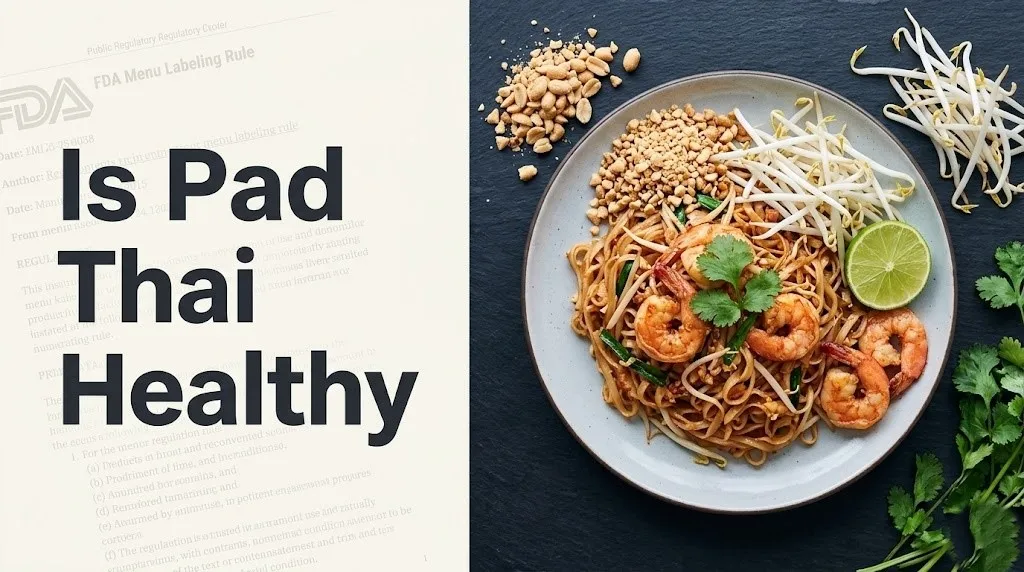
A traditional pad thai contains rice noodles, protein such as shrimp, chicken, or tofu, egg, bean sprouts, green onions, crushed peanuts, and a sauce made from tamarind paste, fish sauce, sugar, and sometimes chili. The ingredient list includes several nutrient-dense items. Tamarind paste contains antioxidants and small amounts of B vitamins. Bean sprouts provide vitamin C and folate. Peanuts contribute monounsaturated fat and vitamin E. The protein, whatever its source, delivers amino acids for muscle maintenance.
The problems are the noodles, the sugar, and the salt. Rice noodles are refined carbohydrates. They digest quickly and can spike blood glucose in susceptible individuals. The sugar in the sauce, usually palm sugar or brown sugar, adds empty calories. The fish sauce and soy sauce contribute sodium at levels that are difficult to manage if you eat pad thai regularly.
A homemade pad thai with controlled oil, less sugar, and measured sodium can be a perfectly reasonable meal. The dish is not inherently unhealthy. The standard American restaurant preparation, heavy on oil and sodium, is the version that raises concerns.
is pad thai healthy for you
Pad thai is healthy for you if you are a generally healthy adult, you order or prepare it with lean protein and extra vegetables, and you eat it as an occasional meal rather than a daily staple. It is not healthy for you if you have hypertension, diabetes, or peanut allergies, or if you eat it multiple times per week from restaurants that use heavy oil and salt.
The “for you” in this question does real work. A twenty-five-year-old with normal blood pressure and an active lifestyle can eat restaurant pad thai weekly with no measurable harm. A sixty-year-old with hypertension and type 2 diabetes should be far more cautious. The same dish has different health implications for different people.
The sodium content is the variable that most affects individual suitability. The American Heart Association recommends limiting sodium to 2,300 milligrams per day with an ideal target of 1,500 milligrams. A single restaurant pad thai can deliver 2,000 to 3,500 milligrams. For someone with sodium-sensitive hypertension, that is a meal that actively works against their health. For someone with low blood pressure and high activity levels who sweats heavily, the sodium is less concerning.
The carbohydrate content matters for people with diabetes or insulin resistance. Rice noodles are high on the glycemic index. A typical pad thai contains 60 to 80 grams of carbohydrates, mostly from the noodles and sugar. That carbohydrate load can spike blood glucose. Pairing pad thai with extra protein and fiber from vegetables slows the glucose response but does not eliminate it.
Key Takeaway: Pad thai is not universally healthy or unhealthy. It is a dish with a specific nutritional profile that either fits your health needs or does not. Know your numbers before you order.
how healthy is pad thai
On a scale from steamed vegetables with grilled fish to deep-fried cheeseburger with fries, pad thai falls somewhere in the middle. It has nutritional strengths, including high-quality protein and some vegetables, and nutritional weaknesses, including refined carbohydrates, added sugar, and excessive sodium in most restaurant preparations.
Comparing pad thai to other common takeout meals puts its nutritional profile in perspective. A serving of chicken pad thai contains roughly 700 to 1,000 calories. A serving of chicken fettuccine alfredo contains 1,200 to 1,500 calories. A serving of beef and broccoli with steamed rice contains 500 to 700 calories. Pad thai is not the worst choice on a takeout menu. It is not the best either.
The protein content is a genuine strength. A chicken or shrimp pad thai delivers 25 to 35 grams of protein, enough to support satiety and muscle maintenance. The vegetables, while not abundant in most restaurant versions, add fiber and micronutrients. The peanuts add monounsaturated fat and a small amount of vitamin E.
The weaknesses are significant enough that pad thai should not be a daily food. The refined noodles lack fiber. The sugar adds empty calories. The sodium is excessive in most preparations. The oil, used liberally in restaurant wok cooking, adds calories without adding corresponding nutrition. The dish is best understood as an occasional indulgence that can be improved with modifications.
is chicken pad thai healthy
Chicken pad thai is a moderate nutritional choice. Chicken breast is a lean protein, and when the dish is prepared with controlled oil, it provides substantial protein without excessive saturated fat. A chicken pad thai at a typical restaurant contains 700 to 900 calories, 30 to 35 grams of protein, and 15 to 20 grams of fat.
The chicken itself is the healthiest part of the dish. It delivers complete protein with minimal saturated fat, assuming the chicken is breast meat rather than thigh meat. The protein supports satiety, meaning you feel full after eating and are less likely to snack later. The lean protein also helps buffer the blood sugar spike from the rice noodles.
The weakness of chicken pad thai is the same as any pad thai. The sauce, noodles, and oil drive the calorie and sodium counts. Adding chicken does not subtract from those. It simply adds protein. The dish is a better choice than a beef pad thai, which typically has more saturated fat, or a fried protein option like breaded shrimp.
The sodium content of chicken pad thai is similar to other pad thai variations. The fish sauce and soy sauce in the sauce mixture provide the sodium. The chicken itself is not salted heavily if the sauce is doing the seasoning work. The sodium load is from the condiments, not the protein.
is shrimp pad thai healthy
Shrimp pad thai is among the healthier pad thai protein choices. Shrimp is low in saturated fat, high in protein, and contains omega-3 fatty acids. It also contains iodine and selenium, trace minerals that support thyroid function and antioxidant defense. A shrimp pad thai contains roughly 650 to 850 calories with 25 to 30 grams of protein.
Shrimp has a nutritional advantage over chicken in one important area. It contains the omega-3 fatty acids EPA and DHA, though in smaller amounts than oily fish like salmon. These fatty acids reduce inflammation and support cardiovascular health. A serving of shrimp pad thai provides roughly 100 to 200 milligrams of combined EPA and DHA, a modest but meaningful contribution.
The cholesterol in shrimp was historically a concern, but that thinking has changed. The USDA Dietary Guidelines for Americans removed the 300-milligram daily cholesterol limit in 2015 after research showed dietary cholesterol has a smaller effect on blood cholesterol than saturated fat. Shrimp is low in saturated fat. For most people, the cholesterol in shrimp pad thai is not a health concern.
The shrimp in restaurant pad thai is often smaller and more numerous than the shrimp in homemade versions. Restaurants use smaller shrimp to distribute protein across more bites and control cost. The shrimp count does not meaningfully change the nutritional profile. The protein content is determined by the total weight of shrimp in the dish, not the number of individual pieces.
is tofu pad thai healthy
Tofu pad thai is a healthy plant-based option with a different nutritional profile than meat-based versions. Tofu is lower in calories than chicken or shrimp, contains no saturated fat, and provides isoflavones, plant compounds with antioxidant properties. A tofu pad thai contains roughly 600 to 800 calories with 20 to 25 grams of protein.
The protein in tofu is complete, meaning it contains all nine essential amino acids. The protein quality is slightly lower than animal protein, but the difference is small in the context of a varied diet. Tofu made from soybeans is one of the best plant protein sources available. It is also a good source of calcium if it is set with calcium sulfate, as most commercial tofu is.
The fat in tofu is primarily polyunsaturated, which is a cardiovascular advantage over the saturated fat in meat-based proteins. Tofu pad thai is the lowest-saturated-fat version of the dish. It is a good choice for people watching their LDL cholesterol or following a plant-based eating pattern.
The weakness of tofu pad thai is the sodium and the noodles, which are the same weaknesses as every other pad thai variation. Tofu itself is bland and absorbs the salt from the sauce. The sodium content is not lower just because the protein is plant-based. Restaurant tofu pad thai can still exceed 2,000 milligrams of sodium.
Legal Bottom Line: Tofu is regulated by the FDA as a food product. The term “tofu” has no federal standard of identity, meaning manufacturers have flexibility in how they produce and label it. Organic tofu is certified under the USDA National Organic Program, which prohibits synthetic pesticides and genetically modified soybeans.
is pad thai healthy for weight loss
Pad thai is not an ideal weight loss food due to its calorie density, refined carbohydrate content, and generous use of oil in most preparations. A single restaurant serving can contain 700 to 1,200 calories, which is a large portion of a typical weight loss calorie budget. Eating pad thai regularly while trying to lose weight requires portion control and modifications.
The calorie math is straightforward. A person trying to lose weight might aim for 1,500 to 1,800 calories per day. A restaurant pad thai at 1,000 calories consumes more than half of that budget in one meal. Unless the other two meals are very light, the day’s calorie total will exceed the target. Weight loss stalls or reverses.
The carbohydrate content of pad thai also works against weight loss for some people. Refined carbohydrates from rice noodles digest quickly and can trigger insulin release. High insulin levels promote fat storage and can increase hunger a few hours after eating. A meal that combines protein, fiber, and complex carbohydrates manages appetite better than a noodle-heavy dish.
If you want to include pad thai in a weight loss plan, make it at home where you control the portion, the oil, and the noodle-to-vegetable ratio. Use half the noodles and double the bean sprouts. Use a teaspoon of oil for the entire dish instead of the several tablespoons a restaurant wok receives. Measure the fish sauce. A homemade pad thai with these modifications can come in at 400 to 500 calories, which fits easily into a weight loss calorie budget.
is restaurant pad thai healthy
Restaurant pad thai is generally not healthy as a regular meal. It is high in calories, sodium, and refined carbohydrates, and the oil quantity used in restaurant woks far exceeds what a home cook would use. A single restaurant serving can deliver more than a day’s worth of sodium and nearly half a day’s calories for an average adult.
The wok cooking technique used in Thai restaurants requires high heat and generous oil to prevent sticking and to achieve the slightly charred, glossy texture that defines good pad thai. The oil is not measured in teaspoons. It is poured from a bottle in a steady stream. The finished dish absorbs much of that oil. A restaurant pad thai can contain 3 to 5 tablespoons of cooking oil, adding 360 to 600 calories from oil alone.
The FDA menu labeling rule requires calorie disclosure at chain restaurants with 20 or more locations. This means you can see the calorie count before ordering at a large chain like Pei Wei or a nationwide Thai chain, if one exists in your area. The rule does not apply to independent Thai restaurants, which are the majority. At those restaurants, the consumer has no legal right to nutritional information.
State Spotlight: California’s menu labeling law, the first in the nation, applies to chain restaurants with 20 or more locations in the state. It mirrors the federal rule. New York City’s law applies to chains with 15 or more locations nationwide. Independent restaurants are exempt in both jurisdictions. No state requires independent Thai restaurants to disclose calorie or sodium data.
is homemade pad thai healthy
Homemade pad thai is significantly healthier than restaurant pad thai because you control the oil quantity, the sodium level, the sugar content, and the noodle-to-vegetable ratio. A homemade pad thai can contain 400 to 600 calories and 800 to 1,200 milligrams of sodium, roughly half the calories and one-third the sodium of a typical restaurant version.
The oil control is the single biggest health advantage of homemade pad thai. A restaurant wok uses several tablespoons of oil per serving. At home, you can make a credible pad thai with 1 to 2 teaspoons of oil in a nonstick or well-seasoned wok. The calorie savings from oil alone are 250 to 400 calories per serving.
The sodium control is the second advantage. Fish sauce and soy sauce are the sodium sources in pad thai. At home, you can use reduced-sodium versions of both, or simply use less. The sauce flavor comes from tamarind, lime, and chili as well as from salt. Reducing the salty components and increasing the sour and spicy components preserves the flavor balance with less sodium.
The noodle control is the third advantage. Rice noodles are a refined carbohydrate, but the quantity matters. A homemade pad thai can use 1 to 1.5 ounces of dry noodles per serving instead of the 3 to 4 ounces a restaurant serves. Adding extra bean sprouts, shredded cabbage, or julienned carrots replaces some of the noodle volume with vegetables, adding fiber and reducing the calorie density.
is vegetarian pad thai healthy
Vegetarian pad thai can be healthy, especially when it includes tofu for protein and extra vegetables for fiber and micronutrients. The health profile is similar to tofu pad thai, with the added benefit of more vegetable volume. The sodium and refined carbohydrate concerns remain.
A vegetarian pad thai made with tofu, extra vegetables, and controlled oil is one of the healthiest versions of the dish. The vegetables add fiber, vitamins, and volume without adding many calories. The tofu provides complete protein without saturated fat. The nuts add texture and monounsaturated fat.
The risk with vegetarian pad thai at restaurants is that the kitchen compensates for the lack of meat protein by adding more oil or sugar. A vegetarian dish should not be assumed to be lower in calories or healthier than a meat-based version. The cooking technique and sauce matter more than the protein source.
Vegetarian pad thai is also more likely to be served with a peanut-heavy garnish. Peanuts are a good source of monounsaturated fat and protein, but they are also calorie-dense. A generous peanut topping can add 150 to 200 calories to the dish. If you are watching calories, ask for peanuts on the side or use them sparingly.
Key Takeaway: Vegetarian pad thai with tofu and extra vegetables is a strong nutritional choice when prepared with controlled oil and sodium. Do not assume a restaurant vegetarian version is automatically healthier.
is pad thai healthy for your heart
Pad thai is not heart healthy in its standard restaurant form due to high sodium, refined carbohydrates, and added sugars. The American Heart Association identifies these three factors as dietary contributors to hypertension, insulin resistance, and cardiovascular disease. Occasional consumption is fine. Regular consumption is not.
The sodium is the primary cardiovascular concern. High sodium intake raises blood pressure, a leading risk factor for heart attack and stroke. A restaurant pad thai with 2,500 milligrams of sodium exceeds the AHA’s daily upper limit and approaches double the ideal limit. Eaten regularly, this sodium load contributes to the development and worsening of hypertension.
The refined carbohydrates from rice noodles and the added sugar from palm sugar promote insulin resistance over time. Insulin resistance is a precursor to metabolic syndrome, which increases cardiovascular risk. The AHA recommends limiting added sugars to no more than 6 percent of daily calories. A pad thai with 2 to 3 tablespoons of sugar, which is common in restaurant recipes, delivers 25 to 36 grams of added sugar, well over the AHA’s recommended limit.
The heart health case for pad thai is weak, but the dish is not uniquely harmful. It is a restaurant meal with the same problems that affect most restaurant meals: too much salt, too much sugar, and too many refined carbohydrates. A homemade version with reduced sodium and sugar, more vegetables, and controlled oil is a better choice for heart health.
is pad thai healthy without peanuts
Yes, pad thai without peanuts is slightly healthier because it eliminates a calorie-dense topping. Peanuts add roughly 150 to 200 calories and 14 grams of fat per ounce to the dish. Removing them reduces the total calorie count without affecting the protein content significantly.
Peanuts are not unhealthy in isolation. They contain monounsaturated fat, protein, fiber, vitamin E, and several minerals. They are a nutrient-dense food. The issue is that they are calorie-dense, and pad thai already has enough calories from noodles, oil, and sugar. The peanuts add calories that may push the dish over the line from a moderate meal to an indulgent one.
For people with peanut allergies, removing peanuts is not a nutritional choice. It is a medical necessity. Peanut allergy is one of the most common food allergies and can cause anaphylaxis, a life-threatening reaction. Thai restaurants use peanuts extensively. Cross-contamination is likely even in dishes that do not list peanuts as an ingredient. Anyone with a peanut allergy must inform the restaurant and confirm that the dish is prepared without peanut exposure.
If you remove peanuts and want to preserve the texture they provide, add extra bean sprouts or sliced almonds, if almond allergy is not a concern. Almonds provide similar crunch and monounsaturated fat with a slightly better fatty acid profile. The calorie difference is small. The texture and flavor difference is noticeable.
is pad thai healthy for people with diabetes
Pad thai is not a good choice for people with diabetes, especially in restaurant portions. The rice noodles are a high-glycemic carbohydrate that digests quickly and raises blood glucose. The added sugar in the sauce compounds the problem. A person with diabetes should approach pad thai cautiously and with significant modifications.
The carbohydrate load in a standard restaurant pad thai is 60 to 80 grams, mostly from rice noodles and sugar. For someone with diabetes who is managing blood glucose through carbohydrate counting, that is a substantial portion of a meal’s carbohydrate budget. Many diabetes meal plans target 45 to 60 grams of carbohydrates per meal. A restaurant pad thai exceeds that target.
The American Diabetes Association does not prohibit specific foods for people with diabetes. It recommends managing total carbohydrate intake and choosing nutrient-dense carbohydrate sources. Rice noodles are not nutrient-dense. They are a refined grain with minimal fiber. Pairing pad thai with extra protein and vegetables slows the glucose absorption but does not change the total carbohydrate load.
A diabetes-friendly pad thai at home can work by using half the noodles, doubling the vegetables, choosing lean protein, and using a sugar substitute or a smaller amount of sugar in the sauce. Konjac noodles or spiralized vegetable noodles can replace some or all of the rice noodles. These modifications reduce the carbohydrate load to 20 to 30 grams per serving, which fits into most diabetes meal plans.
is pad thai healthy during pregnancy
Pad thai can be safe and reasonably healthy during pregnancy with specific precautions. The dish provides protein, some vegetables, and calories to support pregnancy energy needs. The concerns are food safety, particularly undercooked egg and raw bean sprouts, and the high sodium content.
Undercooked eggs in pad thai are a food safety risk during pregnancy. Pad thai traditionally includes egg that is scrambled in the wok. The egg should be fully cooked, with no runny yolk or white. The CDC advises pregnant women to avoid raw or undercooked eggs due to Salmonella risk. Inform the restaurant that you need the egg fully cooked.
Raw bean sprouts are another food safety concern. Bean sprouts are grown in warm, humid conditions that are ideal for bacterial growth, including Salmonella and Listeria. The FDA advises pregnant women to avoid raw sprouts. Pad thai is typically topped with raw bean sprouts. Ask for the sprouts to be cooked into the dish or left off entirely.
The sodium content is relevant during pregnancy, especially for women with pregnancy-induced hypertension or preeclampsia. High sodium intake can worsen fluid retention and blood pressure. A restaurant pad thai with 2,500 milligrams of sodium is a poor choice for a pregnant woman with these conditions. A homemade version with controlled sodium is safer.
Legal Bottom Line: The FDA Food Code classifies raw sprouts as a potentially hazardous food. Retail food establishments are required to keep sprouts refrigerated and to use them within a specified time. The requirement does not guarantee safety. The FDA continues to advise vulnerable populations to avoid raw sprouts.
how to order a healthy pad thai
To order a healthier pad thai at a restaurant, ask for light oil, light sauce, extra vegetables, and protein such as shrimp or tofu. Request peanuts on the side or not at all. Ask for lime wedges and fresh chili to add flavor without sodium. Be specific with the server. Most Thai restaurants will accommodate reasonable modifications.
The phrase “light oil” or “easy on the oil” tells the kitchen to use less cooking oil in the wok. This is a common request at Thai restaurants and most kitchens know how to execute it. The dish will have less of the glossy sheen that restaurant pad thai is known for, but the flavor will remain largely intact.
The phrase “light sauce” or “easy on the sauce” reduces the fish sauce, soy sauce, and sugar in the dish. This lowers both sodium and sugar. The tamarind tang will still come through. Ask for lime wedges and chili on the side to add flavor at the table without adding sodium or sugar.
The request for extra vegetables is usually accommodated by adding more bean sprouts, shredded cabbage, or carrots. Some restaurants charge a small fee. The added vegetables increase the fiber and volume of the dish without adding significant calories. They also reduce the proportion of noodles in each bite.
is pad thai healthy compared to other noodle dishes
Pad thai is generally healthier than cream-based pasta dishes like fettuccine alfredo and roughly comparable to other Asian stir-fried noodle dishes like lo mein or chow fun. It is less healthy than broth-based noodle soups like pho or soba noodle soup. The comparison depends on the specific dishes and preparations.
Comparing pad thai to common noodle dishes gives context for its nutritional standing. A serving of chicken pad thai contains roughly 700 to 1,000 calories. A serving of chicken lo mein contains 800 to 1,100 calories. A serving of beef chow fun contains 900 to 1,200 calories. A serving of chicken fettuccine alfredo contains 1,200 to 1,500 calories. Pad thai is not the worst noodle dish, but it is in the same general calorie range as its peers.
The sodium comparison is less favorable to pad thai. Fish sauce and soy sauce are concentrated sodium sources. Pad thai often contains more sodium per serving than lo mein or chow fun because of the fish sauce component. A bowl of pho can also be high in sodium, but the broth dilutes the concentration, and the consumer controls how much broth to drink.
The protein content is favorable for pad thai. The dish typically includes more protein per serving than cream-based pasta dishes and is roughly comparable to other Asian noodle dishes with protein additions. The egg in pad thai contributes additional protein that not all noodle dishes include.
is pad thai healthy if you skip the noodles
Pad thai without noodles is not really pad thai. It is a stir-fried protein and vegetable dish with tamarind sauce. That dish is healthier than traditional pad thai because it eliminates the refined carbohydrates that drive the calorie and blood glucose impact. It is essentially a Thai stir-fry.
The noodle-free version of pad thai has a different name in Thai cuisine. It is not a standard menu item. If you ask a Thai restaurant to make pad thai without noodles, they will likely accommodate the request by making a stir-fry with the same sauce and protein, served over or alongside vegetables. The result is a lower-calorie, lower-carbohydrate meal.
The nutritional profile of noodle-free pad thai is strong. The protein, vegetables, and tamarind-based sauce provide protein, fiber, micronutrients, and flavor without the 60 to 80 grams of refined carbohydrates. The calorie count drops by roughly 300 to 400 calories. The sodium remains high from the sauce. The dish fits into low-carbohydrate and diabetes-friendly eating patterns.
The texture and eating experience are different. Noodles provide bulk and chew. Without them, the dish is lighter and less satisfying in terms of mouthfeel. Adding extra vegetables with different textures, such as shredded cabbage for crunch and steamed broccoli for substance, partially compensates for the missing noodles.
is pad thai healthy from a calorie perspective
Pad thai is moderately high in calories for a single meal. A restaurant serving contains 700 to 1,200 calories, with the variation depending on the restaurant, the protein, and the portion size. For an adult eating roughly 2,000 calories per day, pad thai occupies 35 to 60 percent of the daily calorie budget in one meal.
The calorie breakdown of pad thai reveals where the energy comes from. Rice noodles contribute roughly 200 to 250 calories per cup, and a restaurant serving includes 2 to 3 cups. Cooking oil contributes 120 to 150 calories per tablespoon, and a restaurant serving uses 3 to 5 tablespoons. The protein contributes 100 to 200 calories depending on type and amount. The sugar in the sauce contributes 50 to 100 calories. The peanuts contribute 100 to 200 calories. The egg contributes 70 calories.
The calorie distribution is roughly 50 percent carbohydrates, 30 percent fat, and 20 percent protein. That is a reasonable macronutrient split. The problem is not the ratio. It is the absolute quantity. The calories are concentrated in a dish that does not look or feel like a 1,000-calorie meal. This is the calorie density problem that affects many restaurant foods.
From a calorie perspective, pad thai is a maintenance food. It is not a weight loss food unless the portion is controlled. It is not a bulking food unless the portion is large. It is a standard restaurant meal that fits into a maintenance calorie budget if the rest of the day’s eating is light.
Key Takeaway: Pad thai is a calorie-dense restaurant meal. The calories come from oil, noodles, and sugar. Control the portion or make it at home to manage the calorie count.
Common Questions About Pad Thai
How many calories are in a restaurant serving of pad thai?
A typical restaurant serving of pad thai contains 700 to 1,200 calories.
Chicken and shrimp versions tend toward the lower end of that range.
The variation depends on the restaurant, the oil quantity, the noodle portion, and any added toppings.
Independent Thai restaurants are not required by federal law to disclose calorie counts.
Is pad thai high in sodium?
Yes, restaurant pad thai is very high in sodium.
A single serving can contain 2,000 to 3,500 milligrams, exceeding the American Heart Association’s daily upper limit of 2,300 milligrams.
Fish sauce, soy sauce, and shrimp paste are the primary sodium sources.
Homemade pad thai with reduced-sodium condiments can cut the sodium load by half or more.
What is the healthiest protein choice for pad thai?
Shrimp is the healthiest protein choice for pad thai.
It is low in saturated fat, high in protein, and contains omega-3 fatty acids.
Tofu is the best plant-based option, providing complete protein with no saturated fat.
Chicken breast is a close second to shrimp, with similar protein and slightly more saturated fat.
Can I eat pad thai if I have a peanut allergy?
No, you should not eat pad thai at a restaurant if you have a peanut allergy.
Peanuts are a standard ingredient, and cross-contamination is likely in Thai restaurant kitchens.
Homemade pad thai can be made without peanuts, but all ingredients must be verified as peanut-free.
The sauce ingredients, particularly fish sauce and tamarind paste, are generally peanut-free, but check labels.
Is pad thai gluten free?
Pad thai is not reliably gluten free at most restaurants.
Rice noodles are naturally gluten free, but soy sauce and fish sauce may contain wheat.
Some restaurants use soy sauce with wheat as a seasoning in addition to or instead of fish sauce.
Ask the restaurant specifically about wheat in the sauce and request gluten-free soy sauce or tamari if available.
The single most important thing to understand about pad thai is that the dish itself is not the problem. The restaurant preparation is. Too much oil, too much sodium, too much sugar, and a noodle portion that dwarfs the protein and vegetables.
You can make pad thai a genuinely healthy meal at home. Use less oil. Measure the fish sauce. Cut the sugar. Double the vegetables. Choose shrimp or tofu. If you are ordering out, ask for light oil and light sauce, extra vegetables, and peanuts on the side. Eat half the portion and take the rest home.
Pad thai is too good to give up. You do not have to. You just have to know what is in it and make the adjustments that bring it in line with your health goals.