Healthy sodas replace the 39 grams of sugar, artificial colors, and phosphoric acid of traditional soda with carbonated water, a few grams of prebiotic fiber from plant sources like chicory root, natural sweeteners like stevia or monk fruit, and fruit flavors, delivering a fizzy drink at 25 to 60 calories with zero added sugar and functional fiber that supports gut bacteria.
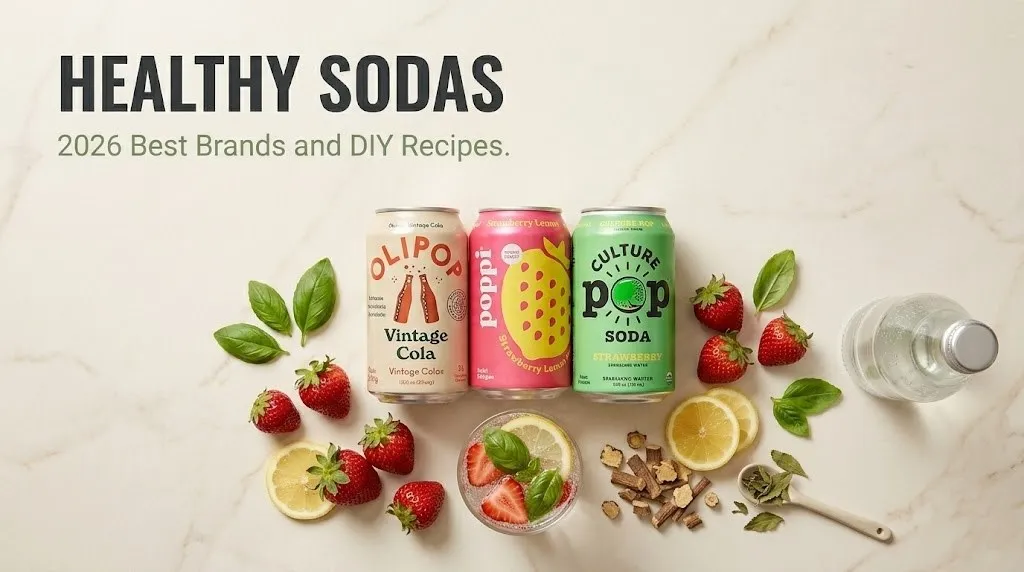
The soda aisle looks different than it did five years ago. Next to the Coke and Sprite sit cans of Olipop, Poppi, and Culture Pop claiming to be good for your digestion. The labels use words like “prebiotic” and “plant fiber.” The flavors sound like regular soda: Vintage Cola, Ginger Lemon, Classic Root Beer. The question is whether these drinks deliver on their health promises or are just diet soda with better branding.
The American Heart Association recommends limiting added sugars to 25 grams per day for women and 36 grams for men. A single can of regular soda contains 39 grams, exceeding any adult’s limit. Healthy sodas contain zero to 5 grams of sugar while providing fiber and avoiding artificial sweeteners. This article breaks down the best brands, the science behind the ingredients, and how to make your own at home.
What Makes Regular Soda Unhealthy
Regular soda is unhealthy because a single 12-ounce can contains 39 grams of added sugar, exceeding the American Heart Association’s daily limit for any adult, along with phosphoric acid that erodes tooth enamel, caramel color, and zero nutritional value beyond empty calories.
The nutritional profile of a standard can of cola is stark:
| Nutrient | Regular Cola (12 oz) |
|---|---|
| Calories | 140 |
| Total Sugar | 39g |
| Added Sugar | 39g |
| Fiber | 0g |
| Protein | 0g |
| Sodium | 45mg |
| Phosphoric Acid | Yes |
The sugar content is the headline problem. Thirty-nine grams of sugar in a single serving is roughly 10 teaspoons. The American Heart Association’s daily limit is 6 teaspoons for women and 9 for men. A single can of soda exceeds either limit.
Sugar in liquid form is particularly problematic. It absorbs rapidly without the slowing effect of fiber or protein. Blood glucose spikes. Insulin surges. The calories do not register as satiety the way solid food calories do. A 2019 study in the journal Circulation found that each additional daily serving of sugar-sweetened beverages was associated with a 10 percent higher risk of cardiovascular disease.
Phosphoric acid gives cola its tang and bite. It also erodes dental enamel by lowering the mouth’s pH below the critical threshold at which enamel begins to dissolve. The phosphoric acid content is an independent problem from the sugar. Even sugar-free sodas with phosphoric acid can contribute to dental erosion.
Diet soda avoids the sugar but introduces artificial sweeteners. The World Health Organization’s 2023 conditional guideline on non-sugar sweeteners advised against their use for weight control, citing observational evidence linking long-term consumption to modestly increased risk of type 2 diabetes and cardiovascular disease. The evidence is not conclusive. The recommendation is precautionary.
Key Takeaway: Regular soda delivers a day’s worth of sugar in a single can with no nutritional value. The sugar, acid, and empty calories make it one of the least healthy beverages available.
What Is a Healthy Soda
A healthy soda is a carbonated beverage that contains no more than 5 grams of added sugar per can, avoids artificial sweeteners, uses natural flavors and sweeteners like stevia or monk fruit, and ideally provides a functional benefit such as prebiotic fiber to support digestive health.
The definition matters because “healthy soda” is a marketing term, not a regulated one. Any brand can call itself healthy. The nutritional facts panel tells the real story.
Criteria for a genuinely healthy soda:
- 5 grams of sugar or less per can, meeting the FDA’s definition of “low sugar”
- No artificial sweeteners (aspartame, sucralose, acesulfame potassium)
- No artificial colors or preservatives
- No phosphoric acid (citric acid is acceptable and less erosive)
- Functional ingredients that add value: prebiotic fiber, probiotics, vitamins, or antioxidants
- Short ingredient list with recognizable components
A healthy soda is not a health food. It is a harm-reduction product. It satisfies the desire for a fizzy, flavored drink without the sugar load of regular soda or the artificial sweeteners of diet soda. The prebiotic fiber in brands like Olipop and Poppi adds a small functional benefit: feeding beneficial gut bacteria.
The Academy of Nutrition and Dietetics recommends 25 grams of fiber per day for women and 38 grams for men. The average American consumes about 15 grams. A can of prebiotic soda with 9 grams of fiber closes a meaningful portion of that gap. It is not a substitute for vegetables and whole grains. It is a better choice than the alternative.
Dietary Sensitivity Note: A healthy soda is still a processed beverage. It is not a replacement for water, which should remain the primary source of hydration. Sparkling water with a splash of juice is closer to a whole food choice.
Best Healthy Sodas to Buy in 2026
The best healthy sodas in 2026 are Olipop for highest fiber content, Poppi for lower calorie and lighter flavor, Culture Pop for simplest ingredient list, Zevia for zero-calorie stevia-sweetened options, and kombucha for natural probiotics and fermentation benefits.
Here is a comparison of the top healthy soda brands:
| Brand | Calories | Sugar | Fiber | Sweetener | Key Feature |
|---|---|---|---|---|---|
| Olipop | 35-50 | 2-5g | 9g | Stevia, cassava syrup | Highest fiber |
| Poppi | 25 | 4-5g | 2g | Cane sugar, stevia | Lightest, lowest calorie |
| Culture Pop | 35-45 | 4-5g | 1g | Organic fruit juice | Shortest ingredient list |
| Zevia | 0 | 0g | 0g | Stevia leaf extract | Zero calorie, no fiber |
| Health-Ade Kombucha | 50-80 | 8-14g | 0g | Cane sugar (mostly fermented) | Natural probiotics |
| GT’s Kombucha | 50-70 | 8-12g | 0g | Cane sugar (mostly fermented) | Raw, unpasteurized probiotics |
Olipop is the best choice for someone who wants maximum functional benefit. Nine grams of prebiotic fiber per can is a meaningful contribution to daily fiber intake. The fiber blend includes chicory root inulin, Jerusalem artichoke, and cassava root fiber.
Poppi is the best choice for someone who wants a lighter, lower-calorie option. At 25 calories and 2 grams of fiber, it is less functionally potent but also less likely to cause digestive discomfort from fiber. The apple cider vinegar provides a tang that some people enjoy.
Culture Pop is the best choice for someone who wants the simplest ingredients. The ingredient list is carbonated water, organic fruit juice, and live cultures. No fiber. No stevia. Just carbonation, fruit, and probiotics.
Quick Tip:
- Start with one can of prebiotic soda and see how your digestion responds. Nine grams of inulin in a single sitting can cause bloating and gas in people unaccustomed to fiber. Your gut needs time to adapt.
Olipop Nutrition and Health Review
Olipop is a prebiotic soda containing 9 grams of plant fiber from chicory root, Jerusalem artichoke, and cassava, sweetened with stevia and a small amount of cassava syrup, delivering a functional beverage at 35 to 50 calories that meaningfully contributes to daily fiber intake while satisfying soda cravings.
Olipop is the most nutritionally ambitious healthy soda on the market. The 9 grams of fiber per can is the differentiator. It represents about a third of the daily fiber recommendation for women and about a quarter for men. The fiber comes from a proprietary blend called OLISMART, which combines:
- Chicory root inulin: A soluble prebiotic fiber that feeds Bifidobacterium species
- Jerusalem artichoke fiber: Another source of inulin
- Cassava root fiber: A resistant starch that functions as a prebiotic
- Marshmallow root: A traditional demulcent herb
- Calendula: A flower extract with mild anti-inflammatory properties
The nutritional profile per can (Vintage Cola flavor):
| Nutrient | Amount |
|---|---|
| Calories | 45 |
| Total Carbohydrates | 17g |
| Dietary Fiber | 9g |
| Total Sugars | 2g |
| Added Sugars | 2g |
| Protein | 0g |
| Sodium | 55mg |
Olipop tastes closer to regular soda than most healthy alternatives. The Vintage Cola has a convincing cola flavor with a slight stevia aftertaste that some people detect and others do not. The root beer and ginger lemon flavors are well-executed.
The primary drawback is digestive tolerance. Nine grams of inulin at once can cause bloating, gas, and abdominal discomfort in people not accustomed to high fiber intake. Start with half a can. Give your gut microbiome a week to adapt before drinking a full can.
Dietary Sensitivity Note: Inulin and chicory root fiber are high-FODMAP ingredients. People with IBS or following a low-FODMAP diet may experience symptoms from Olipop. Culture Pop or Zevia are lower-FODMAP alternatives.
Poppi Soda Nutrition and Health Review
Poppi is a lighter prebiotic soda with 2 grams of fiber from agave inulin, 4 to 5 grams of cane sugar, and 25 calories per can, offering a more subtle functional benefit with less digestive risk and a tangy apple cider vinegar flavor profile.
Poppi positions itself differently from Olipop. It is less about maximum fiber and more about a lighter, cleaner soda experience. The fiber content is modest. The calorie count is low. The apple cider vinegar adds a distinctive tang that fans of the brand enjoy.
Nutritional profile per can (Strawberry Lemon flavor):
| Nutrient | Amount |
|---|---|
| Calories | 25 |
| Total Carbohydrates | 6g |
| Dietary Fiber | 2g |
| Total Sugars | 4g |
| Added Sugars | 4g |
| Protein | 0g |
| Sodium | 0mg |
The ingredient list is short: carbonated water, organic cane sugar, organic agave inulin, organic apple cider vinegar, organic fruit juice, natural flavors, and stevia.
The 2 grams of fiber is meaningful without being aggressive. Most people can tolerate 2 grams of agave inulin without digestive symptoms. The apple cider vinegar, at approximately one to two teaspoons per can, is a modest amount that contributes flavor and a small amount of acetic acid.
Poppi is the better choice for someone who wants a healthy soda that tastes light and does not risk digestive discomfort. It is the worse choice for someone who wants maximum prebiotic fiber delivery per can.
Dietary Sensitivity Note: Agave inulin is also a FODMAP, though the 2-gram dose is below the threshold that triggers symptoms in most people with IBS. Individual tolerance varies.
Key Takeaway: Olipop is the heavy hitter on fiber and gut health function. Poppi is the lighter, gentler option. Both are genuinely healthier than regular soda.
Culture Pop and Other Prebiotic Sodas
Culture Pop is a lightly carbonated soda made with organic fruit juice, live probiotic cultures, and no added fiber or sweeteners beyond the juice itself, making it the simplest-ingredient option in the healthy soda category at 35 to 45 calories per can.
Culture Pop takes a different approach from Olipop and Poppi. It does not add fiber. It does not use stevia. It carbonates water, adds organic fruit juice for flavor and a small amount of sugar, and includes live probiotic cultures. The ingredient list is the shortest in the category.
Other notable healthy sodas:
Zevia is a zero-calorie soda sweetened entirely with stevia leaf extract. It contains no fiber, no sugar, and no artificial sweeteners. The flavor range includes cola, ginger ale, cream soda, and fruit flavors. It is the best choice for someone who wants a zero-calorie soda without aspartame or sucralose. The stevia aftertaste is more pronounced than in Olipop or Poppi.
Health-Ade Kombucha is a fermented tea-based beverage with live probiotics, organic acids, and a small amount of residual sugar from fermentation. It is functionally different from prebiotic soda because it contains live bacteria rather than fiber that feeds bacteria. The sugar content is higher, 8 to 14 grams per bottle, but much of this is consumed by the culture during fermentation.
Moment and Mayawell are newer entrants in the functional soda space, offering adaptogenic herbs and mushrooms alongside carbonation and light sweetening.
Here is how the broader category compares:
| Brand | Best For |
|---|---|
| Olipop | Maximum prebiotic fiber |
| Poppi | Light, low-calorie refreshment |
| Culture Pop | Cleanest ingredients |
| Zevia | Zero-calorie, no artificial sweeteners |
| Kombucha (GT’s, Health-Ade) | Natural probiotics |
| Homemade sparkling water with fruit | Lowest cost, complete ingredient control |
Dietary Sensitivity Note: Kombucha contains trace amounts of alcohol from fermentation (typically less than 0.5 percent). It is not recommended during pregnancy or for those avoiding alcohol for medical or personal reasons.
Kombucha as a Healthy Soda Alternative
Kombucha is a fermented tea beverage that provides natural carbonation, live probiotic bacteria, organic acids, and a small amount of residual sugar, making it a healthy soda alternative with a different functional benefit than prebiotic sodas.
Kombucha is not technically a soda. It is fermented tea. But it occupies the same consumer niche: a fizzy, flavored, refrigerated beverage that replaces soda. The carbonation is natural, produced by the fermentation process rather than injected. The flavor is tart and complex, not sweet.
The health benefits of kombucha come from its fermentation byproducts:
- Live probiotic bacteria including Lactobacillus and Acetobacter species
- Organic acids including acetic acid, gluconic acid, and glucuronic acid
- Polyphenols from the tea base, which have antioxidant properties
- B vitamins produced by the fermenting cultures
The sugar content is worth understanding. Kombucha starts with sweetened tea. The SCOBY (symbiotic culture of bacteria and yeast) consumes most of the sugar during fermentation. A bottle labeled with 12 grams of sugar may have significantly less bioavailable sugar because much of it has been converted to organic acids. The tartness is a clue. Sweeter kombuchas have more residual sugar. Very tart, vinegar-forward kombuchas have less.
Kombucha is a better source of live probiotics than prebiotic sodas, which contain fiber that feeds existing bacteria but typically do not contain live cultures. Prebiotic sodas are a better source of fiber. They serve different functions.
Dietary Sensitivity Note: Unpasteurized kombucha contains live bacteria and should be avoided by immunocompromised individuals, pregnant people, and those with severe gut barrier dysfunction. Pasteurized kombucha has killed the live cultures but retains the organic acids and flavor.
Sparkling Water vs Healthy Soda
Sparkling water with natural flavor is the healthiest carbonated beverage because it contains zero calories, zero sugar, zero sweeteners, and zero additives, while healthy sodas add functional ingredients like prebiotic fiber at the cost of processing, sweeteners, and calories.
The comparison matters because sparkling water is the baseline against which all healthy sodas should be measured. A flavored sparkling water like LaCroix, Polar, or Spindrift provides carbonation and flavor without anything else. It is water plus bubbles plus natural flavor essence. It is the closest thing to water in the fizzy drink category.
Here is how sparkling water compares to healthy sodas:
| Beverage | Calories | Sugar | Fiber | Sweetener | Processing |
|---|---|---|---|---|---|
| Plain sparkling water | 0 | 0g | 0g | None | Minimal |
| Flavored sparkling water | 0-5 | 0g | 0g | None | Minimal |
| Spindrift (real fruit) | 3-10 | 1-3g | 0g | None (fruit juice) | Minimal |
| Olipop | 45 | 2g | 9g | Stevia | Moderate |
| Poppi | 25 | 4g | 2g | Cane sugar, stevia | Moderate |
| Diet soda | 0 | 0g | 0g | Aspartame, sucralose | High |
Spindrift is the bridge between sparkling water and healthy soda. It uses a small amount of real fruit juice for flavor, contributing 1 to 3 grams of sugar and 3 to 10 calories per can. It tastes closer to soda than unsweetened sparkling water while maintaining an ingredient list you can pronounce.
The Academy of Nutrition and Dietetics identifies water as the ideal primary beverage. Sparkling water is water. Healthy sodas are processed beverages with functional ingredients. Both are better than regular soda. Sparkling water is the better everyday choice. A healthy soda is the better soda replacement.
Key Takeaway: Sparkling water is water. Healthy soda is a processed beverage with benefits. Drink mostly sparkling water. Use healthy soda when you want the real soda experience without the sugar.
Prebiotic Fiber in Healthy Sodas Explained
Prebiotic fiber in healthy sodas, primarily inulin from chicory root, agave, or Jerusalem artichoke, feeds beneficial gut bacteria and supports digestive health, with Olipop containing 9 grams per can and Poppi containing 2 grams per can.
Prebiotics are non-digestible food ingredients that selectively stimulate the growth or activity of beneficial bacteria in the colon. They are distinct from probiotics, which are live bacteria. Prebiotics are food for the bacteria already living in your gut.
The prebiotic fibers used in healthy sodas:
| Fiber Source | Used In | Fermentation Speed | Gas Production |
|---|---|---|---|
| Chicory root inulin | Olipop | Moderate | Moderate to high |
| Jerusalem artichoke | Olipop | Moderate | Moderate |
| Cassava root fiber | Olipop | Slow | Lower |
| Agave inulin | Poppi | Moderate | Moderate |
| Beta-glucan (oats) | Some brands | Slow | Lower |
Inulin is a fructan, a chain of fructose molecules linked in a way that human enzymes cannot break down. It passes through the small intestine intact and arrives in the colon, where Bifidobacterium and Lactobacillus species ferment it. The fermentation produces short-chain fatty acids (SCFAs) including butyrate, acetate, and propionate, which nourish colon cells, regulate inflammation, and support the gut barrier.
The gas is real. Bacterial fermentation of fiber produces hydrogen, carbon dioxide, and sometimes methane. This is a normal, healthy process. It is also uncomfortable for some people. Starting with a smaller dose, half a can rather than a full can, gives the gut microbiome time to adapt.
A 2021 study in the journal Nutrients found that inulin supplementation at 5 to 10 grams per day increased Bifidobacterium populations and improved bowel regularity in healthy adults. The 9 grams in a can of Olipop delivers that studied dose.
Dietary Sensitivity Note: Inulin is a FODMAP. People with IBS, SIBO, or fructose malabsorption may react to even small amounts. If prebiotic soda causes persistent bloating or pain, it is not the right product for you.
Natural Sweeteners in Healthy Sodas
Healthy sodas use stevia, monk fruit, and small amounts of cane sugar or fruit juice as sweeteners, avoiding the artificial sweeteners aspartame, sucralose, and acesulfame potassium found in diet sodas, as well as the high-fructose corn syrup found in regular soda.
The sweetener strategy in healthy sodas is to achieve a satisfying sweet taste with minimal calories and no artificial compounds. Each brand takes a slightly different approach.
| Sweetener | Used In | Calories per gram | Sweetness vs Sugar | Notes |
|---|---|---|---|---|
| Stevia | Olipop, Poppi, Zevia | 0 | 200-300x sweeter | Plant-derived; some detect bitter aftertaste |
| Monk fruit | Some brands | 0 | 150-250x sweeter | Plant-derived; less aftertaste than stevia |
| Cane sugar | Poppi | 4 | 1x | 4-5g per can; minimal |
| Cassava syrup | Olipop | 4 | 0.7x | Low glycemic; 2g per can |
| Fruit juice | Culture Pop | 4 | 1x | 4-5g per can from juice |
| Erythritol | Some brands | 0.24 | 0.7x | Sugar alcohol; may cause digestive issues |
Stevia is extracted from the leaves of Stevia rebaudiana, a plant in the sunflower family. It is 200 to 300 times sweeter than sugar, so a tiny amount provides sweetness. The FDA considers high-purity steviol glycosides Generally Recognized as Safe (GRAS). The aftertaste is real and varies by product formulation.
Monk fruit sweetener, also called luo han guo, is extracted from a small melon native to Southeast Asia. It has less aftertaste than stevia and is more expensive. Fewer brands use it for cost reasons.
The small amount of real sugar in Poppi and Culture Pop, 4 to 5 grams per can, is nutritionally insignificant. It is well within the American Heart Association’s limits and represents about a teaspoon of sugar.
Dietary Sensitivity Note: Erythritol and other sugar alcohols can cause digestive distress in large amounts. The amounts in healthy sodas are typically small, but individual tolerance varies.
Are Healthy Sodas Good for Weight Loss
Healthy sodas can support weight loss as a replacement for regular soda because they eliminate the 140 calories and 39 grams of sugar per can, but they are not a weight loss tool in themselves and should be consumed as part of a calorie-controlled diet rather than in addition to it.
The math is straightforward. Replacing one daily can of regular soda (140 calories) with an Olipop (45 calories) or Poppi (25 calories) creates a deficit of 95 to 115 calories per day. Over a year, that is approximately 35,000 to 42,000 calories, or about 10 to 12 pounds of fat, if no other changes are made.
The caveat is that this works by replacement, not addition. Drinking a healthy soda on top of regular soda does not help. Swapping a healthy soda for water does not reduce calories. The benefit comes specifically from replacing a higher-calorie beverage with a lower-calorie one.
The fiber in prebiotic sodas may provide a modest additional benefit. Fiber slows gastric emptying and contributes to satiety. A can of Olipop with 9 grams of fiber consumed with a meal may increase fullness compared to water or diet soda. The effect is small but real.
For someone actively counting calories for weight loss, Poppi at 25 calories or Zevia at zero calories are the lowest-calorie options. Olipop at 45 calories and 9 grams of fiber is also a strong choice if the fiber improves satiety.
Dietary Sensitivity Note: Healthy sodas are not a license to consume unlimited amounts. One can per day as a soda replacement is reasonable. Multiple cans per day add calories and fiber that may exceed digestive tolerance.
Are Healthy Sodas Safe for Kids
Healthy sodas are generally safe for older children and teenagers as an occasional replacement for regular soda, but they are not recommended for young children due to the stevia content, fiber levels, and the normalization of sweet, flavored beverages as daily hydration.
The American Academy of Pediatrics recommends that children drink primarily water and milk, with limited or no sugary beverages. Healthy sodas are better than regular soda. They are not better than water.
Specific concerns for children:
- Stevia: The FDA considers stevia safe, but long-term pediatric safety data are limited. The AAP has not issued specific stevia guidance for children.
- Fiber: Nine grams of fiber in a single serving is a lot for a child’s digestive system. A young child’s daily fiber recommendation is 15 to 25 grams. A full can of Olipop represents a third to half of that in a single drink.
- Habit formation: Children who drink flavored, sweetened beverages regularly, even healthy ones, may develop a preference for sweet drinks over water.
- Caffeine: Some kombucha and tea-based drinks contain caffeine. Verify labels.
For teenagers who drink regular soda, replacing it with a healthy soda is a net positive. For children under 10, sparkling water with a splash of juice is a better introduction to fizzy drinks.
Dietary Sensitivity Note: Kombucha contains trace alcohol from fermentation and is not recommended for children for this reason.
Healthy Sodas for Diabetics and Blood Sugar
Prebiotic sodas sweetened with stevia or monk fruit are generally suitable for people with diabetes because they contain zero or minimal sugar and do not cause a blood glucose spike, and the fiber content may modestly blunt the glycemic response to other foods consumed at the same time.
Blood sugar management depends on total carbohydrate load, sugar content, and the presence of fiber, protein, or fat that slow absorption. Healthy sodas perform well on all three criteria.
Olipop contains 2 grams of sugar and 9 grams of fiber per can. The fiber, particularly the viscous soluble fiber, slows gastric emptying and can modestly reduce the post-meal glucose response. The net carbohydrate after subtracting fiber is approximately 8 grams, all from the cassava syrup and natural flavors.
Poppi contains 4 grams of sugar and 2 grams of fiber. Net carbohydrates: approximately 4 grams. Zevia contains zero grams of sugar, zero carbohydrates, and zero fiber.
The American Diabetes Association recognizes that non-nutritive sweeteners like stevia can be useful tools for reducing sugar and calorie intake. A 2022 consensus statement noted that replacing sugar-sweetened beverages with low-calorie or no-calorie alternatives can improve glycemic control.
Kombucha requires more caution. The sugar content on the label may overstate bioavailable sugar because some has been fermented into organic acids. But the remaining sugar is real and can affect blood glucose. Flavored, sweetened kombuchas with 12 to 14 grams of sugar per bottle should be accounted for in carbohydrate counting.
Dietary Sensitivity Note: People with diabetes should monitor their individual blood glucose response to any new food or beverage. The fiber in prebiotic sodas may affect different people differently.
Healthy Soda vs Regular Soda Nutritional Comparison
A can of prebiotic healthy soda contains 25 to 50 calories, 0 to 5 grams of sugar, and 2 to 9 grams of fiber, compared to 140 calories, 39 grams of sugar, and zero fiber in a can of regular cola, representing a nutritional improvement of roughly 100 calories and 35 grams of sugar per serving.
Here is the direct comparison:
| Nutrient (per 12 oz) | Regular Cola | Diet Cola | Olipop | Poppi | Zevia |
|---|---|---|---|---|---|
| Calories | 140 | 0 | 45 | 25 | 0 |
| Sugar | 39g | 0g | 2g | 4g | 0g |
| Fiber | 0g | 0g | 9g | 2g | 0g |
| Sweetener | HFCS | Aspartame | Stevia | Cane sugar, stevia | Stevia |
| Phosphoric Acid | Yes | Yes | No | No | No |
| Artificial Colors | Yes | Yes | No | No | No |
| Functional Ingredients | None | None | Prebiotic fiber, botanicals | Prebiotic fiber, ACV | None |
The switch from regular soda to any of these options eliminates 35 to 39 grams of sugar and 95 to 140 calories per can. The switch from diet soda to a prebiotic soda adds a small number of calories and fiber while eliminating artificial sweeteners and phosphoric acid.
The fiber content is the nutritional differentiator that makes prebiotic sodas more than just “less bad” soda. Nine grams of fiber toward a 25 to 38-gram daily target is a meaningful contribution from a beverage category that traditionally offers nothing.
Key Takeaway: Any healthy soda is a major improvement over regular soda. The choice between brands comes down to fiber goals, calorie preferences, and taste.
How to Make Healthy Sodas at Home
Make healthy sodas at home by combining sparkling water with fresh fruit juice, herbs, and a small amount of natural sweetener if desired, creating a beverage with complete ingredient control, no processed additives, and a cost of roughly 50 cents per serving.
Homemade healthy sodas cost a fraction of commercial brands and let you control every ingredient. They take about two minutes to make.
Basic formula for homemade healthy soda:
- Start with 12 ounces of plain sparkling water (unsweetened, unflavored)
- Add 2 to 3 tablespoons of 100 percent fruit juice for flavor and a small amount of natural sugar
- Add fresh herbs, citrus zest, or sliced fruit for complexity
- Sweeten further if desired with a few drops of liquid stevia
- Pour over ice
Five homemade healthy soda recipes:
Strawberry basil soda: Muddle 2 fresh strawberries and 3 basil leaves in a glass. Add ice. Pour sparkling water over the top. Stir gently. 15 calories, 3g sugar.
Ginger lemon fizz: Add 2 tablespoons fresh lemon juice, 1 teaspoon grated fresh ginger, and sparkling water. Sweeten with 2 drops liquid stevia if desired. 5 calories, 1g sugar.
Blueberry rosemary sparkler: Muddle 2 tablespoons fresh blueberries and a small sprig of rosemary. Add ice and sparkling water. 10 calories, 2g sugar.
Cucumber mint cooler: Muddle 3 cucumber slices and 5 fresh mint leaves. Add ice, sparkling water, and a squeeze of lime. 5 calories, 1g sugar.
Cherry limeade: Add 2 tablespoons tart cherry juice and 1 tablespoon fresh lime juice to sparkling water. 20 calories, 4g sugar.
The homemade versions lack the prebiotic fiber of Olipop and the probiotics of kombucha. They are simply flavored sparkling water with real ingredients. They are the cleanest, most whole-food option in the fizzy drink category.
Quick Tip:
- To add fiber to homemade soda, stir in half a teaspoon of inulin powder (available at health food stores). Dissolve completely in the juice before adding sparkling water to prevent clumping. Half a teaspoon provides about 2 grams of prebiotic fiber.
Key Takeaway: Homemade healthy soda costs pennies per serving, contains ingredients you recognize, and satisfies the craving for a fizzy, flavored drink without any processing you did not do yourself.
Frequently Asked Questions About Healthy Sodas
What is the healthiest soda you can drink?
Flavored sparkling water with no sweeteners is the healthiest carbonated beverage because it contains zero calories, zero sugar, and zero additives.
Among functional sodas, Olipop provides the most nutritional benefit with 9 grams of prebiotic fiber per can.
The healthiest choice depends on your goals: water replacement (sparkling water), soda replacement with fiber (Olipop), or lowest calorie (Zevia).
Are prebiotic sodas like Olipop actually healthy?
Yes, prebiotic sodas like Olipop are genuinely healthier than regular soda because they contain zero added sugar, 9 grams of fiber, and no artificial sweeteners or colors.
The fiber feeds beneficial gut bacteria and contributes meaningfully to the daily fiber recommendation.
They are still processed beverages and not a replacement for water or whole food fiber sources.
Is Poppi better than Olipop?
Poppi is better than Olipop if you want fewer calories (25 vs 45) and less risk of digestive discomfort from fiber.
Olipop is better than Poppi if you want more prebiotic fiber (9g vs 2g) and a richer soda-like flavor.
Both are healthy choices. The better one depends on your priorities.
Can healthy sodas help with weight loss?
Healthy sodas can support weight loss by replacing regular soda, creating a calorie deficit of about 100 calories per can.
They are a replacement tool, not a weight loss supplement. Drinking them in addition to regular soda does not help.
The fiber in prebiotic sodas may modestly increase satiety.
What is the best alternative to soda?
The best alternative to soda is flavored sparkling water, which provides carbonation and flavor with zero calories, zero sugar, and zero sweeteners.
For a closer soda experience, prebiotic sodas like Olipop and Poppi offer sweetness and flavor with functional fiber.
For the most affordable and customizable option, homemade sparkling water with fresh fruit and herbs costs pennies per serving.
A healthy soda is a better choice than a regular soda. That is the honest, unglamorous truth at the center of this category. A can of Olipop or Poppi eliminates nearly 40 grams of sugar, adds fiber that feeds your gut bacteria, and satisfies the craving for something cold and fizzy that tastes like a treat.
It is not a health food. It is harm reduction in a can. The healthiest fizzy drink is plain sparkling water. The second healthiest is sparkling water with a splash of juice. The third healthiest is a prebiotic soda with fiber and stevia. The 39 grams of sugar in a regular soda is the thing to avoid. Everything else in this category is an improvement.
Drink mostly water. Enjoy a healthy soda when you want soda. Make your own when you have two minutes and some fruit. The fizzy drink does not need to be a vice. It just needed better options. Now they exist.