Salsa is genuinely one of the healthiest condiments you can keep in your kitchen, made primarily from vegetables, and low in calories, fat, and added sugar. The full picture depends on which type you’re eating and how much sodium is hiding in the jar.
Condiment choices matter more than most people realize. According to USDA FoodData Central, a standard 2-tablespoon serving of red tomato salsa provides roughly 10 to 15 calories with meaningful amounts of vitamin C and the antioxidant compound lycopene. That’s a nutritional profile most sauces can’t match.
This article breaks down the nutrition facts for every major salsa type, explains what the research says about its health benefits, and tells you exactly what to watch for on the label. Whether you’re comparing homemade to jarred, red to green, or wondering whether it fits your dietary needs, you’ll have a clear answer by the end.
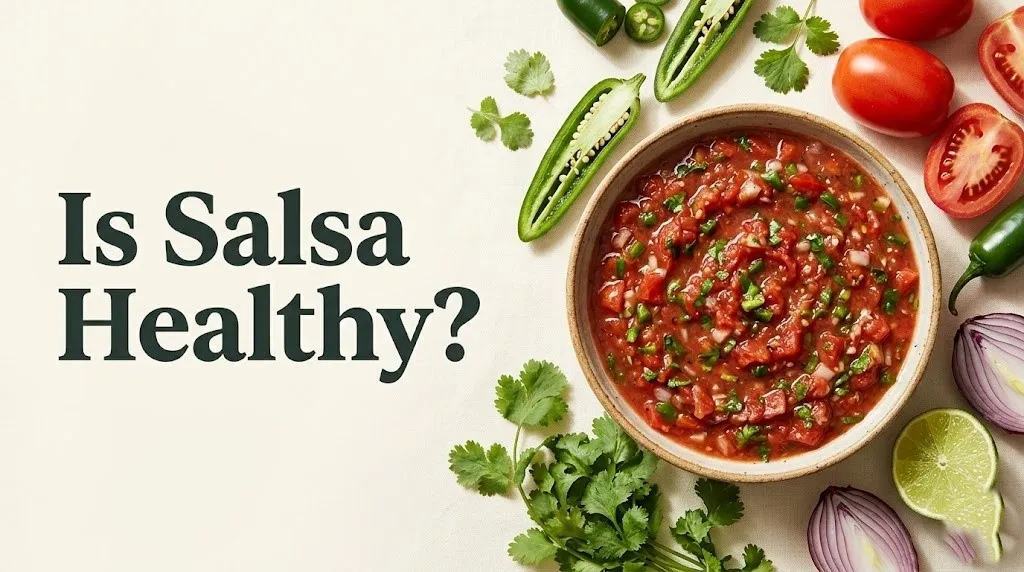
Is Salsa Healthy?
Yes, salsa is healthy for most people. It’s a low-calorie, plant-based condiment built from tomatoes, peppers, onions, garlic, and herbs, with no significant fat and minimal natural sugar.
The catch is preparation and sodium. Fresh homemade salsa and many quality jarred versions are genuinely nutritious additions to a varied diet. But some commercial brands add sodium at levels that matter if you’re watching your blood pressure.
Think of salsa like vinaigrette dressing: the base ingredients are excellent, but the quality of what’s added during manufacturing separates a smart choice from a less thoughtful one. The condiment itself is not the problem. What manufacturers do to extend its shelf life sometimes is.
People following low-fat, low-calorie, plant-based, Mediterranean, or DASH dietary patterns will find salsa fits without effort. Those managing sodium intake or hypertension need to read labels carefully, which this article will help you do.
| Salsa Type | Calories per 2 tbsp | Sodium per 2 tbsp | Primary Nutrients |
|---|---|---|---|
| Fresh homemade (red) | 10 to 12 | 5 to 50 mg | Vitamin C, lycopene, potassium |
| Jarred red salsa | 10 to 15 | 100 to 270 mg | Vitamin C, lycopene, fiber |
| Salsa verde (jarred) | 10 to 15 | 90 to 230 mg | Vitamin C, vitamin K, potassium |
| Salsa fresca/pico | 8 to 12 | 10 to 60 mg | Vitamin C, folate, quercetin |
| Restaurant salsa | 10 to 20 | 60 to 300+ mg | Variable |
Salsa Nutrition Facts: Calories, Carbs, and Macros
A standard 2-tablespoon (approximately 32g) serving of red tomato salsa contains roughly 10 to 15 calories, 2 to 3 grams of carbohydrates, less than 1 gram of fat, and 0.5 to 1 gram of protein. Fiber content sits around 0.5 to 1 gram per serving.
Those numbers make salsa one of the lowest-calorie condiments available. Compare it to two tablespoons of ranch dressing at approximately 145 calories, or even ketchup at around 40 calories with added sugar. Salsa delivers flavor without caloric weight.
Carbohydrate content is almost entirely from naturally occurring sugars in the tomatoes and peppers. Unlike many condiments, quality salsas contain no added sugar and no refined carbohydrates. Some commercial brands add a small amount of sugar for flavor balance; always check the ingredient list.
The macro profile shifts slightly by type. Salsa fresca (pico de gallo) tends to have marginally fewer calories due to its raw preparation and absence of cooking oils or thickeners. Cooked salsas may have slightly more concentrated nutrients per serving because water evaporates during cooking.
| Nutrient | Per 2 tbsp Red Salsa | Per 2 tbsp Salsa Fresca | Per 2 tbsp Salsa Verde |
|---|---|---|---|
| Calories | 10 to 15 | 8 to 12 | 10 to 15 |
| Total carbs | 2 to 3g | 2g | 2g |
| Total fat | 0 to 0.5g | 0g | 0g |
| Protein | 0.5g | 0.5g | 0.5g |
| Fiber | 0.5 to 1g | 0.5g | 0.5g |
| Sodium | 100 to 270mg | 10 to 60mg | 90 to 230mg |
Sources: USDA FoodData Central. Figures represent typical commercial and fresh-prepared values; exact amounts vary by brand and recipe.
What Nutrients Are in Salsa?
Salsa delivers a wider range of micronutrients than its modest calorie count suggests. The tomato base contributes vitamin C (ascorbic acid), vitamin A (from beta-carotene), potassium, and folate.
Chili peppers add more vitamin C and introduce capsaicin (8-methyl-N-vanillyl-6-nonenamide), the compound responsible for heat. Onions bring quercetin, a flavonoid antioxidant studied for its anti-inflammatory properties. Garlic provides allicin, a sulfur compound associated with cardiovascular and antimicrobial effects in research settings.
The most nutritionally notable compound in cooked or processed tomato-based salsa is lycopene, a carotenoid pigment that gives tomatoes their red color. Lycopene is a fat-soluble antioxidant, and interestingly, cooking tomatoes actually increases lycopene’s bioavailability compared to eating raw tomatoes. According to a review published in the Journal of Nutrition, heating tomatoes breaks down the cell walls and converts lycopene into a more absorbable form.
Fresh herbs like cilantro (Coriandrum sativum) and lime juice contribute additional vitamin C, vitamin K, and small amounts of calcium and iron.
Key micronutrients in a standard serving include:
- Vitamin C: supports immune function and acts as an antioxidant
- Vitamin A (from beta-carotene): supports vision and immune health
- Potassium: important for blood pressure regulation and muscle function
- Folate: essential for cell production and particularly important during pregnancy
- Lycopene: carotenoid antioxidant linked to cardiovascular and cellular health
- Capsaicin: bioactive compound from chili peppers with studied metabolic effects
- Quercetin: flavonoid from onions linked to anti-inflammatory activity in research
Key Takeaway: Salsa is a low-calorie, plant-based condiment with a genuinely useful micronutrient profile, especially for vitamin C, lycopene, and potassium, but sodium content varies widely between types and brands.
Salsa Health Benefits Backed by Research
The health benefits of salsa trace directly to its whole-food ingredients, and the research on those ingredients is more substantial than most condiment coverage suggests.
Lycopene, abundant in cooked red salsa, has been studied extensively for its relationship to cardiovascular health. A review in the American Journal of Clinical Nutrition found that higher dietary lycopene intake was associated with reduced markers of oxidative stress. The National Institutes of Health (NIH) Office of Dietary Supplements notes that lycopene is among the most consumed carotenoids in the American diet, with tomato products being the primary source.
Capsaicin, the compound that gives chili peppers their heat, has attracted attention from metabolic researchers. Studies published in the journal Nutrients suggest that capsaicin may temporarily increase thermogenesis (the body’s heat production and energy expenditure) and reduce appetite in some people. These effects are modest and not a substitute for broader dietary strategy, but they do make the chili component of salsa more than just a flavor choice.
Quercetin, found in the onions and peppers common to every salsa recipe, has been the subject of over 100 peer-reviewed studies. Research consistently indicates quercetin has antioxidant and anti-inflammatory activity in laboratory and animal models, with some human trials showing modest reductions in inflammatory markers. Results in human research remain preliminary.
The overall plant-based profile of salsa aligns with dietary patterns consistently associated with long-term health outcomes. The American Heart Association identifies diets rich in vegetables, low in saturated fat, and moderate in sodium as supportive of cardiovascular health.
People who would benefit most from salsa’s nutrient profile:
- Those increasing vegetable intake without adding calories
- People following Mediterranean or DASH dietary patterns
- Anyone looking to replace higher-calorie condiments like mayo or cream-based sauces
Is Salsa a Healthy Snack?
Salsa is one of the few condiments that genuinely works as a standalone snack component without adding significant calories to the equation. Two tablespoons delivers flavor, fiber, and micronutrients for roughly 10 to 15 calories.
The snacking context changes the equation only when you factor in what you’re eating salsa with. Salsa paired with raw vegetables like cucumber slices, bell pepper strips, or celery stays genuinely low-calorie and adds fiber from both sources. Salsa paired with tortilla chips is where calorie counts climb quickly: a standard 1-ounce serving of tortilla chips adds approximately 140 calories, and most people eat two to three ounces.
Snacking on salsa alone is comparable to snacking on a fresh tomato: it’s filling relative to its calorie load, hydrating (tomatoes are over 90% water), and contains real dietary fiber that contributes to satiety. Think of it like a savory, seasoned vegetable puree that happens to be easy to grab from the fridge.
Quick Tip:
- Use salsa as a dip for raw vegetables instead of hummus or guacamole when watching calories
- A 2-tablespoon serving is the standard reference; measure once so you calibrate what that looks like in practice
- People managing sodium intake should check the label before snacking on jarred salsa regularly
For people with type 2 diabetes or those following a low-glycemic eating plan, salsa is an excellent snack base because it won’t spike blood glucose. The fiber and water content of tomatoes contribute to a very low glycemic index, around 15 to 30 on the standard glycemic index scale.
Is Salsa Good for Weight Loss?
Salsa supports weight management when used as a replacement for higher-calorie condiments, not as a magic solution on its own. At 10 to 15 calories per 2-tablespoon serving, it has one of the lowest calorie densities of any flavored sauce or dip.
The Academy of Nutrition and Dietetics recommends low-calorie, high-volume foods as part of weight management strategies because they help satisfy hunger without delivering excess calories. Salsa fits this model well: it’s mostly water, fiber, and natural compounds from vegetables.
Replacing two tablespoons of ranch dressing (approximately 145 calories) with salsa at every meal for a week represents a reduction of roughly 900 calories without changing what you eat, only how you season it. Over time, consistent condiment substitutions like this can genuinely contribute to a calorie deficit.
The capsaicin content from chili peppers adds a minor thermogenic effect, as noted above. Research suggests this effect is real but modest, contributing perhaps 50 to 100 additional calories of expenditure per day in some studies, and not consistent across all individuals.
| Condiment | Calories per 2 tbsp | Fat | Added Sugar |
|---|---|---|---|
| Salsa (red, jarred) | 10 to 15 | 0g | Often 0g |
| Ranch dressing | 140 to 150 | 14g | 1 to 2g |
| Ketchup | 38 to 40 | 0g | 8 to 10g |
| Sour cream | 60 | 5g | 0g |
| Guacamole | 50 to 60 | 4 to 5g | 0g |
| Hummus | 70 | 5g | 0g |
Guacamole and hummus contain healthy fats and are nutritious choices; this table is for calorie comparison only and doesn’t imply they are inferior.
Key Takeaway: Salsa’s biggest practical strength is its calorie-to-flavor ratio: almost no calories, real nutrients, and strong flavor that makes lower-calorie meals feel satisfying.
Is Homemade Salsa Healthy?
Homemade salsa is the healthiest form of salsa available. You control every ingredient, which means you control the sodium, you skip the preservatives, and you can maximize the fresh vegetable content.
A basic fresh red salsa made with ripe tomatoes (Solanum lycopersicum), jalapeños (Capsicum annuum), white onion, garlic, lime juice, cilantro, and a small amount of salt delivers the full micronutrient profile with sodium as low as 5 to 50 mg per 2 tablespoons, depending on how much salt you add. That’s a fraction of most jarred versions.
One practical note: homemade salsa has a short refrigerator life. According to food safety guidance from the USDA, fresh homemade salsa made without cooking or acidification should be stored in a sealed container and consumed within 3 to 5 days. Signs of spoilage include off odors, visible mold, or excessive liquid separation.
If you make a cooked salsa, the heating process reduces some raw bacterial risk, but refrigeration is still necessary after cooling. Homemade salsa should never be left at room temperature for more than 2 hours, the standard food safety guideline for perishable foods.
Key advantages of homemade salsa over jarred:
- Sodium is fully in your control
- No added preservatives (citric acid, sodium benzoate, calcium chloride common in jars)
- Fresher vitamin C content, since ascorbic acid degrades over time and during pasteurization
- No added sugar, thickeners, or natural flavor concentrates
- Full flexibility over heat level, texture, and ingredient quality
People with cilantro aversion (which is linked to a specific OR6A2 gene variant affecting taste perception) can easily substitute flat-leaf parsley or leave herbs out entirely without affecting the overall nutrition profile.
Is Jarred Salsa Healthy?
Jarred salsa can be a healthy choice, but the label determines everything. The core concern is sodium: commercial salsa typically contains 100 to 270 mg of sodium per 2-tablespoon serving, with some brands reaching 300+ mg.
The American Heart Association recommends no more than 2,300 mg of sodium per day for most adults, with an ideal target of 1,500 mg per day for people with high blood pressure. A single serving of a high-sodium jarred salsa can represent more than 10% of the daily upper limit before you’ve eaten anything else.
Beyond sodium, check jarred salsa ingredient lists for:
- Added sugars: present in some brands, usually 1 to 2g per serving
- High fructose corn syrup: found in some lower-quality products
- Citric acid: a common and safe preservative, not a nutritional concern
- Calcium chloride: used to maintain texture, safe but signals higher processing level
- “Natural flavors”: a catch-all label term that doesn’t indicate a health issue but adds no nutritional value
Well-regarded jarred brands like Pace, Herdez, and Tostitos produce options with ingredient lists close to a homemade recipe. Herdez’s taqueria-style salsas, in particular, tend to have shorter ingredient lists. Opt for “low sodium” or “no salt added” versions when available.
Quick Tip:
- Look for jarred salsas with fewer than 140 mg sodium per serving for a more sodium-conscious choice
- Ingredient lists closer to “tomatoes, onions, jalapeños, cilantro, garlic, lime juice, salt” are the standard to match
- People with kidney disease or on medically restricted sodium diets should confirm appropriate sodium limits with their treating provider before relying on any jarred condiment regularly
Is Salsa Fresca Healthy?
Salsa fresca, also called pico de gallo, is healthy and is arguably the most nutrient-intact form of salsa because it’s made entirely from raw, uncooked ingredients. Nothing is heated, pasteurized, or processed.
The standard recipe combines diced raw tomatoes, white onion, jalapeño, cilantro, lime juice, and salt. Raw tomatoes retain slightly more vitamin C than their cooked counterparts, since ascorbic acid is heat-sensitive. However, raw tomatoes contain less bioavailable lycopene than cooked tomatoes, because the cell walls haven’t been broken down by heat.
Salsa fresca’s sodium content is primarily controlled by how much salt you add, making it naturally low-sodium when prepared at home. Restaurant versions can run higher in sodium depending on how heavily they season the batch.
The quercetin content from raw onions is also notable. Harvard T.H. Chan School of Public Health research on flavonoid-rich foods highlights raw onions as one of the most accessible dietary sources of quercetin in the standard American diet.
Salsa fresca differs from jarred salsa in three practical ways:
| Feature | Salsa Fresca (Fresh) | Jarred Red Salsa |
|---|---|---|
| Lycopene bioavailability | Lower (raw tomatoes) | Higher (cooked process increases it) |
| Vitamin C content | Higher (raw, unheated) | Lower (pasteurization degrades some) |
| Shelf life | 2 to 3 days refrigerated | 12 to 24 months (unopened) |
| Sodium | Low (controlled by recipe) | Moderate to high (preserved with salt) |
| Processing level | Whole food, unprocessed | Minimally to moderately processed |
People with ragweed pollen allergies may experience oral allergy syndrome with raw tomatoes or raw cilantro. This does not apply to cooked or jarred salsa because heat denatures the proteins responsible for the cross-reaction.
Key Takeaway: Salsa fresca gives you the freshest vitamin C and quercetin from raw vegetables, while cooked/jarred red salsa delivers more bioavailable lycopene; neither is superior across the board, and variety between both serves you well.
Is Green Salsa Healthy?
Green salsa, or salsa verde, is healthy and offers a distinct nutritional profile from red tomato-based salsa. Its primary ingredient is the tomatillo (Physalis philadelphica), a small, husked fruit in the nightshade family that is related to tomatoes but has its own nutritional composition.
Tomatillos are lower in lycopene than red tomatoes (the characteristic red pigment and associated carotenoid is largely absent) but they contain their own phytonutrients, including withanolides, naturally occurring compounds studied for antioxidant properties in laboratory research. Tomatillos also provide vitamin C, potassium, vitamin K, and modest amounts of iron and magnesium.
Salsa verde’s calorie and carbohydrate profile is nearly identical to red salsa at approximately 10 to 15 calories per 2-tablespoon serving. The sodium range of jarred versions follows a similar pattern, typically 90 to 230 mg per serving, so the same label-reading advice applies.
Green salsa gets its heat from serrano peppers (Capsicum annuum var. serrano) or jalapeños, so it still delivers capsaicin regardless of the color change. Some green salsas also include avocado, which changes the calorie and fat profile significantly (avocado-based salsas can run 30 to 80 calories per 2 tablespoons with healthy monounsaturated fat from oleic acid).
For people who don’t tolerate tomatoes due to sensitivity or reflux issues, salsa verde made purely from tomatillos and peppers is often a well-tolerated alternative. Tomatillos are somewhat less acidic than ripe red tomatoes, which some people with acid reflux find helpful, though individual response varies.
Is Salsa Good for Diabetics?
Salsa is generally an excellent condiment choice for people managing type 2 diabetes or blood sugar. Its carbohydrate content is low, its glycemic impact is minimal, and it adds flavor without the sugar load found in many commercial sauces.
A 2-tablespoon serving of red salsa contains approximately 2 to 3 grams of total carbohydrates, with 0.5 to 1 gram of fiber. The net carbohydrate impact is effectively 1.5 to 2 grams per serving. For reference, the American Diabetes Association notes that carbohydrate quality and total load matter more than avoiding individual foods, and a vegetable-based condiment in standard portion sizes is not a blood sugar concern for most people with diabetes.
The fiber from tomatoes, peppers, and onions helps slow glucose absorption, which is the opposite of what refined carbohydrates do. Think of fiber as a speed governor: the more of it present in a meal, the more gradually glucose enters the bloodstream.
The capsaicin in salsa has attracted interest in diabetes research. A study published in PLOS ONE found that regular capsaicin consumption was associated with improved insulin sensitivity in some participants, though researchers noted the effect was modest and context-dependent.
What diabetics should watch for:
- Some jarred salsas contain added sugar (1 to 2g per serving); always check the Nutrition Facts label
- Sodium in jarred salsa is relevant because diabetes and hypertension frequently co-occur; low-sodium versions are preferable for those managing both conditions
- Pairing salsa with high-glycemic chips significantly changes the meal’s blood glucose impact, regardless of how small salsa’s own impact is
People with diabetes managing specific carbohydrate targets should account for salsa in their overall meal plan and confirm appropriate condiment choices with a registered dietitian familiar with their individual management plan.
Is Salsa High in Sodium?
Whether salsa is high in sodium depends entirely on which type you’re eating. Fresh homemade salsa and salsa fresca can be nearly sodium-free. Many jarred commercial salsas are meaningfully high in sodium.
The American Heart Association recommends keeping sodium intake below 2,300 mg per day for most adults. For the roughly one-third of American adults with elevated blood pressure, an ideal target of 1,500 mg per day is recommended. A single 2-tablespoon serving of a jarred salsa can contain between 100 and 270 mg of sodium, and most people eat more than one serving at a sitting.
Here’s the practical picture: if you eat four tablespoons of a jarred salsa with 240 mg per 2-tablespoon serving, you’ve consumed nearly 500 mg of sodium from the salsa alone, before factoring in chips, proteins, or other foods in the same meal.
| Salsa Type | Sodium per 2 tbsp | % of AHA 2,300 mg daily limit |
|---|---|---|
| Homemade (no added salt) | 5 to 20 mg | Under 1% |
| Homemade (with 1/4 tsp salt per batch) | 30 to 60 mg | 1 to 3% |
| Low-sodium jarred | 90 to 140 mg | 4 to 6% |
| Standard jarred | 150 to 270 mg | 7 to 12% |
| Restaurant (heavily seasoned) | 150 to 350+ mg | 7 to 15%+ |
The solution is not to avoid salsa. It’s to choose low-sodium or no-salt-added versions, or to make it yourself. Several mainstream brands produce low-sodium lines specifically for people managing hypertension or heart disease. People on medically prescribed sodium-restricted diets should treat jarred salsa as they would any packaged food and factor its sodium into their daily total.
Key Takeaway: Sodium is the one legitimate nutritional concern with jarred salsa; homemade and low-sodium versions eliminate or dramatically reduce this issue, and it should not deter anyone from eating salsa in thoughtfully chosen forms.
Is Salsa Keto Friendly?
Salsa is keto friendly in standard portions. A 2-tablespoon serving contains approximately 2 to 3 grams of total carbohydrates, well within the typical per-serving carb budget on a ketogenic diet, which generally restricts total daily carbohydrates to 20 to 50 grams.
Tomatoes do contain natural sugars (primarily fructose and glucose), but the amount per standard salsa serving is small enough that it does not typically disrupt ketosis for most people. Some strict ketogenic practitioners limit even small tomato amounts; individual tolerance varies based on metabolic response.
The ingredients to watch for in jarred salsa on a keto plan:
- Added sugar: some brands add 1 to 2g per serving, increasing the net carb count
- Modified food starch or corn syrup: occasionally used as thickeners in lower-quality products; these are not keto-appropriate
- Maltodextrin: sometimes present in flavoring blends; check labels carefully
Fresh tomato-based salsa and salsa verde made with tomatillos both fit a keto framework. Avocado-based green salsas add healthy fats that are actively beneficial on a ketogenic eating pattern.
| Salsa Type | Net Carbs per 2 tbsp | Keto Compatible? |
|---|---|---|
| Fresh red salsa (no added sugar) | 1.5 to 2g | Yes |
| Jarred red salsa (no added sugar) | 1.5 to 2g | Yes |
| Jarred salsa with added sugar | 2.5 to 4g | Check daily budget |
| Salsa verde/green | 1.5 to 2g | Yes |
| Avocado salsa | 1 to 2g + 4 to 5g fat | Yes, actively beneficial |
For people following a ketogenic diet for a specific medical purpose (such as epilepsy management), dietary guidance should come from the supervising neurologist and a dietitian trained in medical ketogenic protocols, since carbohydrate tolerance in those cases is more precisely managed.
Frequently Asked Questions About Salsa and Health
Is salsa healthier than ketchup?
Yes, salsa is generally healthier than ketchup when comparing standard servings.
Ketchup typically contains 8 to 10 grams of added sugar per 2-tablespoon serving and fewer whole vegetable ingredients.
Salsa delivers comparable or fewer calories, often with no added sugar, more dietary fiber, and a broader range of micronutrients from its whole-food ingredients.
Can I eat salsa every day?
Most people can eat salsa daily without any health concerns, particularly homemade or low-sodium versions.
The only reason for daily moderation is sodium: regularly eating multiple servings of high-sodium jarred salsa can meaningfully contribute to exceeding daily sodium recommendations.
If you’re using 2 tablespoons of a low-sodium or homemade salsa daily, you’re adding vegetables and antioxidants to your diet with negligible calorie cost.
Does cooking salsa change its nutritional value?
Yes, cooking changes salsa’s nutritional profile in two important ways.
Heating tomatoes increases the bioavailability of lycopene by breaking down cell walls, making more of it available for absorption.
However, cooking reduces vitamin C content because ascorbic acid is heat-sensitive and degrades at high temperatures, so raw salsa fresca retains more vitamin C than cooked or jarred versions.
Is salsa good for your gut?
Salsa supports digestive health primarily through its fiber and prebiotic plant compounds, not through any probiotic mechanism.
The fiber from tomatoes, onions, and peppers feeds beneficial gut bacteria, and the prebiotic compounds in onion (fructooligosaccharides) specifically support microbial diversity in the colon.
Salsa is not fermented, so it does not itself contain live cultures; for probiotic benefits, pair it with fermented foods.
What is the healthiest type of salsa to buy?
The healthiest jarred salsa has a short ingredient list close to: tomatoes, onions, jalapeños, cilantro, garlic, lime juice, and salt.
Look for options with fewer than 140 mg of sodium per 2-tablespoon serving, no added sugar, and no thickeners or artificial preservatives beyond citric acid.
Brands with “taqueria style” or “restaurant style” labeling often have cleaner ingredient lists because they aim to replicate fresh preparation.
Salsa earns its reputation as one of the smarter condiment choices in any kitchen. It’s built from vegetables, delivers real micronutrients, and adds flavor at almost no caloric cost. The type you choose and the sodium on the label are the two decisions worth making deliberately.
If you’re eating jarred salsa regularly, spend sixty seconds reading the ingredients and sodium line. If you make it yourself even occasionally, you’re in full control of one of the easiest high-flavor, low-calorie additions to your daily eating. Start there, and the rest of the health math takes care of itself.