Thai food is genuinely healthy in many respects, built around fresh herbs, lean proteins, and vegetables. The honest answer is that it depends heavily on which dish you order, how it’s prepared, and how often you eat it.
Thai cuisine gets attention from nutrition researchers for good reason. The herb and spice base, including turmeric (Curcuma longa), ginger (Zingiber officinale), lemongrass (Cymbopogon citratus), and Thai chilies (Capsicum annuum), contains bioactive compounds studied for their anti-inflammatory and antioxidant properties. According to the Academy of Nutrition and Dietetics, diets rich in diverse vegetables, herbs, and lean proteins align closely with evidence-based healthy eating patterns.
This article covers Thai food’s full nutritional picture: calories and macros by dish, the science behind its herb profile, specific dish breakdowns, sodium concerns, and practical advice for people managing weight, blood sugar, or food allergies.
Is Thai Food Healthy?
Thai food is among the more nutritionally balanced options in Asian cuisine, though its health value depends on dish selection and preparation method. At its best, it combines lean protein, a wide range of vegetables, fiber-rich ingredients, and one of the most pharmacologically studied spice profiles in any food culture.
The challenge is consistency. Restaurant Thai food varies widely in sodium, added sugar, and cooking oil content. A home-cooked Thai stir-fry with controlled fish sauce and minimal oil is a genuinely different nutritional product from a restaurant version of the same dish.
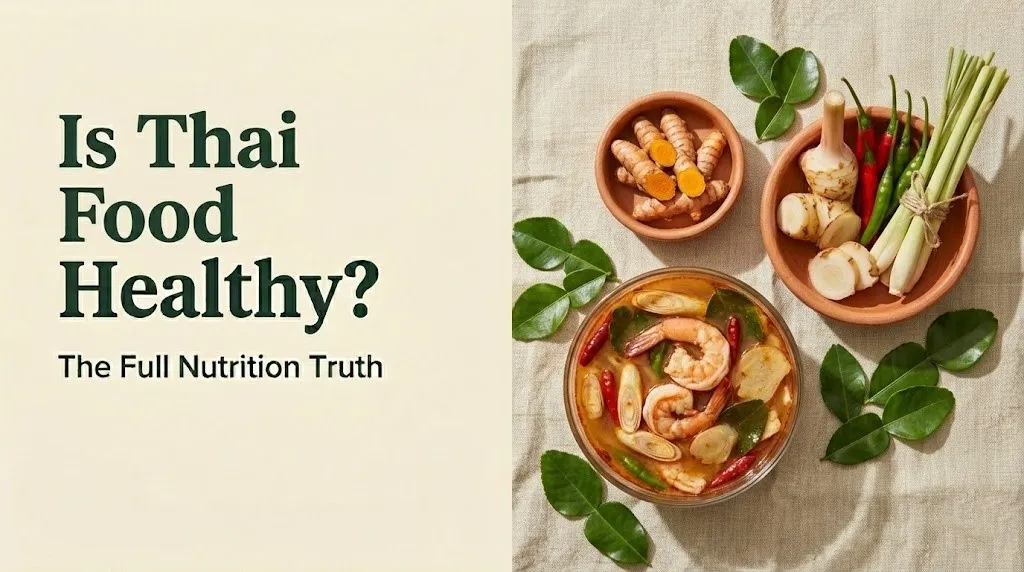
The cuisine’s plant diversity is one of its strongest points. A single Thai meal can include lemongrass, galangal (Alpinia galanga), kaffir lime leaves (Citrus hystrix), Thai basil (Ocimum basilicum var. thyrsiflora), and multiple vegetables, each contributing distinct micronutrients.
Key markers of Thai food’s nutritional identity:
- High herb and spice diversity with documented bioactive compounds
- Lean protein options including tofu, chicken, shrimp, and fish
- Fresh vegetable components in most non-fried dishes
- Sodium load driven mainly by fish sauce (nam pla) and shrimp paste (kapi)
- Variable saturated fat content depending on coconut milk use and frying method
People with hypertension or kidney disease should review sodium content before ordering. People with peanut, shellfish, or fish allergies need to check ingredients carefully, as these appear across most Thai menus.
Is Thai Food Good for You?
Thai food is good for you when you’re eating the right dishes in reasonable portions. The cuisine’s reliance on fresh ingredients, its herb density, and its traditional emphasis on balance between flavors (sour, salty, sweet, spicy) naturally encourages ingredient variety.
Several components of Thai cooking appear regularly in nutrition research. Turmeric’s active compound curcumin has been studied for its antioxidant and anti-inflammatory properties in dozens of peer-reviewed trials. Ginger’s gingerols have documented effects on nausea reduction and digestive function. Neither compound is a cure for any condition, but their presence as regular cooking ingredients is a genuine nutritional positive.
Think of Thai cuisine’s herb base the way you’d think of seasoning with concentrated plant extracts rather than just salt. Every time lemongrass or galangal goes into a dish, you’re adding flavonoids and terpenoids that don’t exist in most Western cooking at those concentrations.
The USDA Dietary Guidelines for Americans 2020-2025 recommend patterns centered on vegetables, fruits, whole grains, lean proteins, and healthy fats. Many traditional Thai dishes fit this template well, particularly soups, salads, and herb-forward stir-fries.
Where Thai food works against you: dishes made with full-fat coconut milk, heavy oil, and multiple tablespoons of fish sauce can be high in saturated fat and sodium simultaneously. That combination, eaten frequently, matters for cardiovascular health over time.
Quick Tip:
- Soups and salads are generally the most nutrient-dense Thai options
- Curry dishes vary widely depending on coconut milk quantity; ask for less cream in curries when possible
- Grilled protein dishes (satay, grilled fish) tend to be lower in calories than stir-fried or deep-fried equivalents
Thai Food Nutrition Facts and Macros
Thai food’s macronutrient profile varies significantly by dish type, but the cuisine as a whole is not inherently high in any single macronutrient category. The range below reflects standard restaurant servings.
| Dish Type | Calories (per serving) | Protein (g) | Carbs (g) | Fat (g) | Sodium (mg) |
|---|---|---|---|---|---|
| Tom yum soup (1 bowl, ~350ml) | 100-180 | 10-15 | 8-12 | 3-7 | 800-1,400 |
| Pad thai (1 plate, ~300g) | 700-1,100 | 20-35 | 65-90 | 20-40 | 1,500-2,500 |
| Green curry with rice | 550-850 | 20-30 | 55-75 | 20-38 | 1,000-2,000 |
| Papaya salad/som tum | 90-180 | 3-8 | 18-28 | 1-5 | 600-1,400 |
| Thai fried rice (khao pad) | 450-700 | 15-25 | 60-80 | 12-22 | 900-1,600 |
| Massaman curry with rice | 600-900 | 22-32 | 55-75 | 22-40 | 900-1,800 |
| Larb (minced meat salad) | 200-350 | 20-30 | 10-20 | 8-15 | 700-1,300 |
Note: Figures are estimates based on standard restaurant recipes. Actual values vary by portion size, restaurant, and preparation style. Individual dishes may fall outside these ranges.
The most notable micronutrients in Thai cuisine include manganese (from rice and herbs), vitamin C (from chilies and vegetables), potassium (from lemongrass, vegetables, and tofu), iron (from protein sources and leafy vegetables), and B vitamins (from lean meats and whole-grain rice alternatives).
Vegetarian and vegan diners can find substantial plant-based protein from tofu and edamame in Thai menus, though cross-contamination with fish sauce is common and worth verifying. People managing macronutrient ratios for medical reasons should note that jasmine rice, the standard accompaniment, has a high glycemic index.
Thai Food Calories by Popular Dish
Thai food calories span a very wide range, and the same dish name can mean 400 or 1,100 calories depending on restaurant and portion. Understanding which variables drive calorie count helps you make better choices without giving up the cuisine.
The two biggest calorie drivers in Thai cooking are coconut milk (full-fat coconut milk contains roughly 445 calories and 48g of fat per cup) and cooking oil volume (restaurant stir-fries often use 2-4 tablespoons of oil per serving). Rice portion size is the third major variable.
| Dish | Lower-Calorie Version | Higher-Calorie Version | Key Variable |
|---|---|---|---|
| Pad thai | 650 cal (smaller portion, less sauce) | 1,100 cal (large, extra peanuts, full sauce) | Portion size and peanut quantity |
| Green curry | 480 cal (light coconut milk, extra veg) | 850 cal (full coconut cream, large rice) | Coconut milk type and rice serving |
| Tom yum | 100 cal (clear broth, light proteins) | 250 cal (added coconut cream “tom kha” style) | Whether coconut milk is added |
| Thai fried rice | 420 cal (minimal oil, no egg) | 700 cal (full oil, egg, pork) | Oil quantity and protein additions |
| Spring rolls (fresh) | 90-120 cal per roll (rice paper, raw filling) | 200-280 cal per roll (fried version) | Fried vs. fresh/uncooked |
Fresh spring rolls wrapped in rice paper are one of the most calorie-efficient Thai appetizers. Fried spring rolls or fried tofu appetizers double or triple the calorie count of their unfried equivalents.
A practical benchmark: the USDA Dietary Guidelines suggest most adults need 1,800-2,200 calories per day depending on age, sex, and activity level. A high-calorie pad thai at 1,100 calories represents more than half that total before drinks or sides.
People managing calorie intake for weight purposes benefit from defaulting toward soups, salads, and dishes described as “stir-fried with vegetables” rather than curries or noodle dishes with heavy sauces.
Key Takeaway: Thai food’s nutritional value ranges widely by dish. Soups, salads, and grilled proteins are the most consistently nutrient-dense choices. Coconut milk curries and noodle dishes vary the most in calories and sodium.
Thai Herbs and Spices Health Benefits
The herb and spice base of Thai cooking is its most nutritionally distinctive feature, and the one most often described vaguely in health writing. These aren’t just flavor compounds. They’re some of the most studied plant-derived bioactive substances in food science.
Turmeric (Curcuma longa) contains curcumin, a polyphenol with documented antioxidant activity. A 2021 review published in the journal Nutrients found that curcumin supplementation reduced markers of oxidative stress in clinical trials. In food form, turmeric’s curcumin bioavailability is low on its own but increases significantly when combined with piperine (from black pepper) or dietary fat, both of which appear in Thai curries.
Ginger (Zingiber officinale) contributes gingerols and shogaols, compounds that have shown measurable effects on nausea reduction and gastric motility in clinical settings. The NIH’s National Center for Complementary and Integrative Health notes that ginger has credible evidence for reducing nausea related to chemotherapy and surgery.
Lemongrass (Cymbopogon citratus) contains citronellal, limonene, and geraniol, compounds with antifungal and antibacterial properties studied in laboratory settings. Human trial evidence is still limited, but lemongrass tea and extracts are actively researched.
Thai chilies (Capsicum annuum) supply capsaicin, which has well-documented effects on thermogenesis and appetite regulation. A 2014 study in the American Journal of Clinical Nutrition found that capsaicin consumption was associated with modest increases in energy expenditure and reduced appetite in some participants.
Key bioactive compounds found in Thai cooking:
- Curcumin (turmeric): antioxidant, anti-inflammatory effects documented in clinical trials
- Gingerols (ginger): anti-nausea, digestive function support
- Capsaicin (chilies): thermogenesis, possible appetite regulation
- Quercetin (Thai basil): flavonoid with antioxidant properties
- Citronellal, limonene (lemongrass): antimicrobial activity in lab studies
- Eugenol (cloves, used in some Thai curries): antioxidant compound
People taking blood-thinning medications should note that high culinary doses of turmeric and ginger may have mild anticoagulant effects. This is relevant at supplement doses, but the amounts in a single Thai meal are generally considered safe. Anyone taking warfarin or similar medications regularly eating large quantities of these spices should raise the topic with their prescribing physician.
Is Thai Food Anti-Inflammatory?
Thai food has a genuinely strong anti-inflammatory profile when prepared with its traditional herb base intact. This isn’t wellness marketing; it reflects the compound profiles of turmeric, ginger, galangal, lemongrass, and Thai basil as measured in food science research.
The term “anti-inflammatory” in food contexts refers to ingredients that contain compounds capable of modulating inflammatory pathways, particularly those involving cyclooxygenase (COX) enzymes and nuclear factor kappa B (NF-kB) signaling. Both curcumin and gingerols have demonstrated these effects in controlled laboratory and human studies.
Harvard T.H. Chan School of Public Health identifies dietary patterns rich in polyphenols, omega-3 fatty acids, and plant-derived antioxidants as associated with lower markers of systemic inflammation. Traditional Thai cooking scores well on the polyphenol dimension specifically.
That said, anti-inflammatory food effects are cumulative and dietary pattern-level. A single bowl of tom kha gai doesn’t treat any condition. The benefit comes from regularly eating a herb-rich diet over time, not from any one meal.
Where Thai food’s anti-inflammatory profile breaks down: deep-frying in refined vegetable oils high in omega-6 linoleic acid can promote inflammatory signaling when not balanced by omega-3 intake. Dishes that are primarily deep-fried, like tod man (fish cakes) or fried tofu in heavy oil, don’t carry the same anti-inflammatory profile as herb-forward soups and curries.
Key Fact: According to research published in the British Journal of Nutrition, curcumin’s anti-inflammatory effects in human trials are most consistently observed at doses of 1,000-1,500 mg per day, which is significantly higher than the 50-100 mg found in a typical serving of Thai curry. Eating Thai food regularly contributes to cumulative intake but is not equivalent to a curcumin supplement.
Is Pad Thai Healthy?
Pad thai is not among the healthiest Thai dishes, though it can fit into a balanced diet eaten in moderation and with mindful portion sizing. A standard restaurant serving contains roughly 700-1,100 calories and 1,500-2,500 mg of sodium, which represents a large portion of both daily limits in a single plate.
The dish’s core ingredients are rice noodles, egg, protein (usually shrimp, chicken, or tofu), tamarind paste, fish sauce, palm sugar, bean sprouts, green onions, and crushed peanuts. The noodles and sauce together account for most of the carbohydrate and sodium load.
| Pad Thai Nutritional Component | Standard Restaurant Serving |
|---|---|
| Calories | 700-1,100 kcal |
| Protein | 20-35 g |
| Carbohydrates | 65-90 g |
| Fat | 20-40 g |
| Sodium | 1,500-2,500 mg |
| Fiber | 2-5 g |
Figures are estimates; actual values vary by restaurant and portion size.
The peanut topping adds roughly 80-150 additional calories and contributes to fat content, but also adds protein and magnesium. People with peanut allergies must confirm peanut presence before ordering, as peanuts appear in pad thai by default at nearly all restaurants.
The American Heart Association recommends no more than 2,300 mg of sodium per day for most adults, and ideally 1,500 mg for those with hypertension. A single pad thai from many restaurants can exceed either figure on its own.
Pad thai can be made considerably healthier at home. Using low-sodium fish sauce, reducing palm sugar by half, adding more bean sprouts, and keeping the serving to 1.5 cups of cooked noodles brings the dish into a more manageable nutritional range.
Key Takeaway: Thai cuisine’s famous herb profile, including curcumin, gingerols, and capsaicin, is backed by real food science. But individual dishes like pad thai can be sodium-heavy and calorie-dense. The herb benefits and the sodium risks exist in the same cuisine simultaneously.
Is Green Curry Healthy?
Green curry (gaeng keow wan) occupies the middle ground on the Thai food health spectrum. It delivers a strong array of herbs and vegetables, but its coconut milk base makes it one of the higher-fat Thai dishes.
A standard serving of green curry with rice contains approximately 550-850 calories, 20-30g of protein, and 20-38g of fat, a significant portion of which is saturated fat from coconut milk. Full-fat coconut milk contains roughly 12-14g of saturated fat per 100ml, and a typical pot of curry uses 200-400ml per serving.
The saturated fat question in coconut milk is genuinely contested in current nutrition research. Coconut milk’s saturated fat comes largely from medium-chain triglycerides (MCTs), including lauric acid. Some research suggests MCTs are metabolized differently than long-chain saturated fats, potentially with less impact on LDL cholesterol. However, the American Heart Association still recommends limiting saturated fat to less than 6% of daily calories regardless of source, which is approximately 13g per day for a 2,000-calorie diet.
The curry paste itself is nutritionally positive. It typically contains green chilies, lemongrass, galangal, kaffir lime leaves, Thai basil, and garlic, all contributing antioxidants and bioactive compounds.
Practical modifications for a healthier green curry:
- Request light or reduced coconut milk at restaurants
- Ask for extra vegetables and less sauce over rice
- Choose chicken or tofu over beef for a lower saturated-fat protein
- Use light coconut milk (about 60% less fat than full-fat) when cooking at home
People with high LDL cholesterol should be mindful of regular full-fat coconut milk curry consumption. Occasional meals are unlikely to be problematic, but eating coconut-heavy curries multiple times per week may affect lipid panels over time.
Is Tom Yum Soup Healthy?
Tom yum soup is one of the healthiest Thai dishes you can order. The clear broth version, made without added coconut milk, is low in calories, rich in flavor compounds, and built almost entirely from herbs and lean protein.
A standard bowl of tom yum goong (shrimp tom yum) contains approximately 100-180 calories per serving, with 10-15g of protein, minimal fat, and a substantial array of bioactive herbs. The ingredients include lemongrass, galangal, kaffir lime leaves, Thai chilies, fish sauce, lime juice, and mushrooms. Each brings distinct nutrients and compounds.
The main nutritional caveat for tom yum is sodium. Fish sauce contributes roughly 400-700 mg of sodium per tablespoon, and a typical pot uses two to three tablespoons. Total sodium per bowl can reach 800-1,400 mg, which is still within single-meal limits for most healthy adults but warrants attention for those on low-sodium diets.
Tom kha gai is a variation that adds full-fat coconut milk, which roughly triples the fat content and adds 150-200 calories per bowl. The coconut version is still a relatively light Thai option but no longer classifies as a broth-based soup nutritionally.
Mushrooms in tom yum (typically straw mushrooms or oyster mushrooms) contribute B vitamins, selenium, and ergothioneine, a naturally occurring antioxidant amino acid. These aren’t present in most other Thai dishes in meaningful amounts.
For people managing weight or watching sodium, ordering tom yum as the first course of a Thai meal is one of the most practical strategies on any menu. The high flavor intensity from the herb broth creates satiety signaling before the higher-calorie main course.
Thai Food Sodium Content and Heart Health
Thai food’s sodium content is its most significant nutritional concern, particularly for people managing hypertension, heart disease, or kidney function. The primary sodium sources are fish sauce, shrimp paste, soy sauce, and oyster sauce, all of which are used at high volumes in restaurant cooking.
| Condiment | Sodium per Tablespoon |
|---|---|
| Fish sauce (nam pla) | 1,190-1,400 mg |
| Low-sodium fish sauce | 500-700 mg |
| Shrimp paste (kapi), 1 tsp | 280-400 mg |
| Oyster sauce | 490-560 mg |
| Regular soy sauce | 900-1,100 mg |
| Tamari (gluten-free soy sauce) | 700-900 mg |
| Coconut aminos | 90-130 mg |
The USDA Dietary Guidelines for Americans 2020-2025 recommend no more than 2,300 mg of sodium per day for adults. The American Heart Association sets an ideal target of 1,500 mg per day for people with elevated blood pressure or heart disease risk.
A single restaurant Thai meal containing pad thai plus tom yum soup can easily deliver 2,500-3,500 mg of sodium combined. That’s a full day’s intake in one sitting.
This doesn’t make Thai food categorically bad for heart health. Home preparation allows precise control. Requesting “less fish sauce” or “less sauce” at restaurants makes a measurable difference. Asking for sauces on the side and using them sparingly is the single most effective sodium-reduction strategy when eating out.
People with stage 3 or higher chronic kidney disease or those on sodium-restricted diets prescribed by a physician should approach restaurant Thai food carefully. In those cases, reviewing the specific dishes with the prescribing dietitian is appropriate and specific to their condition, not a generic precaution.
Key Takeaway: Sodium is Thai food’s biggest nutritional watchpoint. Fish sauce and shrimp paste can push a single meal past the daily limit. Home cooking and asking for reduced sauce at restaurants are the two most effective ways to manage this.
Is Thai Food Good for Weight Loss?
Thai food can support weight management, but it’s not automatically a low-calorie choice. The cuisine includes both excellent weight-loss-compatible dishes and calorie-dense ones that require portion awareness.
The best Thai options for weight management share a pattern: broth-based, protein-forward, vegetable-heavy, and low in added oil and coconut milk. Tom yum, larb (minced meat salad), steamed dishes, and papaya salad (som tum) fit this profile well.
Think of the Thai menu like a dial from “broth and herbs” on one end to “coconut cream and noodles” on the other. Where you land on that dial determines whether Thai food helps or hinders your weight goals.
| Thai Dish | Approx. Calories | Weight-Loss Compatible? |
|---|---|---|
| Tom yum soup | 100-180 kcal | Yes, excellent choice |
| Som tum (papaya salad) | 90-180 kcal | Yes, watch added sugar versions |
| Larb (minced chicken/pork) | 200-350 kcal | Yes, watch fish sauce volume |
| Pad thai | 700-1,100 kcal | Moderate; watch portions |
| Massaman curry + rice | 600-900 kcal | Eat mindfully; not ideal daily |
| Fried spring rolls | 200-280 kcal per roll | Limit; high oil content |
| Mango sticky rice | 350-500 kcal | Dessert; occasional treat |
Protein content is a genuine advantage of Thai food for weight management. Dishes like larb, grilled protein satay, and tofu stir-fries deliver 20-30g of protein per serving, which supports satiety and muscle maintenance during a calorie deficit.
The Academy of Nutrition and Dietetics notes that dietary patterns emphasizing adequate protein, fiber, and variety in vegetables support sustainable weight management better than restrictive elimination diets. Traditional Thai cooking, when prepared with controlled oil and sodium, aligns with this framework.
Healthiest Thai Dishes to Order at a Restaurant
The healthiest Thai dishes at restaurants are those built on clear broths, lean proteins, and herb-forward sauces rather than coconut cream, deep-frying, or heavy noodle bases.
The following dishes consistently offer strong nutritional value across most Thai restaurant menus, though exact nutritional content varies by location, chef, and portion size. Always verify allergen information (particularly peanuts, shellfish, and fish sauce) directly with restaurant staff, as recipes differ by location.
Top choices for nutritional balance:
- Tom yum soup: Clear herb broth, lean shrimp or chicken protein, low calories, high flavor. Best ordered without added coconut milk.
- Larb (minced meat salad): High protein, herbs, lime, and fish sauce dressing over fresh vegetables. Relatively low-fat and low-calorie.
- Som tum (green papaya salad): High in fiber from unripe papaya, fresh vegetables, and lime dressing. Watch for added palm sugar in sweeter versions.
- Steamed or grilled protein dishes: Fish, chicken, or tofu prepared with minimal oil and herb-based sauces.
- Pad pak (stir-fried vegetables): When made with light oil and reduced fish sauce, one of the highest-fiber Thai options.
- Gaeng jued (clear vegetable soup): A mild, low-sodium broth soup with tofu and vegetables. Low calorie, good fiber content.
Dishes to eat in moderation:
- Pad thai (high sodium and calories per serving)
- Red or green curry with full coconut cream (high saturated fat)
- Thai fried rice (variable oil and sodium)
- Fried appetizers including spring rolls and tod man
Note that menus change seasonally and by location. Nutritional data for independent Thai restaurants is not standardized. Treating the guidance above as a general framework rather than an exact prescription is the appropriate approach.
How to Make Thai Food Healthier at Home
Making Thai food at home gives you precise control over the two biggest nutritional variables: sodium from fish sauce and fat from cooking oil and coconut milk. A home-cooked Thai curry or stir-fry can be genuinely different, nutritionally, from a restaurant version of the same dish.
Practical substitutions that preserve flavor while improving the nutritional profile:
| Standard Ingredient | Healthier Substitution | Nutritional Impact |
|---|---|---|
| Regular fish sauce | Low-sodium fish sauce | 35-50% sodium reduction per tbsp |
| Fish sauce (for vegans) | Coconut aminos | 90% sodium reduction, vegan-safe |
| Full-fat coconut milk | Light coconut milk | ~60% less fat, 50% fewer calories |
| Jasmine white rice (2 cups) | Jasmine rice (1 cup) + cauliflower rice (1 cup) | 40-50% calorie and carb reduction |
| Palm sugar in curries | Reduce by 50% or use date syrup | Lower glycemic index, less added sugar |
| Vegetable oil for stir-frying | Avocado oil in smaller quantity | Healthier fat profile, high smoke point |
| Regular soy sauce | Tamari (gluten-free) or reduced-sodium soy | Gluten-free, lower sodium |
Steps to make a healthier Thai stir-fry at home:
- Start with 1 tablespoon of avocado oil in a wok over high heat.
- Add protein first (chicken, tofu, or shrimp) and cook to 165°F internal temperature.
- Add aromatics: garlic, galangal, lemongrass, and Thai chilies.
- Add vegetables in order of density: broccoli and carrots before leafy greens.
- Season with 1 tablespoon low-sodium fish sauce, 1 teaspoon coconut aminos, and lime juice.
- Finish with fresh Thai basil and serve over a half-and-half rice and cauliflower rice blend.
This approach cuts sodium by roughly 40%, reduces calories by 20-30%, and preserves the herb-driven flavor that makes Thai cooking distinctive.
Key Takeaway: Thai food cooked at home can be genuinely nutritious. The biggest wins come from switching to low-sodium fish sauce, using light coconut milk, and keeping rice portions moderate.
Thai Food for Diabetics
Thai food can be appropriate for people with type 2 diabetes or prediabetes, but several common components require careful attention: jasmine rice, palm sugar, and the glycemic impact of rice noodle-heavy dishes like pad thai.
Jasmine rice has a glycemic index (GI) of approximately 68-80, which classifies it as a medium-to-high GI food. The American Diabetes Association notes that total carbohydrate quantity and overall meal composition, including protein and fiber content, matter more than the glycemic index of any single food in isolation.
Pairing jasmine rice with high-fiber vegetables, lean protein, and herb-based sauces, as many Thai dishes naturally do, slows glucose absorption compared to rice eaten alone. A green curry over rice with substantial vegetable content has a different glycemic response than plain rice of the same portion.
| Thai Food Factor | Impact on Blood Sugar | Recommendation |
|---|---|---|
| Jasmine rice (large portion) | High glycemic load | Reduce portion to 1/2-3/4 cup cooked |
| Rice noodles in pad thai | High carbohydrate | Limit portion; add extra protein and vegetables |
| Palm sugar in sauces | Raises blood glucose | Request reduced sugar versions |
| Coconut milk | Moderate fat, low direct glucose impact | Moderate consumption; watch total calories |
| Herb and spice base | Potentially beneficial; turmeric studied for insulin sensitivity | Include regularly |
| Protein (tofu, shrimp, chicken) | Low glycemic impact | Prioritize in ordering |
| Fibrous vegetables in dishes | Lowers overall glycemic response | Request extra vegetables |
A 2019 study published in Nutrients found that curcumin supplementation was associated with improved insulin sensitivity markers in patients with type 2 diabetes. The food-level evidence is preliminary, but turmeric’s regular presence in Thai cooking is not harmful and may be modestly beneficial for blood sugar management.
People managing diabetes with medication or insulin who are making significant dietary changes should discuss those changes with their diabetes care team, since food composition changes can affect medication dosing.
Thai Food Allergens and Dietary Restrictions
Thai food contains multiple major allergens, and cross-contamination in restaurant kitchens is common. The cuisine’s reliance on fish sauce, shrimp paste, peanuts, and eggs across most dishes makes it a high-alert environment for people with food allergies.
Major allergens commonly present in Thai food:
- Peanuts: Found in pad thai, satay sauce, some curries, and salad dressings. One of the most prevalent allergens in Thai cooking.
- Tree nuts: Cashews appear in some stir-fries. Less common than peanuts but present.
- Shellfish: Shrimp, crab, and squid appear as primary proteins. Shrimp paste (kapi) is a background ingredient in many sauces and curry pastes, even when shellfish is not listed as the main ingredient.
- Fish: Fish sauce (nam pla) is the base condiment of Thai cooking. Dried shrimp and fermented fish appear in many dishes including som tum.
- Eggs: Used in pad thai, Thai fried rice, and many stir-fries.
- Soy: Tofu, soy sauce, and soy-based products appear in stir-fries and vegan-labeled dishes.
- Wheat/gluten: Standard soy sauce contains wheat. Oyster sauce typically contains wheat starch.
| Dietary Need | Thai Food Compatibility | Key Watchpoints |
|---|---|---|
| Peanut allergy | High risk | Peanuts in most noodle and salad dishes; inform staff |
| Shellfish allergy | High risk | Shrimp paste in curry pastes; ask specifically |
| Fish allergy | High risk | Fish sauce in nearly all savory dishes |
| Vegan | Possible with care | Fish sauce and shrimp paste in most dishes by default |
| Vegetarian | Possible with care | Same fish-derived condiment concerns as vegan |
| Halal | Possible at halal-certified restaurants | Pork and lard appear in some preparations |
| Kosher | Rarely | Mixing meat and dairy-type ingredients; shellfish present |
| Gluten-free | Possible with substitutions | Standard soy sauce contains wheat; request tamari |
Communicating allergies clearly to restaurant staff before ordering is the most important safety step. Asking specifically about shrimp paste in curry sauces and peanuts in dressings covers the two most commonly overlooked sources.
Is Thai Food Gluten Free?
Thai food is not reliably gluten-free as served in most restaurants, despite rice and rice noodles being naturally gluten-free ingredients. The issue is the condiments, not the staple carbohydrates.
Standard soy sauce contains wheat as a primary ingredient and contributes gluten throughout Thai cooking wherever it’s used. Oyster sauce also typically contains wheat starch. Both appear in stir-fries, marinades, and fried rice regularly.
The naturally gluten-free components of Thai cooking include:
- Jasmine rice and rice noodles
- Fish sauce (generally wheat-free; verify brand)
- Most curry pastes (check for individual brands, as some use wheat-based stabilizers)
- Lemongrass, galangal, kaffir lime leaves, and other fresh herbs
- Coconut milk
- Rice flour-based items including certain dumplings and some desserts
To order gluten-free at a Thai restaurant:
- Ask the restaurant to confirm they use gluten-free tamari or no soy sauce in your dish.
- Avoid oyster sauce-based stir-fries unless the restaurant confirms a wheat-free version.
- Confirm that curry pastes are wheat-free; many commercial brands are, but not all.
- Request plain jasmine rice rather than fried rice, which commonly uses soy sauce.
- Avoid dishes with any battered or deep-fried coating, as batters typically contain wheat flour.
People with celiac disease face additional risk from cross-contamination in kitchens that use wheat-containing soy sauce alongside gluten-free dishes. A dedicated gluten-free Thai restaurant or home preparation with verified gluten-free condiments is the only way to reliably eliminate cross-contamination risk.
According to the Celiac Disease Foundation, cross-contact with gluten-containing sauces during cooking is sufficient to trigger a reaction in people with celiac disease, even when the primary ingredients of a dish are gluten-free.
Key Takeaway: Thai food is not automatically gluten-free. Soy sauce is the hidden culprit in most Thai stir-fries and fried rice. Switching to tamari and confirming curry paste ingredients covers the main sources of gluten exposure.
Frequently Asked Questions About Thai Food and Health
What is the healthiest Thai dish to order?
Tom yum soup and larb are consistently among the healthiest Thai dishes at most restaurants.
Tom yum offers a low-calorie, herb-rich broth with lean protein and documented bioactive compounds from lemongrass, galangal, and Thai chilies.
Larb delivers high protein, fresh herbs, and a lime-based dressing with relatively low fat and calories compared to curry or noodle dishes.
Is Thai food healthier than Chinese food?
Neither cuisine is uniformly healthier than the other, as both include dishes ranging from very nutritious to high in sodium and calories.
Thai food generally has a more herb-intensive ingredient base with documented bioactive compounds, while Chinese cuisine has broader variety and includes more steamed options in some regional styles.
The healthfulness of either depends almost entirely on which specific dish you order and how it’s prepared.
Can you eat Thai food on a diet?
Yes, Thai food can fit into a calorie-controlled eating plan when you choose strategically.
Tom yum soup, som tum, larb, and steamed or grilled protein dishes are all low-calorie, high-protein options that support weight management.
Pad thai, coconut curries, and fried dishes require portion awareness given their higher calorie and sodium content.
Is Thai food high in sodium?
Restaurant Thai food is often high in sodium, primarily because fish sauce and shrimp paste are used extensively in cooking.
A standard restaurant pad thai can contain 1,500-2,500 mg of sodium, approaching or exceeding the American Heart Association’s daily recommendation in one dish.
Requesting less sauce, choosing broth-based soups, and using low-sodium fish sauce at home are the most effective ways to reduce sodium intake from Thai food.
Is Thai food good for people with diabetes?
Thai food can work for people with diabetes when eaten with attention to carbohydrate portion size and condiment sugar content.
Reducing jasmine rice portions, choosing protein and vegetable-forward dishes, and requesting reduced palm sugar in sauces are the most practical adjustments.
Herb-heavy dishes featuring turmeric and other spices are not harmful and may offer modest benefits based on emerging research on curcumin and insulin sensitivity, though the evidence is still developing.
Thai food, at its core, is a cuisine built on ingredients that nutrition researchers study for good reason. Fresh herbs, lean proteins, and a remarkable variety of vegetables can make it one of the more nutritious options in any restaurant category. The sodium load from fish sauce and the calorie density of coconut-heavy curries are real limitations, not invented concerns.
The practical takeaway is straightforward. Order from the broth-based and herb-forward side of the menu. Cook at home when you want full control. Use low-sodium condiments where possible. Communicate allergies clearly every time you order.
Thai food eaten thoughtfully is not something to avoid. It’s one of the better cuisines to understand.