Seaweed salad is fundamentally a healthy food, delivering significant iodine, vitamin K, fiber, and unique antioxidants for very few calories, but the commercial version served at most sushi restaurants is often a nutritional compromise due to a heavy dressing of sugar, high-fructose corn syrup, and sesame oil. The seaweed itself is a nutritional powerhouse. The dressing is where the trouble lives.
Seaweed is one of the most nutrient-dense foods on the planet by weight. A single cup of raw wakame, the seaweed species most commonly used in the bright green salad, contains only about 45 calories but delivers over 100 percent of the Daily Value for iodine and significant vitamin K. The problem is that you are rarely eating a plain cup of wakame. You are eating a prepared salad that has been rehydrated, dyed, and tossed in a dressing that can add 15 grams of sugar and 400 milligrams of sodium to that same cup.
This article examines the seaweed salad that lands on your plate at the sushi bar, breaks down exactly what is in it, and helps you decide whether it deserves its health halo. You will learn how to identify a genuinely healthy version, when to make it at home, and who needs to be cautious about the iodine load.
is seaweed salad healthy
Seaweed salad is a healthy food at its core because the seaweed base provides substantial iodine, vitamin K, fiber, magnesium, and folate in a low-calorie package, but the commercial dressing often undermines those benefits with added sugar and sodium that the diner does not see. The answer is yes, with a qualification large enough to matter.
The nutritional case for seaweed itself is exceptionally strong. Wakame contains fucoxanthin, a carotenoid antioxidant found exclusively in brown seaweeds that preliminary research suggests may have anti-inflammatory and metabolic effects, though human trials are still limited. The soluble fiber in seaweed, primarily alginate, forms a viscous gel in the digestive tract and has been studied for its ability to reduce fat absorption and moderate post-meal blood glucose levels.
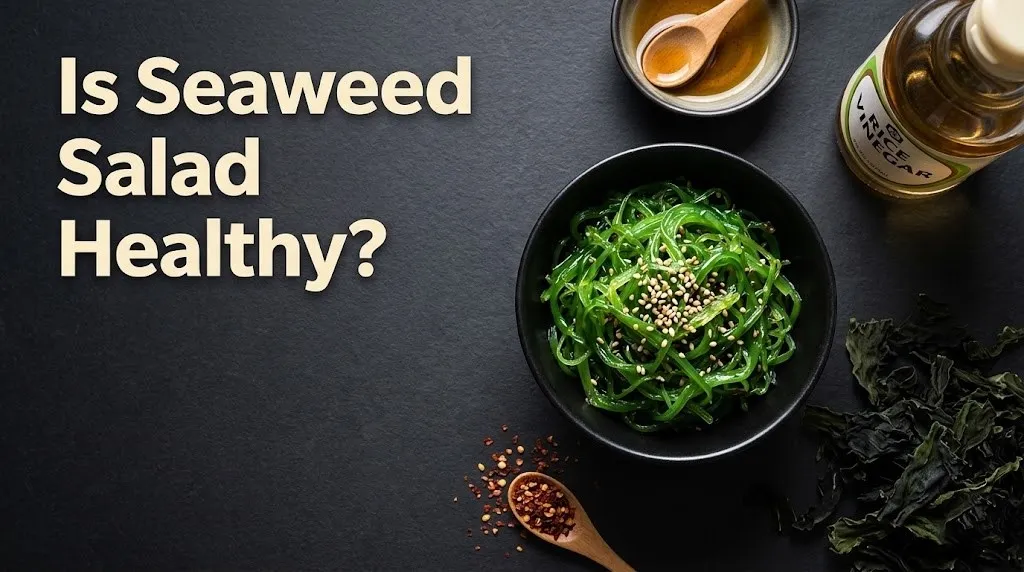
Where the “healthy” label gets complicated is the preparation. The average sushi restaurant seaweed salad is a pre-made product purchased from a foodservice distributor. These products are formulated for shelf stability, color brightness, and addictive flavor. A 2024 review of commercial seaweed salad products by a major consumer nutrition watchdog found that a standard 1-cup restaurant serving contains 10 to 15 grams of added sugar and 400 to 700 milligrams of sodium. That sodium range is 26 to 47 percent of the American Heart Association’s ideal daily limit of 1,500 milligrams. You would never guess this by looking at the salad, and servers rarely know the nutritional data.
seaweed salad healthy
Seaweed salad, when made from scratch with dried wakame, rice vinegar, a small amount of sesame oil, and reduced-sodium soy sauce or tamari, is unequivocally a healthy food that belongs in a balanced eating pattern. The homemade version eliminates the sugar shock and sodium overload of the commercial product while retaining every nutritional benefit of the seaweed.
The distinction between “seaweed” and “seaweed salad” is the same as the distinction between “kale” and “kale salad drenched in sweetened poppy seed dressing.” One is a whole food. The other is a dish whose health value depends entirely on the dressing-to-vegetable ratio and the dressing’s ingredient list. A 2023 analysis published in the Journal of Food Composition and Analysis found that the prepared seaweed salads sold in Asian grocery stores varied by as much as 400 percent in sugar content and 300 percent in sodium content across brands.
The takeaway is not to fear seaweed salad. It is to ask one question before you order: was this salad made in-house, or did it arrive in a plastic tub from a distributor? If the server does not know, assume the latter. Order it, enjoy it, and count it as a neutral food rather than a positive health choice. If you want the nutritional benefits without the dressing compromise, making a batch at home takes ten minutes and costs a fraction of the restaurant price.
is seaweed salad healthy for you
Seaweed salad is healthy for you if your thyroid function is normal, you are not on blood thinners, and you are eating a version with minimal added sugar, but it can be actively harmful if you have an undiagnosed thyroid condition, are pregnant, or are sensitive to excess dietary iodine. “Healthy for you” is the personalized version of the question, and the answer depends on your individual physiology.
The iodine content of seaweed is both its greatest nutritional asset and its most significant potential liability. Iodine is an essential mineral required for the production of thyroid hormones T3 and T4. The Recommended Dietary Allowance for adults is 150 micrograms per day. The Tolerable Upper Intake Level is 1,100 micrograms. A single cup of wakame can contain anywhere from 150 to 850 micrograms of iodine depending on species, harvest location, and processing. That is a healthy contribution for someone with adequate iodine status but potentially problematic for someone with thyroid autoimmunity.
The NIH Office of Dietary Supplements notes that individuals with Hashimoto’s thyroiditis or a history of iodine deficiency-related goiter can be exquisitely sensitive to sudden increases in iodine intake. The mechanism is not fully understood, but excess iodine can trigger a flare of autoimmune thyroid activity in susceptible individuals. If you have a diagnosed thyroid condition, particularly if your antibody levels are not well controlled, the decision to eat seaweed salad regularly should be made in conversation with the endocrinologist managing your care.
are seaweed salads healthy
Seaweed salads are healthy as a broad category, but the nutritional range is so wide, from a homemade wakame salad with 60 calories and 2 grams of sugar to a restaurant version with 200 calories and 15 grams of sugar, that the question cannot be answered without specifying which salad you mean. The seaweed itself is never the problem. The preparation is everything.
A homemade seaweed salad made with dried wakame, a tablespoon of rice vinegar, a teaspoon of sesame oil, a splash of low-sodium tamari, and a pinch of chili flakes contains roughly 70 calories, 4.5 grams of fat, 5 grams of carbohydrate, 2 grams of fiber, and 200 milligrams of sodium per cup. It is vegan, gluten-free if tamari is used, keto-compatible, and one of the most nutrient-dense foods you can eat for the calorie investment.
The restaurant version can easily double or triple the calorie count, primarily from sesame oil, and push the sugar above 10 grams per serving. The bright green color is often enhanced with food coloring, either FD&C Yellow No. 5 and Blue No. 1 combined to make green, or a natural source like spirulina extract. The color itself is not harmful, but it signals a processed product that has been optimized for visual appeal and shelf life rather than nutritional integrity.
Key Takeaway: Seaweed salads exist on a nutritional spectrum from genuinely healthy (homemade) to candy-coated vegetables (commercial). The seaweed is the hero. The dressing is the variable that determines whether you are eating a health food or a dessert.
what is seaweed salad made of
Seaweed salad is made primarily from wakame (Undaria pinnatifida), a brown seaweed that is harvested, dried, and then rehydrated to produce the familiar bright green, tender-crisp strands with a mild, slightly sweet oceanic flavor. The salad dressing typically includes sesame oil, rice vinegar, soy sauce, sugar or high-fructose corn syrup, and chili flakes or ginger for heat.
Wakame is the default seaweed for this salad because its texture is uniquely suited to the format. Unlike nori, which is papery and dissolves when wet, or kombu, which is tough and used for broth, wakame rehydrates into a plump, slippery, slightly crunchy strand that holds dressing beautifully. In its dried form, wakame is dark brown to black. Rehydration and a brief blanching turn it the vivid green seen in the salad bowl. If the green seems fluorescent, the salad has almost certainly been artificially colored.
Some commercial seaweed salads also include agar strands, which are clear or white, gelatinous threads made from a different type of red algae. Agar is flavorless, calorie-free, and used to add volume and visual contrast. It is a form of soluble fiber and contributes nothing negative nutritionally, but its presence signals that the product is stretching the more expensive wakame with a filler.
Common ingredients in restaurant seaweed salad:
- Rehydrated wakame seaweed
- Sesame oil
- Rice vinegar
- Soy sauce
- Sugar or high-fructose corn syrup
- Toasted sesame seeds
- Chili flakes or ginger
- Food coloring (FD&C Yellow 5 and Blue 1, or spirulina extract)
- Agar strands (filler, adds volume)
seaweed salad nutrition facts
A 1-cup serving of restaurant-style seaweed salad, weighing approximately 100 to 120 grams, contains roughly 120 to 180 calories, 8 to 12 grams of fat (mostly from sesame oil), 12 to 18 grams of carbohydrate, 2 to 4 grams of fiber, 10 to 15 grams of sugar, 3 to 5 grams of protein, and 400 to 700 milligrams of sodium. The nutrient profile reflects the dressing more than the seaweed.
The fat in seaweed salad is predominantly unsaturated because it comes from sesame oil, which is roughly 40 percent monounsaturated and 42 percent polyunsaturated. This is a healthier fatty acid profile than the saturated fat in butter or lard, but the total fat content is high relative to the small serving size. A cup of seaweed salad delivering 12 grams of fat is getting roughly 60 percent of its calories from fat. This is fine in the context of an overall eating pattern, but it contradicts the “light, healthy side dish” perception that most diners bring to the table.
The vitamin and mineral content is where the seaweed itself shines through. A 1-cup serving of wakame-based salad provides approximately 60 to 80 micrograms of vitamin K, which is 50 to 65 percent of the Daily Value, and is essential for blood clotting and bone metabolism. The magnesium content ranges from 30 to 50 milligrams. The calcium content is approximately 100 to 150 milligrams. The iron content is roughly 1.5 to 2 milligrams, which is 10 to 12 percent of the Daily Value.
seaweed salad calories and macros
A 1-cup serving of restaurant seaweed salad typically delivers 120 to 180 calories, with 8 to 12 grams of fat, 12 to 18 grams of total carbohydrate, and 3 to 5 grams of protein. The homemade version with controlled dressing drops to roughly 60 to 80 calories, 4 to 5 grams of fat, 5 to 8 grams of carbohydrate, and 3 to 4 grams of protein per cup.
The calorie difference between restaurant and homemade versions is almost entirely explained by the quantity of sesame oil and sugar. A restaurant portion of seaweed salad is often soaking in a pool of dressing at the bottom of the bowl. That excess dressing adds calories without adding satiety or nutrients. If you tip the bowl and see a shallow puddle of oil and sugar syrup, you are looking at roughly 80 to 100 calories that you would not have consumed in a homemade version.
The protein content, while modest at 3 to 5 grams, is notable because it is complete protein containing all nine essential amino acids, which is unusual for a plant food. Seaweed is not a protein powerhouse in the way that legumes or animal products are, but the protein it does contain is of high biological quality. The carbohydrate content is primarily from the added sugar in the dressing, not from the seaweed itself, which is why the homemade version has significantly fewer total carbohydrates.
| Seaweed Salad Type (1 cup) | Calories | Fat | Carbs | Sugar | Protein | Sodium |
|---|---|---|---|---|---|---|
| Restaurant (standard) | 150 | 10 g | 15 g | 12 g | 4 g | 550 mg |
| Restaurant (light dressing) | 100 | 6 g | 8 g | 5 g | 4 g | 300 mg |
| Homemade (controlled) | 70 | 4.5 g | 5 g | 2 g | 4 g | 200 mg |
| Grocery pre-packaged | 130-200 | 8-14 g | 14-20 g | 10-16 g | 3 g | 400-700 mg |
seaweed salad iodine content
A 1-cup serving of wakame-based seaweed salad contains approximately 150 to 850 micrograms of iodine, which is 100 to 567 percent of the Recommended Dietary Allowance of 150 micrograms for adults, and can approach or exceed the Tolerable Upper Intake Level of 1,100 micrograms if the portion is large or the seaweed species is particularly iodine-dense.
The range is wide because the iodine content of seaweed varies enormously based on species, harvest depth, water temperature, and post-harvest processing. Kombu, which is sometimes used in small amounts in mixed seaweed salads, can contain up to 2,000 micrograms of iodine per gram, meaning a single gram of dried kombu can deliver more than 1,000 percent of the RDA. Most seaweed salad is made from wakame, which is lower in iodine than kombu but still a concentrated source compared to any land vegetable.
The NIH Office of Dietary Supplements identifies the following iodine content ranges for common seaweeds: nori at 16 to 43 micrograms per gram, wakame at 42 to 200 micrograms per gram, and kombu at 1,500 to 2,660 micrograms per gram. Using these figures, a 100-gram serving of wakame salad could contain anywhere from 4,200 to 20,000 micrograms of iodine, far exceeding the safe upper limit. In practice, the seaweed in a salad has been rehydrated, which dilutes the concentration by weight, and a standard restaurant portion is smaller than 100 grams of dry seaweed. The actual delivered dose is lower, but the variability is real and not visible on the plate.
seaweed salad sodium content
A standard 1-cup serving of restaurant seaweed salad contains 400 to 700 milligrams of sodium, which is 27 to 47 percent of the American Heart Association’s ideal daily limit of 1,500 milligrams and 17 to 30 percent of the upper limit of 2,300 milligrams. The sodium comes primarily from soy sauce in the dressing.
Soy sauce is one of the most sodium-dense ingredients in any cuisine. A single tablespoon contains 900 to 1,200 milligrams of sodium. The dressing for seaweed salad typically uses 1 to 2 tablespoons of soy sauce per batch, which is distributed across multiple servings. Even so, the sodium concentration in the dressing means that the salad arrives at the table carrying a salt load that competes with processed snack foods.
For context, a small serving of fast-food french fries contains approximately 250 milligrams of sodium. A cup of seaweed salad can deliver double that amount. This does not make seaweed salad “worse” than french fries, the seaweed still provides fiber, vitamins, and minerals the fries lack, but it does make the point that the health halo around this dish can obscure a genuine nutritional liability. If you are watching your sodium intake, particularly for blood pressure management, the seaweed salad at a sushi restaurant is not a free pass.
Quick Tip for Reducing Sodium:
- Ask for the dressing on the side and use half of what is provided.
- Make the salad at home using reduced-sodium tamari or coconut aminos.
- Rinse the rehydrated seaweed in fresh water before dressing to remove any residual brine from processing.
seaweed salad health benefits
The health benefits of seaweed salad, when prepared with minimal sugar and salt, include supporting thyroid hormone production through dietary iodine, improving bone health through vitamin K and calcium, promoting satiety through soluble fiber, and delivering unique antioxidants not found in land vegetables.
The alginate fiber in brown seaweeds like wakame is a soluble fiber that forms a gel in the stomach. This gel slows gastric emptying and can increase the sensation of fullness after a meal. A 2022 study in the journal Appetite found that participants who consumed an alginate-based beverage before a meal ate fewer calories at that meal compared to a control group. The effect size was modest, roughly a 5 to 7 percent reduction in calorie intake, but it suggests that seaweed fiber functions as a natural appetite moderator.
Fucoxanthin, the brown pigment in wakame, has attracted research attention for its potential effects on fat metabolism. Animal studies and small human pilot trials suggest it may slightly increase resting energy expenditure and promote fatty acid oxidation, though the evidence is preliminary and no large-scale, long-term human trials have been published as of 2026. It is reasonable to consider fucoxanthin a promising bioactive compound, but not a weight-loss solution.
The vitamin K content of seaweed salad is among the highest of any commonly eaten food by weight. Vitamin K is required for the activation of osteocalcin, a protein that binds calcium into the bone matrix. Adequate vitamin K intake is associated with lower hip fracture risk in observational studies of older adults. A cup of seaweed salad providing 60 to 80 micrograms of vitamin K meets more than half the daily requirement.
seaweed salad risks and side effects
The primary risks of seaweed salad are excess iodine intake, which can trigger thyroid dysfunction in susceptible individuals, heavy metal contamination from polluted waters, particularly arsenic in hijiki seaweed, and interaction with anticoagulant medications due to the high vitamin K content.
The iodine risk is the most broadly relevant. The American Thyroid Association warns that acute high-dose iodine exposure can cause iodine-induced hyperthyroidism, particularly in older adults with pre-existing nodular thyroid disease. The reverse can also occur: excess iodine can paradoxically cause hypothyroidism by blocking thyroid hormone synthesis through the Wolff-Chaikoff effect. Most healthy adults have an autoregulatory mechanism that escapes this block after a few days, but individuals with underlying thyroid autoimmunity may not escape it efficiently.
Heavy metal accumulation is a genuine but often exaggerated concern. Seaweeds bioaccumulate minerals from seawater, including beneficial ones like iodine and potentially harmful ones like arsenic, cadmium, and lead. The specific concern with hijiki seaweed, which is occasionally included in mixed seaweed salads, is well documented. Hijiki contains inorganic arsenic at levels that have led food safety agencies in multiple countries, including the UK and New Zealand, to advise against its consumption entirely. If your seaweed salad contains thin, dark, almost black strands that look like wiry hair, those are hijiki, not wakame. Ask the restaurant or read the package label.
Key Takeaway: Iodine overload is the most common risk for seaweed salad consumers, and people with thyroid conditions, pregnant women, and anyone on blood thinners should know exactly what seaweed species they are eating and in what quantity.
restaurant vs homemade seaweed salad
Restaurant seaweed salad is typically a pre-made commercial product high in sugar, sodium, and sesame oil, while homemade seaweed salad is a low-calorie, nutrient-dense dish that you can prepare in ten minutes using dried wakame, a simple vinaigrette, and no added sugar beyond a teaspoon of honey or mirin if desired. The difference in nutritional quality is stark and entirely within your control.
Making seaweed salad at home is simpler than most people assume. Dried wakame is available at Asian grocery stores, health food stores, and online. It rehydrates in warm water in 5 to 7 minutes, expanding to roughly 10 times its dried volume. A $4 bag of dried wakame makes the equivalent of 10 to 15 restaurant portions. The dressing is rice vinegar, a small amount of toasted sesame oil for flavor, a splash of low-sodium tamari, and a pinch of chili flake or grated fresh ginger. The total active prep time is under 10 minutes.
The flavor of homemade seaweed salad is brighter and more vegetal than the restaurant version, which can taste cloyingly sweet once you have the homemade version as a reference point. The texture is snappier because the wakame has not been sitting in dressing for days. You can also customize the heat level, the acidity, and the oil quantity to your preference and dietary needs.
To make a basic homemade seaweed salad:
- Place 1 ounce (about 30 grams) of dried wakame in a large bowl and cover with warm water.
- Let the wakame rehydrate for 5 to 7 minutes until plump and tender.
- Drain thoroughly and gently squeeze out excess water with your hands.
- In a separate small bowl, whisk together 2 tablespoons of rice vinegar, 1 tablespoon of low-sodium tamari, 1 teaspoon of toasted sesame oil, and a pinch of chili flakes.
- Toss the dressing with the wakame and let it sit for 5 minutes to absorb the flavors before serving.
who should avoid seaweed salad
People with thyroid disorders, particularly Hashimoto’s disease or a history of hyperthyroidism, pregnant and breastfeeding women due to the variability of iodine content, individuals taking warfarin or other anticoagulant medications, and anyone with a diagnosed iodine sensitivity should avoid seaweed salad or consume it only under the explicit guidance of the physician managing their condition.
The thyroid warning is the most actionable for a broad audience. An estimated 12 percent of the U.S. population will develop a thyroid condition in their lifetime, according to the American Thyroid Association, and many are undiagnosed. A person with undiagnosed Hashimoto’s disease who starts eating seaweed salad several times per week may notice fatigue, brain fog, or heart palpitations without connecting the symptoms to their new health food. If you are considering making seaweed a regular part of your diet, and you have any family history of thyroid disease, it is reasonable to ask your primary care provider to check your thyroid function and antibodies before making a significant dietary change.
Pregnant women face a specific dilemma with seaweed. Iodine is critical for fetal brain development, and requirements increase to 220 micrograms daily during pregnancy. But the risk of excessive iodine is also heightened because the fetal thyroid is sensitive to maternal iodine status. The NIH recommends that pregnant women obtain iodine from a prenatal vitamin with a standardized 150-microgram dose rather than from seaweed, whose iodine content is unpredictable. Seaweed salad should be an occasional food during pregnancy, not a regular iodine source.
The warfarin interaction is straightforward. Vitamin K is the antidote to warfarin, a blood thinner that works by blocking vitamin K-dependent clotting factors. A sudden increase in dietary vitamin K from seaweed salad can reduce the medication’s effectiveness and increase the risk of blood clots. This does not mean people on warfarin can never eat seaweed. It means they need to consume a consistent amount week to week so their warfarin dose can be calibrated accordingly. A binge of seaweed salad after months of none is the problematic pattern.
Frequently Asked Questions About Seaweed Salad
Is seaweed salad good for weight loss?
Seaweed salad can support weight loss because it is very low in calories and high in soluble fiber that promotes satiety.
A cup of homemade seaweed salad contains only 60 to 80 calories but feels substantial in the stomach.
The key is avoiding restaurant versions with heavy dressing that can double or triple the calorie count.
How much iodine is in a serving of seaweed salad?
A 1-cup serving of wakame-based seaweed salad contains between 150 and 850 micrograms of iodine.
This is 100 to 567 percent of the daily requirement and can approach the safe upper limit of 1,100 micrograms.
The range is wide because iodine content varies based on seaweed species, harvest location, and preparation method.
Can I eat seaweed salad if I have a thyroid condition?
You should not eat seaweed salad regularly if you have a thyroid condition without first consulting the endocrinologist managing your care.
Excess iodine can trigger autoimmune thyroid flares in people with Hashimoto’s disease.
A single occasional serving is less likely to cause harm than regular consumption, but the safe threshold varies by individual.
Is the seaweed salad at sushi restaurants actually healthy?
Restaurant seaweed salad is a mixed bag, offering the fiber and micronutrients of seaweed but often loaded with 10 to 15 grams of added sugar and 400 to 700 milligrams of sodium per cup.
The seaweed base is healthy, but the commercial dressing undermines many of the nutritional advantages.
Ask if the salad is made in-house, and if not, eat it as an occasional neutral food rather than a positive health choice.
How much sugar is in the dressing on seaweed salad?
The dressing on restaurant seaweed salad typically contributes 10 to 15 grams of sugar per 1-cup serving.
This sugar comes from added sweeteners like high-fructose corn syrup, sugar, or mirin in the commercial formulation.
A homemade dressing can bring this down to 0 to 2 grams of sugar.
Seaweed salad is a food where your control over the preparation determines the health outcome. The seaweed itself is a genuine superfood in the non-marketing sense of the term: nutrient-dense, low-calorie, and packed with compounds that land vegetables simply do not produce. The commercial dressing and the variable iodine content are the factors that turn a health food into a cautionary tale.
The most practical approach is to make your own. A bag of dried wakame costs less than two restaurant portions and lives in your pantry for months. The dressing comes together in the time it takes the seaweed to soak. You control the sodium, the sugar, and the portion size. Your thyroid knows exactly how much iodine it is getting because you know exactly what seaweed you used.
When you are at a sushi restaurant, order the seaweed salad if you genuinely enjoy it, but do not count it as a free pass or a health food. It is a dressed salad, not a green light. Eat it for pleasure, tip the excess dressing into the empty edamame bowl, and keep the rest of your meal balanced.