Yes, ribs can be a healthy part of your diet when you choose the right cut, cook them with a thoughtful method, and eat a reasonable portion. The answer is not a simple yes or no. It is a matter of knowing which ribs you are eating and how they got to your plate.
The American Heart Association (AHA) recommends limiting saturated fat to less than 7 percent of your total daily calories. A single restaurant portion of fatty spare ribs slathered in a sugar-rich sauce can blow past that target in one meal. But a rack of well-trimmed baby back ribs, roasted at home with a salt-free dry rub, provides high-quality protein, zinc, and a complete suite of B vitamins without the dietary landmines.
This guide breaks down the nutritional science of ribs, compares every major cut, explains the exact risks of the smoke and sauce, and gives you a practical framework for eating ribs without guilt. You will learn how to read a restaurant menu, how to cook ribs for maximum nutrient retention, and who genuinely needs to keep ribs off their plate.
Are Ribs Healthy to Eat?
Ribs are a nutrient-dense food that provides high-quality protein, essential minerals, and B vitamins, but their health profile depends almost entirely on the cut you select and the amount of saturated fat you consume. A leaner cut of pork rib, with the visible fat cap removed, is a different food from a fatty beef short rib.
A standard 3-ounce serving of roasted pork baby back ribs contains roughly 18 grams of protein. That protein is complete, meaning it supplies all nine essential amino acids your body cannot manufacture. The same serving provides about 30 percent of the recommended daily intake for zinc, a mineral that supports immune function and cellular repair.
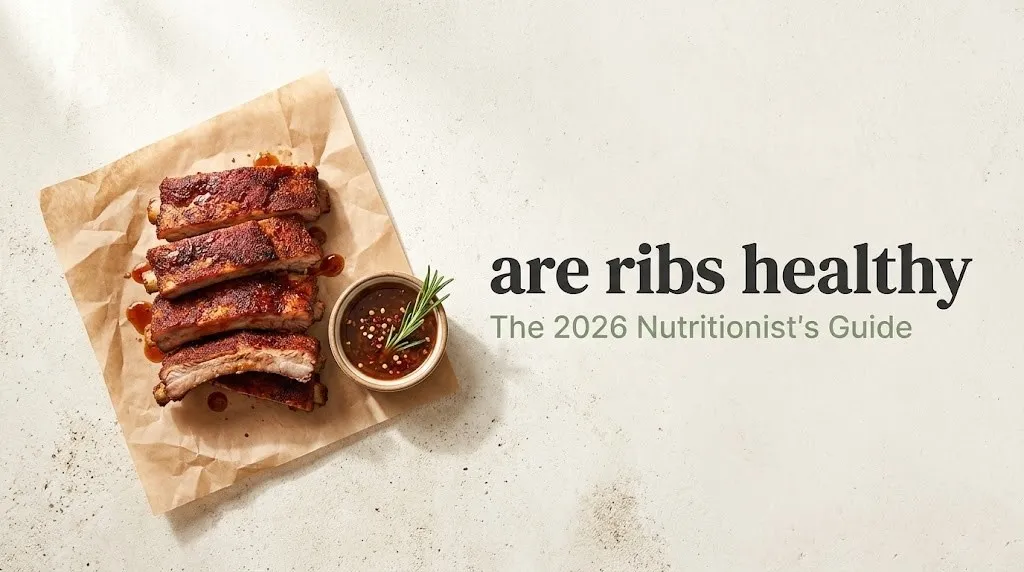
The same 3-ounce serving also delivers about 11 grams of total fat, of which 4 grams are saturated. The AHA suggests a daily saturated fat limit of around 13 grams for a 2,000-calorie diet. A single serving of ribs does not ruin your day. A full rack eaten with fried sides and a sugary drink is a different calculation entirely. The meat itself is not intrinsically unhealthy. The dose and the context make the poison.
Key Takeaway: Ribs are a whole-food source of complete protein and zinc. The saturated fat content is the single biggest variable, and you control it by choosing the right cut.
Are BBQ Ribs Healthy?
BBQ ribs shift the health profile from the meat itself toward the sauce and the cooking method. The classic BBQ preparation coats ribs in a sauce where the first ingredient is often high-fructose corn syrup or brown sugar. A single half-cup of a standard bottled BBQ sauce can contain 40 grams of added sugar, which is more than the American Heart Association’s entire daily limit for men and women.
The sugar in BBQ sauce does not just add empty calories. It caramelizes and chars on the grill, contributing to the formation of advanced glycation end-products and the carbon compounds discussed in detail later. The sweet, sticky glaze also masks the natural flavor of the pork, encouraging you to eat more than you might otherwise.
That does not mean you must eat your ribs dry. A vinegar-based Carolina-style mop sauce or a Kansas City-style dry rub applies flavor without the concentrated sugar load. You can also serve the sauce on the side. Dip your fork in the sauce first, then spear a piece of rib. You will get the flavor in every bite while using a quarter of the amount.
Ways to make BBQ ribs healthier:
- Use a dry rub made from paprika, garlic powder, onion powder, and black pepper instead of a wet, sugary mop
- Thin a standard BBQ sauce with an equal amount of apple cider vinegar to cut the sugar per tablespoon in half
- Grill over indirect heat with the lid closed to reduce charring and flare-ups
- Remove the silverskin membrane to allow the dry rub to penetrate the meat directly
Key Takeaway: BBQ sauce is the primary nutritional problem with BBQ ribs, not the pork itself. A dry rub or a vinegar-based mop cuts the added sugar to nearly zero.
The Complete Nutritional Profile of Pork and Beef Ribs
The nutritional profile of ribs varies widely between species, cuts, and cooking methods. The USDA FoodData Central database provides exact figures for the most common preparations. Understanding these numbers is the difference between making an informed choice and guessing.
Pork ribs are the most commonly consumed type in the United States. A roasted, untrimmed rack of pork spare ribs is significantly fattier than a rack of baby back ribs. Beef ribs, particularly the short rib cut from the chuck, are even richer in fat and contain a higher proportion of saturated fatty acids compared to pork.
The protein-to-fat ratio is the single most useful metric for comparing rib cuts. A higher ratio means more protein per gram of fat. Baby back ribs lead in this metric, making them the preferred choice for anyone tracking their saturated fat intake or following a higher-protein dietary pattern.
| Rib Cut (3 oz cooked, lean and fat) | Calories | Protein | Total Fat | Saturated Fat | Cholesterol |
|---|---|---|---|---|---|
| Pork Baby Back Ribs (roasted) | 200 | 18 g | 14 g | 5 g | 60 mg |
| Pork Spare Ribs (braised) | 337 | 20 g | 28 g | 10 g | 95 mg |
| Beef Short Ribs (braised) | 400 | 25 g | 33 g | 14 g | 105 mg |
| Beef Back Ribs (roasted) | 270 | 22 g | 20 g | 8 g | 80 mg |
Key Takeaway: Baby back ribs provide the best protein-to-fat ratio. Beef short ribs are the most calorically dense and highest in saturated fat.
Baby Back Ribs vs. Spare Ribs: Which Is Healthier?
Baby back ribs are healthier than spare ribs by every standard nutritional metric. They contain less total fat, less saturated fat, and fewer calories per serving, while delivering a comparable amount of protein. The anatomical location of the cut explains the difference.
Baby back ribs are cut from the top of the rib cage near the spine, where the loin muscle runs. This is the same muscle that produces pork loin chops, one of the leanest cuts of pork. The ribs are smaller, more curved, and have a thin layer of meat with a relatively modest fat cap. Spare ribs come from the belly side of the pig, closer to where bacon originates. The meat is marbled with more intramuscular fat and sits beneath a thick layer of external fat.
St. Louis style spare ribs are spare ribs with the cartilage and sternum removed, giving them a neat rectangular shape. The trimming makes them cook more evenly, but they remain nutritionally closer to spare ribs than to baby backs. When you see a competition BBQ plate, you are almost always looking at St. Louis cut spare ribs.
Think of the difference between a chicken breast and a chicken thigh. Both are chicken. Both are real food. But one is objectively leaner and lower in saturated fat. That is the baby back versus spare rib distinction, applied to pork.
Key Takeaway: Baby backs are the leaner, higher-protein choice. Spare ribs are the fattier, richer choice. The anatomical origin of the cut tells you everything you need to know.
The Saturated Fat in Ribs and Your Heart
The saturated fat in ribs raises low-density lipoprotein (LDL) cholesterol when consumed in excess and without the balance of unsaturated fats and fiber in the overall diet. The concern is not the occasional rack of ribs. It is the cumulative dietary pattern in which ribs and other high-saturated-fat animal products crowd out vegetables, legumes, and whole grains.
The AHA’s 2025 dietary guidance reaffirmed the link between high saturated fat intake and increased cardiovascular disease risk. For a person eating 2,000 calories daily, the recommended saturated fat ceiling is approximately 13 grams. A half-rack of braised spare ribs can supply 20 grams or more of saturated fat before you have eaten a single side dish.
This does not mean a person with healthy cholesterol levels must avoid ribs. A 3-ounce portion of baby back ribs contains about 5 grams of saturated fat, which fits comfortably within a balanced day. The person who needs to be most careful is someone with a history of high LDL cholesterol, familial hypercholesterolemia, or established cardiovascular disease.
For these individuals, ribs should be an occasional food, ordered as a small portion, and paired with high-fiber sides like collard greens, a vinegar-based slaw, or black-eyed peas. The soluble fiber in beans and vegetables binds to some of the dietary cholesterol and fat in the gut and reduces absorption.
Key Takeaway: A half-rack of spare ribs can double your daily saturated fat limit. A 3-ounce portion of baby back ribs fits easily inside the AHA guidelines.
Is the BBQ Sauce the Biggest Health Problem?
The BBQ sauce is often the biggest health problem in a rib dinner, even more than the saturated fat in the meat. A 2024 analysis of popular commercial BBQ sauce brands found that a standard 2-tablespoon serving contains an average of 16 grams of added sugar. Most people pour on closer to a quarter cup, consuming 30 grams or more of sugar before the meal has even started.
Sugar consumption is directly linked to weight gain, insulin resistance, and systemic inflammation. The AHA recommends that men limit added sugar to 36 grams per day and women to 25 grams. A heavily sauced rib dinner can exceed that entire daily budget in the first course.
The alternative is not to eat dry, flavorless meat. A dry rub based on chili powder, smoked paprika, garlic powder, and a pinch of salt delivers a deep, complex flavor without any sugar. If you want a glossy, sticky finish, a thin glaze of reduced balsamic vinegar or a fruit-sweetened sauce made from blended dates and tomato paste provides the texture with a fraction of the refined sugar.
Smarter sauce strategies:
- Mix 1 tablespoon of BBQ sauce with 1 tablespoon of apple cider vinegar for a lighter, tangier glaze
- Use a Carolina-style mustard-based sauce, which typically contains far less sugar
- Serve the sauce on the side and dip your fork, not your rib
- Make a low-sugar sauce at home with tomato paste, smoked paprika, blackstrap molasses, and water
Key Takeaway: The sugar in BBQ sauce, not the pork fat, is the hidden metabolic disruptor on the rib plate. Control the sauce and you control the meal.
Are Smoked and Grilled Ribs Carcinogenic?
Smoking and high-temperature grilling create chemical compounds that are classified as probable or possible human carcinogens. The two primary classes are polycyclic aromatic hydrocarbons (PAHs), which form when fat drips onto hot coals and smoke rises back onto the meat, and heterocyclic amines (HCAs), which form when muscle meat is cooked at very high temperatures.
The International Agency for Research on Cancer (IARC), part of the World Health Organization, classifies processed red meat as a Group 1 carcinogen and unprocessed red meat as a Group 2A probable carcinogen. Fresh ribs are unprocessed red muscle meat. They fall into Group 2A. This classification is based on epidemiological evidence linking high lifetime red meat intake to a statistically increased risk of colorectal cancer.
The absolute risk increase for an individual is small, but it is not zero. Grilling a rack of ribs once a month does not put you in the same risk category as someone who eats grilled red meat daily. However, you can reduce your exposure to PAHs and HCAs considerably with a few well-documented techniques.
Ways to reduce carcinogen formation when grilling ribs:
- Pre-cook ribs in the oven or a pressure cooker and finish them on the grill for only 5 to 10 minutes
- Use a gas grill rather than charcoal to reduce PAH production from smoke
- Keep the grill temperature below 350 degrees Fahrenheit to reduce HCA formation
- Flip the ribs every 5 minutes, which reduces charring and HCA concentration
- Marinate the meat in a mixture containing lemon juice, vinegar, or wine before cooking, which has been shown in laboratory studies to reduce HCA formation by up to 90 percent
Key Takeaway: Char and smoke create carcinogenic compounds. Pre-cooking ribs in the oven and finishing them quickly on the grill gives you the flavor with far fewer carcinogens.
How to Choose Healthier Ribs at the Grocery Store
Choosing healthier ribs at the grocery store means looking for a specific cut, examining the fat cap, and reading the label on any pre-seasoned or pre-marinated product. The choices you make in the meat aisle determine the nutritional baseline before you even turn on the stove.
Baby back ribs are the default healthier choice, but not all baby backs are equal. Some racks come with a thick, white layer of fat across the top. A healthier rack has a thin, even fat covering that you can trim further at home. Avoid any rack with the word “enhanced” or “basted” on the label. These terms indicate the pork has been injected with a saline solution that adds sodium without adding flavor or nutrition.
Pre-seasoned ribs from the grocery meat case are almost always a bad deal nutritionally. The seasoning blend is often 30 percent salt and 30 percent sugar by weight. You are paying a premium price for a product that delivers less nutrition than a plain rack you season yourself.
Your grocery store rib checklist:
- Select baby back ribs over spare ribs or beef ribs
- Look for racks that are firm, pinkish-red, and have minimal visible external fat
- Avoid any label that says “enhanced with solution,” “self-basting,” or “pre-marinated”
- If buying beef ribs, choose back ribs over short ribs
- Smell the package through the plastic wrap; fresh pork should have no detectable odor
Quick Tip:
- Ask the butcher to remove the silverskin membrane for you. It saves 10 minutes of prep at home and is a free service at most full-service meat counters.
Key Takeaway: Buy plain, uninjected baby back ribs with a thin fat cap. Every pre-marinated or “enhanced” rack is a sodium and sugar delivery system disguised as convenience.
The Healthiest Ways to Cook Ribs
The healthiest ways to cook ribs are methods that render and drip away the fat while keeping the meat’s internal temperature high enough to dissolve the connective tissue without charring the surface. Braising and oven-roasting meet these criteria better than direct grilling or smoking.
Braising involves cooking the ribs in a covered pot with a small amount of liquid at a low temperature, typically 300 degrees Fahrenheit, for 2 to 3 hours. The gentle, moist heat converts the collagen in the connective tissue into gelatin. That is what gives properly braised ribs their soft, pull-apart texture. The fat renders out of the meat and into the braising liquid, which you can then skim and discard.
Oven-roasting on a rack set inside a rimmed baking sheet achieves a similar fat-draining effect. By elevating the ribs, the fat pools on the sheet below and the meat cooks in dry, circulating heat. The result is closer to a grilled texture without any of the char-related carcinogens.
Pressure cooking or using an Instant Pot has become a popular 2025 shortcut. It works fast, fully denatures the collagen in about 30 minutes, and produces a clean, neutral-tasting rib that is ready for a quick sear in a hot pan or under the broiler. The gelatin-rich cooking liquid can be defatted and used as a base for a sauce.
| Cooking Method | Temperature | Cook Time | Fat Drained Away? | Carcinogen Formation |
|---|---|---|---|---|
| Braising | 300 F | 2 to 3 hrs | Yes (into liquid) | None |
| Oven-Roasting on Rack | 275 F | 2.5 to 3 hrs | Yes (drips onto pan) | None |
| Pressure Cooking | High Pressure | 25 to 30 min | Rendered but contained | None |
| Smoking (offset heat) | 225 to 250 F | 4 to 6 hrs | Partially drips | Yes (PAHs from smoke) |
| Direct Grilling | 350 to 450 F | 20 to 40 min | Drips and flares | Yes (HCAs from charring) |
Key Takeaway: Braising and oven-roasting on a rack are the two healthiest cooking methods. They maximize fat drainage and minimize carcinogen formation.
A Low-Sugar Oven-Baked Ribs Recipe
A low-sugar, oven-baked rib recipe eliminates the need for bottled BBQ sauce while producing a tender, flavorful rack. This method uses a dry rub with no refined sugar and a finishing glaze made from reduced apple cider vinegar and a touch of blackstrap molasses.
Blackstrap molasses is the byproduct of the third boiling of sugarcane. Unlike refined sugar, it retains a meaningful amount of iron, calcium, and magnesium. A tablespoon contains about 10 grams of sugar, which is still significant, but it delivers a depth of flavor that means you use far less than you would of a standard BBQ sauce. This recipe serves four people and requires about 20 minutes of active prep time.
Ingredients:
- 1 rack of baby back ribs (about 2 lbs), silverskin membrane removed
- 2 tablespoons smoked paprika
- 1 tablespoon garlic powder
- 1 teaspoon onion powder
- 1 teaspoon freshly ground black pepper
- 1/4 teaspoon salt (omit if you are strictly limiting sodium)
- 3 tablespoons apple cider vinegar
- 1 tablespoon blackstrap molasses
Instructions:
- Preheat the oven to 275 degrees Fahrenheit and position a rack in the center of the oven.
- Place the ribs on a cutting board, bone-side up. Slide a butter knife under the silverskin membrane at one end, lift it, and grip it with a paper towel to peel the entire membrane off in one sheet.
- Combine the paprika, garlic powder, onion powder, black pepper, and salt in a small bowl and rub the mixture evenly over both sides of the rack.
- Place the ribs on a wire rack set inside a foil-lined rimmed baking sheet. Roast for 2 hours and 30 minutes.
- While the ribs roast, whisk the apple cider vinegar and molasses together in a small bowl.
- Remove the ribs from the oven and brush the vinegar-molasses glaze over the meat side. Place under the broiler on high for 3 to 4 minutes until the glaze bubbles and darkens slightly.
- Let the ribs rest for 5 minutes, then slice between the bones and serve.
Each serving of three to four bones contains approximately 380 calories, 26 grams of protein, and 6 grams of added sugar from the molasses.
Key Takeaway: Oven-roasting on a rack with a dry rub and a vinegar-molasses glaze delivers the texture and flavor of BBQ ribs with a fraction of the sugar and zero char.
How to Order Ribs at a Restaurant
Ordering ribs at a restaurant requires asking two specific questions of your server and choosing your sides before the main course arrives. The kitchen will almost never refuse a reasonable accommodation. You simply need to know what to ask for.
National chain restaurants like Chili’s and Texas Roadhouse serve ribs that are often pre-sauced, pre-seasoned, and cooked in large batches. A full order of Chili’s Original BBQ Ribs with the sauce on as served contains roughly 1,100 calories, 70 grams of fat, and 40 grams of sugar. Asking for the sauce on the side and choosing a half-order brings those numbers down by nearly 50 percent.
Texas Roadhouse is known for their fall-off-the-bone ribs, which are cooked in a holding cabinet with a heavy sauce application. A half-slab with sauce on the side, paired with a plain sweet potato and a side salad with the dressing on the side, is a workable restaurant meal. The same half-slab with the sauce on, fries, and a loaded baked potato is a dietary disaster.
Your restaurant ordering script:
- Ask for the sauce on the side. Say, “I’m watching my sugar intake. Can I get the sauce on the side?”
- Inquire about the cooking method. Say, “Are your ribs grilled over an open flame or slow-roasted?”
- Request visible fat to be trimmed. Most kitchens will do this if you ask.
- Choose two vegetable-based sides. Collard greens, steamed broccoli, a plain baked potato, or a vinegar-based slaw all work.
- Order a half-slab instead of a full slab. The visual portion difference is small, but the calorie difference is often 500 or more.
Key Takeaway: Sauce on the side, half-slab instead of full, and two vegetable sides. That one ordering framework transforms a restaurant rib dinner.
Are Ribs OK on a Weight Loss Diet?
Ribs can fit into a weight loss diet when you control the portion size strictly, choose a lean cut, and account for the calorie density in your overall daily intake. A 3-ounce portion of roasted baby back ribs contains about 200 calories and 18 grams of protein. That is an excellent satiety-to-calorie ratio for someone in a calorie deficit.
The problem with ribs and weight loss is not the ribs. It is the portion distortion. A full slab of baby back ribs can weigh close to a pound before cooking. Even after shrinkage, the edible meat portion is 8 to 10 ounces, which is three times a reasonable serving. The sides, the cornbread, the beer, and the dessert are what tip the meal into a multi-thousand-calorie event.
The protein leverage hypothesis, which has gained substantial research support through 2025, suggests that prioritizing protein at meals helps regulate total calorie intake by enhancing satiety. A small, protein-rich rib portion, paired with a large serving of fibrous vegetables, leverages this mechanism. You feel full on fewer calories.
Making ribs work for weight loss:
- Limit your portion to 3 ounces of cooked meat, which is about three to four bones from a baby back rack
- Use a food scale at home until you can eyeball the portion accurately
- Fill half the plate with non-starchy vegetables like green beans, roasted zucchini, or a simple salad
- Avoid the classic calorie bombs: no cornbread, no mac and cheese, no fried pickles on the side
- Account for the ribs in your daily calorie budget just as you would any other protein and fat source
Key Takeaway: Ribs are not incompatible with fat loss. A three-bone portion of baby backs with vegetables is a high-satiety, protein-forward meal that fits a calorie deficit.
Who Should Avoid or Limit Ribs?
People with gout, uncontrolled high cholesterol, established cardiovascular disease, or a known sensitivity to dietary purines should limit or avoid ribs. These conditions do not all require total avoidance, but they demand a more conservative approach than the general population needs.
Gout is triggered by elevated uric acid in the blood. Purines, found in high concentrations in red meat and organ meats, are metabolized into uric acid. The National Institute of Arthritis and Musculoskeletal and Skin Diseases (NIAMS) advises people with gout to limit their intake of red meat, including pork and beef ribs. A small portion once or twice a month may be tolerated by someone whose uric acid is well-managed with medication. Someone in an active flare should avoid ribs entirely.
People with familial hypercholesterolemia or a history of a cardiac event face a stricter saturated fat calculation. For them, even a 3-ounce portion of baby back ribs might represent more than half their daily saturated fat allowance. Ribs should be an occasional food, always eaten as a small portion, and never on the same day as other high-saturated-fat animal products.
| Condition | Recommendation | Frequency Guideline |
|---|---|---|
| Gout (active) | Avoid completely | Until uric acid levels normalize |
| Gout (managed) | Limit to 2 to 3 oz portion | No more than 1 to 2 times per month |
| High LDL Cholesterol | Strictly limit saturated fat | Occasional, baby back only, 3 oz max |
| Cardiovascular Disease History | Limit | Discuss with a cardiologist; occasional small portion |
| Type 2 Diabetes | No specific rib restriction | Choose dry rub over sugary sauce; monitor blood glucose response |
Key Takeaway: The conditions that require the most caution with ribs are gout and cardiovascular disease. For everyone else, the dose and the frequency are the variables that matter.
Are Ribs Safe to Eat During Pregnancy?
Ribs are safe to eat during pregnancy when they are cooked to a safe internal temperature, which the USDA specifies as 145 degrees Fahrenheit for whole cuts of pork with a 3-minute rest time. The primary pregnancy-specific concerns are foodborne illness, not the nutritional content of the meat.
The meat must be fully cooked. This means no pink in the center and juices that run clear. A rack of ribs smoked low and slow reaches an internal temperature far above the USDA minimum, typically 190 to 203 degrees Fahrenheit, which is more than sufficient to kill Toxoplasma gondii, Listeria monocytogenes, and other pathogens of concern during pregnancy.
The same cautions about saturated fat and sodium apply during pregnancy as they do for anyone else. Pregnancy is not a free pass to eat unlimited saturated fat. A 3-ounce portion of roasted baby back ribs remains a reasonable serving. The sauce caution also applies. Commercial BBQ sauce can be a significant source of added sugar, which contributes to excessive gestational weight gain.
Pregnancy-specific ordering and cooking guidelines:
- Always cook ribs to well-done with no pink remaining
- Use a meat thermometer to confirm an internal temperature of at least 145 degrees Fahrenheit for whole pork cuts
- Request sauce on the side at restaurants to control sugar and sodium
- Avoid gas station or convenience store ribs, which may have been held at unsafe temperatures
Key Takeaway: Well-cooked ribs are safe during pregnancy. The USDA’s 145-degree-Fahrenheit minimum internal temperature is your safety benchmark.
Frequently Asked Questions About Ribs and Health
Are pork ribs or beef ribs healthier?
Pork baby back ribs are the healthiest option among all rib types because they have the most favorable protein-to-fat ratio.
A 3-ounce serving of pork baby back ribs provides about 18 grams of protein with only 5 grams of saturated fat, while the same serving of beef short ribs can contain more than double the saturated fat.
The pork spare rib and beef short rib are the richest, fattiest cuts and should be treated as an indulgence.
Can I eat ribs if I have high cholesterol?
You can eat ribs with high cholesterol if you choose a leaner cut like pork baby back ribs, limit your portion to 3 ounces, and eat them infrequently.
A 3-ounce serving of baby back ribs contains about 5 grams of saturated fat, which fits within a single meal but leaves a tight budget for the rest of the day.
If your LDL cholesterol is severely elevated or you have a history of a cardiac event, you should eat ribs only on rare occasions and after discussing your diet with a cardiologist.
How many ribs is a healthy serving?
A healthy serving of ribs is 3 to 4 ounces of edible meat, which translates to roughly three to four bones from a baby back rack or two bones from a spare rib rack.
This serving provides around 200 to 250 calories and 18 to 20 grams of protein, making it an appropriate centerpiece for a balanced meal.
Fill the rest of your plate with fibrous, non-starchy vegetables to round out the meal without adding a large calorie load.
Is it bad to eat ribs every week?
Eating ribs every week is not recommended for most people because the regular intake of saturated fat and, if grilled, the cumulative exposure to carcinogenic compounds becomes a long-term health concern.
A weekly rib habit, especially if the ribs are heavily sauced and grilled, adds a consistent load of saturated fat and sugar that can affect cholesterol levels over time.
Rotating ribs with leaner protein sources like grilled chicken breast, fish, or legume-based meals is a healthier long-term pattern.
Are boneless ribs healthier than bone-in ribs?
Boneless ribs are not inherently healthier than bone-in ribs, and in many cases they are less healthy because boneless rib products are often formed from compressed meat cuts that include more fat and connective tissue.
The term “boneless rib” on a menu frequently refers to a country-style rib, which is cut from the pork shoulder and is significantly fattier than a baby back rib.
Bone-in ribs require slower eating and more physical work to consume, which can naturally slow your eating pace and help you recognize fullness sooner.
The health profile of ribs is not a fixed label printed on the meat. It is a set of decisions you make, starting in the grocery store and ending at the dinner table. Choose baby back over spare. Choose a dry rub over a sticky sweet sauce. Braise or roast instead of charring over an open flame. Serve a reasonable portion next to two vegetable sides and call it a meal that genuinely nourishes you.
The next time you want ribs, go buy a rack of untrimmed, un-enhanced baby backs. Take 60 seconds to peel off the silverskin. Coat them in smoked paprika and black pepper. Roast them slowly while you go about your afternoon. You will eat better ribs than any restaurant serves and you will know exactly what is on your plate.