Most cat owners want to reward their cats without harming them. The reality is that most commercial treats are designed to be appealing to humans buying them, not nutritionally optimal for the cats eating them.
The global pet treat market was valued at over $7 billion USD in 2024, according to industry research. Cats, as obligate carnivores, have nutritional requirements that are genuinely different from dogs and humans. What counts as a “healthy” treat for a cat comes down to species biology, not marketing language.
This guide covers what feline nutrition science actually says about treat ingredients, how to read labels correctly, which treat formats hold up to scrutiny, and how treat needs shift across life stages and health conditions.
Healthy Treats for Cats: The Honest Starting Point
Healthy treats for cats are animal-protein-based snacks that provide bioavailable nutrients, stay within a safe daily calorie limit, and contain no ingredients that are toxic or physiologically inappropriate for an obligate carnivore.
Cats are not small dogs. Their digestive systems, metabolic pathways, and amino acid requirements are categorically different. A cat cannot convert beta-carotene from plants into usable vitamin A (retinol). A cat cannot synthesize taurine (2-aminoethanesulfonic acid) in sufficient amounts from dietary precursors.
This means that a treat made from plant proteins, artificial colors, and sweeteners may look appealing on a shelf but provides essentially no nutritional benefit to a cat. Worse, some ingredients common in budget treats are actively problematic for feline health.
The baseline standard for any healthy cat treat:
- Primary ingredient is a named animal protein (chicken, salmon, turkey, shrimp)
- No artificial preservatives such as BHA (butylated hydroxyanisole), BHT (butylated hydroxytoluene), or ethoxyquin
- No added sugars, onion powder, or garlic powder
- Caloric contribution stays within veterinary-recommended daily treat limits
What Makes a Cat Treat Healthy
A cat treat qualifies as healthy when it supports the cat’s dietary needs without adding harmful ingredients or excessive calories.
The Association of American Feed Control Officials (AAFCO) sets minimum nutrient standards for cat foods in the United States. However, AAFCO’s standards apply primarily to complete and balanced diets, not to treats sold as supplemental products. This means treats can legally contain minimal protein, significant fillers, and artificial additives while still sitting on pet store shelves without regulatory intervention.
The National Research Council’s 2006 publication, “Nutrient Requirements of Cats and Dogs,” remains the foundational reference for feline amino acid requirements. It identifies taurine, arginine, arachidonic acid, and preformed vitamin A (retinol) as nutrients cats cannot manufacture adequately on their own and must obtain from animal-source food.
What to check on any cat treat label:
- First ingredient: Must be a named meat, fish, or poultry. “Chicken” is better than “poultry by-product meal,” which is better than “meat meal.”
- Crude protein percentage: Look for at least 30% on a dry-matter basis for most treats.
- Moisture content: High-moisture treats (above 70%) are closer to a cat’s natural prey diet.
- Additive list: Shorter is better. Natural preservatives such as mixed tocopherols (vitamin E) are preferable to synthetic ones.
- Caloric density: Look for treats that state kilocalories per treat or per 100 grams.
| Label Term | What It Means | What to Do |
|---|---|---|
| Named animal protein first | Primary ingredient is real meat | Positive sign, continue reading |
| “By-product meal” first | Rendered animal material, variable quality | Check for other quality signals |
| Artificial preservatives | BHA, BHT, ethoxyquin listed | Avoid if possible |
| “Natural flavor” | Broad term, minimally regulated | Not a red flag alone |
| No caloric information | Manufacturer not disclosing density | Contact manufacturer or skip |
Best Healthy Treats for Cats in 2026
The best healthy treats for cats in 2026 are those that use single or limited animal-protein ingredients, contain no artificial preservatives or sweeteners, and fit comfortably within the 10% daily calorie rule without delivering excessive carbohydrates.
Based on ingredient analysis and veterinary nutrition principles, four treat formats consistently outperform the rest. Freeze-dried single-ingredient treats lead on protein density and ingredient simplicity. High-moisture soft chews made from named meat proteins rank second for hydration contribution. Dental treats formulated with veterinary input rank third for functional benefit. Homemade treats made from plain cooked lean protein rank equally alongside freeze-dried for ingredient transparency.
The brands and specific products that lead in any given year change as formulations update. Rather than naming products that may be reformulated by the time you’re reading this, apply the label criteria above to any product you’re evaluating.
Quick Tip:
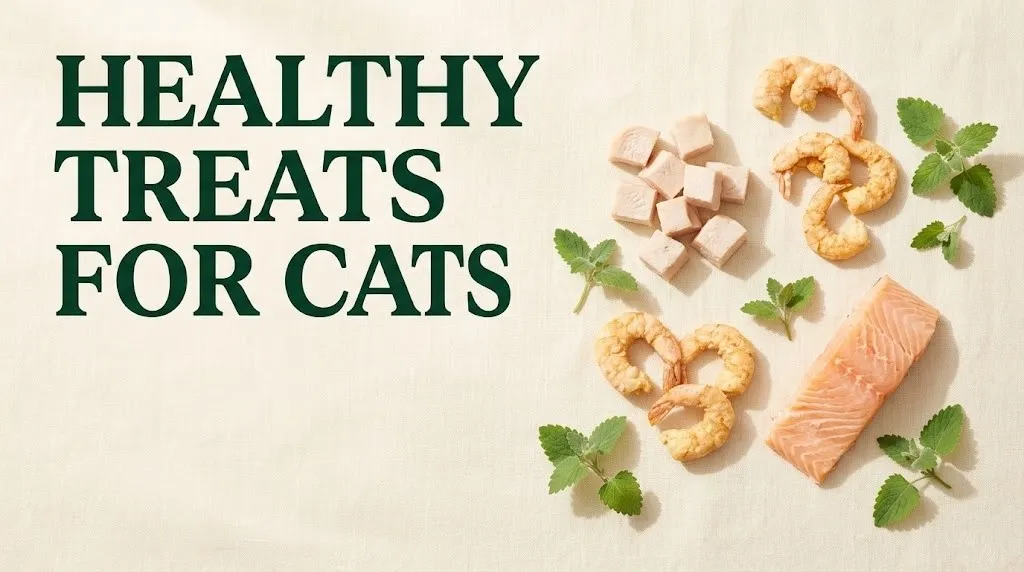
- Freeze-dried treats with one ingredient (chicken breast, shrimp, salmon) are the easiest to evaluate because the label tells you exactly what you’re giving.
- Avoid treats where the ingredient list includes corn syrup, propylene glycol, or any flavor marked only as “natural flavor” without specification.
- If your cat has a known health condition, a board-certified veterinary nutritionist through the American College of Veterinary Nutrition (ACVN) can help identify appropriate treat options.
A useful way to think about this: choosing a cat treat is like choosing a protein bar for yourself. The first ingredient tells you most of what you need to know. If it’s sugar or a filler grain rather than protein, no amount of attractive packaging changes the nutritional reality.
Key Takeaway: Healthy treats for cats are built on animal protein, minimal additives, and calorie awareness. The label’s first ingredient and the absence of synthetic preservatives are your two fastest quality signals.
Cat Treats With Taurine: Why This Amino Acid Matters
Taurine (2-aminoethanesulfonic acid) is an essential nutrient for cats that they cannot synthesize in sufficient quantities from other amino acids, unlike most mammals.
In dogs and humans, the body can produce taurine from cysteine and methionine. In cats, this conversion pathway is severely limited. A cat that does not receive adequate dietary taurine over time faces serious health risks. The Journal of Feline Medicine and Surgery has documented that taurine deficiency in cats causes dilated cardiomyopathy (an enlarged, weakened heart muscle), central retinal degeneration leading to blindness, and reproductive failure in breeding females.
This is not a minor or theoretical concern. Taurine deficiency was identified as a widespread problem in cats eating commercially prepared foods in the 1980s, before AAFCO added mandatory minimum taurine levels to feline diet standards. Today, any AAFCO-compliant complete cat food includes sufficient taurine. However, treats are not always complete foods and may not carry the same guarantee.
Why this matters for treats specifically:
- A treat that makes up a large portion of a cat’s daily intake but lacks taurine can erode the nutritional balance of the overall diet.
- Animal-source proteins like chicken, fish, and beef naturally contain taurine. Plant proteins do not.
- If a treat’s primary protein is plant-based (wheat gluten, pea protein), it contributes essentially no taurine.
The simplest solution is choosing treats where animal protein is the first and primary ingredient. The taurine naturally present in chicken breast, salmon, and shrimp makes those treats inherently safer from an amino acid standpoint than plant-forward options.
Cats with existing heart conditions are particularly sensitive to taurine intake levels. If your cat has been diagnosed with cardiac disease, discuss treat selection specifically with your veterinarian, as taurine supplementation may be part of their treatment plan.
High Protein Cat Treats: What the Numbers Mean
High protein cat treats are treats where animal-derived protein constitutes the majority of caloric content, typically providing 2 to 5 grams of protein per serving depending on treat size and format.
Cats have a higher baseline protein requirement than dogs or humans. According to the National Research Council, adult cats require approximately 5.2 grams of protein per kilogram of body weight per day for maintenance. This is roughly double the requirement of adult dogs. Protein for cats is not just about muscle mass. It is a primary energy source and the supply chain for essential amino acids their bodies cannot produce independently.
A “high protein” claim on a treat label has no standardized regulatory definition in the United States. In practical terms, look for a crude protein percentage of at least 40% to 50% on a dry-matter basis for treats marketed as high protein. Freeze-dried meat treats regularly reach 70% to 85% crude protein by dry weight, making them genuinely high protein by any reasonable interpretation.
| Treat Type | Approx. Crude Protein (dry matter) | Primary Protein Source |
|---|---|---|
| Freeze-dried chicken breast | 75 to 85% | Chicken (Gallus gallus domesticus) |
| Soft meat chews | 35 to 50% | Varies by brand |
| Fish-based flakes | 60 to 75% | Salmon, tuna, or cod |
| Commercial crunchy treats | 25 to 40% | Often mixed or by-product |
| Dental treats | 20 to 35% | Often lower protein by design |
Cats with kidney disease require protein monitoring, as high protein intake can increase the kidneys’ filtration workload. For healthy adult cats, protein density in treats is a feature, not a liability, provided total caloric intake stays within appropriate limits.
Low Calorie Cat Treats: Keeping Portions in Check
Low calorie cat treats are those providing fewer than 2 to 3 kilocalories per individual treat piece, allowing owners to reward their cats without meaningfully disrupting daily caloric balance.
The veterinary nutrition community generally applies a rule that treats should not exceed 10% of a cat’s total daily caloric intake. A typical adult domestic cat weighing 4 kilograms (approximately 9 pounds) with moderate activity requires roughly 200 to 250 kilocalories per day. Ten percent of that budget is 20 to 25 kilocalories total from treats.
This is less than it sounds. Many popular commercial treats deliver 3 to 5 kilocalories per piece. Giving five to ten treats per day, as many owners do casually, can easily consume 15 to 50 kilocalories, which at the high end represents 20% or more of a 200-kilocalorie daily budget.
Think of it the way you’d think about snacking on salted almonds while trying to eat carefully. A small handful seems reasonable until you realize 15 almonds is already 100 calories and you’ve had three handfuls. The treat math for cats adds up the same way.
| Treat Format | Approx. Calories Per Piece | Safe Daily Quantity (4 kg adult cat) |
|---|---|---|
| Freeze-dried shrimp (small) | 1 to 2 kcal | Up to 12 to 15 pieces |
| Soft meat chew (standard) | 3 to 5 kcal | 4 to 7 pieces |
| Crunchy commercial treat | 2 to 4 kcal | 5 to 10 pieces |
| Dental chew (large) | 8 to 15 kcal | 1 to 2 pieces maximum |
| Cooked chicken breast (1 tsp) | 5 to 8 kcal | 2 to 3 servings |
These figures are approximate. Caloric density varies by brand and formulation. Always check the product’s stated kilocalorie content and calculate based on your cat’s specific daily needs, which your veterinarian can help you determine.
Key Takeaway: Taurine from animal proteins is non-negotiable in any cat treat, and daily treat calories should stay at or below 10% of your cat’s total daily intake to avoid gradual weight gain.
Natural Cat Treats: What the Label Actually Means
The word “natural” on a cat treat label has a specific but limited regulatory meaning. It does not mean organic, human-grade, wild-caught, free-range, or minimally processed.
According to AAFCO’s definition, “natural” in pet food means the ingredient was derived solely from plant, animal, or mined sources without synthetic chemical alterations. A treat can be labeled natural while still containing rendered meat meals, chemically extracted fats, and heavily processed ingredients, as long as no synthetic vitamins or preservatives were added without disclosure.
The term is not meaningless. It does rule out synthetic flavor compounds and certain artificial preservatives. But it does not guarantee ingredient quality, sourcing transparency, or nutritional superiority over a product without the natural label.
When evaluating “natural” cat treats, look past the label and examine:
- Whether the protein source is a whole named ingredient (chicken, salmon, beef) versus a processed derivative (meat meal, poultry digest)
- Whether the preservative is a natural tocopherol (vitamin E) or a synthetic compound
- Whether any plant-based fillers appear in the first five ingredients
What “natural” cat treats often get right:
- Absence of artificial colors (which serve no nutritional function and exist only for human appeal)
- Use of natural preservatives that are better tolerated in feline systems
- Simpler ingredient lists overall
What “natural” does not guarantee:
- Taurine content
- High crude protein percentage
- Appropriate caloric density
- Sourcing accountability
Freeze-Dried Cat Treats: Are They Worth It?
Freeze-dried cat treats are genuinely among the most nutritionally sound commercial treat options available, and the process that makes them shelf-stable also preserves most of the protein structure and amino acid content of the original ingredient.
Freeze-drying removes moisture through sublimation, a process that converts ice directly to vapor without passing through liquid. This preserves the cellular structure of the meat more effectively than heat-based drying methods, which can denature proteins and reduce nutrient availability. The resulting treat is lightweight, shelf-stable without synthetic preservatives, and highly palatable because the flavor compounds remain intact.
A single-ingredient freeze-dried chicken or shrimp treat contains what it says it contains. There is no filler, no binder, no added fat for palatability. This makes it one of the few commercial treat formats where the ingredient list is genuinely transparent.
Practical considerations for freeze-dried cat treats:
- They rehydrate quickly in water, making them useful for adding moisture to the diet of cats who drink insufficiently.
- They are calorie-dense by weight because all moisture is removed. One gram of freeze-dried chicken provides more calories than one gram of fresh chicken.
- Cats with fish allergies should avoid freeze-dried fish treats. Single-ingredient format means there is no hiding what the allergen is, which is exactly why these treats are also preferred for food elimination trials under veterinary guidance.
- Cost per treat is higher than conventional options. Buying in larger bags reduces the per-treat cost.
According to the American Veterinary Medical Association’s general guidance on pet nutrition, minimally processed animal proteins are appropriate dietary components for cats at all life stages, provided total intake remains within the cat’s daily energy needs.
Homemade Healthy Cat Treats: Recipes That Are Safe
Homemade cat treats can be healthy and appropriate when made from plain, cooked lean animal proteins with no seasonings, sauces, or additives.
The safest homemade treats require no recipe at all. A small piece of plain cooked chicken breast, a small cube of cooked salmon with bones fully removed, or a single cooked shrimp (peeled, deveined, no seasoning) provides exactly what the ingredient says, with no mystery additives.
For owners who prefer a more structured treat option, here is a straightforward baked cat treat that works well:
Plain Tuna and Egg Cat Treat Bites
Yield: approximately 40 small treats
Prep time: 10 minutes
Cook time: 15 minutes
To make plain tuna and egg cat treat bites:
- Preheat the oven to 177°C (350°F) and line a baking sheet with parchment paper.
- Drain one 170-gram (6-ounce) can of tuna packed in water. The tuna must be unseasoned. Avoid tuna packed in oil or with any added salt.
- Combine the drained tuna with one large egg, lightly beaten.
- Add 60 grams (half a cup) of plain oat flour to bind the mixture. Oat flour is better tolerated than wheat flour in cats with gluten sensitivity.
- Mix until a soft dough forms. If the dough is too wet, add oat flour a teaspoon at a time.
- Roll the dough to approximately 6mm (quarter inch) thickness on a lightly floured surface.
- Cut into small pieces approximately 1.5 cm (half an inch) across using a knife or small cookie cutter.
- Bake for 12 to 15 minutes until the treats are firm and lightly golden.
- Allow to cool completely before serving. Store refrigerated in an airtight container for up to 5 days. Freeze for up to 2 months.
Each treat provides approximately 3 to 5 kilocalories. Limit to 5 to 8 treats per day for a typical 4-kilogram adult cat.
Cats with wheat sensitivities, grain allergies, or inflammatory bowel disease should avoid flour-based treats entirely. Plain cooked protein pieces are safer for these animals.
Key Takeaway: Freeze-dried single-ingredient treats and plain cooked lean proteins are the two treat formats with the highest ingredient transparency and the lowest risk of hidden additives.
Grain-Free Cat Treats: Helpful or Just Marketing?
Grain-free cat treats are not inherently healthier than grain-containing treats. Whether they benefit your cat depends entirely on what replaces the grain in the formulation.
Cats have no biological requirement for dietary grains. Their digestive systems are adapted to process animal tissue, not starchy carbohydrates. In this narrow sense, grain-free formulations align with feline biology. However, most commercial grain-free treats substitute grains with peas, potatoes, tapioca, or sweet potato. These ingredients are still high in starch and may actually deliver more carbohydrates than some grain-containing treats.
A grain-free label is valuable in two specific scenarios. First, for cats with confirmed grain allergies or intolerances, eliminating grain removes a known dietary trigger. Second, for cats whose owners want to reduce overall carbohydrate exposure without going to a fully raw or home-cooked diet, grain-free treats are a reasonable middle step.
Where the grain-free claim holds up:
- Genuine grain-free treats with meat as the primary ingredient and no starchy vegetable substitutes do reduce carbohydrate load.
- Grain-free freeze-dried single-ingredient treats are effectively zero-carbohydrate.
Where the grain-free claim can mislead:
- Pea protein, potato starch, and tapioca starch are still digestible carbohydrates. A grain-free treat with these as primary ingredients may have a similar carbohydrate profile to a grain-containing treat.
- “Grain-free” does not mean “low glycemic.” The glycemic impact of potato starch on a cat’s blood glucose is similar to that of corn or rice.
Cats with diabetes mellitus benefit from genuinely low-carbohydrate treats, not simply grain-free ones. Checking the guaranteed analysis for carbohydrate content (calculated as: 100 minus crude protein minus crude fat minus crude fiber minus moisture) gives you the actual carbohydrate percentage.
Limited Ingredient Cat Treats: When Simpler Is Better
Limited ingredient cat treats contain a short ingredient list, typically featuring one protein source, minimal binders, and no added flavors, colors, or preservatives beyond a natural preservative.
The primary use case for limited ingredient treats is managing food allergies or adverse food reactions in cats. Feline food allergy presents as chronic gastrointestinal upset, skin irritation, hair loss, or excessive grooming. Identifying the allergen requires an elimination diet, during which every protein and carbohydrate in the cat’s diet must be novel (never previously eaten) for the diagnostic period, typically 8 to 12 weeks.
During an elimination diet, treats must also follow the limited ingredient protocol. Giving a cat a standard commercial treat during an elimination trial contaminates the test and makes the result unreadable.
Key proteins used in limited ingredient treats:
- Novel proteins for allergy cats: rabbit (Oryctolagus cuniculus), venison (Odocoileus virginianus), duck (Anas platyrhynchos), kangaroo
- Standard proteins for non-allergy use: chicken, salmon, turkey, shrimp
- Avoid if there’s a known sensitivity: the protein the cat has already eaten extensively (usually chicken or fish in most domestic cats)
According to the American College of Veterinary Nutrition, elimination diet trials must be conducted under veterinary supervision to ensure nutritional adequacy and proper interpretation of results. A limited ingredient treat is a tool within that protocol, not a standalone solution for a cat with suspected allergies.
Cats without allergy concerns can still benefit from limited ingredient treats because a shorter ingredient list means fewer opportunities for hidden problematic additives.
Treats for Overweight Cats
Treats for overweight cats must be low in caloric density, high in protein relative to fat, and carefully portioned within a reduced daily calorie budget set by a veterinarian.
Feline obesity is documented as one of the most common preventable health conditions in domestic cats. The Association for Pet Obesity Prevention (APOP) has reported in repeated annual surveys that more than 60% of cats in the United States are classified as overweight or obese based on body condition scoring. Excess body weight in cats is associated with increased risk of feline diabetes mellitus, hepatic lipidosis (fatty liver disease), osteoarthritis, and reduced lifespan.
Treats for an overweight cat should not be eliminated entirely. Treats serve a behavioral and bonding function that has value. Eliminating them abruptly can cause stress behaviors and food-seeking in cats accustomed to treat routines. The goal is caloric substitution, not removal.
Practical adjustments for overweight cats:
- Use freeze-dried shrimp or freeze-dried chicken pieces, breaking them into halves or quarters to increase the number of reward moments without increasing caloric load.
- Replace caloric treats with non-food rewards where the cat responds to them: grooming sessions, play with a wand toy, or verbal praise.
- Count every treat calorie against the cat’s total daily intake, calculated as part of the weight-loss plan established with the veterinarian.
- Avoid treats with more than 3 kilocalories per piece for cats on active weight-loss protocols.
A veterinarian or veterinary nutritionist should set the specific daily caloric target for any cat on a weight-loss plan. Body condition score and ideal weight vary by breed, sex, and age. A 5-kilogram Maine Coon and a 5-kilogram mixed-breed shorthair have different lean-body-mass distributions and energy needs.
Key Takeaway: Overweight cats need treat calories counted, not treats removed. Break high-value treats into smaller pieces to preserve the reward value without exceeding the calorie budget.
Treats for Cats With Kidney Disease
Cats with chronic kidney disease (CKD) require treats that are low in phosphorus, moderate in sodium, and appropriate in protein quantity as directed by their veterinarian.
Feline CKD is extremely common in older cats. According to a study published in the Journal of Feline Medicine and Surgery, CKD affects an estimated 20 to 50% of cats over 15 years of age. The kidneys in a cat with CKD cannot filter phosphorus efficiently. Phosphorus accumulates in the bloodstream, accelerating kidney deterioration. Dietary phosphorus restriction is a cornerstone of CKD management.
Most commercial cat treats are not formulated with phosphorus restriction in mind. Fish-based treats, in particular, tend to be high in phosphorus. Organ meat treats (liver, kidney) are also high in phosphorus and are generally inappropriate for cats in moderate to advanced CKD stages.
Treat options typically better tolerated in CKD cats:
- Plain cooked egg white (low phosphorus, usable protein)
- Small amounts of plain cooked chicken breast (lower phosphorus than fish or organ meats)
- Specialized veterinary-prescription treats formulated for renal diets
Treats to avoid in CKD cats:
- Fish-based treats (high phosphorus)
- Liver treats (very high phosphorus)
- High-sodium treats (additional kidney stress)
- Treats with added phosphate preservatives (listed as sodium phosphate, potassium phosphate on labels)
Protein quantity in CKD is nuanced. Moderate dietary protein is generally preferred in early CKD to preserve muscle mass. Severe protein restriction was historically recommended but is no longer the standard approach in early-stage disease, according to guidance from veterinary internal medicine specialists. The appropriate protein level for a specific cat with CKD should be determined by a veterinarian based on blood and urine panel results.
Cat Treats for Senior Cats: Adjusting for Aging Needs
Senior cats, typically defined as those aged 11 years and older, have specific treat considerations related to dental health, digestive changes, reduced caloric needs, and increased risk of chronic disease.
Many senior cats develop dental disease that makes crunchy treats painful or impossible to eat comfortably. Transitioning to soft, high-moisture treats or finely divided freeze-dried pieces that dissolve easily reduces discomfort and maintains the treat routine. The Cornell Feline Health Center notes that dental disease affects the majority of cats over age three, with severity increasing through the senior years.
Senior cats often have lower overall energy needs than young adults due to reduced activity, while simultaneously needing higher-quality protein to maintain muscle mass. This is somewhat counterintuitive. Older cats are less efficient at absorbing and utilizing dietary protein. The American Association of Feline Practitioners (AAFP) recognizes this and generally supports maintaining or slightly increasing protein quality (not necessarily quantity) in senior feline diets.
| Treat Consideration | Young Adult (1 to 6 years) | Senior (11+ years) |
|---|---|---|
| Texture preference | Crunchy or soft | Soft, moist, or crumbled |
| Protein priority | Moderate to high | High quality, easily digestible |
| Caloric needs | Moderate | Often reduced |
| Dental consideration | Dental chews beneficial | Soft treats preferable |
| Health condition risk | Lower | CKD, hyperthyroidism, diabetes higher |
Senior cats should have a veterinary wellness exam at least twice yearly. Any change in treat interest, chewing behavior, or appetite warrants prompt veterinary attention as these can be early signs of dental pain, gastrointestinal disease, or systemic illness.
Cat Treats for Kittens: Starting the Right Way
Kittens under 12 months old have high protein and caloric requirements to support rapid growth, but their small body size means treat portions must be extremely small.
The AAFCO “growth” nutrient profile sets higher requirements for protein, calcium, phosphorus, and taurine for kittens compared to adult cats. A kitten’s daily caloric need per unit body weight is significantly higher than an adult’s. A 500-gram (approximately 1 pound) kitten needs roughly 80 to 100 kilocalories per day. Even 5 kilocalories from a single treat represents 5% to 6% of their daily intake.
Treats for kittens should meet three criteria:
- Sized appropriately for a very small mouth (pea-sized or smaller)
- Made from easily digestible animal protein
- Free from any ingredient that poses a higher risk in a young animal (very high sodium, artificial preservatives, dairy-based products that may cause digestive upset in cats beyond early weaning)
Safe treat introductions for kittens:
- Plain cooked chicken breast, shredded into tiny pieces
- Plain cooked salmon, tiny flake with all bones confirmed removed
- Freeze-dried single-ingredient treats broken into crumbs
- Age-appropriate commercial kitten treats labeled for growth life stage
Kittens under 8 weeks should not receive treats of any kind. Their nutritional needs are fully met by mother’s milk or a kitten milk replacer. Introducing solid treats too early can displace needed caloric intake from a more complete source.
Breed plays a role in portioning. A rapidly growing Maine Coon kitten at 4 months has very different caloric needs than a petite Singapura at the same age. A veterinarian familiar with the specific breed can provide appropriate daily caloric targets.
Key Takeaway: Senior cats need soft, high-quality protein treats due to dental disease risk and reduced protein absorption efficiency. Kittens need treats sized to their small mouths and counted carefully against their high daily caloric requirements.
Ingredients to Avoid in Cat Treats
Several ingredients commonly found in commercial pet treats are toxic to cats, and several more are physiologically inappropriate even if not acutely harmful.
The ASPCA Animal Poison Control Center maintains a comprehensive list of foods and compounds toxic to cats. Cat owners should check this resource when evaluating any human food as a potential treat.
Ingredients that are acutely toxic to cats:
- Onion and garlic (including onion powder, garlic powder, and related Allium species): Cause oxidative damage to feline red blood cells, leading to hemolytic anemia. The powder forms are more concentrated and more dangerous per gram than fresh forms.
- Xylitol (a sugar alcohol sweetener): Causes severe hypoglycemia and potential liver failure in cats. Found in some peanut butters, candies, and flavored treats marketed broadly.
- Grapes and raisins: Mechanism in cats is not fully understood, but these cause acute kidney failure in dogs and are considered unsafe for cats as well by the ASPCA.
- Alcohol (ethanol): Extremely dangerous even in small amounts. Relevant because some natural flavor compounds may derive from fermentation processes.
Ingredients that are physiologically inappropriate without being acutely toxic:
- Propylene glycol: Permitted in dog treats but prohibited in cat food by the FDA due to its potential to damage feline red blood cells. Some treats may still include it.
- Artificial colors (Red 40, Yellow 5, Yellow 6, Blue 2): Serve no nutritional function. Cats cannot perceive color the way humans do, making these additives purely for human visual appeal at the cat’s potential expense.
- Dairy products in large amounts: Most adult cats are lactose-intolerant. Small amounts of hard cheese occasionally may be tolerated, but milk, cream, and soft cheese can cause gastrointestinal upset.
- High-sodium ingredients: Added salt, soy sauce, and seasoning blends contribute sodium loads that stress feline kidneys over time.
- Artificial sweeteners other than xylitol: Saccharin and aspartame have limited research in cats. Until proven safe, they are best avoided.
| Ingredient | Risk Level | Effect |
|---|---|---|
| Onion/garlic powder | High toxicity | Hemolytic anemia |
| Xylitol | High toxicity | Hypoglycemia, liver failure |
| Grapes/raisins | High toxicity | Acute kidney failure (mechanism unclear) |
| Propylene glycol | Moderate concern | Red blood cell damage |
| Artificial colors | Low direct toxicity | No nutritional value, potential sensitivity |
| Lactose (dairy) | Moderate concern | Gastrointestinal upset in most adults |
| High sodium | Chronic concern | Kidney stress, hypertension over time |
If you suspect your cat has ingested a toxic ingredient, contact the ASPCA Animal Poison Control Center (APCA) at their 24-hour hotline or reach an emergency veterinary clinic immediately. Time matters in poisoning cases.
Frequently Asked Questions About Healthy Treats for Cats
How many treats should I give my cat per day?
Treats should not exceed 10% of your cat’s daily caloric intake, which for a typical 4-kilogram adult cat means no more than 20 to 25 kilocalories from treats per day.
This translates to approximately 5 to 10 standard commercial crunchy treats or 10 to 15 small freeze-dried pieces.
Your veterinarian can calculate your specific cat’s daily caloric target based on weight, age, and activity level, which gives you a precise treat budget.
Can I give my cat human food as a treat?
Yes, several human foods are safe for cats as occasional treats when prepared appropriately.
Safe options include plain cooked chicken breast, plain cooked salmon with bones fully removed, plain cooked shrimp (no seasoning), plain cooked egg white, and small amounts of plain cooked turkey.
Human foods to avoid completely include anything in the onion or garlic family, grapes, raisins, any food containing xylitol, chocolate, alcohol, and caffeinated items.
Are freeze-dried cat treats healthier than regular treats?
Freeze-dried single-ingredient cat treats are generally among the most nutritionally transparent options available because the freeze-drying process preserves amino acids and the short ingredient list leaves nothing to question.
They tend to be higher in protein and lower in carbohydrates than most commercial crunchy treats.
The main practical consideration is cost per treat, which is higher than conventional options, and caloric density by weight, which is higher due to moisture removal.
What ingredients in cat treats are toxic or harmful?
Onion powder, garlic powder, xylitol, grapes, and raisins are acutely toxic to cats and must be completely avoided.
Propylene glycol is prohibited in cat food by the FDA due to risks to feline red blood cells.
High sodium levels, artificial colors, and lactose are not acutely toxic but can contribute to health problems over time, particularly in cats with kidney disease, diabetes, or lactose intolerance.
Can cats with kidney disease have treats?
Cats with chronic kidney disease can have treats, but the selection must be phosphorus-restricted and ideally sodium-controlled.
Plain cooked egg white and small amounts of plain cooked chicken breast are generally better tolerated than fish-based or organ-based treats, which tend to be high in phosphorus.
A veterinarian managing the cat’s CKD should approve any regular treat given to a cat with this condition, as the appropriate phosphorus and protein levels depend on disease stage and current bloodwork results.
Choosing better treats for your cat does not require a nutritional science degree. It requires reading the first five ingredients, checking for taurine-containing animal proteins, keeping daily treat calories within the 10% rule, and avoiding the handful of genuinely toxic ingredients that have no place in a cat’s diet under any circumstances.
Start with the simplest option: a small piece of plain cooked chicken breast. From there, you have a standard worth comparing everything else against.
For cats with specific health conditions, the right treat is part of a broader dietary conversation. A veterinarian familiar with your cat’s bloodwork and history is the right person to make those calls precisely.