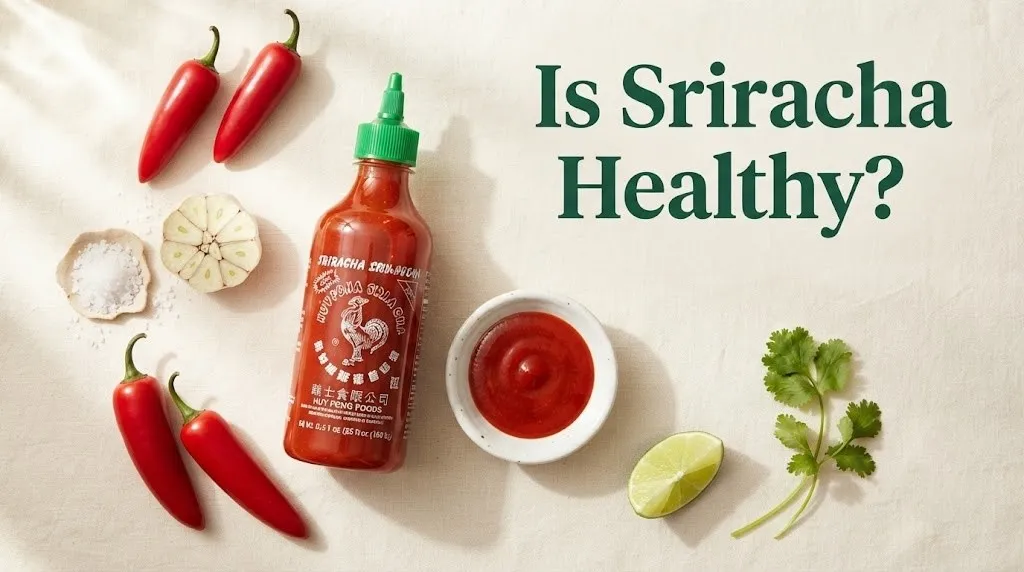
Sriracha is a low-calorie condiment that adds flavor without meaningful nutritional downsides for most people, making it a healthy addition to a balanced diet when used in normal teaspoon-sized portions. The health concerns around sriracha are not about the sauce itself. They are about the sodium content and what happens when people use half a bottle per meal.
The question of whether sriracha is healthy matters because this single condiment has become a cultural phenomenon. What started as a Thai chili sauce made by Huy Fong Foods in California now appears on restaurant tables, in packaged snacks, and on everything from eggs to pizza. The NPD Group reported that sriracha consumption in the United States grew by over 60 percent between 2015 and 2025, making it one of the fastest-growing condiments in the country. People are eating a lot of it, and the cumulative intake is worth examining.
This article walks you through exactly what is in sriracha, how it compares to other hot sauces nutritionally, what the research says about capsaicin and metabolism, who should limit their intake, and how to choose the healthiest sriracha on the shelf. No vague wellness claims. Just the nutritional data, the ingredient analysis, and the practical guidance you need to decide whether your sriracha habit is serving you.
What Is Sriracha Made Of?
Sriracha is made from red jalapeño peppers (Capsicum annuum), garlic, sugar, salt, and distilled vinegar, blended into a smooth, pourable sauce and fermented to develop its signature tangy, garlicky heat. The ingredient list is short compared to most commercial condiments, which is one reason sriracha has a health halo.
The peppers are the foundation. Red jalapeños are fully ripened green jalapeños, which means they have a higher sugar content and a slightly fruitier flavor than their green counterparts. The capsaicin content of red jalapeños falls in the range of 2,500 to 8,000 Scoville Heat Units, which is mild by chili pepper standards. Sriracha’s heat is approachable precisely because the base pepper is not a super-hot variety.
Garlic is the second most prominent ingredient by weight after peppers. The garlic content is what distinguishes sriracha from simpler hot sauces that are essentially vinegar, peppers, and salt. Garlic contributes organosulfur compounds including allicin, which research published in the Journal of Nutrition has associated with cardiovascular benefits including modest blood pressure reduction and improved lipid profiles. The garlic in sriracha is processed and fermented, which reduces the allicin content compared to raw garlic, but some bioactive compounds survive.
Sugar is the ingredient that surprises people who think of sriracha as purely savory. A teaspoon of sriracha contains roughly 1 gram of sugar, which is not much in isolation. The sweetness balances the acid and heat. The sugar content becomes relevant when sriracha is used in large quantities, but at normal serving sizes, it contributes negligibly to daily added sugar intake.
Vinegar provides acidity and acts as a preservative. The low pH of sriracha, typically around 3.5 to 3.8, inhibits bacterial growth and gives the sauce its shelf stability. No artificial preservatives are needed because the combination of vinegar, salt, and the natural antimicrobial properties of garlic and capsaicin keeps the sauce safe at room temperature after opening, though refrigeration extends quality.
Sriracha Nutrition Facts
A 1-teaspoon (5-gram) serving of standard Huy Fong Foods sriracha contains approximately 5 calories, 1 gram of carbohydrate (of which 1 gram is sugar), 0 grams of fat, 0 grams of protein, and 80 to 100 milligrams of sodium. The nutritional impact of a normal serving is negligible in the context of a full day’s eating.
The calorie content is so low that sriracha can be considered a free food in most dietary tracking systems. Five calories per teaspoon means that even a generous tablespoon, roughly three teaspoons, contributes only 15 calories. The caloric impact of sriracha comes not from the sauce itself but from what it is eaten with. Sriracha on grilled vegetables adds flavor without calories. Sriracha mayonnaise blends the sauce with a high-calorie fat source.
The sodium content is the only nutritional number that deserves attention. At 80 to 100 milligrams per teaspoon, sriracha is moderately high in sodium. The American Heart Association recommends an ideal limit of 1,500 milligrams of sodium per day. A teaspoon of sriracha represents 5 to 7 percent of that ideal limit. A tablespoon represents 15 to 20 percent. Heavy sriracha users who apply the sauce liberally to multiple meals per day can accumulate meaningful sodium from this single condiment.
The sugar content is minimal. One gram per teaspoon means that even a tablespoon contributes only 3 grams of sugar, which is less than a single packet of ketchup. The Dietary Guidelines for Americans recommend limiting added sugar to less than 10 percent of total daily calories. For a 2,000-calorie diet, that is 50 grams. Sriracha’s sugar contribution is a rounding error by comparison.
| Condiment (1 tsp) | Calories | Sodium (mg) | Sugar (g) | Notable Ingredients |
|---|---|---|---|---|
| Sriracha | 5 | 80 to 100 | 1 | Chili, garlic, vinegar, sugar |
| Ketchup | 15 | 150 | 4 | Tomato concentrate, high fructose corn syrup |
| Yellow Mustard | 3 | 55 | 0 | Mustard seed, vinegar, turmeric |
| Barbecue Sauce | 25 | 150 | 5 | Tomato paste, sugar, molasses |
| Ranch Dressing | 60 | 80 | 1 | Oil, buttermilk, egg yolk |
| Soy Sauce | 10 | 300 | 0 | Soybeans, wheat, salt |
Is Sriracha Healthier Than Other Hot Sauces?
Sriracha is similar in nutritional profile to other vinegar-based hot sauces, with the main differences being slightly more sugar and a more complex flavor from garlic and fermentation. Compared to traditional Louisiana-style hot sauces, sriracha is slightly sweeter and slightly lower in sodium per teaspoon.
A standard Louisiana-style hot sauce like Tabasco contains roughly 35 milligrams of sodium per teaspoon and zero sugar. Sriracha contains 80 to 100 milligrams of sodium and 1 gram of sugar per teaspoon. The differences are real but small. One teaspoon of either sauce adds negligible calories and modest sodium to a meal. The health comparison between sriracha and other hot sauces is splitting hairs at normal serving sizes.
Where sriracha has an advantage over simpler hot sauces is in the garlic content. The fermented garlic in sriracha provides trace amounts of organosulfur compounds that are absent in pepper-and-vinegar-only sauces. The amounts are not therapeutic. No one is treating hypertension with sriracha. But the garlic does add a layer of nutritional interest that plain chili-vinegar sauces lack.
The sugar content of sriracha is sometimes framed as a health negative, but the context matters. A teaspoon of sriracha contains 1 gram of sugar. A tablespoon of ketchup contains roughly 4 grams. A tablespoon of sweet chili sauce contains 6 to 8 grams. Sriracha is closer to a savory condiment than a sweet one. The sugar is present to balance flavor, not to sweeten the product the way ketchup or barbecue sauce is sweetened.
For someone choosing between sriracha and a creamy condiment like ranch dressing or mayonnaise, sriracha is the clear nutritional winner. A tablespoon of sriracha adds 15 calories and 300 milligrams of sodium. A tablespoon of ranch adds 60 to 70 calories and more saturated fat than most people realize they are adding. Using sriracha as a flavor booster in place of oil-based or cream-based sauces and dressings reliably reduces the calorie density of a meal.
Key Takeaway: Sriracha is a low-calorie condiment made from chili peppers, garlic, sugar, salt, and vinegar. A teaspoon adds minimal calories and modest sodium. It is nutritionally comparable to other hot sauces with slightly more sugar and a more complex flavor profile from garlic.
Does Sriracha Have Any Health Benefits?
Sriracha provides small amounts of capsaicin and garlic-derived compounds that research links to modest metabolic and cardiovascular effects, but the quantities in a typical serving are too small to function as a therapeutic intervention. The health benefits of sriracha are best understood as minor bonuses, not reasons to eat the sauce.
Capsaicin, the compound that gives chili peppers their heat, has been studied extensively for metabolic effects. A 2022 review in Nutrients summarized the evidence: capsaicin consumption can increase energy expenditure by roughly 50 calories per day through activation of brown adipose tissue and can modestly reduce appetite when consumed before meals. The doses used in these studies were typically 2 to 4 milligrams of capsaicin per meal, which is more than a teaspoon of sriracha delivers. The effect is real but small.
Garlic compounds in sriracha have a more established evidence base. The organosulfur compounds in garlic, including allicin and its breakdown products, have demonstrated cardiovascular benefits in clinical trials. A 2024 meta-analysis in the Journal of Hypertension found that garlic supplementation reduced systolic blood pressure by an average of 5 to 8 mmHg in hypertensive participants. The garlic in sriracha is fermented and present in much smaller amounts than the supplements used in research, so the effect is diluted but directionally positive.
The fermentation process creates trace amounts of probiotic bacteria, but sriracha is not a probiotic food in the way that yogurt or kimchi is. The vinegar and salt content create an environment that is hostile to live bacteria. Any probiotic benefit is minimal. The garlic and peppers do provide prebiotic fiber in small amounts, which feeds beneficial gut bacteria. The amounts are small but the mechanism is real.
The indirect health benefit of sriracha may be its most important. It makes vegetables, lean proteins, and whole grains taste better, which encourages people to eat more of those foods. A bowl of brown rice with steamed vegetables and grilled chicken might feel like diet food. The same bowl with a drizzle of sriracha feels like a meal someone would actually want to eat. Flavor is not a frill. It is what makes healthy eating sustainable.
What Are the Downsides of Eating Sriracha?
The primary downsides of sriracha are its sodium content, potential digestive irritation in sensitive individuals, and the risk of acid reflux symptoms in people with gastroesophageal reflux disease (GERD). These are dose-dependent effects that do not apply to everyone at typical serving sizes.
Sodium is the most widely applicable concern. The 80 to 100 milligrams of sodium per teaspoon adds up for people who use sriracha generously and frequently. Someone who adds a tablespoon of sriracha to lunch and dinner is adding 500 to 600 milligrams of sodium from this single condiment, which is roughly a third of the American Heart Association’s ideal daily limit. For people managing hypertension, heart failure, or chronic kidney disease, this sodium contribution is worth tracking.
Digestive irritation from capsaicin is a real phenomenon with individual variability. Capsaicin activates TRPV1 receptors in the mouth and throughout the gastrointestinal tract. Some people experience stomach pain, cramping, or diarrhea after eating spicy food. The effect is not an allergy. It is a direct activation of pain receptors. People with irritable bowel syndrome (IBS) are more likely to experience capsaicin-induced symptoms. Starting with a small amount and observing the response is the practical approach.
GERD and acid reflux are the conditions most commonly aggravated by sriracha. The combination of capsaicin and acid (from the vinegar) can relax the lower esophageal sphincter and directly irritate the esophageal lining in susceptible individuals. The American College of Gastroenterology lists spicy foods and acidic foods as common GERD triggers. Someone with well-controlled GERD who takes sriracha with a meal rather than on an empty stomach may tolerate it fine. Someone with frequent reflux symptoms should experiment cautiously.
The sugar content of sriracha is not a concern at normal serving sizes. The concern about sugar in sriracha is sometimes overstated by comparing it to plain hot sauce rather than to the condiments people actually use as alternatives. Sriracha has less sugar than ketchup, barbecue sauce, sweet chili sauce, and most salad dressings. The 1 gram per teaspoon is negligible in the context of a diet that is otherwise low in added sugar.
Dietary sensitivity note: Sriracha is compatible with vegan, vegetarian, gluten-free, kosher, and halal dietary patterns, but individual brands vary. Huy Fong Foods sriracha is certified kosher and does not contain animal products. Always check the label of the specific brand you are buying to confirm dietary compliance.
Is Sriracha Good for Weight Loss?
Sriracha can support weight loss indirectly by adding flavor to low-calorie foods without adding meaningful calories, but it does not contain compounds that directly cause fat loss in the amounts found in normal servings. The weight loss benefit is about food palatability and substitution, not metabolism.
The metabolic argument for capsaicin and weight loss is supported by modest evidence. The thermic effect of capsaicin, meaning the calories burned digesting and metabolizing it, increases energy expenditure by a small amount. A 2023 study in the American Journal of Clinical Nutrition found that capsaicin consumption increased 24-hour energy expenditure by roughly 50 calories in lean participants. The effect was smaller in participants with obesity. Fifty calories per day is meaningful over months but is not a substitute for dietary calorie reduction.
The appetite effect may be more relevant than the metabolic one. Some research suggests that capsaicin reduces hunger and increases satiety when consumed with a meal. The effect is not large enough to override the body’s hunger signals during a severe calorie deficit, but it may make a modest calorie reduction more tolerable. The spicy food satiety effect is inconsistent across studies and varies by individual spice tolerance and habitual intake.
The substitution benefit is the strongest weight loss argument for sriracha. Using sriracha instead of calorie-dense condiments and sauces reduces the energy density of meals. Replacing a tablespoon of mayonnaise (90 calories) with a teaspoon of sriracha (5 calories) saves 85 calories per substitution. Over the course of a week of sandwiches, wraps, and bowls, the calorie savings accumulate. The mechanism is not metabolic magic. It is basic calorie math.
Flavor satisfaction is the psychological component that nutrition advice often ignores. A diet of plain chicken breast, steamed broccoli, and brown rice is nutritionally excellent and sensorially miserable. Most people abandon it within weeks. Adding sriracha, herbs, spices, and acid makes the same meal pleasurable enough to eat repeatedly. The condiment that keeps someone on a healthy eating plan is contributing to weight loss more than any minor metabolic effect of its ingredients.
Can You Eat Sriracha Every Day?
Eating sriracha daily in small amounts is safe for most healthy adults and unlikely to cause health problems. The cumulative sodium intake is the only variable worth monitoring for people without digestive conditions that spicy foods aggravate.
A daily teaspoon of sriracha adds 80 to 100 milligrams of sodium to the day, which is trivial. A daily tablespoon adds 250 to 300 milligrams, which is noticeable but manageable within a 1,500 to 2,300 milligram sodium budget. The question is not whether sriracha itself is harmful at these levels. It is whether the total dietary sodium intake, including the sriracha and everything else, exceeds the healthy range.
The FDA recommends a daily sodium limit of 2,300 milligrams for healthy adults. The average American consumes roughly 3,400 milligrams daily. Sriracha is a contributor to that total but rarely the primary driver. Processed foods, restaurant meals, bread, deli meats, and canned soups account for the majority of dietary sodium. Eliminating sriracha while continuing to eat processed food would make almost no difference in total sodium intake.
Digestive tolerance develops with regular consumption for most people. The TRPV1 receptors that capsaicin activates become less sensitive with repeated exposure, which is why people who eat spicy food regularly can tolerate heat levels that would be painful to a spice novice. Daily sriracha consumption is unlikely to cause digestive problems in someone without underlying gastrointestinal conditions. The body adapts.
The habit becomes problematic when the dose escalates. Some sriracha enthusiasts report using a quarter to a half bottle per day, which represents 2,000 to 4,000 milligrams of sodium just from the sauce. That level of consumption pushes sodium intake into a range that the American Heart Association would consider high risk. Moderation means something specific here. A teaspoon or two daily is fine. A bottle a week deserves a closer look at total sodium intake.
Key Takeaway: Sriracha has minor metabolic and cardiovascular benefits from capsaicin and garlic, but the amounts are small at normal serving sizes. The sodium content is the primary downside. Daily use in small amounts is safe. Heavy use should be monitored for cumulative sodium intake.
Is Sriracha Anti-Inflammatory?
Capsaicin and garlic compounds in sriracha have demonstrated anti-inflammatory properties in laboratory and animal studies, but the amounts in a typical serving of sriracha are far below the doses used in research. The sauce is not a meaningful anti-inflammatory intervention.
The anti-inflammatory mechanism of capsaicin is well characterized at the molecular level. Capsaicin activates TRPV1 receptors, which triggers a cascade that ultimately reduces the production of pro-inflammatory cytokines including tumor necrosis factor-alpha and interleukin-6. A 2023 study in Inflammation Research demonstrated that capsaicin reduced inflammatory markers in a rodent model of arthritis at doses equivalent to several grams of pure capsaicin per day for a human, which is orders of magnitude more than a teaspoon of sriracha contains.
Garlic compounds show more consistent anti-inflammatory effects in human studies at realistic dietary doses. A 2024 review in Phytotherapy Research found that daily consumption of 2 to 4 grams of fresh garlic, roughly one to two cloves, reduced C-reactive protein levels by an average of 15 to 20 percent in participants with elevated baseline inflammation. The garlic content of a teaspoon of sriracha is a fraction of a clove. The anti-inflammatory benefit is directionally positive but quantitatively small.
The practical framing is that sriracha is part of an anti-inflammatory dietary pattern when it replaces pro-inflammatory condiments. A diet high in refined vegetable oils, added sugar, and processed meats promotes inflammation. Replacing creamy dressings and sugar-sweetened sauces with sriracha reduces the intake of those pro-inflammatory ingredients. The net effect of the substitution is anti-inflammatory, even if the direct effect of the sriracha itself is negligible.
Do not think of sriracha as medicine. Think of it as a tool for making anti-inflammatory foods like vegetables, legumes, and whole grains taste good enough to eat regularly. The anti-inflammatory benefit of a diet rich in those foods is well established. If sriracha helps you eat more of them, it contributes to an anti-inflammatory eating pattern.
How Does Sriracha Compare to Other Condiments Nutritionally?
Sriracha is among the lowest-calorie, lowest-sugar condiments available, making it a nutritionally favorable choice compared to ketchup, barbecue sauce, ranch dressing, and mayonnaise. Its main nutritional trade-off is moderate sodium content in exchange for very low calorie and sugar loads.
Ketchup is the most direct comparison because both are red, slightly sweet, and used in similar applications. Ketchup contains roughly 15 calories and 4 grams of sugar per tablespoon, compared to sriracha’s 5 calories and 1 gram of sugar per teaspoon. Per equivalent volume, ketchup is significantly sweeter and more calorie-dense. Sriracha provides heat that ketchup does not, which means a smaller amount delivers a more intense flavor impact. People tend to use less sriracha than ketchup per meal.
Barbecue sauce is the least healthy common condiment by a wide margin. A 2-tablespoon serving of standard barbecue sauce contains roughly 50 calories and 10 to 12 grams of sugar. The sugar content of barbecue sauce rivals that of some desserts. Sriracha is not in the same category. Using sriracha in place of barbecue sauce reduces the sugar content of a meal dramatically.
Creamy condiments like mayonnaise and ranch dressing belong to a different nutritional category entirely. They are primarily fat and deliver 60 to 90 calories per tablespoon with minimal flavor intensity relative to their calorie load. Sriracha is water-based, not oil-based, which accounts for the dramatic calorie difference.
Mustard is the only common condiment that equals or beats sriracha on calorie and sugar metrics. Yellow mustard contains zero sugar and roughly 55 milligrams of sodium per teaspoon. Dijon mustard is similar. The choice between sriracha and mustard is about flavor preference and heat tolerance, not nutrition. Both are excellent low-calorie condiment choices.
How to Choose the Healthiest Sriracha
The healthiest sriracha is the one with the shortest ingredient list that does not contain added preservatives, artificial colors, or high fructose corn syrup. The original Huy Fong Foods sriracha sets the standard with its five-ingredient formulation, but several newer brands offer variations with less sugar, less sodium, or organic ingredients.
The original Huy Fong sriracha ingredients are chili, sugar, salt, garlic, distilled vinegar, and potassium sorbate and sodium bisulfite as preservatives. The preservatives are used in small amounts and are generally recognized as safe by the FDA. Some consumers prefer preservative-free versions, which are available from smaller brands. The trade-off is that preservative-free sriracha typically requires refrigeration and has a shorter shelf life after opening.
Low-sodium sriracha options have entered the market in response to consumer demand. These products reduce the sodium content from roughly 80 to 100 milligrams per teaspoon to 40 to 60 milligrams. The flavor profile changes because salt is a flavor enhancer, not just a seasoning. Low-sodium sriracha tastes slightly flatter but still delivers the chili-garlic-vinegar combination. For someone on a medically prescribed low-sodium diet, the flavor trade-off may be worth it.
Organic sriracha uses certified organic chili peppers, sugar, and garlic. The nutritional profile is identical to conventional sriracha. The difference is about agricultural practices and pesticide exposure, not about the sauce’s effect on human health. Organic sriracha costs more and may taste slightly different depending on the pepper variety and growing conditions.
The sriracha-style sauces from competing brands vary in heat level, sweetness, and garlic intensity. Tabasco Sriracha is slightly sweeter and less garlicky than Huy Fong. Trader Joe’s sriracha is thinner and milder. Lee Kum Kee sriracha is sweeter and contains different preservatives. None of these differences are health differences in a meaningful sense. They are taste preferences. The healthiest sriracha is the one whose flavor you enjoy enough to use in place of higher-calorie, higher-sugar condiments.
Quick Tip:
- Read the ingredient label before buying. The ideal sriracha contains chili peppers, garlic, sugar, salt, and vinegar with minimal preservatives.
- If sodium is a concern, try a low-sodium version or use half the amount of regular sriracha supplemented with extra garlic or a splash of rice vinegar for flavor.
Key Takeaway: Sriracha’s capsaicin and garlic have modest anti-inflammatory potential, but the effect is small at normal serving sizes. Sriracha is nutritionally superior to ketchup, barbecue sauce, and creamy dressings. Mustard is its only equal among common condiments.
What Happens If You Eat Too Much Sriracha?
Eating too much sriracha can cause temporary digestive discomfort, acid reflux, and excessive sodium intake that may contribute to elevated blood pressure over time. The effects are dose-dependent and reversible. No permanent harm results from a single overindulgence.
The immediate effects of excessive sriracha consumption are capsaicin-driven. Burning in the mouth and throat is the first sensation. Stomach pain, cramping, and diarrhea can follow as the capsaicin travels through the gastrointestinal tract activating TRPV1 receptors. The body treats a massive capsaicin dose as it would a chemical irritant, increasing gut motility to expel it. The experience is unpleasant but self-limiting. Symptoms resolve within hours as the capsaicin passes through the system.
The sodium effect of heavy sriracha use is less dramatic in the moment but more relevant to long-term health. A quarter bottle of sriracha, roughly 2 ounces or 12 teaspoons, contains 960 to 1,200 milligrams of sodium. That is half to three-quarters of the American Heart Association’s ideal daily limit in a single condiment serving. Habitual high-sodium intake is a risk factor for hypertension, and the relationship between sodium and blood pressure is one of the most consistent findings in nutritional epidemiology.
The capsaicin tolerance ceiling is real but high. People who eat spicy food regularly develop reduced sensitivity to capsaicin, which means they can tolerate larger amounts without discomfort. The tolerance is to the burning sensation, not to the sodium or the acid. Someone who has built capsaicin tolerance may consume large quantities of sriracha without immediate discomfort while still absorbing the sodium load.
There is no established lethal dose of capsaicin at food-level concentrations. The LD50 (the dose that kills 50 percent of test animals) for pure capsaicin is measured in grams per kilogram of body weight, and a human would have to consume physically impossible quantities of sriracha to approach that threshold. The practical limit is determined by sensory and digestive tolerance, not by toxicity.
Is Sriracha Safe During Pregnancy?
Sriracha is safe during pregnancy when consumed in normal food amounts. Spicy food does not cause miscarriage, preterm labor, or fetal harm. The primary pregnancy-specific concern is whether it aggravates the heartburn and acid reflux that many pregnant women experience.
The myth that spicy food triggers labor is persistent and unsupported by evidence. The American College of Obstetricians and Gynecologists does not list spicy food as a contraindication during pregnancy. The compounds in sriracha, including capsaicin, are metabolized in the digestive tract and do not cross the placenta in amounts that affect fetal development. Pregnant women in cultures where spicy food is a dietary staple, including Thailand, Mexico, and India, consume capsaicin regularly without adverse pregnancy outcomes.
Heartburn is the legitimate pregnancy concern with sriracha. The hormonal changes of pregnancy relax the lower esophageal sphincter, making acid reflux more common. The combination of capsaicin and vinegar can exacerbate existing reflux. Pregnant women who already have pregnancy-related heartburn may find that sriracha makes it worse. Those who do not have reflux can eat sriracha normally.
The sodium content of sriracha is worth monitoring during pregnancy, particularly for women with pregnancy-induced hypertension or preeclampsia. Sodium restriction is sometimes recommended for these conditions. A teaspoon or two of sriracha is unlikely to matter. Heavy use should be discussed with the obstetric care provider in the context of total dietary sodium intake.
The bottom line for pregnant women is that sriracha in normal food amounts is safe. If it causes heartburn, stop using it or reduce the amount. If you have a hypertensive disorder of pregnancy, track the sodium contribution. Otherwise, the hot sauce on your eggs does not need a second thought.
Does Sriracha Expire or Go Bad?
Sriracha does not spoil in the traditional sense because its acidity, salt content, and capsaicin create an inhospitable environment for bacterial growth, but its color darkens and its flavor fades over time. An unopened bottle lasts 2 to 3 years at room temperature. An opened bottle maintains best quality for 6 to 12 months at room temperature and longer if refrigerated.
The darkening of sriracha over time is oxidation, not spoilage. The bright red color of fresh sriracha fades to a deeper burgundy or brown as the chili pigments react with oxygen. The color change does not indicate safety problems. The flavor becomes slightly less bright and the garlic notes fade, but the sauce remains safe to eat. Many sriracha enthusiasts actually prefer the mellower flavor of an aged bottle.
Refrigeration is optional according to the manufacturer, but it extends the quality window. Huy Fong Foods states that sriracha does not require refrigeration. The combination of vinegar, salt, and the natural antimicrobial properties of garlic and capsaicin keep the sauce stable at room temperature. Refrigeration slows oxidation and preserves the bright red color and fresh garlic flavor longer.
Signs that sriracha has actually gone bad, which is rare, include visible mold growth on the surface or inside the cap, an off odor that is sour or fermented in an unpleasant way distinct from the normal vinegar tang, or a fizzy or carbonated texture that suggests unintended fermentation. Any of these signs means the bottle should be discarded. Separation of solids and liquid is normal and can be remedied by shaking the bottle.
Frequently Asked Questions About Sriracha
Is sriracha high in sodium?
Sriracha contains 80 to 100 milligrams of sodium per teaspoon, which is moderate but not high compared to other condiments.
Soy sauce contains roughly 300 milligrams per teaspoon. Ketchup contains about 150 milligrams.
Heavy sriracha use can contribute meaningfully to daily sodium intake, but normal use of a teaspoon or two is not a concern for healthy adults.
Does sriracha raise blood pressure?
A normal serving of sriracha does not raise blood pressure in healthy adults because the sodium content per teaspoon is modest.
Habitual heavy use that adds 500 milligrams or more of sodium daily could contribute to elevated blood pressure over time in sodium-sensitive individuals.
The effect depends on total dietary sodium, not on sriracha alone.
Is sriracha keto-friendly?
Sriracha is keto-friendly because it contains approximately 1 gram of carbohydrate per teaspoon, all of which is sugar.
Even a generous tablespoon contains only 3 grams of carbohydrates, which fits easily within the daily carbohydrate limit of a ketogenic diet.
No special low-carb sriracha is necessary for keto compliance.
Can dogs eat sriracha?
Dogs should not eat sriracha because capsaicin causes significant gastrointestinal irritation and discomfort in canines.
Dogs have TRPV1 receptors that respond to capsaicin the same way human receptors do, and their smaller body size makes a given amount of sriracha proportionally more intense.
Feeding a dog sriracha is not toxic in the sense of causing organ damage, but it causes unnecessary pain and digestive distress. The ASPCA advises against giving dogs spicy human foods.
What is the healthiest way to use sriracha?
The healthiest way to use sriracha is as a flavoring for vegetables, lean proteins, whole grains, and legumes in place of higher-calorie sauces and dressings.
Adding a teaspoon to a bowl of rice and beans with vegetables adds flavor and negligible calories.
Mixing sriracha with Greek yogurt creates a high-protein, low-calorie spicy sauce that replaces mayonnaise-based versions.
Sriracha Is a Condiment, Not a Health Food, and That Is Fine
Sriracha is not going to fix your metabolism, cure inflammation, or undo the damage of a processed food diet. It is a condiment. It makes food taste better. The nutritional profile happens to be excellent for a condiment. Low calorie, low sugar, moderate sodium, and made from real ingredients with a short list. Compared to what most people put on their food, sriracha is a genuine upgrade.
Use it on eggs, on grain bowls, in soups, on roasted vegetables, and anywhere else you want heat and garlic. Use enough to make your food satisfying. The teaspoon or two most people use per meal adds flavor without adding a meal’s worth of calories or sugar. That is the point of a good condiment. It does its job without creating nutritional problems.
If you eat sriracha daily, check the sodium math once. Add up the teaspoons across your meals and see where you land. If the number is under 300 milligrams from sriracha, you are in fine shape. If it is higher, adjust or switch to a low-sodium version. That is the only monitoring most people need to do with a bottle of hot sauce.