
Korean BBQ can be a reasonably healthy meal when you prioritize lean proteins, load up on vegetable banchan, go easy on the rice, and watch the sodium from marinades and dipping sauces. It is not inherently healthy or unhealthy. It depends entirely on what you order, how much you eat, and how the meal fits into your overall eating pattern.
The reason this question matters is that Korean BBQ has moved from a niche dining experience to a mainstream restaurant category in the United States. Chains like Gen Korean BBQ, Baekjeong, and independent KBBQ spots now operate in most major cities, and the all-you-can-eat format dominates the business model. The National Restaurant Association identified Korean BBQ as one of the fastest-growing dining segments in 2025. People are eating a lot of grilled meat, banchan, and rice in one sitting, and the cumulative nutritional impact is worth examining.
This guide breaks down the health profile of every component of a Korean BBQ meal. You will learn which meats are leanest, which marinades and sauces add the most sodium and sugar, how to navigate the all-you-can-eat format without overeating, which banchan are nutritional standouts, and what a healthier KBBQ plate actually looks like. Every nutritional estimate is based on standard Korean BBQ preparations and USDA nutrient data for the underlying ingredients. Individual restaurants vary, and nutritional information is rarely posted. Ask your server about specific preparations if you have allergies or dietary restrictions.
What Is Korean BBQ?
Korean BBQ, often abbreviated as KBBQ, is a dining style centered on grilling marinated and unmarinated meats at the table, served with an array of small vegetable side dishes called banchan, steamed rice, lettuce wraps (ssam), and dipping sauces. The grilled meat is the star, but the meal as a whole involves far more than protein.
The format varies by restaurant type. Traditional Korean BBQ restaurants bring raw meat to the table, where a gas or charcoal grill is built into the center. Diners cook the meat themselves, often using scissors to cut it into bite-sized pieces. All-you-can-eat KBBQ restaurants, which dominate the US market, offer a fixed price for unlimited meat orders within a time limit, typically 90 to 120 minutes. A la carte KBBQ restaurants charge per plate of meat and generally serve higher-quality cuts.
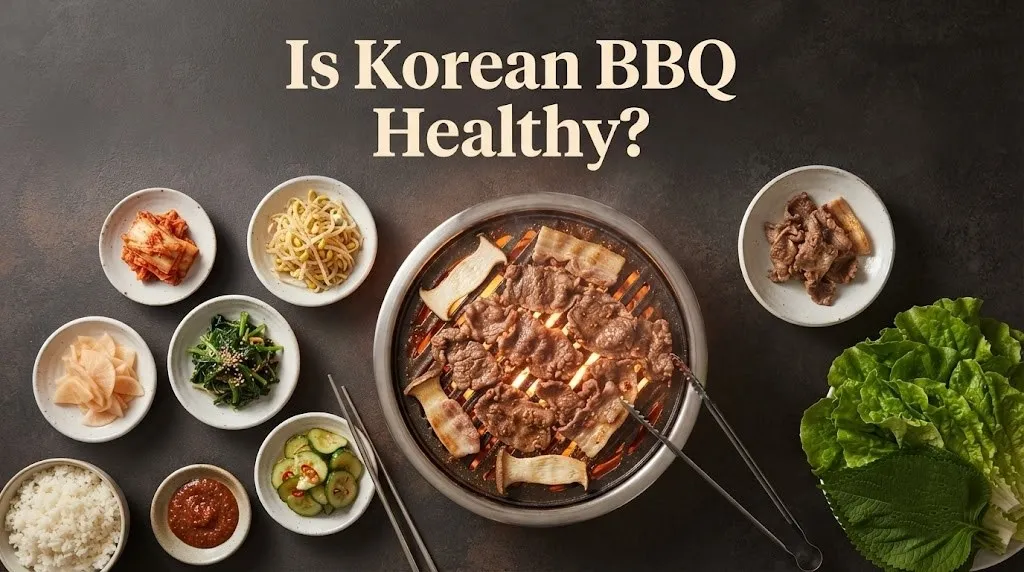
The meat selection at a typical Korean BBQ restaurant includes beef brisket (chadolbaegi), beef short rib (galbi or LA galbi), pork belly (samgyeopsal), bulgogi (thinly sliced marinated beef), spicy pork (dwaeji bulgogi), chicken, and sometimes shrimp or squid. The beef brisket and pork belly are usually unmarinated and cooked as thin slices. The galbi, bulgogi, and spicy pork are marinated in soy sauce-based mixtures with sugar, garlic, sesame oil, and fruit puree.
Banchan are the vegetable side dishes that arrive before the meat. A typical KBBQ meal includes kimchi (fermented cabbage or radish with chili), pickled radish, bean sprouts, spinach, fish cakes, and potato salad. These are not decorative. They are integral to the meal and traditionally replenished throughout. The variety and vegetable density of banchan is the strongest nutritional argument in favor of Korean BBQ.
What Are the Nutritional Strengths of Korean BBQ?
Korean BBQ provides high-quality protein, a meaningful amount of vegetables through banchan, and the fermented food kimchi, which contributes beneficial bacteria and bioactive compounds. The meal format also allows the diner to control exactly what goes into each bite, which is a nutritional advantage over fixed-plate restaurant meals.
Protein quality at Korean BBQ is excellent. Beef, pork, and chicken are complete proteins containing all essential amino acids. A 4-ounce portion of grilled beef brisket provides roughly 28 grams of protein with approximately 250 to 300 calories depending on the fat trim. A 4-ounce portion of pork belly provides a similar amount of protein but with significantly more fat and calories, roughly 400 to 500 calories. The protein supports muscle maintenance and satiety, which helps explain why Korean BBQ feels satisfying without requiring large volumes of food.
Vegetable intake at Korean BBQ exceeds what most restaurant meals provide. A typical spread of banchan includes five to eight vegetable dishes. A diner who eats a few bites of each banchan throughout the meal consumes one to two servings of vegetables, often including fermented, pickled, and lightly seasoned preparations. The vegetables contribute fiber, vitamin C, vitamin K, folate, and a range of phytonutrients that are absent from a meal of meat and rice alone.
Kimchi deserves specific mention as a fermented food. The fermentation process, driven by lactic acid bacteria including Lactobacillus species, produces compounds that research has associated with improved digestion and immune function. A 2024 study in the Journal of Medicinal Food found that daily kimchi consumption was associated with lower levels of inflammatory markers in a cohort of Korean adults. The study was observational, not experimental, so causation is not established. The kimchi at Korean BBQ is a small part of a single meal, not a daily therapeutic dose, but it contributes to the overall nutritional quality of the meal.
The interactive format of Korean BBQ allows for portion control in a way that a plated restaurant entree does not. A diner can choose to eat more brisket and less rice. More vegetables and less marinated meat. More lean protein and less pork belly. The control belongs to the person eating, provided they understand the nutritional differences between the options.
Key Takeaway: Korean BBQ is a protein-rich, vegetable-inclusive dining format where the health outcome depends on the diner’s choices. Lean unmarinated meats and banchan are the nutritional strengths. Kimchi adds fermented food benefits.
What Are the Nutritional Downsides of Korean BBQ?
The nutritional downsides of Korean BBQ are high sodium from marinades and dipping sauces, high saturated fat from certain meat cuts, significant added sugar in marinades, and the tendency to overeat due to the all-you-can-eat format and the social, extended nature of the meal. These are manageable with informed choices, not dealbreakers.
Sodium is the most concerning nutritional attribute of Korean BBQ. Soy sauce, the base of most marinades, contains roughly 900 milligrams of sodium per tablespoon. A typical galbi or bulgogi marinade uses soy sauce, sugar, garlic, sesame oil, and often pear or apple puree for sweetness and enzymatic tenderizing. The meat absorbs this sodium-rich marinade for hours before cooking. A 4-ounce portion of marinated galbi can contain 800 to 1,200 milligrams of sodium, which is half to three-quarters of the American Heart Association’s ideal daily limit of 1,500 milligrams.
The dipping sauces add another layer of sodium. Ssamjang, the thick paste made from fermented soybean paste (doenjang) and chili paste (gochujang), contains roughly 300 to 500 milligrams of sodium per tablespoon. Sesame oil with salt and pepper adds sodium directly. Even diners who skip the marinade by ordering unmarinated meats often dip those meats in salted sauces, recreating the sodium load they were trying to avoid.
Saturated fat is concentrated in the most popular Korean BBQ cuts. Pork belly, which is essentially uncured bacon, is roughly 50 percent fat by weight. A 4-ounce portion of grilled pork belly contains approximately 40 grams of total fat, of which 14 grams are saturated. The Dietary Guidelines for Americans recommend limiting saturated fat to less than 10 percent of total daily calories, roughly 22 grams for a 2,000-calorie diet. A single portion of pork belly delivers nearly two-thirds of that limit.
Sugar in marinades is the hidden ingredient that surprises people who think of Korean BBQ as purely savory. Galbi and bulgogi marinades typically include a quarter to a half cup of sugar, honey, or corn syrup per pound of meat, along with fruit puree that adds additional natural sugars. The sugar caramelizes on the grill, creating the charred, sweet crust that defines these dishes. The sugar content of the marinade is difficult to quantify per serving because much of it remains in the marinade bowl, but the absorbed sugar and the caramelized surface contribute to the meal’s carbohydrate and calorie load.
How Do Korean BBQ Marinades Affect Health?
Korean BBQ marinades based on soy sauce, sugar, garlic, sesame oil, and fruit puree add significant sodium and sugar to the meat while also contributing beneficial compounds from garlic and sesame. The marinade is a nutritional trade-off. Flavor and tenderness come with a sodium and sugar cost.
Soy sauce is the foundation. Its sodium content drives the marinade’s impact on blood pressure. The FDA recommends a daily sodium limit of 2,300 milligrams for healthy adults. A single serving of marinated Korean BBQ meat can deliver half that amount. For someone with hypertension, sodium sensitivity, or kidney concerns, the unmarinated meat options (brisket, pork belly, unmarinated chicken) are the safer choice. The salt on the table, in the dipping sauce, can be controlled. The salt inside the meat from a long marinade cannot.
Sugar in the marinade serves multiple functions. It balances the salt. It promotes browning and caramelization on the grill. It feeds the Maillard reaction that produces the complex flavor compounds in grilled meat. Fruit puree, traditionally Asian pear or apple, contributes natural sugars and enzymes that tenderize the meat. The sugar content of a bulgogi or galbi marinade is not trivial. A quarter cup of sugar per pound of meat, which is a typical ratio, means each 4-ounce portion carries roughly a tablespoon of sugar from the marinade, some of which stays in the bowl and some of which adheres to the meat and caramelizes.
Garlic and sesame oil are the nutritional bright spots in the marinade. Garlic contributes allicin and other organosulfur compounds with documented cardiovascular benefits. A 2024 meta-analysis in the Journal of Hypertension found that regular garlic consumption reduced systolic blood pressure by an average of 5 to 8 mmHg in hypertensive participants. The garlic in a KBBQ marinade is a fraction of a therapeutic dose, but it contributes to the overall intake of these compounds. Sesame oil contains sesamin and sesamolin, lignans with antioxidant properties, and is predominantly unsaturated fat.
The marinade also raises food safety considerations. Raw meat marinated for hours and then brought to the table carries the same bacterial risks as any raw meat. Cross-contamination between raw meat tongs and cooked meat or banchan is a real risk in the self-grill format. Using separate utensils for raw and cooked meat, or at minimum flipping the tongs between raw and cooked handling, reduces this risk. The grill itself reaches temperatures that kill surface bacteria, but the tongs that touch raw meat and then touch cooked meat transfer contamination directly.
Which Korean BBQ Meats Are the Healthiest?
The healthiest Korean BBQ meats are unmarinated beef brisket (chadolbaegi), chicken breast (where available), shrimp, and lean beef tongue. These options are lower in saturated fat than pork belly and short rib and do not carry the sodium and sugar load of marinated meats.
Beef brisket is the nutritional standout among traditional KBBQ cuts. It is sliced paper-thin, which means a 4-ounce portion looks like a large pile of meat on the plate but cooks down significantly on the grill. Brisket is a moderately fatty cut, but the thin slicing means it cooks quickly and renders some fat onto the grill rather than into the diner’s mouth. A 4-ounce serving provides roughly 250 to 300 calories and 28 grams of protein. It is typically unmarinated and seasoned only with salt and pepper at the table.
Chicken is the leanest protein commonly available at Korean BBQ restaurants, though it is not always on the menu. Unmarinated chicken breast contains roughly 140 calories and 26 grams of protein per 4-ounce portion with minimal saturated fat. The danger with KBBQ chicken is that it is often served as spicy chicken with a gochujang-based marinade that adds sugar and sodium. Ordering unmarinated chicken and adding your own seasoning at the table preserves the leanness while giving you control over sodium.
Shrimp and squid are excellent lean protein options when available. A 4-ounce portion of grilled shrimp contains roughly 100 calories, 24 grams of protein, and minimal saturated fat. Squid is similarly lean. Seafood options are less common at budget-oriented all-you-can-eat KBBQ restaurants and more common at higher-end a la carte spots.
| Meat | Calories (4 oz cooked) | Protein (g) | Total Fat (g) | Saturated Fat (g) | Marinated? |
|---|---|---|---|---|---|
| Beef Brisket (chadolbaegi) | 250 to 300 | 28 | 15 to 18 | 6 to 8 | No |
| Beef Short Rib (galbi) | 300 to 400 | 24 | 20 to 30 | 8 to 12 | Yes |
| Pork Belly (samgyeopsal) | 400 to 500 | 20 | 40 to 45 | 14 to 16 | No |
| Bulgogi (beef) | 280 to 350 | 26 | 12 to 18 | 5 to 8 | Yes |
| Spicy Pork (dwaeji bulgogi) | 300 to 380 | 24 | 16 to 22 | 6 to 10 | Yes |
| Chicken Breast (unmarinated) | 140 to 160 | 26 | 3 to 5 | 1 to 2 | No |
| Shrimp | 100 to 120 | 24 | 1 to 2 | 0.5 | No |
Key Takeaway: Korean BBQ marinades are high in sodium and sugar but also contain beneficial garlic and sesame. Unmarinated lean meats like brisket and chicken are the healthiest protein options. Pork belly and short rib are the highest in saturated fat.
Are Korean BBQ Dipping Sauces Healthy?
Korean BBQ dipping sauces are concentrated sources of sodium, sugar, and in some cases sesame oil, used in small quantities that add up over the course of a long meal. The sauces are not inherently unhealthy, but they are the easiest place to overconsume sodium without realizing it.
Ssamjang is the most commonly used dipping sauce at Korean BBQ. It is a thick paste combining doenjang (Korean fermented soybean paste), gochujang (Korean chili paste), sesame oil, garlic, and often a sweetener. A tablespoon contains roughly 30 to 40 calories and 300 to 500 milligrams of sodium. The flavor is intense, which means most diners use less than a tablespoon per lettuce wrap, but across a meal of 10 to 15 wraps, the sauce accumulates. Ssamjang also provides small amounts of beneficial compounds from fermented soybeans, including isoflavones, but the amounts per tablespoon are nutritionally modest.
Sesame oil with salt and pepper is the simplest dipping sauce and the easiest to control nutritionally. The sesame oil provides unsaturated fat and lignans. The salt content depends on how heavily the diner seasons the oil. A tablespoon of sesame oil contains roughly 120 calories and 14 grams of fat, predominantly unsaturated. Dipping meat lightly in sesame oil adds flavor and healthy fat. Dunking every piece thoroughly adds calories quickly.
Gochujang is sometimes served as a standalone sauce or incorporated into ssamjang. It contains chili peppers, fermented soybean powder, rice flour, and sweetener. A tablespoon contains roughly 30 to 40 calories and 200 to 300 milligrams of sodium. The capsaicin from chili peppers provides the same modest metabolic and anti-inflammatory effects discussed in the context of other spicy foods. Not enough to be therapeutic. Enough to be directionally positive.
The practical approach to dipping sauces at Korean BBQ is to use them in moderation and to be aware that the sodium in the sauce adds to the sodium in the marinade. A diner eating unmarinated brisket with a small amount of ssamjang and sesame oil is consuming far less sodium than a diner eating marinated galbi dunked heavily in the same sauces. The sauce is not the problem. The combination of marinated meat and heavy sauce use is the problem.
How to Eat Healthy at Korean BBQ
Eating healthy at Korean BBQ means building each lettuce wrap or bowl with lean unmarinated meat, plenty of vegetables, a small amount of rice, and restrained use of high-sodium sauces. The all-you-can-eat format requires a specific strategy to avoid overeating that has nothing to do with willpower.
The strategy for a healthier Korean BBQ meal:
- Start with soup and banchan. The mild soups served at KBBQ, often soybean paste stew or a clear broth, fill stomach volume with low-calorie liquid. Eating a plate of banchan before the meat arrives reduces the hunger that drives over-ordering in the first round.
- Order mostly unmarinated lean meats. Brisket, chicken breast, tongue, and any seafood available. Limit pork belly and marinated short rib to small shared portions rather than centerpiece meats.
- Build ssam (lettuce wraps) with more vegetables than meat. A piece of brisket the size of two fingers, a pile of pickled radish, some bean sprouts, a dab of ssamjang, and a small amount of rice wrapped in lettuce is a balanced bite.
- Use rice sparingly. A single bowl of steamed white rice, roughly 200 calories and 45 grams of carbohydrate, is reasonable. Multiple refills of the rice bowl add empty starch calories that crowd out the more nutrient-dense components of the meal.
- Drink water or unsweetened tea. Beer and soju are standard KBBQ beverages, and both add empty calories. A bottle of soju contains roughly 540 calories. Multiple bottles shared across the table add hundreds of calories per person to the meal.
- Eat until satisfied, not until the timer runs out. All-you-can-eat pricing creates a psychological pressure to maximize value by overeating. The value proposition changes when you factor in how you will feel for the rest of the evening. Eating to fullness rather than to the point of discomfort does not waste money. It invests in comfort.
The lettuce wrap (ssam) is the single healthiest eating format at Korean BBQ. The lettuce provides bulk and a small amount of fiber. The wrap enforces portion control on the meat and rice because only so much fits inside a lettuce leaf. The banchan add vegetable variety. The sauce provides flavor. A meal eaten as 10 to 15 ssam is structurally more balanced than a meal eaten as piles of meat directly from the grill with rice on the side.
What Are the Healthiest Banchan at Korean BBQ?
The healthiest banchan are kimchi, kongnamul (seasoned soybean sprouts), sigeumchi-namul (seasoned spinach), oi muchim (spicy cucumber salad), and musaengchae (spicy shredded radish). These dishes are vegetable-based, low in calories, and provide fiber, vitamins, and in the case of kimchi, fermented food benefits.
Kimchi is the nutritional star of banchan. The fermentation process creates lactic acid bacteria, and the cabbage or radish base provides fiber and vitamin C. Kimchi is high in sodium, roughly 300 to 500 milligrams per half-cup serving, which is worth noting in the context of a meal already high in sodium. The benefit of the fermentation and the vegetable base outweighs the sodium concern for most people, but someone on a strict low-sodium diet should eat kimchi in moderation.
Kongnamul, soybean sprouts seasoned with sesame oil and garlic, provides protein, fiber, and a satisfying crunch. A half-cup serving contains roughly 30 calories and 3 grams of protein. Soybean sprouts are a good source of vitamin C and folate. They are lightly seasoned compared to the more heavily sauced banchan.
Sigeumchi-namul, seasoned spinach, delivers iron, vitamin K, and magnesium. The spinach is blanched and seasoned with sesame oil, garlic, and a small amount of soy sauce. A half-cup serving contains roughly 40 calories. The iron content is non-heme and benefits from the vitamin C in other banchan for absorption.
Oi muchim, spicy cucumber salad, provides hydration and crunch with almost no calories. Cucumbers are roughly 95 percent water. The gochugaru (Korean chili flake) seasoning adds capsaicin and modest heat. A half-cup serving contains roughly 15 calories.
The banchan to approach with more caution include the gamja jorim (braised potatoes in sweet soy glaze) and the potato salad, which is often made with mayonnaise and sugar. These dishes are delicious but closer to a starch side dish than a vegetable. They add calories and sugar without the fiber and nutrient density of the vegetable-forward banchan.
Dietary sensitivity note: Many banchan contain sesame oil, which is a top allergen. Soy sauce contains wheat and soy. Fish sauce and salted shrimp are common in kimchi and other banchan, making strict vegan Korean BBQ difficult without advance communication with the restaurant. Ask your server about specific allergens and dietary accommodations before ordering.
Is Korean BBQ Healthy for Weight Loss?
Korean BBQ can fit into a weight loss plan if the diner chooses lean unmarinated meats, loads up on banchan vegetables, skips or minimizes rice, and avoids overeating driven by the all-you-can-eat format. The meal format is not inherently fattening. The calorie content is driven by choices.
A healthier KBBQ meal that supports a calorie deficit might look like this: 4 ounces of brisket (275 calories), 4 ounces of chicken breast (150 calories), two cups of assorted banchan (100 calories), half a cup of rice (100 calories), a small amount of ssamjang and sesame oil (80 calories), and lettuce leaves (10 calories). The total is roughly 715 calories with 70 grams of protein and a meaningful amount of vegetables. This is a filling, nutrient-dense meal that fits easily into most weight loss calorie targets.
A less restrained KBBQ meal that undermines a calorie deficit might look like this: 8 ounces of pork belly (900 calories), 4 ounces of marinated galbi (350 calories), one cup of rice (200 calories), multiple servings of dipping sauces (150 calories), a bottle of soju shared between two people (270 calories per person), and limited banchan (50 calories). The total is roughly 1,920 calories before any additional meat orders. This is a meal that exceeds the daily calorie target for many people trying to lose weight.
The protein content of Korean BBQ supports weight loss by increasing satiety. A meal containing 70 grams of protein, as in the healthier scenario above, keeps most people full for four to five hours. This reduces the likelihood of post-meal snacking and makes it easier to maintain a calorie deficit across the day.
The all-you-can-eat format is the single biggest obstacle to weight-loss-friendly Korean BBQ. The fixed price encourages eating beyond fullness. The time limit creates a sense of urgency. The social nature of the meal means everyone orders more meat as a group activity. Breaking free of the “maximize value” mindset is the psychological challenge. The nutritional choices, lean meat, vegetables, light rice, are straightforward once the mindset shifts.
Key Takeaway: Healthy Korean BBQ prioritizes lean unmarinated meats, heavy banchan vegetable consumption, light rice, and restrained sauce use. The all-you-can-eat format requires a psychological strategy to avoid overeating driven by perceived value rather than hunger.
What Should You Avoid at Korean BBQ?
The items to limit or avoid at Korean BBQ for health reasons are marinated short rib (galbi) in large quantities, pork belly as a main protein, multiple refills of steamed rice, heavy consumption of soju or beer, and the sweetened potato side dishes. These items are where the calories, saturated fat, sodium, and sugar concentrate most densely.
Marinated short rib is the most caloric and sodium-heavy meat on a standard KBBQ menu. The combination of a fatty cut and a soy-sugar marinade produces a piece of meat that delivers saturated fat, sodium, and sugar in a single bite. Galbi is delicious. It is also the meat that most efficiently undermines a health-conscious Korean BBQ strategy. Eating one or two pieces as part of a meal centered on leaner proteins is reasonable. Making galbi the primary protein of the meal loads the plate with saturated fat and sodium.
Pork belly is the other meat to treat as a garnish rather than a main. Its fat content makes it satisfying in small amounts. A single piece of grilled pork belly eaten in a lettuce wrap with kimchi and pickled radish is a balanced bite. Multiple orders of pork belly eaten without vegetables or rice is a saturated fat delivery system. The American Heart Association recommends limiting saturated fat to less than 6 percent of daily calories for optimal cardiovascular health. Pork belly is a once-in-a-while food, not an all-you-can-eat food.
Soju and beer are the hidden calorie sources at Korean BBQ. Soju is a clear distilled spirit with roughly 20 percent alcohol by volume. A standard 375-milliliter bottle, which two or three people might share over a meal, contains roughly 540 calories entirely from alcohol. Beer adds additional calories. The alcohol also lowers inhibitions about food intake, making overeating more likely. Water, sparkling water, or unsweetened iced tea are the calorie-free alternatives.
The sweetened potato banchan and potato salad are vegetables in name only. They are prepared with enough sugar and mayonnaise to function as starch sides. Eating them is not harmful. Mistaking them for vegetable servings is the error. A diner who fills up on gamja jorim and potato salad while ignoring the kimchi and seasoned greens has missed the nutritional opportunity of banchan.
Is Korean BBQ Healthier Than Other Restaurant Meals?
Korean BBQ is generally healthier than fast food burgers and fried chicken, comparable to other grilled-protein restaurant formats, and variable compared to sit-down American and Italian restaurants depending on what you order. The grill is the differentiator. Grilling drains fat away from the meat, unlike pan-frying or deep-frying, which adds fat.
Compared to a fast food burger meal, Korean BBQ is a clear nutritional upgrade. A Whopper combo with medium fries and a medium soda delivers roughly 1,200 to 1,350 calories, 18 grams of saturated fat, and 1,500 milligrams of sodium. A healthier KBBQ meal of brisket, chicken, banchan, and light rice falls under 800 calories with less saturated fat and more vegetables. The KBBQ meal provides protein without the deep-fried potato and sugar-sweetened beverage components.
Compared to a steakhouse dinner, Korean BBQ offers more variety and vegetable inclusion. A 12-ounce ribeye with a loaded baked potato and creamed spinach can exceed 1,500 calories and 40 grams of saturated fat. Korean BBQ eaten in a balanced format, multiple small portions of different meats, banchan vegetables, lettuce wraps, provides the grilled meat experience with more vegetable matter and smaller total meat volume.
Compared to family-style Italian or Chinese-American restaurants, Korean BBQ performs well on protein and vegetable metrics but is similar on sodium. A plate of pasta with meat sauce and a side of garlic bread is heavy on refined carbohydrates and saturated fat with minimal vegetables. Korean BBQ provides protein and vegetables as the default, with rice as the optional starch rather than the foundation of the meal.
The sodium comparison is where Korean BBQ loses ground to many restaurant formats. The soy sauce-based marinades and dipping sauces make Korean BBQ one of the higher-sodium dining options available. A diner managing hypertension or fluid retention should be as cautious about KBBQ sodium as they would be about any soy-sauce-heavy cuisine.
Frequently Asked Questions About Korean BBQ
Is Korean BBQ high in calories?
Korean BBQ can be high in calories when centered on fatty cuts like pork belly and marinated short rib with multiple rice refills and alcohol.
A meal built around lean brisket and chicken with banchan vegetables and light rice falls in the 700 to 900 calorie range.
The calorie content depends almost entirely on meat selection and portion size.
Is Korean BBQ keto-friendly?
Korean BBQ is highly keto-friendly when the diner chooses unmarinated meats, skips the rice entirely, and avoids the sweetened marinades on galbi and bulgogi.
The banchan selection requires attention because some vegetable sides, like braised potatoes and potato salad, contain significant carbohydrates.
Kimchi, seasoned spinach, bean sprouts, and cucumber salad are low-carb banchan options.
Can I eat Korean BBQ if I have high blood pressure?
Korean BBQ is challenging for someone with hypertension because of the high sodium content in marinades and dipping sauces.
Unmarinated brisket and chicken with minimal ssamjang and sesame oil dipping are the safest options.
Avoid marinated meats, heavy sauce use, and the soup course, which is often high in sodium from soybean paste or salt seasoning.
Is Korean BBQ safe during pregnancy?
Korean BBQ is safe during pregnancy when the meat is cooked thoroughly and cross-contamination between raw and cooked meat is avoided.
The grill reaches temperatures that kill surface bacteria, but pregnant women should use separate utensils for raw and cooked meat handling.
Unmarinated meats and vegetable banchan are nutritious choices during pregnancy. Alcohol, including soju, should be avoided entirely.
Does Korean BBQ have MSG?
Many Korean BBQ restaurants use MSG (monosodium glutamate) in marinades and seasoning blends, though it varies by restaurant.
MSG is classified as generally recognized as safe by the FDA and does not pose a health risk to the vast majority of diners.
Diners who experience sensitivity to MSG should ask the restaurant directly about its use in their specific preparations.
The Korean BBQ Meal That Works for Your Health
Korean BBQ is not a health food restaurant, and it is not a nutritional disaster. It is a dining format that gives you more control than most restaurant meals over what you eat and how much. The grill is neutral. The banchan are a genuine nutritional asset. The lettuce wrap format encourages vegetable consumption. The protein is high quality. The sodium and saturated fat are the trade-offs, and they are manageable with the choices outlined in this guide.
The practical bottom line for your next Korean BBQ meal: order mostly brisket and chicken, eat the kimchi and spinach and bean sprouts, make lettuce wraps with a small amount of rice, go easy on the ssamjang, and drink water. You will leave full and satisfied without the sodium headache and the calorie regret.
Korean BBQ is a social meal meant to be enjoyed, not optimized within an inch of its life. The goal is not to eat perfectly. It is to eat well enough, often enough, that the overall pattern supports your health. A Korean BBQ meal built around lean proteins and vegetables fits that pattern comfortably. A meal built around pork belly and soju is a special occasion, not a Tuesday. Both have a place. The distinction is knowing which is which.