Chicken shawarma is a healthy meal choice when made with lean chicken, balanced with vegetables, and served with reasonable portions of sauce and pita, delivering high-quality protein, beneficial spices, and healthy fats from olive oil while the main nutritional concerns are sodium from marinades and sauces and the refined carbohydrates in the pita wrap.
The scent of shawarma spinning on a vertical rotisserie is one of the great pleasures of street food. Chicken layered in thin slices, deeply spiced with cumin, turmeric, and garlic, crisping at the edges while staying tender within. It is fast food that feels like real food. The question is whether the nutritional reality matches the sensory promise.
The Academy of Nutrition and Dietetics identifies lean poultry as a protein source that supports muscle maintenance and satiety within balanced eating patterns. Chicken shawarma, at its core, is spiced, roasted chicken. The healthfulness of the final dish depends on what accompanies it, how much sauce is added, whether it is wrapped in refined flour pita or served over vegetables, and how heavily the chicken was salted during marination.
What Is Chicken Shawarma
Chicken shawarma is a Middle Eastern dish of thinly sliced, marinated chicken traditionally stacked on a vertical rotisserie and slowly roasted, then shaved off in tender pieces and served in pita bread or on a plate with vegetables, pickles, and sauces like garlic toum or tahini.
The word “shawarma” comes from the Turkish word “cevirme,” meaning “turning,” referring to the rotating spit on which the meat cooks. The technique spread across the Levant and has deep roots in Lebanese, Syrian, Palestinian, Jordanian, and broader Middle Eastern food culture.
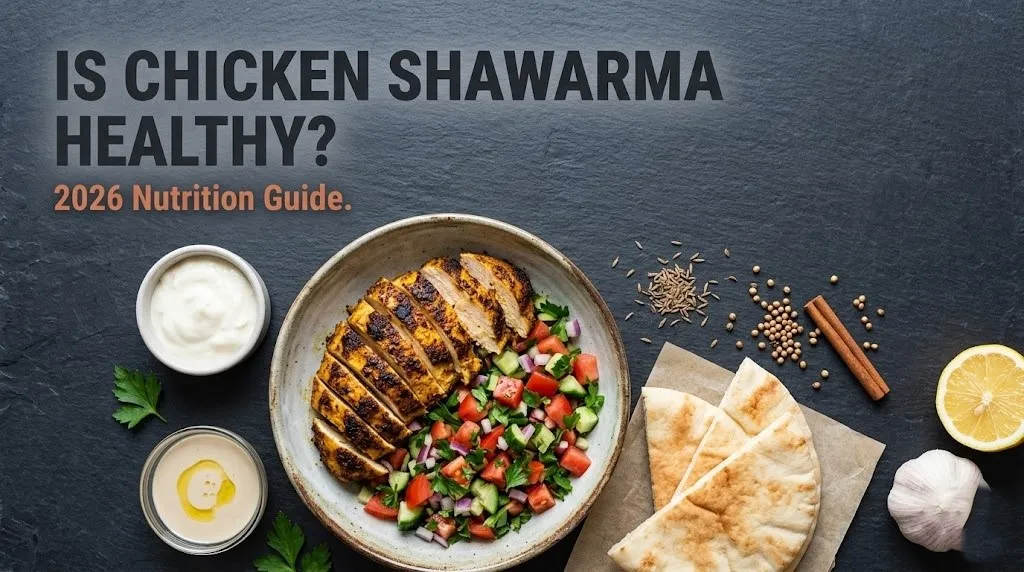
The marinade is what defines shawarma. Chicken is coated in a mixture of olive oil, lemon juice or yogurt, garlic, and a blend of warm spices including cumin, turmeric, coriander, paprika, cardamom, cinnamon, and allspice. The acid tenderizes the meat. The oil carries fat-soluble flavor compounds into the chicken. The spices create the distinctive aroma that announces shawarma from half a block away.
The traditional cooking method, a vertical rotisserie, has a nutritional advantage often overlooked. As the stacked chicken layers cook, fat renders and drips downward rather than pooling around the meat. The result is chicken that is crisped on the exterior from direct heat but not fried or simmering in its own fat. When the outer layer is shaved off for serving, the fat that has not rendered away is a fraction of what you would find in pan-fried or deep-fried chicken.
Most chicken shawarma in restaurants and food trucks uses chicken thigh rather than breast. Thigh meat is higher in fat and remains moist during long cooking on the rotisserie. Some restaurants use breast or a combination. The cut of meat affects the fat content of the final dish.
Key Takeaway: Chicken shawarma is spiced, roasted chicken cooked on a vertical spit that allows fat to render away. The marinade, cooking method, and accompaniments determine its nutritional profile.
Chicken Shawarma Nutrition Facts and Calories
A standard chicken shawarma wrap in pita bread with garlic sauce and vegetables contains approximately 550 to 700 calories, 30 to 40 grams of protein, 20 to 30 grams of fat, and 40 to 55 grams of carbohydrates, though numbers vary widely by restaurant and portion size.
The calorie range is broad because shawarma is not standardized. A food truck wrap wrapped in a large flour lavash with extra garlic sauce can reach 900 calories. A modest pita with light sauce and extra vegetables may sit around 450 calories. Here is the nutritional breakdown for a typical chicken shawarma wrap:
| Nutrient | Chicken Shawarma Wrap (standard) | Chicken Shawarma Bowl (no pita) | Chicken Shawarma Plate (with rice) |
|---|---|---|---|
| Calories | 550-700 | 380-480 | 650-800 |
| Protein | 30-40g | 32-40g | 35-45g |
| Total Fat | 20-30g | 18-26g | 22-32g |
| Saturated Fat | 6-10g | 4-7g | 6-10g |
| Carbohydrates | 40-55g | 15-20g | 55-75g |
| Dietary Fiber | 3-5g | 4-7g | 4-6g |
| Sodium | 800-1,500mg | 600-1,200mg | 900-1,600mg |
The protein content is the nutritional highlight. Thirty to 40 grams of protein in a single wrap is substantial. The Academy of Nutrition and Dietetics recommends approximately 20 to 30 grams of protein per meal for most adults to support muscle maintenance and satiety. A chicken shawarma wrap meets or exceeds that target.
The sodium content is the primary nutritional concern. The American Heart Association recommends no more than 2,300 milligrams of sodium per day, with an ideal target of 1,500 milligrams. A single shawarma wrap can deliver 800 to 1,500 milligrams of sodium, using half to all of the ideal daily limit in one meal. The sodium comes from salt in the chicken marinade, salt in the garlic sauce (toum), and salt in the pickled turnips and vegetables.
The carbohydrate content varies significantly. A large pita or lavash wrap contains 35 to 50 grams of refined carbohydrates. A bowl without pita contains 10 to 20 grams primarily from vegetables and a small amount from sauce. For someone managing carbohydrate intake, this single decision cuts the meal’s carbohydrate load by more than half.
Quick Tip:
- The single largest nutritional variable in a shawarma meal is the bread. A large lavash wrap can add 300 to 400 calories and 50 to 60 grams of carbohydrates. A bowl or plate without bread reduces the calorie and carbohydrate load dramatically.
Is Chicken Shawarma Healthy
Chicken shawarma is a generally healthy meal choice when evaluated on protein quality, spice content, and vegetable accompaniments, earning a solid B-plus on the health scale, with sodium being the primary reason it does not score higher.
The healthfulness of chicken shawarma is not a simple yes or no. It depends on which nutritional criteria you prioritize. For someone focused on protein intake, it is excellent. For someone on a sodium-restricted diet, it is problematic. For someone eating low-carb, the wrap is a concern but the bowl is ideal.
Here is how chicken shawarma performs against major nutritional criteria:
| Criterion | Rating | Notes |
|---|---|---|
| Protein quality | Excellent | Complete protein, 30-40g per serving |
| Vegetable content | Good | Pickled turnips, tomatoes, lettuce, parsley, onions |
| Spice and antioxidant content | Excellent | Cumin, turmeric, garlic, coriander |
| Healthy fat (olive oil) | Good | Primary fat in marinade and toum |
| Saturated fat | Moderate | From chicken thigh, not excessive |
| Fiber | Low to moderate | 3-5g; mostly from vegetables |
| Sodium | Poor to moderate | 800-1,500mg; can be very high |
| Refined carbohydrate | Moderate | Pita bread is refined flour |
| Processing level | Low to moderate | Freshly prepared from whole ingredients |
The Mediterranean diet, widely studied for its cardiovascular benefits, shares many features with a traditional shawarma meal: lean protein, olive oil, garlic, spices, and vegetables. The Cleveland Clinic identifies the Mediterranean diet as one of the most evidence-supported eating patterns for heart health. A chicken shawarma bowl with vegetables, toum, and a small amount of hummus aligns well with this pattern.
What keeps shawarma from being an unqualified “health food” is primarily the sodium and the refined pita. These are not dealbreakers. They are factors to manage through ordering choices and portion awareness.
Dietary Sensitivity Note: Chicken shawarma is typically dairy-free unless the marinade contains yogurt. Toum is made from garlic, oil, lemon, and salt and is dairy-free. Tahini is made from sesame seeds. Confirm specific ingredients with the restaurant if you have food allergies.
Chicken Shawarma vs Beef Shawarma Nutrition
Chicken shawarma is generally healthier than beef shawarma because it contains less saturated fat, fewer calories, and similar protein content, though beef shawarma provides more iron and zinc per serving.
Both are traditional preparations. Both are delicious. The nutritional differences come down to the fat profile of the meat and the calorie density.
| Nutrient (per standard wrap) | Chicken Shawarma | Beef Shawarma |
|---|---|---|
| Calories | 550-700 | 650-850 |
| Protein | 30-40g | 30-38g |
| Total Fat | 20-30g | 30-45g |
| Saturated Fat | 6-10g | 12-20g |
| Iron | 2-3mg (11-17% DV) | 3-5mg (17-28% DV) |
| Zinc | 2-3mg (18-27% DV) | 4-6mg (36-55% DV) |
| Vitamin B12 | 0.3-0.5mcg | 1.5-2.5mcg |
Chicken shawarma wins on fat and calorie control. The saturated fat content in beef shawarma, at 12 to 20 grams per serving, approaches or exceeds the American Heart Association’s daily limit of 13 grams for a 2,000-calorie diet. Chicken shawarma at 6 to 10 grams leaves room for other foods.
Beef shawarma wins on iron, zinc, and vitamin B12. These are nutrients that matter for specific populations. Women of reproductive age have higher iron needs. Older adults are at risk for B12 deficiency. For someone with low iron stores, beef shawarma provides more of a nutrient they specifically need.
The spices and accompaniments are the same. The cooking method is the same. The choice between chicken and beef shawarma is primarily about fat and calorie density versus mineral content. For most people eating a varied diet, chicken is the leaner, more everyday choice. Beef is the richer, more occasional one.
Dietary Sensitivity Note: Both chicken and beef shawarma are free of dairy (unless yogurt-marinated) and soy. Neither is gluten-free when served in pita. Both are halal when prepared according to Islamic dietary law at Middle Eastern restaurants.
Key Takeaway: Chicken shawarma is the leaner choice with less saturated fat. Beef shawarma provides more iron and zinc. Both can fit a healthy eating pattern. Choose chicken for everyday, beef for occasional.
Health Benefits of Shawarma Spices and Ingredients
The spices in chicken shawarma, including garlic, cumin, turmeric, and coriander, contain bioactive compounds with documented antimicrobial, anti-inflammatory, and digestive health properties, making the marinade a meaningful contributor to the meal’s overall health profile.
Shawarma is not just chicken. It is chicken coated in a spice blend that has been used for centuries in Middle Eastern cooking for both flavor and food preservation. Modern research has identified specific health-promoting compounds in these spices.
Garlic contains allicin, a sulfur compound formed when garlic is crushed or chopped. Allicin has demonstrated antimicrobial activity against a range of bacteria in laboratory studies. A 2020 meta-analysis in the Journal of Nutrition found that garlic supplementation modestly reduced blood pressure in hypertensive individuals. The amount of garlic in a shawarma meal is culinary, not supplemental, but it contributes to the overall dietary pattern.
Turmeric contains curcumin, one of the most studied phytochemicals in food science. Curcumin has documented anti-inflammatory effects through inhibition of NF-kB and COX-2 pathways. The challenge with curcumin is bioavailability. It is poorly absorbed unless consumed with fat and black pepper. Shawarma marinade contains both: olive oil (fat) and the spice blend often includes black pepper. This traditional food combination enhances the absorption of curcumin in a way that whole turmeric root eaten alone does not.
Cumin contains cuminaldehyde, a compound that stimulates digestive enzyme secretion. A 2019 study in the Middle East Journal of Digestive Diseases found that cumin improved symptoms of irritable bowel syndrome in a small clinical trial. The seed is also a source of iron and manganese.
Coriander seeds and leaves contain linalool and other volatile oils with antimicrobial properties. Coriander has been studied for its potential to chelate heavy metals and support the body’s detoxification pathways.
These benefits are modest and cumulative. A single shawarma meal does not prevent or cure disease. The point is that the spices in shawarma are not just flavor. They are functional ingredients that contribute to the overall healthfulness of a diet rich in herbs and spices.
Sodium and Fat Concerns in Chicken Shawarma
Sodium is the single most significant nutritional concern with chicken shawarma, with a single wrap potentially delivering 800 to 1,500 milligrams of sodium from the combined salt in the chicken marinade, garlic sauce, and pickled vegetables.
The fat content of chicken shawarma is moderate and largely unproblematic for a meal built around chicken thigh and olive oil. The sodium is the issue that deserves attention.
Sodium sources in a shawarma wrap:
- Chicken marinade: Salt is a required component. It seasons the meat and helps retain moisture during cooking. A well-marinated shawarma can contain 400 to 700 milligrams of sodium from the chicken alone.
- Toum (garlic sauce): Made from garlic, oil, lemon juice, and salt. A generous smear of toum can add 200 to 400 milligrams of sodium.
- Pickled turnips and cucumbers: Pickles are preserved in salt brine. A small serving adds 150 to 300 milligrams of sodium.
- Pita bread: Commercially made pita contains 200 to 300 milligrams of sodium per large round.
Total sodium: 800 to 1,500 milligrams. The American Heart Association recommends an ideal daily limit of 1,500 milligrams. A single shawarma wrap can reach that limit.
The fat profile is more favorable. The primary fat sources are olive oil in the marinade and sauce and chicken fat from the thigh meat. Olive oil is predominantly monounsaturated fat, which the American Heart Association identifies as heart-healthy when it replaces saturated fat in the diet. Chicken fat is a mix of saturated and unsaturated fats. The total saturated fat in a chicken shawarma wrap, 6 to 10 grams, is within a reasonable range for a meal.
Strategies to reduce sodium while enjoying shawarma:
- Ask for toum on the side and use half
- Request less pickled vegetables or fresh vegetables instead
- Choose a bowl or plate with less bread (commercial bread is a hidden sodium source)
- At home, control the salt in the marinade and make toum with less salt
Key Takeaway: The fat in chicken shawarma is mostly healthy olive oil and chicken fat in moderate amounts. The sodium is the nutritional weak point. Managing sauce and pickle portions is the most effective sodium-reduction strategy.
Is Shawarma Healthier Than a Burger
Chicken shawarma is generally healthier than a standard fast-food burger because it provides more protein per calorie, less saturated fat, more beneficial spices, and more vegetables, though a thoughtfully assembled burger with lean beef and vegetables can be nutritionally comparable.
The shawarma versus burger comparison is practical. Many people are choosing between these two options at food courts, late-night takeout windows, and casual dining spots. The nutritional differences are real but depend on how each is prepared.
| Nutrient | Chicken Shawarma Wrap | Fast-Food Cheeseburger | Gourmet Burger with Vegetables |
|---|---|---|---|
| Calories | 550-700 | 550-750 | 650-850 |
| Protein | 30-40g | 25-30g | 30-40g |
| Saturated Fat | 6-10g | 10-15g | 12-18g |
| Sodium | 800-1,500mg | 800-1,200mg | 900-1,400mg |
| Vegetables | Tomatoes, pickles, lettuce, onion | Lettuce, tomato, pickles, onion | Lettuce, tomato, onion, avocado, etc. |
| Spices and antioxidants | Garlic, cumin, turmeric, coriander | Minimal | Minimal |
| Refined carbohydrate | Pita bread | White bun | Brioche or white bun |
Chicken shawarma edges out the burger on saturated fat and spice-derived antioxidants. The burger edges out shawarma on sodium when the shawarma is heavy on toum and pickles.
The most meaningful difference is the spice profile. A burger patty is seasoned with salt and pepper. Shawarma chicken is marinated in a blend of spices with documented health-promoting compounds. This does not make shawarma a health food and a burger unhealthy. It makes shawarma a more nutrient-dense choice in the flavoring department, adding compounds that are beneficial even in small amounts.
Both foods can be part of a healthy eating pattern. Both can be excessive in calories and sodium. The choice between them matters less than how often you eat either one and what else you eat that day.
Dietary Sensitivity Note: A burger typically contains dairy (cheese) and may contain egg in the bun. Chicken shawarma is more easily ordered dairy-free and egg-free. For gluten-free needs, neither a burger bun nor a pita wrap is appropriate without modification.
How to Order Healthy Chicken Shawarma at a Restaurant
Order healthy chicken shawarma by choosing a bowl or plate instead of a wrap, asking for toum and sauces on the side, requesting extra fresh vegetables, and eating only half the pita if bread is served alongside.
Restaurant shawarma is built for flavor and value, not for calorie consciousness. The portions are generous. The sauce is applied with a heavy hand. The pita is large. These are fixable with a few polite requests.
Healthy ordering strategies:
Choose the format wisely. A shawarma wrap is the default. A shawarma bowl or plate gives you more control. The chicken, vegetables, and sauces are served without the large flour wrap. You eat exactly what you want in the proportions you choose.
Ask for sauce on the side. Toum and tahini are delicious and calorie-dense. Toum is approximately 80 to 100 calories per tablespoon, mostly from oil. A restaurant wrap may contain three to four tablespoons. Asking for sauce on the side and using one to two tablespoons saves 150 to 200 calories and 300 to 500 milligrams of sodium.
Request extra vegetables. Most shawarma shops have tomatoes, cucumbers, lettuce, parsley, onions, and pickled turnips. Ask for “extra vegetables, light pickles” to increase the fiber and micronutrient content while reducing the sodium from pickles.
Manage the bread. If you order a wrap, eat half the pita and eat the filling with a fork. If you order a bowl or plate, ask for pita on the side and eat a quarter or half of it.
Skip the soda. A can of cola adds 140 calories and 40 grams of sugar to a meal that already contains 500 to 700 calories. Water, sparkling water, or unsweetened iced tea are better pairings.
Quick Tip:
- The words “extra vegetables, toum on the side, light pickles” in that order will get you a healthier shawarma at any restaurant without confusing the person taking your order. These are standard requests that shawarma shops handle regularly.
Chicken Shawarma Wrap vs Bowl vs Plate
A chicken shawarma bowl without pita is the healthiest format because it eliminates 300 to 400 calories and 40 to 50 grams of refined carbohydrates from the bread while preserving the protein, vegetables, and sauces that make shawarma satisfying.
The format choice is the single biggest nutritional lever in a shawarma meal. Here is how the three common formats compare:
| Format | Description | Calories | Best For |
|---|---|---|---|
| Wrap | Chicken, vegetables, sauces rolled in large pita or lavash | 550-700 | Convenience, eating on the go |
| Bowl | Chicken, vegetables, sauces served without bread | 380-480 | Low carb, calorie control |
| Plate | Chicken, rice, hummus, pita, vegetables, sauces | 650-800 | Full meal, sharing, higher activity days |
The bowl is the nutritional winner. It strips out the refined carbohydrates while keeping the protein, vegetables, and sauces. For someone eating low-carb, managing diabetes, or watching calories, the bowl is the clear choice.
The plate is the most complete meal but the highest in calories. The addition of rice, hummus, and pita pushes the total toward 800 calories. This format works for someone with high energy needs or as a shared meal. Eating half the plate and taking the rest home is a practical strategy.
The wrap is the most convenient and the default at most restaurants. To make a wrap healthier, eat half the pita, focusing on the filling, or ask for the wrap to be cut in half and save one half for another meal.
Dietary Sensitivity Note: The bowl format is inherently gluten-free if no pita is included. Confirm that the chicken marinade and toum contain no wheat-derived ingredients. Most traditional recipes are naturally gluten-free aside from the bread.
Is Chicken Shawarma Good for Weight Loss
Chicken shawarma can support weight loss when ordered as a bowl with extra vegetables, light sauce, and no pita, delivering 30 to 40 grams of protein for roughly 380 to 480 calories, a protein-to-calorie ratio that supports satiety during a calorie deficit.
Weight loss requires a sustained calorie deficit. Foods that help achieve that deficit are high in protein, moderate in fiber, and moderate in calorie density. Chicken shawarma, ordered strategically, fits that profile.
The protein content of chicken shawarma is its weight-loss strength. Thirty to 40 grams of protein per serving triggers satiety hormones including GLP-1 and PYY while suppressing ghrelin, the hunger hormone. A 2019 study in the journal Obesity found that meals with at least 30 grams of protein reduced post-meal hunger and subsequent food intake compared to lower-protein meals matched for calories.
The shawarma bowl for weight loss:
- Chicken shawarma (protein, 350 calories)
- Extra fresh vegetables (volume, fiber, 30 calories)
- One tablespoon toum (flavor, 80 calories)
- One tablespoon tahini (healthy fat, 90 calories)
- No pita, no rice
Total: approximately 450 to 500 calories with 35 to 40 grams of protein and 5 to 7 grams of fiber. This is a filling, satisfying meal that supports a calorie deficit.
The shawarma wrap, by contrast, adds 200 to 300 calories of refined carbohydrates from the pita and often more sauce. At 600 to 700 calories, it can still fit a weight loss plan, but it uses a larger portion of the daily calorie budget.
For someone tracking macros for weight loss, one chicken shawarma bowl with light sauce provides approximately 40 percent of daily protein needs, 25 percent of daily calories, and 10 to 15 percent of daily fiber in a single meal.
Key Takeaway: A shawarma bowl with extra vegetables and light sauce is a weight-loss-friendly meal. The protein and volume keep you full on moderate calories. The wrap works too but uses more of the daily calorie budget.
Low Carb and Keto Chicken Shawarma Options
Chicken shawarma is naturally low-carb and keto-compatible when ordered as a bowl without pita, rice, or hummus, with the chicken, toum, tahini, and non-starchy vegetables providing a high-fat, moderate-protein, low-carb meal that fits ketogenic macros.
The chicken itself is zero-carb. The spices are negligible in carbohydrate content. The olive oil in the marinade and sauces is pure fat. The only meaningful carbohydrate sources in shawarma are the bread, the rice if served, and a small amount from vegetables like tomatoes and onions.
A keto-friendly shawarma bowl breakdown:
| Component | Carbohydrates | Notes |
|---|---|---|
| Chicken shawarma | 0-3g | Trace from spices and marinade |
| Toum (2 tbsp) | 2g | Garlic and lemon juice have minimal carbs |
| Tahini (1 tbsp) | 2-3g | Sesame seeds have a few carbs |
| Lettuce, cucumber, tomato | 5-7g | Primarily from tomato and onion |
| Pickled turnips | 2-3g | Small amount, limit for sodium |
| Total | 12-18g net carbs | Well within keto limits |
This meal provides approximately 450 to 500 calories, 35 to 40 grams of protein, 30 to 35 grams of fat, and 12 to 18 grams of net carbohydrates. It fits ketogenic macros and provides meaningful protein and fat.
The pita is the only significant carbohydrate obstacle. A large pita contains 40 to 50 grams of carbohydrates, nearly all of which is digestible starch. Removing the pita transforms shawarma from a high-carb meal into a low-carb one.
For someone on a moderate low-carb diet (50 to 100 grams per day), a shawarma wrap eaten open-faced or half the pita can still fit within daily carbohydrate targets. For strict keto (under 20 to 30 grams), the bowl without pita is the only option.
Dietary Sensitivity Note: Some commercial shawarma marinades contain sugar or honey. Ask the restaurant if their marinade includes sugar. Most traditional recipes do not, but Americanized versions sometimes add sweetener.
Is Chicken Shawarma Gluten Free
Chicken shawarma is naturally gluten-free in the chicken, marinade, sauces, and vegetables, but the traditional pita or lavash wrap contains wheat gluten, making the bowl or plate format without bread the gluten-free option.
The core components of shawarma, chicken, olive oil, garlic, lemon juice, cumin, turmeric, coriander, vegetables, and toum (garlic, oil, lemon, salt) are all naturally free of gluten. The marinade ingredients are gluten-free. The sauces are gluten-free.
The gluten risk points:
- Pita and lavash: Made from wheat flour. Contains gluten. This is the primary source.
- Cross-contamination on the rotisserie: If the restaurant also cooks breaded items or uses shared utensils, cross-contact is possible.
- Pre-made spice blends: Some commercial shawarma spice blends contain wheat flour as an anti-caking agent. This is uncommon but worth asking about.
- Soy sauce in marinade: Some non-traditional recipes add soy sauce, which contains wheat. This is rare in authentic shawarma shops.
For someone with celiac disease, order a chicken shawarma bowl or plate without pita. Inform the staff of your allergy. Ask whether the spice blend contains any flour or fillers. Most traditional shawarma is safe. The bread is the only routine gluten concern.
Dietary Sensitivity Note: Even when ordering a gluten-free bowl, verify that the restaurant does not place pita directly on the plate or use the same tongs for bread and chicken. Cross-contact is the most common source of gluten exposure for people with celiac disease eating out.
Toum Garlic Sauce and Shawarma Condiments Nutrition
Toum is a traditional Lebanese garlic sauce made from garlic, oil, lemon juice, and salt that is dairy-free, naturally low in carbohydrates, and rich in monounsaturated fat from oil, but it is calorie-dense at 80 to 100 calories per tablespoon and a significant sodium source at 100 to 200 milligrams per tablespoon.
Toum is the white, creamy sauce that accompanies shawarma. It looks like mayonnaise. It is not. It contains no eggs, no dairy, and no soy. It is an emulsion of garlic and oil stabilized by the natural emulsifiers in garlic. The result is intensely garlicky, fluffy, and rich.
Here is how toum compares to other common shawarma condiments:
| Condiment (1 tbsp) | Calories | Fat | Sodium | Key Ingredient |
|---|---|---|---|---|
| Toum (garlic sauce) | 80-100 | 9-11g | 100-200mg | Garlic, oil, lemon, salt |
| Tahini | 85-95 | 8-9g | 15-30mg | Sesame seeds, lemon, water |
| Hummus | 25-35 | 2-3g | 50-80mg | Chickpeas, tahini, lemon, garlic |
| Pickled turnips | 5-10 | 0g | 150-300mg | Turnips, vinegar, salt, beet juice |
| Hot sauce (shatta) | 5-15 | 0-1g | 50-150mg | Chilies, vinegar, salt |
Tahini is the healthier sauce choice when considering sodium. It contains very little sodium compared to toum and provides calcium, iron, and healthy fats from sesame seeds. A combination of one tablespoon tahini and a small amount of toum for flavor balances the nutritional profile.
Hummus is the lowest-calorie spread. At 25 to 35 calories per tablespoon, it adds fiber and protein from chickpeas and tahini. A shawarma bowl with hummus instead of heavy toum is a more calorie-conscious option.
The pickled vegetables are the highest-sodium condiment per calorie. A small serving of pickled turnips can add 200 to 400 milligrams of sodium. Requesting fresh vegetables in place of some of the pickles reduces the sodium load without sacrificing crunch.
Quick Tip:
- For the healthiest sauce combination, use one tablespoon of tahini for healthy fats and calcium, a small amount of toum for garlic flavor, and skip or reduce the pickled vegetables in favor of fresh tomatoes, cucumbers, and parsley.
Healthy Homemade Chicken Shawarma Recipe
A healthy homemade chicken shawarma bowl made with grilled chicken thighs marinated in olive oil, lemon, garlic, and warm spices, served over cauliflower rice or a small portion of brown rice with fresh vegetables and controlled amounts of toum, contains approximately 350 to 450 calories and 35 to 40 grams of protein.
Cooking shawarma at home eliminates the sodium, oil, and portion issues of restaurant versions. You control the salt in the marinade. You control the amount of oil. You control the sauce portions. You build the plate the way you want to eat.
Healthy homemade chicken shawarma (serves 4):
Ingredients for the chicken:
- 1.5 pounds boneless, skinless chicken thighs
- 3 tablespoons olive oil
- Juice of 1 large lemon
- 4 garlic cloves, minced or grated
- 2 teaspoons ground cumin
- 1 teaspoon ground turmeric
- 1 teaspoon ground coriander
- 1 teaspoon smoked paprika
- 1/2 teaspoon ground cinnamon
- 1/2 teaspoon ground allspice
- 1 teaspoon salt (reduce to 1/2 teaspoon for lower sodium)
- 1/2 teaspoon black pepper
For serving:
- 4 cups cauliflower rice or 2 cups cooked brown rice
- 2 cups chopped fresh tomatoes and cucumbers
- 1 cup chopped fresh parsley
- 1/4 cup pickled turnips (optional)
- 1/4 cup toum (homemade or store-bought)
- 2 tablespoons tahini
Instructions:
- Combine olive oil, lemon juice, garlic, and all spices in a large bowl to make the marinade. Add the chicken thighs and coat evenly. Cover and refrigerate for at least 2 hours, ideally overnight.
- Preheat a grill, grill pan, or cast iron skillet to medium-high heat. Remove chicken from the marinade and let excess drip off.
- Cook the chicken for 5 to 7 minutes per side until the internal temperature reaches 165 degrees Fahrenheit and the exterior is charred in spots. Do not overcrowd the pan. Cook in batches if needed.
- Let the chicken rest for 5 minutes, then slice thinly against the grain.
- Divide the cauliflower rice or brown rice among four bowls. Top with sliced chicken, fresh tomatoes and cucumbers, parsley, pickled turnips if using, a drizzle of tahini, and a small spoonful of toum.
Nutrition per serving (with cauliflower rice and 1 tablespoon toum): Approximately 380 calories, 38g protein, 24g fat, 7g saturated fat, 15g carbohydrates, 5g fiber, 600mg sodium.
The homemade version cuts sodium by 40 to 60 percent compared to a restaurant wrap, eliminates refined carbohydrates with the cauliflower rice or controls them with a half-cup of brown rice, and delivers the same protein, spices, and satisfaction.
Quick Tip:
- To make homemade toum, blend 1/2 cup peeled garlic cloves, 2 tablespoons lemon juice, and 1/2 teaspoon salt in a food processor. With the motor running, slowly drizzle in 1 cup of neutral oil (canola or avocado) until the mixture is thick and fluffy. This takes about 5 minutes of slow, steady pouring.
Chicken Shawarma Meal Prep and Balanced Plate Building
Build a balanced chicken shawarma plate by filling half the plate with fresh vegetables and salad, one quarter with chicken shawarma, and one quarter with whole grains or cauliflower rice, with a measured tablespoon of tahini or toum for healthy fat.
The USDA Dietary Guidelines’ plate method works perfectly for shawarma. The chicken is the protein. The vegetables are the produce. The rice or pita is the grain. The toum and tahini are the healthy fats.
For meal prep, the components store separately and assemble in minutes:
- Cook the chicken on Sunday. Store sliced in the refrigerator for up to 4 days.
- Wash and chop vegetables. Store in separate containers.
- Cook brown rice or cauliflower rice. Store in individual portions.
- Keep toum and tahini in the refrigerator.
To assemble a meal prep shawarma bowl: Reheat the chicken gently (microwave at 50 percent power or warm in a skillet). Pile fresh vegetables on one half of the plate or container. Add the chicken. Add a spoonful of rice or cauliflower rice. Drizzle tahini and a small amount of toum. Eat.
This system produces a balanced meal in under 5 minutes of assembly. It is the same principle as a restaurant bowl but with complete control over salt, oil, and portion sizes.
Key Takeaway: A balanced shawarma plate is half vegetables, one-quarter chicken, one-quarter whole grains or cauliflower rice, finished with a measured tablespoon of tahini or toum. This formula works at restaurants, at home, and for meal prep.
Frequently Asked Questions About Chicken Shawarma
How many calories are in a chicken shawarma wrap?
A standard chicken shawarma wrap with pita, garlic sauce, and vegetables contains 550 to 700 calories.
Calorie content varies significantly by restaurant based on pita size, amount of sauce, and chicken portion.
A chicken shawarma bowl without pita contains 380 to 480 calories, making it the lower-calorie format.
Is chicken shawarma good for weight loss?
Yes, chicken shawarma can support weight loss when ordered as a bowl with extra vegetables and light sauce.
The 30 to 40 grams of protein per serving promote satiety and help maintain muscle during a calorie deficit.
Choose the bowl format without pita to save 200 to 300 calories of refined carbohydrates.
Can I eat chicken shawarma on a low carb diet?
Yes, chicken shawarma is naturally low in carbohydrates when eaten as a bowl without pita, rice, or hummus.
The chicken, toum, tahini, and non-starchy vegetables contain 12 to 18 grams of net carbohydrates per serving.
The pita wrap is the primary carbohydrate source and should be omitted for low-carb or keto eating patterns.
What is the healthiest sauce for shawarma?
Tahini is the healthiest sauce for shawarma because it is lower in sodium than toum and provides calcium, iron, and healthy fats from sesame seeds.
Toum is higher in sodium but is dairy-free and made from whole ingredients (garlic, oil, lemon, salt).
Use a tablespoon of tahini as the primary sauce and add a small amount of toum for garlic flavor.
Is homemade chicken shawarma healthier than restaurant?
Yes, homemade chicken shawarma is generally healthier because you control the salt in the marinade, the amount of oil, and the portion sizes of sauces and accompaniments.
Restaurant shawarma can contain 800 to 1,500 milligrams of sodium per serving. A homemade version with reduced salt contains 400 to 700 milligrams.
The protein, spice, and vegetable content of homemade shawarma is equivalent to or better than restaurant versions.
Chicken shawarma is one of the best choices in the fast-casual food landscape. It is spiced, roasted chicken served with vegetables and sauces made from real ingredients. The protein is excellent. The spice profile adds genuine nutritional value. The fats are mostly olive oil. The vegetables are present by default, not as an upgrade.
The sodium is the catch. Restaurant shawarma is salty. Managing the sauce, moderating the pickles, and eating it as a bowl instead of a wrap turns a meal that can be a sodium bomb into a balanced protein-rich plate that fits nearly every eating pattern. Homemade shawarma eliminates the sodium problem entirely.
Eat the chicken. Enjoy the garlic. Pile on the fresh vegetables. The pita is optional. The sauce goes on the side. This is how shawarma fits into a healthy way of eating, and it fits better than most people realize.