
Tamales are healthy when eaten in reasonable portions and made with quality ingredients. Like most traditional foods, their nutritional value depends heavily on preparation method, filling choice, and how often you eat them.
One medium tamale typically contains 200 to 285 calories, 7 to 10 grams of protein, and 2 to 4 grams of dietary fiber, according to data from the USDA FoodData Central. That puts tamales in similar territory to a slice of whole-grain pizza or a loaded corn tortilla taco.
This guide covers the complete nutritional picture: macros, sodium, filling comparisons, weight loss context, diabetes considerations, and how homemade stacks up against store-bought. You’ll get real numbers and real answers, not vague reassurance.
Are Tamales Healthy?
Tamales are a nutritionally balanced food in moderation, offering meaningful protein, dietary fiber, and key B vitamins alongside a moderate calorie count.
They’re not a “superfood,” and they’re not junk food. The honest answer depends on three things: what’s inside them, how much fat went into the masa, and how many you eat in one sitting.
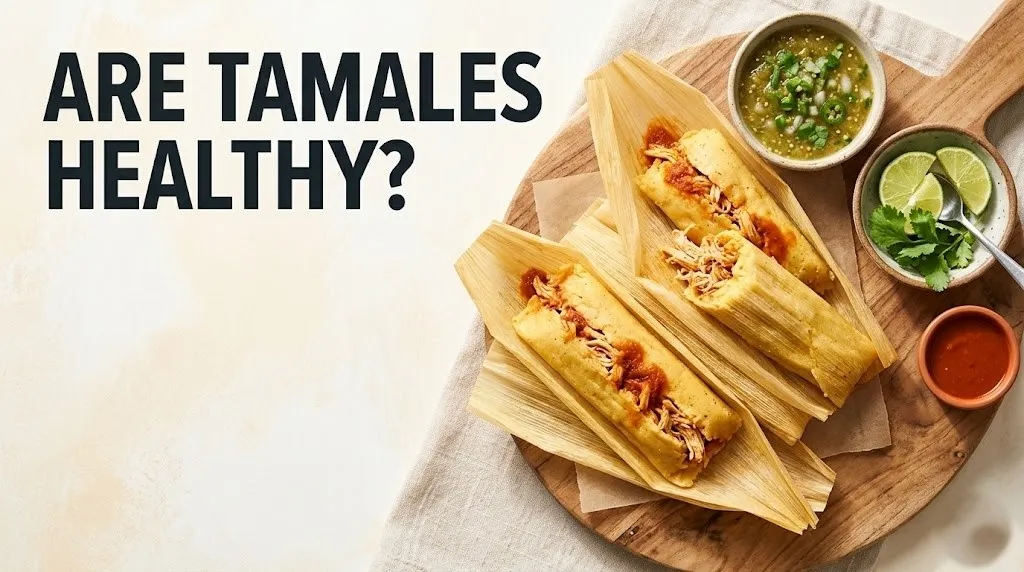
Traditional tamales are made from masa (nixtamalized corn dough), a filling, and an outer wrapper of dried corn husks or banana leaves. The nixtamalization process, which involves treating dried corn kernels with an alkaline solution (usually calcium hydroxide, also called cal or slaked lime), genuinely improves the nutritional profile of the corn. Research published in the Journal of Nutrition has documented that nixtamalization increases the bioavailability of niacin (vitamin B3), which is otherwise bound to compounds in raw corn that the human gut cannot process efficiently.
The Academy of Nutrition and Dietetics positions traditional whole-food dishes like tamales as compatible with a balanced diet when portions are appropriate and preparation methods are considered.
Key factors that determine whether your tamale is a healthy choice:
- Filling type: Lean chicken or beans vs. fatty pork significantly changes the fat and calorie profile.
- Masa fat content: Lard-heavy masa raises saturated fat meaningfully. Avocado oil substitutions reduce this.
- Sodium: Homemade tamales can be controlled. Restaurant and canned versions often contain far more.
- Portion size: One tamale as part of a meal differs nutritionally from four as a standalone dinner.
People who are watching sodium intake, managing type 2 diabetes, or limiting saturated fat should pay closer attention to preparation details. For most healthy adults, a one-to-two tamale serving fits well within a varied diet.
Tamale Nutrition Facts: Calories, Carbs, Protein, and Fat
One medium tamale (approximately 100 to 120 grams) delivers a specific set of macronutrients that vary by filling and preparation.
The USDA FoodData Central provides baseline data for a beef or pork tamale. Chicken and vegetarian versions shift the numbers meaningfully, particularly on fat content.
| Nutrient | Pork Tamale (1 medium) | Chicken Tamale (1 medium) | Vegetarian/Cheese Tamale (1 medium) |
|---|---|---|---|
| Calories | 255 to 285 | 200 to 240 | 190 to 230 |
| Total Fat | 11 to 15g | 7 to 10g | 8 to 12g |
| Saturated Fat | 3.5 to 5g | 1.5 to 3g | 3 to 5g |
| Carbohydrates | 24 to 30g | 22 to 28g | 22 to 27g |
| Dietary Fiber | 2 to 3g | 2 to 3g | 2 to 4g |
| Protein | 8 to 10g | 9 to 12g | 5 to 8g |
| Sodium | 280 to 530mg | 250 to 480mg | 220 to 450mg |
Values are estimates based on USDA FoodData Central data and standard homemade recipes. Restaurant versions typically sit at the higher end or above these ranges.
The masa itself contributes the majority of carbohydrates and a significant portion of the fat, depending on how much lard or oil was incorporated during preparation.
Micronutrients worth noting per serving include:
- Phosphorus: Supports bone health and cellular energy. One tamale provides roughly 8 to 12% of the daily value.
- Magnesium: Present in meaningful amounts from corn masa. Approximately 6 to 9% daily value per tamale.
- Niacin (vitamin B3): Bioavailable specifically because of nixtamalization. Around 8 to 12% daily value per serving.
- Iron: Particularly relevant in bean and pork fillings. Typically 4 to 8% daily value per tamale.
- Zinc: Present in both masa and meat fillings. Approximately 5 to 8% daily value per serving.
For people with corn allergies, all tamales are off the table regardless of filling. Tamales made with traditional masa are naturally gluten-free, though cross-contamination can occur in commercial facilities that handle wheat-based products.
What Are the Health Benefits of Tamales?
The health benefits of tamales come primarily from three sources: the fiber in nixtamalized corn masa, the protein in meat or bean fillings, and the micronutrients released through traditional preparation.
Think of nixtamalization like unlocking a vitamin vault. The alkaline treatment doesn’t add nutrients to corn; it removes the chemical barriers that prevent your body from absorbing what was already there.
Dietary fiber is one of the more meaningful nutritional contributions of tamales. The Dietary Guidelines for Americans 2020-2025 recommend 25 grams of fiber daily for adult women and 38 grams for adult men. One tamale contributes roughly 2 to 4 grams, meaning two tamales can cover 10 to 20% of a standard daily fiber target.
Fiber supports digestive regularity, helps you feel full between meals, and is associated with a reduced risk of cardiovascular disease according to the American Heart Association.
The protein content matters too. A chicken or pork tamale provides 7 to 12 grams of protein per serving. Protein is the most satiating macronutrient per calorie, meaning tamales carry more staying power than many snack foods of comparable calorie counts.
Additional documented benefits include:
- B vitamin supply: Niacin and thiamine from nixtamalized masa support energy metabolism and nervous system function.
- Moderate glycemic response: The resistant starch in masa, combined with its fat content, slows glucose absorption compared to plain corn tortillas. Research in the Journal of Nutrition has noted that nixtamalized corn products produce a lower glycemic response than non-nixtamalized corn equivalents.
- Iron and zinc from meat fillings: Both minerals are better absorbed from animal-based sources (heme iron) than from plant sources, making pork or chicken fillings nutritionally valuable for people at risk of deficiency.
- Phytochemicals in blue or purple corn masa: Traditional varieties made from blue or purple corn varieties contain higher levels of anthocyanins, a class of antioxidants linked to reduced inflammation in observational studies.
People eating vegetarian or vegan versions get the fiber and micronutrient benefits from masa, but lose the heme iron advantage. Adding black beans or pinto beans as filling partially compensates.
Key Takeaway: Tamales offer real nutritional value from fiber, B vitamins, and protein, but the exact benefit depends on the filling type and how the masa was prepared. Nixtamalization specifically increases niacin bioavailability, making traditional masa more nutritious than plain ground corn.
Are Tamales High in Sodium?
Tamales can be high in sodium, particularly restaurant-made and canned versions, where a single tamale may contain 400 to 900 milligrams of sodium.
The American Heart Association recommends no more than 2,300 milligrams of sodium per day for most adults, with an ideal target of 1,500 milligrams for people with high blood pressure or cardiovascular disease risk. Two restaurant tamales could provide more than half of the upper daily limit in one sitting.
Homemade tamales are a different story. When you control the salt in both the masa and the filling, a single tamale can be brought down to 150 to 300 milligrams of sodium, which is very manageable.
| Tamale Source | Estimated Sodium Per Tamale |
|---|---|
| Homemade (controlled recipe) | 150 to 300mg |
| Store-bought refrigerated | 300 to 500mg |
| Store-bought canned | 400 to 650mg |
| Restaurant (casual dining) | 500 to 900mg |
| Restaurant (large format) | 700mg to 1,100mg+ |
The sodium comes from multiple sources: salt added to the masa dough, salt or spice blends in the filling, and often chili sauce or salsa incorporated during cooking.
For people managing hypertension or following a physician-guided low-sodium diet, homemade tamales with reduced-salt masa and unseasoned meat fillings are the practical option. If you’re eating tamales at a restaurant and sodium is a concern, asking for salsa or hot sauce on the side rather than cooked in reduces the number somewhat.
Are Tamales High in Carbs?
Tamales are a moderate-to-high carbohydrate food, with one medium tamale containing approximately 22 to 30 grams of total carbohydrates.
That’s roughly equivalent to one and a half slices of whole-grain bread. The carbohydrate load is almost entirely from the corn masa rather than the filling.
The nature of those carbohydrates matters. Masa made from nixtamalized corn contains resistant starch, a form of starch that resists digestion in the small intestine and acts more like fiber metabolically. This means the carbohydrates in tamales are not absorbed as rapidly as the total gram count might suggest.
For people tracking net carbs on a low-carb diet, the resistant starch component means the effective carbohydrate impact is lower than the label total. However, tamales remain too carbohydrate-dense to fit comfortably within a strict ketogenic framework, which typically limits total carbohydrates to under 20 to 50 grams per day.
People following a Mediterranean diet, a DASH diet, or general whole-food eating patterns have no reason to avoid tamales on the basis of carbohydrate content alone. The Harvard T.H. Chan School of Public Health notes that carbohydrate quality, specifically whole food sources with fiber and phytonutrients, matters more than total carbohydrate count for most healthy adults.
Quick Tip:
- Pair tamales with a side of non-starchy vegetables (roasted peppers, sautéed greens, or a tomato salsa) to slow carbohydrate absorption and increase meal volume without adding calories.
- One tamale with beans and vegetables as a full meal manages the glycemic load better than two tamales eaten alone.
Are Pork Tamales Healthy?
Pork tamales are healthy in moderation, but they carry the highest fat and calorie counts among common tamale varieties, primarily because of the pork shoulder filling and lard-based masa.
A standard pork tamale made with braised pork shoulder (carnitas-style) and traditional lard masa contains approximately 255 to 285 calories, 11 to 15 grams of total fat, and 3.5 to 5 grams of saturated fat. That saturated fat figure is relevant: the Dietary Guidelines for Americans recommend keeping saturated fat under 10% of total daily calories, which equals about 22 grams per day on a 2,000-calorie diet.
One pork tamale covers roughly 15 to 23% of that saturated fat allowance. Two pork tamales as a meal can get you most of the way to that limit before you’ve eaten anything else that day.
That said, pork shoulder provides complete protein, meaning it contains all nine essential amino acids. The iron and zinc content of pork is also well-absorbed by the body. These are genuine nutritional contributions.
The smarter approach is choosing pork tamales made with leaner pork tenderloin or sirloin rather than shoulder, and masa prepared with avocado oil rather than lard. These changes can reduce saturated fat by 30 to 50% without compromising the structure of the tamale.
For people following a halal or kosher diet, traditional pork tamales are not suitable. Bean, chicken, or cheese tamales made with appropriate fats and ingredients are the standard alternatives.
Key Takeaway: Pork tamales are the highest-calorie and highest-fat variety. They’re fine occasionally for most healthy adults, but people watching saturated fat for cardiovascular reasons should choose lean-filling versions or switch to chicken.
Are Corn Tamales Healthy?
Corn tamales, sometimes called sweet corn tamales or “tamales de elote,” are among the most nutritious options in the tamale family when made with minimal added sugar.
Traditional corn tamales use fresh sweet corn (Zea mays) blended into the masa or folded into the dough as whole kernels. This adds moisture, natural sweetness, extra fiber, and a meaningful dose of the antioxidant lutein, which is concentrated in sweet corn and supports eye health according to the American Optometric Association.
A savory corn tamale without added sugar typically contains 170 to 220 calories, 5 to 8 grams of fat, 25 to 30 grams of carbohydrates, and 3 to 5 grams of fiber, making the fiber density per calorie higher than most other tamale types.
The distinction between savory corn tamales and sweetened dessert-style corn tamales is worth making clearly. Some recipes add piloncillo (unrefined cane sugar), condensed milk, or other sweeteners that push the sugar content above 10 grams per tamale and reduce the overall nutrient density.
Plain or lightly salted corn tamales with a vegetable or bean filling represent one of the most nutritionally sound options within the tamale category. They’re naturally lower in saturated fat than pork versions and tend to be more filling per calorie because of the added corn fiber.
People with corn allergies cannot eat any tamale made from masa or containing corn kernels, which includes all traditional varieties.
Are Sweet Tamales Healthy?
Sweet tamales are a higher-sugar, dessert-oriented variety and are generally less nutritionally dense than savory tamales, though they’re not categorically unhealthy.
Common sweet tamale fillings include raisins, cinnamon, piloncillo (unrefined brown cane sugar), fresh fruit, dried chiles with chocolate, and in some regional traditions, cream cheese with strawberries. The masa itself is often sweetened directly and sometimes colored with natural food dyes from ingredients like hibiscus or fruit.
A sweet tamale typically contains 200 to 260 calories, 8 to 12 grams of added sugar, and 8 to 12 grams of fat, depending on how much shortening or butter is used in the dough.
| Component | Savory Pork Tamale | Sweet Raisin Tamale |
|---|---|---|
| Calories | 255 to 285 | 200 to 255 |
| Total Fat | 11 to 15g | 8 to 12g |
| Added Sugar | 0 to 1g | 8 to 14g |
| Protein | 8 to 10g | 3 to 6g |
| Fiber | 2 to 3g | 2 to 4g |
Sweet tamales are lower in sodium than savory versions, which is a genuine advantage for people on sodium-restricted diets. They’re also typically lower in protein, which reduces their satiety value.
For people managing blood glucose, the added sugar in sweet tamales requires more attention than the carbohydrate load of savory versions. The American Diabetes Association recommends that people with diabetes treat sweet tamales as an occasional dessert rather than a regular food.
Are Chicken Tamales Healthier Than Pork Tamales?
Chicken tamales are generally healthier than pork tamales, offering fewer calories, less total fat, less saturated fat, and roughly equal or higher protein per serving.
This is partly a filling question and partly a masa preparation question. Traditional tamale recipes across both chicken and pork versions use lard in the masa. When the masa fat content is held constant, the filling makes the biggest difference.
| Comparison | Chicken Tamale (1 medium) | Pork Tamale (1 medium) |
|---|---|---|
| Calories | 200 to 240 | 255 to 285 |
| Total Fat | 7 to 10g | 11 to 15g |
| Saturated Fat | 1.5 to 3g | 3.5 to 5g |
| Protein | 9 to 12g | 8 to 10g |
| Sodium | 250 to 480mg | 280 to 530mg |
Chicken breast filling, particularly poached or shredded chicken without added fat, delivers higher protein per calorie than pork shoulder. This makes chicken tamales a stronger option for people prioritizing muscle maintenance, post-exercise recovery, or higher protein intake within a calorie target.
The caveat is preparation style. Chicken cooked in lard or heavy oil, or finished with a rich chile sauce incorporating cream or cheese, can match pork’s fat content in the finished tamale.
For people at heightened cardiovascular risk, the American Heart Association’s guidance on limiting saturated fat gives chicken tamales a clear edge over pork versions when preparation methods are similar.
Key Takeaway: Chicken tamales are the leanest mainstream option, providing the best protein-to-calorie ratio among common fillings. Pork tamales are higher in saturated fat, making them the more occasional choice for cardiovascular health.
Are Tamales Healthy for Weight Loss?
Tamales can fit into a weight-loss eating plan when portioned correctly, because they combine protein, fiber, and moderate calorie density in a filling package.
Calorie density is the concept that matters most here. It refers to calories per gram of food. Foods that are high in fiber and protein tend to produce satiety (the sensation of fullness) at lower calorie counts than foods primarily made of refined starch or fat.
One chicken tamale at roughly 200 to 220 calories delivers satiety partly through its 9 to 12 grams of protein and partly through the fiber in the masa. Research published in the American Journal of Clinical Nutrition has found that protein increases satiety hormones and reduces appetite more effectively per calorie than fat or carbohydrates.
Two tamales with a side of grilled vegetables or a simple tomato-based salsa can constitute a complete meal at 400 to 500 calories that keeps most people satisfied for three to four hours.
Practical tips for eating tamales in a weight-loss context:
- Stick to one to two medium tamales per meal.
- Choose chicken, bean, or vegetarian fillings over pork to reduce calorie density.
- Skip the sour cream topping, which adds 30 to 60 calories per tablespoon with minimal nutritional contribution.
- Make tamales at home where you can control fat content in the masa.
- Use non-starchy vegetables as a side: roasted zucchini, grilled peppers, tomato salsa, or sautéed greens.
Tamales are not well-suited as the foundation of a very low-carbohydrate diet because their carbohydrate content makes portion control within those constraints difficult. Within a moderate-calorie, balanced-macronutrient eating plan, they’re a genuinely satisfying option.
How to Make Tamales Healthier
Making healthier tamales starts with two changes: modifying the masa fat and choosing leaner, lower-sodium fillings.
The masa is where most of the fat and calories in a tamale originate. Traditional recipes call for lard at a ratio of roughly 1 cup lard per 4 cups masa harina. Replacing lard with avocado oil at about 75% of the volume reduces saturated fat by more than half while keeping the dough pliable and moist.
To make healthier tamales at home:
- Replace lard with avocado oil or a neutral plant-based oil at three-quarters the original lard volume.
- Use low-sodium chicken or vegetable broth instead of water when mixing masa to build flavor without salt.
- Reduce added salt in the masa by half and compensate with garlic powder, cumin, and dried oregano.
- Choose lean fillings: shredded poached chicken breast, black beans with roasted peppers, or sautéed mushrooms with queso fresco used sparingly.
- Steam tamales rather than frying or baking in oil; steaming is the traditional method and adds zero additional fat.
- Make your own chile sauce for filling using dried chiles, tomatoes, garlic, and chicken stock, rather than canned enchilada sauce, which is typically high in sodium.
- Test masa readiness by dropping a small piece into cold water; if it floats, the fat is properly incorporated and tamales will have a light texture rather than a dense, greasy one.
One modification that genuinely changes the nutrition is adding pureed cooked black beans or roasted corn directly into the masa. This increases fiber content by 1 to 2 grams per tamale and reduces the fat-to-volume ratio of the dough.
People avoiding all animal products can use refined coconut oil or vegan butter in the masa and fill with beans, peppers, potatoes, or plant-based proteins. Tamales are one of the more naturally adaptable traditional foods for vegan modification.
Are Store-Bought Tamales Healthy?
Store-bought tamales are typically less healthy than homemade versions because of higher sodium content, more saturated fat, and the use of lower-quality fats in mass production.
Commercial tamales require longer shelf lives, which drives up sodium as a preservative function. A single refrigerated store-bought tamale commonly contains 400 to 650 milligrams of sodium, compared to 150 to 300 milligrams in a well-made homemade version.
The fat profile also changes in commercial production. Many mass-produced tamales use vegetable shortening rather than lard. This sounds healthier, but partially hydrogenated shortening still found in some older commercial formulations contains trans fats. Current FDA regulations have largely eliminated partially hydrogenated oils from the US food supply, but ingredient labels are worth checking. Look specifically for “partially hydrogenated oil” in the ingredient list as a red flag.
| Feature | Homemade Tamales | Store-Bought Refrigerated | Canned Tamales |
|---|---|---|---|
| Sodium per tamale | 150 to 300mg | 400 to 650mg | 500 to 800mg+ |
| Saturated fat | 2 to 5g | 3 to 6g | 3 to 7g |
| Protein | 7 to 12g | 5 to 9g | 4 to 7g |
| Fiber | 2 to 4g | 1 to 3g | 1 to 2g |
| Ingredient control | Full | None | None |
Canned tamales are the least nutritionally favorable option. The canning process requires higher sodium levels and often uses lower-quality filling cuts. The masa texture in canned versions is also noticeably denser because of the structural changes that occur during pressure canning.
If store-bought is the practical option, refrigerated brands from Mexican specialty grocers or local tamale makers typically outperform national canned brands on every nutritional measure. Checking the sodium content per serving before buying is the single most useful step.
Key Takeaway: Store-bought tamales and canned tamales are significantly higher in sodium than homemade, and often lower in protein and fiber. If you’re buying rather than making, refrigerated options from a local producer are the better choice over canned.
Are Baked Tamales Healthier Than Steamed Tamales?
Steamed tamales are the healthier preparation method, and baked tamales are not meaningfully different in caloric or fat content unless additional oil is applied during baking.
Tamales are traditionally steamed, and steaming adds zero fat or calories to the finished product. The moisture from the steam cooks the masa evenly without requiring any external fat.
Baking tamales without added oil produces a drier, slightly crispier exterior but does not increase or decrease the nutritional content of the tamale itself. The masa and filling determine the nutrition; the cooking method’s effect is minimal if no fat is added during baking.
The comparison that does matter is tamales vs. fried preparations. Deep-fried tamales, sometimes served at festivals or markets, can absorb 4 to 8 grams of additional fat from the frying oil. That adds 36 to 72 additional calories purely from the cooking method.
Quick Tip:
- Steam tamales for the most traditional texture and zero added cooking fat.
- Baked tamales work fine if you’re reheating leftover steamed tamales; wrap them in foil to retain moisture.
- Never judge the health of a tamale by the cooking method alone; the masa fat and filling content are far more consequential.
For reheating, steaming for 10 to 15 minutes retains texture better than microwaving, which can make masa gummy. If using an oven to reheat, keep them in their husks and cover with foil at 325°F (163°C) for 15 to 20 minutes.
Tamales and Diabetes: What You Need to Know
Tamales can be part of a diabetes-friendly eating plan when portion size is managed and filling choices are made carefully, but they require more attention than many other traditional foods because of their carbohydrate density.
The American Diabetes Association emphasizes that carbohydrate management, not carbohydrate elimination, is the goal for most people with type 2 diabetes. A single medium tamale containing 22 to 30 grams of carbohydrates is within a manageable range when it replaces other carbohydrate sources rather than adding to them.
The resistant starch in nixtamalized corn masa is relevant here. Resistant starch is fermented by gut bacteria rather than absorbed as glucose, which means the glycemic response per gram of masa carbohydrate is meaningfully lower than for plain white rice or wheat bread. Research in the Journal of Nutrition has found that nixtamalized corn products produce a lower blood glucose spike than comparable non-nixtamalized corn preparations.
Practical guidelines for people with diabetes eating tamales:
- Treat one tamale as one carbohydrate serving (approximately 15 to 25 grams, depending on size).
- Pair with a non-starchy protein (additional chicken, eggs, or beans) to blunt glucose absorption.
- Avoid sweet tamales as a regular food; save them for planned, infrequent occasions.
- Monitor individual blood glucose response, as glycemic reactions vary considerably by person, meal timing, and physical activity level.
- Choose bean or lean chicken fillings over pork or cheese to reduce saturated fat alongside carbohydrate management.
Anyone using insulin or medications that affect blood glucose should work with a registered dietitian or certified diabetes care and education specialist to determine how tamales fit their specific carbohydrate targets. This is not a general caution; it’s genuinely important because medication doses interact directly with carbohydrate intake.
Who Should Be Cautious About Eating Tamales?
Most healthy adults can eat tamales without concern, but several specific groups should pay closer attention to frequency, preparation method, or filling choices.
People with hypertension or cardiovascular disease should limit restaurant tamales and all commercial versions because of sodium content. Homemade tamales with controlled salt and avocado oil masa are a genuinely reasonable option for this group.
People managing type 2 diabetes should treat tamales as a carbohydrate serving within their daily target, not as an add-on. The glycemic impact is moderate, not extreme, but portion control is non-negotiable.
People with high LDL cholesterol who have been advised to limit saturated fat should be selective about preparation. Lard-heavy masa and pork shoulder filling is the combination to moderate; chicken or bean tamales with oil-based masa are a workable alternative.
| Group | Main Concern | Recommended Approach |
|---|---|---|
| People with hypertension | High sodium in commercial versions | Homemade with controlled salt |
| People with type 2 diabetes | Moderate carbohydrate load | 1 tamale as a carb serving; lean filling |
| People with high LDL | Saturated fat from lard and pork | Avocado oil masa, chicken or bean filling |
| People with corn allergy | Masa is 100% corn-based | All traditional tamales are off-limits |
| Pregnant women | Listeria risk from improperly stored/heated tamales | Ensure fully heated to 165°F (74°C) internal temp |
| People on very low-carb diets | 22 to 30g carbs per tamale | Difficult to fit; bean or cauliflower masa experiments exist |
| Vegan and vegetarian eaters | Traditional versions use lard and pork | Bean, vegetable, or plant-based fillings with oil masa |
Pregnant women deserve a specific note: tamales sold at room temperature at street markets or improperly refrigerated present a listeria contamination risk, as with any cooked meat product not kept at safe temperatures. The USDA recommends reheating ready-to-eat foods to an internal temperature of 165°F (74°C) to eliminate listeria risk.
Key Takeaway: Tamales are not a food that requires blanket caution. They need specific attention only from people managing sodium, blood glucose, saturated fat, or corn allergies. For everyone else, the main variable is how many you eat and what’s inside them.
Are Mexican Restaurant Tamales Healthy?
Mexican restaurant tamales are generally less healthy than homemade versions because of higher fat content in the masa, larger portion sizes, and substantially higher sodium levels.
Restaurant tamales are made for flavor and texture satisfaction, not macronutrient optimization. Commercial kitchens typically use generous amounts of lard in the masa because fat produces a smoother, richer dough texture that customers respond to positively.
A restaurant tamale can easily contain 300 to 400 calories each, with sodium ranging from 500 to 900 milligrams. At a casual Mexican restaurant, two tamales with rice and beans can put a meal well over 1,200 milligrams of sodium before any salsa or sauces are added.
| Meal Component | Approximate Sodium |
|---|---|
| 2 restaurant pork tamales | 1,000 to 1,800mg |
| Side of Mexican rice | 400 to 600mg |
| Refried beans (side) | 400 to 700mg |
| Sour cream (2 tbsp) | 25 to 50mg |
| Salsa verde (2 tbsp) | 100 to 200mg |
| Estimated full meal total | 1,925 to 3,350mg |
That full meal total can meet or exceed the entire daily sodium recommendation in a single sitting.
The most practical approach at a restaurant: order one tamale instead of two, skip the sour cream or use it sparingly, ask for salsa on the side rather than smothered, and choose rice or beans as a side but not both.
Menus and portion sizes vary by location, restaurant chain, and season. Specific nutritional values for any named restaurant chain may have changed since the time this guide was written. Checking directly with the restaurant or accessing their online nutrition guide gives you the most current numbers.
Frequently Asked Questions About Tamales
How many calories are in one tamale?
One medium tamale contains roughly 200 to 285 calories, depending on filling type and how much fat is in the masa.
Chicken tamales sit at the lower end of this range, around 200 to 240 calories.
Pork tamales and restaurant versions tend to land at the higher end, often reaching 280 to 350 calories or more.
Are tamales gluten-free?
Traditional tamales made from masa harina (nixtamalized corn flour) are naturally gluten-free, as corn contains no gluten.
Cross-contamination is possible in commercial facilities that process wheat, so people with celiac disease should verify that the masa brand is certified gluten-free.
Fillings and sauces can also introduce gluten if thickened with wheat flour, so checking all components matters for people with serious gluten intolerance.
Can I eat tamales on a diet?
Yes, tamales can fit into a calorie-controlled eating plan when you keep portions to one or two and choose lean fillings.
At 200 to 240 calories for a chicken tamale, they’re a filling meal component that provides both protein and fiber.
The challenge is restaurant and commercial versions, which can double the calorie and sodium count of a well-made homemade tamale.
Are tamales good for protein?
Tamales are a moderate protein food, providing 7 to 12 grams of protein per tamale, with chicken fillings at the top of that range.
That’s comparable to two large eggs or about one ounce of cooked chicken breast per tamale.
For higher protein intake, chicken or bean tamales are the better choices; sweet tamales provide the least protein per serving.
Are homemade tamales healthier than store-bought?
Homemade tamales are almost always healthier than store-bought, primarily because of dramatically lower sodium levels and ingredient control.
A homemade tamale can have as little as 150 to 300 milligrams of sodium, while a canned or refrigerated commercial tamale often contains 400 to 800 milligrams.
Making tamales at home also lets you substitute lard with avocado oil, choose leaner fillings, and skip preservatives entirely.
The Honest Bottom Line on Tamales
Tamales are genuinely good food when made well. Two tamales with lean filling and controlled-fat masa give you a complete meal with real protein, meaningful fiber, and a solid package of B vitamins and minerals. That’s not nothing.
The problems show up with restaurant portions, canned versions, and pork-and-lard combinations eaten regularly. Sodium and saturated fat are the two numbers worth watching. If you’re making tamales at home, the solutions are straightforward: swap lard for avocado oil, season with spices instead of salt, and fill with chicken, beans, or vegetables.
Eat them like the traditional food they are: made with care, shared in reasonable amounts, and balanced with vegetables on the plate.