Coleslaw is healthy when it’s made primarily from raw cruciferous vegetables like cabbage (Brassica oleracea) and carrots (Daucus carota), but the dressing can shift it from a nutrient-dense side dish to a high-fat, high-sodium one in seconds. The short answer: coleslaw’s healthfulness depends almost entirely on what goes into the bowl.
According to the USDA Dietary Guidelines for Americans 2020-2025, most adults fall short of the recommended two to three cups of vegetables per day. A well-prepared serving of coleslaw counts toward that goal, delivering fiber, key vitamins, and protective plant compounds in a format that most people actually enjoy eating.
This guide covers the full nutritional profile of coleslaw, how preparation method changes the numbers dramatically, what specific vitamins and compounds the cabbage base delivers, how restaurant versions compare, and who gets the most benefit from eating it regularly.
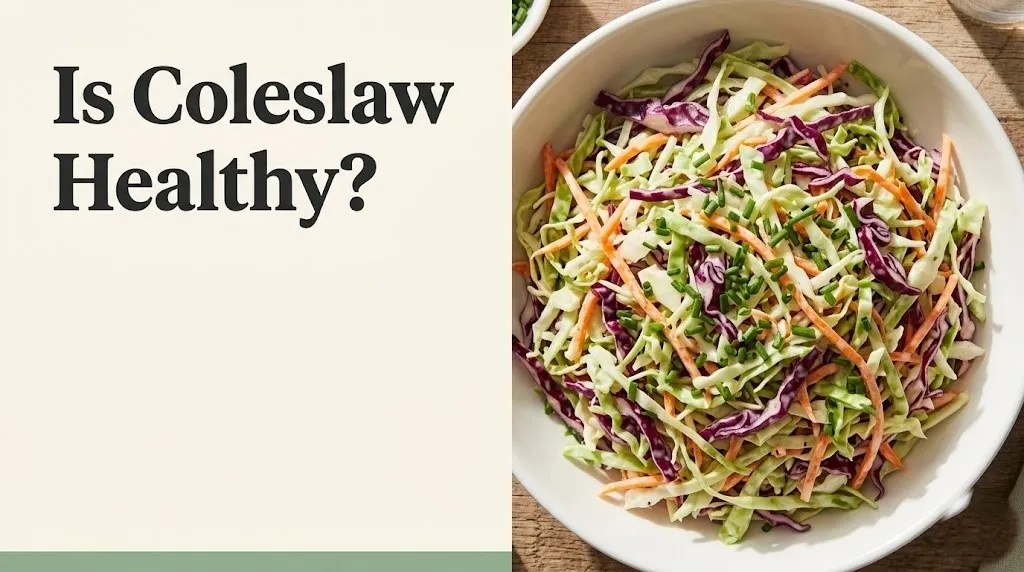
Is Coleslaw Healthy?
Coleslaw is a genuinely healthy food when the base is raw cabbage and the dressing is light, but standard creamy versions can carry significant fat and sodium loads that offset the vegetable benefits.
The foundation of any coleslaw is shredded green cabbage (Brassica oleracea var. capitata) or red cabbage (Brassica oleracea var. capitata f. rubra), both of which are cruciferous vegetables with a well-documented nutritional profile. Cruciferous vegetables contain glucosinolates, sulfur-containing compounds that break down during digestion into isothiocyanates, which research published in the Nutrients journal has linked to antioxidant activity in the body.
The problem isn’t the cabbage. It’s the dressing. A traditional creamy coleslaw made with full-fat mayonnaise, sugar, and salt can contain 14 to 16 grams of fat and upward of 300 milligrams of sodium per half-cup serving. That transforms a brassica vegetable side into something that deserves a second look before you take a second helping.
People with egg allergies should note that standard mayonnaise contains egg yolk, making traditional creamy coleslaw unsuitable for them without substitution.
| Coleslaw Type | Calories (per half-cup) | Fat (g) | Sodium (mg) | Fiber (g) |
|---|---|---|---|---|
| Creamy mayo-based | 150 to 180 | 14 to 16 | 250 to 350 | 1.5 |
| Vinegar-based | 40 to 70 | 0 to 3 | 100 to 200 | 1.5 |
| Greek yogurt-based | 60 to 80 | 2 to 4 | 120 to 180 | 1.5 |
| Store-bought (average) | 120 to 160 | 8 to 12 | 200 to 400 | 1 to 1.5 |
Coleslaw Nutrition Facts
Coleslaw’s nutritional profile centers on its raw vegetable base, but the dressing determines whether the overall numbers are favorable or not.
Per a standard half-cup (approximately 120g) serving of homemade creamy coleslaw, USDA FoodData Central reports approximately:
- Calories: 150 to 180
- Total fat: 14 to 16g (of which 2 to 3g are saturated fat)
- Carbohydrates: 8 to 12g
- Sugars: 5 to 9g (including added sugar in dressings)
- Dietary fiber: 1.5 to 2g
- Protein: 1g
- Sodium: 250 to 350mg
- Vitamin K1 (phylloquinone): 50 to 70 micrograms (55 to 78% of the daily value)
- Vitamin C (ascorbic acid): 20 to 30mg (22 to 33% of the daily value)
- Folate (vitamin B9): 20 to 30 micrograms (5 to 8% of the daily value)
- Potassium: 150 to 200mg
The raw cabbage base stays consistent across preparation styles. The fat, sodium, and calorie numbers shift entirely based on the dressing used.
People on warfarin (an anticoagulant medication) should be aware of the vitamin K1 content. Consistent intake is more important than avoidance, but large or irregular servings of vitamin K-rich foods like coleslaw can affect how warfarin works. Consulting with the prescribing physician about consistent weekly vegetable intake is a practical step.
Coleslaw Calories Per Serving
The calorie count in coleslaw ranges from about 40 calories for a light vinegar-based serving to over 200 calories for a large, full-fat creamy serving from a fast food chain.
That range makes “how many calories are in coleslaw” a genuinely complex question. A half-cup of homemade vinegar slaw contains roughly 40 to 70 calories. The same-size serving of creamy coleslaw made with full-fat mayo sits at 150 to 180 calories. A large restaurant portion, often closer to a full cup, can reach 180 to 300 calories depending on dressing richness.
Think of it this way: the same bowl of shredded cabbage can be a 50-calorie side dish or a 200-calorie one depending entirely on what gets poured over it. The cabbage hasn’t changed. The caloric weight has shifted entirely to the dressing.
| Serving Size | Creamy Coleslaw (cal) | Vinegar Coleslaw (cal) |
|---|---|---|
| 2 tablespoons | 35 to 45 | 10 to 18 |
| Half-cup (120g) | 150 to 180 | 40 to 70 |
| 1 cup (240g) | 290 to 360 | 80 to 130 |
| Large restaurant side | 180 to 320 | 60 to 120 |
People watching calorie intake should use a quarter- to half-cup serving as a starting benchmark, not a full cup. Restaurant portions typically run larger than what most people realize they’re eating.
Key Takeaway: Coleslaw’s healthfulness is not fixed. The cabbage base is legitimately nutritious, but the dressing is where fat, sodium, and calories get added. Choosing a vinegar or yogurt-based dressing cuts calories by more than half without touching the vegetable nutrition.
Health Benefits of Coleslaw
The health benefits of coleslaw come primarily from its cruciferous vegetable base, which provides documented protective plant compounds, vitamins, and fiber in a raw, unprocessed form.
Raw cabbage retains more vitamin C (ascorbic acid) and heat-sensitive glucosinolates than cooked cabbage, because cooking at high temperatures degrades both. This makes raw coleslaw one of the better ways to get these compounds from a Brassica vegetable. Research published in the Journal of Nutrition has noted that glucosinolates are metabolized more efficiently from raw cruciferous vegetables than from boiled ones.
Red cabbage delivers an additional benefit that green cabbage does not: anthocyanins, the water-soluble pigments responsible for its deep purple color. According to research reviewed by the Harvard T.H. Chan School of Public Health, anthocyanin-rich foods have been associated with reduced markers of oxidative stress in human observational studies, though the research is ongoing and effects depend on regular consumption patterns.
Carrots, a standard coleslaw ingredient, add beta-carotene (a precursor to vitamin A), which supports eye health and immune function. The Academy of Nutrition and Dietetics notes that pairing beta-carotene-containing vegetables with a small amount of fat improves absorption, meaning even a lightly dressed coleslaw may enhance the bioavailability of carrot’s fat-soluble compounds.
Vitamins and Minerals in Coleslaw
Coleslaw delivers a meaningful concentration of vitamin K1 (phylloquinone), vitamin C (ascorbic acid), folate (vitamin B9), and potassium from its raw vegetable base.
Per half-cup serving, coleslaw’s vitamin K1 content alone covers more than half the daily recommended intake for most adults. The National Institutes of Health (NIH) sets the adequate intake for vitamin K at 120 micrograms per day for adult men and 90 micrograms per day for adult women. A standard half-cup serving of raw cabbage-based coleslaw provides 50 to 70 micrograms, making it one of the more meaningful dietary sources of this vitamin in a single serving.
Vitamin C functions as an antioxidant and supports collagen synthesis. A half-cup serving of coleslaw provides roughly 20 to 30mg, which is 22 to 33% of the adult daily value of 90mg established by the NIH.
Folate (vitamin B9) supports DNA synthesis and red blood cell formation. It’s particularly relevant for people who are pregnant or planning to become pregnant, as the CDC recommends 400 to 800 micrograms of folate daily before and during early pregnancy. Coleslaw contributes a modest but real amount to daily folate intake.
| Nutrient | Per Half-Cup Coleslaw | % Daily Value (Approx.) |
|---|---|---|
| Vitamin K1 (phylloquinone) | 50 to 70mcg | 55 to 78% |
| Vitamin C (ascorbic acid) | 20 to 30mg | 22 to 33% |
| Folate (vitamin B9) | 20 to 30mcg | 5 to 8% |
| Potassium | 150 to 200mg | 3 to 4% |
| Beta-carotene (from carrots) | 400 to 600mcg | Variable |
| Calcium | 30 to 45mg | 3 to 4% |
People who have been prescribed blood thinners that interact with vitamin K should discuss their coleslaw intake with their prescribing physician, not because the food is harmful, but because consistent intake patterns matter for anticoagulation management.
Coleslaw Fiber Content and Digestion
Coleslaw provides approximately 1.5 to 2 grams of dietary fiber per half-cup serving, primarily from the insoluble fiber in raw cabbage cell walls.
Insoluble fiber works like a slow-moving brush through the intestinal tract. It adds bulk to stool, supports regular bowel movements, and helps move food through the digestive system at a steady pace. The Academy of Nutrition and Dietetics recommends 25 grams of fiber per day for adult women and 38 grams per day for adult men, meaning a serving of coleslaw covers roughly 4 to 8% of that goal.
Raw cabbage contains more intact fiber than cooked cabbage because heat softens cell walls and reduces some of the structural integrity of fiber. This makes raw coleslaw a better fiber source, gram for gram, than cabbage prepared by boiling or steaming.
People with irritable bowel syndrome (IBS) should approach raw cabbage with some caution. Cabbage is on the high-FODMAP list (fermentable oligosaccharides, disaccharides, monosaccharides, and polyols), which are compounds that can trigger bloating, gas, and abdominal discomfort in people sensitive to them. A Monash University-certified low-FODMAP diet limits raw cabbage to 75 grams per sitting. If raw coleslaw consistently causes digestive discomfort, a FODMAP-aware dietitian can help identify whether cabbage is a specific trigger.
Key Takeaway: The raw cabbage base of coleslaw delivers vitamin K1, vitamin C, glucosinolates, anthocyanins (in red cabbage), and insoluble fiber. These are real nutritional contributions, not vague wellness claims. The key is keeping the dressing from undoing them.
Creamy vs Vinegar Coleslaw: Which Is Healthier?
Vinegar-based coleslaw is consistently lower in calories, fat, and sodium than creamy mayo-based coleslaw, while delivering the same vegetable nutrition from the cabbage base.
The difference between these two styles is not subtle. A half-cup of creamy coleslaw contains 14 to 16 grams of fat. The same serving of vinegar-based coleslaw contains 0 to 3 grams. For someone eating coleslaw twice a week as a side dish, that gap adds up to roughly 11 to 13 grams of fat per serving, primarily from saturated fat in the mayonnaise.
Creamy coleslaw isn’t categorically off-limits. But the American Heart Association (AHA) recommends limiting saturated fat to less than 6% of total daily calories, which equals about 13 grams per day on a 2,000-calorie diet. A generous helping of creamy coleslaw can use up nearly a quarter of that budget in one side dish.
| Factor | Creamy (mayo) | Vinegar-based | Greek Yogurt |
|---|---|---|---|
| Calories per half-cup | 150 to 180 | 40 to 70 | 60 to 80 |
| Total fat (g) | 14 to 16 | 0 to 3 | 2 to 4 |
| Saturated fat (g) | 2 to 3 | 0 | 0.3 |
| Sodium (mg) | 250 to 350 | 100 to 200 | 120 to 180 |
| Added sugar (g) | 4 to 8 | 0 to 3 | 0 to 2 |
| Vitamin content | Same base | Same base | Same base |
Vinegar-based coleslaw often uses apple cider vinegar or white wine vinegar, Dijon mustard, and a touch of honey or maple syrup. It’s sharper, lighter, and better suited to pairing with rich proteins like pulled pork or fried chicken where you want a contrasting freshness rather than more creaminess.
Is Store-Bought Coleslaw Healthy?
Store-bought coleslaw is generally higher in sodium, added sugar, and preservatives than a homemade version, which makes reading the nutrition label non-negotiable before buying.
Most supermarket coleslaws use commercially produced mayonnaise with added preservatives and stabilizers to extend shelf life. The sodium content in store-bought coleslaw frequently runs between 200 and 450mg per half-cup serving, which is noticeably higher than most homemade versions. For context, the AHA recommends no more than 2,300mg of sodium per day for most adults, with an ideal target of 1,500mg per day for people with high blood pressure.
Added sugar is the second concern. Many commercial coleslaw dressings include high-fructose corn syrup or multiple forms of added sugar to balance the vinegar and salt. The USDA Dietary Guidelines for Americans 2020-2025 recommend limiting added sugar to less than 10% of total daily calories, which is about 50 grams on a 2,000-calorie diet. Some store-bought coleslaws contain 8 to 12 grams of added sugar per serving.
Quick Tip:
- Look for store-bought coleslaws with fewer than 200mg sodium per serving.
- Check the ingredients list: sugar should not appear in the first three ingredients.
- If the coleslaw mix (pre-shredded cabbage without dressing) is available separately, buy that and make your own dressing. You control every gram.
People on sodium-restricted diets (those managing hypertension, heart failure, or kidney disease) should treat store-bought coleslaw with real scrutiny rather than assuming a “vegetable side dish” is automatically low in sodium.
Is KFC Coleslaw Healthy?
KFC’s coleslaw in the US contains approximately 170 calories, 10 grams of fat, 19 grams of carbohydrates, and 180 milligrams of sodium per standard side serving, based on KFC US nutrition data published as of 2025.
Within the KFC menu, coleslaw is one of the lower-calorie side options. A medium order of mashed potatoes with gravy runs around 160 calories but contains more sodium. A medium mac and cheese sits at approximately 230 calories. By comparison, KFC coleslaw is a reasonable vegetable-containing choice in a fast food context.
That said, the added sugar is worth noting. KFC’s coleslaw dressing contains approximately 8 to 10 grams of added sugar per serving, which is meaningful for anyone managing blood sugar or following the Dietary Guidelines’ added sugar limits. It doesn’t disqualify it as a choice, but it does mean it’s not a free pass as a “healthy side.”
Important note: KFC’s nutritional content varies by country and franchisee. The calorie and sodium figures for KFC coleslaw in the UK, Canada, and Australia differ from US figures. Anyone making a dietary decision based on KFC’s coleslaw should verify current nutrition data directly on KFC’s official website or request the in-store nutrition guide.
Key Takeaway: KFC coleslaw is one of the more reasonable fast food side dish choices on a pure calorie basis, but its added sugar content makes it one to watch for people managing blood sugar or following strict added sugar guidelines.
Is Coleslaw Good for Weight Loss?
Coleslaw can be a useful food in a weight-loss eating pattern when made with a light dressing and consumed in appropriate portions, because the cabbage base is low in calories and provides fiber that contributes to satiety.
Raw cabbage contains approximately 22 calories per 100 grams, making it one of the lower-calorie vegetables available. Fiber slows gastric emptying, which means it takes longer to leave your stomach and contributes to a feeling of fullness. Research published in the Journal of Nutrition has found that higher dietary fiber intake is associated with lower body weight over time in epidemiological studies, though the relationship is complex and affected by total dietary pattern.
The weight loss calculus shifts based on dressing. A cup of vinegar-based coleslaw as a side dish at dinner is approximately 60 to 100 calories. A cup of creamy coleslaw at the same meal is 280 to 350 calories. Over a week of dinners, that difference is meaningful without requiring any other dietary change.
People following calorie-tracking approaches like the USDA MyPlate recommendations can use coleslaw’s raw vegetable base to add volume and fiber to a meal without proportionally adding calories, provided the dressing is kept light.
- Vinegar-based coleslaw at half a cup: 40 to 70 calories
- Creamy coleslaw at half a cup: 150 to 180 calories
- Full restaurant-size creamy serving (1 cup): 290 to 360 calories
- Greek yogurt-based coleslaw at half a cup: 60 to 80 calories
Is Coleslaw Healthy for Diabetics?
Coleslaw can fit into a diabetic eating plan, but the added sugar and carbohydrate content of the dressing require attention, and vinegar-based versions are generally the better choice.
The raw cabbage base of coleslaw has a low glycemic index, meaning it raises blood glucose relatively slowly compared to high-starch foods. The American Diabetes Association notes that non-starchy vegetables like cabbage are among the best foods for blood sugar management. A half-cup of plain shredded cabbage contains roughly 3 to 4 grams of carbohydrates, almost all of which come from fiber.
The dressing changes the equation. Creamy coleslaw dressings typically add 5 to 12 grams of added sugar per serving. Commercially made store-bought versions can add even more. For someone managing Type 2 diabetes or prediabetes, those added grams of sugar in a side dish matter against the total daily carbohydrate budget.
Vinegar-based coleslaw is the more diabetes-friendly option. Apple cider vinegar may offer an additional benefit: a study published in the Journal of Functional Foods found that acetic acid (the main compound in vinegar) may help moderate postprandial (post-meal) blood glucose responses, though research is still building on this mechanism.
Anyone managing diabetes with medication or insulin should work with a registered dietitian to determine appropriate portion sizes and dressing choices within their specific carbohydrate targets, rather than applying generic serving sizes.
Key Takeaway: For people managing blood sugar, the cabbage in coleslaw is genuinely low-glycemic and vegetable-positive. The dressing is where the blood sugar risk lives, particularly in creamy and store-bought versions with significant added sugar.
Is Coleslaw Keto Friendly?
Vinegar-based coleslaw made with low-carb ingredients is keto-compatible, but standard creamy coleslaw with added sugar in the dressing can push net carbs high enough to be a concern on a strict ketogenic diet.
A ketogenic diet typically restricts net carbohydrates to 20 to 50 grams per day. The raw cabbage in a half-cup serving of coleslaw contributes approximately 3 to 4 grams of net carbohydrates (total carbs minus fiber). That’s keto-compatible on its own.
The problem is the dressing. Standard creamy coleslaw dressings add 5 to 8 grams of added sugar per half-cup serving, pushing net carbs to 8 to 12 grams. For someone on a strict 20-gram daily net carb limit, one side of coleslaw uses up 40 to 60% of their daily carb budget.
Keto-friendly coleslaw is achievable at home with a few adjustments:
- Use a mayonnaise made without added sugar (read the label)
- Substitute any sweetener with erythritol or skip sweetener entirely
- Use apple cider vinegar for acidity instead of sugar-sweetened dressings
- Keep the serving to half a cup to manage net carbs
Store-bought coleslaw is rarely keto-friendly without checking labels, as sugar is a standard ingredient in commercial coleslaw dressings. Pre-shredded coleslaw mix without dressing is a reliable starting point for a homemade keto version.
Vegan Coleslaw and Plant-Based Diets
Coleslaw is naturally plant-based in its vegetable components, but standard creamy versions are not vegan because they contain egg yolk (in mayonnaise) and sometimes dairy (in yogurt-based dressings).
The fix is genuinely easy. Vegan mayonnaise made from aquafaba or refined plant oils is widely available and performs similarly to egg-based mayo in coleslaw dressings. Brands using sunflower oil or soy protein create a creamy texture without eggs. Tahini (sesame seed paste) blended with lemon juice and a little water makes an equally satisfying, fully plant-based dressing.
From a plant-based nutrition perspective, coleslaw is a strong food choice. The raw cruciferous vegetable base provides vitamin C, vitamin K1, folate, and glucosinolates from entirely plant-derived sources. Carrots add beta-carotene, the precursor to vitamin A.
For people following a plant-based or vegan diet, coleslaw paired with a legume-based protein (like a bean burger or lentil patty) creates a complementary plate that adds iron, zinc, and protein alongside the vegetable nutrition coleslaw provides. The Academy of Nutrition and Dietetics recognizes well-planned plant-based diets as nutritionally adequate for all stages of life.
Quick Tip:
- Check vegan mayo labels: some use soy protein (relevant for soy allergies).
- Tahini-lemon dressing adds calcium and healthy monounsaturated fats.
- Sesame seeds (in tahini) contain lignans, compounds studied for antioxidant properties.
Key Takeaway: Coleslaw works well in vegan and plant-based eating patterns with one substitution: swap standard mayo for a vegan version or a tahini-based dressing. The nutritional core of the dish stays intact.
How to Make Coleslaw Healthier
Making coleslaw healthier centers on three changes: rethinking the dressing, controlling the sugar, and using red cabbage alongside green for an anthocyanin boost.
The single most effective change is the dressing. Replacing full-fat mayonnaise with plain non-fat Greek yogurt cuts calories by roughly half and adds protein, while maintaining a creamy texture. Adding apple cider vinegar and Dijon mustard provides brightness and depth without adding fat or sugar.
The second most effective change is eliminating or dramatically reducing added sugar. Most coleslaw recipes call for one to two teaspoons of sugar in the dressing to balance acidity. Replacing that with a tiny amount of honey (half a teaspoon) or skipping it entirely shifts the flavor toward a sharper, more savory profile that many people prefer once they adjust.
Here are the core modifications ranked by nutritional impact:
- Replace full-fat mayo with non-fat Greek yogurt: saves approximately 80 to 100 calories and 12g fat per half-cup serving
- Use red cabbage (half or in full): adds anthocyanins without changing macros
- Skip or reduce added sugar: eliminates 4 to 8g of added sugar per serving
- Add 1 tablespoon apple cider vinegar: acidity without calories
- Include fresh herbs (flat-leaf parsley, dill, chives): adds flavor with minimal caloric impact
- Use a mandoline or box grater for very fine shredding: improves texture and dressing adhesion
- Add thinly sliced jalapeño or serrano pepper: capsaicin provides heat with zero added calories
People managing sodium intake should make dressing from scratch rather than using any bottled coleslaw dressing. Most bottled dressings contain 150 to 400mg of sodium per two-tablespoon serving.
Healthy Coleslaw Recipe
This healthy coleslaw recipe uses a Greek yogurt and apple cider vinegar dressing for a lighter version that keeps all the vegetable nutrition intact.
Yield: 6 servings at approximately half a cup each
Prep time: 15 minutes
Rest time: 10 minutes
Calories per serving: approximately 60 to 80 (with Greek yogurt dressing)
Ingredients:
- 350g (approximately 4 cups) shredded green cabbage
- 150g (approximately 1.5 cups) shredded red cabbage
- 120g (approximately 1 cup) shredded carrots (1 to 2 medium carrots)
- 3 tablespoons plain non-fat Greek yogurt
- 2 tablespoons apple cider vinegar
- 1 tablespoon Dijon mustard
- 0.5 teaspoon celery seed
- 0.5 teaspoon fine sea salt
- 0.25 teaspoon freshly ground black pepper
- 0.5 teaspoon honey (optional; omit for keto or diabetic versions)
- 2 tablespoons thinly sliced chives or flat-leaf parsley
Instructions:
- Shred both types of cabbage into very thin strips using a sharp knife, mandoline slicer, or the shredding blade of a food processor. Aim for strips no wider than 3mm.
- Place shredded cabbage in a large colander. Sprinkle with 0.5 teaspoon fine sea salt and toss briefly. Let it rest over a bowl for 10 minutes. This draws out excess moisture and prevents a watery final dish.
- While the cabbage rests, whisk together in a separate bowl: 3 tablespoons Greek yogurt, 2 tablespoons apple cider vinegar, 1 tablespoon Dijon mustard, 0.5 teaspoon celery seed, 0.5 teaspoon honey (if using), and 0.25 teaspoon black pepper.
- Squeeze the salted cabbage gently with your hands or press it against the colander with a spoon to remove as much liquid as possible. Pat dry with a clean kitchen towel.
- Combine the drained cabbage, shredded carrots, and chives in a large mixing bowl. Pour the dressing over the vegetables and toss thoroughly until every strand is coated.
- Taste and adjust: add a few drops of vinegar for more acidity, or a tiny pinch of salt if needed. Refrigerate for at least 10 minutes before serving to allow flavors to meld.
- Serve cold. Store in an airtight container in the refrigerator for up to three days. Do not freeze, as the cabbage will lose its texture completely.
| Per Serving (with Greek yogurt dressing) | Amount |
|---|---|
| Calories | 60 to 80 |
| Total fat | 0.5 to 1g |
| Carbohydrates | 10 to 13g |
| Fiber | 2 to 3g |
| Protein | 3 to 4g |
| Sodium | 170 to 220mg |
| Vitamin K1 | ~55mcg |
| Vitamin C | ~22mg |
People with soy allergies should check the Greek yogurt label, as some brands use soy-derived cultures. For a fully dairy-free version, replace Greek yogurt with a tahini-lemon dressing (2 tablespoons tahini, 1 tablespoon lemon juice, 1 tablespoon water, 1 teaspoon apple cider vinegar, whisked together).
Key Takeaway: Making coleslaw healthier at home is one of the easier food swaps available. Swap the mayo for Greek yogurt, cut the added sugar, add red cabbage for anthocyanins, and you have a legitimately nutrient-dense side dish you can feel confident eating regularly.
Frequently Asked Questions About Coleslaw
How many calories are in a cup of coleslaw?
A cup of creamy coleslaw contains approximately 290 to 360 calories, while a cup of vinegar-based coleslaw contains approximately 80 to 130 calories.
The wide range reflects dressing type and ingredient ratios.
Using a quarter- to half-cup as your benchmark rather than a full cup gives you a more realistic picture of what a standard restaurant side actually delivers.
Is coleslaw healthier than a salad?
Coleslaw made from raw cruciferous cabbage has a stronger micronutrient profile per calorie than many common salad bases like iceberg lettuce, delivering significantly more vitamin K1 and glucosinolates per serving.
Green leaf, romaine, or spinach-based salads with a light dressing will generally be lower in calories and fat than a creamy coleslaw.
The comparison depends on both the coleslaw and salad in question: a vinegar slaw often beats an iceberg salad dressed with ranch on nearly every nutritional measure.
Can you eat coleslaw every day?
Eating coleslaw daily is reasonable for most healthy adults if the portion is half a cup and the dressing is light, because the raw cabbage base provides genuine nutritional value from regular consumption.
The raw cabbage’s glucosinolates require consistent exposure to build meaningful dietary contribution, according to research reviewed by the Nutrients journal.
The one consideration for daily consumption is sodium: store-bought or restaurant coleslaw daily could push sodium intake meaningfully higher, so homemade versions with controlled salt levels are the better choice.
What is the healthiest coleslaw dressing?
A vinegar-based dressing made with apple cider vinegar, Dijon mustard, and a small amount of olive oil is the lowest-calorie and lowest-fat option while still delivering good flavor.
A Greek yogurt-based dressing offers a creamy texture with significantly less fat than mayo and the addition of protein and probiotics.
Both options outperform standard mayonnaise-based dressings on calorie, fat, and sodium measures without sacrificing the dish’s palatability.
Is coleslaw high in sugar?
Homemade vinegar-based coleslaw contains minimal added sugar, typically 0 to 3 grams per half-cup serving.
Standard creamy coleslaw dressings and most store-bought versions, however, contain 5 to 12 grams of added sugar per serving, which is meaningful for people managing blood sugar or following the Dietary Guidelines’ added sugar limits.
Checking the nutrition label on any commercial coleslaw and looking specifically at the “added sugars” row (a required disclosure on US nutrition facts panels since 2020) gives you the clearest picture.
The Real Answer to Whether Coleslaw Is Worth Eating
Coleslaw built on raw cabbage and carrots is a legitimate vegetable-forward side dish that delivers vitamin K1, vitamin C, fiber, and protective plant compounds that most people don’t get enough of. The food itself earns its place on a plate.
The dressing is where the story gets complicated. Choose a vinegar or Greek yogurt base, watch the sodium in any commercial product, and keep portions honest. That’s the entire framework.
At home, coleslaw is one of the easiest vegetables to prepare, store, and adapt to almost any dietary need. At a restaurant or fast food chain, treat the creamy version as an occasional choice rather than a default one, and check the current nutrition data before counting it as a health win.