Yes, you can dye fabric with food coloring, but only certain fabrics will actually hold the color. Wool, silk, and other animal-based fibers take food coloring beautifully, while cotton and polyester barely change shade at all.
This matters because so many people reach for food coloring as a cheap substitute for real fabric dye, only to end up with disappointing, patchy results on the wrong material. Textile crafters have used kitchen dyes on yarn and silk scarves for decades, since the same acid-and-heat process used for Easter eggs works on protein fibers too.
This guide walks through exactly which fabrics respond to food coloring, the vinegar method that makes it stick, a no-vinegar alternative, how to avoid common beginner mistakes, and how food coloring stacks up against real fabric dye and natural food-scrap dyes.
Can You Dye Fabric With Food Coloring?
Food coloring can dye fabric, but it only works reliably on protein-based fibers like wool and silk.
Food coloring is designed as an acid dye. It needs an acidic environment and heat to bond permanently to fiber, which is exactly what protein fibers provide at a molecular level. Cotton, linen, and true synthetic fibers do not have the same chemical structure, so the color mostly rinses back out.
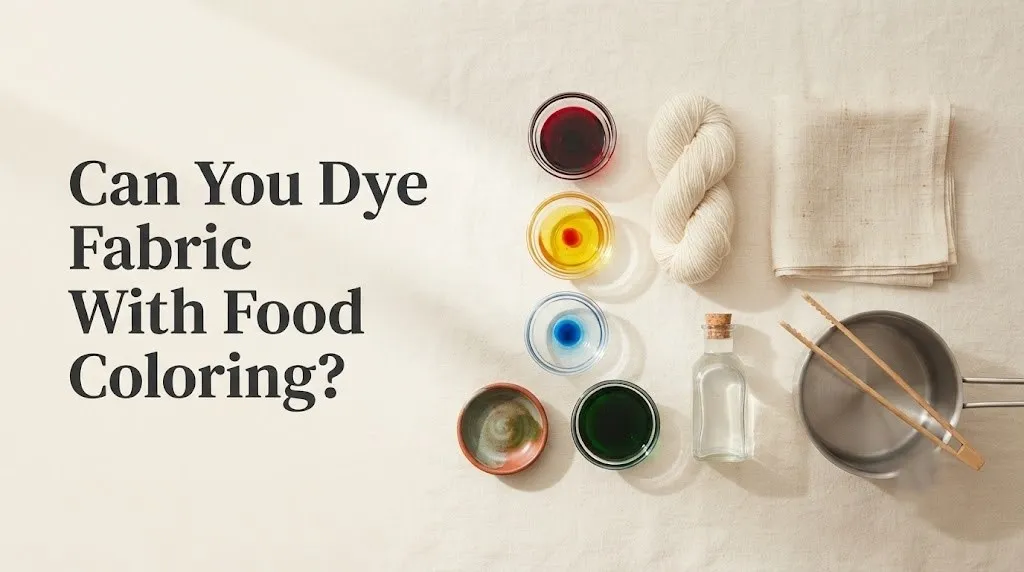
This is why a wool sweater dyes evenly in a stovetop dye bath, while a cotton t-shirt dipped in the same bath comes out pale and blotchy. Think of it like trying to staple paper to glass. The stapler works fine, but the surface simply won’t hold it.
Quick Tip:
- Check the garment tag before starting any project.
- Look for wool, silk, angora, or cashmere listed as the main fiber.
- Blended fabrics will only take color on the protein portion, creating a mottled effect.
How to Dye Fabric With Food Coloring
The standard method combines liquid food coloring, white vinegar, and heat in a stovetop dye bath.
This process mimics commercial acid dyeing on a small, kitchen-safe scale. It works because vinegar lowers the pH of the water, which opens up bonding sites on protein fibers so the dye molecules can lock in during heating.
To dye fabric with food coloring:
- Soak the fabric in plain water for 15 to 20 minutes so it absorbs evenly.
- Fill a stainless-steel pot with enough hot water to let the fabric move freely.
- Add one quarter cup of white vinegar per 100 grams of fabric.
- Stir in 10 to 20 drops of liquid food coloring, adjusting for the shade you want.
- Add the wet fabric and slowly bring the pot to a simmer around 80°C (176°F), holding it there for 20 minutes.
- Turn off the heat, let the fabric cool in the pot, then rinse in cool water until it runs clear.
A study of home-dyeing practices by textile hobbyist communities consistently notes that gradual cooling improves color evenness, since rapid temperature drops can cause uneven fiber relaxation and blotching.
Anyone with sensitive skin or a latex allergy should wear nitrile gloves during this process, since prolonged contact with concentrated food dye can temporarily stain skin for several days.
Does Food Coloring Dye Clothes?
Food coloring dyes clothes made from wool, silk, or other animal fibers, but it will not meaningfully color cotton, denim, or polyester clothing.
Most everyday clothing is cotton, cotton blends, or polyester, which explains why so many people try this project on a t-shirt and end up disappointed. The dye simply washes back out after one or two cycles because cellulose and synthetic fibers lack the chemical bonding sites protein fibers offer.
Silk blouses, wool scarves, cashmere sweaters, and wool socks are realistic candidates for a home food coloring project.
| Clothing Type | Fiber Content | Food Coloring Result |
|---|---|---|
| Wool sweater | Animal protein | Dyes evenly and holds well |
| Silk scarf | Animal protein | Dyes vividly, slightly less durable than wool |
| Cotton t-shirt | Plant cellulose | Very pale, uneven, washes out fast |
| Polyester shirt | Synthetic | Almost no color uptake |
| 50/50 cotton-poly blend | Mixed synthetic | No meaningful color change |
What Fabrics Actually Work With Food Coloring
Wool and silk are the two fabrics that consistently work with food coloring at home.
Both are protein fibers, meaning they’re built from amino acid chains that offer chemical binding sites for acid dyes once heat and vinegar are introduced. Angora and cashmere, which are also animal-hair fibers, behave the same way as wool.
Cotton, linen, hemp, rayon, polyester, acrylic, and nylon fall outside this category. Nylon is a partial exception: it’s synthetic but can pick up faint color from acid dyes, though results are usually weak and inconsistent compared to wool or silk.
Key points to remember before buying fabric for a project:
- Choose 100% wool or silk whenever possible for the most reliable color.
- Avoid pre-treated “easy care” or stain-resistant wool, since coatings can block dye absorption.
- Test a small swatch first if you’re unsure of the exact fiber content.
How to Dye Clothes With Food Coloring
Dyeing a finished garment follows the same vinegar-and-heat method used for loose fabric, just scaled up to fit the whole piece.
The main challenge with garments rather than yardage is making sure the entire item stays submerged and moves freely, since folded or cramped fabric dyes unevenly. A pot that’s too small is the single biggest reason people end up with blotchy sweaters.
To dye a wool or silk garment:
- Weigh the dry garment to calculate vinegar and dye ratios accurately.
- Pre-soak it in warm water for 20 minutes.
- Use a pot at least twice the volume of the submerged garment.
- Add vinegar, dye, and heat as described in the earlier stovetop method.
- Stir gently every few minutes to prevent folds from blocking dye penetration.
According to general textile-care guidance from fiber suppliers like Dharma Trading Co, garments with linings, buttons, or trims should be dyed with those elements removed or protected, since plastic buttons and synthetic linings will not accept the dye and can discolor unevenly.
How to Dye a Shirt With Food Coloring
A shirt can be dyed with food coloring only if it’s made from silk or wool; cotton and blended shirts won’t hold color well.
If you’ve confirmed the fiber content is right, the process is identical to garment dyeing: soak, add the shirt to a vinegar-and-dye bath, bring to a simmer, and rinse thoroughly once finished.
For a lighter, ombre-style shirt rather than a solid color, dip only part of the shirt into the dye bath and hold it there for a shorter time, roughly 5 to 8 minutes, before moving to the next section.
Quick Tip:
- Fold or twist sections of the shirt and secure with rubber bands for a tie-dye style effect.
- Use two or three complementary food coloring shades for a gradient look.
- Always rinse in cool water first to prevent the dye from bleeding as temperature drops.
Can I Use Food Coloring to Dye Fabric?
Yes, food coloring can be used to dye fabric, provided the fabric is a protein fiber and the dye bath includes an acid and heat source.
Without vinegar or citric acid, the color will sit on the surface temporarily and rinse away in the first wash. Heat is equally necessary, since cold water alone won’t open the fiber enough for the dye to penetrate.
People with young children or pets in the kitchen should keep the hot dye bath on a back burner and out of reach, since a spilled pot of near-boiling dyed water poses a genuine burn risk beyond the staining itself.
Key Takeaway: Food coloring genuinely dyes fabric, but only wool and silk hold the color, and vinegar plus heat is what locks it in place.
How to Dye Cotton With Food Coloring
Cotton will only pick up a faint, temporary tint from food coloring, since it lacks the protein structure needed for a true acid dye bond.
Some crafters still try it for a pastel, wash-out effect on cotton, such as a temporary tie-dye for a one-time event. In that case, food coloring can work as a light surface stain rather than a permanent dye.
To get the most color onto cotton:
- Use a strong dye bath with more drops of coloring than you would for wool.
- Add the fabric while the water is very hot, close to boiling, since heat helps even a weak bond form.
- Expect the color to fade significantly, often within one or two washes.
If a permanent result on cotton is the goal, a fiber-reactive dye made specifically for cellulose fibers, such as Rit brand’s all-purpose or ColorStay lines, will perform far better than food coloring.
Can Food Dye Dye Clothes?
Food dye can color clothes made of animal-based fibers, but it cannot permanently dye cotton, linen, or polyester clothing.
“Food dye” and “food coloring” refer to the same thing in most kitchens: the small bottles of red, yellow, blue, and green liquid or gel coloring sold for baking. The chemistry doesn’t change based on what you call it.
Liquid food coloring dissolves more evenly than gel or paste versions, which is why several textile hobbyists specifically recommend avoiding gel food coloring for fabric projects, since it can clump and create dark speckles instead of an even tone.
| Food Coloring Type | Best Use for Fabric | Notes |
|---|---|---|
| Liquid | Fabric and yarn dyeing | Dissolves evenly, most reliable |
| Gel | Not recommended | Clumps, causes speckling |
| Powdered | Fabric dyeing, mixed thoroughly first | Needs full dissolving before adding to bath |
How to Dye Clothes With Food Coloring and No Vinegar
Food coloring can still color protein fabrics without vinegar if you substitute another acid, such as citric acid or lemon juice, though results are usually less vivid.
Vinegar is popular because it’s cheap, already in most kitchens, and consistently acidic. Citric acid powder, sold in canning and homebrewing sections of grocery stores, works as a direct substitute at roughly one tablespoon per gallon of water.
Plain lemon juice can work in a pinch for small projects, though its acidity varies batch to batch, which makes color results less predictable than a measured vinegar or citric acid ratio.
Without any acid at all, food coloring will still tint wool or silk somewhat, but the color will rinse out far more quickly, often fading noticeably after the very first wash.
How to Make Food Coloring Permanent on Clothes
Food coloring becomes as permanent as it can get on fabric through the combination of an acid fixative, sustained heat, and a slow cooldown period.
None of these steps make food coloring truly permanent in the way commercial acid dyes formulated for textiles are, but this combination gets the closest result achievable at home. Skipping the cooldown step is one of the most common reasons color fades faster than expected.
Steps that most improve permanence:
- Use the full vinegar ratio, not a reduced amount, even for small fabric pieces.
- Hold the dye bath at a steady simmer for the full 20 minutes rather than a quick dip.
- Let the fabric cool inside the dye pot instead of rinsing immediately.
- Hand-wash the finished item in cold water for its first few washes.
- Avoid direct sunlight for drying, since UV exposure fades food-based dyes faster than commercial ones.
Even with every step followed correctly, expect gradual fading over months of regular washing, since food coloring was never engineered as a textile dye in the first place.
Key Takeaway: Nothing makes food coloring bulletproof-permanent, but vinegar, sustained heat, and a slow cooldown get you the longest-lasting result possible.
Food Coloring vs. Fabric Dye vs. Natural Food-Scrap Dyes
Food coloring, commercial fabric dye, and natural food-scrap dyes each work through different chemistry and suit different projects.
Commercial dyes like Rit are formulated with fiber-specific chemistry, so they work on cotton, polyester, and blends that food coloring simply cannot touch. Natural food-scrap dyes, made from things like beet skins, avocado pits, or red cabbage, sit somewhere in between: they work on natural fibers with the help of a mordant, but colors tend to be more muted and less predictable than either food coloring or commercial dye.
| Dye Type | Works On | Color Vibrancy | Permanence | Cost |
|---|---|---|---|---|
| Food coloring | Wool, silk only | High, bright | Moderate, fades over months | Very low |
| Rit or commercial fabric dye | Cotton, wool, silk, some blends | High | Strong, wash-fast | Low to moderate |
| Natural food-scrap dye | Natural fibers with mordant | Muted, earthy | Moderate | Very low, uses scraps |
Anyone avoiding synthetic dyes for skin sensitivity reasons may prefer natural food-scrap dyes, though people with contact allergies to specific plants, like ragweed-family plants for those with related pollen allergies, should patch-test any new natural dye source first.
Safety and Cleanup When Dyeing With Food Coloring
Food coloring is non-toxic to handle, but it stains skin, grout, and porous countertops on contact, so setup and cleanup matter as much as the dyeing itself.
Working in a well-ventilated space with old towels laid down protects countertops from splashes. A dedicated “craft only” pot is worth setting aside permanently once you’ve used it for dyeing, since food-grade coloring can leave a tint that’s difficult to fully scrub out.
Safety steps to follow every time:
- Wear nitrile or latex gloves to prevent skin staining that can last several days.
- Keep the hot dye bath away from children and pets at all times.
- Use a stainless steel or glass pot; aluminum can react with the dye and dull the color.
- Ventilate the kitchen, since simmering vinegar has a strong smell some people find irritating.
Anyone with a known dye or additive sensitivity, including some individuals with reactions to specific FD&C colors like Yellow 5, should handle concentrated food coloring with gloves rather than bare hands as an extra precaution.
Common Mistakes When Dyeing With Food Coloring
The most common mistake is trying this method on cotton or polyester and expecting the same result you’d get on wool or silk.
Other frequent errors include skipping the vinegar step, using gel-based coloring instead of liquid, overcrowding the pot so fabric can’t move freely, and rinsing in hot water right after dyeing instead of letting the fabric cool gradually first.
Mistakes to specifically avoid:
- Don’t skip the pre-soak. Dry fabric absorbs dye unevenly and creates blotches.
- Don’t use a too-small pot. Cramped fabric dyes in patches, not solid color.
- Don’t rush the cooldown. Fast temperature changes cause fiber shock and color loss.
- Don’t assume all food colorings behave the same. Liquid dissolves; gel and paste do not.
Key Takeaway: Wrong fabric choice causes more failed food-coloring projects than any other single mistake, so always check the fiber tag before you start.
Frequently Asked Questions About Dyeing Fabric With Food Coloring
Can you dye fabric with food coloring?
Yes, food coloring can dye fabric, but only protein fibers like wool and silk hold the color well.
Cotton and polyester will only pick up a faint, temporary tint.
Vinegar and heat are what make the color bond to the fiber.
Does food coloring dye clothes permanently?
Food coloring does not dye clothes as permanently as commercial textile dye, even with vinegar and heat.
Color gradually fades over weeks or months of regular washing.
Cold hand-washing and avoiding direct sunlight slow down that fading.
Can you dye cotton with food coloring?
Cotton only picks up a light, temporary tint from food coloring since it lacks a protein structure.
The color typically fades noticeably within one or two washes.
A cellulose-specific dye like Rit all-purpose dye works far better for cotton projects.
How much food coloring do you need to dye fabric?
Most home dyers start with 10 to 20 drops of liquid food coloring per gallon of water for a medium shade.
Darker colors need more drops, while pastel shades need fewer.
It’s easier to add more coloring gradually than to lighten an overly dark dye bath.
Will food coloring stain my washing machine?
A single dyed item rinsed thoroughly beforehand is unlikely to stain a washing machine.
Rinsing the fabric in a separate basin until the water runs clear removes most loose dye first.
Running an empty hot cycle afterward is a simple precaution if you’re dyeing multiple items at once.
The Bottom Line
Food coloring genuinely works as a fabric dye, but only on wool and silk, and only when you add vinegar and heat to lock the color in.
Check the fiber tag before you start any project, use a dedicated pot, and let the fabric cool gradually for the best possible result.
If your project involves cotton or a blend, save yourself the disappointment and reach for a proper fabric dye instead.