Healthy Asian recipes give you some of the most nutritionally dense, flavour-forward meals you can make on a weeknight. They pull from centuries of culinary tradition that happen to align remarkably well with what modern nutrition science recommends.
According to the Harvard T.H. Chan School of Public Health, traditional Asian dietary patterns, particularly those from Japan, South Korea, and Vietnam, are associated with lower rates of obesity, cardiovascular disease, and type 2 diabetes compared to typical Western eating patterns. The reasons are structural: high vegetable volume, lean proteins, fermented foods, and broth-based cooking are the defaults, not the exception.
This guide covers the science behind why these meals work, the specific ingredients that make the biggest difference, fifteen recipe categories with real cooking instructions, and practical strategies for weight management and meal planning. Whether you’re building a week of dinners or looking for one solid lunch idea, you’ll find it here.
What Makes Asian Food Healthy
Traditional Asian food is healthy primarily because of its structure: high vegetable-to-grain ratio, lean protein sources, minimal saturated fat, and cooking methods that preserve nutrients rather than destroy them.
Think of the difference between roasting a vegetable in a heavy sauce versus stir-frying it for three minutes at high heat. The stir-fry method retains more water-soluble vitamins, uses less oil overall, and keeps the vegetable’s natural fiber intact.
The USDA Dietary Guidelines for Americans recommend that vegetables make up half of every plate. In a traditional Japanese set meal or Korean banchan spread, vegetables often make up sixty to seventy percent of the food volume by weight. That structural difference matters when you consider total caloric density per meal.
Fermentation is another factor. Foods like kimchi, miso, and tempeh introduce live bacterial cultures, primarily strains of Lactobacillus and Bifidobacterium, that research published in the American Journal of Clinical Nutrition links to improved digestive function and immune response.
The cooking fat choices also differ. Sesame oil, used in small quantities for flavour, and minimal quantities of neutral oils like rice bran oil replace the heavy butter and cream common in Western cooking. The result is far lower saturated fat per serving.
| Structural Feature | Traditional Asian Cooking | Typical Western Cooking |
|---|---|---|
| Vegetable proportion per plate | 50 to 70% | 20 to 30% |
| Primary cooking fat | Sesame oil, rice bran oil (small quantities) | Butter, cream, lard |
| Primary cooking method | Stir-frying, steaming, simmering | Roasting, frying, braising in fat |
| Fermented foods included | Frequently (miso, kimchi, tempeh) | Rarely |
| Average sodium source | Soy sauce, fish sauce (controllable) | Processed foods, cheese |
| Dominant protein type | Fish, tofu, legumes, lean poultry | Red meat, processed meats |
One genuine caveat: the sodium content in Asian sauces is real. Standard soy sauce contains approximately 900 to 1,000mg of sodium per tablespoon. Managing that single variable, through portion control or reduced-sodium substitutes, resolves most of the sodium concern in home cooking.
Healthy Asian Recipes: Where to Start
The best entry point into healthy Asian cooking is identifying three or four foundational recipes that use overlapping ingredients, so nothing goes to waste.
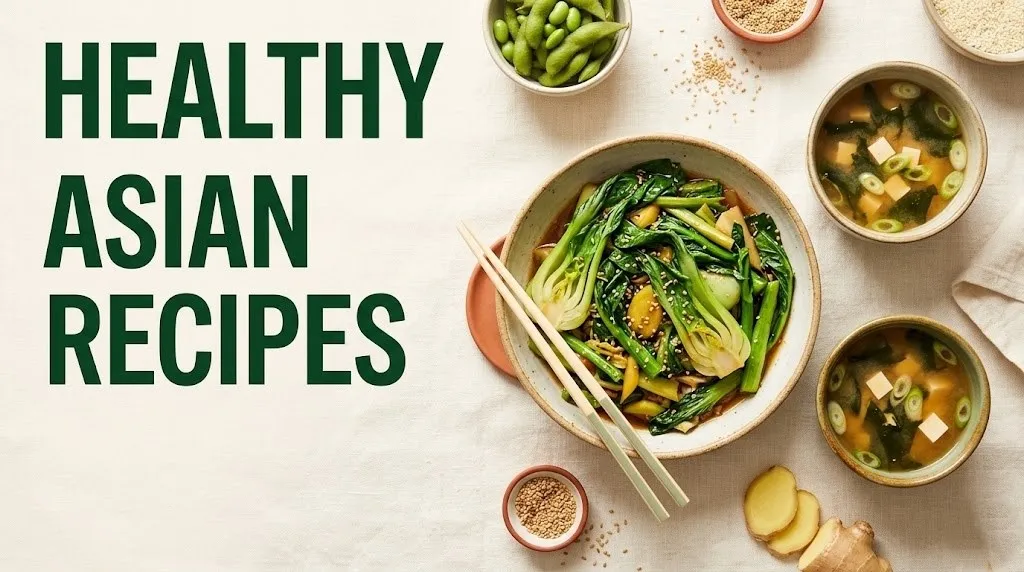
If you buy a head of bok choy (Brassica rapa subsp. chinensis), a block of firm tofu (from Glycine max), some ginger (Zingiber officinale), garlic, reduced-sodium tamari, and sesame oil, you already have the base for a stir-fry, a miso soup, and a noodle bowl. That’s three dinners from one shopping trip.
Healthy Asian recipes don’t require specialty equipment beyond a large skillet or wok. A heavy 12-inch cast-iron skillet performs identically to a carbon steel wok on a standard home burner. The critical factor is heat, not the pan’s shape.
Start with these five pantry staples if you’re building from zero:
- Reduced-sodium tamari (gluten-free soy sauce alternative, approximately 520mg sodium per tablespoon versus 1,000mg in standard soy sauce)
- Rice vinegar (adds acidity with no fat, balances sauces without sugar)
- Toasted sesame oil (use as a finishing oil, not a cooking oil; a teaspoon adds significant flavour)
- Fresh ginger (store unpeeled in the freezer, grate directly from frozen)
- Miso paste (white or yellow miso; dissolve in warm, not boiling, liquid to preserve live cultures)
These five ingredients appear in the majority of the recipes in this guide. They’re widely available in most supermarkets and keep well.
Quick Tip:
- Buy a block of extra-firm tofu, press it between paper towels for 20 minutes, then cube and freeze it. After thawing, the texture becomes chewier and more meat-like, and it absorbs marinades far better than unprocessed tofu.
- For people with soy allergies: sunflower seed butter-based sauces or coconut aminos replace tamari without soy exposure. Confirm the label, as cross-contamination varies by brand.
Best Healthy Asian Foods to Keep in Your Kitchen
The healthiest Asian pantry staples are the ones that do nutritional double duty: high in one key nutrient while being low in something you’d otherwise consume too much of.
Edamame (immature soybeans, Glycine max) leads this list. One cup of shelled edamame delivers approximately 17g of protein, 8g of dietary fiber, and 189 kcal. It contains all nine essential amino acids, making it one of the few plant sources that qualifies as a complete protein. The Academy of Nutrition and Dietetics confirms that soy protein is nutritionally equivalent to animal protein in amino acid profile.
Shirataki noodles (from konjac flour, Amorphophallus konjac) contain virtually zero digestible calories. They’re made almost entirely of glucomannan, a soluble dietary fiber that absorbs water and slows gastric emptying. A 200g serving contains roughly 10 kcal. They’re gluten-free, soy-free, and compatible with almost every dietary restriction.
| Ingredient | Serving | Protein | Fiber | Calories | Notable Nutrients |
|---|---|---|---|---|---|
| Edamame (shelled) | 1 cup (155g) | 17g | 8g | 189 kcal | Folate, vitamin K, isoflavones |
| Firm tofu | 100g | 8g | 0.3g | 76 kcal | Calcium, iron, manganese |
| Bok choy | 1 cup chopped (70g) | 1g | 0.7g | 9 kcal | Vitamin C, vitamin K, folate |
| Brown rice | 1 cup cooked (195g) | 5g | 3.5g | 215 kcal | Magnesium, manganese, B vitamins |
| Miso paste | 1 tbsp (17g) | 2g | 0.4g | 35 kcal | Probiotics, manganese, vitamin K |
| Shirataki noodles | 200g | 0g | 3g | 10 kcal | Glucomannan (soluble fiber) |
| Kimchi | 1/2 cup (75g) | 1.5g | 1.5g | 23 kcal | Vitamin C, vitamin K, Lactobacillus |
Miso deserves special mention. It’s fermented soybean paste. One tablespoon adds a profound savory depth (umami, from glutamic acid) while contributing Lactobacillus strains associated with improved gut microbial diversity. Dissolve miso in broth only after removing the pot from heat. Boiling destroys the live bacterial cultures.
People managing sodium intake should note that one tablespoon of miso contains approximately 630mg of sodium. Use it as a flavour accent, not a base. One tablespoon per serving is a reasonable ceiling.
Key Takeaway: The most impactful healthy Asian pantry items, edamame, tofu, miso, bok choy, and shirataki noodles, share one trait: they deliver substantial nutrition for very few calories, which makes portioning almost irrelevant.
Healthy Asian Dinner Recipes for Weeknights
A healthy Asian weeknight dinner should take 30 minutes or less and require no more than eight ingredients without sacrificing nutritional quality.
The four most practical dinner formats are stir-fries, broth-based soups, grain bowls, and lettuce wraps. Each hits different macros and suits different appetites. Together, they cover your entire week without repetition.
Here is a complete weeknight dinner: Sesame Ginger Chicken and Bok Choy Bowl
Ingredients (serves 4):
- 500g boneless, skinless chicken breast, sliced thin
- 2 heads bok choy, roughly chopped
- 2 cups cooked brown rice (from approximately 3/4 cup dry)
- 3 cloves garlic, minced
- 1 tablespoon fresh ginger, grated
- 2 tablespoons reduced-sodium tamari
- 1 tablespoon rice vinegar
- 1 teaspoon toasted sesame oil
- 1 teaspoon neutral oil (rice bran or avocado)
- Optional: 1 teaspoon sesame seeds, sliced green onion
To prepare:
- Heat neutral oil in a large skillet or wok over high heat until it shimmers (about 60 to 90 seconds).
- Add chicken in a single layer. Do not stir for 2 minutes. Allow it to sear.
- Flip chicken pieces. Cook for another 2 minutes. Remove to a plate.
- Add garlic and ginger to the same pan. Stir constantly for 30 seconds.
- Add bok choy. Toss for 2 minutes until the leaves wilt and stems soften slightly.
- Return chicken to the pan. Add tamari and rice vinegar. Toss everything for 90 seconds.
- Remove from heat. Drizzle sesame oil over the pan. Toss once more.
- Serve over brown rice. Garnish with sesame seeds and green onion if using.
Approximate nutrition per serving: 370 kcal, 38g protein, 32g carbohydrate, 8g fat, 4g fiber
For people with gluten sensitivity: tamari is typically gluten-free, but always verify the label. Standard soy sauce contains wheat. Use certified gluten-free tamari to be certain.
Easy Healthy Asian Recipes with Chicken
Chicken breast is the most versatile lean protein in Asian cooking. Per 100g of cooked chicken breast, you get approximately 31g of protein and 165 kcal, with less than 4g of saturated fat.
The key to flavourful chicken in Asian recipes is the marinade-to-rest ratio. Even a 15-minute marinade in tamari, ginger, garlic, and rice vinegar dramatically changes the depth of flavour compared to seasoning the chicken during cooking only.
Vietnamese-style Chicken Lettuce Wraps (serves 4, approximately 280 kcal per serving):
Ingredients:
- 450g ground chicken (or finely diced chicken breast)
- 1 head butter lettuce, leaves separated
- 1 cup shredded carrots
- 1/2 cup sliced cucumber
- 2 tablespoons fish sauce (or coconut aminos for a fish-free version)
- 1 tablespoon rice vinegar
- 1 teaspoon honey or maple syrup
- 1 clove garlic, minced
- 1/2 teaspoon chili flakes (optional)
- Fresh mint and cilantro for serving
To prepare:
- Heat a skillet over medium-high heat. Add ground chicken.
- Break into small pieces and cook until no pink remains, about 5 to 6 minutes.
- In a small bowl, whisk fish sauce, rice vinegar, honey, and garlic together.
- Pour sauce over cooked chicken. Stir to coat. Cook for 1 additional minute.
- Remove from heat.
- To assemble: spoon chicken mixture into lettuce leaves.
- Top with shredded carrots, cucumber, fresh mint, and cilantro.
- Serve immediately.
Quick Tip:
- Fish sauce contains fish allergens. For people with fish allergies, coconut aminos is a complete substitute. It is lower in sodium and naturally sweet.
- Ground turkey replaces ground chicken with almost identical macros.
The lettuce wrap format eliminates refined carbohydrates entirely, making this a genuinely low-glycemic meal that works for people managing blood sugar levels.
Key Takeaway: Chicken in Asian recipes works best when marinated briefly and cooked at high heat. The real calorie variable is the sauce quantity, not the protein itself.
Healthy Asian Stir-Fry Recipes That Actually Work
A healthy stir-fry is built on three non-negotiable principles: very high heat, very small oil quantity, and sequenced ingredient additions.
Getting these three things right is what separates a stir-fry from a vegetable-and-protein steam. Think of the wok like a racing engine: it’s designed to operate at full throttle. Running it at medium heat produces different chemistry, specifically less Maillard reaction browning, more steam, and a softer, less textured result.
According to the Academy of Nutrition and Dietetics, stir-frying with a small quantity of oil (one to two teaspoons per serving) is one of the lower-fat cooking methods for vegetables and proteins when compared to deep-frying, pan-frying in butter, or roasting with heavy oil coating.
Core Stir-Fry Formula (serves 4, approximately 320 kcal per serving):
Protein base options:
- 400g chicken breast, thinly sliced
- 400g shrimp, peeled and deveined
- 350g firm tofu, pressed and cubed
- 400g beef sirloin, sliced against the grain
Vegetable combinations (choose 3 to 4):
- Bok choy, sliced
- Broccoli florets (Brassica oleracea var. italica)
- Snap peas
- Shiitake mushrooms (Lentinula edodes)
- Bell peppers (Capsicum annuum)
- Baby corn
- Napa cabbage (Brassica rapa subsp. pekinensis)
Basic sauce (whisk before cooking):
- 2 tablespoons reduced-sodium tamari
- 1 tablespoon rice vinegar
- 1 teaspoon sesame oil
- 1 teaspoon cornstarch (thickens the sauce without added fat)
- 1/2 teaspoon fresh ginger, grated
To stir-fry correctly:
- Heat pan on highest heat for 90 seconds before adding oil.
- Add 1 teaspoon neutral oil. Swirl to coat.
- Add protein. Spread in one layer. Do not move for 90 seconds.
- Stir protein and cook until 80 percent done. Remove to a plate.
- Add harder vegetables first (broccoli, carrots). Toss for 2 minutes.
- Add softer vegetables (bok choy, mushrooms). Toss for 1 minute.
- Return protein to pan. Pour sauce around the edges of the pan (not directly on the food).
- Toss everything together for 60 to 90 seconds until sauce thickens.
- Serve immediately.
The cornstarch in the sauce is the professional technique that separates home stir-fries from restaurant-quality results. It binds the sauce to the food rather than pooling at the bottom of the pan.
Healthy Asian Soup Recipes for Every Season
Broth-based Asian soups are among the most calorie-efficient satisfying meals available. A full bowl of miso soup with tofu and seaweed delivers approximately 80 to 120 kcal per serving. A bowl of pho with lean beef and broth runs roughly 350 to 420 kcal depending on serving size.
The satiety mechanism here is straightforward. Broth takes up physical volume in the stomach, triggering stretch receptors that signal fullness. You eat fewer calories than a comparable dry meal while feeling equally satisfied.
Simple Miso Soup with Tofu and Wakame (serves 4, approximately 90 kcal per serving):
Ingredients:
- 4 cups water
- 2 tablespoons white or yellow miso paste
- 150g firm tofu, diced into 1cm cubes
- 2 tablespoons dried wakame seaweed (Undaria pinnatifida), rehydrated
- 2 green onions, sliced thin
- Optional: 1/4 cup diced silken tofu for a creamier texture
To prepare:
- Heat water in a saucepan over medium heat until hot but not boiling.
- Place miso in a small bowl. Add 3 tablespoons of the hot water. Whisk until smooth.
- Add rehydrated wakame and tofu cubes to the hot water.
- Simmer gently for 2 minutes. Do not boil.
- Remove from heat. Stir in dissolved miso.
- Ladle into bowls. Top with green onion. Serve immediately.
Wakame (Undaria pinnatifida) provides iodine, a mineral essential for thyroid hormone synthesis. One tablespoon of dried wakame provides approximately 30 to 40mcg of iodine, against the NIH’s recommended daily intake of 150mcg for adults. People with thyroid conditions should be aware that high seaweed intake can occasionally affect thyroid function and should discuss frequency with a registered dietitian.
A study published in the Journal of Nutrition found that regular miso soup consumption in Japanese cohorts was associated with reduced risk of cardiovascular events, though researchers noted that the overall dietary pattern, not miso in isolation, likely drove the association.
Key Takeaway: Broth-based soups are among the most calorie-efficient filling meals in any cooking tradition. Miso soup in particular takes under 10 minutes and costs almost nothing per serving.
Healthy Asian Rice and Noodle Dishes
Brown rice and soba noodles are the two healthiest grain-based foundations for Asian meals. Both outperform white rice and wheat noodles on fiber content and glycemic response.
Brown rice (Oryza sativa, whole grain) contains approximately 3.5g of dietary fiber per cooked cup versus 0.6g in white rice. Its glycemic index sits at approximately 50 to 55, compared to white rice at 64 to 72. That difference affects how steadily your blood glucose rises after a meal.
Soba noodles (from buckwheat, Fagopyrum esculentum) contain approximately 6g of protein and 4g of dietary fiber per 100g dry weight. They are naturally gluten-free when made from 100% buckwheat. However, many commercial soba blends contain wheat flour. Always check the ingredient label if gluten avoidance matters to you.
| Grain/Noodle | Fiber per serving | GI (approx.) | Protein per serving | Calories per serving |
|---|---|---|---|---|
| Brown rice (1 cup cooked) | 3.5g | 50 to 55 | 5g | 215 kcal |
| White rice (1 cup cooked) | 0.6g | 64 to 72 | 4g | 205 kcal |
| Soba noodles (100g dry) | 4g | 46 to 50 | 6g | 336 kcal |
| Shirataki noodles (200g) | 3g | Near zero | 0g | 10 kcal |
| Rice noodles (100g dry) | 1.8g | 61 to 65 | 3.5g | 364 kcal |
| Udon noodles (100g dry) | 2g | 55 to 60 | 7g | 348 kcal |
Shirataki noodles (from konjac, Amorphophallus konjac) are the outlier. Their glucomannan fiber absorbs water and expands in the stomach, which extends the feeling of fullness. They work best in dishes with strongly flavoured sauces because they have almost no flavour of their own.
Rinse shirataki noodles under cold water for 30 seconds before cooking. Dry-toast them in a hot pan for 2 minutes without oil before adding sauce. This removes the natural konjac odour entirely and improves texture.
Healthy Asian Salad Recipes Worth Making
Cold Asian salads are built on raw or lightly blanched vegetables with bright, acid-forward dressings. They’re among the most nutrient-dense meals per calorie of any food category.
The dressings do most of the nutritional work. A sesame ginger dressing made with tahini, rice vinegar, ginger, garlic, and a small amount of tamari adds only 60 to 80 kcal per two-tablespoon serving while delivering flavour complexity that makes a large salad feel genuinely satisfying.
Sesame Cucumber and Edamame Salad (serves 4, approximately 160 kcal per serving):
Ingredients:
- 2 cups shelled edamame, thawed if frozen
- 2 large cucumbers, sliced thin
- 1 cup shredded purple cabbage
- 1/4 cup sliced radishes
- 2 tablespoons sesame seeds
- For dressing: 2 tablespoons rice vinegar, 1 tablespoon tamari, 1 teaspoon sesame oil, 1 teaspoon honey, 1/2 teaspoon grated ginger, 1/2 teaspoon minced garlic
To prepare:
- Whisk all dressing ingredients together in a small bowl.
- Combine edamame, cucumber, cabbage, and radishes in a large bowl.
- Pour dressing over vegetables. Toss gently to coat.
- Sprinkle sesame seeds on top.
- Serve immediately or refrigerate for up to 2 hours.
Note: Sesame is classified as a top-9 allergen under the U.S. FASTER Act of 2023. For sesame-free versions, omit sesame oil and sesame seeds, and use sunflower seed butter thinned with water as an alternative dressing base.
This salad provides 17g of plant protein per serving from edamame alone, making it nutritionally comparable to a chicken salad from a protein standpoint while being fully plant-based.
Quick Tip:
- Salting cucumber slices and letting them drain for 10 minutes before assembling removes excess moisture. This keeps the dressing from diluting and the salad from becoming watery by the time you eat it.
- Purple cabbage contains anthocyanins, plant pigments associated with antioxidant activity in research published in the Nutrients journal.
Key Takeaway: Cold Asian salads with sesame-based dressings hit a rare nutritional sweet spot: high protein from edamame, high fiber from vegetables, and very low caloric density, with enough flavour to make you actually want to eat them.
Healthy Asian Recipes for Weight Loss
Healthy Asian recipes support weight management primarily because they combine high dietary fiber, high protein, and low caloric density in the same meal.
Low caloric density means you eat a high volume of food for relatively few calories. One cup of stir-fried bok choy with tofu and a small portion of brown rice delivers roughly 300 to 340 kcal while filling a full dinner plate. That’s the structural advantage.
According to the Harvard T.H. Chan School of Public Health, populations following traditional Asian dietary patterns, particularly in Japan and South Korea, have obesity rates significantly below the global average. The relationship appears tied to meal composition: high vegetable volume, fermented foods, fish-based proteins, and minimal ultra-processed food.
For weight management specifically, these recipe choices have the strongest evidence:
- Miso soup before a meal: Research published in Appetite (Elsevier) found that consuming a broth-based soup before a meal reduced total caloric intake at that meal by an average of 20%.
- Shirataki noodles as a noodle swap: Replacing 200g of wheat noodles with shirataki saves approximately 350 kcal per meal without reducing portion size or satisfaction.
- Edamame as a snack: Provides complete protein and high fiber at low caloric cost, which blunts blood sugar spikes compared to refined carbohydrate snacks.
- Stir-frying over frying: A stir-fry typically uses 1 to 2 teaspoons of oil versus 2 to 4 tablespoons in pan-frying. That alone saves 80 to 300 kcal per meal.
- Brown rice over white rice: The fiber difference slows gastric emptying, extending satiety by approximately 20 to 40 minutes per meal based on comparative glycemic response studies in the American Journal of Clinical Nutrition.
No recipe format alone produces weight loss. The overall dietary pattern, consistent caloric balance over time, and individual metabolic factors are the primary drivers. These recipes create the conditions for lower caloric intake without hunger, but they are not a prescribed weight-loss treatment.
High-Protein, Low-Calorie Asian Meals
High-protein, low-calorie Asian meals build around four protein sources: firm tofu, edamame, lean chicken breast, and shrimp. All four deliver substantial protein per serving with minimal saturated fat.
Shrimp (Penaeus monodon or related species) is particularly underused in home cooking. A 100g serving of cooked shrimp provides approximately 24g of protein at just 99 kcal, with less than 1g of saturated fat. It’s one of the highest protein-to-calorie ratios of any common protein source.
| Protein Source | Serving | Protein | Calories | Saturated Fat |
|---|---|---|---|---|
| Shrimp, cooked | 100g | 24g | 99 kcal | 0.3g |
| Chicken breast, cooked | 100g | 31g | 165 kcal | 0.9g |
| Firm tofu | 100g | 8g | 76 kcal | 0.7g |
| Edamame, shelled | 1 cup (155g) | 17g | 189 kcal | 1g |
| Egg (large) | 1 egg (50g) | 6g | 72 kcal | 1.6g |
| Tempeh | 100g | 19g | 195 kcal | 0.5g |
Garlic Shrimp with Bok Choy is the highest protein-per-calorie dish in this guide. Serves 4 at approximately 195 kcal and 26g protein per serving before adding a grain base.
Allergen note: Shrimp is a top-8 shellfish allergen. For shellfish-free high-protein alternatives, firm tofu marinated in miso and garlic replicates the flavour profile effectively and provides 8g protein per 100g serving.
Tempeh (fermented soybean cake) is worth highlighting for plant-based eaters who find plain tofu texturally unappealing. It has a firmer, denser, slightly nutty character. At 19g of protein per 100g, it outperforms tofu by more than double per weight. Its fermentation also partially breaks down phytic acid, an antinutrient that otherwise reduces mineral absorption from soy.
Quick Tip:
- Slice tempeh thin and dry-fry it in a non-stick pan before adding marinade. This creates a slightly crispy exterior and helps the marinade penetrate the surface rather than just coating it.
Key Takeaway: Shrimp and chicken breast dominate the protein-to-calorie ratio among common Asian proteins. Tempeh is the most underrated plant-based option, delivering nearly twice the protein of tofu per gram.
Healthy Asian Lunch Ideas for the Week
Healthy Asian lunches work best when built on the leftovers-forward cooking philosophy. The most practical lunch format is a grain bowl: one base, one protein, two to three vegetables, and a sauce.
One hour of weekend prep yields four to five weekday lunches with no reheating complexity beyond a microwave. That’s what makes Asian-style meal prep actually sustainable for working adults.
The five most practical healthy Asian lunch formats:
- Grain bowl: Brown rice or soba base, leftover stir-fry protein, fresh cucumber, shredded carrot, sesame dressing
- Miso soup + protein: Made fresh in 8 minutes with packaged dashi or water and miso, paired with leftover chicken or tofu
- Lettuce wrap assembly: Pre-cooked protein mixture, butter lettuce leaves, shredded vegetables, a dipping sauce
- Cold soba salad: Cooked soba noodles dressed in sesame-tamari sauce, topped with cucumber, edamame, and a soft-boiled egg
- Kimchi fried rice: Brown rice, a small portion of kimchi, one egg, and any leftover protein. Ready in under 8 minutes.
Cold Soba Salad with Sesame Dressing (serves 2, approximately 340 kcal per serving):
Ingredients:
- 100g dry soba noodles (100% buckwheat for gluten-free)
- 1 cup shelled edamame
- 1 cucumber, julienned
- 2 tablespoons tamari
- 1 tablespoon rice vinegar
- 1 teaspoon sesame oil
- 1 teaspoon honey
- 1 teaspoon grated ginger
- 1 tablespoon sesame seeds
To prepare:
- Cook soba noodles according to package directions (typically 4 to 5 minutes in boiling water).
- Drain and rinse under cold water immediately to stop cooking and remove starch.
- Whisk tamari, vinegar, sesame oil, honey, and ginger in a bowl.
- Toss noodles, edamame, and cucumber with the dressing.
- Top with sesame seeds.
- Refrigerate in an airtight container for up to 2 days.
Healthy Asian Dinner Ideas: Planning a Full Week
A full week of healthy Asian dinners becomes manageable when you plan around three to four proteins and a shared vegetable prep session. The overlap in ingredients cuts both cost and preparation time without producing repetitive meals.
Here is a complete Monday-to-Friday healthy Asian dinner plan built around shared pantry staples:
| Day | Dinner | Protein | Key Vegetables | Approx. Calories |
|---|---|---|---|---|
| Monday | Sesame Ginger Chicken Bowl | Chicken breast | Bok choy, carrot | 370 kcal |
| Tuesday | Miso Soup + Edamame | Tofu, edamame | Wakame, green onion | 280 kcal |
| Wednesday | Garlic Shrimp Stir-Fry | Shrimp | Broccoli, snap peas | 310 kcal |
| Thursday | Soba Noodle Salad | Edamame | Cucumber, cabbage | 340 kcal |
| Friday | Kimchi Fried Rice + Egg | Egg, kimchi | Cabbage, green onion | 360 kcal |
The shopping list for this plan requires: chicken breast, shrimp, firm tofu, edamame, eggs, kimchi, bok choy, broccoli, snap peas, cucumber, napa cabbage, brown rice, soba noodles, miso paste, reduced-sodium tamari, rice vinegar, sesame oil, and fresh ginger. That’s a complete week from one grocery run.
The Academy of Nutrition and Dietetics recommends that adults consume a minimum of 25g of dietary fiber per day for women and 38g per day for men. This meal plan delivers between 22g and 31g of fiber daily depending on portion sizes, meeting or approaching those targets through food alone.
For people managing sodium intake: the biggest variable in this plan is tamari and miso quantities. Replacing standard tamari with reduced-sodium versions and using miso as a flavour accent rather than a base cuts weekly sodium exposure substantially. Target under 2,300mg of sodium per day, per the American Heart Association’s recommendation, as a practical ceiling.
Key Takeaway: Planning a week of healthy Asian dinners around three shared proteins and a single vegetable prep session reduces both the mental load and the grocery bill without sacrificing variety or nutritional quality.
How to Make Asian Food Healthier at Home
Making Asian food healthier at home is mostly a matter of controlling four variables: sauce sodium, oil quantity, portion size of refined grains, and protein-to-vegetable ratio.
Restaurant Asian food tends to be higher in sodium and fat than home-cooked versions because sauces are made in large batches optimized for flavour intensity and consistency, not nutritional moderation. When you cook at home, you control every one of those variables.
The most impactful swaps:
- Replace standard soy sauce with reduced-sodium tamari: Cuts sodium from approximately 1,000mg to 500mg per tablespoon with no detectable flavour difference in cooked dishes.
- Use sesame oil as a finish, not a cooking fat: One teaspoon (40 kcal) drizzled post-heat adds the same aromatic impact as two tablespoons used during cooking, with about 80% fewer calories from fat.
- Swap half your rice portion with riced cauliflower: Riced cauliflower (Brassica oleracea var. botrytis) contains approximately 25 kcal per cup versus 215 kcal for brown rice. Mixing them 50/50 cuts the grain calorie contribution by roughly 47% without changing the texture noticeably.
- Add vegetables at a 2:1 ratio to protein by volume: This shifts caloric density downward while increasing fiber, vitamin C (ascorbic acid), vitamin K, and potassium content per bowl.
- Sauce on the side for restaurant orders: Restaurant stir-fry sauces account for 200 to 400mg of additional sodium per serving. Requesting sauce on the side, then using half, is the single most effective sodium reduction strategy for eating out.
| Swap | Before | After | Benefit |
|---|---|---|---|
| Standard soy sauce to reduced-sodium tamari | ~1,000mg Na/tbsp | ~500mg Na/tbsp | 50% sodium reduction |
| Cooking sesame oil to finishing sesame oil | 120 kcal (1 tbsp) | 40 kcal (1 tsp) | 67% calorie reduction from fat |
| Full white rice to 50/50 cauli rice blend | 205 kcal/cup | ~115 kcal/cup | 44% calorie reduction per serving |
| Fried topping to steamed topping | variable +80 to 200 kcal | baseline | Eliminates added frying fat entirely |
| Hoisin sauce (2 tbsp) to miso-tamari blend | ~250mg Na + 60 kcal | ~150mg Na + 20 kcal | Lower sodium, lower sugar |
The most important single habit: taste your dish before adding any sauce at the table. Most home-cooked Asian meals need no additional seasoning if the cooking sauce was properly incorporated. Adding soy sauce at the table is the fastest route to exceeding your sodium target.
Frequently Asked Questions About Healthy Asian Recipes
What is the healthiest Asian food to eat for dinner?
Miso soup with tofu, broth-based pho with lean protein, and stir-fried chicken with bok choy rank among the lowest-calorie, highest-nutrient Asian dinner options.
All three combine high protein, high vegetable volume, and minimal saturated fat in one meal.
Choosing a broth-based dish over a noodle or rice-heavy dish generally reduces caloric density per bowl by 20 to 40%.
Are Asian noodles healthy or should I avoid them?
Asian noodles are not inherently unhealthy, but their nutritional profile varies considerably by type.
Soba noodles (100% buckwheat) provide approximately 6g of protein and 4g of fiber per 100g dry, while shirataki noodles offer under 10 kcal per 200g serving.
White rice noodles and udon are low in fiber and higher on the glycemic index, making portion size the most relevant factor for people monitoring blood sugar.
How do I make a healthy Asian stir-fry without too much sodium?
Use reduced-sodium tamari instead of standard soy sauce, which cuts sodium from approximately 1,000mg to 500mg per tablespoon.
Keep sauce quantities to two tablespoons maximum per four servings, and add sauce only in the final 90 seconds of cooking.
Rinsing canned vegetables or blanching fresh vegetables before stir-frying also removes any residual sodium from prior processing.
What Asian foods are good for weight loss?
Broth-based soups, edamame, shirataki noodles, stir-fried vegetables with lean protein, and miso-based dishes are the most practical choices for lower-calorie eating within Asian cuisine.
These foods combine low caloric density with high dietary fiber and protein, which supports satiety without high caloric intake.
No food produces weight loss independently. These choices create the structural conditions for eating fewer calories while feeling satisfied.
Is Asian food generally lower in calories than Western food?
Traditional Asian home-cooked meals tend to be lower in caloric density than comparable Western meals because they prioritize vegetables, broth, and lean proteins over high-fat sauces, cheese, and processed meats.
A traditional Japanese meal of miso soup, grilled fish, rice, and pickled vegetables typically delivers 400 to 550 kcal versus a Western dinner of pasta with cream sauce at 700 to 1,000 kcal per serving.
Restaurant Asian food, particularly Chinese-American takeout dishes like general tso’s chicken or pad see ew with heavy sauce, can exceed those calorie ranges significantly depending on cooking method and sauce volume.
Putting It All Together
Healthy Asian recipes earn their reputation. The nutritional architecture of traditional Asian cooking, high vegetables, lean proteins, minimal saturated fat, fermented foods, and broth-based dishes, maps onto almost every evidence-based dietary recommendation from the USDA, the American Heart Association, and the Academy of Nutrition and Dietetics.
Start with two or three recipes from this guide, build a short pantry from the staples list, and cook from that same pantry all week. The overlap in ingredients is the point.
Rotate between a stir-fry, a soup, and a bowl format and you’ll cover your protein targets, your fiber targets, and your caloric goals without spreadsheets, supplements, or frustration.