Healthy baked chicken recipes give you one of the best protein-to-calorie ratios in the kitchen. A 3.5-ounce serving of cooked boneless skinless chicken breast delivers approximately 31 grams of protein at roughly 165 calories, according to the USDA FoodData Central database.
The American Heart Association identifies poultry as a preferred lean protein within a heart-supportive eating pattern. Baking, rather than frying or pan-sauteing in heavy oil, keeps the fat profile clean while preserving those numbers.
This guide covers the nutritional differences between cuts, exact baking temperatures and times, marinade science, a full meal prep framework, and 16 recipe-focused sections built around what people actually search for. You’ll leave knowing not just which recipes to cook, but why they work nutritionally.
What Makes Baked Chicken Recipes Healthy?
Healthy baked chicken recipes earn that label through three measurable factors: the cut used, how it’s seasoned, and how it’s cooked.
Baking uses dry heat without submerging the protein in fat. When you cook skinless chicken in an oven set between 375°F and 425°F (190°C to 218°C), you’re relying on the oven’s ambient heat rather than added oil to drive the cooking process. The result is a lower total fat content compared to pan-frying or deep-frying the same cut.
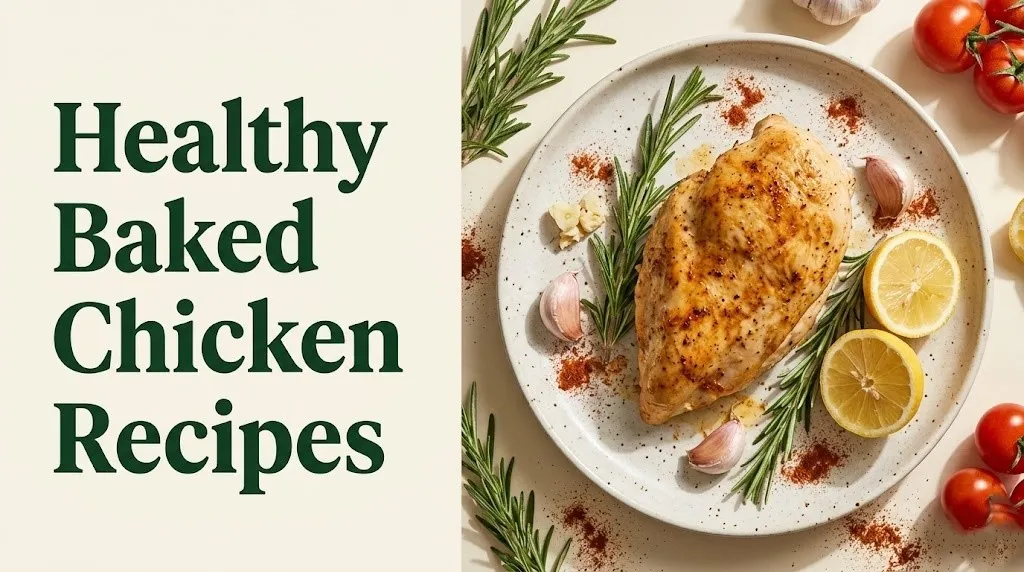
The USDA Dietary Guidelines for Americans 2020-2025 recommend choosing lean protein sources and preparing them with minimal saturated fat. Skinless baked chicken fits that guidance directly. The skin on chicken contains most of the cut’s saturated fat. Removing it before baking can reduce total fat content by 40 to 50 percent, depending on the cut.
Seasoning choices matter as much as cooking method. A chicken breast baked with 500mg of sodium from a store-bought seasoning blend is nutritionally different from one seasoned with fresh herbs, lemon, and a light olive oil coating. Many commercial “healthy” baked chicken recipes ignore this distinction entirely.
| Factor | What Makes It Healthier | What Works Against It |
|---|---|---|
| Cooking method | Dry-heat baking, no deep-frying fat | Added oil in excess of 1 tbsp per serving |
| Cut choice | Skinless breast or thigh | Skin-on preparations add saturated fat |
| Seasoning | Herbs, lemon, garlic, spices | High-sodium blends, sugary glazes |
| Portion size | 3 to 4 oz cooked per serving | Oversized portions shift calorie balance |
Who should be cautious: People managing chronic kidney disease often have physician-directed protein limits. If you have a diagnosed kidney condition, discuss your individual protein targets with your treating dietitian before significantly increasing poultry intake.
Healthy Meals With Chicken: Building a Balanced Plate
Healthy meals with chicken require more than just a well-cooked piece of poultry. The chicken is the protein anchor. What surrounds it determines the meal’s nutritional completeness.
The Harvard T.H. Chan School of Public Health’s Healthy Eating Plate model recommends that roughly half the plate come from vegetables and fruits, a quarter from whole grains, and a quarter from lean protein. Baked chicken handles the protein quarter. The rest needs attention.
Pairing baked chicken breast with a fiber-rich grain like farro, brown rice, or quinoa and a vegetable like roasted broccoli, sauteed spinach, or a simple green salad creates the macronutrient balance that keeps blood sugar stable and satiety signals strong. Think of your plate like a three-instrument band: the chicken is the lead, but it sounds flat without the rhythm section of fiber and healthy fat.
Healthy fat on the plate, whether from a drizzle of extra-virgin olive oil on roasted vegetables or half an avocado on the side, slows the absorption of fat-soluble vitamins like vitamin A and vitamin K present in leafy greens.
Key plate-building combinations for healthy chicken meals:
- Baked lemon herb breast + roasted Brussels sprouts + brown rice
- Baked paprika thigh + steamed broccolini + quinoa
- Baked garlic chicken + mixed greens salad + sweet potato
- Baked Mediterranean chicken + roasted zucchini + whole-grain pita
- Baked chicken + roasted cherry tomatoes + farro with fresh basil
People following a gluten-free eating pattern can substitute all whole-grain components with certified gluten-free options like quinoa, certified GF oats, or brown rice without changing the core nutritional balance of the meal.
How to Cook Healthy Oven Baked Chicken Breast
Healthy oven baked chicken breast starts with understanding that the breast is a lean, low-fat muscle, which means it dries out quickly when overcooked.
The USDA food safety standard for poultry is a verified internal temperature of 165°F (74°C). Use an instant-read thermometer inserted into the thickest part of the breast, not touching bone if bone-in. That number is the only reliable indicator of doneness. Color and juiciness alone are not safe indicators.
For a standard 6-ounce (170g) boneless skinless chicken breast, the following oven temperatures and approximate times are tested and reliable:
| Oven Temperature | Approximate Bake Time | Notes |
|---|---|---|
| 375°F (190°C) | 25 to 30 minutes | Gentler heat, more forgiving for beginners |
| 400°F (204°C) | 22 to 26 minutes | Best balance of browning and moisture retention |
| 425°F (218°C) | 18 to 22 minutes | Faster; requires closer monitoring |
| Convection 400°F | 18 to 22 minutes | Circulating air cooks faster; reduce time by 20% |
Larger or thicker breasts require more time. Pound breasts to an even 3/4-inch thickness before baking to promote even cooking and reduce the risk of dry edges around an undercooked center.
To bake a healthy oven chicken breast properly:
- Remove chicken from the refrigerator 30 minutes before cooking to take the chill off the meat.
- Pat the surface completely dry with paper towels. Moisture on the surface steams the chicken rather than browning it.
- Coat lightly with 1 teaspoon of olive oil per breast.
- Season with kosher salt, black pepper, garlic powder, and your chosen herbs.
- Place on a wire rack set inside a rimmed baking sheet for air circulation.
- Bake at 400°F (204°C) until the internal temperature reads 165°F (74°C).
- Rest on the rack for 5 full minutes before cutting. The internal temperature will rise another 2 to 3 degrees during rest.
People managing hypertension or following a low-sodium diet should limit added salt to 1/4 teaspoon or less per breast and rely on acidic ingredients like lemon zest and fresh herbs to carry the flavor profile.
Key Takeaway: Healthy baked chicken recipes earn their label through cut choice, cooking method, and seasoning control. Baking skinless poultry at 400°F with herbs, lemon, and minimal oil gives you the cleanest nutritional profile without sacrificing flavor.
Calories in Baked Chicken Breast: What You’re Actually Eating
A 3.5-ounce (100g) serving of cooked boneless skinless chicken breast contains approximately 165 calories, according to USDA FoodData Central. That figure applies to plain baked chicken with no added oil or marinade.
Real-world preparation adds calories. One teaspoon of olive oil adds approximately 40 calories. A tablespoon of a standard teriyaki glaze can add 30 to 50 calories and up to 400mg of sodium. Understanding what the seasonings bring to the total is more useful than staring at the base number alone.
Here’s the full picture per a cooked 3.5 oz serving of common chicken preparations:
| Preparation | Calories | Protein (g) | Total Fat (g) | Sodium (mg) |
|---|---|---|---|---|
| Plain baked skinless breast | 165 | 31 | 3.6 | 74 |
| Baked breast with 1 tsp olive oil | 205 | 31 | 8 | 74 |
| Baked breast with lemon herb marinade | 210 | 30 | 8.5 | 200 |
| Baked skin-on breast | 197 | 30 | 8 | 75 |
| Baked boneless skinless thigh | 209 | 26 | 11 | 95 |
| Baked bone-in drumstick (skinless) | 175 | 28 | 6 | 90 |
Source: Approximations based on USDA FoodData Central data for cooked poultry.
For people tracking macronutrients, baked chicken breast is one of the most protein-dense whole foods available. Its protein-to-calorie ratio outperforms most other animal proteins at equivalent serving sizes.
Individuals with type 2 diabetes benefit from the breast’s near-zero glycemic load, meaning it does not meaningfully raise blood glucose on its own. What raises blood glucose in a chicken-based meal is typically the grain or starchy vegetable on the side, not the chicken itself.
Best Healthy Chicken Breast Recipes for Every Skill Level
The best healthy chicken breast recipes balance simplicity with nutritional intentionality. They use acid for flavor depth, herbs for aromatics, and dry heat for texture without requiring complicated technique.
Three recipes that stand up to repeated testing across varying kitchen skill levels:
Recipe 1: Lemon Garlic Baked Chicken Breast
Ingredients for 4 servings:
- 4 boneless skinless chicken breasts (6 oz / 170g each)
- 4 teaspoons extra-virgin olive oil
- 4 cloves garlic, minced
- Zest and juice of 1 lemon
- 1 teaspoon dried oregano
- 1/2 teaspoon black pepper
- 1/4 teaspoon kosher salt
To prepare:
- Preheat oven to 400°F (204°C). Line a rimmed baking sheet with parchment paper.
- Pat chicken breasts completely dry.
- Whisk together olive oil, garlic, lemon zest, lemon juice, oregano, pepper, and salt.
- Coat each breast evenly with the mixture. Let sit for 15 minutes at room temperature.
- Arrange on the prepared baking sheet with at least 1 inch of space between pieces.
- Bake for 22 to 26 minutes until internal temperature reaches 165°F (74°C).
- Rest for 5 minutes before slicing.
Approximate per serving: 215 calories, 31g protein, 8g fat, 2g carbohydrate, 230mg sodium.
This recipe is naturally gluten-free, dairy-free, low-carbohydrate, and suitable for people following Mediterranean or DASH dietary patterns. People watching potassium intake due to kidney conditions should confirm lemon use is appropriate with their care team.
Recipe 2: Paprika and Herb Baked Chicken (Dairy-Free, Low-Sodium)
Works the same technique using 1 teaspoon smoked paprika, 1/2 teaspoon cumin, 1/4 teaspoon garlic powder, and fresh thyme instead of lemon and oregano. The smoked paprika creates a depth of flavor that reads richer than the ingredient list suggests, making salt feel less necessary.
Recipe 3: Balsamic Dijon Baked Chicken
Combine 1 tablespoon balsamic vinegar, 1 teaspoon Dijon mustard, 1 teaspoon olive oil, and 1/2 teaspoon black pepper. Coat and bake as above. The acidity from both vinegar and mustard tenderizes the surface proteins during the brief marinating period, improving texture without added sodium.
Heart Healthy Baked Chicken Recipes
Heart healthy baked chicken recipes minimize saturated fat, limit sodium, and rely on anti-inflammatory seasonings supported by dietary research.
The American Heart Association recommends limiting saturated fat to less than 6 percent of total daily calories and keeping sodium below 1,500mg per day for people managing high blood pressure. Skinless baked chicken contributes very little saturated fat per serving and can fit comfortably within those thresholds when seasoned thoughtfully.
The DASH diet (Dietary Approaches to Stop Hypertension), developed with support from the National Heart, Lung, and Blood Institute, specifically includes lean poultry as a recommended protein source. Research published in the American Journal of Clinical Nutrition has found that replacing red meat with poultry in the diet is associated with lower LDL cholesterol levels over time.
Heart-protective seasoning choices for baked chicken:
- Garlic: Contains allicin, a sulfur compound studied for its effect on blood vessel function
- Turmeric (Curcuma longa): Contains curcumin, which has been studied for anti-inflammatory effects
- Rosemary (Salvia rosmarinus): Provides rosmarinic acid, an antioxidant compound
- Lemon and citrus zest: Adds brightness and flavor without sodium
- Black pepper: Contains piperine, which enhances curcumin absorption when combined with turmeric
Heart Healthy Baked Chicken: Key Recipe Parameters:
| Element | Heart-Supportive Choice | Less Supportive Choice |
|---|---|---|
| Cut | Skinless breast or skinless thigh | Skin-on, dark meat with skin |
| Oil | 1 tsp extra-virgin olive oil per serving | Butter, coconut oil |
| Sodium | Fresh herbs, lemon, garlic; no added salt blends | Commercial rubs with 300-500mg sodium per tsp |
| Cooking method | Rack baking, dry heat | Pan-frying in excess oil |
| Serving pairing | Non-starchy vegetables, legumes | Creamy sides, refined grains |
People prescribed anticoagulant medications should note that herb-heavy preparations can contribute vitamin K, which interacts with warfarin. If you’re managing anticoagulation therapy, discuss any significant dietary change with your prescribing physician.
Key Takeaway: The difference between a regular baked chicken recipe and a heart-supportive one comes down to sodium and saturated fat. Choosing skinless cuts, limiting oil, and relying on herbs, citrus, and spices keeps the dish within American Heart Association guidelines.
How to Make Healthy Flavorful Chicken Recipes Without Relying on Salt
Healthy flavorful chicken recipes work because acid, fat, and aromatic compounds each carry flavor through different sensory pathways.
Salt is a flavor amplifier, not the only one. When you reduce sodium in a recipe, you need to compensate with other mechanisms. Acid from lemon juice, vinegar, or yogurt brightens the palate the same way salt would. Fat from olive oil carries fat-soluble flavor compounds from herbs and garlic directly to your taste receptors. Dry-heat caramelization on the chicken’s surface creates Maillard reaction compounds with their own deep, savory character.
Think of seasoning like a three-legged stool. Acid, fat, and aromatics are each a leg. Remove one and the flavor tips. Rely only on salt and the stool has one leg. These techniques create balance:
Flavor-building techniques that reduce sodium dependence:
- Toast whole spices (cumin, coriander, fennel seed) in a dry pan for 60 seconds before grinding. Toasting releases volatile aromatic oils that significantly intensify perceived flavor.
- Bloom dried herbs in olive oil for 30 seconds before applying to chicken. This extracts oil-soluble flavor compounds that would otherwise remain locked in the dried leaves.
- Use citrus zest, not just juice. The zest contains essential oils from the peel that carry far more aromatic intensity than the juice alone.
- Marinate with yogurt. Plain unsweetened yogurt’s lactic acid tenderizes surface proteins and leaves a slightly tangy note that reads as flavor complexity, not dairy.
- Finish with fresh herbs. Adding fresh parsley, cilantro, or basil after baking adds a brightness that dried herbs cannot replicate.
According to the Academy of Nutrition and Dietetics, the average American adult consumes well over 3,400mg of sodium per day, nearly double the AHA’s recommended limit for high-risk individuals. Recipe-level sodium management is one of the most practical places to start reducing that total.
People following a low-FODMAP eating pattern for irritable bowel syndrome management should note that garlic and onion, common flavor bases in these recipes, are high-FODMAP ingredients. Garlic-infused olive oil is a well-tolerated substitute that delivers the same aromatic quality.
Healthy Chicken Bake With Vegetables: Sheet Pan Done Right
A healthy chicken bake with vegetables is one of the most nutritionally complete single-pan meals available, combining complete protein, dietary fiber, and micronutrients in one cooking session.
The sheet pan format is not just convenient. It’s nutritionally strategic. When vegetables roast alongside chicken, the drippings from the meat coat the vegetables, adding flavor without requiring additional fat. Vegetables that caramelize well include broccoli, bell peppers, zucchini, cherry tomatoes, red onion, Brussels sprouts, and sweet potato.
Timing is the one technical challenge. Dense vegetables need more time than the chicken. Cut root vegetables smaller or start them 10 to 15 minutes before adding the chicken.
Sheet Pan Lemon Herb Chicken and Vegetables
Ingredients (4 servings):
- 4 boneless skinless chicken breasts (6 oz each)
- 2 cups broccoli florets
- 1 medium zucchini, cut into half-moons (1/2 inch thick)
- 1 cup cherry tomatoes
- 1 red bell pepper, sliced
- 2 tablespoons extra-virgin olive oil (divided)
- 1 teaspoon dried thyme
- 1 teaspoon garlic powder
- 1/2 teaspoon smoked paprika
- Juice and zest of 1 lemon
- Black pepper to taste
To prepare:
- Preheat oven to 425°F (218°C). Line a large baking sheet with parchment paper.
- Toss broccoli, zucchini, bell pepper, and cherry tomatoes with 1 tablespoon olive oil, 1/4 teaspoon garlic powder, and black pepper. Spread in a single layer on the baking sheet.
- Roast vegetables for 10 minutes alone before adding the chicken.
- Pat chicken breasts dry. Coat with remaining 1 tablespoon olive oil, thyme, remaining garlic powder, smoked paprika, and lemon zest.
- Nestle the chicken among the vegetables on the baking sheet.
- Bake for 20 to 24 more minutes until chicken reaches 165°F (74°C) internally.
- Squeeze fresh lemon juice over everything before serving.
Approximate per serving: 265 calories, 33g protein, 9g fat, 12g carbohydrate, 4g fiber, 180mg sodium.
Nightshade-sensitive individuals (managing certain autoimmune conditions with medical guidance) can substitute bell peppers and tomatoes with zucchini, green beans, and sliced fennel.
Baked Chicken Marinade: What Makes One Healthy
A healthy baked chicken marinade uses acid, fat, and aromatics to build flavor while keeping sodium and added sugar in check.
The three functional components of any marinade are: an acid (to tenderize surface proteins), a fat (to carry fat-soluble flavor compounds and prevent drying), and aromatics (herbs, spices, alliums for flavor). Every ingredient beyond those three adds either salt, sugar, or both.
Standard marinade timing for chicken in the refrigerator:
- Thin cutlets or tenders: 30 minutes to 2 hours
- Boneless breasts or thighs: 2 to 8 hours
- Bone-in pieces: 4 to 12 hours
- Maximum safe marinating time: 24 hours (per USDA food safety guidance)
Marinating chicken beyond 24 hours in an acidic mixture begins to break down muscle fiber too aggressively, resulting in a mealy, soft texture rather than improved tenderness. At all stages, chicken must marinate in the refrigerator, never at room temperature.
| Marinade Base | Acid Source | Fat Source | Flavor Profile | Sodium (per serving estimate) |
|---|---|---|---|---|
| Lemon herb | Lemon juice | Olive oil | Bright, Mediterranean | 150 to 200mg |
| Yogurt spice | Lactic acid (yogurt) | Full-fat plain yogurt | Tangy, warming | 120 to 180mg |
| Balsamic Dijon | Balsamic vinegar | Olive oil | Sweet-savory, rich | 200 to 280mg |
| Apple cider vinegar herb | ACV | Olive oil | Sharp, herbaceous | 80 to 150mg |
| Commercial teriyaki | Soy sauce base | Sesame oil | Sweet-salty, umami | 400 to 700mg |
The last row illustrates the problem with most store-bought marinades. A commercial teriyaki marinade can easily contribute 400 to 700mg of sodium per serving before any additional seasoning is added. People managing hypertension or following a DASH eating pattern should make marinades from scratch or read sodium content on labels carefully.
Individuals with celiac disease or non-celiac gluten sensitivity should verify that any vinegar, mustard, or soy-based marinade ingredient is certified gluten-free, as cross-contamination is common in condiment manufacturing.
Key Takeaway: A great marinade needs three things: an acid, a fat, and aromatics. Everything else adds sodium or sugar. Make it from scratch and you control all three. Commercial options often carry 4 to 5 times the sodium of homemade versions.
How to Keep Baked Chicken Moist Every Time
Baked chicken stays moist when internal temperature is managed precisely and the protein is not exposed to oven heat beyond 165°F (74°C).
Chicken breast loses moisture rapidly above that temperature. At 170°F (77°C), moisture loss accelerates noticeably. At 180°F (82°C), the texture becomes noticeably dry and stringy. This is the single most common reason baked chicken disappoints. The oven timer is a guide, not a guarantee. The thermometer reading is the only reliable indicator.
Five techniques that reliably protect moisture in baked chicken:
- Pound to even thickness. Uneven breasts cook unevenly. The thin end overcooks while the thick center reaches temperature. Even thickness, roughly 3/4 inch, ensures simultaneous doneness throughout.
- Brine briefly. A 30-minute soak in a solution of 1 tablespoon of salt dissolved in 4 cups of cold water pulls moisture into the muscle fibers through osmosis. This simple step makes a measurable difference in the final texture.
- Cover loosely with foil for the first half of baking. This traps steam and slows surface evaporation. Remove the foil for the final 8 to 10 minutes to develop surface color.
- Rest after baking. Cutting into chicken immediately after removing from the oven releases pooled juices. A 5-minute rest allows those juices to be reabsorbed into the muscle fibers.
- Avoid overbaking. Pull the chicken from the oven at 160°F (71°C) internal temperature. Carryover cooking during the rest period will bring it to the safe 165°F (74°C) without overshooting.
People preparing chicken for young children, elderly adults, or immunocompromised individuals should always confirm the full 165°F (74°C) temperature is reached and verified with a calibrated thermometer before serving, as carryover cooking estimates can vary by oven and chicken thickness.
Healthy Chicken Meal Prep for Weight Loss
Healthy chicken meal prep for weight loss works by pre-portioning lean protein in advance, removing the daily decision of what to cook and making the lower-calorie choice the convenient choice.
Research published in the American Journal of Preventive Medicine found that people who spend more time on home food preparation have higher diet quality scores and lower rates of obesity. Meal prepping baked chicken is a direct application of that pattern.
The protein in baked chicken specifically supports weight loss through satiety. Protein is the most filling macronutrient per calorie. It requires more energy to digest than carbohydrate or fat (the thermic effect of food), meaning the body burns more calories processing protein than it does processing an equivalent calorie count from other sources.
A practical weight-loss meal prep framework using baked chicken:
| Container | Chicken Amount | Vegetables | Grain/Starch | Approximate Calories |
|---|---|---|---|---|
| Weight loss (mild deficit) | 4 oz cooked breast | 1.5 cups roasted broccoli + zucchini | 1/2 cup cooked brown rice | 340 to 380 |
| Maintenance | 5 oz cooked breast | 1 cup mixed roasted vegetables | 2/3 cup cooked quinoa | 420 to 460 |
| Higher protein | 6 oz cooked breast | 1.5 cups vegetables | 1/2 cup lentils | 460 to 510 |
| Lower carb | 5 oz cooked breast | 2 cups roasted vegetables | None / cauliflower rice | 280 to 320 |
The Academy of Nutrition and Dietetics recommends that any weight loss eating plan maintain adequate protein to preserve lean muscle mass during a calorie deficit, typically 0.7 to 1 gram of protein per pound of body weight, depending on activity level and individual factors. Baked chicken breast is one of the most efficient foods for meeting that target without exceeding calorie goals.
People with diagnosed eating disorders or a complex relationship with food restriction should approach structured meal prep cautiously. A registered dietitian can help establish a meal prep framework that supports health goals without reinforcing problematic patterns around restriction or control.
Key Takeaway: Meal-prepping baked chicken is a high-return strategy for weight management because it puts lean protein in easy reach at every meal. Pre-portion containers with protein, vegetables, and a measured grain component and the decision about what to eat is already made.
Easy Healthy Chicken Meal Prep: The Batch Cooking Framework
Easy healthy chicken meal prep requires one core skill: cooking multiple pieces correctly at the same time without any of them drying out or undercooking.
The challenge with batch cooking is that oven airflow changes when you fill a baking sheet. More mass in the oven means more steam, which can prevent browning. More pieces close together means uneven heat distribution. Both issues are solvable with the right setup.
Batch cooking instructions for a full week of baked chicken (8 to 10 pieces):
- Preheat oven to 400°F (204°C) with convection setting if available.
- Pound all chicken breasts to 3/4-inch uniform thickness.
- Brine in 2 tablespoons salt dissolved in 8 cups cold water for 30 minutes.
- Pat all pieces completely dry. Season evenly.
- Use two baking sheets. Space pieces at least 1 inch apart on each.
- Place both sheets in the oven on separate racks. Rotate top to bottom at the 12-minute mark.
- Begin checking temperature at 18 minutes. Smaller pieces may finish before larger ones.
- Remove each piece individually when it hits 165°F (74°C). Do not wait for all pieces to finish simultaneously.
- Cool to room temperature within 2 hours. Refrigerate in airtight containers.
Safe storage timeline for meal-prepped baked chicken:
- Refrigerator: Up to 4 days (per USDA food safety guidelines)
- Freezer: Up to 3 months for best quality; safe beyond that but texture declines
- Reheat temperature: Must return to 165°F (74°C) when reheating from refrigerated or frozen
People cooking for households with immune-vulnerable members, including pregnant women, should adhere strictly to the 4-day refrigerator limit and use a thermometer when reheating rather than relying on visual or tactile cues.
Easy Healthy Chicken Recipes for Weight Loss
Easy healthy chicken recipes for weight loss deliver high protein at a controlled calorie count with minimal preparation time.
The word “easy” is genuinely relative to cooking background and available equipment. What takes an experienced cook 15 minutes might take a beginner 40. These recipes are structured to reduce the skill barrier without sacrificing nutritional quality.
Three weight-loss-appropriate baked chicken recipes with honest time estimates:
1. Five-Ingredient Baked Chicken (Beginner-Appropriate)
Ingredients: 4 boneless skinless chicken breasts, 2 tsp olive oil, 1 tsp garlic powder, 1/2 tsp paprika, black pepper.
Total active prep time: 8 minutes. Bake time: 24 minutes at 400°F (204°C).
Approximately 185 calories, 30g protein per serving.
2. Greek Yogurt Marinated Baked Chicken
Ingredients: 4 boneless skinless chicken breasts, 1/2 cup plain unsweetened Greek yogurt, 1 tbsp lemon juice, 1 tsp garlic powder, 1 tsp dried dill.
Marinate for 2 hours. Bake at 400°F for 23 to 26 minutes.
The yogurt creates a light crust on the surface and keeps the interior noticeably moist. Approximately 210 calories, 34g protein per serving. Suitable for people who are lactose intolerant only in small quantities, as the live cultures in Greek yogurt reduce lactose content.
3. Cumin-Lime Baked Chicken
Ingredients: 4 boneless skinless chicken breasts, 1 tbsp olive oil, juice and zest of 1 lime, 1 tsp cumin, 1/2 tsp chili powder, 1/4 tsp garlic powder.
Marinate 30 minutes. Bake at 425°F for 20 to 22 minutes.
Approximately 220 calories, 31g protein per serving. Naturally dairy-free, gluten-free, and low-carbohydrate. Works well sliced over a salad for a calorie-controlled lunch.
People with a nightshade sensitivity should substitute chili powder with additional cumin and smoked paprika.
Healthy Chicken Lunch Ideas That Hold Up for Hours
Healthy chicken lunch ideas work best when the chicken is prepped in a format that holds texture and food safety through a 3 to 5 hour window between cooking and eating.
The challenge of a chicken-based lunch is texture degradation. Baked chicken breast that was moist at dinner becomes dry and fibrous at room temperature by noon the next day if stored improperly or cut before refrigerating. A few structural choices prevent this.
Preparation approaches that hold up in a packed lunch:
- Slice thinly against the grain before refrigerating. Thin, grain-direction cuts maintain tenderness better than thick chunks that compress and dry unevenly.
- Store separately from any wet components (tomatoes, dressings, sauces) until you’re ready to eat. Moisture migration from wet ingredients softens other components and can accelerate bacterial growth.
- Keep the lunch box below 40°F (4°C) with an ice pack until consumption. The USDA defines the danger zone for bacterial growth as 40°F to 140°F (4°C to 60°C).
Healthy chicken lunch ideas that hold 4 to 5 hours safely:
- Sliced baked lemon herb chicken + farro + arugula + lemon vinaigrette (stored separately)
- Shredded baked cumin-lime chicken + black beans + sliced bell pepper + whole grain tortilla (dry packed separately)
- Baked paprika chicken + roasted sweet potato cubes + spinach + tahini dressing on the side
- Cold baked garlic chicken breast, sliced + cucumber + cherry tomatoes + hummus
- Baked chicken + whole grain rice + steamed edamame + low-sodium soy-ginger dressing on the side
Individuals following a halal eating pattern should verify that any prepared dressings, sauces, or seasoning blends are halal-certified, as some contain flavor compounds derived from non-halal sources.
Key Takeaway: A chicken-based lunch holds up when the protein is thinly sliced against the grain, wet and dry components stay separated until eating time, and the container is kept cold. These three habits turn good meal prep into a lunch that’s still worth eating at noon.
Healthy Baked Chicken Thigh Recipes
Healthy baked chicken thigh recipes are nutritionally different from breast-based recipes but not inherently inferior to them. Understanding the difference helps you choose the right cut for your specific goal.
Boneless skinless chicken thighs contain approximately 209 calories, 26g protein, and 11g total fat per 3.5 oz cooked serving, compared to the breast’s 165 calories, 31g protein, and 3.6g fat. The thigh’s higher fat content is primarily monounsaturated and polyunsaturated fat rather than saturated fat, which means the heart health picture is more nuanced than the raw fat number suggests.
The thigh’s fat content also makes it considerably more forgiving to cook. Where a breast turns dry at 170°F, a thigh remains tender and juicy well past that point. For beginner cooks or meal prep situations where precise temperature monitoring isn’t always practical, thighs are the more reliable choice.
| Metric | Boneless Skinless Breast | Boneless Skinless Thigh |
|---|---|---|
| Calories (per 3.5 oz cooked) | 165 | 209 |
| Protein (g) | 31 | 26 |
| Total fat (g) | 3.6 | 11 |
| Saturated fat (g) | 1.0 | 2.6 |
| B12 (mcg) | 0.34 | 0.45 |
| Iron (mg) | 0.7 | 1.1 |
| Zinc (mg) | 1.0 | 1.8 |
Source: USDA FoodData Central
The thigh’s higher iron and zinc content makes it particularly useful for people with higher demands for those minerals, including menstruating adults, people recovering from illness, and athletes in high-load training phases.
Baked Harissa Chicken Thighs (4 servings):
- Combine 2 tablespoons harissa paste, 1 tablespoon olive oil, 1 teaspoon lemon juice, 1/2 teaspoon cumin.
- Coat 4 boneless skinless thighs evenly. Marinate 1 to 4 hours refrigerated.
- Place on a parchment-lined baking sheet.
- Bake at 400°F (204°C) for 25 to 30 minutes until internal temperature reaches 165°F (74°C).
- Rest 5 minutes before serving.
Approximate per serving: 255 calories, 27g protein, 13g fat, 3g carbohydrate. Naturally gluten-free. Check harissa ingredient labels for wheat-based additives.
Healthy Chicken and Fish Recipes: When to Choose Which
Healthy chicken and fish recipes serve different nutritional purposes, and knowing which to reach for depends on what nutrient gap you’re filling.
Baked chicken excels at delivering high-volume complete protein per calorie with a neutral flavor profile that accepts virtually any seasoning direction. Baked fish, particularly fatty species like salmon (Salmo salar), mackerel (Scomber scombrus), and sardines (Sardina pilchardus), delivers long-chain omega-3 fatty acids, specifically eicosapentaenoic acid (EPA) and docosahexaenoic acid (DHA), that chicken does not meaningfully provide.
The American Heart Association recommends eating two servings of fish per week, particularly fatty fish rich in EPA and DHA. Chicken does not substitute for that recommendation. These are complementary proteins within a well-structured weekly eating pattern, not competitors.
| Factor | Baked Chicken Breast | Baked Salmon | Baked Cod (white fish) |
|---|---|---|---|
| Calories (3.5 oz cooked) | 165 | 208 | 105 |
| Protein (g) | 31 | 25 | 23 |
| Omega-3 (EPA + DHA) | Minimal | 1,800 to 2,200mg | 200 to 300mg |
| Saturated fat | Low | Low-moderate | Very low |
| Selenium | High | Very high | High |
| B12 | Moderate | High | Moderate |
| Iodine | Low | Moderate | High |
Source: USDA FoodData Central; omega-3 values from NIH Office of Dietary Supplements
A well-balanced weekly protein plan uses baked chicken on 3 to 4 days and fatty fish on 2 days. White fish (cod, tilapia, halibut) is an acceptable rotation on the remaining days for variety without significantly altering the weekly omega-3 intake.
People with seafood allergies should not attempt to extract omega-3 benefits from fish oil supplements without first confirming allergen specificity with an allergist, as fish and shellfish allergies differ and some fish oil supplements contain shellfish-derived ingredients.
People following a pescatarian eating pattern can substitute chicken in most of these recipes with a thick-cut fish fillet, though baking time will drop substantially: a 1-inch salmon fillet at 400°F (204°C) takes approximately 12 to 15 minutes rather than 22 to 26.
Key Takeaway: Chicken and fish are not interchangeable. Baked chicken wins on protein per calorie. Fatty fish wins on omega-3 fatty acids. A weekly plan that includes both fills nutritional gaps that neither food covers alone.
Frequently Asked Questions About Healthy Baked Chicken Recipes
How long do you bake chicken breast at 400°F for a healthy result?
Bake a standard 6-ounce boneless skinless chicken breast at 400°F (204°C) for approximately 22 to 26 minutes, depending on thickness.
The only reliable doneness indicator is an internal temperature of 165°F (74°C) measured with an instant-read thermometer at the thickest point.
Pounding the breast to a uniform 3/4-inch thickness before baking ensures even cooking and reduces the chance of the thin end drying out before the center is done.
Is baked chicken healthy for weight loss?
Baked chicken is well-suited to weight loss eating plans because it delivers high protein at a relatively low calorie count.
A 4-ounce cooked boneless skinless chicken breast provides approximately 27 grams of protein at roughly 190 calories, which supports satiety and muscle preservation during a calorie deficit.
Preparation choices, including how much oil and sodium are added through marinades and seasonings, affect the final nutritional profile of each dish.
What seasonings are best for healthy baked chicken?
The best seasonings for healthy baked chicken deliver flavor without significantly increasing sodium or calories: garlic, paprika, cumin, oregano, thyme, rosemary, lemon zest, black pepper, and turmeric are all effective.
These ingredients rely on aromatic compounds and natural acids rather than salt to carry flavor.
Limiting total added sodium to under 300mg per serving keeps the dish within heart-supportive dietary ranges while still producing a genuinely flavorful result.
How many calories are in a healthy baked chicken breast?
A plain 3.5-ounce (100g) cooked boneless skinless chicken breast contains approximately 165 calories according to USDA FoodData Central.
A standard restaurant or home-cooked 6-ounce serving lands closer to 280 calories, not accounting for any marinade or oil.
Marinade ingredients, particularly oil-heavy or sugar-based glazes, can add 40 to 150 calories per serving depending on composition and quantity.
Can I meal prep baked chicken for the whole week?
Baked chicken can be safely refrigerated for up to 4 days after cooking, per USDA food safety guidelines.
For a full week, batch-cook enough chicken for the first 4 days and freeze the remaining portions in individual containers, then thaw in the refrigerator overnight before use.
Always reheat refrigerated or thawed chicken to an internal temperature of 165°F (74°C) before eating.
The Bottom Line on Healthy Baked Chicken Recipes
Baked chicken is one of the most nutritionally efficient proteins you can cook. It’s the sodium in the marinade, the oil in the pan, and what’s on the rest of the plate that determine whether it genuinely earns a place in a health-supportive eating pattern.
Pick the cut that matches your goal: breast for the leanest macro profile, thigh for forgiveness on the stove and extra iron and zinc. Season with herbs, acid, and spice rather than salt-heavy commercial blends. Pull it from the oven at 165°F (74°C) and rest it five minutes.
Those choices, repeated consistently, make baked chicken the most reliable weekly protein in your kitchen.