No, Honey Bunches of Oats is not a genuinely healthy cereal by the standards of the 2025-2026 USDA Dietary Guidelines for Americans. It is a refined-grain, high-added-sugar breakfast product that uses the words “honey” and “oats” and the presence of whole grains to create a health halo that the actual nutrition panel does not support.
A single one-cup serving contains 9 grams of added sugar, which is 36 percent of the American Heart Association’s recommended daily limit for women and a quarter of the limit for men. The cereal is not poison. It is not equivalent to eating a candy bar. But it belongs in the “occasional sweet treat” category, not the “daily healthy breakfast” category.
We will walk through the exact ingredient list, explain why the mid-morning energy crash happens on a biochemical level, and compare the bowl you are eating against a bowl of Cheerios, a bowl of oatmeal, and the 2026 gold standard for a healthy breakfast. You will know exactly where this cereal sits on the health spectrum.
Are Honey Bunches of Oats Healthy
Honey Bunches of Oats is a fortified, sweetened, processed breakfast cereal that provides some micronutrient value from added vitamins and minerals but derives the majority of its calories from refined grains and added sugar, making it an unhealthy daily staple for most people. It is a “sometimes” food, not a “every morning” food.
The core nutritional problem is the ratio of beneficial nutrients to detrimental ones. A serving delivers 2 grams of fiber and 2 grams of protein, both of which are extremely low for a 130-calorie breakfast item. The protein and fiber are the nutrients that slow digestion and provide satiety. Their absence means the cereal digests rapidly, spikes blood glucose, and leaves you hungry within two hours.
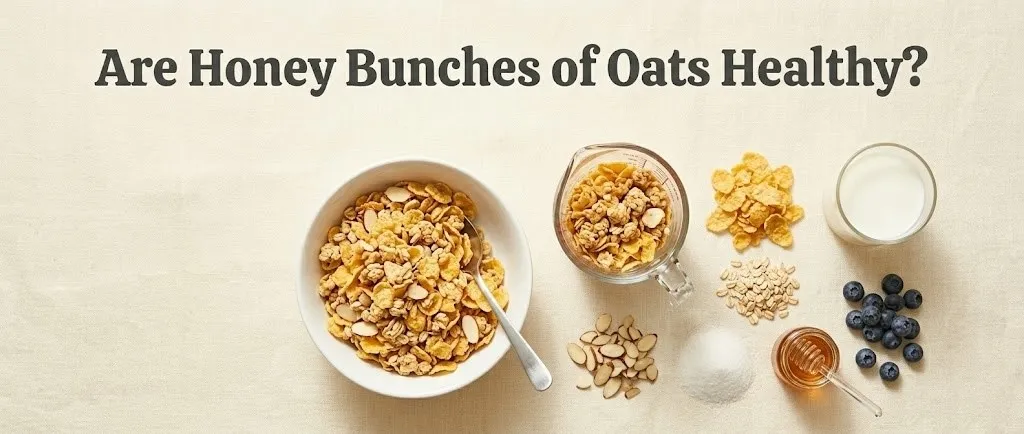
The fortification is the one redeeming feature. The cereal is sprayed with a vitamin and mineral slurry that includes folic acid, iron, niacin, and vitamin B12. For a population group with marginal nutrient intake, like menstruating women who need extra iron, this fortification is functionally useful. The nutrients are absorbed. The problem is that you can get these same nutrients from a plain fortified cereal like Cheerios without the 9 grams of added sugar.
The “honey” and “oats” in the name are a marketing masterstroke. Real honey is the third or fourth listed sweetener, after sugar and corn syrup. The oats are primarily refined oat flour, not the whole rolled oats that deliver the cholesterol-lowering beta-glucan soluble fiber. The name evokes a farmhouse breakfast. The ingredient list reveals a factory-produced, sweetened, refined-grain product.
Is Honey Bunches of Oats a Healthy Cereal
Honey Bunches of Oats is not classified as a healthy cereal by the nutritional criteria used by the FDA and the Academy of Nutrition and Dietetics, because it contains more than double the amount of added sugar and less than half the amount of dietary fiber that defines a genuinely healthy cereal. A healthy cereal has at least 5 grams of fiber and less than 5 grams of added sugar per serving.
The FDA’s updated 2026 Daily Value for added sugars is 50 grams for a standard 2,000-calorie diet. A single cup of Honey Bunches of Oats consumes 18 percent of that daily value. Most people pour closer to 1.5 to 2 cups into the bowl, pushing the sugar intake to 15 to 18 grams before the milk is even added. That is a dessert-level sugar load.
The whole grain content is legally sufficient to carry the “whole grain” marketing claim but nutritionally insufficient to provide the benefits of a truly whole-grain breakfast. The first ingredient is corn, which is a refined grain unless specifically labeled “whole corn.” The whole grain content comes from whole rolled oats and whole wheat, which appear further down the ingredient list behind sugar and corn syrup.
A healthy cereal builds its nutritional profile from the inherent properties of the whole grain, the nuts, and the seeds it contains, not from a spray-on vitamin fortification. The fortification is a safety net for micronutrient deficiencies. It does not make the cereal healthy. It makes it slightly less unhealthy.
Honey Bunches of Oats Nutrition Facts
According to the Post Consumer Brands nutrition label and USDA FoodData Central, a standard 1-cup serving (32 grams) of Honey Bunches of Oats with Almonds contains 130 calories, 2.5 grams of fat, 25 grams of carbohydrates, 2 grams of fiber, 9 grams of added sugar, and 2 grams of protein. The sodium content is 160 milligrams.
The calorie-to-satiety ratio is poor. A 130-calorie egg-and-vegetable scramble would provide 12 grams of protein and 2 grams of fiber and keep you full for three to four hours. The same 130 calories from Honey Bunches of Oats provides 2 grams of protein and 2 grams of fiber and keeps you full for roughly 90 minutes. The difference is the amino acid payload and the physical bulk of the food in the stomach.
The vitamin and mineral fortification is substantial. A serving provides 45 percent of the daily value for iron and 50 percent of the daily value for folic acid. These are both nutrients of public health concern, particularly for women of childbearing age. The iron is in the form of ferric orthophosphate, which has a lower bioavailability than heme iron from animal sources but is still absorbed, especially when consumed with the vitamin C in a glass of orange juice.
The fat content is low and comes primarily from the almonds and the added vegetable oil. The almonds are a genuine whole-food ingredient, but they appear in small quantities. The almond slices are visible in the cereal but do not contribute a meaningful amount of monounsaturated fat or protein per serving.
| Nutrient | Per 1 Cup (32g) | % Daily Value (2026) |
|---|---|---|
| Calories | 130 | N/A |
| Total Fat | 2.5 g | 3% |
| Carbohydrates | 25 g | 9% |
| Dietary Fiber | 2 g | 7% |
| Added Sugar | 9 g | 18% |
| Protein | 2 g | 4% |
| Iron | 8 mg | 45% |
| Folic Acid | 200 mcg | 50% |
Honey Bunches of Oats Sugar Content
A one-cup serving of Honey Bunches of Oats contains 9 grams of added sugar, which represents roughly 2.25 teaspoons of sugar dumped into the bowl before you add milk or any other toppings. This added sugar is derived from a blend of sugar, corn syrup, honey, and molasses listed in the ingredient deck.
The multiple sweetener strategy is a common food manufacturing technique. By using four different sweeteners, the total sugar load is distributed across the ingredient list so that no single sweetener appears as the first or second ingredient. If all the added sugar were listed as a single “sugar” entry, it would be the second ingredient by weight, behind corn. The scatter effect makes the label look more benign than it actually is.
The American Heart Association recommends that women consume no more than 25 grams of added sugar per day and men no more than 36 grams. A single cup of this cereal consumes 36 percent of the women’s limit and 25 percent of the men’s limit. If you pour a larger bowl, add a sliced banana, and drink a glass of orange juice, the breakfast sugar load easily exceeds 30 grams, blowing through the entire daily limit before 9 AM.
The sugar content is the primary reason this cereal fails the health test. The “honey” in the name implies a natural, wholesome sweetness. In reality, honey is a minor contributor to the total sugar blend. The bulk of the sweetness comes from refined sugar and corn syrup, which are chemically identical to the sweeteners in a soda or a candy bar.
Honey Bunches of Oats Ingredients
The ingredient list for Honey Bunches of Oats with Almonds reads: Corn, Whole Rolled Oats, Sugar, Almonds, Corn Syrup, Rice Flour, Canola Oil, Wheat Flour, Malted Barley Flour, Salt, Molasses, Honey, Barley Malt Extract, Cinnamon, BHT added to preserve freshness. Vitamins and Minerals: Reduced Iron, Niacinamide, Vitamin B6, Vitamin A Palmitate, Riboflavin, Thiamin Mononitrate, Folic Acid, Vitamin B12, Vitamin D3.
The first ingredient is corn, which is a refined grain unless specified as “whole corn.” The presence of corn as the dominant ingredient means the cereal is built on a foundation of simple starch that digests rapidly into glucose. The whole rolled oats are the second ingredient, which is the source of the “whole grain” content, but they are followed immediately by sugar and corn syrup.
The BHT (butylated hydroxytoluene) is a synthetic antioxidant added to the packaging to prevent the oils in the cereal from oxidizing and turning rancid. The FDA considers BHT to be Generally Recognized as Safe at current usage levels. Some consumer advocacy groups have raised concerns about its long-term safety profile based on animal studies, but the regulatory consensus in 2026 remains that the small amount in cereal packaging does not pose a measurable human health risk.
The vitamin and mineral blend at the bottom of the list is the “spray-on” fortification. These nutrients are not inherent to the grain ingredients. They are added to replace the natural micronutrients lost during grain processing and to provide a marketing claim of “fortified with vitamins and minerals.” The fortification is genuine and bioavailable, but it is a nutritional patch on a processed product, not a sign of an inherently nutritious food.
Honey Bunches of Oats Whole Grain
Honey Bunches of Oats carries the Whole Grain Stamp from the Oldways Whole Grains Council, certifying that it contains at least 8 grams of whole grains per serving, but the dominant grain in the cereal is refined corn, and the whole grain content is nutritionally diluted by the added sugar and the low absolute quantity. The stamp is factual but misleading.
The USDA Dietary Guidelines recommend that at least half of all grain intake be whole grains. A serving of Honey Bunches of Oats provides 8 grams of whole grains out of a total 25 grams of carbohydrates. The remaining 17 grams of carbohydrates come from refined corn, rice flour, and added sugar. The whole grain to refined grain ratio is roughly 1 to 2, which is the inverse of what the guidelines recommend.
The whole grain stamp is a marketing tool that has been criticized by some nutrition researchers for creating a health halo on products that do not deserve one. A cereal can qualify for the stamp with as little as 8 grams of whole grains per serving, even if the product is simultaneously high in added sugar and refined starch. The stamp signals “this has whole grains.” It does not signal “this is a healthy product.”
The specific whole grains in Honey Bunches of Oats are whole rolled oats and whole wheat flour. These are genuine whole grains. The oats contain beta-glucan, a soluble fiber that has been shown in numerous studies to lower LDL cholesterol. The problem is the dose. You would need to eat roughly four servings of this cereal to get a clinically meaningful dose of beta-glucan, at which point you would have consumed 36 grams of added sugar.
Key Takeaway: Honey Bunches of Oats is a refined-grain, high-sugar cereal with a thin whole-grain veneer and a spray-on vitamin fortification. The name and the packaging are healthier than the actual nutritional content of the bowl.
Honey Bunches of Oats vs Cheerios
Original Cheerios is a significantly healthier breakfast cereal than Honey Bunches of Oats, with 1 gram of added sugar compared to 9 grams, and 4 grams of fiber compared to 2 grams, while providing similar levels of iron and B-vitamin fortification. The two cereals are not in the same nutritional category.
Cheerios is made from whole grain oats as the first and dominant ingredient. The whole grain oat flour provides the beta-glucan soluble fiber that carries a specific FDA-approved health claim for reducing the risk of coronary heart disease. Honey Bunches of Oats does not qualify for this health claim because the whole oat content is too low and is diluted by refined corn and sugar.
The sugar comparison is the deciding factor. A bowl of Cheerios with milk and a handful of fresh blueberries provides a genuinely healthy breakfast with minimal added sugar. A bowl of Honey Bunches of Oats with milk and blueberries still carries the 9 grams of added sugar from the cereal itself. You are starting the day with a sugar deficit that is difficult to recover from.
The calorie comparison is similar, roughly 130 to 140 calories per cup for both cereals. The difference is the macronutrient quality. Cheerios delivers more fiber and more whole grain protein per calorie. Honey Bunches of Oats delivers more sugar per calorie. The choice between them is a choice between a whole-grain product with a health claim and a sweetened refined-grain product with a health halo.
| Cereal (1 cup) | Calories | Added Sugar (g) | Fiber (g) | Protein (g) |
|---|---|---|---|---|
| Honey Bunches of Oats | 130 | 9 | 2 | 2 |
| Original Cheerios | 140 | 1 | 4 | 3 |
| Raisin Bran | 190 | 9 | 7 | 5 |
| Frosted Flakes | 130 | 12 | 1 | 1 |
| Plain Rolled Oats | 150 | 0 | 4 | 5 |
Is Honey Bunches of Oats Good for Weight Loss
Honey Bunches of Oats is a poor choice for weight loss because its low protein and fiber content, combined with its high sugar and refined carbohydrate load, provide minimal satiety per calorie, setting the stage for mid-morning hunger and increased caloric intake at the next meal. The cereal works against the core mechanics of a calorie deficit.
Weight loss requires a sustained negative energy balance. The most common reason people fail to maintain a deficit is not willpower. It is the biological hunger that results from blood glucose crashes after high-glycemic-load meals. A bowl of Honey Bunches of Oats digests rapidly into glucose. The pancreas releases a surge of insulin. The insulin clears the glucose from the bloodstream rapidly, often overshooting, which triggers a reactive hypoglycemia and a powerful hunger signal roughly two hours after the meal.
The portion control argument is also against this cereal. The serving size is 1 cup, which weighs 32 grams. That is a small, non-filling volume in the bowl. Most people pour 1.5 to 2 cups without measuring. A 2-cup bowl is 260 calories and 18 grams of added sugar, which is not a weight-loss breakfast. It is a maintenance breakfast for someone who is not tracking their intake.
If you are attached to the cereal and want to include it in a weight-loss plan, the only viable strategy is strict portion control and protein supplementation. Measure exactly 1 cup. Pair it with a side of Greek yogurt or a hard-boiled egg to add 15 to 20 grams of protein. The protein slows the gastric emptying and blunts the glycemic response. The cereal is the treat. The yogurt is the satiety anchor.
Honey Bunches of Oats Energy Crash
The mid-morning energy crash after eating Honey Bunches of Oats is a biochemical event driven by the cereal’s high glycemic load. The refined corn, rice flour, and added sugar surge into the bloodstream as glucose, triggering an exaggerated insulin release from the pancreatic beta cells, which clears the glucose so rapidly that blood sugar drops below baseline, causing fatigue, brain fog, and hunger.
The sequence is predictable. Within 20 minutes of eating the cereal, blood glucose peaks. The brain registers a burst of alertness and energy. The pancreas senses the glucose spike and releases a proportional amount of insulin. The insulin binds to receptors on muscle and fat cells, signaling them to absorb the glucose. Within 90 minutes, the glucose is cleared. But the insulin is still circulating. The glucose continues to drop, often falling below the pre-meal baseline. The brain, which runs on glucose, detects the deficit and triggers a hunger response.
The term for this is reactive hypoglycemia. It is not a medical condition in most people. It is a normal physiological response to a high-glycemic-load meal. The body is not broken. It is responding exactly as designed to a rapid influx of simple carbohydrates. The solution is to reduce the glycemic load of the breakfast by choosing a higher-fiber, higher-protein option.
The addition of milk helps slightly. The protein and fat in the milk slow the gastric emptying rate. But the effect is modest compared to the glycemic punch of the cereal. A 2-gram fiber, 2-gram protein cereal with 9 grams of sugar is going to cause a crash in most people regardless of what liquid is poured over it.
Healthiest Breakfast Cereal 2026
The healthiest breakfast cereals of 2026 are those with 5 grams or more of fiber, 3 grams or more of protein, less than 5 grams of added sugar, and a first ingredient that is a whole grain, such as plain rolled oats, shredded wheat, bran flakes, and unsweetened muesli. These cereals provide the whole-grain nutrients without the sugar load.
Plain rolled oats is the gold standard. It is a single-ingredient, minimally processed whole grain that provides 4 grams of fiber, 5 grams of protein, and zero grams of added sugar per serving. The beta-glucan soluble fiber in oats has an FDA-approved health claim for reducing the risk of heart disease. A bowl of oatmeal with a tablespoon of ground flaxseed, a handful of walnuts, and a half-cup of blueberries is a breakfast that meets every nutritional guideline.
Shredded wheat is another clean option. It is whole wheat and nothing else. One cup of bite-size shredded wheat provides 6 grams of fiber, 5 grams of protein, and zero grams of added sugar. The texture takes some adjustment if you are used to sweetened cereals, but the nutritional profile is unimpeachable.
Bran flakes are a high-fiber option that often have a small amount of added sugar, usually 3 to 5 grams per serving. The bran is the fiber-rich outer layer of the wheat kernel. Bran flakes provide 7 to 8 grams of fiber per serving, which is roughly a third of the daily recommended intake.
How to Make Honey Bunches of Oats Healthier
To make a bowl of Honey Bunches of Oats healthier, you must reduce the portion size, add a protein anchor, and bulk the bowl with fresh fiber, effectively diluting the cereal’s sugar-to-fiber ratio with whole foods. The cereal is the flavoring agent. The add-ins are the nutrition.
The portion must be measured. Pour exactly 1 cup, not a free-poured bowl, which is usually 1.5 to 2 cups. The measured cup caps the sugar at 9 grams. The protein anchor is non-negotiable. Add a half-cup of plain Greek yogurt on the side or dolloped on top. The yogurt adds 12 to 15 grams of protein that will stabilize the blood glucose curve.
The fiber bulking comes from fresh berries. A half-cup of fresh raspberries adds 4 grams of fiber for 30 calories. A half-cup of sliced strawberries adds 2 grams of fiber. The berries sit on top of the cereal and provide the natural sweetness that allows you to reduce the cereal portion even further.
The milk choice matters. Use unsweetened soy milk or dairy milk instead of vanilla-flavored or sweetened alternatives. Vanilla almond milk can add another 7 grams of sugar to the bowl, pushing the total over 15 grams.
The Healthier Bowl Protocol:
- Measure 1 cup of Honey Bunches of Oats. Do not free-pour.
- Top with 1/2 cup fresh raspberries or sliced strawberries.
- Serve with 1/2 cup plain Greek yogurt on the side or dolloped in the bowl.
- Use unsweetened milk only. No flavored, sweetened creamers.
- Total: ~250 calories, 16g protein, 8g fiber, 9g added sugar.
Healthy Cereal Alternatives to Honey Bunches of Oats
If you want the convenience and crunch of a cereal without the sugar load of Honey Bunches of Oats, the best direct swaps are Original Cheerios, Barbara’s Original Puffins, Ezekiel 4:9 Sprouted Grain Cereal, and Three Wishes Unsweetened Grain-Free Cereal. Each of these provides a better fiber-to-sugar ratio.
Barbara’s Original Puffins provide 5 grams of fiber and only 5 grams of added sugar per serving. The oat and corn puff texture is similar to the crunchy clusters in Honey Bunches of Oats. The molasses-based sweetness is milder.
Ezekiel 4:9 Sprouted Grain Cereal is made from sprouted whole grains and legumes. It provides 6 grams of fiber and 8 grams of protein per serving with zero grams of added sugar. The sprouting process increases the bioavailability of the minerals in the grains.
Three Wishes Unsweetened Cereal is a grain-free, high-protein option made from chickpea, pea protein, and tapioca. A serving provides 8 grams of protein and 3 grams of fiber with zero grams of sugar. The cereal is crunchy and holds its texture in milk, making it a good transition cereal for someone accustomed to sweetened products.
Key Takeaway: The healthiest cereals are built on whole grains, not just containing them, and they deliver fiber and protein without using a spray-on vitamin blend to compensate for a lack of inherent nutrition.
Frequently Asked Questions About Honey Bunches of Oats
How much sugar is actually in Honey Bunches of Oats?
A one-cup serving of Honey Bunches of Oats contains 9 grams of added sugar, which equals roughly 2.25 teaspoons.
A more realistic poured bowl of 1.5 cups contains 13.5 grams of added sugar.
The sugar comes from a blend of sugar, corn syrup, honey, and molasses listed in the ingredients.
Is Honey Bunches of Oats good for high cholesterol?
Honey Bunches of Oats is not a recommended food for managing high cholesterol because the whole oat content is too low to provide a clinically meaningful dose of the cholesterol-lowering soluble fiber beta-glucan.
Plain oatmeal or Cheerios are better choices because the whole grain oat content is higher and the sugar content is lower.
The added sugar in Honey Bunches of Oats is an independent risk factor for the metabolic dysfunction that often accompanies high cholesterol.
Can I give Honey Bunches of Oats to my toddler?
You can give Honey Bunches of Oats to a toddler occasionally as a treat, but it should not be a daily breakfast cereal.
The added sugar content teaches a palate preference for sweet foods at a critical developmental stage.
The American Academy of Pediatrics recommends limiting added sugar for children under 2 to zero grams, and the cereal exceeds this limit.
Why do I feel hungry so quickly after eating Honey Bunches of Oats?
You feel hungry quickly because the refined grains and added sugar spike your blood glucose, triggering an insulin release that clears the glucose too rapidly, causing a reactive blood sugar drop.
This reactive hypoglycemia signals the brain to seek food roughly 90 to 120 minutes after the meal.
A higher-protein, higher-fiber breakfast prevents this crash.
Is the whole grain stamp on Honey Bunches of Oats meaningful?
The whole grain stamp certifies that the cereal contains at least 8 grams of whole grains per serving, which is true.
However, the dominant ingredient is refined corn, and the 9 grams of added sugar per serving dilutes the health benefit of the whole grains.
The stamp is a factual statement that is easily misinterpreted as a health endorsement.
Honey Bunches of Oats is a cereal that tastes good and is marketed brilliantly, but its nutritional profile is a refined-grain, high-sugar product with a vitamin coating. It is not a health food, and it should not be a daily breakfast staple.
If you love the taste and the crunch, treat it like what it is: a sweetened cereal that belongs in the same category as Frosted Flakes, not the same category as oatmeal. Measure a single cup, add Greek yogurt and a pile of berries, and enjoy it as an occasional breakfast rather than a daily ritual.
If you want to upgrade your breakfast to something that genuinely meets the 2026 nutritional guidelines, pour a bowl of plain rolled oats, sprinkle a teaspoon of honey on top, add fresh fruit, and call it done. The name on the bag will not be as clever, but your blood glucose and your hunger signals will thank you.