
Healthy life family medicine is the practice of using food, movement, sleep, and preventive care together to protect every household member’s health across their entire lifespan. It’s not just about treating illness when it arrives. It’s about building the daily habits that keep chronic disease from arriving in the first place.
According to the USDA Dietary Guidelines for Americans 2020 to 2025, poor dietary patterns are directly linked to four of the top ten causes of death in the United States, including cardiovascular disease, type 2 diabetes, stroke, and certain cancers. The connection between what your family eats and what health conditions they face decades from now is not theoretical. It’s well-documented and specific.
This guide covers exactly what healthy life family medicine means at the meal level. You’ll find nutritional benchmarks by age, practical meal planning strategies, and guidance on the nutrients most families routinely fall short on. Every section is grounded in named research and dietary guidelines, not vague wellness language.
Healthy Life Family Medicine: What It Actually Means
Healthy life family medicine is an approach to primary care that treats food, physical activity, sleep, and stress management as medical interventions alongside prescriptions and procedures.
The term emerged from the broader field of lifestyle medicine, which the American Board of Lifestyle Medicine defines as the use of evidence-based therapeutic lifestyle interventions to treat and prevent chronic conditions. Family medicine practitioners who adopt this framework go beyond diagnosing and prescribing. They assess what patients eat, how often they move, and how those behaviors connect to the lab values showing up in blood panels.
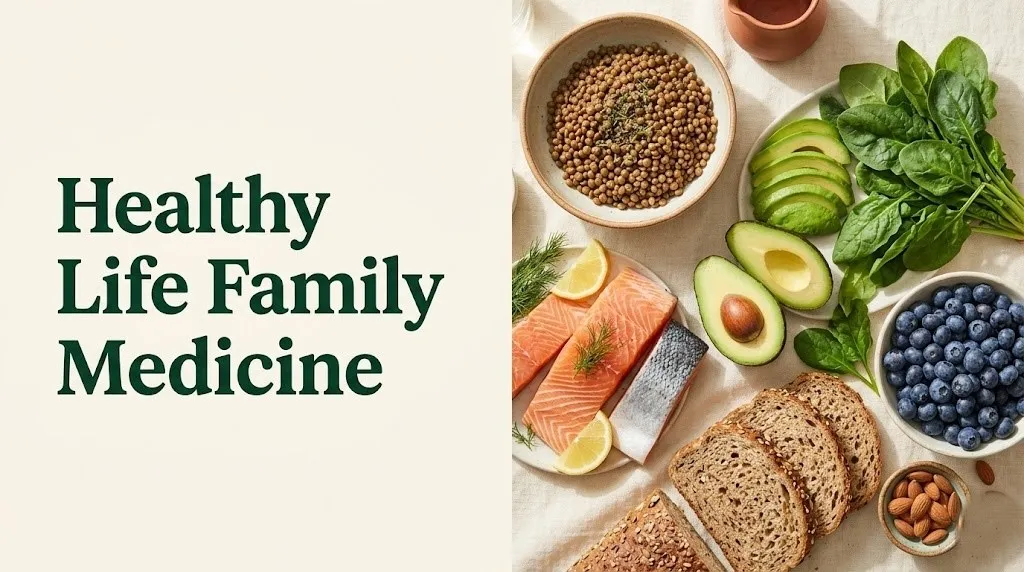
In practice, this means your family medicine provider might discuss your plate at the same appointment where they order a cholesterol panel. It means a pediatrician trained in this model won’t just chart a child’s weight. They’ll ask what a typical school lunch looks like.
The distinction matters because treatment and prevention require different conversations. A prescription manages a condition that already exists. A food pattern built on vegetables, fiber, lean protein, and limited ultra-processed food can often delay or prevent that condition from developing at all.
| Approach | Focus | Primary Tool | Timing |
|---|---|---|---|
| Conventional family medicine | Diagnosis and treatment | Medications and procedures | After symptoms appear |
| Healthy life family medicine | Prevention and management | Lifestyle and food patterns | Before and alongside symptoms |
| Nutrition counseling alone | Dietary change | Meal guidance | Targeted to specific goals |
People with existing conditions like type 2 diabetes or hypertension benefit from both approaches together. The food work does not replace medical treatment. It works with it.
What Family Medicine Doctors Address in Nutrition and Diet
Family medicine doctors address nutrition as part of preventive care, chronic disease management, and pediatric growth monitoring.
Most family medicine visits include some form of dietary screening. This might be a brief set of questions about fruit and vegetable intake, processed food frequency, or sugar-sweetened beverage consumption. In practices that have integrated lifestyle medicine, the assessment goes deeper. Providers may use validated tools like the Mediterranean Diet Adherence Screener (MEDAS) or the DASH Diet Assessment to identify where a patient’s eating pattern is exposing them to risk.
Nutrition comes up most directly in these family medicine contexts:
- Weight management and the metabolic consequences of excess body fat
- Blood glucose regulation for patients at risk of or managing type 2 diabetes
- Cardiovascular risk reduction in patients with elevated LDL cholesterol or triglycerides
- Blood pressure management in patients with hypertension or borderline high readings
- Pediatric growth and development during well-child visits
- Iron-deficiency anemia, particularly in women of reproductive age and young children
- Bone health monitoring in older adults at risk of osteopenia or osteoporosis
- Prenatal nutrition during pregnancy care
What a family medicine provider cannot typically do in a standard appointment is provide a detailed, personalized meal plan. That level of individualized dietary guidance is usually the work of a registered dietitian nutritionist (RDN). Many family medicine practices now include RDNs as part of an integrated care team, and a referral from your family medicine provider to an RDN is a standard and well-covered step in managing many chronic conditions.
Preventive Care and Healthy Eating for Families
Preventive care and food are most powerful when they work together before a health problem becomes a diagnosis.
The USDA Dietary Guidelines for Americans recommend that adults build their eating patterns around vegetables, fruits, whole grains, lean proteins, and low-fat dairy or dairy alternatives. Those recommendations apply to children over age 2 as well, adjusted for caloric needs by age and activity level. The logic behind preventive nutrition is straightforward: the chronic diseases most likely to shorten a person’s life are overwhelmingly driven by modifiable risk factors, and diet sits at the center of nearly all of them.
Think of preventive eating the way you’d think about maintaining a car before it breaks down. A mechanic can fix a seized engine, but consistent oil changes, tire rotations, and fuel quality keep the engine running another 100,000 miles. Preventive food habits are the oil changes your body runs on.
Practical preventive nutrition for families includes:
- Prioritizing whole food sources over ultra-processed packaged alternatives
- Keeping added sugar intake below 10 percent of total daily calories, as recommended by the USDA Dietary Guidelines
- Eating at least 1.5 to 2 cups of fruit and 2 to 3 cups of vegetables per day for adults
- Choosing whole grains (oats, brown rice, quinoa, whole wheat bread) over refined grain products for at least half of daily grain intake
- Limiting saturated fat to less than 10 percent of daily calories
- Replacing processed snack foods with nuts, seeds, whole fruit, or raw vegetables where practical
The American Heart Association notes that populations with the highest adherence to plant-forward dietary patterns have measurably lower rates of cardiovascular disease, independent of other lifestyle factors.
Key Takeaway: Healthy life family medicine treats food as medicine before illness appears, and the most protective dietary patterns are built around vegetables, whole grains, lean protein, and limited ultra-processed food.
Healthy Eating by Age: What Every Family Member Needs
Nutritional needs shift at every life stage, and a meal plan that serves a 45-year-old well won’t automatically meet a toddler’s or a 70-year-old’s needs.
The USDA Dietary Guidelines for Americans 2020 to 2025 organizes nutritional recommendations by age group precisely because caloric needs, micronutrient priorities, and the consequences of dietary shortfalls differ across the lifespan. A family eating together from the same table can share the same core food patterns. What changes is portion size, specific nutrient targets, and which deficiencies to watch for.
| Age Group | Daily Calorie Range (General) | Priority Nutrients | Key Dietary Focus |
|---|---|---|---|
| Toddlers (1 to 3 years) | 1,000 to 1,400 kcal | Iron, calcium, vitamin D, zinc | Variety, texture introduction, whole foods |
| Children (4 to 8 years) | 1,200 to 1,600 kcal | Calcium, vitamin D, fiber | Consistent meals, fruit and vegetable variety |
| Preteens (9 to 13 years) | 1,400 to 2,200 kcal | Calcium, iron (girls), vitamin D | Bone-building foods, iron-rich sources for girls |
| Teens (14 to 18 years) | 1,800 to 3,200 kcal | Iron, calcium, protein, zinc | Supporting rapid growth, managing discretionary food intake |
| Adults (19 to 59 years) | 1,600 to 3,000 kcal | Fiber, omega-3s, potassium | Chronic disease prevention, balanced macros |
| Adults 60 and older | 1,600 to 2,600 kcal | Protein, vitamin D, calcium, B12 | Muscle maintenance, bone density, nerve function |
Caloric ranges vary based on sex, body size, and physical activity level. These figures are drawn from the USDA Dietary Guidelines for Americans 2020 to 2025 and represent typical ranges, not individual prescriptions.
People with chronic conditions, specific food allergies, or unusual energy demands should have their needs assessed by both a family medicine provider and a registered dietitian nutritionist.
Heart-Healthy Eating for the Whole Family
Heart-healthy eating for families means choosing foods that support healthy blood lipid levels, reduce arterial inflammation, and maintain a healthy blood pressure over time.
The American Heart Association (AHA) recommends a dietary pattern high in vegetables, fruits, whole grains, legumes, nuts, and fish, while limiting red and processed meats, sodium, saturated fats, trans fats, and added sugars. This pattern aligns closely with what researchers classify as the Mediterranean diet, which decades of cardiovascular research consistently associate with reduced risk of myocardial infarction and stroke.
For families, translating these principles into practical choices looks like this:
- Serve fatty fish such as salmon (Salmo salar) or mackerel at least twice per week for their docosahexaenoic acid (DHA) and eicosapentaenoic acid (EPA) content
- Replace butter in cooking with extra-virgin olive oil (Olea europaea), which is high in monounsaturated oleic acid
- Choose legumes such as lentils (Lens culinaris) or black beans (Phaseolus vulgaris) as a protein base two to three times weekly
- Use almonds (Prunus amygdalus) or walnuts as snacks rather than processed crackers or chips
- Read sodium content on packaged foods and keep daily sodium below 2,300 mg, the AHA’s recommended upper limit for the general population
The AHA further notes that even modest dietary improvements, like replacing one serving of processed red meat per day with a plant-based protein source, are associated with measurable reductions in cardiovascular risk biomarkers.
People on blood-thinning medications should discuss significant changes to their leafy green vegetable intake with their prescribing provider, as vitamin K levels can interact with anticoagulant dosing.
Managing Blood Pressure Through Diet in Family Medicine
Dietary change is one of the most evidence-backed tools for managing high blood pressure without medication or alongside it.
The DASH diet (Dietary Approaches to Stop Hypertension) was specifically developed and clinically tested to reduce blood pressure. Research published in the New England Journal of Medicine found that participants who followed the DASH eating pattern reduced their systolic blood pressure by an average of 11 mmHg, a reduction comparable to the effect of some antihypertensive medications in people with stage 1 hypertension.
The DASH diet is built around:
- Fruits and vegetables: 4 to 5 servings per day of each
- Whole grains: 6 to 8 servings per day
- Low-fat dairy: 2 to 3 servings per day for calcium and potassium
- Lean protein: Poultry, fish, and legumes preferred over red meat
- Nuts and seeds: 4 to 5 servings per week
- Sodium: Limited to 1,500 to 2,300 mg per day depending on individual guidance
- Added sugar and saturated fat: Kept minimal
Potassium is particularly important here. It helps the kidneys clear excess sodium and relaxes blood vessel walls. Sweet potatoes (Ipomoea batatas), white beans, spinach (Spinacia oleracea), and bananas are among the highest-potassium foods and integrate easily into family meals.
People already taking antihypertensive medication who want to make significant dietary changes should do so in coordination with their family medicine provider, since blood pressure may drop enough to require medication adjustment.
Managing Blood Sugar and Type 2 Diabetes Risk With Food
Food choices directly shape how the body manages blood glucose, and the right dietary pattern can meaningfully reduce the risk of developing type 2 diabetes.
The Academy of Nutrition and Dietetics position on diabetes prevention cites consistent evidence that a dietary pattern high in fiber, low in refined carbohydrates, and built around low-glycemic-index foods reduces both fasting blood glucose and hemoglobin A1c (HbA1c), the standard marker for long-term blood sugar control. The glycemic index (GI) ranks foods by how quickly they raise blood glucose after eating. Low-GI foods digest more slowly and produce a gentler, more sustained blood glucose response.
Low-GI foods that work well in family meals include:
- Oats (Avena sativa): GI of approximately 55; high in beta-glucan soluble fiber, which slows glucose absorption
- Lentils (Lens culinaris): GI of approximately 32; high protein and fiber
- Sweet potato (Ipomoea batatas): GI of approximately 44 when baked (lower than white potato)
- Broccoli (Brassica oleracea var. italica): Non-starchy; minimal glucose impact
- Blueberries (Vaccinium corymbosum): GI of approximately 40; high in anthocyanin antioxidants
- Whole grain bread: GI of approximately 50 to 65 depending on the specific product
The Centers for Disease Control and Prevention (CDC) reports that approximately 38 percent of American adults have prediabetes, and most don’t know it. That makes blood sugar-aware family eating a genuinely widespread public health priority, not just a concern for households with a diagnosed diabetic.
People with diagnosed type 2 diabetes should work with both their family medicine provider and a registered dietitian nutritionist when restructuring their eating pattern, as dietary changes can affect medication requirements.
Key Takeaway: The DASH diet reduces blood pressure by an average of 11 mmHg in clinical trials, and low-glycemic-index foods built around oats, lentils, and non-starchy vegetables are among the best dietary tools for blood sugar management.
Family Meal Planning That Supports Long-Term Health
A meal plan that supports family health doesn’t require perfection. It requires consistency across the majority of meals.
Nutrition researchers often use the 80/20 framework as a practical guide: if 80 percent of your family’s meals over a given week come from whole, minimally processed foods, the remaining 20 percent of choices have minimal impact on long-term health outcomes. This framing is useful because it removes the pressure of dietary rigidity while still creating meaningful behavioral structure.
A week of family meals built on healthy life family medicine principles might look like this:
| Day | Breakfast | Lunch | Dinner |
|---|---|---|---|
| Monday | Oatmeal with blueberries and walnuts | Lentil and vegetable soup | Baked salmon with roasted broccoli and brown rice |
| Tuesday | Greek yogurt, banana, flaxseed | Whole grain wrap with chicken and spinach | Black bean tacos with avocado and salsa |
| Wednesday | Scrambled eggs with spinach | Leftover black bean tacos | Chicken stir-fry with broccoli and brown rice |
| Thursday | Whole grain toast with almond butter | Vegetable and chickpea salad | Baked sweet potato with lentil curry |
| Friday | Smoothie: spinach, banana, Greek yogurt | Tuna on whole grain bread | Grilled fish with roasted vegetables |
Batch cooking at the start of the week, particularly grains, legumes, and roasted vegetables, reduces the time pressure that causes most families to reach for processed convenience foods on busy evenings.
Planning meals around seasonal produce also improves both nutritional quality and cost-effectiveness. According to the Academy of Nutrition and Dietetics, frozen vegetables and fruits are nutritionally comparable to fresh options and may actually retain more heat-sensitive vitamins like ascorbic acid (vitamin C) because they’re frozen immediately after harvest.
Best Foods for Children’s Growth and Development
Children need a specific set of nutrients in adequate amounts to support rapid physical growth, brain development, and immune function.
The American Academy of Pediatrics (AAP) identifies iron, calcium, vitamin D, zinc, and omega-3 fatty acids as the nutrients most critical to children’s development and most commonly inadequate in typical American children’s diets. Iron, for example, supports both hemoglobin synthesis and cognitive development. The AAP recommends that children aged 1 to 3 consume 7 mg of iron per day, and children 4 to 8 consume 10 mg per day.
Best food sources of these key nutrients for children:
- Iron: Lean beef, fortified breakfast cereals, lentils, spinach, tofu, fortified infant formula
- Calcium: Dairy milk, fortified plant milk (soy or almond), Greek yogurt, broccoli, white beans
- Vitamin D (cholecalciferol): Fatty fish, fortified milk, eggs, fortified orange juice
- Zinc: Beef, pumpkin seeds, chickpeas, cashews, whole grain bread
- DHA (docosahexaenoic acid): Salmon, sardines, algae-based DHA supplements for children who don’t eat fish
Calcium and vitamin D work as a pair. Vitamin D is required for calcium absorption in the gut. Children who consume adequate calcium but have low vitamin D status may still experience inadequate bone mineralization. The NIH recommends 600 IU of vitamin D per day for children aged 1 and older.
Children with dairy allergies or lactose intolerance can meet calcium and vitamin D needs through fortified plant milks, calcium-set tofu, and canned fish with bones. A registered dietitian nutritionist can confirm that specific substitutions are providing equivalent nutrition for the child’s age and growth stage.
Nutrition for Teenagers in Family Health Care
Adolescence is the period of most rapid physical growth outside of infancy, and the dietary choices teenagers make during these years have long-term consequences.
Peak bone mass is largely established by the late teens and early twenties. According to the National Institutes of Health, approximately 90 percent of adult bone mass is built by age 18 in girls and age 20 in boys. Calcium and vitamin D intake during adolescence directly determines how much bone density a person enters adulthood with, and that density is protective against osteoporosis decades later.
Key nutritional priorities for teenagers:
- Calcium: 1,300 mg per day for ages 9 to 18 (the highest requirement of any life stage). Dairy, fortified plant milks, canned sardines, white beans, and calcium-set tofu are the most practical sources.
- Iron: Girls begin menstruating during this period and need 15 mg of iron per day from ages 14 to 18. Boys in the same age range need 11 mg per day. Red meat, fortified cereals, lentils, and pumpkin seeds are reliable sources.
- Protein: Supporting muscle development requires 46 to 52 g of protein per day depending on sex and activity level, according to the USDA Dietary Guidelines.
- Omega-3 fatty acids (DHA and EPA): Particularly important for brain development. Teenage boys often eat enough total calories but fall short on nutrient quality.
Disordered eating patterns, food restriction, and skipping meals are more common in adolescence than at any other life stage. If a teenager is regularly avoiding food groups or expressing anxiety around eating, a family medicine provider can facilitate an appropriate referral without making food a point of conflict at home.
Key Takeaway: Adolescence is the window where bone density is built for life, making calcium at 1,300 mg per day and adequate iron intake the most medically significant nutritional priorities for teenagers.
Senior Nutrition and What Changes After 60
The nutritional needs of adults over 60 shift in ways that aren’t always intuitive, and the changes that matter most involve muscle preservation, bone density, and vitamin absorption.
Protein requirements actually increase with age, not decrease. The European Society for Clinical Nutrition and Metabolism recommends that older adults consume 1.0 to 1.2 g of protein per kilogram of body weight per day to preserve muscle mass and function, compared to the standard 0.8 g/kg recommendation for younger adults. Sarcopenia, the age-related loss of muscle mass and strength, is directly linked to reduced protein intake and insufficient physical activity. Eggs, Greek yogurt, fish, legumes, and tofu are among the most accessible high-protein foods for older adults who may have smaller appetites.
Vitamin B12 absorption declines with age because of reduced stomach acid production, which is required to separate B12 from food proteins. The NIH notes that 6 percent of adults over 60 and 20 percent of adults over 80 are clinically deficient in vitamin B12. Deficiency can cause fatigue, nerve damage, and cognitive decline. B12 in its free, crystalline form, found in fortified foods and supplements, does not require stomach acid for absorption and is the preferred source for older adults.
Older adults managing multiple medications should discuss potential nutrient interactions with their family medicine provider. Several commonly prescribed medications, including metformin, proton pump inhibitors, and diuretics, deplete specific micronutrients including B12, magnesium, and potassium.
| Nutrient | Why It Changes After 60 | Best Food Sources |
|---|---|---|
| Protein | Muscle preservation requires higher intake | Eggs, fish, Greek yogurt, legumes |
| Vitamin B12 | Absorption declines due to lower stomach acid | Fortified foods, supplements |
| Calcium | Bone loss accelerates post-menopause | Dairy, fortified plant milk, sardines |
| Vitamin D | Skin synthesis declines; absorption drops | Fatty fish, fortified milk, eggs |
| Potassium | Blood pressure management; often depleted by diuretics | Bananas, spinach, white beans |
Iron, Calcium, and Vitamin D: The Nutrients Families Miss Most
Iron, calcium, and vitamin D (cholecalciferol) are consistently identified as the three micronutrients most likely to be inadequate across every family member, from toddlers to grandparents.
The USDA Dietary Guidelines for Americans flag these three as “nutrients of public health concern” in the U.S. population specifically because their underabundance is widespread and the health consequences of long-term shortfalls are well-documented and serious.
Iron deficiency is the most common nutritional deficiency worldwide, according to the World Health Organization (WHO). It impairs oxygen transport through hemoglobin, reduces cognitive performance, and weakens immune responses. Groups at highest risk include toddlers, adolescent girls, women of reproductive age, and pregnant women. Non-heme iron (from plant sources) absorbs less efficiently than heme iron (from meat). Consuming a source of ascorbic acid (vitamin C) alongside non-heme iron foods increases absorption substantially. Cooking lentils with a squeeze of lemon or serving iron-fortified cereal with orange juice are practical applications of this principle.
Calcium is the primary mineral in bone tissue and also plays a role in muscle contraction and nerve signaling. Dairy remains the most concentrated and bioavailable dietary source, but calcium-set tofu, fortified soy milk, canned sardines with bones, almonds, and white beans are effective alternatives for families who avoid dairy.
Vitamin D (cholecalciferol) is synthesized in the skin through ultraviolet B (UVB) light exposure, but indoor lifestyles, sunscreen use, northern latitudes, and darker skin pigmentation all reduce synthesis. The NIH reports that approximately 42 percent of U.S. adults have insufficient vitamin D serum levels. Dietary sources alone rarely meet the requirement without supplementation for people with limited sun exposure.
Fiber and Digestive Health for Every Age Group
Dietary fiber is one of the most consistently under-consumed nutrients in modern family diets, and its effects extend far beyond digestion.
The USDA Dietary Guidelines recommend 25 g of fiber per day for adult women and 38 g per day for adult men, yet the average American adult consumes only approximately 15 g per day. Fiber works through several distinct mechanisms: soluble fiber forms a gel in the digestive tract that slows glucose absorption and helps lower LDL cholesterol, while insoluble fiber adds bulk to stool and supports regular bowel transit. Think of dietary fiber like a slow-release regulator for both your blood sugar and your digestive system. The more consistently you include it, the more steadily both functions operate.
Food sources of dietary fiber, by amount per standard serving:
| Food | Serving Size | Fiber Content |
|---|---|---|
| Cooked lentils (Lens culinaris) | 1 cup (198g) | 15.6 g |
| Cooked black beans (Phaseolus vulgaris) | 1 cup (172g) | 15.0 g |
| Avocado | 1 medium (150g) | 10.0 g |
| Cooked oats (Avena sativa) | 1 cup (234g) | 4.0 g |
| Broccoli (Brassica oleracea var. italica) | 1 cup cooked (156g) | 5.1 g |
| Whole grain bread | 1 slice (28g) | 1.9 to 3.0 g |
| Almonds (Prunus amygdalus) | 1 oz (28g) | 3.5 g |
Children need fiber too. A simple guideline used by many pediatric dietitians is “age plus 5” in grams per day for children aged 2 to 10. A 6-year-old needs roughly 11 g per day, achievable through fruit, vegetables, and whole grain foods.
People with irritable bowel syndrome (IBS) may need to introduce fiber increases gradually and distinguish between soluble and insoluble fiber sources, as rapid increases in insoluble fiber can worsen symptoms in sensitive individuals.
Key Takeaway: Iron, calcium, and vitamin D are the three nutrients most consistently inadequate across all family age groups, and fiber intake in most households is less than half of what the USDA recommends.
Anti-Inflammatory Eating Patterns for Family Health
Chronic low-grade inflammation is a biological process that connects poor dietary patterns to a wide range of conditions including cardiovascular disease, type 2 diabetes, and certain autoimmune conditions.
Research published in the American Journal of Clinical Nutrition has found that dietary patterns high in refined carbohydrates, trans fats, and processed red meat are associated with elevated blood levels of C-reactive protein (CRP), interleukin-6 (IL-6), and other inflammatory markers. Conversely, diets high in polyphenols, omega-3 fatty acids, fiber, and antioxidants are associated with measurably lower inflammatory marker concentrations.
Foods associated with lower inflammatory biomarkers in research:
- Fatty fish (salmon, sardines, mackerel): High in DHA and EPA omega-3 fatty acids
- Blueberries (Vaccinium corymbosum): High in anthocyanins, a class of flavonoid polyphenols
- Extra-virgin olive oil (Olea europaea): Contains oleocanthal, which has been shown to inhibit inflammatory enzymes in a similar pathway to ibuprofen
- Broccoli (Brassica oleracea var. italica): Contains sulforaphane, a compound with documented anti-inflammatory properties
- Turmeric: Contains curcumin, a polyphenol with anti-inflammatory properties, though bioavailability increases significantly when consumed with black pepper
- Leafy greens (spinach, kale, Swiss chard): High in magnesium, folate, and antioxidants associated with reduced oxidative stress
- Walnuts: High in alpha-linolenic acid (ALA), the plant-based precursor to DHA and EPA
No single food “reduces inflammation” in isolation. The pattern across your eating week is what determines your inflammatory burden. Anti-inflammatory eating is not a named diet brand. It’s a description of what a Mediterranean-style eating pattern produces in the body.
People managing autoimmune conditions should work with both their family medicine provider and a registered dietitian nutritionist when making significant dietary changes, as some high-polyphenol foods can interact with medications used in autoimmune treatment.
Food Allergies, Intolerances, and Dietary Restrictions in Family Medicine
Food allergies and intolerances affect a meaningful proportion of every family, and family medicine is often the first point of contact when symptoms appear.
The American Academy of Allergy, Asthma and Immunology estimates that food allergies affect approximately 32 million Americans, including roughly 5.6 million children under age 18. The nine major food allergens currently designated under U.S. federal law are milk, eggs, fish, shellfish, tree nuts, peanuts, wheat, soybeans, and sesame. A true food allergy involves an immune system response (IgE-mediated) and can range from hives to anaphylaxis. A food intolerance, such as lactose intolerance caused by insufficient lactase enzyme production, does not involve the immune system and is rarely life-threatening.
Common dietary patterns the family medicine setting addresses:
| Condition | Dietary Restriction Required | Key Nutrient Risk | Practical Alternative |
|---|---|---|---|
| Celiac disease | Strict gluten elimination | Iron, B vitamins, fiber | Certified gluten-free oats, quinoa, rice |
| Lactose intolerance | Limit or eliminate dairy | Calcium, vitamin D | Fortified soy milk, calcium-set tofu |
| Peanut allergy | Avoid peanuts and peanut products | Protein, healthy fats | Tree nut butters (if tolerated), seeds |
| Egg allergy | Avoid eggs | Protein, B12, vitamin D | Tofu, fortified foods, algae-based supplements |
| Fish allergy | Avoid fish | DHA, EPA, vitamin D | Algae-based omega-3 supplements |
| Vegetarian | No meat | Iron, B12, zinc, DHA | Legumes, fortified foods, algae DHA |
If a family member experiences recurrent gastrointestinal symptoms, skin reactions, or unexplained fatigue after eating, a family medicine provider can order appropriate allergy testing, run a celiac antibody panel, or provide a referral to a gastroenterologist or allergist based on findings.
Self-eliminating major food groups without a confirmed diagnosis can introduce nutritional deficiencies, particularly in children. Diagnostic testing through a qualified provider is the appropriate first step.
When Nutrition Counseling From a Family Medicine Provider Makes Sense
Bringing nutrition into a family medicine appointment is appropriate, practical, and increasingly covered by insurance in the United States for specific clinical indications.
Medicare and many private insurers in the U.S. cover Medical Nutrition Therapy (MNT) delivered by a registered dietitian nutritionist when ordered by a physician for type 2 diabetes, pre-diabetes, chronic kidney disease, or following a kidney transplant. The Academy of Nutrition and Dietetics advocates for expanded insurance coverage of MNT across additional chronic conditions, and coverage is expanding in many states.
Situations where raising nutrition directly with your family medicine provider is warranted:
- A recent diagnosis of type 2 diabetes, prediabetes, hypertension, or high cholesterol and a desire to use dietary change as part of management
- A child with growth concerns or suspected nutritional deficiency identified at a well-child visit
- Unexplained fatigue, hair loss, or brittle nails that may indicate iron, zinc, or B12 deficiency
- Planning a pregnancy and wanting to optimize pre-conception nutrition
- A family member over 65 experiencing unintentional weight loss or reduced appetite
- A teenager showing signs of disordered eating or extreme dietary restriction
- Managing a newly diagnosed food allergy or celiac disease and needing a referral for dietary guidance
Your family medicine provider is the right person to order a micronutrient panel, identify whether a specific nutrient is low, determine if supplementation is warranted, and provide a referral to a registered dietitian nutritionist for individualized meal planning. The dietary changes that have the clearest evidence behind them work best when they’re coordinated with your overall medical care, not implemented around it.
Key Takeaway: Insurance-covered medical nutrition therapy is available through family medicine referral for type 2 diabetes, prediabetes, and chronic kidney disease, making a direct conversation with your family medicine provider the most practical first step in getting personalized dietary guidance.
Frequently Asked Questions About Healthy Life Family Medicine
What does healthy life family medicine focus on beyond treating illness?
Healthy life family medicine focuses on using food, physical activity, sleep, and preventive care to reduce the risk of chronic disease before it develops.
It integrates lifestyle factors as clinical tools alongside traditional medical treatment.
Practitioners who follow this model assess diet, activity, and stress as part of routine care, not just as afterthoughts.
How much should my family change our diet to prevent chronic disease?
Research consistently shows that even moderate, sustained dietary improvements produce measurable reductions in chronic disease risk.
According to the American Heart Association, replacing one daily serving of processed red meat with a plant-based protein source is associated with lower cardiovascular biomarkers over time.
You don’t need a complete dietary overhaul. Building toward the USDA Dietary Guidelines over several months is a clinically realistic and evidence-backed approach.
What are the most important nutrients children need that most families miss?
Iron, calcium, and vitamin D (cholecalciferol) are the three nutrients most consistently inadequate in American children’s diets, according to the USDA Dietary Guidelines for Americans.
Iron supports cognitive development and oxygen transport; calcium and vitamin D are required together for bone mineralization.
A family medicine well-child visit can identify whether a child is falling short through dietary screening and targeted blood panels.
Can a family medicine doctor help with a specific diet like DASH or Mediterranean?
A family medicine provider can recommend either the DASH diet or the Mediterranean dietary pattern as part of managing hypertension, high cholesterol, or cardiovascular risk.
They can also provide a referral to a registered dietitian nutritionist for detailed, individualized meal planning under either framework.
For patients with covered clinical indications, Medical Nutrition Therapy delivered by an RDN is reimbursable through Medicare and many private insurers.
How do nutritional needs change as family members get older?
Caloric needs generally decrease with age, but several specific micronutrient requirements increase, particularly protein, vitamin D, calcium, and vitamin B12.
Adults over 60 require more protein per kilogram of body weight than younger adults to preserve muscle mass, and vitamin B12 absorption declines due to reduced stomach acid production.
The USDA Dietary Guidelines for Americans 2020 to 2025 provides age-specific nutritional targets for every life stage from infancy through older adulthood.
The single most actionable thing a family can do with healthy life family medicine principles is to build more of their weekly meals around whole, minimally processed foods, specifically vegetables, legumes, whole grains, and lean protein sources, while making those changes gradually enough to stick.
Nutrition isn’t a switch you flip. It’s a direction you move in consistently. The households that see the clearest long-term health outcomes aren’t eating perfectly. They’re eating better than they were, more consistently than they think they need to, and they’ve made the right foods easy to reach for first.
Start with one meal per day built around the principles in this guide. Add another when the first one feels routine.