Propel is a moderately healthy flavored water product that provides electrolytes without sugar or calories, making it a reasonable hydration choice for active people and a clear upgrade over soda. It is not a health tonic, and the artificial sweeteners and preservatives it contains disqualify it from being a genuinely healthy daily beverage for everyone.
The question of whether Propel is healthy matters because electrolyte waters have exploded into a multi-billion-dollar category, with brands positioning themselves as functional wellness products rather than what they actually are: flavored water with added vitamins and minerals. The Centers for Disease Control and Prevention (CDC) reports that the average American consumes roughly 145 calories per day from sugar-sweetened beverages, and products like Propel that offer flavor without sugar can play a real role in reducing that number. The trade-off is the ingredient list behind the zero-calorie claim.
This article examines every angle of Propel’s health profile. You will learn exactly what is in each variety, how the sweeteners and preservatives stack up against current research, which ingredients are harmless and which ones deserve scrutiny, how Propel compares to plain water and to other electrolyte drinks, and whether the product makes sense for your specific activity level, health status, and goals. Nothing here is vague wellness advice. Every claim is sourced to named research or the nutritional data on Propel’s own label.
What Is Propel Water?
Propel is a zero-calorie, zero-sugar flavored water product made by PepsiCo under the Gatorade brand, marketed as an electrolyte-enhanced fitness water for people who want hydration support without the sugar content of traditional sports drinks. The product was originally launched as “Propel Fitness Water” and has since expanded into multiple formats including ready-to-drink bottles, powder packets, and the Propel Zero line.
The brand’s positioning is deliberate. Gatorade owns the sports drink category for high-intensity athletes who need rapid carbohydrate replenishment. Propel targets a different consumer: someone who exercises moderately, wants flavor in their water, and does not want 34 grams of sugar per bottle. The electrolyte content is lighter than Gatorade’s, which makes sense. If you are not depleting significant electrolytes through heavy sweating, you do not need Gatorade-level replenishment.
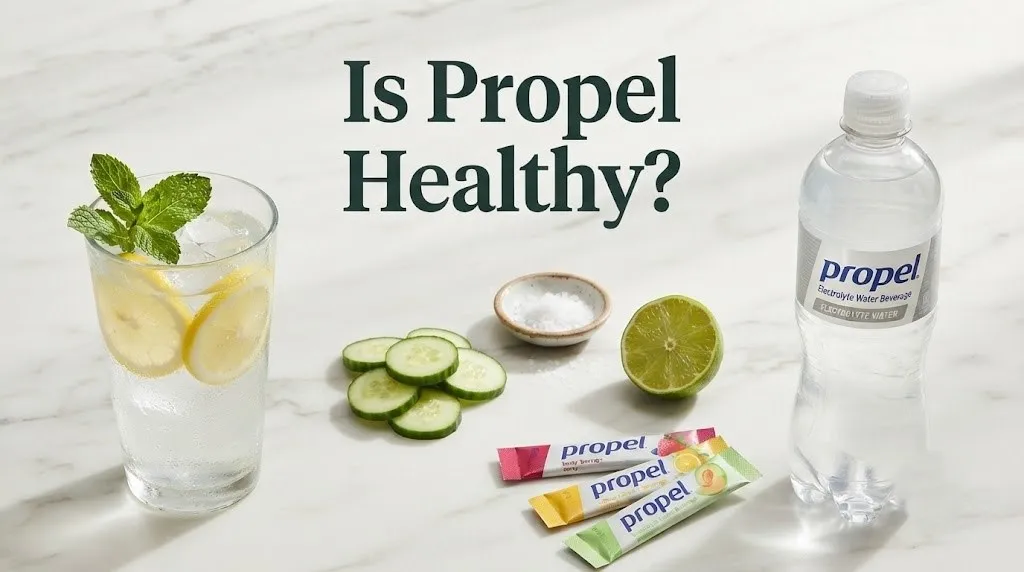
The product line has grown to include several sub-brands that create consumer confusion. The core ready-to-drink Propel Electrolyte Water comes in flavors like Berry, Grape, and Lemon. Propel Powder Packets are single-serve dry mixes designed to be added to a 16.9-ounce bottle of water. Propel Immune Support adds vitamin C and zinc to the electrolyte base. Each version has a slightly different ingredient profile and nutritional purpose.
The key nutritional claim, zero calories and zero sugar, comes from the use of artificial sweeteners rather than the absence of sweetening agents. Propel tastes sweet because it contains sucralose and acesulfame potassium, two high-intensity artificial sweeteners. This is the central tension in evaluating whether Propel is healthy. It solves the sugar problem by creating a different set of questions about long-term sweetener consumption.
Propel Ingredients: A Complete Breakdown
Propel’s ingredient list varies by format, but the standard ready-to-drink Propel Electrolyte Water contains water, citric acid, sodium hexametaphosphate, natural flavor, potassium sorbate, sucralose, sodium citrate, acesulfame potassium, and added electrolytes including sodium, potassium, and magnesium. Each ingredient serves a distinct functional purpose.
Citric acid provides tartness and acts as a preservative. It is naturally present in citrus fruits and is one of the most common food additives globally. It is generally recognized as safe by the FDA. The concern with citric acid in beverages is dental erosion, not systemic toxicity. Sipping acidic drinks throughout the day exposes tooth enamel to a pH low enough to demineralize it over time.
Sodium hexametaphosphate is a sequestrant, a compound that binds to metal ions to prevent discoloration and off-flavors. It is also a phosphate source. Phosphates are essential minerals, but the added phosphate load from processed foods and beverages is under increasing scrutiny. The National Kidney Foundation notes that people with chronic kidney disease should limit phosphate additives because their kidneys cannot excrete excess phosphorus efficiently.
Potassium sorbate and sodium benzoate (in some formulations) are preservatives that prevent mold and bacterial growth. Potassium sorbate has a strong safety record and is considered one of the least problematic food preservatives. Sodium benzoate has drawn more attention because, under certain conditions of heat and light exposure combined with ascorbic acid, it can form benzene, a known carcinogen. The levels detected in beverages have been very low, and manufacturers have reformulated to minimize the risk, but the concern is documented in FDA testing records.
Sucralose and acesulfame potassium are the sweeteners that give Propel its sugar-like taste without calories. Both are FDA-approved and have been studied extensively. The health questions around them are not about acute toxicity. They are about long-term metabolic and microbiome effects, which the research community continues to investigate.
Key Fact: Sucralose is approximately 600 times sweeter than table sugar. Acesulfame potassium is about 200 times sweeter. The combination is common in zero-calorie beverages because blending sweeteners produces a more sugar-like taste profile than either one alone.
Propel Nutrition Facts and Electrolyte Content
A 16.9-ounce bottle of Propel Electrolyte Water contains 0 calories, 0 grams of sugar, 0 grams of protein, 0 grams of fat, and a small amount of sodium and potassium designed to support hydration. The electrolyte content is modest compared to traditional sports drinks, which makes sense given Propel’s positioning as a fitness water rather than a heavy-exercise recovery beverage.
| Nutrient/Electrolyte | Propel Ready-to-Drink (16.9 oz) | Propel Powder Packet (mixed) | Gatorade Thirst Quencher (20 oz) |
|---|---|---|---|
| Calories | 0 | 0 | 140 |
| Sugar | 0 g | 0 g | 34 g |
| Sodium | 160 mg | 210 mg | 270 mg |
| Potassium | 40 mg | 70 mg | 80 mg |
| Magnesium | 0 mg | 10 mg | 0 mg |
| Vitamin C | 0 mg | 0 mg | 0 mg |
| Vitamin E | 0 mg | 20% DV | 0 mg |
| Vitamin B3, B5, B6 | 0 mg | 20% DV each | 0 mg |
The sodium content in Propel, roughly 160 to 210 milligrams per serving, is enough to support hydration during moderate exercise but not enough to replace heavy sweat losses. The American College of Sports Medicine recommends 500 to 700 milligrams of sodium per liter of fluid for prolonged exercise exceeding two hours. Propel falls well below that threshold, which is appropriate for the product’s intended use case. This is not a marathon fuel. It is flavored water with a light electrolyte bump.
The powder packets include added B vitamins and vitamins C and E, which the ready-to-drink bottles do not. The vitamin levels are not therapeutic. They are present at roughly 20 percent of the Daily Value per packet, an amount that provides a minor nutritional contribution without approaching supplementation territory. For someone with an adequate diet, these vitamins are redundant. For someone with marginal intake, they are a small net positive.
The zero-calorie, zero-sugar profile makes Propel compatible with nearly every dietary pattern. It fits within ketogenic, low-carb, diabetic, and calorie-restricted eating plans without modification. It is also compatible with intermittent fasting in the strictest sense, though the sweet taste may trigger cephalic phase insulin responses in some individuals, a mechanism that is still debated in the metabolic research literature.
Is Propel Good for Hydration?
Propel is effective for everyday hydration because it is mostly water with a small amount of sodium and potassium that can slightly improve fluid retention compared to plain water. For moderate exercisers and people who struggle to drink enough plain water, the flavor and light electrolyte content genuinely support better hydration habits.
Hydration is not just about water intake. It is about water retention. Sodium helps the body hold onto fluid rather than excreting it rapidly through urine. The 160 milligrams of sodium in a bottle of Propel is not pharmacologically significant, but it is enough to make a small difference in fluid balance compared to plain water, particularly for someone who is mildly dehydrated and needs to rehydrate efficiently.
The flavor factor is worth taking seriously. Research consistently shows that people drink more fluid when the fluid tastes good to them. A 2022 study in the Journal of the American College of Nutrition found that participants who had access to flavored, unsweetened beverages consumed roughly 25 percent more total fluid over a day than those with only plain water available. Propel’s primary hydration benefit may be behavioral rather than biochemical. It gets people to drink more.
For heavy sweating, Propel is insufficient as a sole hydration source. An hour of intense exercise in heat can produce 1 to 2 liters of sweat loss, each liter containing 500 to 1,000 milligrams of sodium. Propel’s sodium content would need to be consumed in impractically large volumes to match those losses. This is the territory where traditional sports drinks or electrolyte powders with higher sodium concentrations become appropriate.
Quick Tip:
- If plain water bores you and you find yourself not drinking enough, Propel is a reasonable tool to increase your daily fluid intake.
- If you are exercising hard enough to sweat heavily for more than 90 minutes, you need a more concentrated electrolyte source.
Are Artificial Sweeteners in Propel Safe?
The artificial sweeteners in Propel, sucralose and acesulfame potassium, are FDA-approved and considered safe at current exposure levels, but research on their long-term metabolic and microbiome effects continues to produce mixed findings. The safety question is not settled in the way that water safety is settled.
Sucralose has been approved for use in the United States since 1998 and in the European Union since 2004. The FDA established an acceptable daily intake (ADI) of 5 milligrams per kilogram of body weight. For a 150-pound adult, that is roughly 340 milligrams of sucralose per day, equivalent to about 28 packets of Splenda. A bottle of Propel contains a fraction of that amount. Acute toxicity is not the concern at normal consumption levels.
The gut microbiome question is where the research gets murkier. A 2022 study published in Cell found that sucralose consumption altered the gut microbiome composition in mice and impaired glucose tolerance when combined with a high-fat diet. Rodent studies do not translate directly to humans, but the finding was notable enough to generate legitimate scientific discussion. Other studies, including a 2023 review in Nutrients, found no clinically meaningful microbiome changes in humans at typical sucralose intake levels. The honest answer is that we do not yet have definitive long-term human data.
Acesulfame potassium has faced similar scrutiny. A 2023 study in the Journal of Toxicology and Environmental Health raised questions about potential DNA damage from acesulfame potassium breakdown products, but the concentrations studied were far above what any human would consume through beverages. The European Food Safety Authority reaffirmed the safety of acesulfame K in its 2024 re-evaluation, maintaining the ADI of 9 milligrams per kilogram of body weight.
The question of whether artificial sweeteners help with weight management is equally complicated. The American Heart Association issued a 2023 science advisory noting that replacing sugar-sweetened beverages with artificially sweetened beverages can reduce calorie intake in the short term, but the long-term weight loss evidence is inconsistent. Some observational studies find a correlation between diet beverage consumption and weight gain, but correlation is not causation. People who drink diet beverages may have other characteristics that predispose them to weight gain.
Key Takeaway: Propel is zero-calorie flavored water with light electrolytes made by Gatorade. It helps with hydration mainly by tasting good enough that people drink more of it. The artificial sweeteners are FDA-approved but remain under active research scrutiny for long-term effects.
What Are the Side Effects of Drinking Propel?
For most healthy adults, drinking Propel in moderation produces no noticeable side effects. Some people report bloating, gas, or mild digestive discomfort from the artificial sweeteners, and the citric acid content can contribute to dental enamel erosion if consumed frequently throughout the day without rinsing with plain water.
Digestive complaints are the most common consumer-reported side effect. Sucralose and acesulfame potassium are not absorbed in the small intestine and pass into the colon, where they can be fermented by gut bacteria. In some individuals, this fermentation produces gas and bloating. The effect is dose-dependent and highly individual. One bottle is unlikely to cause issues. Multiple bottles per day combined with other artificially sweetened products might.
Headaches are reported by a subset of consumers but have not been consistently linked to sucralose or acesulfame K in controlled studies. The International Headache Society does not list either sweetener as a recognized headache trigger. Aspartame, which is not in Propel, has a stronger documented association with headaches in sensitive individuals.
The dental concern is real and underdiscussed. Propel has a pH in the range of 3.0 to 3.5, similar to most flavored waters and significantly more acidic than plain water at neutral pH 7. Enamel demineralization begins at pH 5.5. Sipping Propel slowly over several hours exposes teeth to a continuous acid bath. The solution is not to stop drinking Propel. It is to drink it in one sitting rather than nursing it all afternoon, and to rinse with plain water afterward.
For people with phenylketonuria (PKU), Propel does not contain aspartame and therefore does not present a phenylalanine concern. For people with soy or gluten sensitivities, Propel does not contain either allergen in its standard formulations. Always check the label for the specific product you are buying, as formulations can change.
Is Propel Healthy for Kidneys?
Propel is generally safe for healthy kidneys, but the phosphate additives and artificial sweeteners deserve consideration for anyone with reduced kidney function or risk factors for kidney disease. The answer depends on baseline renal health.
For a person with normal kidney function, the kidneys filter the small amounts of phosphates and sweeteners in Propel without difficulty. There is no evidence that Propel consumption at typical levels harms healthy kidneys. The sodium content is low enough that it does not meaningfully affect blood pressure or renal perfusion pressure.
The calculation changes for someone with chronic kidney disease. The National Kidney Foundation advises patients with reduced glomerular filtration rate to limit phosphate additives, including sodium hexametaphosphate, because damaged kidneys cannot excrete phosphorus efficiently. Elevated serum phosphorus drives secondary hyperparathyroidism and vascular calcification, which is a major contributor to cardiovascular mortality in kidney disease patients. A single bottle of Propel is not a phosphorus bomb, but the additive load from multiple processed foods and beverages accumulates over a day.
The potassium content in Propel is low at 40 to 70 milligrams per serving, which is negligible even on a potassium-restricted renal diet that typically limits intake to 2,000 to 3,000 milligrams daily. Bananas, potatoes, and tomatoes are far more significant potassium sources. Propel is not a concern on this dimension.
For kidney stone formers, the citric acid in Propel could theoretically provide a small protective effect. Citrate in the urine binds calcium and inhibits stone formation. However, the amount of citric acid in a bottle of Propel is far below the therapeutic doses used for stone prevention, which typically start at the equivalent of half a cup of lemon juice concentrate daily. Propel is not a stone prevention strategy.
Anyone with diagnosed kidney disease should discuss their beverage choices, including Propel, with their nephrologist or renal dietitian. The individualized nature of renal dietary recommendations makes blanket advice inappropriate.
Can You Drink Propel Every Day?
Drinking one bottle of Propel daily is unlikely to cause health problems for a healthy adult, but relying on it as a primary water source raises questions about cumulative artificial sweetener and additive exposure that research has not fully answered. Moderation is the reasonable middle ground.
The ingredient list does not contain anything acutely toxic at daily consumption levels. The FDA’s acceptable daily intake for sucralose is generous enough that even two or three bottles per day would keep most adults well below the threshold. The preservatives are present in milligrams, not grams. The electrolyte content is modest. Nothing about a single daily bottle raises an immediate red flag.
The concern with daily consumption is less about any single ingredient and more about the pattern. Each bottle of Propel replaces a bottle of something else. If Propel is replacing soda or juice, that is a nutritional win. If Propel is replacing plain water, the trade-off is less clearly positive. Plain water has an ingredient list of one item. Propel has an ingredient list of twelve. Both hydrate. One comes with questions about long-term sweetener and additive exposure. The other does not.
The dental consideration becomes more relevant with daily consumption. One bottle consumed quickly and followed by a water rinse poses minimal risk. Three bottles sipped over eight hours at a desk keeps teeth bathed in acid for the entire workday. Dentists generally recommend limiting acidic beverage exposure to meal times and rinsing with water after.
For children and adolescents, daily Propel consumption deserves more caution. The American Academy of Pediatrics recommends that children’s primary beverages be water and milk, with artificially sweetened beverages treated as occasional options, not daily staples. The long-term metabolic effects of artificial sweetener consumption during development are not well studied, and the default position of pediatric nutrition experts is to minimize exposure.
How Does Propel Compare to Plain Water?
Propel hydrates as effectively as plain water for everyday needs, with a slight advantage in fluid retention from its sodium content and a significant disadvantage in ingredient simplicity. Plain water remains the gold standard hydration source for healthy adults at rest.
The hydration comparison is straightforward. Water is water, whether it comes out of a tap or a Propel bottle. The small electrolyte addition in Propel does not make a measurable difference in hydration status for a sedentary or lightly active person who is eating regular meals. The sodium and potassium in a typical lunch far exceed what is in a bottle of Propel.
The advantages of plain water are simplicity, cost, and dental safety. Tap water costs a fraction of a cent per gallon. Propel costs roughly 1 to 1.50 dollars per bottle. Over a year of daily consumption, that is 365 to 550 dollars versus less than 5 dollars for tap water. Tap water has a neutral pH. Propel is acidic enough to erode enamel over time if consumed frequently without mitigation.
The advantage of Propel over plain water is behavioral. If plain water feels like a chore and Propel feels like a treat, and the result is that you drink 50 percent more fluid per day, then Propel is the better hydrator for you specifically. Hydration status matters more than ingredient purity for overall health, assuming the additives are consumed at safe levels.
There is a middle ground worth considering. Drinking plain water for most of your daily fluid needs and using Propel as an occasional flavored alternative captures the benefits of both without the cumulative exposure concern of daily artificial sweetener consumption.
| Comparison Factor | Propel | Plain Water |
|---|---|---|
| Hydration efficacy | Equivalent | Equivalent |
| Cost per day (20 oz) | $1.00 to $1.50 | <$0.01 |
| Calories | 0 | 0 |
| Ingredients | 10 to 12 | 1 |
| pH (acidity) | 3.0 to 3.5 | 7.0 (neutral) |
| Electrolytes | 160 mg sodium, 40 mg potassium | Varies by source |
| Sweeteners | Sucralose, acesulfame K | None |
| Environmental impact | Plastic bottle waste | Minimal |
Is Propel Better Than Soda?
Propel is unquestionably healthier than regular soda because it eliminates the sugar load that makes soda a major contributor to obesity, type 2 diabetes, and metabolic syndrome. A 12-ounce can of regular soda contains roughly 39 grams of added sugar and 140 empty calories. Propel contains zero of both.
The public health case against sugar-sweetened beverages is overwhelming. The CDC identifies sugary drinks as the single largest source of added sugar in the American diet. The American Heart Association recommends no more than 36 grams of added sugar per day for men and 25 grams for women. One can of soda exceeds the daily limit for women and nearly hits it for men. The link between sugar-sweetened beverage consumption and weight gain, type 2 diabetes, cardiovascular disease, and non-alcoholic fatty liver disease is supported by decades of consistent observational and experimental research.
Replacing soda with Propel eliminates this sugar burden entirely. From a metabolic standpoint, this is a clear improvement. Insulin levels stay lower. The liver processes less fructose. Daily calorie intake drops. For someone currently drinking multiple sodas per day, switching to Propel is one of the highest-impact dietary changes they can make.
The comparison to diet soda is more nuanced. Diet sodas also contain artificial sweeteners and are also zero-calorie. The ingredient lists of Propel and diet soda are different but philosophically similar. Both use sucralose or aspartame and acesulfame potassium. Both contain preservatives and acidulants. Propel adds a small amount of electrolytes, which diet soda does not. Neither is water. Both are reasonable soda replacements and less reasonable water replacements.
Key Takeaway: Propel is clearly healthier than regular soda. The comparison to water is more nuanced. Propel hydrates well and costs far more than tap water. Its biggest value is replacing sugary drinks for people who will not drink plain water.
Who Should Drink Propel?
Propel is most appropriate for moderately active adults who want a flavored, zero-calorie hydration option during or after light to moderate exercise, and for anyone using it as a stepping stone away from sugar-sweetened beverages. It is not designed for elite athletes, children, or people with kidney disease.
The ideal Propel consumer exercises enough to sweat but not enough to need serious electrolyte replacement. A 45-minute gym session, a brisk walk on a hot day, a recreational bike ride. These activities produce fluid loss that plain water handles fine, but the flavor and light electrolyte content of Propel make it a pleasant post-exercise choice. The product fits its marketing.
People actively reducing their soda intake benefit from Propel as a transitional beverage. The sweet taste satisfies the conditioned expectation that beverages should be sweet, while the zero-calorie profile avoids the sugar that makes soda harmful. Behavioral substitution is a legitimate weight management strategy. Propel is a reasonable tool for that purpose.
People who dislike the taste of plain water and chronically underhydrate represent another appropriate audience. The health cost of mild chronic dehydration, including fatigue, headache, constipation, and reduced cognitive performance, likely outweighs the unknown long-term risk of daily artificial sweetener consumption at Propel’s levels. The perfect should not be the enemy of the good in hydration.
Who should not drink Propel regularly:
- People with chronic kidney disease should discuss phosphate-containing beverages with their nephrologist before making Propel a daily habit.
- People with irritable bowel syndrome (IBS) or sensitivity to sugar alcohols and artificial sweeteners may find that Propel triggers bloating or digestive discomfort.
- Children and adolescents should get most of their fluids from water and milk, per the American Academy of Pediatrics. Propel is an occasional option, not a daily water replacement.
- People with dental erosion or high caries risk should limit acidic beverage exposure and rinse with water after consuming Propel.
Are Propel Powder Packets Healthier Than Bottled Propel?
Propel powder packets contain added B vitamins and antioxidant vitamins that the bottled version does not, but the sweetener and preservative profiles are essentially identical. The health difference between formats is negligible. The choice is about convenience, cost, and environmental preference.
The powder packets add vitamin C (ascorbic acid), vitamin E (as alpha-tocopheryl acetate), and B vitamins including niacin (B3), pantothenic acid (B5), and pyridoxine (B6) at approximately 20 percent of the Daily Value per packet. These are water-soluble vitamins with well-established safety profiles. The amounts are modest. Someone eating a varied diet does not need them. Someone with a restricted diet might get a small benefit.
The cost difference favors powder packets. A box of 10 packets typically costs 3 to 4 dollars, which is 30 to 40 cents per serving. A single bottled Propel costs 1 to 1.50 dollars. Over a year of daily use, the powder packet habit costs roughly 110 to 145 dollars. The bottled habit costs 365 to 550 dollars. The financial incentive to switch to powder is real.
The environmental case for powder packets is also straightforward. Each packet mixed into a reusable bottle saves one single-use plastic bottle from the waste stream. For a daily Propel drinker, that is 365 bottles per year. The powder packets come in a cardboard box and small foil-lined packets that are not widely recyclable but represent far less total material than a plastic bottle.
The one preparation consideration with powder packets is mixing. The powder dissolves best in room-temperature water with a shake or stir. Cold water can leave clumps. Mixing the packet into a bottle before adding ice produces the smoothest result.
Does Propel Help with Weight Loss?
Propel can support weight loss indirectly by replacing higher-calorie beverages and making hydration more enjoyable, but it contains no compounds that actively promote fat loss. The weight management benefit is about substitution, not metabolism.
Liquid calories are among the easiest to eliminate from the diet because they contribute little to satiety. A person who drinks one 20-ounce regular soda daily consumes roughly 240 calories and 65 grams of sugar from that single beverage. Switching to Propel eliminates 87,600 calories over a year, which is theoretically enough to produce 25 pounds of fat loss if no other dietary changes occur. Real-world results are usually smaller because people compensate in other ways, but the arithmetic is straightforward.
The satiety question around artificially sweetened beverages is more complicated. Some research suggests that sweet tastes without calories may increase appetite or cravings for sweet foods by conditioning the brain to expect a glucose load that never arrives. Other research finds no meaningful effect on total calorie intake. A 2023 meta-analysis in Obesity Reviews concluded that replacing sugar-sweetened beverages with artificially sweetened alternatives produced a modest but statistically significant reduction in body weight, roughly 1.5 to 3 pounds over 12 weeks, without evidence of compensatory eating.
Propel does not contain fiber, protein, or any other compound that directly suppresses appetite. It is not a meal replacement. It is a zero-calorie flavored beverage that happens to make calorie reduction easier for some people because it satisfies the habit of reaching for a flavored drink without adding calories. The weight loss effect, if any, comes from the calorie deficit created by substitution.
Quick Tip:
- If you currently drink regular soda, juice, or sweetened coffee drinks, replacing them with Propel creates a real calorie deficit.
- If you already avoid sugary drinks, adding Propel to your routine does nothing for weight loss.
What Is Propel Immune Support and Is It Healthy?
Propel Immune Support is a line extension that adds vitamin C, zinc, and sometimes elderberry to the standard Propel electrolyte formula. It is a functional beverage with modest immune-supporting nutrients, not a cold remedy or prevention guarantee.
Vitamin C and zinc have documented roles in immune function. Vitamin C supports the activity of phagocytes and T-cells. Zinc is required for the development and function of natural killer cells and neutrophils. Deficiency in either nutrient impairs immune function. Supplementation beyond sufficiency does not provide additional protection. The National Institutes of Health (NIH) Office of Dietary Supplements states that vitamin C and zinc supplementation may modestly reduce the duration of colds in people who are deficient, but evidence for prevention in well-nourished populations is limited.
The amounts in Propel Immune Support are supplementary, not therapeutic. A packet typically provides 100 percent of the Daily Value for vitamin C and 20 percent for zinc. These are maintenance doses consistent with a standard multivitamin. They will correct a marginal deficiency if one exists. They will not prevent a cold in someone with adequate intake.
Elderberry, from the European elder plant (Sambucus nigra), has a small body of research suggesting it may reduce the duration and severity of upper respiratory infections. A 2021 meta-analysis in Complementary Therapies in Medicine found a modest effect, but the studies were small and the mechanisms are not fully characterized. Elderberry is not a proven cold preventative.
Propel Immune Support is not harmful and may provide a small nutritional benefit for someone with low baseline intake of vitamin C and zinc. It is not a replacement for sleep, hand washing, vaccination, or a diet that includes actual fruits and vegetables.
Key Takeaway: Propel serves moderately active adults best. It helps with weight management by replacing sugary drinks, not by burning fat. The Immune Support version adds modest nutrient amounts that are helpful for deficiencies but do not prevent illness in well-nourished people.
What Are the Best Healthy Alternatives to Propel?
The healthiest alternative to Propel is plain water with a squeeze of fresh lemon or lime, which provides flavor, a small amount of vitamin C, and zero artificial sweeteners or preservatives. For people who want electrolyte support without artificial ingredients, several clean-label products and DIY options exist.
Plain water with citrus is the simplest upgrade. A quarter of a lemon squeezed into a glass of water adds roughly 5 milligrams of vitamin C, a small amount of citrate that may benefit kidney stone prevention, and enough flavor to make water more palatable for many people. The cost is pennies. The ingredient list is water and lemon juice. The dental impact is slightly acidic but far less concentrated than commercially flavored waters sipped over hours.
Herbal teas served cold offer flavor variety without sweeteners. Hibiscus tea is naturally tart and deep red. Peppermint tea is refreshing and needs no sugar. Rooibos tea is mild and slightly sweet on its own. All three can be brewed in large batches and refrigerated for a grab-and-go cold beverage with zero calories and zero artificial ingredients.
For electrolyte replacement during exercise, coconut water provides potassium and a small amount of sodium and magnesium. A cup of plain coconut water contains roughly 45 calories, 9 grams of natural sugar, 600 milligrams of potassium, and 250 milligrams of sodium. The calorie and sugar content are higher than Propel’s zero, but the source is whole food rather than an additive blend.
DIY electrolyte water is easier to make than most people assume. A basic formula that approximates Propel’s electrolyte profile without the sweeteners and preservatives:
DIY Electrolyte Water:
- Fill a 16-ounce water bottle with cold water.
- Add 1/8 teaspoon of salt (provides roughly 250 milligrams of sodium).
- Add the juice of one lemon wedge (provides potassium and vitamin C).
- Optional: add a thin slice of cucumber or a few mint leaves for flavor.
- Shake and drink immediately. Do not store for more than 24 hours.
| Alternative | Calories | Sweeteners | Electrolytes | Cost per Serving |
|---|---|---|---|---|
| Water + lemon | 0 | None | Trace | <$0.05 |
| Herbal iced tea | 0 | None | None | $0.10 |
| Coconut water | 45 | Natural sugars | 600 mg potassium, 250 mg sodium | $1.50 to $2.00 |
| DIY electrolyte water | 0 | None | 250 mg sodium | <$0.05 |
| Propel | 0 | Sucralose, Ace-K | 160 mg sodium, 40 mg potassium | $0.30 to $1.50 |
Frequently Asked Questions About Propel
Is Propel good for you after a workout?
Propel is adequate for rehydration after light to moderate exercise but insufficient for heavy sweat losses.
The 160 to 210 milligrams of sodium per serving replaces a fraction of what intense exercise depletes.
For workouts under 60 minutes at moderate intensity, Propel provides enough electrolyte support combined with the water content to rehydrate effectively.
Does Propel have caffeine?
Propel does not contain caffeine in its standard Electrolyte Water or powder packet formulations.
The brand has not released a caffeinated version as of 2026, unlike some competitors in the enhanced water category.
Always check the label, as product lines can change and limited-time flavors may introduce new ingredients.
Is Propel safe during pregnancy?
Propel is generally considered safe during pregnancy when consumed in moderation, as the artificial sweeteners sucralose and acesulfame potassium are FDA-approved and have not been linked to adverse pregnancy outcomes at typical intake levels.
Pregnant women should prioritize plain water for the majority of their fluid intake and discuss any specific concerns about artificial sweetener consumption with their obstetric care provider.
The vitamin-fortified powder packets may contribute small amounts of vitamins C, E, and B vitamins, which are safe during pregnancy at these levels.
Is Propel keto-friendly?
Propel is keto-friendly because it contains zero carbohydrates and zero sugar.
The artificial sweeteners sucralose and acesulfame potassium do not affect blood glucose or insulin in a way that would interfere with ketosis for most people.
Some individuals on ketogenic diets prefer to avoid artificial sweeteners due to personal preference or digestive sensitivity, but Propel fits the macronutrient requirements of the diet.
Can Propel cause kidney stones?
Propel is unlikely to cause kidney stones and may provide a small protective effect from its citric acid content, but it is not a substitute for the high-citrate fluids used in stone prevention.
The sodium content is low enough that it does not meaningfully increase urinary calcium excretion, a risk factor for stone formation.
Anyone with a history of kidney stones should prioritize plain water and lemon water as primary fluids and discuss all beverage choices with their urologist or nephrologist.
The Bottom Line on Propel and Your Health
Propel is a reasonable zero-calorie flavored water option for active adults who understand what it is and what it is not. It is not a health food. It is not a medical electrolyte solution. It is not a substitute for plain water as a primary hydration source. It is a tool that helps some people drink more fluid and avoid sugary beverages, and those are legitimate benefits.
If Propel helps you stay hydrated when plain water would sit untouched on your desk, drink it. If you are using it to kick a soda habit, the trade-off is clearly in your favor. If your kidneys are healthy and you are not drinking six bottles a day, the ingredient list does not contain anything that should keep you up at night.
The healthiest beverage choice is the one you will actually drink that does not come with a sugar load. For many people, that is plain water. For some, it is water with lemon. For others, it is Propel. Context matters more than dogma. Hydrate in the way that works for you.