
Healthy skin tips that actually work start with what you put on your plate, not just what you put on your face. The skin is an organ, the largest one you have, and it responds to the same nutritional inputs as your heart, brain, and muscles. A 2023 review in the Journal of the Academy of Nutrition and Dietetics confirmed that dietary patterns rich in fruits, vegetables, healthy fats, and lean proteins are consistently associated with better skin aging outcomes and lower rates of inflammatory skin conditions. The nutrients you eat literally become the building blocks your skin uses to repair itself, produce collagen, and defend against sun damage.
The American Academy of Dermatology emphasizes that while no single food erases wrinkles or cures acne, the cumulative effect of a nutrient-dense diet over months and years is measurable in skin appearance and function. Your skin cells turn over approximately every 28 to 40 days in young adults, and the quality of the new cells depends partly on the raw materials available when they were formed. Think of your diet as the supply chain for a factory that rebuilds itself every month. The better the supplies, the better the output.
This article is a food-first guide to skin health. You will learn how diet affects your skin at the cellular level, which specific nutrients do what, which foods deliver them in the most bioavailable forms, and how to structure a week of eating that supports your skin without turning your kitchen into a supplement aisle. No product recommendations. No miracle claims. Just the nutritional science of skin, translated into meals.
Healthy skin tips
Healthy skin tips grounded in nutrition science start with three core principles: protect your skin from oxidative damage with antioxidant-rich foods, support structural proteins with adequate high-quality protein and vitamin C, and reduce inflammation with omega-3 fatty acids and a low-glycemic eating pattern. These three strategies address the major mechanisms of skin aging and dysfunction: oxidative stress, collagen breakdown, and chronic inflammation. Every specific food recommendation flows from one of these principles.
Protection comes first because sun exposure and pollution generate free radicals in skin cells that damage collagen, elastin, and cellular DNA. Antioxidants from food, specifically vitamin C, vitamin E, carotenoids, and polyphenols, neutralize these free radicals before they can cause lasting damage. The American Academy of Dermatology notes that while sunscreen is the primary defense against photoaging, dietary antioxidants provide a secondary internal defense that complements topical protection. A diet low in antioxidants leaves your skin more vulnerable to the UV exposure that sunscreen misses.
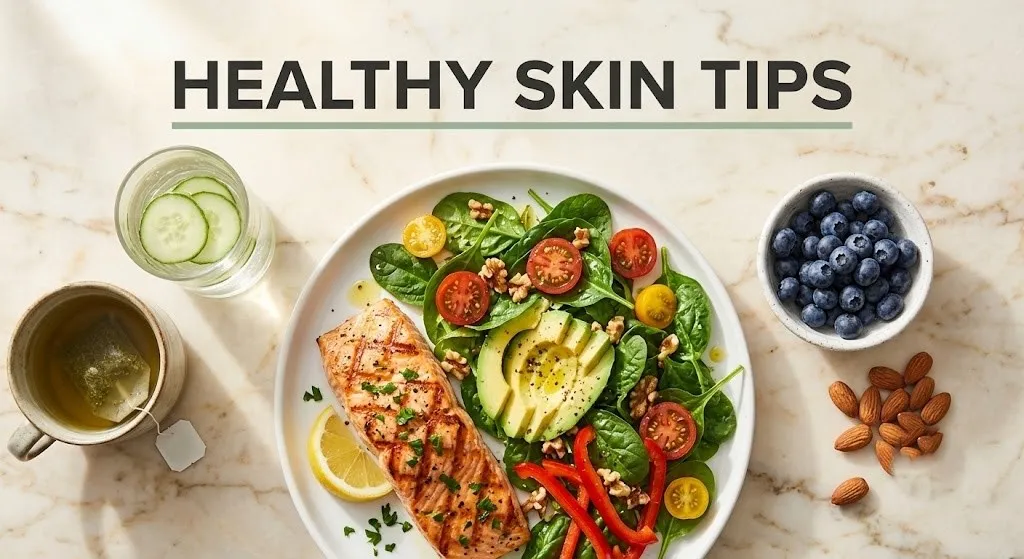
Support comes from protein and the micronutrients required to synthesize collagen and elastin. Your skin’s dermal layer is a dense mesh of collagen fibers that provide structure and firmness. Collagen production requires amino acids from dietary protein, vitamin C as a cofactor for the enzymes that cross-link collagen fibers, and zinc for cellular repair processes. A diet adequate in lean protein and vitamin C supports this ongoing maintenance. A diet deficient in either gradually undermines it, and the effects become visible over years, not days.
Key Takeaway: Healthy skin from the inside out requires antioxidants for protection, protein and vitamin C for structural support, and omega-3s to manage inflammation.
Healthy glowing skin
Healthy glowing skin is skin that is well-hydrated, well-nourished, and free of the dullness caused by oxidative stress and slow cell turnover. The “glow” that skincare marketing promises is partly a function of light reflecting off a smooth, hydrated skin surface and partly a function of microcirculation delivering oxygen and nutrients to skin cells. Both of these factors are influenced by diet. Dehydrated skin appears dull and accentuates fine lines. Skin with poor microcirculation looks sallow and tired.
Hydration for skin glow comes from two sources: water intake and dietary fats that support the skin’s moisture barrier. Drinking adequate water supports blood flow to the skin and helps maintain the water content of skin cells. The stratum corneum, the outermost layer of the epidermis, is composed of dead skin cells embedded in a lipid matrix. When that lipid matrix is well-formed with the right fatty acids, it holds water in the skin effectively. When it is compromised, water evaporates and the skin looks dry and dull regardless of how much water you drink. Omega-3 fatty acids and monounsaturated fats from foods like salmon, walnuts, and olive oil support the formation of this lipid barrier.
Microcirculation, the flow of blood through the tiny capillaries that supply skin cells, is supported by nitric oxide, a compound that relaxes blood vessels and increases blood flow. Foods rich in nitrates, including beets, dark leafy greens, and citrus fruits, support nitric oxide production. The antioxidants in dark chocolate and berries protect the nitric oxide once produced, allowing its vessel-relaxing effects to last longer. A salad of spinach, orange segments, and walnuts with a olive oil dressing is a skin-glowing meal that checks multiple nutritional boxes simultaneously.
Key Takeaway: Skin glow depends on hydration from water and healthy fats, plus microcirculation supported by nitrate-rich vegetables and antioxidants.
Healthy skin tips for face
Healthy skin tips for the face specifically must account for the fact that facial skin is thinner, more exposed to UV radiation, and more sebaceous gland-dense than skin elsewhere on the body. Facial skin produces more oil, sheds cells more rapidly, and shows aging changes earlier. The nutritional strategies that support facial skin are the same as for whole-body skin health, but the emphasis shifts toward controlling oil production through glycemic management and protecting against photoaging through antioxidant intake.
The glycemic connection to facial skin is most visible in acne. High-glycemic foods that spike blood sugar also spike insulin and insulin-like growth factor 1 (IGF-1), hormones that stimulate sebaceous glands to produce more oil and skin cells to proliferate faster. The combination of excess oil and excess skin cells creates the plugged follicle environment where acne bacteria thrive. A 2022 study in the Journal of the Academy of Dermatology found that participants who followed a low-glycemic diet for 12 weeks experienced a 25% to 30% reduction in acne lesion counts compared to a control group. The mechanism is hormonal, and it responds to dietary pattern changes rather than individual food eliminations.
Facial photoaging shows up as fine lines, uneven pigmentation, and loss of elasticity on the face before it appears elsewhere. This is because facial skin receives more cumulative UV exposure. Antioxidants from food, particularly lycopene from cooked tomatoes, beta-carotene from sweet potatoes, and catechins from green tea, have been studied for their photoprotective effects. A 2023 study in the British Journal of Dermatology found that participants who consumed 40 grams of tomato paste daily for 10 weeks had 40% less UV-induced erythema than the control group. Lycopene accumulates in the skin and absorbs UV wavelengths before they damage deeper skin structures.
Key Takeaway: Facial skin benefits from low-glycemic eating to control oil production and antioxidant-rich foods to protect against photoaging.
How to get healthy glowing skin
Getting healthy glowing skin through diet requires consistency across three to four skin cell turnover cycles, approximately three to six months, before the full effects of dietary changes become visible in your complexion. The skin cells forming today in the basal layer of your epidermis will not reach the surface for about a month. The collagen and elastin remodeling in your dermis takes even longer. This timeline is why quick-fix dietary changes produce no visible skin changes and why people abandon effective nutrition strategies before they can work.
The dietary pattern most consistently associated with healthy skin in epidemiological research is the Mediterranean diet, characterized by high intake of vegetables, fruits, whole grains, legumes, nuts, fish, and olive oil, with limited red meat, processed foods, and added sugar. A 2024 study in Nutrients journal followed 800 participants and found that those with the highest adherence to a Mediterranean diet pattern had 35% lower odds of significant facial photoaging compared to those with the lowest adherence. The protective effect was attributed to the combination of antioxidants, healthy fats, and low-glycemic carbohydrate sources.
The practical implementation is straightforward. Build each meal around a protein source, a healthy fat, and at least two colorful vegetables or fruits. Breakfast might be Greek yogurt with walnuts and blueberries. Lunch could be a spinach salad with grilled salmon, avocado, and an olive oil vinaigrette. Dinner might be roasted chicken with sweet potato and steamed broccoli. Snacks include almonds, bell pepper slices, or an orange. This pattern is not restrictive. It is a template you adapt to your preferences and budget. The key is the daily consistency over months, not the perfection of any single meal.
Key Takeaway: Visible skin improvements from diet take three to six months. A Mediterranean-style eating pattern is the most research-supported dietary approach for skin health.
How to get healthy looking skin
Healthy looking skin is skin that appears even in tone, firm in texture, and free of the redness and irritation that signal underlying inflammation. The visual qualities people associate with healthy skin, smoothness, clarity, and an even tone, all have dietary contributors. Achieving them involves both adding skin-supporting foods and reducing or eliminating foods that trigger skin problems.
Protein adequacy is foundational to healthy looking skin because the skin’s structural matrix is protein. Collagen, elastin, and keratin are all proteins that require a steady supply of amino acids from dietary protein for maintenance and repair. The Academy of Nutrition and Dietetics recommends that adults consume 0.8 grams of protein per kilogram of body weight as a minimum, with some research suggesting that 1.0 to 1.2 grams is more supportive of skin health in aging adults. A 150-pound person would aim for 55 to 82 grams of protein per day, distributed across meals. A chicken breast, a salmon filet, or a cup of lentils provides 25 to 35 grams.
Even skin tone is supported by antioxidants that protect melanocytes, the pigment-producing cells, from uneven activation caused by UV damage and inflammation. Vitamin C, beyond its role in collagen synthesis, inhibits the enzyme tyrosinase that drives excess melanin production. This is the mechanism behind hyperpigmentation, and while topical vitamin C is more directly effective, dietary vitamin C from bell peppers, kiwis, citrus fruits, and broccoli supports the skin’s own pigment regulation systems. The effect is subtle and cumulative, not dramatic or immediate.
Redness and irritation often trace back to dietary triggers. For some people, the trigger is alcohol, which dilates blood vessels and can cause persistent facial flushing with regular consumption. For others, spicy foods trigger a histamine response that shows up as facial redness. Dairy is a common acne trigger, though the evidence is observational rather than causal. The practical approach is an elimination-reintroduction protocol. Remove a suspected trigger food for three to four weeks, observe your skin, then reintroduce it and observe again. Your dermatologist can help distinguish dietary triggers from skin conditions like rosacea that require medical treatment.
Key Takeaway: Healthy looking skin requires adequate protein for structure, antioxidants for even tone, and identification of personal dietary triggers for redness and irritation.
Why is healthy skin important
Healthy skin is important because it is a functioning organ that serves as your body’s primary barrier against infection, UV radiation, chemical exposure, and water loss. The skin is not a cosmetic covering. It is an active immune organ, a sensory interface, and a critical component of temperature regulation and vitamin D synthesis. When skin health is compromised by nutritional deficiencies or dietary patterns that promote inflammation, the consequences extend beyond appearance.
The skin’s barrier function is its most clinically important role. The stratum corneum prevents water from leaving your body and pathogens from entering. When this barrier is compromised by essential fatty acid deficiency, the skin becomes dry, cracked, and permeable to bacteria. Linoleic acid, an omega-6 fatty acid found in sunflower seeds, walnuts, and soybean oil, is specifically required for the formation of ceramides, the lipid molecules that fill the spaces between skin cells in the barrier layer. The USDA Dietary Guidelines recognize linoleic acid as an essential nutrient that must come from the diet.
The skin is also the site of vitamin D synthesis, a process that requires cholesterol in the skin and UVB radiation from sunlight. Vitamin D supports calcium absorption, immune function, and mood regulation. The Academy of Nutrition and Dietetics notes that dietary vitamin D from fatty fish, fortified dairy, and egg yolks becomes particularly important in winter months and for people who use sunscreen consistently, as both reduce the skin’s vitamin D production. Healthy skin that can perform this synthetic function is a nutritional asset, not just an aesthetic one.
Key Takeaway: Skin is a vital organ responsible for barrier protection, immune defense, and vitamin D synthesis. Nutritional support of skin is health care, not vanity.
How diet affects skin
Diet affects skin through multiple biological pathways that operate simultaneously over different time scales. Within hours of a meal, high-glycemic carbohydrates trigger insulin release that can increase sebum production. Within days, dietary fatty acids are incorporated into cell membranes throughout the body, including skin cells. Within weeks to months, the cumulative intake of antioxidants, protein, and specific micronutrients influences collagen density, skin hydration, and resilience against UV damage. The skin is constantly remodeling, and diet determines the quality of the materials available for that remodeling.
The glycemic pathway is the most directly observable diet-skin connection for many people. When you eat a meal high in refined carbohydrates, your blood glucose rises, your pancreas releases insulin, and your liver produces IGF-1 in response. Both insulin and IGF-1 activate the sebaceous glands and increase the production of androgens, hormones that further stimulate oil production. This cascade explains why a diet consistently high in white bread, sugary snacks, sweetened beverages, and processed cereals can exacerbate acne even in adults who never had acne as teenagers. The mechanism is the same regardless of age.
The inflammatory pathway connects dietary fats to skin conditions like acne, eczema, and psoriasis. The typical Western diet delivers an omega-6 to omega-3 fatty acid ratio of approximately 15:1 to 20:1. The ideal ratio for reducing systemic inflammation is closer to 4:1. Omega-6 fats, found in vegetable oils like soybean oil and corn oil, are precursors to pro-inflammatory signaling molecules. Omega-3 fats, found in fatty fish, walnuts, and flaxseeds, are precursors to anti-inflammatory molecules. Shifting this ratio by increasing omega-3 intake and reducing processed food consumption reduces the background inflammation that shows up on the skin as redness, sensitivity, and impaired healing.
Key Takeaway: Diet influences skin through glycemic, inflammatory, and structural pathways. High-glycemic foods spike oil-producing hormones. Omega-3s reduce inflammatory skin conditions.
Foods for healthy skin
Foods for healthy skin are whole foods that deliver concentrated amounts of the nutrients skin needs most: vitamin C for collagen synthesis, omega-3 fatty acids for inflammation control, zinc for repair, and antioxidants for photoprotection. The list of evidence-backed skin-supporting foods is not exotic or expensive. It consists primarily of vegetables, fruits, nuts, seeds, and fatty fish that are available at standard grocery stores.
Salmon tops the list for its omega-3 content. A 3.5-ounce serving of wild sockeye salmon provides approximately 1,200 milligrams of EPA and DHA, the long-chain omega-3 fatty acids that incorporate into skin cell membranes and reduce UV-induced inflammation. Walnuts provide alpha-linolenic acid (ALA), a plant-based omega-3, along with vitamin E and zinc. A quarter-cup of walnuts contains 2.5 grams of ALA and 6% of the Daily Value for zinc. Bell peppers, particularly red bell peppers, are the single richest dietary source of vitamin C by weight. One medium red bell pepper provides 169% of the Daily Value for vitamin C, more than an orange.
Sweet potatoes deliver beta-carotene, which the body converts to vitamin A. Vitamin A regulates skin cell turnover and supports the differentiation of new skin cells. A medium sweet potato provides 438% of the Daily Value for vitamin A as beta-carotene. Sunflower seeds are an excellent source of vitamin E, providing 37% of the Daily Value per ounce. Vitamin E is the primary fat-soluble antioxidant in skin cell membranes, where it protects against lipid peroxidation from UV exposure. Spinach combines beta-carotene, vitamin C, vitamin E, and lutein in a single low-calorie package that supports multiple skin health pathways simultaneously.
Key Takeaway: Salmon, walnuts, bell peppers, sweet potatoes, sunflower seeds, and spinach are the most nutrient-dense, research-supported foods for skin health.
Vitamins for skin health
Vitamins for skin health include the fat-soluble vitamins A, D, and E, and the water-soluble vitamin C as the most directly involved in skin structure, function, and protection. These four vitamins participate in collagen synthesis, antioxidant defense, cell turnover regulation, and barrier maintenance. Deficiencies in any of them produce visible skin changes that resolve when adequate intake is restored.
Vitamin A exists in the diet as preformed retinol from animal foods and as provitamin A carotenoids from plant foods. Retinoids regulate gene expression in skin cells, influencing how quickly cells divide and differentiate. This is the mechanism behind prescription retinoid medications for acne and photoaging, and it is the same mechanism, at a much lower potency, by which dietary vitamin A supports normal skin function. The recommended daily intake for adults is 700 to 900 micrograms of retinol activity equivalents. Food sources include sweet potatoes, carrots, spinach, eggs, and liver.
Vitamin C is a cofactor for the enzymes prolyl hydroxylase and lysyl hydroxylase, which cross-link collagen fibers into stable triple helices. Without adequate vitamin C, collagen synthesis falters, and the structural integrity of skin diminishes. The recommended daily intake is 75 to 90 milligrams, easily met with a single bell pepper or a cup of strawberries. Vitamin C is water soluble and heat sensitive. Boiling vegetables leaches vitamin C into the cooking water. Steaming, microwaving, or eating vitamin C-rich foods raw preserves more of the vitamin for your skin’s use.
Vitamin E is a family of eight compounds, with alpha-tocopherol being the most biologically active in humans. It functions as the primary fat-soluble antioxidant in cell membranes. The recommended daily intake is 15 milligrams. Sunflower seeds, almonds, hazelnuts, and wheat germ are the richest sources. Vitamin E works synergistically with vitamin C. When vitamin E neutralizes a free radical, it becomes oxidized itself. Vitamin C can regenerate oxidized vitamin E back to its active form, restoring its antioxidant capacity.
Key Takeaway: Vitamins A, C, D, and E are the most skin-relevant vitamins. Each supports a different mechanism, from collagen synthesis to antioxidant defense to cell turnover.
Vitamin C skin benefits
Vitamin C skin benefits are among the most thoroughly documented in nutritional dermatology, with research supporting its role in collagen synthesis, antioxidant protection, and pigmentation regulation. The skin contains higher concentrations of vitamin C than most other tissues, and it is actively transported from the bloodstream into skin cells via sodium-dependent vitamin C transporters. This active transport system indicates that the skin prioritizes vitamin C uptake because it is essential to skin function.
Collagen synthesis is vitamin C’s primary structural role in skin. The enzymes that create the cross-links between collagen fibers require vitamin C as a cofactor. Without it, the collagen produced is weak and unstable. The clinical manifestation of severe vitamin C deficiency is scurvy, which includes poor wound healing, easy bruising, and fragile skin. While scurvy is rare in developed countries, suboptimal vitamin C status that falls short of outright deficiency can still reduce collagen quality over time. A 2023 study in the American Journal of Clinical Nutrition found that women with higher dietary vitamin C intakes had measurably lower rates of skin wrinkling and dryness in midlife compared to those with lower intakes, independent of sun exposure and smoking status.
Vitamin C’s antioxidant function in skin is its second major benefit. UV radiation and pollution generate reactive oxygen species that damage collagen, elastin, and DNA. Vitamin C in the aqueous compartments of skin cells neutralizes these free radicals before they cause lasting damage. It also regenerates vitamin E after vitamin E has neutralized a free radical in the lipid compartments of cell membranes. This partnership between water-soluble vitamin C and fat-soluble vitamin E provides antioxidant coverage across both aqueous and lipid environments in the skin.
Key Takeaway: Vitamin C is essential for collagen synthesis and antioxidant defense in skin. Dietary intake from bell peppers, citrus, and leafy greens supports both functions.
Omega-3 skin benefits
Omega-3 skin benefits center on reducing inflammation, supporting the skin’s moisture barrier, and providing a measure of photoprotection against UV-induced damage. The two long-chain omega-3 fatty acids, eicosapentaenoic acid (EPA) and docosahexaenoic acid (DHA), are incorporated into the phospholipid membranes of skin cells, where they influence membrane fluidity, cell signaling, and the production of inflammatory mediators.
The anti-inflammatory effect of omega-3s operates through competition with omega-6 fatty acids for the same enzymatic pathways. Both omega-3s and omega-6s are converted into signaling molecules called eicosanoids. Omega-6-derived eicosanoids are generally pro-inflammatory. Omega-3-derived eicosanoids are generally anti-inflammatory or less inflammatory. Increasing omega-3 intake shifts the balance of eicosanoid production toward a less inflammatory profile. For inflammatory skin conditions like acne, eczema, and psoriasis, this shift can produce measurable improvements. The American Academy of Dermatology acknowledges that while dietary omega-3s are not a standalone treatment for these conditions, they are a supportive nutritional strategy with a plausible biological mechanism.
The photoprotective effect of omega-3s has been demonstrated in controlled studies. A 2024 study in the British Journal of Dermatology found that participants who took 4 grams of EPA and DHA daily for 12 weeks had a 25% reduction in UV-induced erythema compared to placebo. The mechanism involves EPA and DHA reducing the production of pro-inflammatory prostaglandins in skin exposed to UV radiation. This internal photoprotection is not a replacement for sunscreen but is an additional layer of defense. The omega-3s accumulate in skin cell membranes and provide ongoing, low-grade protection that sunscreen cannot match because sunscreen is topical and wears off.
Key Takeaway: Omega-3s from fatty fish reduce skin inflammation, support barrier function, and provide measurable photoprotection against UV damage.
Zinc for skin
Zinc is a mineral that supports skin health through wound healing, sebum regulation, and anti-inflammatory effects. It is a cofactor for over 300 enzymes, many of which are involved in DNA synthesis, cell division, and protein synthesis, processes that are constantly active in skin as it renews itself. The recommended daily intake of zinc is 8 milligrams for women and 11 milligrams for men. The skin contains approximately 6% of the body’s total zinc, concentrated in the epidermis.
Wound healing is the most established skin-related function of zinc. Zinc is required for the proliferation and migration of keratinocytes, the primary cell type in the epidermis, during wound closure. It is also required for the cross-linking of collagen in the newly formed tissue that replaces the wound. A 2022 review in Nutrients journal confirmed that zinc supplementation accelerates wound healing in zinc-deficient individuals. In zinc-replete individuals, the effect is less pronounced, suggesting that meeting the daily requirement is the goal, not supra-physiological dosing.
Zinc’s role in acne management is more complex. Zinc has mild anti-androgenic effects, meaning it can reduce the androgen-driven stimulation of sebaceous glands that contributes to acne. It also has antibacterial properties against Cutibacterium acnes, the bacteria involved in acne lesion formation. Some clinical trials have found that oral zinc supplementation reduces acne lesion counts, though the effect is smaller than that of standard acne medications. Zinc from food sources, which include oysters, beef, pumpkin seeds, chickpeas, and cashews, supports skin health without the gastrointestinal side effects that high-dose zinc supplements can cause.
Key Takeaway: Zinc supports wound healing and may help regulate oil production in acne-prone skin. Food sources are safer and better absorbed than high-dose supplements.
Antioxidants for skin aging
Antioxidants for skin aging work by neutralizing the free radicals generated by UV radiation, pollution, and normal cellular metabolism that accumulate over decades and degrade collagen, elastin, and cellular DNA. The cumulative oxidative damage theory of skin aging posits that the visible changes of aging, fine lines, sagging, uneven pigmentation, and dullness, are partly the result of oxidative stress overwhelming the skin’s endogenous antioxidant defenses over time. Dietary antioxidants reinforce those defenses.
The antioxidant families most studied for skin aging are the carotenoids, including beta-carotene, lycopene, and lutein, and the polyphenols, including catechins from green tea and anthocyanins from berries. Carotenoids are fat-soluble pigments that accumulate in the skin after dietary consumption. They absorb UV and blue light wavelengths and quench singlet oxygen, a particularly reactive form of oxygen generated by UV exposure. A 2023 study in the Journal of Investigative Dermatology measured skin carotenoid levels in 500 adults and found that those with the highest levels had measurably less facial wrinkling and more skin elasticity than those with the lowest levels.
Polyphenols work through different mechanisms. Green tea catechins, particularly epigallocatechin gallate (EGCG), inhibit the enzymes that break down collagen after UV exposure. They also reduce the production of matrix metalloproteinases, the collagen-degrading enzymes that are activated by UV radiation. A cup of green tea provides 100 to 200 milligrams of EGCG. Drinking two to three cups daily over months increases the skin’s resistance to UV-induced collagen breakdown. The effect is preventive, not restorative. It maintains the collagen you have. It does not rebuild collagen already lost.
Key Takeaway: Carotenoids from colorful vegetables and polyphenols from green tea and berries protect skin from oxidative aging by neutralizing free radicals and inhibiting collagen-degrading enzymes.
Does sugar cause acne
Sugar does not directly cause acne, but high-glycemic diets that spike blood sugar and insulin consistently are associated with increased acne severity in clinical research. The mechanism involves the insulin, IGF-1, androgen cascade. High-glycemic foods, including white bread, sugary cereals, soda, candy, and pastries, cause a rapid blood glucose rise. The pancreas responds with an insulin surge. Insulin stimulates the liver to produce IGF-1, and both insulin and IGF-1 increase androgen production and sebaceous gland activity. The excess oil combines with skin cells to plug follicles, creating the environment for acne.
The evidence for this mechanism comes from controlled dietary intervention studies. A 2024 systematic review in the Journal of the American Academy of Dermatology analyzed 12 clinical trials and found that low-glycemic dietary interventions consistently reduced acne lesion counts by 20% to 35% compared to control diets over 8 to 12 weeks. The effect size is comparable to mild topical acne treatments. The dietary changes were not extreme. Participants replaced refined grains with whole grains, eliminated sugary beverages, and increased vegetable and protein intake.
The practical implication is not that sugar is toxic or that people with acne must never eat dessert. It is that the overall glycemic pattern of the diet matters. A person who eats a low-glycemic breakfast, lunch, and dinner and has a small dessert is in a different metabolic position than someone who eats high-glycemic meals and snacks all day. If you struggle with acne and have not experimented with reducing high-glycemic foods, a four-week trial of emphasizing whole grains, legumes, vegetables, and proteins while cutting back on refined carbohydrates and added sugars is a low-risk, potentially high-reward self-experiment.
Key Takeaway: High-glycemic diets worsen acne by spiking hormones that increase oil production. Replacing refined carbohydrates with whole foods can reduce acne severity.
Collagen and skin health
Collagen is the primary structural protein in skin, comprising approximately 75% of the skin’s dry weight and providing the tensile strength and firmness that characterize youthful skin. The body synthesizes collagen from amino acids, primarily glycine, proline, and hydroxyproline, using vitamin C as an essential cofactor. Collagen production naturally declines by approximately 1% per year after age 20, and the cumulative loss of collagen over decades is the primary structural cause of skin wrinkling and sagging.
Dietary collagen, consumed as bone broth, chicken skin, fish skin, and collagen peptide supplements, provides the amino acid building blocks for collagen synthesis. Collagen peptides are hydrolyzed collagen that has been broken down into smaller protein fragments that are absorbed intact through the intestinal wall. A 2023 randomized controlled trial published in the Journal of Cosmetic Dermatology found that participants who took 10 grams of collagen peptides daily for 12 weeks had a 20% increase in skin elasticity and a 15% reduction in wrinkle depth compared to placebo. The collagen peptides appeared to stimulate the skin’s own collagen-producing fibroblasts, a signaling effect beyond simply providing amino acid building blocks.
The effectiveness of dietary collagen depends on adequate vitamin C intake. Without vitamin C, the amino acids from collagen are used for other purposes or simply metabolized for energy. Eating collagen-rich foods alongside vitamin C-rich foods, for example, bone broth soup with bell peppers and spinach, or a collagen peptide smoothie with berries and kiwi, ensures that the amino acids are directed toward skin collagen synthesis. This synergy is more effective than collagen alone.
Key Takeaway: Collagen production declines with age. Dietary collagen peptides combined with vitamin C can stimulate skin collagen synthesis and measurably improve skin elasticity and wrinkle depth.
Hydration and skin
Hydration affects skin appearance and function, with both internal water intake and external humidity influencing the water content of the stratum corneum. The skin is approximately 64% water, and the outermost layer requires approximately 10% to 15% water content to remain pliable and smooth. When water content drops below 10%, the skin becomes dry, rough, and less effective as a barrier. Adequate hydration supports both the appearance and the function of skin.
The relationship between drinking water and skin hydration is not as direct as common advice suggests. Water you drink enters the bloodstream, and from there, it is distributed to tissues throughout the body based on osmotic gradients. The skin is one of the last tissues to receive water and one of the first to lose it when the body is dehydrated. The Academy of Nutrition and Dietetics recommends that adults consume 2.7 to 3.7 liters of total water daily from all sources, including food, with higher needs in hot climates and during exercise. Water from food, particularly water-rich fruits and vegetables like cucumbers, watermelon, oranges, and lettuce, contributes significantly to total hydration and is absorbed more slowly than plain water.
The skin’s water-holding capacity is determined not just by water intake but by the quality of the lipid barrier that prevents transepidermal water loss. Essential fatty acids, particularly linoleic acid from nuts and seeds, are required to form the ceramides that seal the spaces between skin cells. A diet adequate in healthy fats supports the skin’s ability to retain the water you drink. Drinking more water without adequate dietary fat is like pouring water into a leaky bucket. The water is there, but it escapes before the skin can benefit.
Key Takeaway: Skin hydration depends on adequate water intake from beverages and water-rich foods, plus healthy dietary fats that maintain the skin’s moisture barrier.
Best foods for glowing skin
The best foods for glowing skin combine multiple skin-supporting nutrients in a single package, delivering antioxidants, healthy fats, vitamins, and minerals that work synergistically. These foods are not rare or expensive. They are staple ingredients that can anchor meals throughout the week.
Fatty fish, particularly salmon, mackerel, and sardines, provide the omega-3 fatty acids EPA and DHA that reduce inflammation and support the skin’s lipid barrier. A 3.5-ounce serving of salmon twice per week meets the American Heart Association’s recommendation for fatty fish intake and provides measurable skin benefits within three to six months. Avocados deliver monounsaturated fat, vitamin E, and carotenoids that are better absorbed in the presence of fat. Half an avocado contains 10% of the Daily Value for vitamin E and 2 grams of fiber.
Walnuts are a unique nut in that they contain significant alpha-linolenic acid, a plant omega-3, along with zinc and vitamin E. A quarter-cup of walnuts daily has been studied for its effects on skin elasticity. Tomatoes, particularly cooked tomatoes, provide lycopene, a carotenoid that accumulates in the skin and absorbs UV radiation. Cooking tomatoes with olive oil, as in a tomato sauce, increases lycopene absorption by making it more bioavailable. Green tea provides catechins that protect collagen from UV-induced breakdown. Two to three cups daily over months produces measurable photoprotective effects.
Key Takeaway: Salmon, avocados, walnuts, tomatoes, and green tea are the most nutrient-dense, evidence-supported foods for building and maintaining glowing skin.
Meal plan for healthy skin
A meal plan for healthy skin translates the nutritional science into actual meals that fit into a normal week. The following one-day template provides the skin-supporting nutrients discussed throughout this article in reasonable portions that are adaptable to different calorie needs and dietary preferences.
Breakfast: Greek yogurt (or a plant-based alternative fortified with calcium) topped with a quarter-cup of walnuts, half a cup of blueberries, and a drizzle of honey. The yogurt provides protein for collagen building blocks. The walnuts contribute omega-3s and zinc. The blueberries add polyphenol antioxidants. A cup of green tea on the side provides catechins. Total skin-relevant nutrients: protein, omega-3 ALA, zinc, polyphenols, catechins.
Lunch: A large spinach salad with grilled salmon, cherry tomatoes, avocado slices, and an olive oil and lemon vinaigrette. The spinach provides beta-carotene and lutein. The salmon delivers EPA and DHA. The tomatoes contribute lycopene. The avocado and olive oil provide monounsaturated fat and vitamin E, and they enhance the absorption of the fat-soluble carotenoids from the spinach and tomatoes. Total skin-relevant nutrients: EPA, DHA, beta-carotene, lycopene, vitamin E, monounsaturated fat.
Dinner: Roasted chicken breast with roasted sweet potato wedges and steamed broccoli with a squeeze of lemon. The chicken provides protein for collagen synthesis. The sweet potato delivers beta-carotene. The broccoli contributes vitamin C, and the lemon adds more. The steaming preserves the water-soluble vitamins better than boiling. Total skin-relevant nutrients: protein, beta-carotene, vitamin C.
Snacks: A red bell pepper sliced and eaten raw, a small handful of almonds, or an orange. These snacks add vitamin C, vitamin E, and additional antioxidants between meals. Hydration throughout the day from water and herbal tea supports skin moisture.
Key Takeaway: A skin-supporting meal plan builds each meal around protein, colorful vegetables, and healthy fats, with berries, nuts, and green tea as snacks and beverages.
Frequently Asked Questions About Healthy Skin
What foods are best for healthy skin?
Fatty fish like salmon, walnuts, avocados, bell peppers, sweet potatoes, tomatoes, and green tea are the most research-supported foods for skin health.
These foods deliver omega-3s, vitamin C, vitamin E, carotenoids, and polyphenols that support collagen, reduce inflammation, and protect against UV damage.
A Mediterranean-style eating pattern built around these foods provides consistent skin benefits over months.
Does drinking water improve skin?
Drinking adequate water supports skin hydration, but the effect depends on dietary fats that maintain the skin’s moisture barrier.
Water-rich foods like cucumbers, watermelon, and oranges contribute to total hydration and are absorbed more gradually than plain water.
Without adequate essential fatty acids from nuts and seeds, the skin loses water regardless of intake.
Can cutting out sugar clear my acne?
Reducing high-glycemic foods like sugar, white bread, and soda can measurably reduce acne severity within 8 to 12 weeks.
The mechanism involves lower insulin and IGF-1 levels, which reduce oil production and skin cell proliferation.
A low-glycemic dietary pattern with whole grains, vegetables, and lean protein is the evidence-based approach.
Which vitamins are most important for skin?
Vitamin C, vitamin A, vitamin E, and vitamin D are the most directly involved in skin structure, function, and protection.
Vitamin C is essential for collagen synthesis. Vitamin A regulates cell turnover. Vitamin E is a membrane antioxidant. Vitamin D supports immune function in skin.
Food sources are preferred over supplements for these vitamins unless a deficiency is diagnosed.
How long does it take for diet changes to affect skin?
Dietary changes take approximately three to six months to produce visible changes in skin because skin cells turn over every 28 to 40 days.
The first visible change is often reduced redness and inflammation within four to eight weeks.
Collagen remodeling and improvements in firmness and fine lines take longer because collagen turnover is a slower process.
Your skin is a reflection of what you eat, not in a poetic sense, but in the literal, biological sense of nutrients being incorporated into skin cells every day. The food on your plate becomes the structure of your skin, the antioxidants that protect it, and the fats that keep it hydrated. That process takes months, not days, which is both frustrating and liberating. It is frustrating because you cannot eat a salad and wake up glowing. It is liberating because the occasional indulgence does not undo weeks of consistent nutrition.
The most practical thing you can do is stop chasing individual skin foods and start building a skin-supporting dietary pattern. Fatty fish twice a week. Colorful vegetables at every meal. A handful of nuts or seeds daily. Green tea instead of a second coffee. Water throughout the day. These small, repeatable choices do more for your skin over a year than any product you can buy.