Rice paper is a healthy wrap option in the sense that it is low in calories, fat-free, and naturally gluten-free, but its health value depends almost entirely on what you put inside it because the wrapper itself is a refined carbohydrate with minimal fiber, protein, or micronutrients.
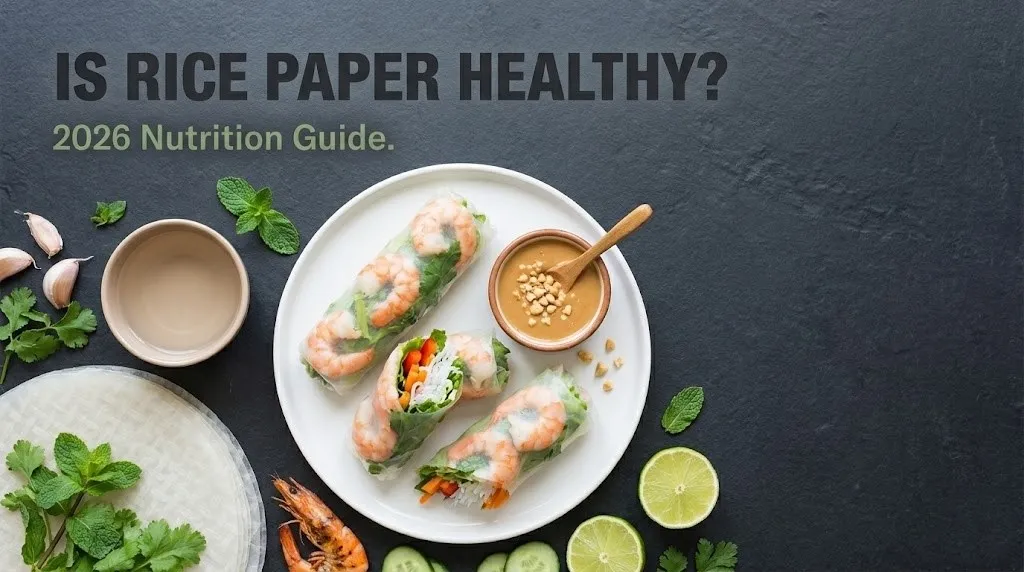
A rice paper roll is a beautiful thing. The translucent wrapper shows the colors of the vegetables, herbs, and shrimp inside. It feels light in your hand and refreshing to eat. It looks and feels healthy. The wrapper itself is a simple food made from rice flour, tapioca starch, water, and salt. It is not a nutritional powerhouse. It is a neutral canvas for whatever you choose to wrap inside.
The Academy of Nutrition and Dietetics identifies balanced meals as those that include protein, fiber-rich carbohydrates, and healthy fats. Rice paper provides the carbohydrate wrapper. The fillings provide everything else. This article breaks down what rice paper is, how it compares to other wraps, and how to build rice paper rolls that are genuinely nutritious meals rather than just low-calorie snacks.
What Is Rice Paper and How Is It Made
Rice paper, known as banh trang in Vietnamese, is an edible wrapper made from a thin paste of rice flour, tapioca starch, water, and salt that is spread onto bamboo mats, steamed, and dried in the sun into translucent, brittle rounds that become pliable when briefly dipped in warm water.
The ingredients are simple. Rice flour provides the structure. Tapioca starch adds flexibility and the characteristic chewy texture. Salt adds a small amount of flavor and acts as a preservative. Water binds everything together and then evaporates during drying.
The process is traditional and largely unchanged. The rice flour and tapioca slurry is spread thinly onto cloth-covered bamboo frames. The frames are placed over steaming water. The starch gelatinizes almost instantly, forming a thin, translucent sheet. The sheets are laid on bamboo mats and dried in the sun. The result is a brittle, semi-transparent round that can be stored for months at room temperature.
When dipped briefly in warm water, the dried starch rehydrates and becomes soft, pliable, and slightly sticky. This allows the wrapper to seal to itself, holding the fillings inside without adhesive. The wrapper has almost no flavor of its own, which is intentional. It is a neutral vehicle for the fillings and dipping sauce.
Dietary Sensitivity Note: Most rice paper is naturally gluten-free, vegan, and free of the top nine allergens. Some brands may process on shared equipment with wheat or soy. Check the label if you have allergies.
Rice Paper Nutrition Facts and Calories
One sheet of rice paper (8.5-inch round) contains approximately 30 to 35 calories, 7 to 8 grams of carbohydrates, 0 grams of fat, 0 grams of fiber, 0 grams of protein, and 30 to 50 milligrams of sodium.
Here is the full nutritional profile per standard sheet:
| Nutrient (per 8.5-inch sheet) | Amount | % Daily Value |
|---|---|---|
| Calories | 33 | — |
| Total Fat | 0g | 0% |
| Sodium | 35mg | 2% |
| Total Carbohydrates | 7.5g | 3% |
| Dietary Fiber | 0g | 0% |
| Sugars | 0g | — |
| Protein | 0g | 0% |
Rice paper is essentially a blank nutritional slate. It provides a small amount of refined carbohydrate and almost nothing else. This is not a criticism. It is an accurate description of what the product is designed to do. Rice paper is a wrapper. It is not meant to be the nutritional centerpiece of a meal. Its value is in what it holds.
A typical Vietnamese spring roll uses one to two sheets of rice paper. The wrapper contributes 30 to 70 calories and 7 to 15 grams of carbohydrate. The fillings (shrimp, pork, tofu, vegetables, vermicelli noodles, herbs) and the dipping sauce provide the protein, fat, additional carbohydrates, fiber, and micronutrients that make the roll a meal.
Dietary Sensitivity Note: Rice paper contains zero grams of fiber and zero grams of protein. It is a refined carbohydrate. The nutritional completeness of a rice paper roll depends on the fillings.
Key Takeaway: Rice paper is a low-calorie, fat-free, protein-free, fiber-free carbohydrate wrapper. Its health value is neutral. The fillings determine whether the roll is a healthy meal.
Is Rice Paper Healthy
Rice paper is a healthy food in the context of being a low-calorie, fat-free, gluten-free wrapper that replaces higher-calorie, higher-fat options like flour tortillas, but it is not inherently nutritious on its own because it lacks protein, fiber, vitamins, and minerals.
The word “healthy” applied to a food wrapper requires context. Rice paper is healthy compared to a flour tortilla if you are counting calories or avoiding gluten. It is less healthy than a lettuce wrap if you are trying to reduce refined carbohydrates. It is a better choice than a fried egg roll wrapper. It is nutritionally neutral. It is what you wrap that matters.
What rice paper does well:
- Low calorie density at 30 to 35 calories per sheet
- Zero fat and zero saturated fat
- Naturally gluten-free, suitable for celiac disease and gluten sensitivity
- No artificial ingredients or preservatives in traditional versions
- Portion control: the wrapper naturally limits how much filling you can add
What rice paper does not do:
- Provides no fiber to support digestion or satiety
- Provides no protein for muscle maintenance or meal satisfaction
- Is a refined carbohydrate with a high glycemic index
- Provides negligible micronutrients
A rice paper wrapper is a tool. It is a way to hold vegetables, lean protein, and fresh herbs in a handheld format. The tool is healthy. The project depends on how you use it.
Dietary Sensitivity Note: Rice paper is a better choice than wheat-based wraps for people with celiac disease or gluten sensitivity. It is not a better choice for people specifically seeking higher fiber or lower carbohydrate options.
Rice Paper vs Flour Tortillas and Other Wraps
Rice paper is lower in calories and fat than flour tortillas and wheat wraps but also lower in fiber and protein, making it the lightest wrapper option that saves calories at the cost of satiety and nutritional substance.
Here is how one standard wrapper compares across common options:
| Wrapper (1 standard serving) | Calories | Carbs | Fiber | Protein | Fat | Gluten-Free |
|---|---|---|---|---|---|---|
| Rice paper (1 sheet, 8.5″) | 33 | 7.5g | 0g | 0g | 0g | Yes |
| Corn tortilla (6″) | 50 | 10g | 1.5g | 1g | 0.5g | Yes |
| Flour tortilla (8″) | 140 | 24g | 1g | 4g | 3.5g | No |
| Whole wheat wrap (8″) | 130 | 22g | 3g | 5g | 2.5g | No |
| Lavash wrap (1/2 sheet) | 100 | 18g | 1g | 3g | 1g | No |
| Nori sheet (seaweed) | 5 | 0.5g | 0.5g | 0.5g | 0g | Yes |
| Butter lettuce leaf | 5 | 1g | 1g | 0.5g | 0g | Yes |
Rice paper is the calorie winner. At 33 calories per sheet, it is less than a quarter of a flour tortilla. For someone counting calories strictly, replacing a flour tortilla wrap with two rice paper rolls saves 80 to 100 calories from the wrapper alone.
The tradeoff is satiety. A whole wheat wrap with 5 grams of protein and 3 grams of fiber will keep you full longer than rice paper with zero protein and zero fiber. The fillings can compensate. A rice paper roll packed with shrimp, tofu, and vegetables can be a more complete meal than a turkey wrap on a flour tortilla. The wrapper is only part of the equation.
Corn tortillas are the closest nutritional comparison. They are also gluten-free, low in calories, and made from whole grain corn with slightly more fiber than rice paper. For tacos, corn tortillas are the better nutritional choice. For fresh, cold rolls with herbs and vegetables, rice paper is traditional and appropriate.
Key Takeaway: Rice paper is the lowest-calorie wrapper. It is best for fresh rolls where the fillings provide protein and fiber. Corn tortillas offer slightly more fiber for a similar calorie count.
Is Rice Paper Gluten Free
Rice paper is naturally gluten-free because it is made from rice flour and tapioca starch, which do not contain wheat, barley, rye, or any gluten-containing grains, making it safe for people with celiac disease and gluten sensitivity.
The Academy of Nutrition and Dietetics advises that naturally gluten-free grains including rice, corn, and tapioca are safe for gluten-free diets. Rice paper fits this category. The basic ingredients (rice flour, tapioca starch, water, salt) contain no gluten.
Cross-contamination is the only concern. Some rice paper brands are produced in facilities that also process wheat products. For someone with celiac disease, choosing a brand labeled “certified gluten-free” or verifying the manufacturing facility with the company is prudent. Most major rice paper brands are gluten-free.
Gluten-containing dipping sauces can undo the gluten-free benefit. Hoisin sauce and soy sauce commonly contain wheat. Use tamari, coconut aminos, or verify that the hoisin brand is gluten-free. Nuoc cham, the traditional Vietnamese dipping sauce made from fish sauce, lime juice, sugar, garlic, and chilies, is naturally gluten-free.
Dietary Sensitivity Note: When ordering rice paper rolls at restaurants, confirm that the dipping sauce is gluten-free. Soy-based sauces are the most common hidden source of gluten in Vietnamese cuisine.
Rice Paper and Blood Sugar
Rice paper has a high glycemic index because it is made from refined rice flour and tapioca starch, both of which digest rapidly and can cause a blood glucose spike, making it a food that people with diabetes should pair with protein, fiber, and fat to slow absorption.
The glycemic index (GI) measures how quickly a food raises blood glucose. Pure glucose has a GI of 100. White rice has a GI of approximately 70 to 75. Rice paper, made from rice flour and the even faster-digesting tapioca starch, has a GI estimated in the 70 to 80 range, making it a high-GI food.
This does not mean rice paper rolls are off-limits for people with diabetes. It means the fillings matter enormously. A rice paper roll filled only with vermicelli noodles and a sweet dipping sauce will spike blood glucose. A rice paper roll filled with shrimp, tofu, avocado, cucumber, and herbs, dipped in a small amount of peanut sauce, will produce a slower, lower glucose response.
The protein, fat, and fiber in the fillings slow gastric emptying and blunt the blood sugar curve. The American Diabetes Association recognizes that pairing carbohydrate with protein and fat reduces the post-meal blood glucose peak.
Strategies for blood sugar-friendly rice paper rolls:
- Fill with lean protein (shrimp, chicken, tofu, pork)
- Add healthy fat (avocado, peanut sauce, sesame oil)
- Add fiber (lettuce, cucumber, carrot, herbs, bean sprouts)
- Minimize vermicelli noodles inside the roll
- Choose a savory dipping sauce over sweet hoisin
- Eat rolls as part of a meal with additional vegetables
Dietary Sensitivity Note: People with diabetes should monitor their individual blood glucose response to rice paper rolls. The same roll can affect different people differently.
Is Rice Paper Good for Weight Loss
Rice paper can support weight loss as a low-calorie wrapper that replaces higher-calorie bread and tortillas, but only when the rolls are filled with lean protein and vegetables and served with a measured amount of dipping sauce.
The math is favorable. Two rice paper rolls filled with shrimp, vegetables, and herbs, with a tablespoon of peanut sauce, total approximately 250 to 350 calories. This is a light meal or substantial snack. Two flour tortilla wraps with similar fillings would total 400 to 500 calories, with the extra calories coming entirely from the wrapper.
The risk is that rice paper rolls are easy to overeat. They are light, small, and go down quickly. Four or five rolls with generous peanut sauce can become a 600 to 700-calorie meal without feeling filling. The low protein and fiber content of the wrapper means satiety depends entirely on the fillings.
For weight loss, build rolls that include:
- At least 3 to 4 ounces of lean protein per serving (about 2 rolls)
- At least 1 cup of vegetables and herbs per serving
- A small amount of healthy fat (avocado, peanut sauce, sesame oil)
- Limited or no vermicelli noodles (they add refined carbohydrate without fiber)
Dipping sauce is where calories can silently climb. Two tablespoons of peanut sauce can add 80 to 120 calories. Two tablespoons of hoisin add 50 to 80 calories with significant sugar. Measure the sauce. Do not dunk freely.
Dietary Sensitivity Note: For the lowest-calorie rice paper meal, fill rolls with shrimp, cucumber, lettuce, mint, and cilantro. Dip in nuoc cham (fish sauce, lime, water, garlic, chili) rather than peanut or hoisin sauce.
Are Rice Paper Rolls Healthy
Rice paper rolls are healthy when filled primarily with lean protein, fresh vegetables, and herbs, and served with a measured amount of dipping sauce, creating a balanced meal that is naturally low in calories and fat while providing protein, fiber, and micronutrients from the fillings.
The healthfulness of a rice paper roll is not in the wrapper. It is in the filling. Here is how common fillings affect the nutritional profile of two rolls:
| Filling Combination | Calories (2 rolls) | Protein | Fiber |
|---|---|---|---|
| Shrimp, lettuce, herbs, cucumber | 180 | 15g | 2g |
| Tofu, avocado, carrot, herbs | 250 | 10g | 5g |
| Pork, vermicelli, lettuce, herbs | 280 | 14g | 1g |
| Shrimp, vermicelli, pork, herbs | 290 | 18g | 1g |
| Tofu, vermicelli, lettuce, peanut sauce | 320 | 12g | 3g |
The healthiest rolls are those with visible vegetables and protein and minimal or no vermicelli noodles. The noodles add refined carbohydrate and calories without fiber or protein. Traditional Vietnamese summer rolls often include a small amount of vermicelli. The amount is typically modest, about 2 to 3 tablespoons per roll, which adds 40 to 60 calories. This is fine for most people. For someone strictly managing carbohydrates, skipping the noodles is a simple modification.
The dipping sauce completes the roll. Nuoc cham is the lightest option at 10 to 20 calories per tablespoon. Peanut sauce is richer at 40 to 60 calories per tablespoon but adds healthy fat and a small amount of protein. Hoisin sauce is the most sugar-heavy.
Dietary Sensitivity Note: Vegetarian rolls with tofu and vegetables can be a complete meal if they include enough protein and fat. Add avocado or a peanut-based sauce for satiety.
How to Build Healthy Rice Paper Rolls
Build healthy rice paper rolls by filling each roll with a balance of lean protein, crunchy vegetables, fresh herbs, and a small amount of healthy fat, with rice paper as the wrapper and a measured dipping sauce on the side.
This is the formula for a nutritionally complete rice paper roll:
Protein (choose 1 to 2, 2 to 3 ounces per roll):
- Cooked shrimp, halved lengthwise
- Sliced grilled chicken breast
- Sliced pork tenderloin
- Baked or pan-seared tofu
- Cooked edamame
Vegetables (choose 2 to 3, 1/4 to 1/3 cup per roll):
- Butter lettuce or green leaf lettuce
- Cucumber, julienned or sliced thin
- Carrot, julienned or shredded
- Red bell pepper, sliced thin
- Bean sprouts
- Avocado slices
Fresh herbs (choose 2, a small handful per roll):
- Fresh mint leaves
- Fresh cilantro
- Thai basil
- Fresh chives
Carbohydrate (optional, 1 to 2 tablespoons per roll):
- Cooked vermicelli rice noodles
- Cooked kelp noodles (low carb alternative)
- Omit for lower carbohydrate
Dipping sauce (1 to 2 tablespoons total):
- Nuoc cham (fish sauce, lime, water, garlic, chili, sugar)
- Peanut sauce (peanut butter, hoisin, water, lime)
- Hoisin sauce with crushed peanuts
- Soy-ginger dipping sauce
Assembly steps:
- Dip one sheet of rice paper in warm water for 2 to 3 seconds. Do not soak. It will continue to soften as you work.
- Lay the softened wrapper flat on a damp cutting board or plate.
- Place a piece of lettuce in the center as a bed for other ingredients. This prevents sharp ingredients from tearing the wrapper.
- Layer herbs, vegetables, and protein on top of the lettuce.
- Add vermicelli noodles if using.
- Fold the bottom edge of the wrapper up over the filling.
- Fold in the left and right sides.
- Roll tightly upward, like a burrito. The wrapper will seal to itself.
- Repeat with remaining ingredients.
- Serve immediately with dipping sauce.
Quick Tip:
- Keep a damp paper towel over finished rolls to prevent them from drying out and sticking together. Rice paper rolls are best eaten within a few hours of assembly.
Healthiest Fillings for Rice Paper Rolls
The healthiest fillings for rice paper rolls are lean proteins like shrimp, chicken breast, and tofu, combined with non-starchy vegetables like lettuce, cucumber, carrot, and bell pepper, and generous amounts of fresh herbs like mint and cilantro.
Fillings determine the nutritional value of the roll. Here is a ranking of common protein fillings:
| Protein | Calories (per 3 oz) | Protein | Best For |
|---|---|---|---|
| Shrimp | 84 | 20g | Leanest, traditional |
| Chicken breast | 140 | 26g | Highest protein |
| Tofu (firm) | 70 | 8g | Vegan, absorbs flavors |
| Pork tenderloin | 120 | 22g | Traditional, leaner than belly |
| Salmon (baked) | 155 | 22g | Omega-3s |
| Edamame | 100 | 9g | Vegan, fiber |
Vegetables add volume, fiber, and micronutrients for very few calories. Butter lettuce is the traditional base. Cucumber adds crunch. Carrot adds color and vitamin A. Bell pepper adds vitamin C. Bean sprouts add a juicy crunch. The more vegetables, the more fiber and the more filling the roll.
Herbs are not garnish. They are a core ingredient. Mint, cilantro, and Thai basil contribute phytochemicals and make the roll taste fresh and complete.
Fillings to use sparingly or avoid:
- Fried proteins (fried shrimp, fried tofu)
- Cream cheese or mayonnaise-based fillings
- Excessive vermicelli noodles (they displace vegetables)
- Crispy fried shallots (add significant oil)
Dietary Sensitivity Note: For nut-free rolls, replace peanut sauce with nuoc cham or soy-ginger sauce. For soy-free, use coconut aminos in dipping sauces and avoid tofu.
Key Takeaway: The best rice paper roll is a protein, at least two vegetables, and a handful of herbs, wrapped in rice paper and dipped lightly. The simpler the filling, the better the nutritional profile.
Healthy Rice Paper Dipping Sauces
The healthiest rice paper dipping sauces are nuoc cham, a Vietnamese fish sauce and lime dressing at 15 to 25 calories per tablespoon, and light peanut sauce made with powdered peanut butter at 25 to 35 calories per tablespoon.
Dipping sauce is where calories, sugar, and sodium can accumulate unnoticed. A few dunks can add 100 to 200 calories to a meal. Measured amounts keep the sauce in a supporting role.
Nuoc cham (traditional Vietnamese dipping sauce):
- 2 tablespoons fish sauce
- 2 tablespoons fresh lime juice
- 2 tablespoons warm water
- 1 to 2 teaspoons sugar or maple syrup
- 1 small garlic clove, minced
- 1 Thai chili, sliced thin (optional)
Makes about 1/3 cup. 15 calories per tablespoon.
Light peanut sauce:
- 2 tablespoons powdered peanut butter (PB2)
- 1 tablespoon hoisin sauce
- 1 tablespoon warm water
- 1 teaspoon lime juice
- Dash of sriracha (optional)
Makes about 1/4 cup. 30 calories per tablespoon.
Soy-ginger dipping sauce:
- 2 tablespoons low-sodium tamari
- 1 tablespoon rice vinegar
- 1 teaspoon sesame oil
- 1/2 teaspoon grated fresh ginger
- Pinch of red pepper flakes
Makes about 3 tablespoons. 20 calories per tablespoon.
Sauce comparison per tablespoon:
| Sauce | Calories | Sugar | Sodium |
|---|---|---|---|
| Nuoc cham | 15 | 2g | 400mg |
| Light peanut sauce | 30 | 2g | 150mg |
| Soy-ginger sauce | 20 | 0g | 350mg |
| Regular peanut sauce | 60 | 3g | 200mg |
| Hoisin sauce | 50 | 10g | 250mg |
Dietary Sensitivity Note: Nuoc cham contains fish sauce and is not vegetarian or vegan. Soy-ginger sauce is vegan. Light peanut sauce is vegan if made with vegan hoisin.
Rice Paper Rolls vs Sandwiches
Rice paper rolls are generally lower in calories and carbohydrates than an equivalent sandwich on bread, but sandwiches typically provide more protein and fiber from the bread, making the choice dependent on your nutritional priorities.
A direct comparison of a standard lunch:
| Meal | Calories | Protein | Carbs | Fiber | Fat |
|---|---|---|---|---|---|
| 3 shrimp rice paper rolls with peanut sauce | 320 | 22g | 35g | 3g | 12g |
| Turkey sandwich on whole wheat | 380 | 30g | 40g | 5g | 14g |
| Chicken wrap on flour tortilla | 450 | 32g | 42g | 3g | 18g |
Rice paper rolls are the lowest-calorie option. The sandwich has more fiber from the whole wheat bread. The wrap has the most calories and fat from the larger tortilla.
The best choice depends on context. For a light lunch on a hot day, rice paper rolls are refreshing and low-calorie. For a more substantial meal that needs to carry you through the afternoon, a sandwich on whole grain bread with similar fillings will be more satiating due to the fiber and protein in the bread.
Dietary Sensitivity Note: Rice paper rolls are naturally gluten-free. Sandwiches are not unless made with gluten-free bread. For gluten-free eaters, rice paper rolls are the better choice.
Is Fried Rice Paper Healthy
Fried rice paper is not healthy because frying adds 10 to 15 grams of oil-based fat and 100 to 150 calories per roll, transforming a low-calorie wrapper into a high-fat, calorie-dense food similar to fried egg rolls.
Fresh rice paper rolls are steamed or served raw. Fried rice paper rolls, sometimes called Vietnamese fried spring rolls (cha gio), are a different food. The rice paper wrapper is filled, rolled, and deep-fried until crisp and golden. The wrapper absorbs frying oil. The calorie count triples.
| Preparation | Calories (per roll) | Fat |
|---|---|---|
| Fresh rice paper roll | 80-120 | 1-3g |
| Fried rice paper roll | 180-250 | 10-15g |
Fried rice paper rolls are a delicious occasional indulgence. They are not a health food. If you enjoy them, eat them occasionally and balance the meal with fresh vegetables and a light soup.
Dietary Sensitivity Note: Fried rice paper rolls are often fried in shared oil with wheat-containing items. Cross-contamination is possible. Verify with the restaurant if you have celiac disease.
Rice Paper on Low Carb and Keto Diets
Rice paper is not suitable for strict low-carb or ketogenic diets because each sheet contains 7 to 8 grams of net carbohydrates, and a meal of two to three rolls provides 20 to 30 grams of net carbs, which exceeds ketogenic limits.
A standard ketogenic diet limits carbohydrates to 20 to 50 grams per day. Two rice paper rolls with vegetable and protein fillings contain approximately 20 to 25 grams of net carbohydrates. Three rolls contain 30 to 35 grams. This can fit within moderate low-carb eating (50 to 100 grams) but not strict keto.
Low-carb alternatives to rice paper wrappers:
- Butter lettuce leaves: 1g net carb per leaf
- Collard green leaves (blanched): 3g net carbs per leaf
- Nori seaweed sheets: 0.5g net carbs per sheet
- Cucumber ribbons: 2g net carbs per half cup
- Kelp noodles as filling: 1g net carb per serving
Dietary Sensitivity Note: For a keto-friendly Vietnamese-style roll, wrap shrimp, avocado, cucumber, and herbs in a butter lettuce leaf and dip in a peanut sauce made with powdered peanut butter. Total carbohydrates: 5 to 8 grams net.
Rice Paper Roll Meal Prep and Storage
Fresh rice paper rolls are best eaten within a few hours of assembly and do not store well for more than 24 hours because the wrapper becomes gummy and the herbs wilt, but the components can be prepped ahead and assembled in minutes.
Rice paper rolls are not a meal prep dish in the traditional sense. The assembled rolls do not hold up well in the refrigerator. The wrapper absorbs moisture from the fillings and becomes sticky and gummy. The herbs darken. The texture deteriorates.
Component prep is the solution. Prepare all the fillings in advance, store them separately, and assemble rolls when ready to eat. The assembly takes about 5 minutes per person.
Meal prep schedule:
- 2 to 3 days ahead: Make dipping sauce. Store in the refrigerator.
- 1 day ahead: Cook protein (shrimp, chicken, tofu). Cook vermicelli noodles if using. Wash and dry lettuce and herbs. Julienne vegetables. Store each component in a separate container.
- Day of: Assemble rolls just before eating or pack components separately for lunch.
To pack rice paper rolls for lunch, keep the dipping sauce in a small sealed container. Wrap rolls individually in damp paper towels and place in an airtight container. Consume within 4 hours for best quality. If refrigeration is unavoidable, wrap each roll tightly in plastic wrap to minimize air exposure.
Dietary Sensitivity Note: Cooked shrimp and chicken should be refrigerated within 2 hours of cooking and consumed within 3 days. Follow standard food safety guidelines for protein storage.
Key Takeaway: Prep the fillings in advance. Assemble fresh. Rice paper rolls are a quick assembly meal, not a make-ahead dish.
Frequently Asked Questions About Rice Paper
Is rice paper healthier than bread?
Rice paper is lower in calories than most breads but also lower in fiber and protein.
Two slices of whole wheat bread provide 140 calories, 8 grams of protein, and 4 grams of fiber. Two rice paper sheets provide 66 calories, 0 grams of protein, and 0 grams of fiber.
Rice paper is a better choice for calorie reduction. Whole wheat bread is a better choice for satiety and nutrition.
Are rice paper rolls good for weight loss?
Yes, rice paper rolls can support weight loss because two to three rolls total 250 to 350 calories with lean protein and vegetables.
The wrapper is low-calorie, and the fillings provide protein and fiber for satiety.
Measure your dipping sauce. Sauce calories add up quickly and can undo the calorie advantage.
Is rice paper gluten free?
Yes, rice paper is naturally gluten-free because it is made from rice flour and tapioca starch with no wheat, barley, or rye.
Verify that the brand is processed in a gluten-free facility if you have celiac disease.
Soy sauce and hoisin-based dipping sauces may contain gluten. Use tamari or verify ingredients.
Can diabetics eat rice paper rolls?
People with diabetes can eat rice paper rolls if they account for the 15 to 25 grams of carbohydrate in two to three rolls and fill them with protein, vegetables, and healthy fat.
The wrapper is a refined carbohydrate with a high glycemic index. The fillings slow absorption.
A roll filled with shrimp, avocado, cucumber, and herbs will produce a gentler blood glucose response than one filled with vermicelli noodles and served with sweet hoisin.
How many calories are in a rice paper roll?
A fresh rice paper roll with shrimp, vegetables, and herbs contains approximately 80 to 120 calories, depending on size and fillings.
The wrapper contributes about 33 calories. The fillings and dipping sauce contribute the rest.
Two to three rolls make a light meal at 250 to 350 calories.
Rice paper is a transparent wrapper for transparent eating. It hides nothing. The fillings are visible. The colors are real. You know exactly what you are eating, which is more than can be said for most packaged wraps and sandwich breads.
The wrapper itself is nutritionally neutral, a thin sheet of refined carbohydrate with almost no calories and almost no nutrients. What makes a rice paper roll healthy is what you put inside. Shrimp. Tofu. Lettuce. Cucumber. Carrot. Mint. Cilantro. A light dip in nuoc cham or peanut sauce. That is a meal that is fresh, satisfying, and genuinely good for you.
Build your rolls around protein and vegetables. Use the wrapper as what it is: a way to hold everything together, not the main event. Eat them fresh. Dip lightly. Enjoy the fact that healthy eating sometimes looks exactly like the food you want to eat.