Healthy nourishment is not a vague feeling of fullness. It is the measurable physiological state where your body receives adequate macronutrients for energy, and sufficient vitamins, minerals, and phytonutrients to regulate every system from immune function to cognitive performance. The CW Bianca Care approach to recipes builds on this precise definition, crafting meals that look beautiful on the plate and, more importantly, deliver the specific chemical compounds your cells actually need to function.
The Academy of Nutrition and Dietetics defines a nutrient-dense diet as one that maximizes vitamins and minerals relative to calories. A bowl of kale delivers 134 percent of your daily vitamin C and 684 percent of your daily vitamin K for just 33 calories. A bag of chips delivers calories and sodium with essentially zero micronutrients. The difference between the two plates is the difference between eating and nourishing.
This guide breaks down the exact mechanics of nourishment, from bioavailability to cooking methods. We will cover how to read your body’s signs of proper nutrient intake, how to combine ingredients to unlock fat-soluble vitamins, and how to adapt the CW Bianca Care philosophy to vegan, gluten-free, and anti-inflammatory eating patterns in 2026.
healthy nourishment cwbiancarecipes
Healthy nourishment in the CW Bianca Care philosophy refers to the intentional selection and preparation of whole foods that supply complete proteins, complex carbohydrates, healthy fats, and a full spectrum of micronutrients without reliance on synthetic fortification or ultra-processed ingredients. The term “cwbiancarecipes” signals a specific collection of meal guides that prioritize color, texture, and phytochemical density over calorie counting.
The foundational principle is that food must perform a function. Every ingredient in a CW Bianca Care recipe serves a specific physiological purpose. Chia seeds (Salvia hispanica) are not just a thickener for pudding. They deliver 5 grams of fiber and 2.5 grams of omega-3 alpha-linolenic acid (ALA) per tablespoon, supporting digestive motility and reducing systemic inflammation. The recipes are structured so that no ingredient is empty filler. Even the garnishes, like parsley or lemon zest, contribute measurable amounts of vitamin C and flavonoids.
This approach rejects the binary of “good food” and “bad food.” Instead, it operates on a spectrum of nutrient density. A recipe might include a modest amount of unrefined sugar, like maple syrup, if it provides trace minerals like manganese and zinc alongside its sweetness. The difference between a standard recipe and a CW Bianca Care recipe is that the latter can always answer the question: “What does this ingredient contribute to my biological function?”
| Nutritional Goal | CW Bianca Care Ingredient Example | Physiological Function |
|---|---|---|
| Anti-inflammatory fat | Extra-virgin olive oil | Oleocanthal reduces COX-2 enzymes |
| Complete protein | Quinoa (Chenopodium quinoa) | All 9 essential amino acids |
| Soluble fiber | Rolled oats (Avena sativa) | Beta-glucan lowers LDL cholesterol |
| Antioxidants | Wild blueberries | Anthocyanins neutralize free radicals |
what is healthy nourishment
Healthy nourishment is the process of consuming a diet that provides the body with the exact amino acids, fatty acids, vitamins, minerals, and phytonutrients required for cellular repair, immune defense, energy production, and neurological function without triggering chronic inflammatory pathways. It is a biological state, not an aesthetic or a marketing term.
The World Health Organization defines malnutrition not just as undernutrition but also as the consumption of calorie-dense, micronutrient-poor foods that leads to obesity, metabolic syndrome, and hidden hunger. A person can consume 3,000 calories a day from ultra-processed food and be profoundly malnourished. Their body has fuel but no spare parts. Healthy nourishment is the inverse. It prioritizes the spare parts, the vitamins, minerals, and antioxidants that run the enzymatic machinery of the human body.
In the CW Bianca Care framework, this translates to the “Rainbow Rule.” Every meal must contain at least three distinct colors from whole plant or animal sources. The deep purple of a blackberry indicates anthocyanins. The bright orange of a sweet potato indicates beta-carotene, a vitamin A precursor. The deep green of steamed broccoli indicates chlorophyll and glucosinolates. These pigments are not cosmetic. They are chemical clues to the nutrient payload of the food.
Key Takeaway: Nourishment is not about calorie math. It is about the micronutrient density per calorie, and the color of your food is the fastest visual read of that density.
signs of proper nourishment
Visible signs of proper nourishment include firm nail beds without ridges, lustrous hair with minimal shedding, clear skin, a pink and moist tongue, and consistent energy levels throughout the day without needing stimulants. Internally, proper nourishment is indicated by regular, formed bowel movements, a resting heart rate within a healthy range, and the absence of frequent infections.
The human body is an honest reporter. Brittle nails that split vertically often signal a deficiency in biotin (vitamin B7) or iron. A pale, smooth tongue may indicate iron-deficiency anemia or a lack of B vitamins. Cracks at the corners of the mouth, a condition called angular cheilitis, are frequently linked to inadequate riboflavin (vitamin B2) intake. CW Bianca Care recipes address these subtle signs by targeting specific nutrient gaps.
Digestion is the most immediate feedback loop for nourishment. If your meal lacks soluble fiber from sources like oats, apples, or legumes, the gut microbiome produces fewer short-chain fatty acids like butyrate. Butyrate is the primary fuel for colon cells and a potent anti-inflammatory agent. A diet that is “nourishing” on paper but fails to produce comfortable, regular digestion is not genuinely nourishing you.
- Strong, smooth nails: Adequate biotin, iron, and zinc.
- Clear skin: Balanced omega-3 to omega-6 ratio, adequate vitamin A and zinc.
- Sustained energy: Stable blood glucose from complex carbohydrates and sufficient B vitamins.
- Restful sleep: Adequate magnesium and tryptophan intake.
how to maximize nutrient absorption
You maximize nutrient absorption by pairing fat-soluble vitamins with dietary fat, combining iron sources with vitamin C, fermenting or soaking grains to reduce mineral-binding phytates, and cooking specific vegetables to break down their rigid cellulose walls. Nutrient absorption, or bioavailability, is the percentage of an ingested nutrient that actually reaches your bloodstream.
The most impactful absorption strategy is the strategic pairing of fat. The carotenoids in a raw carrot, including beta-carotene, are locked inside tough cellulose cells. If you eat a raw carrot without fat, your body absorbs roughly 3 to 5 percent of the available carotenoids. If you roast that same carrot in olive oil, the heat ruptures the cellulose, and the fat dissolves the carotenoids, boosting absorption to over 30 percent. This is why CW Bianca Care recipes always include a healthy fat source like avocado, extra-virgin olive oil, or seeds alongside vegetables.
Phytates, found in the bran of whole grains and legumes, are the primary dietary inhibitor of mineral absorption. They bind to iron, zinc, and calcium in the digestive tract, rendering them unabsorbable. Soaking oats overnight in an acidic medium, like a tablespoon of lemon juice or yogurt, activates the enzyme phytase, which breaks down phytates. This single preparation step can increase the availability of iron in oats by a factor of ten.
To maximize nutrient absorption:
- Pair carotenoid-rich foods (carrots, sweet potato, kale) with 1 to 2 teaspoons of fat.
- Squeeze lemon juice over spinach and lentil dishes to convert plant-based iron to a more absorbable form.
- Soak rolled oats or brown rice for 8 to 12 hours in water with an acid before cooking.
- Consume fermented foods like sauerkraut or yogurt to optimize the gut microbiome, which synthesizes vitamin K2 and B vitamins.
bioavailability of nutrients
Bioavailability refers to the fraction of an ingested nutrient that is digested, absorbed, and utilized by the body. It varies dramatically between food sources. The heme iron in a piece of cooked beef is approximately 25 to 30 percent bioavailable. The non-heme iron in a cup of cooked spinach is only 2 to 5 percent bioavailable due to the presence of oxalates and the chemical form of the iron.
Understanding bioavailability forces a re-evaluation of “healthy” food comparisons. A cup of raw kale contains more calcium per gram than a cup of milk on paper. However, kale is high in oxalic acid, which binds to calcium and prevents absorption. The calcium in milk has a bioavailability of roughly 30 percent. The calcium in raw kale has a bioavailability below 10 percent. If you are relying on raw kale for your calcium needs, you may fall short despite impressive spreadsheet numbers.
The CW Bianca Care approach addresses this through precise cooking techniques. Massaging raw kale with olive oil and lemon juice for five minutes begins to break down the cellulose and oxalates, softening the leaves and increasing nutrient availability. Steaming broccoli for 3 to 4 minutes maximizes the activity of myrosinase, an enzyme that converts glucosinolates into the anti-cancer compound sulforaphane. Boiling broccoli destroys myrosinase entirely, losing the primary health benefit of the vegetable.
| Nutrient | High-Bioavailability Source | Low-Bioavailability Source |
|---|---|---|
| Iron | Beef liver (heme iron) | Raw spinach (non-heme + oxalates) |
| Calcium | Yogurt, sardines with bones | Raw kale, raw spinach |
| Protein | Eggs (complete, high PDCAAS) | Rice protein isolate (incomplete) |
| Vitamin A | Liver (retinol) | Carrots (beta-carotene, requires conversion) |
Key Takeaway: A nutrient on a nutrition label is not a nutrient in your bloodstream. How you cook, pair, and process food determines how much of it your body actually keeps.
micronutrients in whole foods
Micronutrients are vitamins and minerals required in small quantities that act as cofactors, antioxidants, and structural components in the human body. Whole foods supply these micronutrients in complex matrices that include fiber, water, and companion phytonutrients that often enhance their function, a benefit isolated supplements cannot replicate.
The mineral magnesium illustrates this perfectly. It is a cofactor for over 300 enzymatic reactions, including DNA repair and muscle relaxation. A quarter-cup of pumpkin seeds delivers roughly 190 milligrams of magnesium, nearly half the daily requirement, packaged alongside zinc, copper, and lignans. A magnesium oxide supplement delivers a high dose of elemental magnesium but with a bioavailability of roughly 4 percent. The magnesium in pumpkin seeds, bound to amino acid chelates, absorbs at a much higher rate.
The CW Bianca Care pantry is built around these nutrient-dense, whole-food sources. Nutritional yeast is prioritized not just for its cheesy flavor but because a single tablespoon provides roughly 5 micrograms of vitamin B12, a nutrient absent from all plant foods. This addresses one of the most common deficiencies in plant-forward diets without requiring a synthetic pill. Sunflower seeds are used as a garnish because they are one of the richest natural sources of vitamin E, providing 37 percent of the daily requirement in a single ounce.
- Vitamin C: Red bell pepper (152 mg per cup, more than an orange).
- Folate: Lentils (358 mcg per cup, nearly the entire daily requirement).
- Potassium: Baked potato with skin (1,600 mg, more than a large banana).
- Selenium: Two Brazil nuts (100 percent of the daily value).
anti-inflammatory meal prep
Anti-inflammatory meal prep involves batch-cooking ingredients that actively lower C-reactive protein and other systemic inflammatory markers while strictly avoiding refined oils high in omega-6 fatty acids, refined sugars, and charred or blackened animal proteins that contain advanced glycation end-products (AGEs).
Chronic low-grade inflammation is the common pathway behind heart disease, type 2 diabetes, and autoimmune conditions. The CW Bianca Care anti-inflammatory prep strategy is built around a 2:1 ratio of omega-6 to omega-3 fatty acids. The standard Western diet often reaches a ratio of 15:1, driven by soybean oil, corn oil, and processed snacks. The weekly CW Bianca meal prep swaps these oils entirely for extra-virgin olive oil, avocado oil, and flaxseed oil.
A standard prep session includes roasting a sheet pan of broccoli, red onion, and salmon at 400°F for 15 minutes. The salmon provides the long-chain omega-3s docosahexaenoic acid (DHA) and eicosapentaenoic acid (EPA) . The broccoli provides sulfuraphane. The red onion provides quercetin, a flavonoid that stabilizes mast cells and reduces histamine release. The components are stored separately and assembled into bowls throughout the week, ensuring variety without midweek cooking fatigue.
- Salmon (DHA and EPA): Directly resolves inflammation via resolvins.
- Turmeric + black pepper: Piperine increases curcumin absorption by 2,000 percent.
- Broccoli: Sulforaphane inhibits NF-kB, the master switch of inflammation.
- Berries: Anthocyanins reduce oxidative stress on arterial walls.
how to build a balanced plate
A balanced plate consists of one-half non-starchy vegetables and fruit, one-quarter lean or plant-based protein, and one-quarter complex carbohydrates, plus a serving of healthy fat integrated throughout. This framework, adapted from the USDA MyPlate guidelines and the Harvard Healthy Eating Plate, is the visual template for CW Bianca Care main meals.
The vegetable half must be diverse in color and preparation. A pile of raw iceberg lettuce is not nutritionally equivalent to a massaged kale salad with roasted beets and shredded carrot. The protein quarter must provide complete amino acids. If the plate is vegan, this means combining legumes with grains, like black beans and brown rice, or relying on complete plant proteins like quinoa and soy. The carbohydrate quarter prioritizes low-glycemic index sources like sweet potatoes, steel-cut oats, or ancient grains to prevent the post-prandial blood sugar crash that triggers hedonic hunger.
The fat component is the most frequently overlooked element of a balanced plate. A tablespoon of dressing made with extra-virgin olive oil, tahini, or crushed nuts not only provides satiety but unlocks the fat-soluble vitamins (A, D, E, and K) in the vegetables. A plate of broccoli without fat is a plate of indigestible fiber and wasted carotenoids. A plate of broccoli with olive oil is a nutrient-delivery system.
- 50 percent Vegetables/Fruit: 2 handfuls of leafy greens, 1/2 cup of roasted cruciferous veg.
- 25 percent Protein: 4 oz of salmon, 1 cup of lentils, or 4 oz of tempeh.
- 25 percent Starch: 1/2 cup of quinoa, 1 medium sweet potato, or 1/2 cup of beans.
- 1 to 2 tbsp Fat: Drizzle of olive oil, 1/4 avocado, or 1 tbsp of seeds.
Key Takeaway: A balanced plate is not a diet plate. It is a nutrient-delivery blueprint where every quadrant serves a specific physiological function.
nutrient-dense recipes 2026
Nutrient-dense recipes for 2026 move beyond the “smoothie bowl” era into functional meals designed around specific physiological outcomes: cognitive clarity, microbiome diversity, and circadian rhythm alignment. The CW Bianca Care collection epitomizes this trend with a focus on 30-minute, one-pan meals that sacrifice neither taste nor micronutrient density.
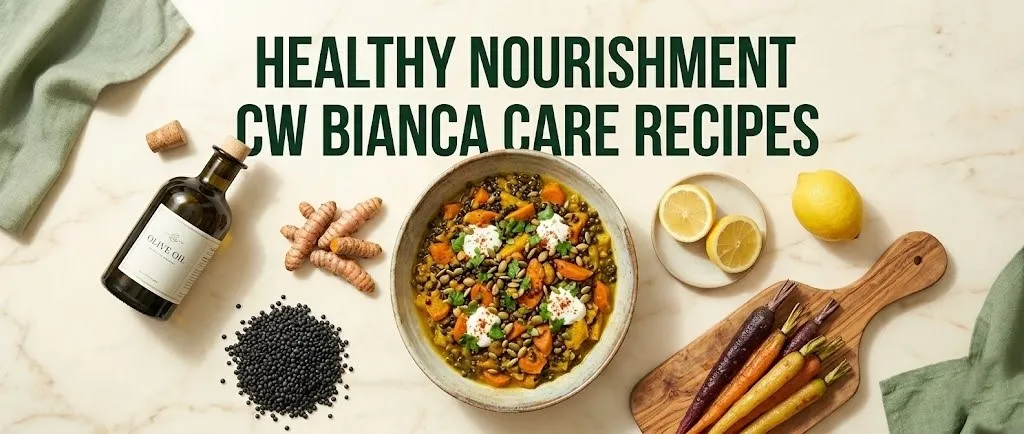
The Golden Spiced Lentil and Roasted Carrot Bowl is a flagship 2026 recipe in this category. It combines black beluga lentils, which provide 12 grams of protein and 9 grams of fiber per half-cup, with oven-roasted rainbow carrots. The carrots are tossed in avocado oil and roasted at 425°F for 20 minutes to maximize beta-carotene bioavailability. The dressing is a blend of tahini, lemon juice, and fresh turmeric root. The black pepper added to the dressing increases the absorption of curcumin from the turmeric.
Breakfast in 2026 has shifted towards savory, protein-forward options that prevent the mid-morning glucose crash. A CW Bianca Care breakfast bowl starts with a base of warm quinoa and wilted spinach, topped with a poached egg, a sprinkle of hemp hearts, and a drizzle of chili-infused olive oil. The combination provides all nine essential amino acids, 4 grams of fiber, and a stable release of glucose that keeps cognitive function sharp until lunch.
To make the Golden Spiced Lentil and Carrot Bowl:
- Preheat oven to 425°F and toss chopped rainbow carrots with 1 tbsp avocado oil and cumin.
- Spread carrots on a sheet pan and roast for 20 minutes until edges are caramelized.
- Simmer 1 cup of beluga lentils in 3 cups of vegetable broth for 18 minutes. Drain.
- Whisk together 2 tbsp tahini, juice of 1 lemon, 1 tsp grated turmeric, and a pinch of black pepper.
- Assemble lentils, carrots, and a handful of arugula in bowls. Drizzle with tahini dressing.
best cooking methods for nutrients
Steaming, roasting, and sauteing at moderate temperatures are the best cooking methods for preserving and enhancing nutrients, while boiling and charring are the most destructive. The cooking method must match the specific vegetable and the target nutrient.
Steaming is the superior method for cruciferous vegetables. Broccoli, cauliflower, and Brussels sprouts contain the enzyme myrosinase, which converts glucosinolates into the anti-cancer compound sulforaphane. Myrosinase is destroyed at temperatures above 158°F, but it must also come into contact with the glucosinolates. Lightly steaming for 3 to 5 minutes heats the vegetable just enough to rupture the cells without denaturing the enzyme, maximizing sulforaphane production. Boiling destroys the enzyme entirely. Microwaving is highly effective for preserving vitamin C due to the short cooking time.
Roasting is optimal for carotenoid-rich vegetables. The dry heat concentrates flavors and drives off water, making the vegetables sweeter and more palatable without adding sugar. The addition of oil is essential. A 2018 study in the American Journal of Clinical Nutrition confirmed that consuming carotenoids with fat significantly increases their absorption. A roast carrot without oil is a missed opportunity. A roast carrot with olive oil is a functional food.
- Steam: Best for broccoli, spinach, and kale to preserve water-soluble vitamins B and C.
- Roast with oil: Best for carrots, sweet potatoes, and tomatoes to unlock carotenoids and lycopene.
- Saute: Quick and effective for onions and garlic to release allicin and quercetin.
- Avoid deep frying: High heat generates inflammatory advanced glycation end-products.
healthy nourishment for dietary restrictions
Healthy nourishment on a restricted diet requires replacing the specific micronutrients lost by eliminating entire food groups. A vegan diet removes heme iron and bioavailable B12. A keto diet removes the fiber and B vitamins found in whole grains. A low-FODMAP diet for irritable bowel syndrome removes the fructans and galacto-oligosaccharides that feed beneficial gut bacteria.
The CW Bianca Care approach to dietary restrictions is never “just remove the food.” It is always “replace the nutrient.” For a vegan CW Bianca recipe, nutritional yeast is non-negotiable as a B12 source. Chia seeds and flaxseeds replace the DHA and EPA from fish with ALA, though the conversion rate is low. Fermented soy products like tempeh provide vitamin K2, which is otherwise found only in animal fats and fermented dairy.
For a gluten-free CW Bianca recipe, the risk is replacing wheat flour with nutrient-void white rice flour and tapioca starch. The CW Bianca approach uses almond flour, buckwheat flour, and teff flour, which provide protein, fiber, and iron where white rice flour provides none. A gluten-free CW Bianca muffin is not just a wheat-free muffin. It is a protein-and-mineral delivery vehicle that happens to be wheat-free.
- Vegan: Prioritize B12-fortified nutritional yeast, tempeh, and chia seeds.
- Gluten-free: Use almond flour, buckwheat, and teff for protein and fiber.
- Low-FODMAP: Use garlic-infused oil for flavor without fructans. Use firm tofu for protein.
- Keto: Emphasize non-starchy vegetables, fatty fish, and avocados for potassium and fiber.
Key Takeaway: A dietary restriction is a risk factor for nutrient deficiency. The CW Bianca Care approach eliminates the deficiency risk first, and the offending food group second.
CW Bianca care recipes nourishment
The CW Bianca Care recipes collection represents a specific 2026 protocol for translating the principles of healthy nourishment into a daily, practical eating pattern. These recipes are defined by their use of the “Foundation Five”: a dark leafy green, a complete protein, a healthy fat, a fermented or prebiotic element, and a colorful antioxidant source.
The Miso-Glazed Cod with Wilted Rainbow Chard and Soba is a perfect expression of the protocol. The cod provides a complete, lean protein. The rainbow chard provides the dark leafy green, delivering over 300 percent of the daily vitamin K requirement. The miso paste provides the fermented element, inoculating the gut with beneficial probiotics. The buckwheat soba noodles provide the complex carbohydrate. The glaze, made with a touch of maple syrup and ginger, provides the antioxidant source.
These recipes are designed for batch execution. A Sunday CW Bianca Care prep involves making three of the Foundation Five in bulk: a grain, a protein, and a roasted vegetable. During the week, these are combined in different configurations with fresh greens and different sauces to create five distinct meals. The protocol values consistency over novelty. Eating the same foundational ingredients daily stabilizes the gut microbiome and eliminates the decision fatigue that leads to less nourishing spontaneous choices.
- Monday: Salmon, quinoa, roasted broccoli, miso dressing.
- Tuesday: Lentils, wild rice, massaged kale, turmeric tahini.
- Wednesday: Roast chicken, sweet potato, sauerkraut, arugula.
- Thursday: Tempeh, brown rice, steamed bok choy, peanut sauce.
- Friday: Sardines, rye cracker, avocado, spinach salad.
Frequently Asked Questions About Healthy Nourishment and CW Bianca Care
What does “nourishment” actually mean in nutrition?
Nourishment in nutrition means consuming food that supplies the specific amino acids, fatty acids, vitamins, and minerals your cells need to function.
It is measured by nutrient density, the ratio of micronutrients to calories, rather than by calorie count alone.
A nourished body shows clear physical signs including strong nails, clear skin, and stable energy.
How do I know if my body is getting enough nutrients?
You can gauge nutrient adequacy by monitoring physical signs like nail texture, hair shedding, skin clarity, and energy stability.
Frequent infections, brain fog, and cracked mouth corners are common outward indicators of hidden deficiencies.
A blood panel ordered by your provider remains the only objective way to confirm specific nutrient levels.
Are CW Bianca Care Recipes suitable for weight loss?
CW Bianca Care Recipes support weight loss because they prioritize high-fiber, high-protein, nutrient-dense foods that induce satiety on fewer calories.
The emphasis on whole foods and stable blood sugar reduces the hormonal hunger spikes that drive overeating.
However, the recipes are designed for nourishment first, with weight loss as a potential secondary outcome.
Can you be overweight and malnourished?
Yes, a person can consume excess calories from ultra-processed foods and simultaneously be malnourished in essential vitamins and minerals.
This condition is called “hidden hunger” and is driven by a diet high in energy but low in nutrient density.
An overweight individual can be deficient in iron, vitamin D, and B12 while consuming 3,000 or more calories daily.
Do I need supplements if I eat nourishing foods?
A well-planned diet built on CW Bianca Care principles can meet most nutrient needs without supplements.
However, vitamin D supplementation is broadly recommended by the Endocrine Society due to limited sun exposure and few rich food sources.
Vitamin B12 supplementation is mandatory for strict vegans, as B12 is absent from all plant foods.
The CW Bianca Care approach to healthy nourishment is a refusal to accept the empty calories that define modern eating patterns. It insists that every ingredient on your plate serves a specific, nameable biological function. Whether it is the myrosinase in your steamed broccoli or the DHA in your roasted salmon, the food is there to do a job.
Start with the Foundation Five. Pick a dark leafy green, a complete protein, a healthy fat, a fermented element, and a colorful antioxidant source for your next meal. Cook the vegetables in oil. Add a squeeze of lemon. Your body will register the difference in your nails, your skin, and the steadiness of your energy within two weeks.
The most nourishing meal you can eat in 2026 is the one you cook yourself, from whole ingredients, with an understanding of exactly what it does for your body. CW Bianca Care Recipes give you the blueprint. The rest is just chopping and heat.