A healthy spa is a wellness facility or practice that integrates evidence-based treatments, nutritious food, and a calming environment to support physical and mental health. The spa experience is not just about massages and facials. It is built on three pillars: therapeutic treatments that reduce stress and improve circulation, spa cuisine that delivers anti-inflammatory nutrients in light, satisfying meals, and an environment designed to lower cortisol and promote relaxation. You do not need to book a $500-a-night wellness retreat to access these benefits. You can recreate the core elements of a healthy spa at home.
The Mayo Clinic recognizes massage therapy as an effective intervention for reducing stress, relieving muscle tension, and improving sleep quality. Harvard Health Publishing has reported on research linking regular sauna use to reduced cardiovascular mortality and improved blood pressure. The National Center for Complementary and Integrative Health (NCCIH) notes that while many spa treatments have evidence supporting their relaxation benefits, claims about detoxification are often overstated. The liver and kidneys detoxify the body continuously without dietary intervention. Spa treatments that promote circulation, relaxation, and mindful eating support those natural processes. They do not replace them.
This guide covers the full healthy spa experience: the nutrition principles behind spa cuisine, recipes for spa water and spa meals you can make at home, an evidence-based evaluation of common spa treatments, and a step-by-step plan for a home spa day. You will finish knowing what makes a spa healthy, what spa food actually delivers nutritionally, and how to bring the best parts of the spa into your weekly routine.
Healthy Spa
A healthy spa is a spa whose treatments, food, and environment are designed to produce measurable improvements in physical and mental health, not just temporary pampering. The treatments have evidence behind them. The food is nutrient-dense and anti-inflammatory. The environment is free from toxins, loud noise, and digital intrusion. The healthy spa is distinguished from a beauty spa or a luxury hotel spa by the intentionality of its health outcomes.
The treatments at a healthy spa include massage therapy, which reduces cortisol and increases serotonin and dopamine according to research reviewed by the Mayo Clinic. They include sauna and steam room use, which improves cardiovascular function and blood pressure according to a 2018 study in the journal Mayo Clinic Proceedings. They include hydrotherapy, the therapeutic use of water at varying temperatures to improve circulation and reduce muscle soreness. They may include meditation, yoga, breathwork, and nature immersion. The treatments are selected for their documented physiological effects, not just their luxury appeal.
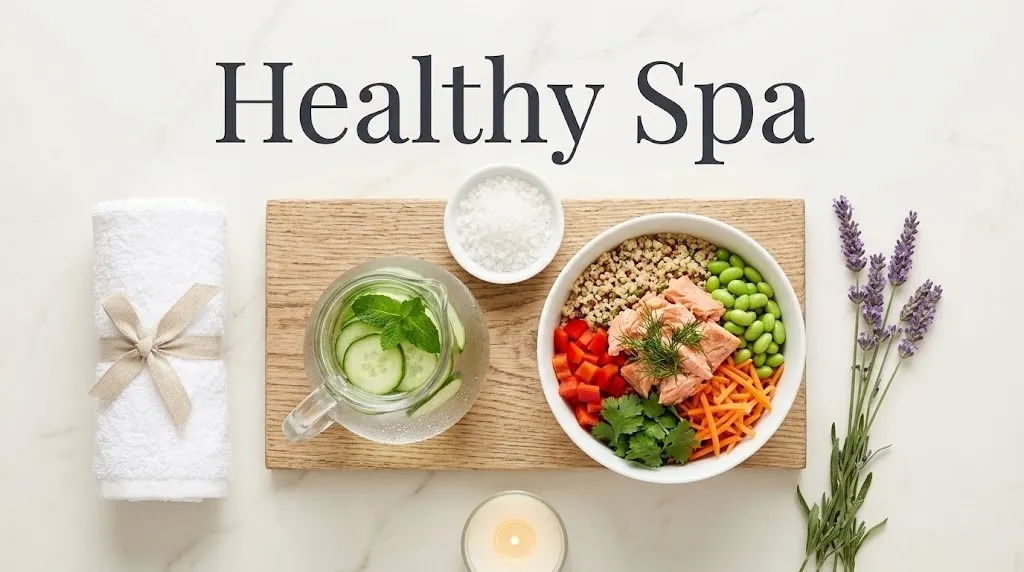
The food at a healthy spa follows spa cuisine principles: light, anti-inflammatory, nutrient-dense meals built around vegetables, lean proteins, whole grains, and healthy fats. The meals are portion-controlled but satisfying. They avoid heavy cream sauces, fried foods, excess salt, and refined sugar. The beverages are water, herbal tea, and fresh juices. Alcohol is absent or minimal. Caffeine is moderate. The food philosophy is aligned with the Mediterranean diet, which has the strongest evidence base for long-term health outcomes.
| Healthy Spa Pillar | What It Includes | Evidence Base |
|---|---|---|
| Therapeutic Treatments | Massage, sauna, hydrotherapy, meditation | Mayo Clinic, Harvard Health, NCCIH |
| Spa Cuisine | Anti-inflammatory, plant-forward, lean protein | Mediterranean diet research |
| Environment | Quiet, nature-connected, digitally disconnected | Stress reduction, cortisol management |
| Mindfulness | Yoga, breathwork, meditation, mindful eating | NCCIH, relaxation response research |
Key Takeaway: A healthy spa integrates evidence-based treatments, anti-inflammatory nutrition, and a stress-reducing environment. The health benefits are documented. The luxury is secondary to the outcomes.
Healthy Spa Food
Healthy spa food is cuisine designed to be anti-inflammatory, nutrient-dense, and satisfying in controlled portions. It is not deprivation food. It is food that leaves you feeling light, energized, and nourished. The principles of spa cuisine can be applied to home cooking without professional training or expensive ingredients.
The core principles of healthy spa food are ingredient quality, anti-inflammatory focus, portion control, and presentation. The ingredients are whole foods, primarily plant-based, with lean proteins and healthy fats. The anti-inflammatory focus means emphasizing omega-3 fatty acids from fish and nuts, antioxidants from colorful fruits and vegetables, and monounsaturated fats from olive oil and avocado. Pro-inflammatory foods are minimized: refined sugar, refined flour, fried foods, processed meats, and excessive alcohol.
Portion control at a spa is not about counting calories obsessively. It is about serving reasonable amounts on appropriately sized plates so that the meal is satisfying without being excessive. A spa breakfast might be a small bowl of oatmeal with berries and a sprinkle of nuts, plus a poached egg. A spa lunch might be a bowl of vegetable soup and a quinoa salad with grilled chicken. A spa dinner might be a piece of fish, roasted vegetables, and a small portion of whole grains. The portions are European in scale, not American restaurant portions.
Presentation matters for spa food because eating engages all the senses. A plate arranged with color and care is more satisfying than the same food piled into a bowl. Herbs, edible flowers, a drizzle of good olive oil, and a squeeze of lemon transform simple ingredients into a meal that feels special. The presentation is not about Instagram. It is about the psychological experience of eating. Food that looks beautiful is eaten more mindfully and savored more fully.
| Spa Food Principle | What It Means | At Home Application |
|---|---|---|
| Ingredient quality | Whole foods, minimal processing | Shop the perimeter of the grocery store |
| Anti-inflammatory | Omega-3s, antioxidants, healthy fats | Salmon, berries, olive oil, nuts |
| Portion control | Smaller plates, reasonable servings | Use salad plates for meals, not dinner plates |
| Presentation | Color, arrangement, herbs | Spend 30 seconds plating before eating |
| Mindful eating | No screens, eat slowly, savor | Put phone away, chew thoroughly |
Quick Tip:
- The simplest spa food upgrade is to add a fresh herb garnish and a squeeze of lemon to any dish. A piece of grilled fish with chopped parsley and lemon looks and tastes spa-like. The same fish without the garnish is dinner. The garnish takes 10 seconds and changes the eating experience.
Spa Cuisine
Spa cuisine is a culinary philosophy developed at destination spas and wellness retreats that emphasizes fresh, local, seasonally appropriate ingredients prepared with minimal added fat, salt, and sugar. The term originated at destination spas like Canyon Ranch, Golden Door, and Rancho La Puerta, where nutritionists and chefs collaborated to create food that was both health-supporting and delicious.
Spa cuisine is built on the Mediterranean diet framework. Olive oil is the primary fat. Vegetables and fruits are the foundation of every meal. Fish and legumes provide protein. Whole grains provide complex carbohydrates. Red meat is rare. Desserts are fruit-based. Portion sizes are moderate. The calorie level for a day of spa cuisine is typically 1,400 to 1,800 calories, distributed across three meals and two snacks. This is appropriate for weight maintenance or modest weight loss for most adults while providing complete nutrition.
Spa cuisine avoids the extremes of wellness culture. It is not a juice cleanse. It is not a raw food diet. It is not a detox program. It is balanced, varied, and sustainable. The nutrition philosophy behind spa cuisine aligns with the USDA Dietary Guidelines for Americans and the Academy of Nutrition and Dietetics recommendations: a variety of vegetables, fruits, whole grains, lean proteins, and healthy fats with limited added sugar, sodium, and saturated fat. The innovation of spa cuisine is not in the nutritional science. It is in the execution. The food is prepared and presented in a way that makes healthy eating feel like a pleasure, not a penance.
| Spa Cuisine Principle | At-Home Application |
|---|---|
| Plant-forward plates | Fill half the plate with vegetables at lunch and dinner |
| Lean proteins | Choose fish, poultry, legumes over red meat |
| Healthy fats | Use olive oil, avocado, nuts instead of butter and cream |
| Whole grains | Replace white rice and pasta with quinoa, brown rice, farro |
| Minimal added sugar | Fruit for dessert, no sugary beverages |
| Herbs and spices for flavor | Use fresh herbs, citrus, garlic, ginger instead of salt |
Key Takeaway: Spa cuisine is Mediterranean-inspired, plant-forward cooking that emphasizes fresh ingredients, moderate portions, and beautiful presentation. It is nutritionally balanced and designed for long-term sustainability, not short-term deprivation.
Healthy Spa Water Recipes
Spa water is water infused with fruits, vegetables, and herbs to add subtle flavor without sugar, artificial sweeteners, or calories. It is the signature beverage of the healthy spa experience. The visual appeal of a glass pitcher filled with water, cucumber slices, lemon wheels, and mint sprigs signals refreshment and self-care. The nutritional benefit is primarily hydration with a small contribution of water-soluble vitamins and phytonutrients from the infused ingredients.
The basic spa water formula: fill a pitcher with cold filtered water. Add sliced fruits, vegetables, or herbs. Refrigerate for 1 to 4 hours to allow the flavors to infuse. Serve over ice. The infused water stays fresh for 24 hours in the refrigerator. After 24 hours, the fruit begins to break down and the water should be discarded.
Classic spa water combinations:
- Cucumber and mint: 1/2 cucumber thinly sliced, 1 handful fresh mint leaves. Refreshing, cooling, classic spa flavor.
- Lemon and ginger: 1 lemon thinly sliced, 1 inch fresh ginger thinly sliced. Bright, zesty, anti-inflammatory.
- Strawberry and basil: 1 cup strawberries halved, 1 handful fresh basil leaves. Slightly sweet, aromatic.
- Rosemary and grapefruit: 1 grapefruit thinly sliced, 2 sprigs fresh rosemary. Sophisticated, slightly bitter, aromatic.
- Watermelon and lime: 1 cup watermelon cubed, 1 lime thinly sliced. Sweet, hydrating, summer flavor.
| Spa Water Combination | Key Flavor | Suggested Infusion Time |
|---|---|---|
| Cucumber + mint | Cool, refreshing | 1 to 2 hours |
| Lemon + ginger | Zesty, warming | 2 to 4 hours |
| Strawberry + basil | Sweet, aromatic | 2 to 3 hours |
| Rosemary + grapefruit | Herbaceous, citrus | 3 to 4 hours |
| Watermelon + lime | Sweet, tart | 1 to 2 hours |
Quick Tip:
- Make a pitcher of spa water in the morning and keep it on the counter or in the refrigerator throughout the day. The visual presence of the pitcher encourages drinking. A person who sees infused water drinks more than a person who has to remember to fill a glass from the tap. Hydration is the simplest health intervention. Spa water makes it appealing.
Spa Detox Drinks
Spa detox drinks are beverages marketed as supporting the body’s natural detoxification processes. The scientific reality is that the liver, kidneys, lungs, and skin detoxify the body continuously without dietary intervention. The Academy of Nutrition and Dietetics states that there is no evidence that detox diets, juices, or drinks remove toxins from the body more effectively than the body’s own systems. The term “detox” in spa contexts is primarily a marketing term.
The beverages served at healthy spas do support health, just not through the mechanism of detoxification. Lemon water provides vitamin C and hydration. Ginger tea has anti-inflammatory properties supported by research on gingerols. Green tea contains catechins with antioxidant activity. These beverages are healthy. They support the body’s natural functions. They do not detoxify anything. The distinction between “supports natural detoxification” and “detoxifies” is important for honest health communication.
The healthiest spa beverages are those that hydrate, provide phytonutrients, and avoid added sugar and alcohol. Herbal tea, particularly chamomile, peppermint, ginger, and rooibos, provides antioxidants and relaxation benefits. Fresh vegetable juices made primarily from greens, celery, cucumber, and a small amount of fruit for sweetness provide concentrated vitamins and minerals. They lack the fiber of whole vegetables but can be part of a balanced diet. They should not replace whole vegetables as the primary source of produce.
| Spa Beverage | Actual Health Benefit | Detox Claim Reality |
|---|---|---|
| Lemon water | Vitamin C, hydration, mild digestive stimulation | Supports, does not detoxify |
| Ginger tea | Anti-inflammatory, anti-nausea | Supports, does not detoxify |
| Green tea | Antioxidants (catechins), mild caffeine | Supports, does not detoxify |
| Green juice | Concentrated vitamins, minerals, phytonutrients | Nutrient-dense, not detoxifying |
| Herbal tea | Relaxation, hydration, antioxidant | Supports, does not detoxify |
People with kidney disease should not consume large amounts of certain juices, particularly those high in oxalates (spinach, beet) or potassium (orange, banana), without medical guidance. A nephrologist or renal dietitian should approve any juice or detox beverage regimen. Juice cleanses are not medically supervised and are not recommended for people with diabetes, eating disorders, or compromised kidney function.
Key Takeaway: Spa detox drinks support health through hydration, vitamins, and phytonutrients. They do not detoxify the body. The liver and kidneys perform detoxification. Spa beverages that support these organs are healthy. Those that claim to replace their function are not evidence-based.
Healthy Spa Treatments
Healthy spa treatments are those with documented physiological and psychological benefits supported by research. The most evidence-supported spa treatments are massage therapy, sauna bathing, hydrotherapy, and mindfulness-based practices including meditation and yoga. These treatments reduce stress, improve circulation, relieve muscle tension, and support cardiovascular health.
Massage therapy is the most researched spa treatment. The Mayo Clinic and the NCCIH recognize massage as effective for reducing stress, relieving muscle tension and pain, improving sleep, and reducing symptoms of anxiety and depression. The mechanisms include reduced cortisol, increased serotonin and dopamine, and improved circulation. Different massage modalities have different effects. Swedish massage is relaxation-focused. Deep tissue massage targets chronic muscle tension. Hot stone massage adds heat to increase muscle relaxation. The evidence is strongest for relaxation and pain relief outcomes.
Sauna bathing has a growing body of cardiovascular research. A 2018 study in Mayo Clinic Proceedings followed over 2,000 middle-aged Finnish men for 20 years and found that frequent sauna use (4 to 7 times per week) was associated with a 50 percent reduction in cardiovascular mortality and a 40 percent reduction in all-cause mortality compared to once weekly use. The mechanisms include improved endothelial function, reduced blood pressure, and reduced inflammation. Sauna use mimics moderate cardiovascular exercise. The heart rate increases to 100 to 150 beats per minute. The blood vessels dilate. The effect is temporary but repeated exposure produces lasting cardiovascular benefit.
| Spa Treatment | Evidence-Based Benefits | Research Source |
|---|---|---|
| Massage therapy | Stress reduction, pain relief, improved sleep | Mayo Clinic, NCCIH |
| Sauna bathing | Reduced cardiovascular mortality, lower blood pressure | Mayo Clinic Proceedings (2018) |
| Hydrotherapy | Improved circulation, muscle recovery | Cleveland Clinic |
| Meditation | Reduced anxiety, lower blood pressure, improved focus | NCCIH, Harvard Health |
| Yoga | Improved flexibility, stress reduction, lower blood pressure | NCCIH |
People with cardiovascular conditions, pregnancy, or other medical conditions should discuss spa treatments with their healthcare provider before participating. Sauna is contraindicated for people with unstable angina, recent myocardial infarction, or severe aortic stenosis. Massage is contraindicated for people with deep vein thrombosis, bleeding disorders, or certain cancers. A licensed spa should conduct a health intake before treatments. The client should disclose all medical conditions.
Anti Inflammatory Spa Menu
An anti-inflammatory spa menu is built on the principles of the Mediterranean diet with an emphasis on foods that have documented anti-inflammatory effects. The Cleveland Clinic and Harvard Health Publishing identify the core anti-inflammatory foods as fatty fish, berries, leafy greens, nuts, olive oil, tomatoes, and spices including turmeric and ginger. Pro-inflammatory foods to avoid include refined carbohydrates, fried foods, processed meats, sugary beverages, and excessive alcohol.
A one-day anti-inflammatory spa menu might include breakfast of oatmeal with walnuts, blueberries, and a sprinkle of cinnamon. Lunch of a quinoa bowl with grilled salmon, mixed greens, cherry tomatoes, cucumber, and a lemon-olive oil dressing. Dinner of roasted chicken breast with turmeric-spiced roasted vegetables and a small portion of brown rice. Snacks of Greek yogurt with strawberries or apple slices with almond butter. Beverages of water with lemon, green tea, and herbal tea.
The anti-inflammatory menu is not a weight loss diet. It is a way of eating that modulates the body’s inflammatory response. Chronic low-grade inflammation is associated with cardiovascular disease, type 2 diabetes, arthritis, and neurodegenerative diseases. The foods on the anti-inflammatory menu reduce inflammatory markers including C-reactive protein, interleukin-6, and tumor necrosis factor-alpha. The evidence is strongest for the overall dietary pattern rather than any individual food.
| Meal | Anti-Inflammatory Spa Menu |
|---|---|
| Breakfast | Oatmeal with walnuts, blueberries, cinnamon, and a drizzle of honey |
| Lunch | Quinoa bowl with grilled salmon, mixed greens, tomatoes, cucumber, lemon-olive oil dressing |
| Dinner | Roasted chicken breast with turmeric-roasted cauliflower, sweet potatoes, and brown rice |
| Snack 1 | Greek yogurt with fresh strawberries and a sprinkle of flaxseed |
| Snack 2 | Apple slices with almond butter |
| Beverages | Lemon water, green tea, chamomile tea |
Quick Tip:
- Build your plate around the anti-inflammatory color spectrum: dark leafy greens, deep reds and purples (berries, tomatoes), orange (sweet potatoes, carrots), and healthy browns (whole grains, nuts). The more colorful the plate, the broader the range of anti-inflammatory phytonutrients.
Key Takeaway: An anti-inflammatory spa menu emphasizes fatty fish, berries, leafy greens, nuts, olive oil, and spices. It avoids refined carbohydrates, fried foods, and added sugar. The Mediterranean diet pattern is the evidence-based foundation.
Home Spa Healthy
A home spa is a self-created wellness experience using the principles of a destination spa without the travel, cost, or time commitment. The core elements are environment, treatments, food, and mindfulness. You can create a home spa experience in an afternoon, an evening, or a full day. The only requirements are the intention to prioritize health and the willingness to disconnect from normal demands.
The environment for a home spa is a clean, quiet space with soft lighting, comfortable temperature, and no digital devices. A bathroom is the most common home spa location. A bedroom or living room can work for the non-water elements. Declutter the space. Light a candle or use a diffuser with a calming essential oil (lavender, chamomile, eucalyptus). Put your phone in another room. Play soft instrumental music or nature sounds. The environment signals to your nervous system that this time is different from normal life.
The treatments for a home spa include a warm bath with Epsom salts (magnesium sulfate, which may soothe muscle tension), a self-massage with a body oil or lotion, a facial steam with a bowl of hot water and a towel over your head, dry brushing before the bath to stimulate circulation and lymphatic flow, and a guided meditation or breathwork session. These treatments do not require professional equipment. They require time and attention.
The food for a home spa day is spa cuisine: light, anti-inflammatory meals prepared in advance so that you are not cooking during your spa time. Prepare a pitcher of spa water in the morning. Make a spa lunch bowl (quinoa, greens, salmon, vegetables) the night before. Have cut vegetables and hummus ready for snacks. Brew herbal tea. The food is ready when you are hungry. You do not break the spa experience to cook.
| Home Spa Element | What You Need | Time |
|---|---|---|
| Environment | Clean, quiet space, candle, music, no phone | Setup 10 minutes |
| Bath soak | Epsom salts, warm water, optional essential oils | 20 to 30 minutes |
| Facial steam | Bowl, hot water, towel, optional herbs | 10 minutes |
| Dry brushing | Natural bristle brush | 5 minutes before bath |
| Guided meditation | Meditation app or recording | 10 to 20 minutes |
| Spa meal | Pre-prepared spa cuisine | Eat mindfully, 20 to 30 minutes |
| Herbal tea | Chamomile, peppermint, or rooibos | Throughout |
Spa Day at Home Healthy
A spa day at home is a structured day of self-care following the healthy spa model. The schedule below provides a template that can be adapted to the time available. The full day runs approximately 4 to 6 hours. A half day runs 2 to 3 hours. The schedule is intentionally screen-free. The phone is off or in another room for the duration.
Full home spa day schedule:
- Morning preparation (15 minutes): Prepare spa water. Prepare or set out spa meals. Declutter the bathroom or spa space. Set out towels, robe, candle, music.
- Morning movement (20 to 30 minutes): Gentle yoga, stretching, or a walk outside. Movement prepares the body for relaxation.
- Dry brushing and bath (35 minutes): Dry brush before showering or bathing. Soak in a warm bath with Epsom salts for 20 minutes.
- Facial and body care (20 minutes): Facial steam, gentle exfoliation, apply a face mask. Apply body lotion or oil with self-massage.
- Meditation or breathwork (15 minutes): Guided meditation or 4-7-8 breathing (inhale 4 counts, hold 7, exhale 8).
- Spa lunch (30 minutes): Eat pre-prepared spa cuisine at a set table, with no screens. Eat slowly. Notice flavors and textures.
- Rest or reading (30 to 60 minutes): Rest, read a physical book or magazine, or nap. No screens.
- Afternoon tea and reflection (20 minutes): Herbal tea. Journal or reflect on the experience.
| Home Spa Day Schedule | Activity | Duration |
|---|---|---|
| Morning prep | Prepare water, food, space | 15 min |
| Movement | Yoga, stretching, or walk | 20 to 30 min |
| Bath | Dry brush, Epsom salt bath | 35 min |
| Facial and body | Steam, mask, self-massage | 20 min |
| Meditation | Guided or breathwork | 15 min |
| Spa lunch | Mindful eating | 30 min |
| Rest | Read, nap, reflect | 30 to 60 min |
| Afternoon tea | Herbal tea, journal | 20 min |
Healthy Spa Breakfast
A healthy spa breakfast is light, nutrient-dense, and visually appealing. It contains protein, fiber, and healthy fat to sustain energy without heaviness. It avoids sugary cereals, pastries, and fried breakfast meats. The spa breakfast plate is small to moderate in size and served on a beautiful dish with attention to presentation.
Spa breakfast ideas include a poached egg on a slice of whole grain toast with sliced avocado and a sprinkle of red pepper flakes (250 calories, 12g protein, 5g fiber). A small bowl of steel-cut oatmeal topped with fresh berries, a tablespoon of chopped walnuts, and a drizzle of maple syrup (300 calories, 8g protein, 6g fiber). A Greek yogurt bowl with granola, sliced peaches, and a sprinkle of chia seeds (280 calories, 20g protein, 5g fiber). A green smoothie with spinach, banana, almond milk, and a scoop of protein powder (250 calories, 18g protein, 6g fiber).
| Spa Breakfast | Calories | Protein (g) | Fiber (g) | Key Nutrients |
|---|---|---|---|---|
| Poached egg + avocado toast | 250 | 12 | 5 | Protein, monounsaturated fat, fiber |
| Steel-cut oatmeal + berries + walnuts | 300 | 8 | 6 | Soluble fiber, omega-3 ALA, antioxidants |
| Greek yogurt + granola + peaches + chia | 280 | 20 | 5 | Protein, calcium, omega-3 ALA |
| Green smoothie (spinach, banana, protein) | 250 | 18 | 6 | Iron, potassium, protein |
Quick Tip:
- The poached egg on avocado toast is the quintessential spa breakfast. It takes 5 minutes to prepare, looks beautiful, and provides the protein, healthy fat, and fiber that sustain energy until lunch. The red pepper flakes add metabolism-supporting capsaicin and visual appeal.
Healthy Spa Lunch Ideas
A healthy spa lunch is a bowl or plate composed of vegetables, lean protein, whole grains, and a light dressing. It follows the MyPlate structure: half vegetables, one quarter protein, one quarter whole grains. The meal is colorful, fresh, and satisfying in the 350 to 450 calorie range.
Spa lunch ideas include a quinoa power bowl with grilled chicken breast, mixed greens, cherry tomatoes, cucumber, shredded carrots, and a lemon-herb vinaigrette (400 calories, 30g protein, 8g fiber). A Mediterranean plate with hummus, tabbouleh, grilled vegetables, olives, and a small whole wheat pita (380 calories, 12g protein, 10g fiber). A salmon and avocado salad with mixed greens, orange segments, and a citrus vinaigrette (420 calories, 28g protein, 7g fiber).
| Spa Lunch | Calories | Protein (g) | Fiber (g) | Key Nutrients |
|---|---|---|---|---|
| Quinoa power bowl + chicken | 400 | 30 | 8 | Protein, fiber, B vitamins |
| Mediterranean plate | 380 | 12 | 10 | Monounsaturated fat, fiber, antioxidants |
| Salmon avocado salad | 420 | 28 | 7 | Omega-3, monounsaturated fat, vitamin C |
Quick Tip:
- Build spa lunch bowls in advance for the week. On Sunday, cook quinoa, grill chicken breasts, and chop vegetables. Store each component separately. Each morning, assemble a bowl in 5 minutes. The prepped components make a spa lunch accessible on a weekday.
Healthy Spa Snacks
Healthy spa snacks are light, hydrating, and portion-controlled. They bridge the gap between meals without adding excessive calories or sugar. The spa snack follows the produce-plus-protein rule: a fruit or vegetable paired with a protein or healthy fat source.
Spa snack ideas include cucumber slices with a small dollop of hummus (80 calories, 3g protein, 2g fiber), a small apple with a tablespoon of almond butter (150 calories, 4g protein, 4g fiber), a cup of herbal tea with a small handful of raw almonds (160 calories, 6g protein, 3g fiber), and a small bowl of fresh berries with a spoonful of Greek yogurt (120 calories, 6g protein, 3g fiber).
| Spa Snack | Calories | Protein (g) | Fiber (g) |
|---|---|---|---|
| Cucumber slices + hummus | 80 | 3 | 2 |
| Apple + almond butter | 150 | 4 | 4 |
| Herbal tea + raw almonds | 160 | 6 | 3 |
| Berries + Greek yogurt | 120 | 6 | 3 |
Spa Water Benefits
Spa water benefits are primarily hydration and the behavioral encouragement to drink more water. The Academy of Nutrition and Dietetics recommends that women consume approximately 2.7 liters of total water daily and men 3.7 liters, from all beverages and foods. The infused ingredients in spa water contribute a negligible amount of vitamins and antioxidants. The flavor is the functional benefit. It makes water more appealing to drink.
The specific infused ingredients add trace amounts of nutrients. Cucumber provides a small amount of vitamin K and potassium. Lemon provides vitamin C. Mint provides menthol. Ginger provides gingerols. These contributions are nutritionally minor. The hydration is the primary benefit. A person who drinks 2 liters of spa water daily is well hydrated. A person who drinks 1 liter of plain water and 1 liter of soda is not.
The visual appeal of spa water is a behavioral intervention. A beautiful pitcher on the counter or desk reminds you to drink. The slices of fruit and herbs signal that this water is special. You are more likely to pour a glass of spa water than to fill a glass from the tap. The behavioral effect is real even if the nutritional contribution of the fruit is small.
| Spa Water Ingredient | Primary Benefit | Secondary Benefit |
|---|---|---|
| Cucumber | Refreshing flavor | Trace vitamin K, potassium |
| Lemon | Bright flavor | Vitamin C |
| Mint | Cooling flavor | Menthol (mild digestive) |
| Ginger | Spicy flavor | Gingerols (anti-inflammatory) |
| Berries | Sweet flavor | Anthocyanins (antioxidant) |
Key Takeaway: Spa water’s primary benefit is increased hydration. The infused ingredients add flavor and trace nutrients. The visual appeal encourages drinking. Hydration is the health outcome. The fruit is the behavioral incentive.
Wellness Spa Nutrition
Wellness spa nutrition is the dietary philosophy that integrates anti-inflammatory eating, balanced macronutrients, and mindful food presentation to support physical and mental health. The nutritional principles align with the Mediterranean diet and the USDA Dietary Guidelines. The innovation is in the execution: the way food is prepared, portioned, and presented to create a sense of abundance and pleasure within a calorie-appropriate framework.
The macronutrient balance of wellness spa cuisine is approximately 40 to 50 percent carbohydrate (primarily from vegetables, fruits, and whole grains), 20 to 30 percent protein (from fish, poultry, legumes, and some dairy), and 25 to 35 percent fat (primarily from olive oil, nuts, seeds, and avocado). The calorie level is 1,400 to 1,800 per day. The sodium level is controlled through the use of herbs and spices instead of salt. The added sugar is minimal.
The food experience at a wellness spa is as important as the nutrient composition. Meals are eaten at a table, without screens, with attention to the food. The environment is calm and beautiful. The pace is slow. The portion is satisfying but not excessive. These behavioral elements of eating are part of the nutrition philosophy. How you eat affects what you absorb, how much you eat, and how satisfied you feel.
| Wellness Spa Nutrition Element | Daily Target or Guideline |
|---|---|
| Calories | 1,400 to 1,800 (varies by individual) |
| Carbohydrate | 40 to 50% (vegetables, fruits, whole grains) |
| Protein | 20 to 30% (fish, poultry, legumes, dairy) |
| Fat | 25 to 35% (olive oil, nuts, seeds, avocado) |
| Sodium | Less than 2,300mg |
| Added sugar | Less than 25g (women), 36g (men) |
| Fiber | 25 to 38g |
| Hydration | 2 to 3 liters water |
Detox Spa Food
Detox spa food is a marketing term for the light, plant-forward cuisine served at wellness retreats. The Academy of Nutrition and Dietetics states that there is no evidence that specific foods, juices, or eating patterns detoxify the body more effectively than the body’s own systems. The liver, kidneys, lungs, gastrointestinal tract, and skin continuously detoxify the body through a complex series of enzymatic processes. These organs require adequate protein, vitamins, and minerals to function optimally. The best nutritional support for detoxification is a balanced diet, not a restrictive cleanse.
The foods served at detox spas are genuinely healthy. They are vegetable-forward, high in fiber, rich in antioxidants, and free from processed foods, added sugar, and alcohol. They support the body’s natural detoxification processes by providing the nutrients those processes require. Cruciferous vegetables (broccoli, cauliflower, kale, Brussels sprouts) contain glucosinolates that support Phase II liver detoxification enzymes. Protein provides the amino acids required for conjugation, a key step in Phase II. The foods are supportive. They are not detoxifying. The distinction is important for honest nutrition communication.
Juice cleanses, a common detox spa offering, are not evidence-based and are not recommended by the Academy of Nutrition and Dietetics. Juice cleanses eliminate fiber, protein, and fat. They provide concentrated fruit sugar that can spike blood glucose. The weight loss that occurs during a juice cleanse is primarily water and glycogen depletion, not fat loss, and is regained when normal eating resumes. A person who wants to support their body’s detoxification systems should eat a balanced diet rich in vegetables, adequate protein, and fiber, and drink enough water. A juice cleanse is not necessary and can be harmful for people with diabetes, eating disorders, or compromised kidney function.
| Detox Claim | Scientific Reality |
|---|---|
| Juice cleanse removes toxins | Liver and kidneys remove toxins continuously without dietary intervention |
| Detox tea flushes the system | Hydration supports kidney function, tea provides antioxidants |
| Fasting detoxifies the body | Fasting may induce autophagy, does not detoxify in the marketed sense |
| Specific foods detox the liver | Nutrients support liver function, do not replace it |
Key Takeaway: Detox spa food is a marketing term. The foods are healthy and support the body’s natural detoxification systems. They do not detoxify the body. Juice cleanses are not evidence-based and are not recommended by the Academy of Nutrition and Dietetics.
Frequently Asked Questions About Healthy Spas
What is the healthiest spa treatment?
Massage therapy is the most evidence-supported spa treatment with documented benefits for stress reduction, pain relief, and improved sleep per Mayo Clinic and NCCIH research.
Sauna bathing has strong cardiovascular evidence, with regular use associated with reduced cardiovascular mortality.
The combination of massage, sauna, and mindfulness practices provides the broadest health benefit.
Is spa water actually good for you?
Yes, spa water supports hydration, which is the primary health benefit. The infused fruits and herbs add trace vitamins and antioxidants.
The visual appeal and flavor encourage increased water intake. A person who drinks more water because it is flavored and beautiful is better hydrated.
The nutritional contribution of the fruit is minor. The hydration is the primary benefit.
What do they feed you at a wellness spa?
Wellness spas serve spa cuisine: plant-forward, anti-inflammatory meals with lean proteins, whole grains, healthy fats, and abundant vegetables and fruits.
The meals are portion-controlled, beautifully presented, and free from processed foods, excess salt, and added sugar.
The nutritional philosophy aligns with the Mediterranean diet. Calorie levels are typically 1,400 to 1,800 per day.
Can you recreate a spa experience at home?
Yes, a home spa day includes a clean, quiet environment, a warm bath with Epsom salts, self-massage, facial steam, meditation, and pre-prepared spa cuisine.
The key elements are disconnecting from devices, creating a calm space, and dedicating uninterrupted time to self-care.
A full home spa day takes 4 to 6 hours. A half day takes 2 to 3 hours.
Are detox spa treatments scientifically proven?
No, detox treatments that claim to remove toxins from the body are not scientifically proven. The liver, kidneys, and other organs perform detoxification continuously.
Spa treatments like massage, sauna, and hydrotherapy support circulation and relaxation, which aid the body’s natural processes.
Juice cleanses and extreme detox regimens are not recommended by the Academy of Nutrition and Dietetics and can be harmful for certain individuals.
A healthy spa is not a building. It is a set of practices. The treatments that reduce stress and improve circulation. The food that reduces inflammation and nourishes the body. The environment that lowers cortisol and quiets the mind. The intentional time away from phones and demands. These practices are available to you at a destination spa. They are also available to you at home, on a Tuesday evening, for the cost of a bag of Epsom salts and some vegetables.
Start with one spa practice this week. Make a pitcher of cucumber-mint water and drink it throughout the day. Prepare a spa lunch bowl with quinoa, greens, and salmon and eat it without your phone. Take a warm bath with Epsom salts and no screens. The individual practices are small. Accumulated across a week, a month, a year, they create the same physiological benefits as a spa retreat without the travel, the cost, or the need to book a babysitter.
The spa is a mindset as much as a place. You can live in it. The food, the movement, the stillness, the hydration, the beauty, these are daily choices. Make them. Your nervous system will thank you.