Grits are healthy in many contexts, offering meaningful amounts of iron, B vitamins, and antioxidants per serving when prepared simply. Like most grain-based foods, the full answer depends on the type of grits you choose, how you prepare them, and what you add to the bowl.
According to the USDA FoodData Central, one cup of cooked, enriched white grits provides approximately 182 calories, 38 grams of carbohydrates, and 8% of the daily value for iron. That’s a more substantial nutritional profile than many people expect from what looks like a simple porridge.
This article covers grits nutrition facts, how different types compare, what the research says about blood sugar and heart health, and specific guidance for people managing diabetes, weight, or gluten sensitivity. You’ll finish reading with a real, usable answer.
Is Grits Healthy? Here’s the Direct Answer
Grits are a nutritionally moderate grain food that can absolutely be part of a healthy diet when chosen wisely and prepared without excess saturated fat or sodium.
Plain, enriched grits provide iron, B vitamins including folate, and carotenoid antioxidants (specifically lutein and zeaxanthin in yellow corn varieties). They’re low in fat and relatively affordable. The nutritional problems with grits rarely come from the grits themselves. They come from what gets added: butter, full-fat cheese, heavy cream, and high-sodium seasoning packets can turn a modest grain into a calorie-dense, artery-taxing bowl.
Stone-ground grits hold more of the corn’s natural fiber and nutrients. Instant grits, by contrast, are more processed, lower in fiber, and often higher in sodium. The type you buy matters more than most people realize.
For most healthy adults, grits eaten in a reasonable portion with thoughtful toppings are not a problem. People managing blood sugar, watching sodium, or living with celiac disease need to be more selective, and those specifics are covered in detail below.
Key Fact:
- Plain enriched grits: approximately 182 calories per cooked cup (USDA FoodData Central)
- Stone-ground grits: slightly higher in fiber and naturally occurring nutrients
- Instant flavored grits: often 400 to 570 mg of sodium per packet, before toppings
What Are Grits Made Of?
Grits are made from ground dried corn (Zea mays), specifically from a variety called dent corn or field corn, which is coarser and starchier than sweet corn eaten off the cob.
Most commercial grits go through a process called degerming, where the outer hull (bran) and germ are removed, leaving primarily the starchy endosperm. This is why conventional grits are classified as a refined grain. Stone-ground grits skip or minimize this process, retaining more of the germ and some of the bran, which is why they have more fiber and a slightly nuttier flavor.
Hominy grits are made from corn that has been treated with an alkaline solution (typically limewater or lye) in a process called nixtamalization. This ancient technique, long used in traditional Mesoamerican cooking, increases the bioavailability of certain B vitamins, particularly niacin, and adds a distinct flavor. Hominy grits are the traditional base of many Southern American recipes.
There is real nutritional variety within the category of “grits.” Degermed, stone-ground, and hominy grits each have slightly different nutrient profiles. When a package just says “grits” with no further description, it’s almost certainly the degermed, enriched variety.
Quick Tip:
- Check for “stone-ground” or “whole grain” on the label for higher fiber content
- Look for “enriched” to confirm added iron and B vitamins
- Avoid flavored instant packets if you’re monitoring sodium or calorie intake
Grits Nutrition Facts Per Serving
One cup of cooked, plain, enriched white grits contains the following nutritional profile, based on USDA FoodData Central data:
| Nutrient | Amount per 1 Cup Cooked (242g) | % Daily Value |
|---|---|---|
| Calories | 182 kcal | 9% |
| Total Carbohydrates | 38.5 g | 14% |
| Dietary Fiber | 1 g | 4% |
| Total Sugars | 0.4 g | |
| Protein | 4.3 g | 9% |
| Total Fat | 1.2 g | 2% |
| Saturated Fat | 0.2 g | 1% |
| Iron | 1.5 mg | 8% DV |
| Folate (B9) | 79 mcg | 20% DV |
| Thiamine (B1) | 0.24 mg | 20% DV |
| Riboflavin (B2) | 0.13 mg | 10% DV |
| Niacin (B3) | 2.3 mg | 14% DV |
| Sodium | 343 mg | 15% DV |
That sodium figure assumes grits cooked with a small amount of salt, which is standard. Cook them unsalted and sodium drops significantly, closer to 5 to 10 mg per cup.
The protein content is modest. At about 4 grams per cup, grits won’t anchor a high-protein meal on their own. Pairing them with eggs, legumes, or lean meat addresses this gap.
Folate deserves specific mention. A single cup of enriched grits delivers 20% of the daily folate requirement, making this food particularly valuable for people who are pregnant or planning pregnancy, since folate supports healthy fetal neural tube development. The National Institutes of Health Office of Dietary Supplements identifies folate as one of the most critical nutrients during early pregnancy.
Key Takeaway: Grits are a low-fat, moderate-calorie grain with real amounts of iron, B vitamins, and folate per serving. The type you buy and whether you add salt determines how much sodium ends up in the bowl.
Are Grits High in Carbs?
Grits are a carbohydrate-dominant food, with approximately 38 to 40 grams of carbohydrates per cooked cup. For context, that’s comparable to a cup of cooked white rice (approximately 45 grams) and more than a cup of cooked oatmeal (approximately 27 grams).
The carbohydrates in grits are primarily starch, with minimal sugar and modest fiber (around 1 gram per cup for enriched varieties, up to 2 grams for stone-ground). This makes them less effective at slowing digestion compared to higher-fiber carbohydrate sources.
For people eating a standard mixed diet, one cup of grits as part of a balanced meal is a reasonable carbohydrate portion. The Dietary Guidelines for Americans 2020-2025 recommend that carbohydrates make up 45 to 65% of total daily calories for most adults. A 182-calorie cup of grits fits within that framework without dominating the plate.
People following low-carbohydrate dietary patterns (targeting under 100 to 130 grams of carbs per day) will find that a single cup of grits uses a substantial portion of their daily carbohydrate budget. That doesn’t make grits incompatible with lower-carb eating, but it means portion size becomes more important.
| Food (1 cup cooked) | Total Carbs | Fiber | Net Carbs (approx.) |
|---|---|---|---|
| White grits (enriched) | 38.5 g | 1 g | 37.5 g |
| Stone-ground grits | 36 g | 2 g | 34 g |
| White rice | 45 g | 0.6 g | 44.4 g |
| Oatmeal (rolled oats) | 27 g | 4 g | 23 g |
| Cream of wheat | 26 g | 1.3 g | 24.7 g |
Are Grits a Whole Grain?
Most commercially sold grits are not a whole grain. Standard enriched or regular grits have had the bran and germ removed during processing, leaving primarily the starchy endosperm. This places them in the refined grain category.
The exception is stone-ground grits. Stone-ground varieties retain much of the germ and some of the bran, giving them a higher fiber content and a more complete nutrient profile. Some stone-ground grits are specifically labeled “whole grain” and meet the FDA’s definition, which requires the product to contain all three parts of the kernel (bran, germ, endosperm) in proportions found in intact grain.
The Dietary Guidelines for Americans 2020-2025 recommend that at least half of all grains consumed daily come from whole grain sources. If grits are a regular part of your diet, choosing stone-ground or certified whole-grain varieties is a straightforward way to meet that recommendation.
Enriched grits, while refined, are not nutritionally empty. The enrichment process adds back iron, thiamine, riboflavin, niacin, and folate, which partially compensates for what processing removes. But it does not restore the fiber or the naturally occurring compounds found in the germ, including the carotenoids present in yellow whole-grain corn.
Quick Tip:
- Look for the Whole Grain Stamp from the Whole Grains Council on packaging
- “Stone-ground” on the label is a good indicator but not an automatic guarantee of whole-grain status
- “Degerminated” on the label means bran and germ have been removed: refined grain
Are Grits Good for You? Health Benefits Explained
Grits offer several specific, research-supported nutritional benefits, particularly when prepared simply and chosen in stone-ground or enriched form.
Iron support: Enriched grits are a meaningful source of non-heme iron, the plant-based form of this mineral. Iron is required for red blood cell production and oxygen transport throughout the body. The National Institutes of Health Office of Dietary Supplements notes that iron deficiency is one of the most common nutritional deficiencies globally, particularly among women of reproductive age. A cup of enriched grits providing 8% of the daily iron value is a real, usable contribution.
Eye health from carotenoids: Yellow corn grits contain lutein and zeaxanthin, two carotenoid antioxidants that accumulate in the macula of the eye. A study published in the American Journal of Clinical Nutrition found that higher dietary intake of lutein and zeaxanthin was associated with a reduced risk of age-related macular degeneration. White grits contain very low amounts of these compounds; yellow grits are the better choice if eye health is a priority.
Folate for cellular health: The folate content in enriched grits supports DNA synthesis and cellular repair. This is most relevant for people who are pregnant, as adequate folate intake in the first trimester is strongly linked to reduced risk of neural tube defects, according to the Centers for Disease Control and Prevention.
Energy from complex carbohydrates: Grits provide a steady carbohydrate source that the body converts to glucose for energy. This makes them a practical pre-activity meal for people who need accessible fuel.
| Health Benefit | Relevant Nutrient | Type of Grits | Evidence Level |
|---|---|---|---|
| Oxygen transport and red blood cell support | Iron (non-heme) | Enriched grits | Strong (NIH) |
| Eye health and macular protection | Lutein, zeaxanthin | Yellow corn grits | Moderate-strong (AJCN) |
| Fetal development support | Folate (B9) | Enriched grits | Strong (CDC) |
| Sustained energy provision | Complex carbohydrates | All types | Established |
| B vitamin support (metabolism) | Thiamine, riboflavin, niacin | Enriched grits | Strong (NIH) |
Key Takeaway: Grits deliver real nutritional value through iron, B vitamins, and folate. Yellow corn varieties add eye-protective carotenoids that white grits lack entirely.
Grits Glycemic Index and Blood Sugar
The glycemic index (GI) of grits is moderate to high, generally estimated between 69 and 84 depending on the variety and preparation method. This places grits above oatmeal (GI approximately 55 to 58) and closer to white bread (GI approximately 70 to 75) on the glycemic scale.
Glycemic index measures how quickly a food raises blood glucose relative to pure glucose (GI of 100). Foods above 70 are considered high GI; foods between 56 and 69 are moderate. Instant grits, which are more finely ground and faster to cook, tend to have a higher GI than stone-ground varieties.
Glycemic load (GL), which accounts for both GI and portion size, gives a more practical picture. A standard one-cup serving of grits has an estimated glycemic load of approximately 20 to 23, which is in the moderate-to-high range. Eating grits alongside protein, fat, and fiber (eggs, avocado, leafy greens) lowers the overall glycemic response of the meal by slowing gastric emptying.
Think of this like water flowing through a drain. Eating grits alone is like an open drain: glucose hits the bloodstream quickly. Adding protein and fat is like adding a screen: the flow slows, the rise in blood sugar is more gradual.
The cooking and cooling of starchy foods increases their resistant starch content, which ferments in the colon rather than raising blood sugar. Grits that have been cooked, cooled, and reheated gently will have a modestly lower glycemic impact than freshly cooked grits eaten immediately.
Are Grits Good for Diabetics?
Grits can be included in a diabetes-friendly diet, but they require portion control and thoughtful pairing due to their moderate-to-high glycemic index.
The American Diabetes Association recommends that people with type 2 diabetes focus on carbohydrate quality and quantity rather than avoiding entire food groups. A half-cup serving of cooked grits (approximately 90 calories and 19 grams of carbohydrates) is a more appropriate starting point for blood sugar management than a full cup.
Stone-ground grits are the better choice for people managing blood sugar. Their slightly higher fiber content and less processed starch structure leads to a more gradual glucose response compared to instant or quick-cook varieties. This is consistent with findings from the Journal of Nutrition, which has documented that fiber content and degree of grain processing both influence postprandial (after-meal) blood glucose levels.
Pairing grits with a meaningful protein source (eggs, legumes, grilled fish) and adding non-starchy vegetables (spinach, tomatoes, peppers) to the bowl further blunts the blood sugar response. Avoiding butter, cheese, and high-sodium additions keeps the meal appropriate for people also managing cardiovascular risk, which frequently accompanies type 2 diabetes.
Anyone using insulin or glucose-lowering medications who wants to include grits regularly should work with their registered dietitian or diabetes care team to understand how the carbohydrate content fits their individualized meal plan and glucose monitoring patterns.
| Grits Strategy for Blood Sugar Management | Reason |
|---|---|
| Choose stone-ground over instant | Slightly higher fiber, less processed starch |
| Limit portion to 1/2 cup cooked | Approximately 19g carbohydrates, more manageable load |
| Add protein (eggs, legumes, fish) | Slows gastric emptying, reduces glucose spike |
| Add non-starchy vegetables | Adds fiber without significant carbohydrate burden |
| Avoid flavored instant packets | High sodium, added sugars, less nutritional value |
Are Grits Good for Weight Loss?
Grits can fit into a calorie-conscious eating plan, though they’re not the most satiating grain option available at a similar calorie count.
A plain one-cup serving of cooked grits contains approximately 182 calories with only 1 gram of dietary fiber and 4 grams of protein. Satiety research consistently shows that both fiber and protein are the two nutrients most effective at reducing hunger and supporting reduced calorie intake over time. Grits are relatively modest in both.
By contrast, a cup of cooked oatmeal delivers approximately 166 calories with 4 grams of fiber and 6 grams of protein. For a similar calorie investment, oatmeal provides meaningfully more hunger-suppressing power.
That said, calorie density alone doesn’t determine whether a food supports weight management. Context matters. Grits prepared with water or low-sodium broth, topped with vegetables and a lean protein, can make a satisfying, balanced meal in the 300 to 400 calorie range. The same bowl made with butter, cream, and full-fat cheese can exceed 600 to 700 calories before any protein addition.
People working toward a calorie deficit will get more volume and satiety from stone-ground grits than from instant varieties, because the higher fiber content and denser starch structure slow digestion slightly. Portion size is the most relevant lever. A half-cup of dry grits yields approximately one cup cooked and keeps the carbohydrate and calorie impact moderate.
Quick Tip:
- Cook grits with low-sodium broth instead of salted water for added flavor without excess sodium
- Top with a poached egg and sauteed greens for protein and fiber at minimal added calories
- A half-cup dry portion (one cup cooked) is the practical serving size for calorie management
Key Takeaway: Grits can fit into a weight-conscious diet when portion-controlled and paired with protein and vegetables, but oatmeal delivers more fiber and protein at a comparable calorie count.
Are Grits Healthier Than Oatmeal?
Oatmeal has a stronger nutritional profile than grits across most metrics, but grits offer specific advantages that make the comparison more nuanced than a simple winner-takes-all answer.
| Nutrient Comparison | Grits (1 cup cooked) | Oatmeal (1 cup cooked) |
|---|---|---|
| Calories | 182 kcal | 166 kcal |
| Carbohydrates | 38.5 g | 27 g |
| Dietary Fiber | 1 g | 4 g |
| Protein | 4.3 g | 6 g |
| Iron | 1.5 mg (8% DV) | 2 mg (11% DV) |
| Folate | 79 mcg (20% DV) | 14 mcg (4% DV) |
| Glycemic Index | 69 to 84 | 55 to 58 |
| Lutein and Zeaxanthin | Present (yellow varieties) | Minimal |
Oatmeal wins clearly on fiber, protein, and glycemic index. These three factors combine to make oatmeal the stronger choice for blood sugar management, hunger control, and cardiovascular support. Research published in the American Journal of Clinical Nutrition has linked regular oat consumption (specifically beta-glucan fiber) to reductions in LDL cholesterol.
Grits have the advantage in folate, particularly enriched varieties, where they provide five times the folate of oatmeal per serving. Yellow corn grits also deliver meaningful lutein and zeaxanthin, which oatmeal essentially does not provide.
Neither food is the universal winner. For most healthy adults, both belong in a varied diet. For someone prioritizing blood sugar stability or hunger control, oatmeal is the more effective choice at breakfast. For someone who needs more folate in their diet or who simply doesn’t enjoy oatmeal, grits prepared simply are a perfectly reasonable alternative.
Stone-Ground vs. Instant Grits: Which Is Healthier?
Stone-ground grits are nutritionally superior to instant grits in every meaningful category. The difference comes down to how much of the original corn kernel survives processing.
Stone-ground grits are milled slowly between two stone surfaces, preserving the germ and some of the outer bran. This retains more fiber, more naturally occurring B vitamins, and more of the carotenoid antioxidants (lutein and zeaxanthin) found in yellow corn. They take longer to cook (20 to 45 minutes on the stovetop) and have a noticeably richer, more complex corn flavor.
Instant grits are finely ground, fully degermed, pre-cooked, and dehydrated. They dissolve in hot water in about one minute. The trade-off for that convenience is a significantly lower fiber content, fewer naturally occurring nutrients, and a higher glycemic index due to the finer particle size and more disrupted starch structure. Flavored instant varieties add sodium, artificial flavors, and sometimes sugar.
Quick-cook grits sit between the two: partially processed, cook in about 5 to 10 minutes, better than instant but not as nutritionally dense as stone-ground.
| Type | Cook Time | Fiber (per cup cooked) | Sodium (plain) | GI Estimate | Nutrition Score |
|---|---|---|---|---|---|
| Stone-ground | 20 to 45 min | ~2 g | Low (if unsalted) | ~69 | Best |
| Quick-cook | 5 to 10 min | ~1 to 1.5 g | Low to moderate | ~75 | Moderate |
| Enriched/regular | 10 to 15 min | ~1 g | Moderate (if salted) | ~78 | Moderate |
| Instant (plain) | Under 2 min | Under 1 g | Moderate | ~82 | Lower |
| Instant (flavored) | Under 2 min | Under 1 g | High (400 to 570 mg) | ~84 | Lowest |
Key Takeaway: Stone-ground grits are genuinely healthier than instant varieties. More fiber, lower glycemic impact, no added sodium, and a more complex flavor profile make them worth the extra 20 minutes on the stove.
Are Grits Gluten Free?
Corn is naturally gluten-free, which means grits made from pure corn are not a source of gluten in their natural state. For people with a general preference for gluten-free foods or mild gluten sensitivity, plain corn grits are a safe choice.
The critical issue for people with celiac disease is cross-contamination. Most commercial grits are processed in facilities that also handle wheat, barley, or rye. Equipment, storage bins, and production lines can introduce trace amounts of gluten that are enough to trigger an immune reaction in someone with celiac disease.
The only reliably safe option for people with celiac disease is grits that carry a certified gluten-free label from a recognized certification body, which guarantees testing to under 20 parts per million (ppm) of gluten, the threshold established by the FDA as the safe limit for people with celiac disease.
Several specialty brands produce certified gluten-free stone-ground grits. These are widely available in natural food stores and online. Reading the label carefully every time matters, because manufacturers sometimes change facilities or suppliers.
People with non-celiac gluten sensitivity may find plain corn grits tolerable, but the same cross-contamination concern applies. Opting for certified gluten-free grits removes the guesswork entirely.
Key Fact: Corn (Zea mays) is a naturally gluten-free grain. The risk for people with celiac disease comes from cross-contamination during processing, not from the grain itself.
Are Grits Good for Your Heart?
Plain grits prepared without excess saturated fat or sodium are not inherently harmful to cardiovascular health. However, the way most people eat grits (with butter, cream, and cheese) introduces saturated fat and sodium that directly counter that baseline neutrality.
The American Heart Association recommends limiting saturated fat to no more than 5 to 6% of total daily calories for people managing cardiovascular risk, and limiting sodium to under 2,300 mg per day, with 1,500 mg as the target for adults with high blood pressure. A bowl of cheese grits made with butter and full-fat cheddar can add 8 to 12 grams of saturated fat and 600 to 900 mg of sodium, depending on quantities.
Plain enriched grits have only 0.2 grams of saturated fat per cup and contribute minimally to sodium if cooked without added salt. That’s a very different food from the cream-loaded restaurant version.
Yellow corn grits also contribute antioxidants (lutein and zeaxanthin) that preliminary research has associated with anti-inflammatory effects. However, the evidence connecting corn carotenoids specifically to cardiovascular outcomes is still developing and should not be overstated.
The most practical cardiovascular guidance: grits cooked with water or unsalted broth, topped with olive oil, herbs, and vegetables rather than butter and cheese, are genuinely heart-neutral to modestly beneficial as part of an overall diet that follows the AHA’s dietary patterns.
Quick Tip:
- Replace butter with a teaspoon of extra-virgin olive oil for heart-healthy fats
- Use low-sodium broth for cooking liquid to add flavor without sodium load
- Add leafy greens (spinach, arugula) to the bowl for potassium, which supports healthy blood pressure
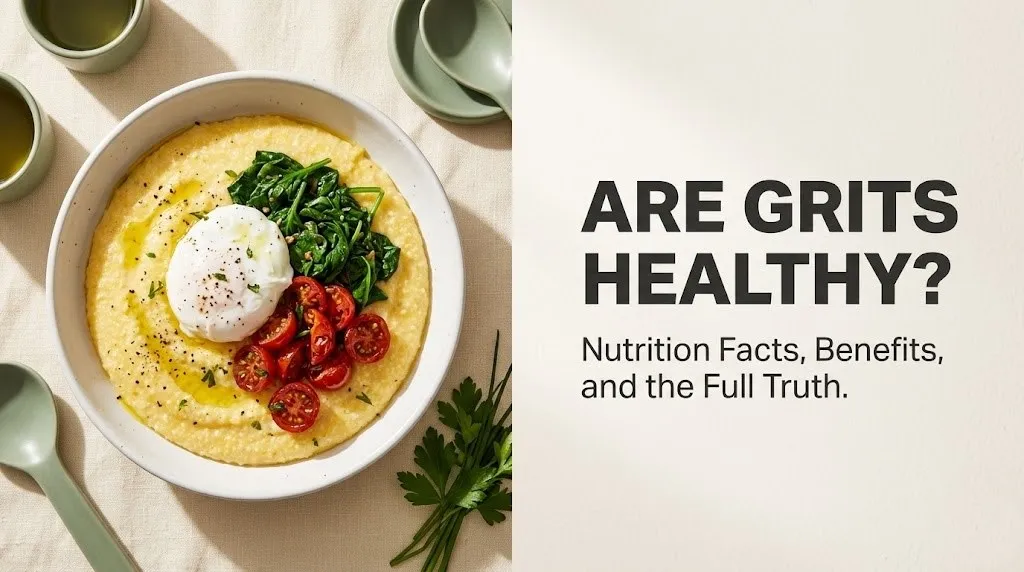
Healthy Grits Toppings and Add-Ins
The toppings and cooking additions you choose transform the nutritional profile of grits more than any other single variable. This is where most people either make grits genuinely healthy or quietly turn them into a high-calorie, high-sodium meal.
Toppings that improve the nutritional profile:
- Poached or soft-boiled eggs: Add 6 to 7 grams of protein and healthy fats per egg without significant carbohydrates
- Sauteed greens (spinach, kale, Swiss chard): Add fiber, potassium, magnesium, and vitamin K with minimal calories
- Avocado (1/4 medium): Adds approximately 5 grams of healthy monounsaturated fats and 2.5 grams of fiber
- Smoked salmon (2 oz): Adds 13 grams of protein and heart-supportive omega-3 fatty acids
- Roasted vegetables (peppers, zucchini, tomatoes): Add fiber, antioxidants, and volume without significant calories
- Salsa (2 tablespoons): Adds flavor and lycopene from tomatoes at approximately 10 calories
| Topping | Calories Added | Key Benefit | Caution |
|---|---|---|---|
| Butter (1 tbsp) | 102 | Flavor | High in saturated fat (7g) |
| Full-fat cheddar (1 oz) | 113 | Protein, calcium | High in saturated fat (6g), sodium |
| Poached egg (1 large) | 72 | Protein (6g), B12, choline | Limit added salt on egg |
| Avocado (1/4) | 80 | Healthy fats, fiber | Watch portion if calorie-conscious |
| Sauteed spinach (1 cup) | 41 | Iron, folate, vitamin K | Minimal concern |
| Olive oil (1 tsp) | 40 | Monounsaturated fats | Modest portion recommended |
| Salsa (2 tbsp) | 10 | Lycopene, vitamin C | Check for sodium in commercial brands |
People watching saturated fat and sodium should treat butter and cheese as occasional flavor additions rather than the base of the dish.
Key Takeaway: The toppings on grits matter more than the grits themselves. A bowl built with eggs, greens, and olive oil is a legitimately nutritious meal; the same base with butter, cream, and full-fat cheese is a very different nutritional situation.
Are Shrimp and Grits Healthy?
Shrimp and grits can be a nutritionally balanced dish, but the traditional restaurant version often carries significantly more calories, saturated fat, and sodium than a home-cooked alternative.
Shrimp (Penaeus monodon or Litopenaeus vannamei, the most common commercial species) is an outstanding lean protein source. A 3-ounce cooked serving provides approximately 20 grams of protein, 1 gram of fat, and under 100 calories, according to USDA FoodData Central. Shrimp also provides iodine, selenium, and vitamin B12. People managing cholesterol have sometimes been cautioned about shrimp due to its dietary cholesterol content (approximately 166 mg per 3 oz serving), but current dietary science, including guidance from the Dietary Guidelines for Americans 2020-2025, emphasizes that dietary cholesterol has less impact on blood cholesterol than saturated fat intake for most people.
The health concern with shrimp and grits lies in the preparation. Restaurant versions frequently involve butter-heavy sauces, Andouille sausage, heavy cream, and significant salt. A restaurant bowl of shrimp and grits can range from 600 to 1,100 calories and 900 to 1,800 mg of sodium, depending on portion size and restaurant.
A home-cooked version using stone-ground grits, shrimp sauteed in olive oil with garlic and herbs, and a small amount of broth-based sauce can deliver the same satisfying dish in the 400 to 550 calorie range with a much better fat and sodium profile.
People with a shellfish allergy need to avoid this dish entirely. Shellfish is one of the nine major food allergens recognized by the FDA.
How to Make Grits Healthier
Making grits healthier is primarily a function of three decisions: which type of grits you buy, what you cook them in, and what you put on top.
To prepare a healthier base:
- Choose stone-ground or whole-grain grits for higher fiber and more naturally occurring nutrients.
- Cook with water, unsalted broth, or a mix of both rather than milk or cream to keep saturated fat low.
- Use 1/4 teaspoon of salt maximum per cup of dry grits, or season at the end with fresh herbs, lemon juice, or garlic instead.
- Stir in 1 teaspoon of extra-virgin olive oil per serving rather than a tablespoon or more of butter.
- Cook over medium-low heat, stirring frequently, for a creamy texture without fat-based creaminess.
- Top with poached eggs, sauteed vegetables, or lean protein rather than sausage, bacon, or heavy cheese sauce.
- Serve a half-cup cooked portion as a side dish alongside protein and vegetables for a balanced plate.
Simple substitutions that make a real difference:
| Traditional Preparation | Healthier Swap | Calorie Saving (approx.) |
|---|---|---|
| 2 tbsp butter in grits | 1 tsp olive oil | Save ~170 calories |
| Full-fat cheddar (1 oz) | Nutritional yeast (2 tbsp) | Save ~80 calories, adds B12 |
| Heavy cream (1/4 cup) | Low-sodium broth (1/4 cup) | Save ~195 calories |
| Flavored instant packet | Plain stone-ground grits | Save ~300 to 400 mg sodium |
| Bacon topping (2 strips) | Smoked salmon (1.5 oz) | Save ~60 calories, gain omega-3s |
People with celiac disease should confirm that stone-ground grits purchased for home cooking carry a certified gluten-free designation. Cross-contamination during milling is a real risk even with naturally gluten-free corn.
Frequently Asked Questions About Grits
Are grits healthy for breakfast every day?
Grits can be a reasonable daily breakfast when you choose stone-ground varieties and prepare them with minimal saturated fat and sodium.
A daily bowl of plain enriched grits with eggs and vegetables provides iron, folate, and protein in a calorie-appropriate package.
The concern with daily grits is their relatively low fiber content compared to oatmeal or whole-grain toast, so varying your grain choices week to week gives broader nutritional coverage.
Are grits healthier than oatmeal?
Oatmeal is the stronger nutritional choice for most people, with higher fiber, more protein, and a lower glycemic index per serving.
Grits provide more folate per cup than oatmeal and yellow varieties offer lutein and zeaxanthin that oatmeal essentially does not contain.
If blood sugar stability and satiety are your priorities, oatmeal wins; if you’re focused on folate intake or variety in your grain rotation, grits are a legitimate option.
Can people with diabetes eat grits?
People with diabetes can eat grits, but portion size and pairing matter because grits have a moderate-to-high glycemic index.
A half-cup cooked serving paired with protein (eggs or legumes) and non-starchy vegetables creates a more stable blood glucose response than a full cup eaten alone.
Stone-ground grits are the better choice over instant varieties, and confirming the fit with a registered dietitian or diabetes care provider is worthwhile for anyone on glucose-lowering medication.
Are grits gluten free?
Corn is naturally gluten-free, so plain corn grits do not inherently contain gluten.
People with celiac disease must choose grits specifically labeled certified gluten-free, because cross-contamination during processing in shared facilities is a genuine and documented risk.
People with non-celiac gluten sensitivity should apply the same caution and opt for certified options when possible.
How many calories are in a cup of grits?
One cup of cooked, plain, enriched grits contains approximately 182 calories, based on USDA FoodData Central data.
That figure is for grits prepared with water and minimal or no added salt; cooking with milk, butter, or cream significantly increases the calorie count.
A half-cup cooked portion (the starting point for anyone monitoring carbohydrate or calorie intake) contains approximately 90 to 95 calories.
The Bottom Line on Grits
Grits are a reasonable, nutritionally moderate grain food. They provide real amounts of iron, folate, and B vitamins, and yellow corn varieties add eye-protective carotenoids that are genuinely worth having in your diet.
The version of grits that is healthy and the version that isn’t mostly come down to preparation. Stone-ground, simply cooked, and topped with protein and vegetables: that’s a solid meal. Butter, cream, cheese, and a flavored instant packet: that’s a different food with a different nutritional outcome.
Buy the stone-ground variety when you can, cook them simply, and build the bowl thoughtfully. That’s the actual answer.