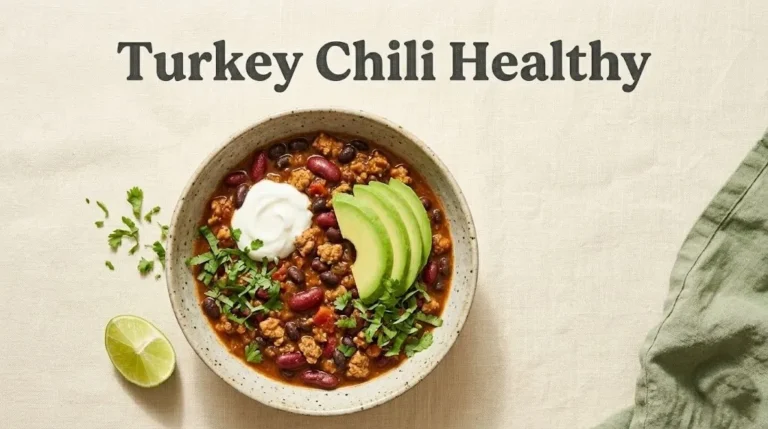
Healthy chili is one of the most nutritionally complete meals you can make at home, and the research backs that up. High-protein, high-fiber, built around vegetables and legumes, and genuinely adaptable to almost any dietary goal, a well-made bowl of chili earns its place in a weekly rotation.
The reason chili works nutritionally is structural. According to the USDA Dietary Guidelines for Americans 2020-2025, most adults fall short of both their daily protein and dietary fiber targets. A single serving of homemade turkey chili with beans can provide upward of 19 to 24 grams of protein and 11 to 14 grams of dietary fiber, making a meaningful contribution to both in a single bowl.
This guide covers everything: the actual nutrition in your bowl, why certain ingredients matter, the best stovetop and slow cooker recipes, how to adapt chili for weight loss, diabetes, and low-sodium diets, what to put on top, and how to store it safely without risking foodborne illness. No vague wellness claims. Just real food, real data, and a recipe that actually tastes like chili.
Is Chili Healthy?
Yes, chili is healthy, and it is one of the few comfort foods where the evidence is genuinely on its side.
A well-constructed chili combines lean protein, dietary fiber from legumes, antioxidants from tomatoes and chili peppers, and a wide range of micronutrients including potassium, iron, magnesium, folate, and vitamin B6. The calorie load is moderate relative to the nutritional return. That ratio is what nutritional researchers call high “nutrient density,” and chili delivers it.

The caveat is in the construction. A beef chili loaded with full-fat ground beef, cheese, sour cream, and canned sauces with high sodium can look nothing like a turkey-and-bean version built from scratch. Calling them both “chili” obscures a large nutritional gap.
The word “healthy” in front of a recipe name is only meaningful when it translates to specific ingredient and preparation choices. This article defines what those choices are and why they matter.
Key Fact:
- A 1-cup serving of homemade turkey chili with beans provides approximately 280 to 345 calories, 19 to 24 g protein, and 11 to 14 g dietary fiber, based on data from the U.S. Department of Veterans Affairs nutrition program and Columbus Regional Health recipe analysis.
Healthy Chili Nutrition: What’s Actually in Your Bowl?
Healthy chili contains a combination of lean protein, complex carbohydrates, dietary fiber, and micronutrients that makes it one of the more complete single-dish meals available.
Think of a bowl of chili like a well-packed lunchbox compared to a single sandwich. The beans bring carbohydrate, fiber, and plant protein. The turkey or meat brings complete amino acids. The tomatoes bring vitamin C (ascorbic acid) and lycopene. The spices bring bioactive compounds. Each layer earns its place.
Here is a direct comparison of the key nutritional metrics across the main chili types, based on a standard 1 to 1.25 cup serving:
| Chili Type | Calories | Protein | Fiber | Total Fat | Sodium (homemade) |
|---|---|---|---|---|---|
| Healthy turkey and bean (homemade) | 280 to 345 | 19 to 24 g | 11 to 14 g | 5 to 8.5 g | 250 to 500 mg |
| Extra-lean beef and bean (homemade) | 300 to 380 | 20 to 26 g | 10 to 13 g | 8 to 12 g | 250 to 500 mg |
| Vegetarian lentil and bean (homemade) | 250 to 310 | 15 to 20 g | 14 to 18 g | 3 to 5 g | 150 to 400 mg |
| Restaurant/canned meat and bean | 200 to 450 | 13 to 22 g | 6 to 12 g | 7 to 20 g | 800 to 1,500+ mg |
Figures are approximate based on USDA FoodData Central and verified recipe nutrition data. Actual values vary by brand, ingredients, and portion size.
For individuals with soy allergies: most standard chili recipes are naturally soy-free. Watch for seasoning packets and commercial chili starters, which may contain soy-based fillers or flavorings. Read labels if using any packaged spice blends.
What Makes a Chili Recipe Genuinely Healthy?
A genuinely healthy chili recipe is built around four core principles: lean protein, legumes as the fiber source, limited added sodium, and no added refined sugars.
Protein type matters most at the fat level. Ground turkey at 93% lean contains approximately 3 g of saturated fat per 3-ounce serving, compared to 7 to 8 g of saturated fat in 80/20 ground beef per equivalent serving, based on USDA FoodData Central data. The American Heart Association recommends limiting saturated fat to no more than 5 to 6% of daily calories for people managing cardiovascular disease risk.
Beans are the second structural pillar. Kidney, black, and pinto beans are excellent sources of soluble fiber, a type of fiber that dissolves in water to form a gel-like substance, which slows digestion and can help prevent sharp spikes in blood glucose levels. Skipping beans to “keep it simple” removes the single most nutritionally valuable ingredient in the dish.
The sodium variable is where most recipes quietly fail. A can of standard diced tomatoes contains approximately 350 mg of sodium per half-cup. A can of standard kidney beans adds another 400 mg per half-cup of drained beans. Together, before any additional seasoning, you’re approaching 750 mg of sodium per two ingredients. Using no-salt-added canned goods across the board and controlling your seasoning salt brings a full pot of chili under 500 mg sodium per serving without sacrificing flavor.
What separates a healthy chili from a less healthy one:
| Feature | Healthier Version | Less Healthy Version |
|---|---|---|
| Protein | 93% lean ground turkey or extra-lean beef | 80/20 ground beef, chorizo, or processed sausage |
| Beans | 2 or more cans, no-salt-added | Skipped, or canned in high-sodium liquid |
| Tomatoes | No-salt-added crushed or diced | Standard canned with ~350 mg sodium per half-cup |
| Sodium management | Low-sodium broth, spice-only seasoning | Commercial chili seasoning packets (can exceed 1,500 mg/packet) |
| Cooking fat | 1 tsp olive oil or avocado oil | 2 to 3 tbsp butter or lard |
| Added sugar | None | Some recipes add sugar to balance tomato acidity |
| Toppings | Greek yogurt, avocado, cilantro | Full-fat sour cream, shredded full-fat cheese, corn chips |
Key Takeaway: A healthy chili is defined by lean protein, at least two cans of no-salt-added beans, no-salt-added tomatoes, and controlled sodium. Those four choices together determine 80% of the nutritional outcome before a single spice is measured.
Ground Turkey vs. Beef: Which Protein Makes a Healthier Chili?
Ground turkey is a popular alternative to beef in chili, offering lower fat content while retaining bold flavors. Whether it is the better choice depends on what you are managing nutritionally.
93% lean ground turkey (Meleagris gallopavo) is the gold standard for lower-fat chili. According to USDA FoodData Central, a 3-ounce (85 g) serving of 93% lean ground turkey contains approximately 170 calories, 22 g protein, and 9 g fat (of which approximately 2.5 g is saturated). That is a meaningfully different saturated fat profile from 80/20 ground beef at the same serving size, which delivers approximately 15 g total fat and 6 g saturated fat.
A serving of extra-lean ground beef has 26 grams of protein, compared to 17 grams when it’s 80% fat. Using extra-lean beef means less unhealthy fats in the final dish. So if you prefer beef, the fat percentage is the lever to adjust, not the ingredient itself.
| Protein Option | Serving | Calories | Total Fat | Saturated Fat | Protein |
|---|---|---|---|---|---|
| 93% lean ground turkey | 3 oz (85 g) | ~170 | ~9 g | ~2.5 g | ~22 g |
| 85% lean ground turkey | 3 oz (85 g) | ~200 | ~12 g | ~3.5 g | ~22 g |
| Extra-lean ground beef (96/4) | 3 oz (85 g) | ~130 | ~4 g | ~2 g | ~23 g |
| 80/20 ground beef | 3 oz (85 g) | ~230 | ~15 g | ~6 g | ~20 g |
| Lentils (Lens culinaris), cooked | 1/2 cup | ~115 | ~0.4 g | ~0 g | ~9 g |
Source: USDA FoodData Central. Figures are per raw weight before cooking for meats.
People following a halal or kosher diet should verify that their ground turkey source meets certification requirements. For those avoiding all animal products, the lentil substitution delivers a genuinely protein-rich result with nearly zero saturated fat.
The Health Benefits of Chili You May Not Know About
Chili’s health benefits come from four distinct sources: capsaicin in the chili peppers, lycopene in the cooked tomatoes, soluble fiber in the beans, and the micronutrient profile of lean poultry.
Capsaicin (8-methyl-N-vanillyl-6-nonenamide) is the primary pungent alkaloid in chili peppers (Capsicum spp.). According to Mary-Jon Ludy, PhD, associate professor of food and nutrition at Bowling Green State University, “capsaicin turns on hormones that suppress appetite and shuts off hormones that stimulate appetite.” Her research found that as little as a quarter teaspoon of ground chili pepper mixed into food, rather than taken in a supplement form, could have a modest effect on appetite.
Research published in the National Library of Medicine notes that studies suggest that capsaicin intake may reduce obesity by decreasing food intake, increasing energy expenditure, and increasing lipid oxidation. These effects are mediated through the TRPV1 (transient receptor potential vanilloid 1) receptor, which capsaicin activates in the gastrointestinal tract and elsewhere. The effects are real but modest, and should not be overstated.
Cooked tomatoes are among the best sources of the potent antioxidant lycopene, which also gives tomatoes their red color. Heat processing increases lycopene bioavailability compared to raw tomatoes, making a slow-simmered chili a more effective lycopene source than a fresh tomato salad.
Consuming cooked red kidney beans (Phaseolus vulgaris) has been shown to have positive effects on blood vessel function and also decreases blood pressure. Research from Arizona State University found that when adults consumed a half cup of cooked pinto beans (Phaseolus vulgaris var.) daily for eight weeks, they experienced reductions in total and LDL cholesterol.
Key health-relevant compounds found in healthy chili:
- Capsaicin (Capsicum spp.): studied for appetite modulation and thermogenesis via TRPV1 activation
- Lycopene (from cooked tomatoes): carotenoid antioxidant associated with reduced cardiovascular and prostate cancer risk in epidemiological research
- Soluble fiber (from beans): slows glucose absorption, associated with LDL cholesterol reduction
- Folate (from beans): B vitamin essential for DNA synthesis and cell repair
- Iron (from beans and meat): supports oxygen transport via hemoglobin
- Potassium (from beans, tomatoes, peppers): supports healthy blood pressure regulation
Key Takeaway: The capsaicin in chili peppers, lycopene in cooked tomatoes, and soluble fiber in beans are three distinct, research-supported reasons why a well-built chili does more for your body than almost any other single-pot comfort meal.
The Best Healthy Turkey Chili Recipe
This healthy turkey chili recipe is built to deliver maximum protein and fiber at a controlled calorie and sodium level, with spice depth that makes it worth eating for four days straight.
Ingredients (serves 6 to 8):
- 1 lb (454 g) 93% lean ground turkey (Meleagris gallopavo)
- 1 medium yellow onion, diced (approximately 1 cup)
- 1 red bell pepper (Capsicum annuum), diced
- 4 cloves garlic (Allium sativum), minced
- 2 cans (15 oz each) red kidney beans (Phaseolus vulgaris), no-salt-added, drained and rinsed
- 1 can (28 oz) crushed tomatoes (Solanum lycopersicum), no-salt-added
- 1 can (15 oz) diced tomatoes, no-salt-added
- 1.5 cups low-sodium chicken or vegetable broth
- 2.5 tbsp mild chili powder (check label for wheat-free if gluten-sensitive)
- 1.5 tsp ground cumin (Cuminum cyminum)
- 1 tsp smoked paprika
- 1 tsp dried oregano
- 1/4 tsp cayenne pepper (adjust to heat preference)
- 1 tsp olive oil
- Salt and black pepper to taste, added at the end after tasting
Approximate nutrition per 1.25-cup serving (based on 8 servings): 295 to 320 calories, 22 g protein, 12 g dietary fiber, 6 g total fat, 1 g saturated fat, 400 to 480 mg sodium (using no-salt-added canned goods).
People following a gluten-free diet should verify that their chili powder blend is certified gluten-free. Some commercial chili powder blends use wheat-based anti-caking agents. Individuals with nightshade sensitivity (tomatoes, peppers, and paprika are all members of the Solanaceae family) should assess their tolerance before making this a regular meal.
How to Make Healthy Chili on the Stovetop Step by Step
Making healthy chili on the stovetop takes about 45 to 50 minutes total, with most of that time being hands-off simmering.
The single technique that separates good chili from flat chili is blooming the dry spices. When you add chili powder, cumin, and paprika directly to a hot oiled pan and let them cook for 30 to 60 seconds before any liquid touches them, the fat-soluble flavor compounds in those spices release into the oil rather than diluting into broth. The result is a richer, more rounded flavor that no amount of extra spice powder will replicate if you skip this step.
To make healthy turkey chili on the stovetop:
- Heat 1 teaspoon olive oil in a large heavy-bottomed pot or Dutch oven over medium-high heat.
- Add diced onion and red bell pepper. Cook for 5 to 6 minutes, stirring occasionally, until softened and lightly golden at the edges.
- Add minced garlic. Cook for 1 minute, stirring constantly. Do not let the garlic brown or it will turn bitter.
- Add ground turkey. Break into small pieces with a wooden spoon. Cook for 5 to 7 minutes until no pink remains. Drain excess liquid if needed.
- Push the turkey mixture to one side of the pot. Add chili powder, cumin, smoked paprika, oregano, and cayenne to the cleared space. Let the spices toast in the pan for 30 to 45 seconds, stirring constantly, before mixing into the meat.
- Add crushed tomatoes, diced tomatoes, drained kidney beans, and broth. Stir everything together thoroughly.
- Bring to a boil over high heat. Reduce heat to medium-low. Simmer uncovered for 30 to 40 minutes, stirring every 10 minutes, until the chili thickens and the flavors fully develop.
- Taste and adjust seasoning with salt and black pepper before serving.
- Serve in bowls topped with desired healthy garnishes. Allow chili to rest for 5 minutes before serving for best flavor.
Healthy Chili Slow Cooker Method
A slow cooker produces a deeper, more developed chili than a short stovetop simmer, and requires only about 10 minutes of hands-on work.
The trade-off is time. Low heat for 6 to 8 hours breaks down the connective structure of the beans and allows the spices to penetrate the protein more thoroughly than a 30-minute stovetop session allows. The flavor is measurably different. The texture is thicker and more cohesive. Slow cooker chili is also the better choice for meal prep since you can start it in the morning and come home to a finished dinner.
To make healthy turkey chili in a slow cooker:
- Brown 1 lb ground turkey in a skillet over medium-high heat for 5 to 6 minutes until no pink remains. Drain and transfer to slow cooker.
- Add diced onion, diced red bell pepper, and minced garlic directly to the slow cooker. No pre-cooking needed for the vegetables.
- Sprinkle all dry spices over the meat and vegetables. Stir briefly.
- Add crushed tomatoes, diced tomatoes, drained beans, and broth. Stir to combine.
- Cook on LOW for 6 to 8 hours or HIGH for 3 to 4 hours.
- Taste and adjust seasoning in the final 30 minutes of cooking, not before. Sodium perception changes as liquid reduces.
- Serve directly from the insert. Hold at the warm setting (above 140°F) for up to 2 hours if not serving immediately.
Quick Tip:
- Browning the turkey before adding it to the slow cooker is not optional for best flavor. Raw turkey added directly produces a pale, steamed texture.
- For a thicker slow cooker chili, remove the lid for the final 30 minutes on high heat to allow steam to escape.
- Gluten-free adaptation: Confirm all canned goods and spice blends carry a certified gluten-free label.
Key Takeaway: Blooming dry spices in hot oil or fat before adding liquid is the single most effective technique for building deep flavor in any chili, stovetop or slow cooker. Skipping it produces flat-tasting results that no amount of extra spice powder will fix after the liquid is in.
Healthy Vegetarian Chili Recipe
A genuinely healthy vegetarian chili can match or exceed the protein and fiber profile of a turkey-based version when built correctly.
The key is using two sources of plant protein: legumes and a dense textured ingredient that provides body. Brown or green lentils (Lens culinaris) are the most reliable replacement for ground turkey in terms of both texture and protein contribution. A hearty vegetarian chili built on navy beans and brown lentils provides an impressive 18 grams of fiber and 20 grams of plant-based protein per serving, proof that meat-free meals can still be substantive.
For people following a vegan diet, all ingredients in a standard vegetarian chili are naturally vegan. Use vegetable broth instead of chicken broth. For individuals following a low-FODMAP protocol for irritable bowel syndrome (IBS): canned lentils and canned chickpeas (Cicer arietinum) are lower in fermentable oligosaccharides than dried-and-cooked versions, making them somewhat better tolerated. However, large portions of any legume can still trigger symptoms in sensitive individuals. Portion size should be tested individually.
Healthy Vegetarian Chili ingredients (serves 6):
- 1.5 cups dry green lentils (Lens culinaris), rinsed (no pre-soaking required)
- 2 cans (15 oz each) black beans (Phaseolus vulgaris var.), no-salt-added, drained and rinsed
- 1 can (28 oz) crushed tomatoes, no-salt-added
- 1 can (15 oz) diced tomatoes, no-salt-added
- 2 cups low-sodium vegetable broth
- 1 medium yellow onion, diced
- 3 cloves garlic (Allium sativum), minced
- 1 red bell pepper (Capsicum annuum), diced
- 1 cup fresh or frozen corn kernels (optional)
- 2 tbsp chili powder, 1 tsp cumin, 1 tsp smoked paprika, 1/2 tsp oregano, 1/4 tsp cayenne
- 1 tsp olive oil
Simmer covered on medium-low heat for 30 to 35 minutes or until lentils are fully tender. Approximate nutrition per 1.25-cup serving: 280 to 310 calories, 17 to 19 g protein, 15 to 18 g dietary fiber, 3 to 4 g fat, 0 g saturated fat, under 350 mg sodium (using no-salt-added canned goods).
Healthy Chili for Weight Loss: Does It Actually Work?
Healthy chili genuinely supports weight management, not because of any single ingredient, but because of its combined effect on satiety relative to its calorie load.
Protein and dietary fiber are the two dietary components with the strongest research backing for appetite regulation. A 1.25-cup serving of healthy turkey chili provides both in meaningful amounts at a calorie range of approximately 280 to 345 calories. For reference, that is the same calorie range as many packaged snack bars, with a dramatically better nutritional profile.
Research from Bowling Green State University found that capsaicin turns on hormones that suppress appetite and shuts off hormones that stimulate appetite. The best way to harness these effects is to add chili pepper directly to your food, and as little as a quarter teaspoon can have a modest effect. The appetite-suppression effect is real but modest. It contributes to a meal that is already satiety-promoting by design, rather than acting as a standalone “fat-burner.”
Portion context matters too. A standard restaurant serving of chili can be 1.5 to 2 cups, adding up to 400 to 500+ calories before toppings. Making your own at home lets you control portions, ingredients, and toppings with precision.
Practical tips for using chili in a weight management plan:
- Serve in a 1 to 1.25 cup portion as a main, alongside a green salad with vinegar-based dressing.
- Skip the full-fat cheese and sour cream toppings. Use plain nonfat Greek yogurt (approximately 15 calories per 2-tablespoon serving) instead of sour cream.
- Start with a small bowl of the chili’s broth if the recipe is liquid enough, or with a broth-based soup. Research consistently shows that starting a meal with a low-calorie liquid reduces total meal intake.
- Avoid serving over rice, baked potato, or corn chips, which can add 200 to 400 calories before your entrée portion is counted.
People managing obesity under medical supervision should work with a registered dietitian to determine appropriate calorie targets and portion sizes for their specific health context.
Is Chili Good for People With Diabetes?
Healthy homemade chili can be a good choice for people managing type 2 diabetes, but specific ingredient and portion choices determine the outcome.
Beans are excellent sources of soluble fiber, a type of fiber that dissolves in water to form a gel-like substance in the gut, which slows down digestion and can help prevent sharp spikes in blood glucose levels. This mechanism makes beans one of the few carbohydrate-containing foods that generally produces a moderate glycemic response despite their carbohydrate content.
The glycemic index of a mixed bean-and-meat chili is substantially lower than that of white rice, pasta, or bread at an equivalent serving size. A study published in the Journal of Nutrition found that replacing high-glycemic foods with legumes as part of a low-glycemic diet improved long-term blood glucose control in people with type 2 diabetes, with measurable reductions in HbA1c (glycated hemoglobin) over 3 months.
The main areas requiring attention for diabetic-friendly chili are sauces with hidden added sugars and starchy toppings. Some commercial chili seasoning packets contain corn syrup or maltodextrin as fillers. Always read the ingredient list on any packaged spice blend. Corn served as a topping or ingredient adds approximately 18 g of carbohydrate per half-cup and may need to be factored into an individual’s carbohydrate budget.
Diabetes-friendly chili adaptations:
- Use no-salt-added canned beans and tomatoes (lower sodium is generally relevant for diabetics managing concurrent hypertension)
- Keep starchy toppings like corn chips and rice sides optional
- Choose 93% lean ground turkey over fatty beef to reduce saturated fat, which research links to worsening insulin resistance at high intakes
- Monitor portion size: 1 cup per serving provides approximately 35 to 45 g of carbohydrate, which fits within many standard meal plans for people managing blood sugar
People with type 2 diabetes should work with a registered dietitian or certified diabetes care and education specialist to determine appropriate portion sizes and carbohydrate distribution for their individual medication and health plan.
Key Takeaway: Chili built on beans and lean protein is one of the better carbohydrate-containing meals for blood sugar management because soluble fiber from beans slows glucose absorption, but portion size and what you put on top still matter for people with diabetes.
Low-Sodium Healthy Chili: How to Cut the Salt Without Losing Flavor
Sodium content can be high in some chili recipes, so opting for low-sodium versions of canned ingredients is one of the most effective steps you can take. The good news is that cutting sodium in chili is achievable without any loss in flavor when you know which technique to apply.
The AHA recommends no more than 2,300 mg of sodium per day for most adults, and no more than 1,500 mg per day for people with hypertension or heart disease. A standard bowl of restaurant chili can contain 800 to 1,500 mg of sodium per cup before toppings. A homemade version using no-salt-added canned goods and measured seasoning can land at 250 to 500 mg per cup.
The reason low-sodium chili still tastes good when done correctly is that the flavor complexity comes from spices (chili powder, cumin, smoked paprika, cayenne), the Maillard reaction products from browning the meat, and the long-cooked tomato acidity, not from salt. Salt enhances existing flavors; it does not create them. Add it at the very end, taste-test before adding, and you will use far less.
Six steps to make a low-sodium healthy chili:
- Use no-salt-added canned tomatoes (saves approximately 350 mg sodium per 15-oz can vs. standard)
- Use no-salt-added canned beans, drained and rinsed (draining beans removes approximately 40% of the canned sodium)
- Use low-sodium broth (saves approximately 400 to 600 mg per cup vs. standard broth)
- Avoid commercial chili seasoning packets, which can add 1,000 to 1,500 mg sodium per packet
- Build spice complexity with fresh garlic, cumin, smoked paprika, and chili powder instead of seasoning mixes
- Add any salt only at the very end, after tasting
People on medically supervised low-sodium diets for heart failure, stage 3+ chronic kidney disease, or severe hypertension should note that even a well-constructed homemade chili contains potassium from beans and tomatoes. Those managing potassium levels under nephrology guidance should confirm appropriate serving sizes with their care team.
Healthy Chili Toppings: What to Add and What to Skip
The toppings you put on chili can either reinforce its nutritional value or erase the effort you put into building a healthy base.
A full bowl of healthy turkey chili at 295 calories with a standard topping of 1/4 cup shredded full-fat cheddar, 2 tablespoons sour cream, and a handful of corn chips adds approximately 200 to 300 additional calories and 300 to 500 mg of additional sodium. That math matters if the goal is calorie management.
The good news is that the best-tasting chili toppings are also the lowest-calorie ones. Fresh-squeezed lime juice brightens the entire bowl. A spoonful of plain Greek yogurt provides the same creamy texture as sour cream with a fraction of the fat and a protein boost. Sliced fresh jalapeño (Capsicum annuum var. annuum) adds capsaicin without calories.
| Topping | Serving Size | Approx. Calories | Notes |
|---|---|---|---|
| Plain nonfat Greek yogurt | 2 tbsp | ~15 cal | Replaces sour cream; adds protein |
| Fresh lime juice | 1/2 lime | ~5 cal | Brightens flavor; no added sodium |
| Fresh cilantro (Coriandrum sativum) | 2 tbsp | ~2 cal | Adds brightness; herb flavor |
| Sliced jalapeño (Capsicum annuum) | 1/4 cup | ~8 cal | Adds heat and capsaicin |
| Diced avocado (Persea americana) | 1/4 of fruit | ~80 cal | Adds monounsaturated fat; filling |
| Diced white or red onion | 2 tbsp | ~8 cal | Adds crunch and flavor |
| Shredded cheddar cheese (full-fat) | 2 tbsp | ~55 to 65 cal | Saturated fat; use sparingly |
| Full-fat sour cream | 2 tbsp | ~60 cal | High saturated fat; swap for yogurt |
| Corn tortilla chips | 1 oz (about 15 chips) | ~130 to 140 cal | High sodium if salted; add glycemic load |
Individuals with a latex-fruit syndrome allergy should note that avocado is among the foods associated with cross-reactivity in people with latex allergy. If you have a diagnosed latex allergy, discuss avocado with your allergist before adding it regularly to your diet.
Healthy Chili Meal Prep: Storage, Freezing, and Reheating Safely
Healthy chili is one of the best meal prep dishes available, but safe storage requires following specific temperature guidelines, not guesswork.
The general consensus among food safety experts, including the USDA, indicates that properly stored chili stays good for three to four days when refrigerated at 40°F (4°C) or below. This applies to all versions: turkey, beef, and vegetarian.
Within 2 hours of cooking food or after it is removed from an appliance keeping it warm, leftovers must be refrigerated. Chili left at room temperature for more than 2 hours should be discarded (1 hour if the ambient temperature is above 90°F). These are USDA Food Safety and Inspection Service guidelines, not suggestions.
For cooling a large pot quickly and safely before refrigerating: divide large batches into smaller, shallow containers rather than storing everything in one large pot. This technique increases the surface area exposed to cold air, allowing the chili to reach safe temperatures more quickly.
When reheating, the USDA specifies distinct temperature targets based on protein type. Chili should be reheated to 160°F for ground beef chili and 165°F for ground turkey chili. Use a food thermometer to verify temperature, especially in the microwave where uneven heating creates cold spots. Stir thoroughly and check temperature in multiple spots before eating.
Freezing: For the best quality, aim to eat frozen chili within 4 to 6 months. Freeze in individual portions using freezer-safe airtight containers or heavy-duty freezer bags laid flat for efficient storage. Label each container with the date it was made.
Safe meal prep timeline for healthy chili:
- Cook: Brown turkey to 165°F internal temperature
- Cool: Divide into shallow containers. Cool to room temperature within 1 hour
- Refrigerate: Store at 40°F or below within 2 hours of cooking
- Refrigerator shelf life: 3 to 4 days maximum
- Freezer shelf life: 4 to 6 months for best quality; safe indefinitely at 0°F
- Reheat: Turkey chili to 165°F before eating; ground beef chili to 160°F
- Never: Thaw on the countertop; never reheat more than once
People with compromised immune systems (including those undergoing chemotherapy, pregnant individuals, adults over 65, and children under 5) are at higher risk from foodborne illness from improperly stored or reheated meats and legumes. Following temperature guidelines precisely is especially relevant for these groups.
Key Takeaway: Chili is ideal for meal prep, but the two-hour refrigeration rule and protein-specific reheating temperatures (165°F for turkey, 160°F for beef) are non-negotiable safety steps that protect you from foodborne illness, regardless of how the chili looks or smells.
Frequently Asked Questions About Healthy Chili
Is homemade turkey chili healthy?
Yes, homemade turkey chili is one of the more nutritionally complete single-dish meals you can prepare.
A 1.25-cup serving of a well-constructed turkey chili with beans provides approximately 280 to 345 calories, 19 to 24 g protein, and 11 to 14 g dietary fiber, based on verified recipe nutrition data.
Using 93% lean ground turkey, no-salt-added canned goods, and skipping high-fat toppings keeps it in a nutritional range that supports most health goals.
How many calories are in a bowl of healthy chili?
A standard 1 to 1.25-cup serving of homemade healthy chili ranges from approximately 250 to 345 calories, depending on the protein type and whether beans are included.
Restaurant or canned chili can range from 200 calories for a small serving up to 450+ calories for a large restaurant bowl before toppings.
Home cooking lets you control the calorie range precisely through ingredient choices, portion size, and topping selection.
Can I eat chili every day?
Eating chili daily is not problematic for most healthy adults when the recipe is built from lean protein, beans, and low-sodium ingredients.
The main concern with daily consumption is bean-derived gas and bloating from galacto-oligosaccharides, which some people find uncomfortable; this often decreases over 2 to 3 weeks as gut bacteria adapt.
Individuals managing gout should moderate frequency since both red meat and legumes are high in purines; a registered dietitian can help determine appropriate serving frequency for that condition.
Is chili good for you if you’re trying to lose weight?
Yes, chili is a good option for weight management because its combination of lean protein, soluble fiber from beans, and capsaicin from chili peppers supports satiety without high calorie density.
A 1 to 1.25 cup serving at 280 to 320 calories is genuinely filling for most people, particularly when served without high-calorie toppings or sides.
The key is portion discipline: restaurant and packaged servings are often 1.5 to 2 cups per bowl, which adds up quickly before toppings are counted.
How long does homemade healthy chili last in the fridge?
Properly stored chili stays good for three to four days when refrigerated at 40°F (4°C) or below.
It must be refrigerated within 2 hours of cooking in shallow, airtight containers at 40°F or below, per USDA Food Safety and Inspection Service guidelines.
For longer storage, freeze in labeled airtight containers for up to 4 to 6 months; always reheat turkey chili to a verified internal temperature of 165°F before eating.
Closing
The honest case for healthy chili is straightforward: few single-pot meals deliver this much protein, fiber, and micronutrient variety at this calorie cost, while still being genuinely satisfying to eat. Build it with 93% lean ground turkey, two cans of no-salt-added beans, crushed tomatoes, and bloomed dry spices. That combination does the nutritional heavy lifting.
Make a large batch on Sunday. Divide it into labeled containers. Reheat it properly during the week. The meal prep value alone makes this recipe worth knowing.
If you’re adapting for a specific health condition, such as diabetes, hypertension, or kidney disease, the substitution principles in this guide give you the starting point. Work from there with your care team for precision.