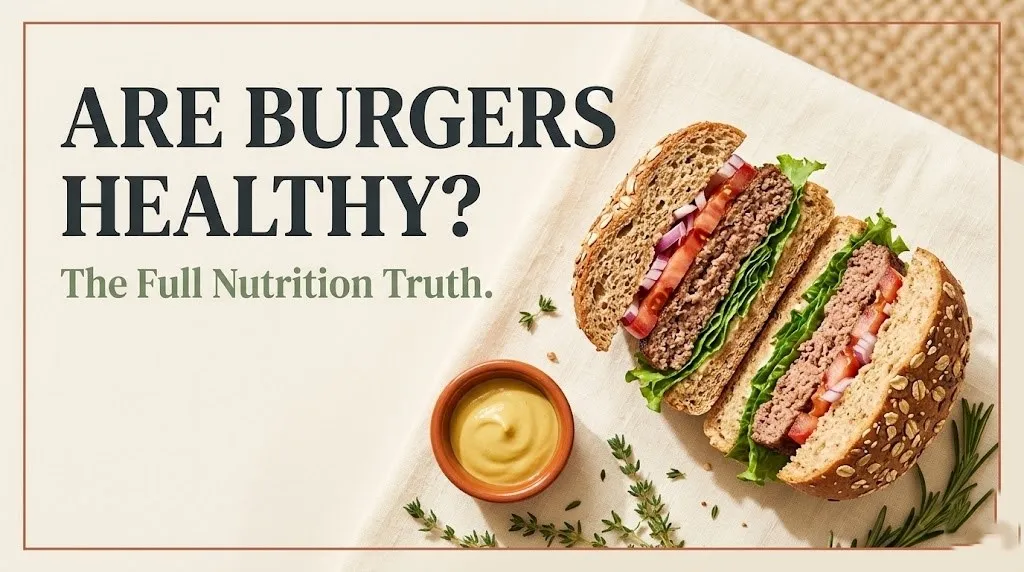
Burgers can absolutely be part of a healthy diet, but the answer depends almost entirely on the patty type, cooking method, toppings, and how often you eat them. A well-built homemade burger is a genuinely solid source of protein, iron, and B vitamins. A fast food double with processed cheese and a white bun is a different nutritional story.
Red meat consumption sits at the center of ongoing nutrition research. According to the USDA Dietary Guidelines for Americans 2020-2025, lean meats including lean ground beef can fit within a healthy dietary pattern when consumed in appropriate portions and prepared without excess sodium or added saturated fat.
This article covers the real nutritional profile of beef patties, what research says about their health effects, how different cooking methods and ingredients change the outcome, and exactly how to build a burger that works for your goals.
Are Burgers Healthy?
Burgers are healthy when they’re built from lean ground beef or a quality protein alternative, cooked without excess added fat, and paired with nutrient-dense toppings on a reasonable bun. The patty itself is not the enemy. A plain beef patty is a whole food protein source with real nutritional value.
The problem is almost never the beef. It’s the combination of a high-fat patty, processed bun, high-sodium condiments, processed cheese slices, and super-sized portions. Those elements stack up fast. A reasonable homemade burger and a fast food triple stack are both called “burgers,” but they share almost nothing nutritionally.
The other factor people overlook is frequency. Harvard T.H. Chan School of Public Health research consistently finds that eating unprocessed red meat in moderate amounts (roughly two to three times per week at standard serving sizes) does not carry the same cardiovascular risk as processed red meat consumed daily. Context and frequency matter as much as the food itself.
Key Research Finding: The World Health Organization classifies processed red meat (hot dogs, bacon, sausages, deli meats) as a Group 1 carcinogen based on sufficient evidence. Unprocessed red meat, which includes fresh ground beef burgers, is classified as a Group 2A “probable” carcinogen, meaning the evidence is limited and often influenced by diet quality overall.
Is a Beef Patty Healthy?
A plain beef patty is a nutritionally dense, minimally processed protein source that contains essential amino acids, heme iron, zinc, and vitamin B12, making it genuinely healthy for most people in appropriate serving sizes. The healthfulness of that patty shifts based on the fat percentage of the ground beef.
Ground beef is labeled by its lean-to-fat ratio. An 80/20 ground beef patty (80% lean, 20% fat) delivers more calories and saturated fat than a 93/7 ground beef patty. Neither is inherently bad. The higher-fat version has more flavor and stays juicy with less cooking skill. The leaner version needs more careful preparation to avoid dryness.
Here’s how the four most common fat ratios compare for a raw 4-ounce (113g) patty before cooking:
| Ground Beef Type | Approx. Calories | Total Fat | Saturated Fat | Protein |
|---|---|---|---|---|
| 80/20 (regular) | 290 kcal | 23g | 9g | 19g |
| 85/15 (regular-lean) | 240 kcal | 17g | 7g | 21g |
| 90/10 (lean) | 200 kcal | 11g | 4.5g | 22g |
| 93/7 (extra-lean) | 170 kcal | 8g | 3g | 23g |
Source: USDA FoodData Central
Cooking reduces fat content further, particularly for grilled or broiled patties where rendered fat drips away. A raw 80/20 patty loses roughly 20 to 30% of its fat content during grilling. That number changes based on cooking method, which this article addresses directly in a later section.
Beef Patty Nutrition Facts
A cooked beef patty from standard 80/20 ground beef weighing 3 ounces (85g) contains approximately the following, per USDA FoodData Central data:
| Nutrient | Amount per 3oz Cooked Patty | % Daily Value (DV) |
|---|---|---|
| Calories | 218 kcal | 11% |
| Total Fat | 15g | 19% |
| Saturated Fat | 6g | 30% |
| Cholesterol | 77mg | 26% |
| Sodium | 70mg | 3% |
| Protein | 22g | 44% |
| Heme Iron | 2.2mg | 12% |
| Zinc | 5.4mg | 49% |
| Vitamin B12 (cobalamin) | 2.4mcg | 100% |
| Niacin (vitamin B3) | 4.4mg | 28% |
| Selenium | 18mcg | 33% |
That vitamin B12 figure is notable. A single 3-ounce cooked beef patty can meet 100% of the recommended daily intake of cobalamin (vitamin B12), a nutrient the body cannot produce on its own and one that’s absent from plant foods entirely unless they’re fortified.
Beef also contains conjugated linoleic acid (CLA), a naturally occurring fatty acid that some research suggests may support body composition. The evidence on CLA’s effects in humans is still developing, but it’s a genuine bioactive compound unique to ruminant animal products.
People following vegetarian or vegan diets should be aware that beef patties contain dairy cross-contamination risk depending on shared cooking surfaces, and they obviously contain no plant-based ingredients themselves. For halal and kosher dietary requirements, sourcing and preparation certification need to be confirmed at the point of purchase.
Key Takeaway: The fat percentage of ground beef is the single biggest nutritional lever you can pull when building a healthier burger. Choosing 90/10 instead of 80/20 reduces saturated fat by roughly 25%, without sacrificing protein, iron, or B12.
Calories in a Burger Patty
A cooked beef patty contains between 170 and 290 calories depending on the fat percentage of the ground beef and the patty weight. Those numbers are for the patty alone, before any bun, toppings, sauces, or cheese enter the picture.
The most common fast food burger patty weighs between 1.6 ounces and 4 ounces (45g to 113g) depending on the chain and menu tier. A standard homemade patty made from 4 ounces of raw 80/20 ground beef will cook down to roughly 3 ounces and yield approximately 218 calories. Use extra-lean 93/7 beef in that same 4-ounce raw weight, and you’re looking at closer to 145 to 160 cooked calories.
Think of it this way: the difference between an 80/20 and a 93/7 patty is roughly the same calorie difference as one large egg. That’s not a dramatic gap for a single meal, but across three or four burger meals per week, it accumulates in a way that’s worth knowing about.
Here’s a quick calorie picture of a full burger build, starting from just the patty:
| Component | Approx. Calories Added |
|---|---|
| 3oz cooked 80/20 beef patty | 218 kcal |
| Standard white hamburger bun | 120 kcal |
| 1 slice processed American cheese | 60 kcal |
| 1 tablespoon ketchup | 15 kcal |
| 1 tablespoon mayonnaise | 90 kcal |
| Lettuce and tomato | under 10 kcal |
| Total (approximate) | 513 kcal |
Swap to a 93/7 beef patty, a whole grain bun, mustard instead of mayo, and skip the processed cheese: you’re closer to 350 calories with a better fiber and saturated fat profile. Same meal category, meaningfully different numbers.
Protein in a Burger Patty
Beef patties are a high-quality, complete protein source, meaning a single patty contains all nine essential amino acids the body cannot produce on its own. A 3-ounce cooked beef patty delivers approximately 22 grams of protein regardless of whether you’re using 80/20 or 93/7 ground beef.
That protein figure is why burgers hold up well in higher-protein dietary patterns. The Academy of Nutrition and Dietetics notes that most adults need between 0.8 and 1.2 grams of protein per kilogram of body weight daily, with higher needs for athletes, older adults, and people recovering from illness or surgery. A single beef patty contributes between 35 and 50% of a sedentary adult’s baseline daily protein target in one sitting.
Beef protein also has a high Protein Digestibility Corrected Amino Acid Score (PDCAAS) and a high Digestible Indispensable Amino Acid Score (DIAAS), both of which are measures of how efficiently the body can use the protein from a given food. These scores reflect that the amino acids in beef are highly bioavailable, meaning the body absorbs and uses them efficiently compared to many plant-based proteins.
For people following a high-protein weight management plan, people over 65 trying to maintain muscle mass, or anyone recovering from surgery or illness, the protein density of a lean beef patty is genuinely useful. Those with kidney disease who need to limit dietary protein should check with their nephrologist about appropriate red meat frequency given their specific kidney function levels.
Saturated Fat in a Beef Burger
A 3-ounce cooked patty from standard 80/20 ground beef contains approximately 6 grams of saturated fat, which is 30% of the American Heart Association’s recommended daily limit. That number drops to roughly 3 grams for an extra-lean 93/7 patty.
The American Heart Association (AHA) recommends limiting saturated fat intake to no more than 5 to 6% of total daily calories for people managing cardiovascular risk. For someone eating 2,000 calories per day, that’s roughly 11 to 13 grams of saturated fat total across all food sources. A single 80/20 beef patty uses about half that daily budget before you’ve added cheese, butter on the bun, or any other meal.
That’s the practical concern, not that beef contains saturated fat, but that burgers are rarely eaten in isolation. The saturated fat in a beef patty is compounded by cheese, sauces, and any other protein or dairy eaten that day.
The relationship between dietary saturated fat and cardiovascular disease is also more nuanced than older public health messaging suggested. Research published in the American Journal of Clinical Nutrition has indicated that the type of saturated fatty acids and the overall dietary pattern matter more than saturated fat in isolation. Beef contains a mix of saturated fatty acids including stearic acid, which some research suggests has a more neutral effect on LDL cholesterol than palmitic acid. This doesn’t make unlimited saturated fat intake risk-free, but it does mean context and total dietary pattern carry significant weight in the risk calculation.
Iron and Zinc in Beef Burgers
Beef burgers are one of the most concentrated dietary sources of heme iron and zinc available in a commonly eaten food format. A 3-ounce cooked patty provides approximately 2.2mg of iron (12% DV) and 5.4mg of zinc (49% DV).
What makes the iron in beef genuinely different from plant-based iron sources is the form it takes. Beef contains heme iron, which is bound to the protein myoglobin and absorbed at a rate of approximately 15 to 35% in the human gut. Non-heme iron from plant foods like spinach or lentils is absorbed at only 2 to 20%, and that rate drops further in the presence of certain compounds like phytic acid in grains and legumes.
Think of it like water flow through two different pipes: heme iron moves through a smooth, efficient channel, while non-heme iron moves through a narrower pipe with valves that can be partially closed by other foods eaten at the same meal.
This distinction matters most for:
- Women of reproductive age with higher baseline iron needs
- Pregnant women, who require approximately 27mg of iron daily according to the NIH
- Adolescent girls during growth periods
- People who have been diagnosed with iron deficiency anemia
- Athletes, particularly endurance athletes who lose iron through sweat and foot-strike hemolysis
Zinc is needed for immune function, wound healing, DNA synthesis, and protein metabolism. A single beef patty providing nearly half the daily recommended zinc intake is a meaningful contribution for most adults, particularly for older adults whose zinc absorption efficiency declines with age.
Key Takeaway: The heme iron and zinc content of a beef patty aren’t just supporting-cast nutrients. For women of reproductive age and anyone managing iron levels, a lean beef burger can be one of the most efficient ways to meet those daily targets from a single food source.
Are Burgers Healthy for Weight Loss?
Burgers can fit into a weight loss plan when the patty uses lean ground beef (90/10 or 93/7), portion size is controlled, and high-calorie toppings like full-fat cheese and mayonnaise are moderated. The protein content of a beef patty is one of its most weight-management-relevant attributes.
High-protein foods increase satiety by influencing hormones like peptide YY (PYY) and glucagon-like peptide-1 (GLP-1), both of which signal fullness to the brain. A study published in the American Journal of Clinical Nutrition found that increasing dietary protein to 30% of total calories reduced daily calorie intake by an average of 441 calories in participants, largely due to improved satiety. A burger with a lean patty and protein-rich toppings like a fried egg or extra beef can contribute meaningfully to that satiety target.
The part of a burger that most often creates a weight loss problem isn’t the patty. It’s the combination of refined carbohydrates in a white bun, calorie-dense sauces, and the total portion size of a restaurant or fast food serving. A fast food large combo meal can exceed 1,200 to 1,400 calories. A homemade burger on a whole grain bun with a 93/7 lean patty, mustard, pickles, tomato, and lettuce lands between 350 and 400 calories.
For people tracking macros or following a calorie-controlled plan, choosing the patty type strategically, skipping or halving the bun, and using volume-adding toppings like sliced onion, lettuce, and tomatoes instead of calorie-dense sauces makes burgers a workable choice rather than an obstacle.
Are Beef Burgers High in Cholesterol?
A 3-ounce cooked beef patty contains approximately 77mg of dietary cholesterol, which is roughly 26% of the 300mg daily limit that older dietary guidelines once promoted. Current guidance has shifted on this point.
The 2020-2025 USDA Dietary Guidelines for Americans removed the previous 300mg daily cap on dietary cholesterol after a review of the research found that dietary cholesterol (the cholesterol in food) has a smaller and more variable impact on blood cholesterol levels than saturated fat intake does. The body tightly regulates blood cholesterol through internal production in the liver, which adjusts downward when dietary intake increases in most people.
This doesn’t mean dietary cholesterol is irrelevant. Roughly 25 to 30% of people are classified as “cholesterol hyper-responders,” meaning their blood LDL cholesterol rises more than average when dietary cholesterol increases. For this group, which includes some people with familial hypercholesterolemia, moderating dietary cholesterol including from red meat remains a reasonable strategy recommended by their cardiologist or registered dietitian.
For the majority of healthy adults, however, the cholesterol in a beef patty eaten several times a week is not the primary cardiovascular concern. The saturated fat content of the overall burger build, not the cholesterol in the patty alone, is a more meaningful variable to monitor. People who have been told by a physician that they have high LDL cholesterol or specific cardiovascular risk factors should discuss their red meat frequency with their cardiologist to get guidance appropriate for their individual lipid profile.
How Does Cooking Method Affect Burger Nutrition?
Cooking method changes the final fat content, calorie total, and safety profile of a beef burger patty more than most people realize. Grilling and broiling allow rendered fat to drip away from the patty, while pan-frying in oil or butter adds fat back in.
Here’s a comparison of how four common cooking methods affect a raw 4-ounce 80/20 ground beef patty:
| Cooking Method | Fat Retained | Est. Cooked Calories | Notable Consideration |
|---|---|---|---|
| Grilling (open flame) | 60 to 70% of original | 215 to 230 kcal | HCA and PAH formation at high temps |
| Broiling (oven) | 65 to 75% of original | 210 to 225 kcal | Similar fat loss to grilling, lower HCA risk |
| Pan-frying (dry skillet) | 75 to 85% of original | 240 to 260 kcal | Fat stays in pan, flavor intensity higher |
| Pan-frying (with oil/butter) | Fat added | 280 to 320+ kcal | Significant calorie addition from cooking fat |
| Air-frying | 60 to 70% of original | 215 to 230 kcal | No HCA risk, good fat reduction |
HCA stands for heterocyclic amines, and PAH stands for polycyclic aromatic hydrocarbons. Both are chemical compounds that form when meat is cooked at high temperatures over open flames or chars significantly. The National Cancer Institute has identified these as potential carcinogens in laboratory studies, though the real-world cancer risk from occasional grilled meat in an otherwise balanced diet has not been established definitively.
Practical steps to reduce HCA and PAH formation while grilling:
- Keep grill temperature at medium rather than maximum heat
- Flip burgers frequently (every 30 to 60 seconds) rather than leaving them stationary on high heat
- Avoid visible charring on the patty surface
- Use a meat thermometer to reach 160°F (71°C) internal temperature without overcooking
Key Takeaway: Grilling and air-frying retain the least fat of all common burger cooking methods. Pan-frying in a dry skillet is a reasonable indoor alternative. Adding butter or oil to the pan while cooking a burger patty negates a significant portion of the nutritional advantage of choosing leaner ground beef.
Are Homemade Burgers Healthier Than Fast Food?
Homemade burgers are consistently healthier than fast food burgers across almost every relevant metric: sodium content, saturated fat, calorie total, ingredient quality, and portion control. The difference is substantial.
A standard fast food quarter-pound burger with cheese from a major chain typically contains:
- 520 to 740 calories
- 1,000 to 1,400mg sodium
- 10 to 17g saturated fat
- 2 to 3g fiber
- A white refined bun, processed cheese slice, and high-sodium condiments
A homemade burger built with a 4-ounce 90/10 lean beef patty on a whole grain bun with lettuce, tomato, onion, and mustard contains roughly:
- 380 to 420 calories
- 350 to 550mg sodium
- 4 to 5g saturated fat
- 4 to 5g fiber (from the whole grain bun)
- Fresh vegetables contributing vitamin C, potassium, and dietary fiber
The sodium gap is the figure most worth pausing on. The American Heart Association recommends no more than 2,300mg of sodium per day, with an ideal target of 1,500mg for people managing blood pressure. A single fast food cheeseburger can consume 60 to 90% of the lower target in one meal.
Menus and nutritional data at fast food chains vary by location, regional supplier, and seasonal changes. Any specific nutritional figures you want to verify should be checked directly with the restaurant’s current published nutrition guide or their website’s nutrition calculator, as these change regularly.
Healthy Burger Toppings and Bun Choices
The toppings and bun on a burger can add anywhere from 50 to 600 additional calories depending on what’s chosen. Making smart topping and bun decisions is one of the most practical ways to shift a burger from a nutritional liability to a well-rounded meal.
Bun comparison:
| Bun Type | Approx. Calories | Fiber | Notable Detail |
|---|---|---|---|
| White hamburger bun | 120 kcal | 1g | High-GI refined carbs, low fiber |
| Whole grain bun | 110 to 130 kcal | 2 to 4g | More fiber, slower glucose release |
| Lettuce wrap | 5 to 10 kcal | 0.5g | Ideal for low-carb or gluten-free diets |
| Portobello mushroom cap | 20 kcal | 1g | Adds vitamin D and potassium |
| Gluten-free bun | 130 to 160 kcal | 1 to 2g | Check sodium; often higher than whole grain |
Topping choices with best nutritional value:
- Sliced tomato: vitamin C, lycopene, potassium
- Romaine or leaf lettuce: folate, vitamin K, fiber
- Sliced red onion: quercetin (an antioxidant flavonoid), prebiotic fiber
- Avocado or guacamole: monounsaturated fat, potassium, folate
- Pickles: low calorie; choose low-sodium varieties if monitoring salt intake
- Mustard: near-zero calories, no added fat
- Salsa: low calorie, adds lycopene and vitamin C
Toppings that add significant calories quickly:
- Mayonnaise: approximately 90 calories per tablespoon
- Bacon: 40 to 60 calories per slice, plus significant sodium
- Processed American cheese: 60 calories per slice, 250mg sodium
- Special or “secret” sauce at restaurants: often 100 to 200+ calories per serving
For people managing celiac disease or non-celiac gluten sensitivity, a lettuce wrap or a certified gluten-free bun eliminates the cross-contamination risk that standard buns carry. For anyone following a halal diet, verify that the bun and any sauces are also halal-certified, not just the beef patty.
Are Turkey Burgers Healthier Than Beef Burgers?
Turkey burgers made with 93% lean ground turkey are lower in total fat and saturated fat than most beef burger options, but the nutritional comparison depends significantly on which fat percentage of beef you’re comparing and how the turkey patty is seasoned and prepared. The answer is not as straightforward as “turkey is always healthier.”
| Nutrient (per 3oz cooked patty) | 93% Lean Ground Turkey | 93/7 Lean Ground Beef | 80/20 Ground Beef |
|---|---|---|---|
| Calories | 150 kcal | 170 kcal | 218 kcal |
| Total Fat | 5g | 8g | 15g |
| Saturated Fat | 1.5g | 3g | 6g |
| Protein | 22g | 23g | 22g |
| Heme Iron | 1.1mg | 2.2mg | 2.2mg |
| Zinc | 2.0mg | 5.4mg | 5.4mg |
| Vitamin B12 | 1.0mcg | 2.4mcg | 2.4mcg |
Source: USDA FoodData Central
Ground turkey wins on total fat and saturated fat. Ground beef wins significantly on zinc, vitamin B12, and iron content. For someone whose primary goal is reducing saturated fat, turkey is a reasonable swap. For someone managing iron levels or B12 intake, particularly if they don’t eat other animal proteins regularly, the nutritional advantage of beef is worth considering.
One practical note: many commercial ground turkey patties contain significant sodium because seasoning is added to compensate for the leaner meat’s lower natural flavor intensity. Always check the sodium figure on packaged ground turkey before assuming it’s the automatically lower-sodium option.
Key Takeaway: Turkey burgers aren’t automatically the healthy choice and beef burgers aren’t automatically the unhealthy one. A 93/7 lean beef patty is nutritionally competitive with turkey on most metrics and outperforms it significantly on iron, zinc, and B12.
Are Plant-Based Burgers Healthy?
Plant-based burger patties like Beyond Burger and Impossible Burger are nutritionally comparable to beef in protein content but differ significantly in their fat sources, sodium levels, and micronutrient profiles. They are not automatically healthier than beef; they are different in ways that matter depending on your dietary goals.
| Nutrient (per 4oz cooked patty) | Impossible Burger | Beyond Burger | 80/20 Ground Beef | 90/10 Ground Beef |
|---|---|---|---|---|
| Calories | 240 kcal | 250 kcal | 290 kcal | 200 kcal |
| Total Fat | 14g | 18g | 23g | 11g |
| Saturated Fat | 8g | 5g | 9g | 4.5g |
| Protein | 19g | 20g | 19g | 22g |
| Sodium | 370mg | 390mg | 70mg | 70mg |
| Heme Iron | 0mg | 0mg | ~3mg | ~3mg |
| Zinc | low (non-heme) | low (non-heme) | ~7mg | ~7mg |
Sources: Brand nutrition panels; USDA FoodData Central
Plant-based burgers are a genuinely useful option for people reducing animal product intake for environmental, ethical, or dietary reasons. They provide substantial protein and are often fortified with vitamins including B12 and iron, though the iron they contain is non-heme iron with the lower bioavailability rate discussed earlier in this article.
The sodium gap is the most important number on that table. A plant-based patty contains five to six times more sodium than a plain ground beef patty of the same weight. For people managing hypertension or following a low-sodium diet, this is a meaningful practical consideration that’s rarely highlighted in plant-based food marketing.
People with soy allergies should note that Impossible Burger contains soy protein and is not suitable for soy-allergic individuals. Beyond Burger uses pea protein isolate instead and is soy-free but should still be verified for individual allergen needs.
How to Make a Healthier Burger at Home
Building a healthier burger at home takes roughly the same time and equipment as any standard burger. The variables that matter most are the fat percentage of the beef, the seasoning level, and the cooking method.
Lean Beef Burger (Serves 4)
Ingredients:
- 1 pound (450g) 90/10 lean ground beef
- 1/2 teaspoon (2.5g) kosher salt
- 1/4 teaspoon (1g) black pepper
- 1/2 teaspoon (2g) garlic powder
- 4 whole grain hamburger buns
- Toppings of your choice (lettuce, tomato, red onion, avocado, mustard, pickles)
Steps:
- Divide the ground beef into 4 equal portions of 4 ounces (113g) each. Handle the meat as little as possible; overworking develops tough, dense patties.
- Shape each portion into a round patty approximately 3/4 inch (2cm) thick.
- Press a shallow thumb indent in the center of each patty. This prevents the patty from puffing up into a ball during cooking.
- Season the outside surfaces with salt, pepper, and garlic powder just before cooking. Do not mix seasonings into the meat, which draws out moisture.
- Heat a cast iron or heavy skillet over medium-high heat until a drop of water evaporates immediately. No oil needed for 90/10 beef.
- Cook patties for 4 to 5 minutes on the first side without pressing down. Pressing forces moisture and fat out of the patty.
- Flip once. Cook for 3 to 4 more minutes until the internal temperature reads 160°F (71°C) on an instant-read thermometer.
- Rest for 2 minutes off heat before assembling. This allows juices to redistribute.
Each patty (patty only): approximately 185 to 200 calories, 10 to 11g fat, 22 to 23g protein, 3.5g saturated fat.
Who Should Be Cautious About Eating Burgers Regularly?
Most healthy adults can eat beef burgers two to three times per week without measurable harm when using lean ground beef and reasonable portions. Certain groups, however, have specific reasons to moderate their intake or choose differently.
Groups who should moderate or adjust burger intake:
- People with cardiovascular disease or high LDL cholesterol: The saturated fat in beef, particularly from 80/20 ground beef and added cheese, can compound cardiovascular risk when eaten frequently. Choosing 93/7 lean beef or turkey, skipping processed cheese, and keeping frequency to once weekly is a reasonable starting adjustment. A cardiologist or registered dietitian can provide guidance calibrated to specific lipid panel results.
- People with type 2 diabetes: Burgers are not automatically problematic for diabetics, but the combination of a refined white bun and high-calorie sauces can spike post-meal blood glucose. Choosing a whole grain bun, a lettuce wrap, or reducing bun size while keeping the protein-rich patty is a practical strategy.
- People with high blood pressure: Fast food burgers and seasoned processed patties can contain 800 to 1,400mg of sodium, representing a significant portion of a low-sodium daily target. Homemade burgers with minimal added salt are a genuinely different food in this respect.
- Pregnant women: Beef burgers must be cooked to 160°F (71°C) internal temperature without exception during pregnancy. Undercooked ground beef carries E. coli and Listeria risk that is far more serious for a developing fetus. Pink centers in a beef burger are not safe during pregnancy regardless of how briefly the meat was cooked.
- People with iron overload conditions (hemochromatosis): The high heme iron bioavailability that benefits people with low iron levels works in the opposite direction for those with hereditary hemochromatosis. A hematologist’s guidance on dietary iron restriction is appropriate for this group.
| Group | Primary Concern | Practical Adjustment |
|---|---|---|
| High LDL cholesterol | Saturated fat content | Choose 93/7 beef; skip processed cheese |
| High blood pressure | Sodium in fast food patties | Homemade only; limit added salt |
| Type 2 diabetes | Refined carbs in bun | Whole grain bun or lettuce wrap |
| Pregnancy | Food safety (E. coli, Listeria) | Cook to 160°F (71°C) always |
| Hemochromatosis | Excess heme iron absorption | Limit red meat frequency per physician |
| Iron deficiency anemia | Benefit from heme iron | Lean beef burger 2 to 3x weekly can help |
Key Takeaway: Burgers are not a food that most healthy adults need to avoid. The adjustments that make burgers work for specific health conditions are genuinely manageable: leaner ground beef, lower-sodium preparation, whole grain bun, and a meat thermometer for food safety.
Frequently Asked Questions About Burgers
How many calories are in a homemade beef burger?
A homemade beef burger made with a 4-ounce 90/10 lean ground beef patty on a whole grain bun contains approximately 370 to 420 calories total.
That includes roughly 185 to 200 calories from the patty, 120 to 130 from the bun, and 50 to 100 calories from standard toppings like mustard, lettuce, tomato, and onion.
Adding cheese and mayonnaise pushes the total to 550 to 650 calories.
Is it okay to eat a burger once a week on a healthy diet?
Eating a burger once a week fits comfortably within a healthy dietary pattern for most adults, particularly when it’s made with lean ground beef and minimal high-sodium, high-saturated-fat additions.
The USDA Dietary Guidelines for Americans 2020-2025 include lean red meat as part of a balanced healthy eating pattern.
What shifts the risk is eating highly processed burger formats (drive-through combo meals, processed cheese, large white buns with high-calorie sauces) multiple times a week over years, not a single weekly burger.
Are beef patties healthy for weight loss?
A lean beef patty can support weight loss goals because of its high protein content, which increases satiety and helps reduce overall calorie intake throughout the day.
A 3-ounce cooked 93/7 beef patty contains roughly 150 calories and 22 to 23 grams of protein, which is a high protein-to-calorie ratio compared to many other foods.
The components most likely to disrupt a calorie deficit are the bun, sauces, and cheese rather than the patty itself.
What is the healthiest type of burger patty?
The healthiest burger patty depends on your specific dietary goals, but for most people a 93/7 extra-lean ground beef patty offers the best balance of protein quality, iron, zinc, vitamin B12, and lower saturated fat.
For people reducing red meat intake, 93% lean ground turkey is a reasonable alternative that’s lower in fat, though it provides less iron, zinc, and B12.
Plant-based patties provide adequate protein and are the right choice for people avoiding animal products, but they’re significantly higher in sodium than a plain ground beef or turkey patty.
Is a burger with a bun healthy?
A burger with a whole grain bun is nutritionally reasonable as a complete meal, providing protein, complex carbohydrates, and fiber in a single serving.
A white refined hamburger bun adds calories and refined carbohydrates without meaningful fiber, which makes it a less useful choice for blood sugar management and satiety compared to whole grain alternatives.
For people avoiding gluten or following a very low-carbohydrate diet, a large lettuce wrap or portobello mushroom cap serves as a practical bun replacement that doesn’t compromise the meal.
The Practical Reality of Burgers and Your Diet
Burgers earned their bad reputation from how they’re typically served at scale: oversized patties, processed cheese, white buns, calorie-dense sauces, and portions that clock in at twice a reasonable serving. The food itself isn’t the problem. The format often is.
A lean beef patty is one of the most protein-dense, iron-rich, and B12-complete foods you can cook in under ten minutes. The gap between a fast food burger meal and a well-built homemade one is enormous. Choosing 90/10 or 93/7 ground beef, cooking it without added fat, pairing it with a whole grain bun and fresh toppings, and keeping portions at 3 to 4 ounces is the difference between a food that supports your goals and one that quietly undermines them.
Eat the burger. Just know what’s actually in it.